First created 30 Apr 2020. Version 1.0, 6 May 2020. Jerry Daperro. London.
Michelangelo’s
CeilingSistine Chapel Ceiling
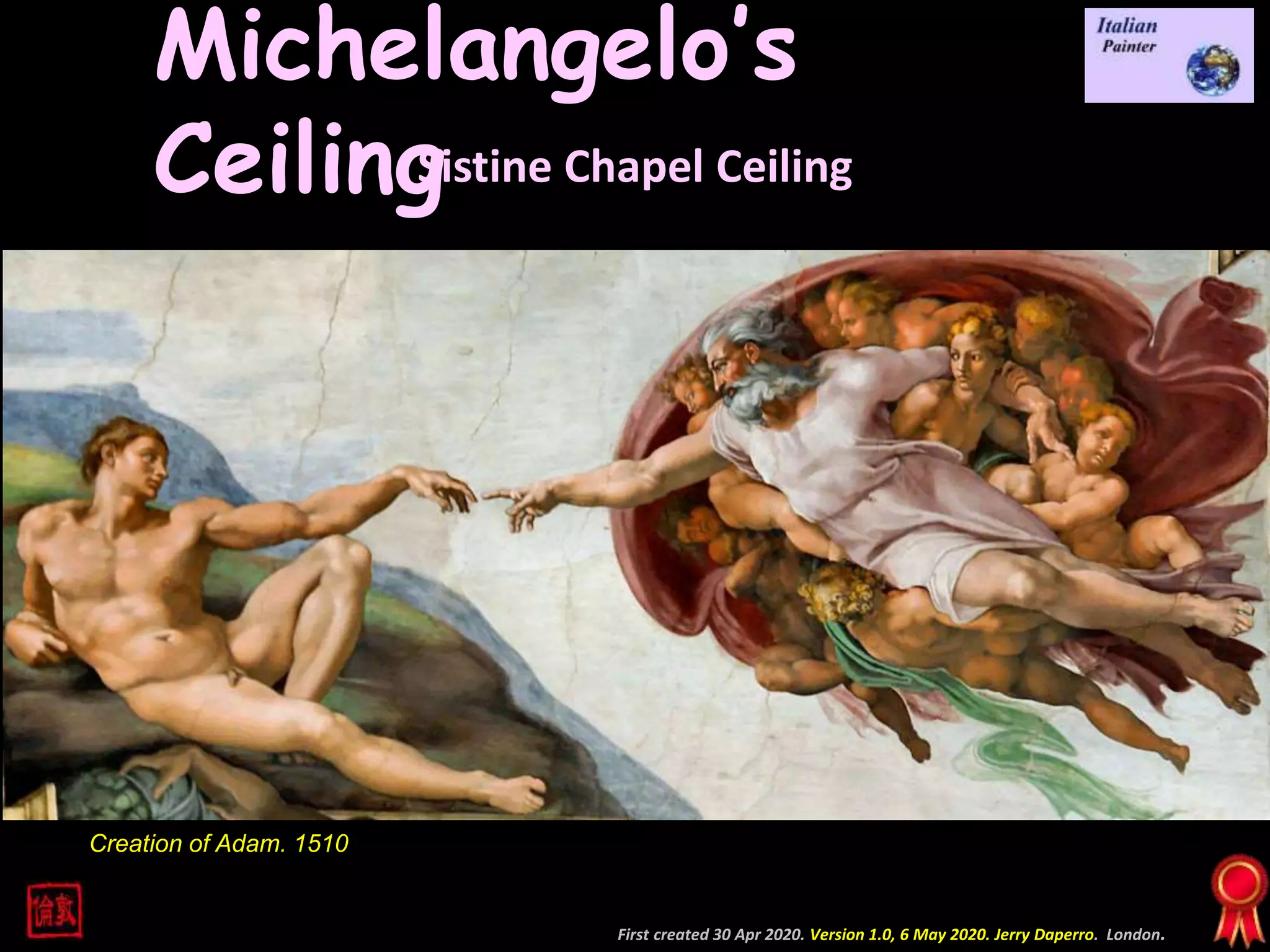
Creation of Adam. 1510
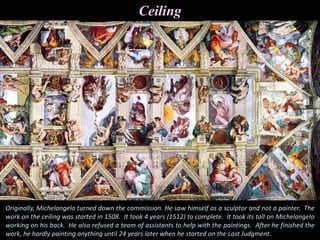
Ceiling
Originally, Michelangelo turned down the commission. He saw himself as a sculptor and not a painter. The
work on the ceiling was started in 1508. It took 4 years (1512) to complete. It took its toll on Michelangelo
working on his back. He also refused a team of assistants to help with the paintings. After he finished the
work, he hardly painting anything until 24 years later when he started on the Last Judgment.
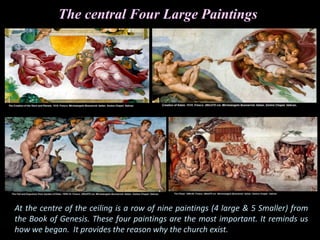
The central Four Large Paintings
At the centre of the ceiling is a row of nine paintings (4 large & 5 Smaller) from
the Book of Genesis. These four paintings are the most important. It reminds us
how we began. It provides the reason why the church exist.
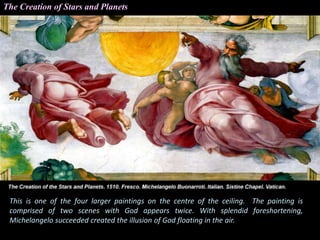
This is one of the four larger paintings on the centre of the ceiling. The painting is
comprised of two scenes with God appears twice. With splendid foreshortening,
Michelangelo succeeded created the illusion of God floating in the air.
The Creation of Stars and Planets
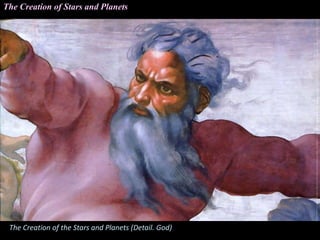
The Creation of the Stars and Planets (Detail. God)
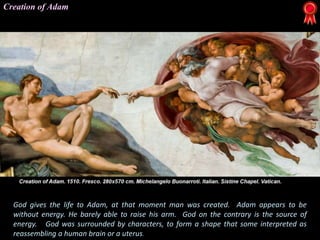
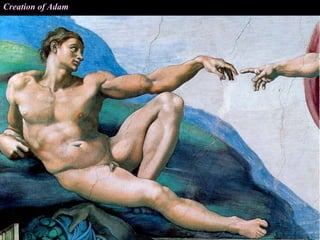
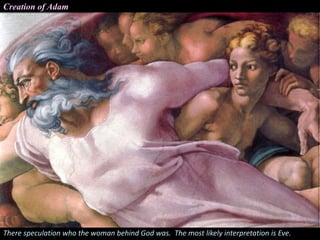
God gives the life to Adam, at that moment man was created. Adam appears to be
without energy. He barely able to raise his arm. God on the contrary is the source of
energy. God was surrounded by characters, to form a shape that some interpreted as
reassembling a human brain or a uterus.
Creation of Adam
Creation of Adam
Creation of Adam
There speculation who the woman behind God was. The most likely interpretation is Eve.
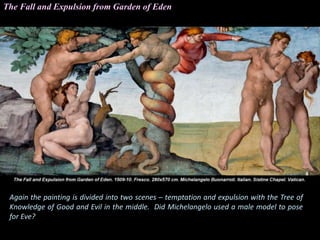
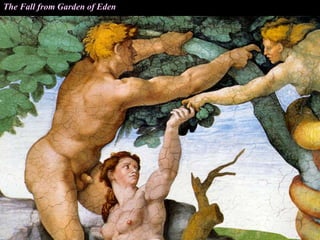
Again the painting is divided into two scenes – temptation and expulsion with the Tree of
Knowledge of Good and Evil in the middle. Did Michelangelo used a male model to pose
for Eve?
The Fall and Expulsion from Garden of Eden
The Fall from Garden of Eden
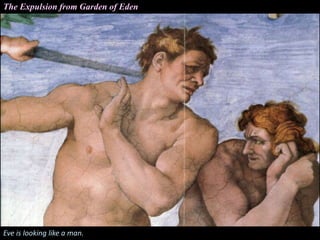
The Expulsion from Garden of Eden
Eve is looking like a man.
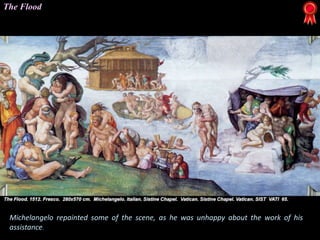
Michelangelo repainted some of the scene, as he was unhappy about the work of his
assistance.
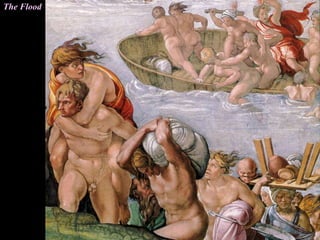
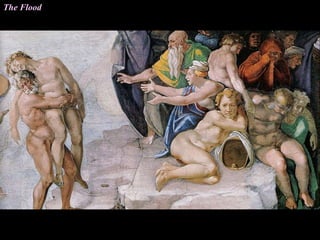
The Flood
The Flood
The Flood
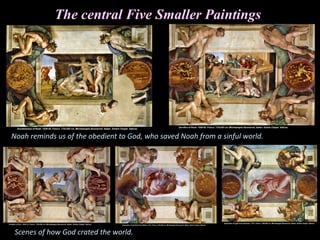
The central Five Smaller Paintings
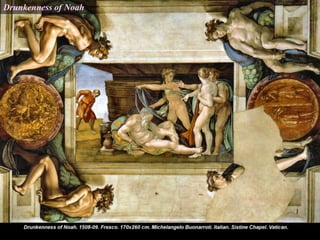
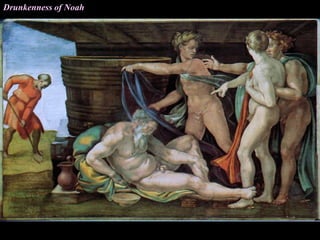
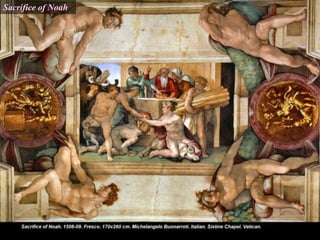
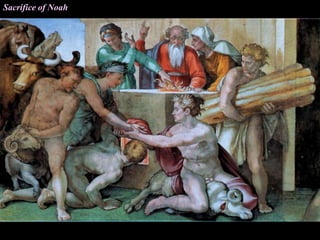
Noah reminds us of the obedient to God, who saved Noah from a sinful world.
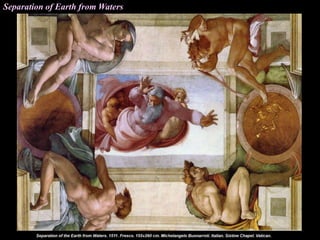
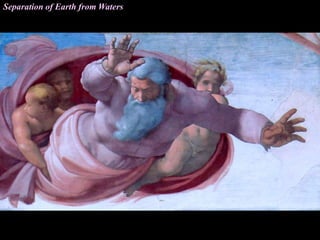
Scenes of how God crated the world.
Drunkenness of Noah
Drunkenness of Noah
Sacrifice of Noah
Sacrifice of Noah
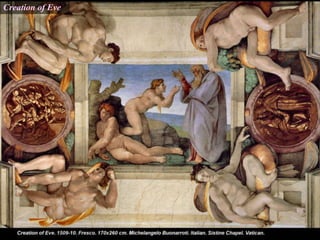
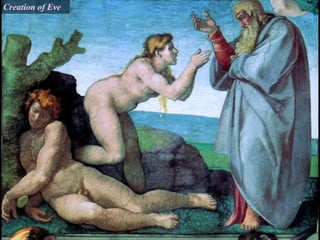
Creation of Eve
Creation of Eve
Separation of Earth from Waters
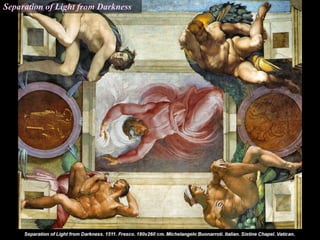
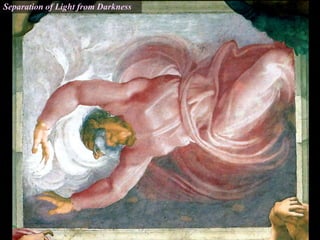
Separation of Light from Darkness
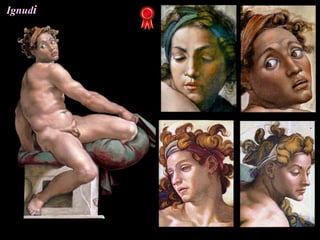
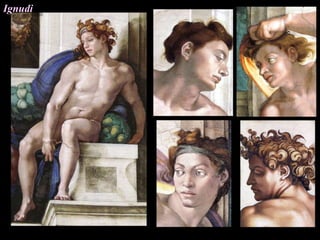
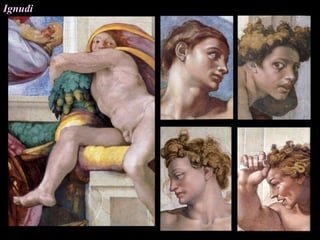
Ignudi
Ignudi
Ignudi
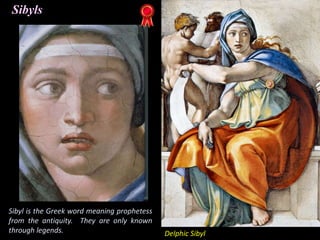
Sibyls
Sibyl is the Greek word meaning prophetess
from the antiquity. They are only known
through legends. Delphic Sibyl
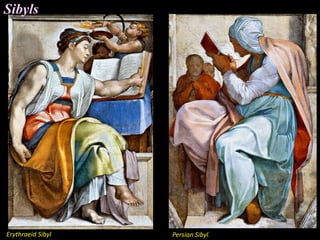
Erythraeid Sibyl Persian Sibyl.
Sibyls
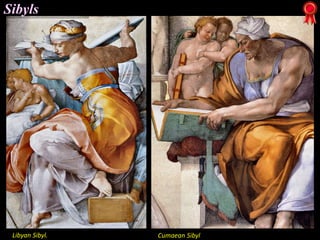
Libyan Sibyl. Cumaean Sibyl
Sibyls
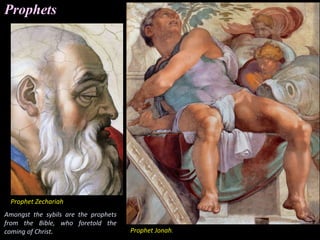
Prophets
Amongst the sybils are the prophets
from the Bible, who foretold the
coming of Christ. Prophet Jonah.
Prophet Zechariah
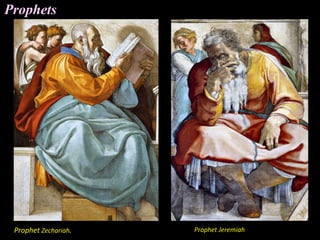
Prophet Zechariah. Prophet Jeremiah
Prophets
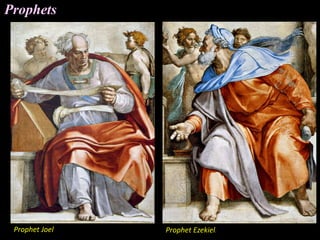
Prophet Joel Prophet Ezekiel.
Prophets
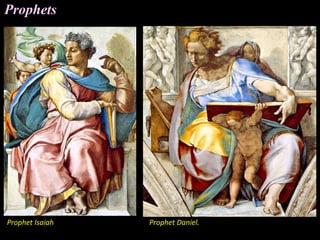
Prophet Isaiah Prophet Daniel.
Prophets
Ancestors
of Christ
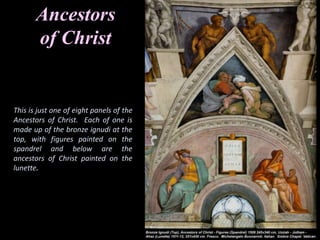
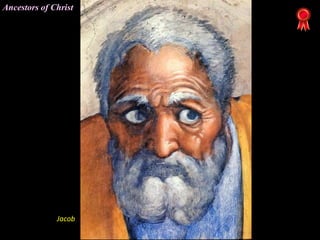
This is just one of eight panels of the
Ancestors of Christ. Each of one is
made up of the bronze ignudi at the
top, with figures painted on the
spandrel and below are the
ancestors of Christ painted on the
lunette.
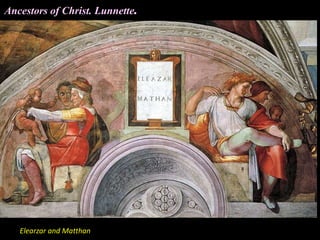
Ancestors of Christ. Lunnette.
Elearzar and Matthan
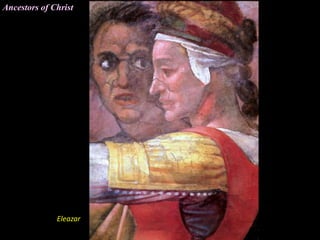
Ancestors of Christ
Eleazar
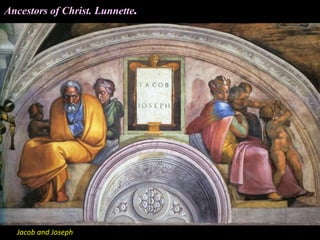
Ancestors of Christ. Lunnette.
Jacob and Joseph
Jacob
Ancestors of Christ
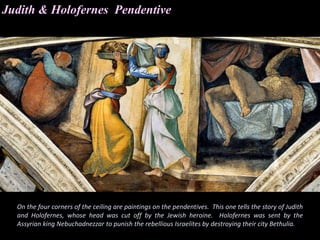
Judith & Holofernes Pendentive
On the four corners of the ceiling are paintings on the pendentives. This one tells the story of Judith
and Holofernes, whose head was cut off by the Jewish heroine. Holofernes was sent by the
Assyrian king Nebuchadnezzar to punish the rebellious Israelites by destroying their city Bethulia.
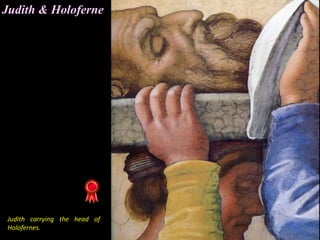
Judith carrying the head of
Holofernes.
Judith & Holoferne
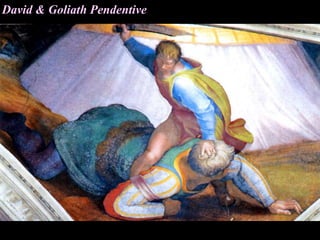
David & Goliath Pendentive
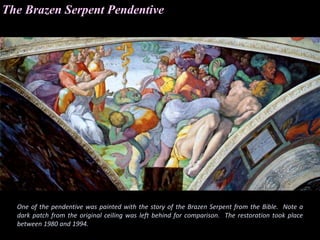
The Brazen Serpent Pendentive
One of the pendentive was painted with the story of the Brazen Serpent from the Bible. Note a
dark patch from the original ceiling was left behind for comparison. The restoration took place
between 1980 and 1994.
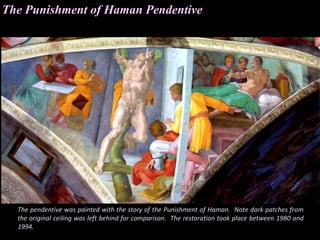
The Punishment of Haman Pendentive
The pendentive was painted with the story of the Punishment of Haman. Note dark patches from
the original ceiling was left behind for comparison. The restoration took place between 1980 and
1994.
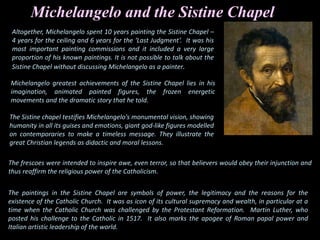
Michelangelo and the Sistine Chapel
Altogether, Michelangelo spent 10 years painting the Sistine Chapel –
4 years for the ceiling and 6 years for the ‘Last Judgment’. It was his
most important painting commissions and it included a very large
proportion of his known paintings. It is not possible to talk about the
Sistine Chapel without discussing Michelangelo as a painter.
Michelangelo greatest achievements of the Sistine Chapel lies in his
imagination, animated painted figures, the frozen energetic
movements and the dramatic story that he told.
The paintings in the Sistine Chapel are symbols of power, the legitimacy and the reasons for the
existence of the Catholic Church. It was as icon of its cultural supremacy and wealth, in particular at a
time when the Catholic Church was challenged by the Protestant Reformation. Martin Luther, who
posted his challenge to the Catholic in 1517. It also marks the apogee of Roman papal power and
Italian artistic leadership of the world.
The Sistine chapel testifies Michelangelo's monumental vision, showing
humanity in all its guises and emotions, giant god-like figures modelled
on contemporaries to make a timeless message. They illustrate the
great Christian legends as didactic and moral lessons.
The frescoes were intended to inspire awe, even terror, so that believers would obey their injunction and
thus reaffirm the religious power of the Catholicism.
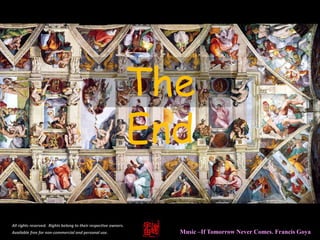
Music –If Tomorrow Never Comes. Francis Goya
The
End
All rights reserved. Rights belong to their respective owners.
Available free for non-commercial and personal use.
Rome’s Art Gallery
Michelangelo sistine Chapel Ceiling

Michelangelo sistine Chapel Ceiling

  • 1.
    First created 30Apr 2020. Version 1.0, 6 May 2020. Jerry Daperro. London. Michelangelo’s CeilingSistine Chapel Ceiling Creation of Adam. 1510
  • 2.
    Ceiling Originally, Michelangelo turneddown the commission. He saw himself as a sculptor and not a painter. The work on the ceiling was started in 1508. It took 4 years (1512) to complete. It took its toll on Michelangelo working on his back. He also refused a team of assistants to help with the paintings. After he finished the work, he hardly painting anything until 24 years later when he started on the Last Judgment.
  • 3.
    The central FourLarge Paintings At the centre of the ceiling is a row of nine paintings (4 large & 5 Smaller) from the Book of Genesis. These four paintings are the most important. It reminds us how we began. It provides the reason why the church exist.
  • 4.
    This is oneof the four larger paintings on the centre of the ceiling. The painting is comprised of two scenes with God appears twice. With splendid foreshortening, Michelangelo succeeded created the illusion of God floating in the air. The Creation of Stars and Planets
  • 5.
    The Creation ofStars and Planets The Creation of the Stars and Planets (Detail. God)
  • 6.
    God gives thelife to Adam, at that moment man was created. Adam appears to be without energy. He barely able to raise his arm. God on the contrary is the source of energy. God was surrounded by characters, to form a shape that some interpreted as reassembling a human brain or a uterus. Creation of Adam
  • 7.
  • 8.
    Creation of Adam Therespeculation who the woman behind God was. The most likely interpretation is Eve.
  • 9.
    Again the paintingis divided into two scenes – temptation and expulsion with the Tree of Knowledge of Good and Evil in the middle. Did Michelangelo used a male model to pose for Eve? The Fall and Expulsion from Garden of Eden
  • 10.
    The Fall fromGarden of Eden
  • 11.
    The Expulsion fromGarden of Eden Eve is looking like a man.
  • 12.
    Michelangelo repainted someof the scene, as he was unhappy about the work of his assistance. The Flood
  • 13.
  • 14.
  • 15.
    The central FiveSmaller Paintings Noah reminds us of the obedient to God, who saved Noah from a sinful world. Scenes of how God crated the world.
  • 16.
  • 17.
  • 18.
  • 19.
  • 20.
  • 21.
  • 22.
  • 23.
  • 24.
    Separation of Lightfrom Darkness
  • 25.
    Separation of Lightfrom Darkness
  • 26.
  • 27.
  • 28.
  • 29.
    Sibyls Sibyl is theGreek word meaning prophetess from the antiquity. They are only known through legends. Delphic Sibyl
  • 30.
  • 31.
  • 32.
    Prophets Amongst the sybilsare the prophets from the Bible, who foretold the coming of Christ. Prophet Jonah. Prophet Zechariah
  • 33.
    Prophet Zechariah. ProphetJeremiah Prophets
  • 34.
    Prophet Joel ProphetEzekiel. Prophets
  • 35.
    Prophet Isaiah ProphetDaniel. Prophets
  • 36.
    Ancestors of Christ This isjust one of eight panels of the Ancestors of Christ. Each of one is made up of the bronze ignudi at the top, with figures painted on the spandrel and below are the ancestors of Christ painted on the lunette.
  • 37.
    Ancestors of Christ.Lunnette. Elearzar and Matthan
  • 38.
  • 39.
    Ancestors of Christ.Lunnette. Jacob and Joseph
  • 40.
  • 41.
    Judith & HolofernesPendentive On the four corners of the ceiling are paintings on the pendentives. This one tells the story of Judith and Holofernes, whose head was cut off by the Jewish heroine. Holofernes was sent by the Assyrian king Nebuchadnezzar to punish the rebellious Israelites by destroying their city Bethulia.
  • 42.
    Judith carrying thehead of Holofernes. Judith & Holoferne
  • 43.
    David & GoliathPendentive
  • 44.
    The Brazen SerpentPendentive One of the pendentive was painted with the story of the Brazen Serpent from the Bible. Note a dark patch from the original ceiling was left behind for comparison. The restoration took place between 1980 and 1994.
  • 45.
    The Punishment ofHaman Pendentive The pendentive was painted with the story of the Punishment of Haman. Note dark patches from the original ceiling was left behind for comparison. The restoration took place between 1980 and 1994.
  • 46.
    Michelangelo and theSistine Chapel Altogether, Michelangelo spent 10 years painting the Sistine Chapel – 4 years for the ceiling and 6 years for the ‘Last Judgment’. It was his most important painting commissions and it included a very large proportion of his known paintings. It is not possible to talk about the Sistine Chapel without discussing Michelangelo as a painter. Michelangelo greatest achievements of the Sistine Chapel lies in his imagination, animated painted figures, the frozen energetic movements and the dramatic story that he told. The paintings in the Sistine Chapel are symbols of power, the legitimacy and the reasons for the existence of the Catholic Church. It was as icon of its cultural supremacy and wealth, in particular at a time when the Catholic Church was challenged by the Protestant Reformation. Martin Luther, who posted his challenge to the Catholic in 1517. It also marks the apogee of Roman papal power and Italian artistic leadership of the world. The Sistine chapel testifies Michelangelo's monumental vision, showing humanity in all its guises and emotions, giant god-like figures modelled on contemporaries to make a timeless message. They illustrate the great Christian legends as didactic and moral lessons. The frescoes were intended to inspire awe, even terror, so that believers would obey their injunction and thus reaffirm the religious power of the Catholicism.
  • 47.
    Music –If TomorrowNever Comes. Francis Goya The End All rights reserved. Rights belong to their respective owners. Available free for non-commercial and personal use.
  • 48.

Editor's Notes

  • #2 Initially, Michelangelo did not want to undertake the painting of the Sistine Chapel ceiling, as he considered himself as a sculptor. Nevertheless, he took on the work, when he was 33 after his famous statue of Pieta, now in St Peter Basilica. It was a big undertaking. The Sistine Chapel is the place where the next Pope would be chosen. Originally, he had a army of painter to help him, but he sent them all home. He did most of the work himself. He painted the ceiling for 4 years. It was a difficult task. He hardly painted anything else, until he picked up the brushes and painted the Last Judgement again at the Sistine Chapel. This time it took him 6 years, at the age of 60 some 24 years after he painted the ceiling. On his ceiling painting he had shown vivid imagination, movements and his story telling ability. The ceiling painting is about the foundation and the roots of the Christian faith. The ceiling was restored from 1980 to 1994, a total of 14 years. 6 May 2020.