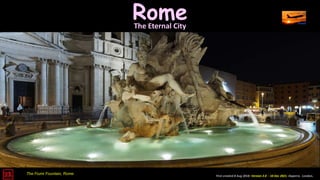
Rome
The Eternal City
First created 8 Aug 2018. Version 2.0 - 10 Dec 2021. Daperro. London.
The Fiumi Fountain, Rome
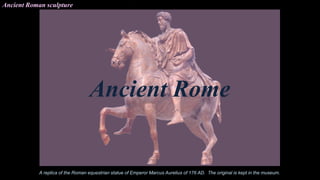
Ancient Roman sculpture
A replica of the Roman equestrian statue of Emperor Marcus Aurelius of 176 AD. The original is kept in the museum.
Ancient Rome
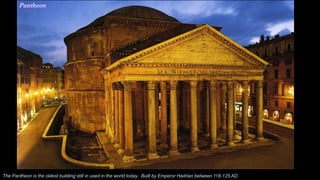
Pantheon
The Pantheon is the oldest building still in used in the world today. Built by Emperor Hadrian between 118-125 AD.
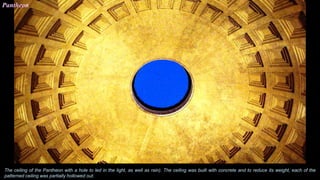
Pantheon
The ceiling of the Pantheon with a hole to led in the light, as well as rain). The ceiling was built with concrete and to reduce its weight, each of the
patterned ceiling was partially hollowed out.
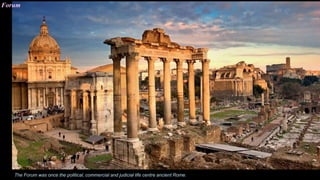
Forum
The Forum was once the political, commercial and judicial life centre ancient Rome.
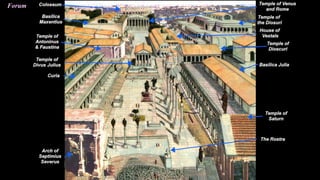
Forum
Now and then.
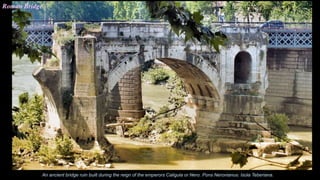
Roman Bridge
An ancient bridge ruin built during the reign of the emperors Caligula or Nero. Pons Neronianus. Isola Teberiana.
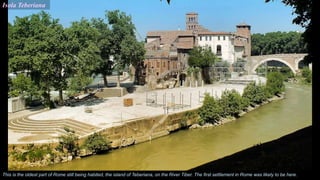
Isola Teberiana
This is the oldest part of Rome still being habited, the island of Teberiana, on the River Tiber. The first settlement in Rome was likely to be here.
Pantheon
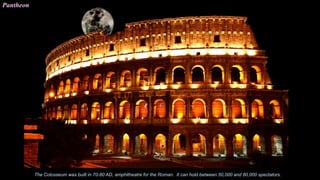
The Colosseum was built in 70-80 AD, amphitheatre for the Roman. It can hold between 50,000 and 80,000 spectators.
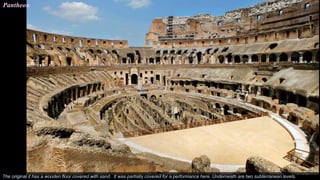
The original it has a wooden floor covered with sand. It was partially covered for a performance here. Underneath are two subterranean levels.
Pantheon
Castel Sant Angelo
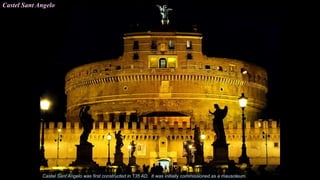
Castel Sant’Angelo was first constructed in 135 AD. It was initially commissioned as a mausoleum.
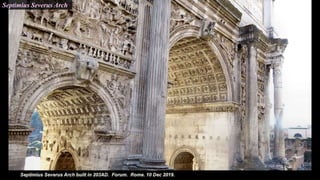
Septimius Severus Arch
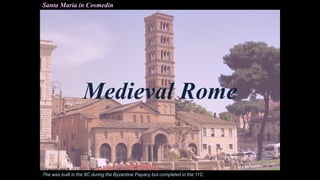
Medieval Rome
Santa Maria in Cosmedin
The was built in the 8C during the Byzantine Papacy but completed in the 11C.
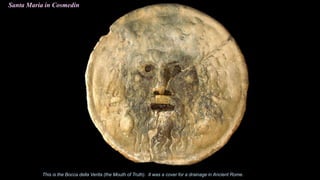
Santa Maria in Cosmedin
This is the Bocca della Verita (the Mouth of Truth). It was a cover for a drainage in Ancient Rome.
Renaissance Rome
Renaissance Painting
The School of Athens (Detail. Plato and Aristotle). 1509. Fresco. Sanzio Raffaello. Italian. Stanza della Segnatura. Vatican museum
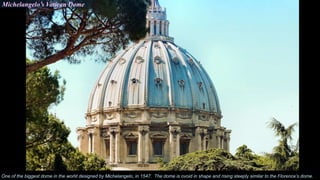
Michelangelo’s Vatican Dome
One of the biggest dome in the world designed by Michelangelo, in 1547. The dome is ovoid in shape and rising steeply similar to the Florence’s dome.
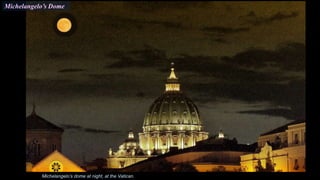
Michelangelo’s Dome
Michelangelo’s dome at night, at the Vatican.
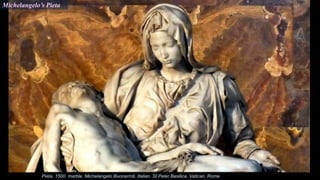
Michelangelo’s Pieta
Pieta. 1500. marble. Michelangelo Buonarroti. Italian. St Peter Basilica. Vatican. Rome.
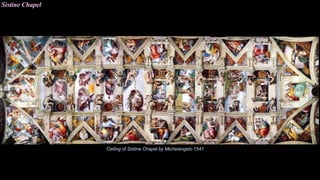
Sistine Chapel
Ceiling of Sistine Chapel by Michelangelo 1541
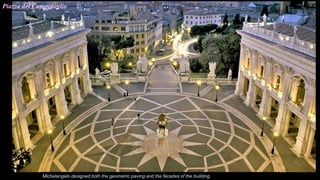
Piazza del Campidoglio
Michelangelo designed both the geometric paving and the facades of the building.
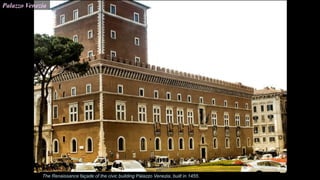
Palazzo Venezia
The Renaissance façade of the civic building Palazzo Venezia, built in 1455.
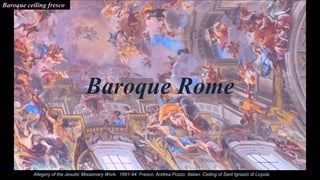
Baroque Rome
Baroque ceiling fresco
Allegory of the Jesuits’ Missionary Work. 1691-94. Fresco. Andrea Pozzo. Italian. Ceiling of Sant Ignazio di Loyola.
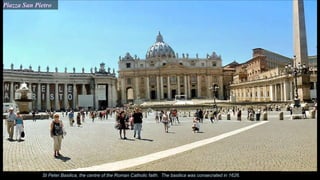
Piazza San Pietro
St Peter Basilica, the centre of the Roman Catholic faith. The basilica was consecrated in 1626.
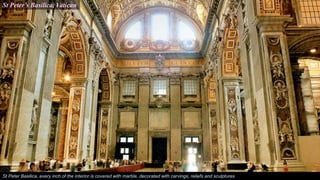
St Peter’s Basilica, Vatican
St Peter Basilica, every inch of the interior is covered with marble, decorated with carvings, reliefs and sculptures
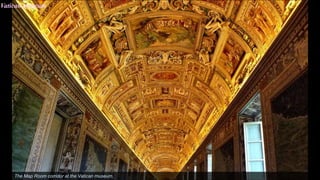
Vatican museum
The Map Room corridor at the Vatican museum.
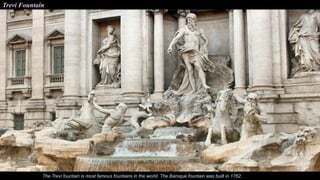
Trevi Fountain
The Trevi fountain is most famous fountains in the world. The Baroque fountain was built in 1762.
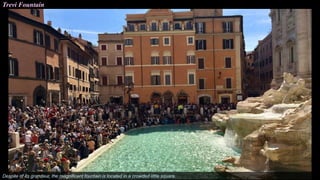
Trevi Fountain
Despite of its grandeur, the magnificent fountain is located in a crowded little square.
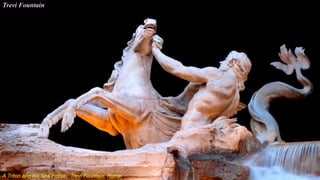
A Triton and his Sea Horse, Trevi Fountain, Rome
Trevi Fountain
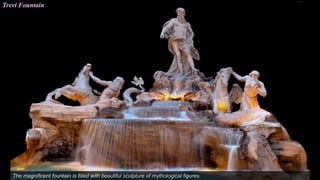
Trevi Fountain
The magnificent fountain is filled with beautiful sculpture of mythological figures.
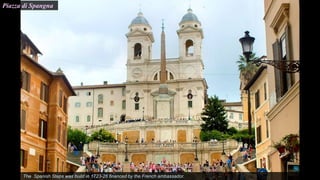
Piazza di Spangna
The Spanish Steps was build in 1723-26 financed by the French ambassador.
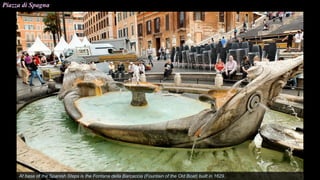
Piazza di Spagna
At base of the Spanish Steps is the Fontana della Barcaccia (Fountain of the Old Boat) built in 1629.
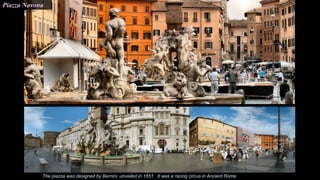
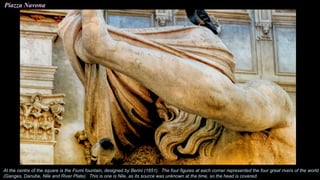
Piazza Navona
The piazza was designed by Bernini, unveiled in 1651. It was a racing circus in Ancient Rome.
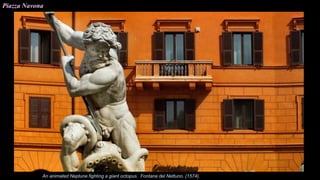
Piazza Navona
An animated Neptune fighting a giant octopus. Fontana del Nettuno. (1574).
Piazza Navona
At the centre of the square is the Fiumi fountain, designed by Berini (1651). The four figures at each corner represented the four great rivers of the world
(Ganges, Danube, Nile and River Plate). This is one is Nile, as its source was unknown at the time, so the head is covered.
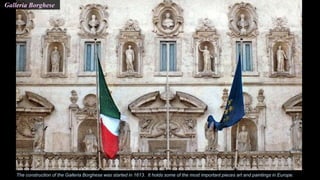
Galleria Borghese
The construction of the Galleria Borghese was started in 1613. It holds some of the most important pieces art and paintings in Europe.
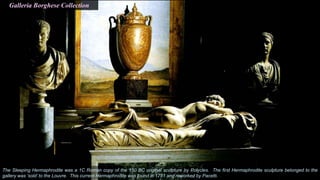
The Sleeping Hermaphrodite was a 1C Roman copy of the 150 BC original sculpture by Polycles. The first Hermaphrodite sculpture belonged to the
gallery was ‘sold’ to the Louvre. This current Hermaphrodite was found in 1781 and reworked by Pacetti.
Galleria Borghese Collection
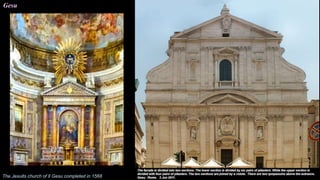
Gesu
The Jesuits church of Il Gesu completed in 1568
Gesu
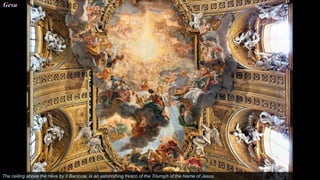
The ceiling above the nave by Il Baciccia, is an astonishing fresco of the Triumph of the Name of Jesus.
Gesu
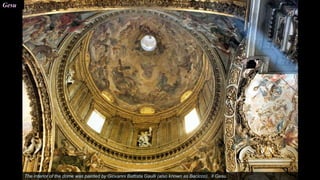
The interior of the dome was painted by Giovanni Battista Gaulli (also known as Bacicco). Il Gesu.
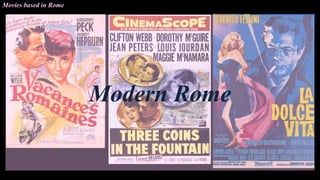
Movies based in Rome
Modern Rome
Emmanuel Monument
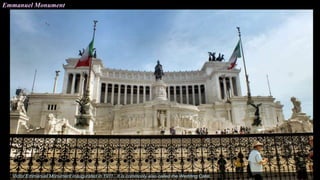
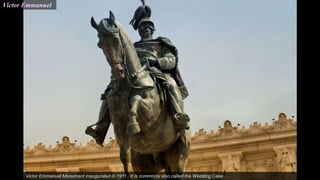
Victor Emmanuel Monument inaugurated in 1911. It is commonly also called the Wedding Cake..
Victor Emmanuel
Victor Emmanuel Monument inaugurated in 1911. It is commonly also called the Wedding Cake..
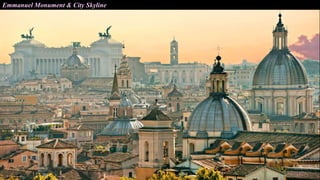
Emmanuel Monument & City Skyline
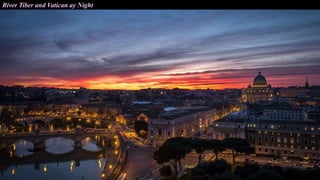
River Tiber and Vatican ay Night
The
End
Music – Three Coins in the Fountain sung by Frank Sinatra
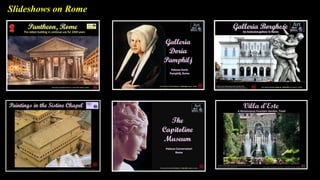
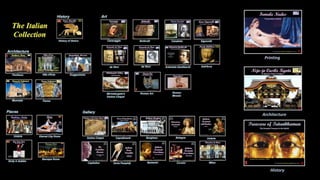
Slideshows on Rome
Printing
Architecture
History
Rome 2.0w

Rome 2.0w

Editor's Notes

  • #2 Rome is known as the Eternal City because of its long history. It is very scenic and the chosen location for The Roman Holiday, La Dolce Vita and There coins in the Fountain. It has many famous sites, rich in architecture and paintings – Pantheon, Roman Forum, Colosseum, castel sant’ Angelo, Vatican, Basilica of St Peter, Trevi Fountain, If Gensu, the Spanish steps, Piazza Navona. Rome is shaped by two important artists Michelangelo and Bernini. This slideshow sketch the development of architecture from the Ancient, to the Medieval, Renaissance and Baroque to the modern age.
  • #29 Rome is known as the Eternal City because of its long history. It is very scenic and the chosen location for The Roman Holiday, La Dolce Vita and There coins in the Fountain. It has many famous sites, rich in architecture and paintings – Pantheon, Roman Forum, Colosseum, castel sant’ Angelo, Vatican,Basilica of St Peter, Trevi Fountain, If Gensu, the Spanish steps, Piazza Navona. Rome is shaped by two important artists Michelangelo and Bernini. This slideshow sketch the development of architecture from the Ancient, to the Medieval, Renaissance and Baroque to the modern age.
  • #46 History of Major Releases Ver 1 - 8 Aug 2018 Ver 2 – 11 Dec 2021 changed to wide screen format.