Globalization,
interculturality and global
citizenship.
Members:
● Cuba Tovar Nayeli - 100%
● Vargas Castro Kenfers - 100%
● Aguilar Estacion Alonso - 100%
● Giuliana Arana Huaman- 100%
G2_ACTIVITY S16
INTRODUCTION
Globalizacion
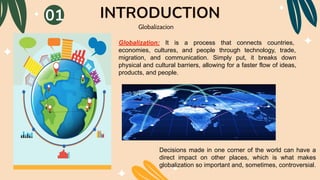
Decisions made in one corner of the world can have a
direct impact on other places, which is what makes
globalization so important and, sometimes, controversial.
Globalization: It is a process that connects countries,
economies, cultures, and people through technology, trade,
migration, and communication. Simply put, it breaks down
physical and cultural barriers, allowing for a faster flow of ideas,
products, and people.
01
INTRODUCTION
02 03
In a globalized world, interculturalism promotes
interaction and respect between different cultures,
fostering understanding and coexistence. It seeks to create
an inclusive environment where everyone feels accepted,
regardless of their cultural background.
Interculturality and Global Citizenship
Interculturality Global Citizenship
It means recognizing that our actions have global
implications. Being a global citizen means
committing to justice, human rights, and
sustainability, while confronting challenges such
as climate change and international conflicts.
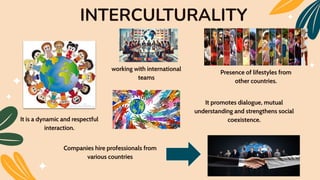
It is a dynamic and respectful
interaction.
INTERCULTURALITY
working with international
teams
Presence of lifestyles from
other countries.
It promotes dialogue, mutual
understanding and strengthens social
coexistence.
Companies hire professionals from
various countries
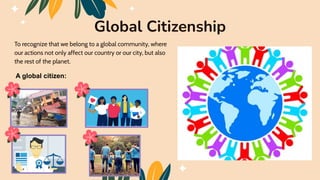
To recognize that we belong to a global community, where
our actions not only affect our country or our city, but also
the rest of the planet.
Global Citizenship
A global citizen:
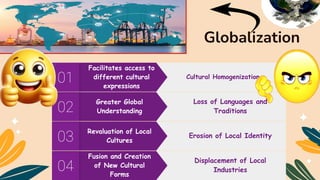
Globalization
Fusion and Creation
of New Cultural
Forms
04
Displacement of Local
Industries
Revaluation of Local
Cultures
03 Erosion of Local Identity
Greater Global
Understanding
02
Loss of Languages and
Traditions
Facilitates access to
different cultural
expressions
Cultural Homogenization
01
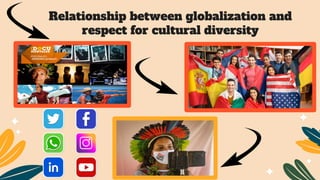
Relationship between globalization and
respect for cultural diversity
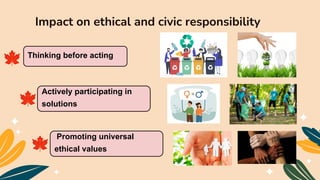
Impact on ethical and civic responsibility
Thinking before acting
Actively participating in
solutions
Promoting universal
ethical values
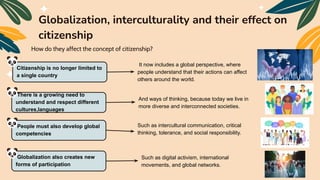
Globalization, interculturality and their effect on
citizenship
How do they affect the concept of citizenship?
Citizenship is no longer limited to
a single country
There is a growing need to
understand and respect different
cultures,languages
People must also develop global
competencies
Globalization also creates new
forms of participation
It now includes a global perspective, where
people understand that their actions can affect
others around the world.
And ways of thinking, because today we live in
more diverse and interconnected societies.
Such as intercultural communication, critical
thinking, tolerance, and social responsibility.
Such as digital activism, international
movements, and global networks.
VIDEO LINK
https://drive.google.com/file/d/17xvvLrSux4qFmLshRvceqPCkqxoUe8oG/view?usp=s
haring
Ingles Activity globalización, intercultural

Ingles Activity globalización, intercultural

  • 1.
    Globalization, interculturality and global citizenship. Members: ●Cuba Tovar Nayeli - 100% ● Vargas Castro Kenfers - 100% ● Aguilar Estacion Alonso - 100% ● Giuliana Arana Huaman- 100% G2_ACTIVITY S16
  • 2.
    INTRODUCTION Globalizacion Decisions made inone corner of the world can have a direct impact on other places, which is what makes globalization so important and, sometimes, controversial. Globalization: It is a process that connects countries, economies, cultures, and people through technology, trade, migration, and communication. Simply put, it breaks down physical and cultural barriers, allowing for a faster flow of ideas, products, and people. 01
  • 3.
    INTRODUCTION 02 03 In aglobalized world, interculturalism promotes interaction and respect between different cultures, fostering understanding and coexistence. It seeks to create an inclusive environment where everyone feels accepted, regardless of their cultural background. Interculturality and Global Citizenship Interculturality Global Citizenship It means recognizing that our actions have global implications. Being a global citizen means committing to justice, human rights, and sustainability, while confronting challenges such as climate change and international conflicts.
  • 4.
    It is adynamic and respectful interaction. INTERCULTURALITY working with international teams Presence of lifestyles from other countries. It promotes dialogue, mutual understanding and strengthens social coexistence. Companies hire professionals from various countries
  • 5.
    To recognize thatwe belong to a global community, where our actions not only affect our country or our city, but also the rest of the planet. Global Citizenship A global citizen:
  • 6.
    Globalization Fusion and Creation ofNew Cultural Forms 04 Displacement of Local Industries Revaluation of Local Cultures 03 Erosion of Local Identity Greater Global Understanding 02 Loss of Languages and Traditions Facilitates access to different cultural expressions Cultural Homogenization 01
  • 7.
    Relationship between globalizationand respect for cultural diversity
  • 8.
    Impact on ethicaland civic responsibility Thinking before acting Actively participating in solutions Promoting universal ethical values
  • 9.
    Globalization, interculturality andtheir effect on citizenship How do they affect the concept of citizenship? Citizenship is no longer limited to a single country There is a growing need to understand and respect different cultures,languages People must also develop global competencies Globalization also creates new forms of participation It now includes a global perspective, where people understand that their actions can affect others around the world. And ways of thinking, because today we live in more diverse and interconnected societies. Such as intercultural communication, critical thinking, tolerance, and social responsibility. Such as digital activism, international movements, and global networks.
  • 10.