
APPROACHES TO LANGUAGE TEACHING
METHODS
GRAMMAR-
TRANSLATION METHOD AUDIO-
LINGUISM
COGNITIVE-
CODE TEACHING
DIRECT METHOD
GRAMMAR- TRANSLATION
METHOD
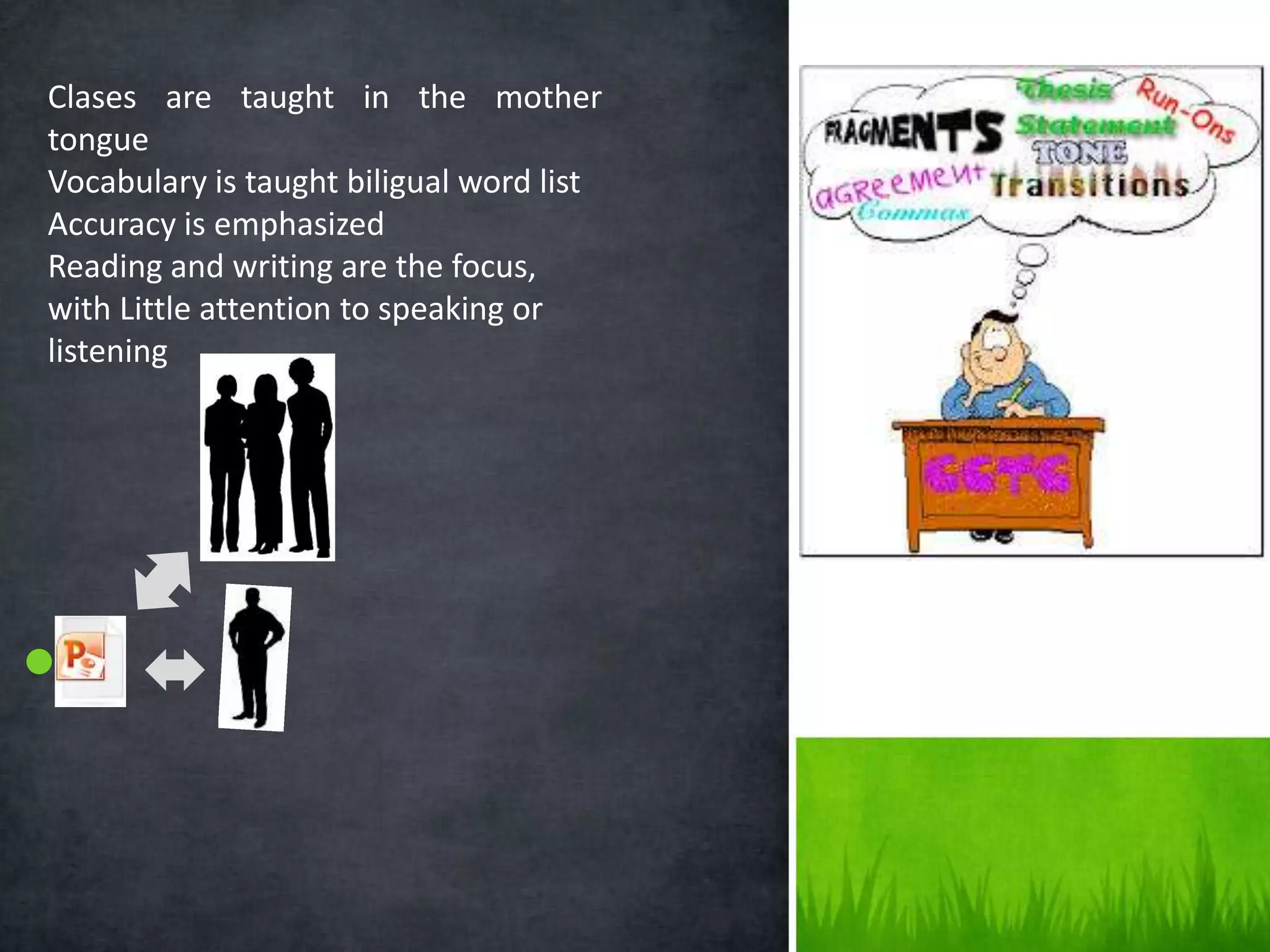
Clases are taught in the mother
tongue
Vocabulary is taught biligual word list
Accuracy is emphasized
Reading and writing are the focus,
with Little attention to speaking or
listening
INTERACTIVE COMMUNICATIVE
APPROACH
Broadcast and compress for seamless delivery
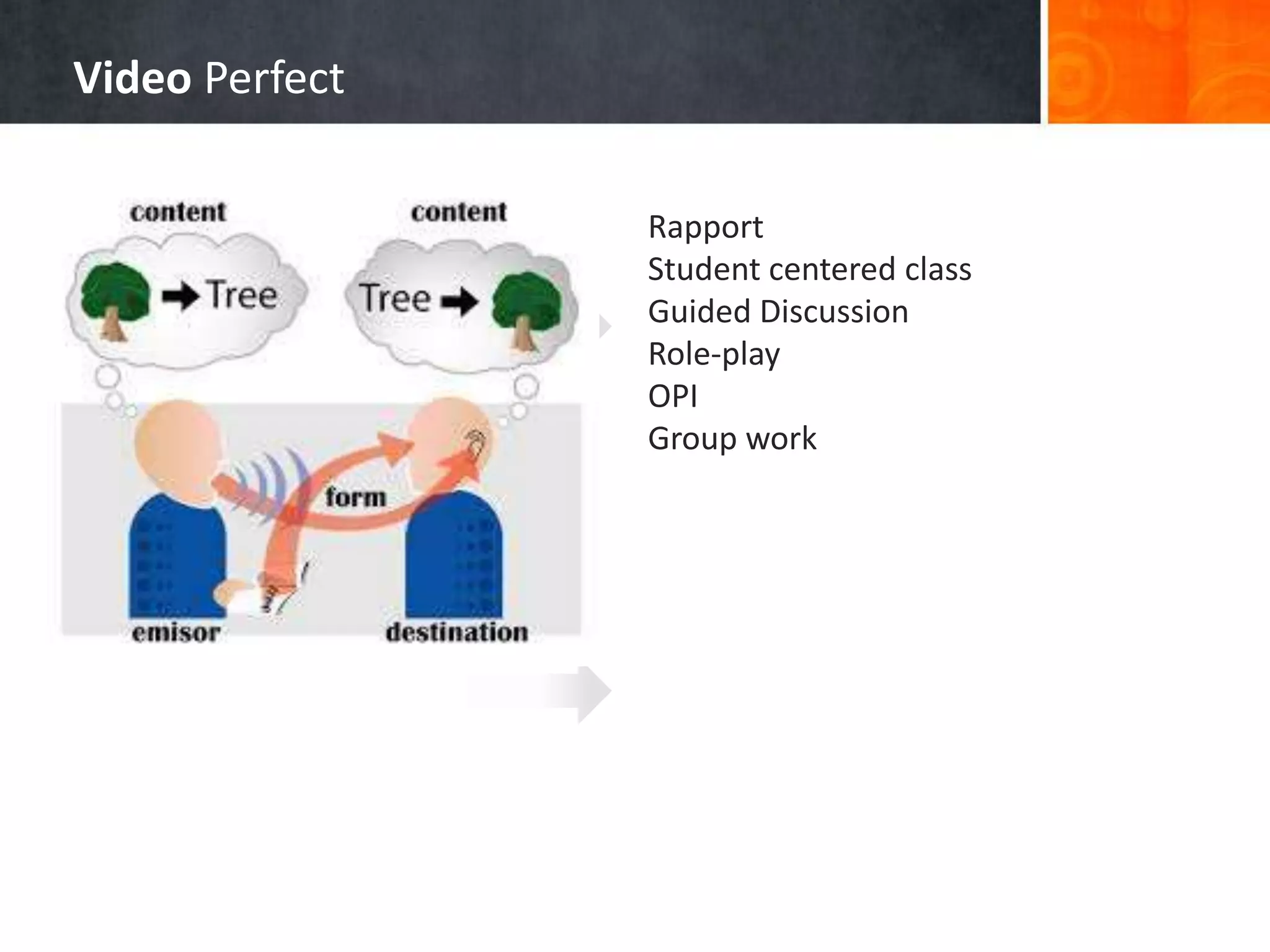
Rapport
Student centered class
Guided Discussion
Role-play
OPI
Group work
Video Perfect
AUDIO- LINGUAL METHOD
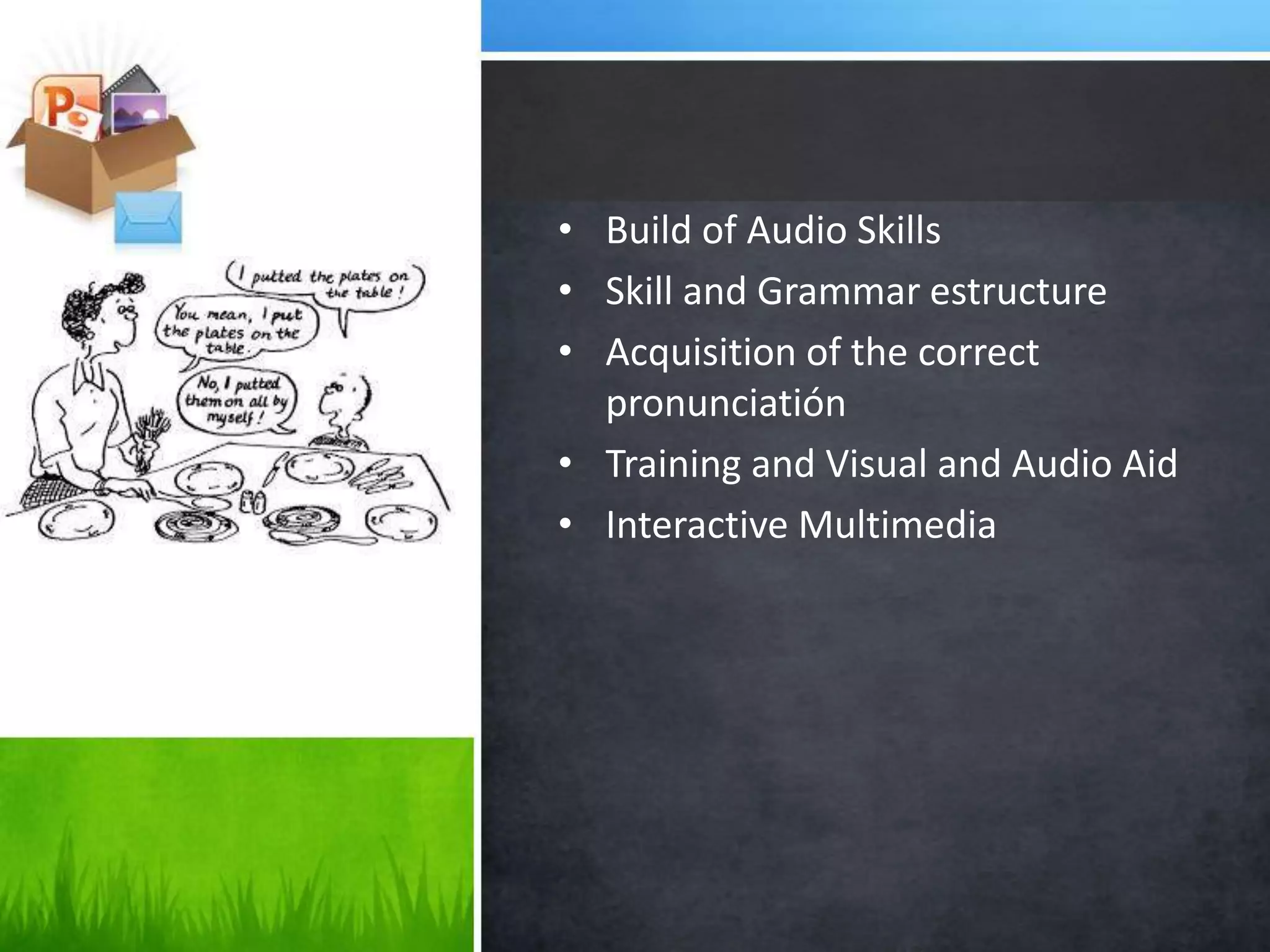
• Build of Audio Skills
• Skill and Grammar estructure
• Acquisition of the correct
pronunciatión
• Training and Visual and Audio Aid
• Interactive Multimedia
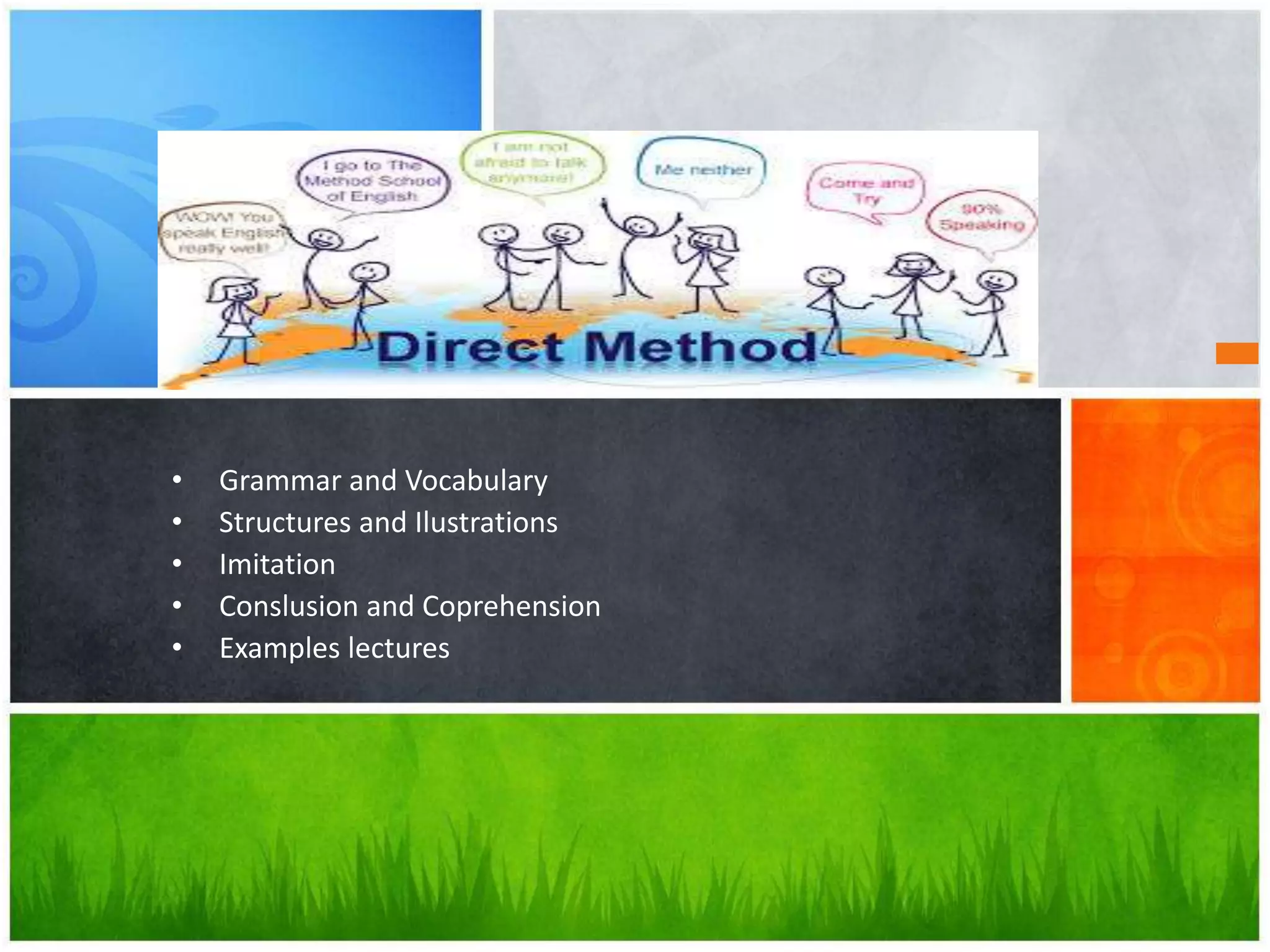
DIRECT METHOD
• Grammar and Vocabulary
• Structures and Ilustrations
• Imitation
• Conslusion and Coprehension
• Examples lectures
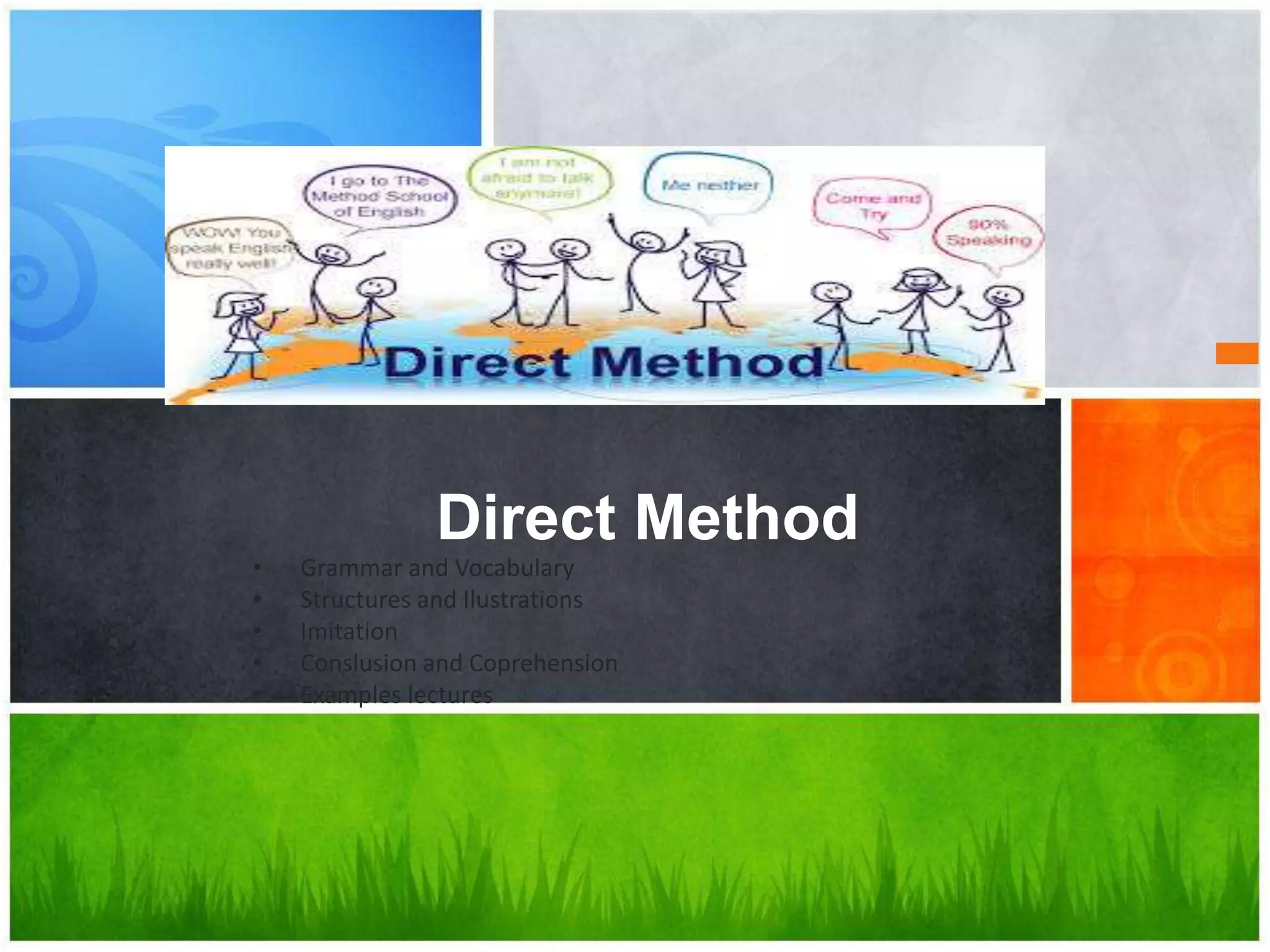
Direct Method
• Grammar and Vocabulary
• Structures and Ilustrations
• Imitation
• Conslusion and Coprehension
• Examples lectures
THEORIES OF SLA
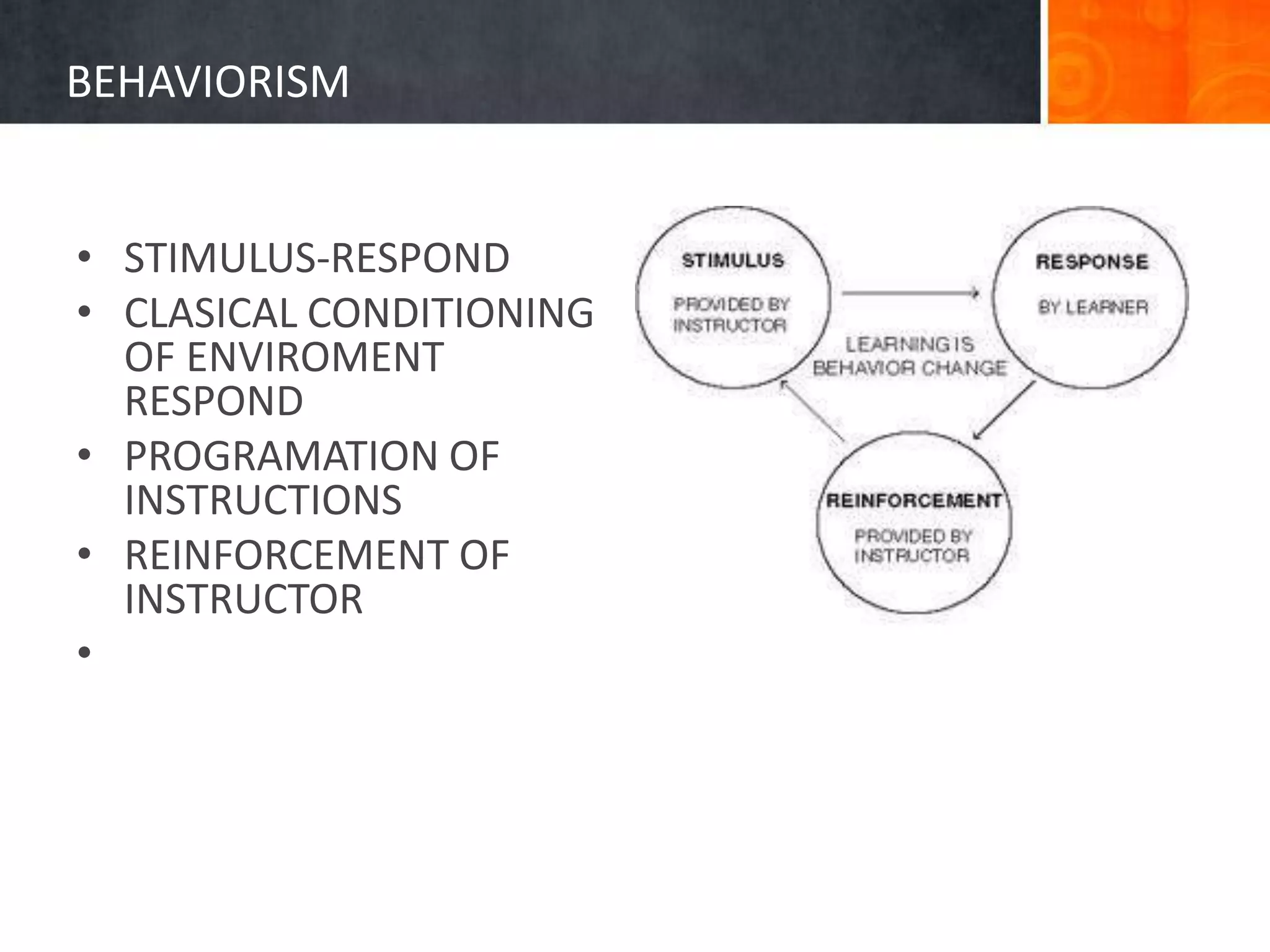
BEHAVIORISM
• STIMULUS-RESPOND
• CLASICAL CONDITIONING
OF ENVIROMENT
RESPOND
• PROGRAMATION OF
INSTRUCTIONS
• REINFORCEMENT OF
INSTRUCTOR
•
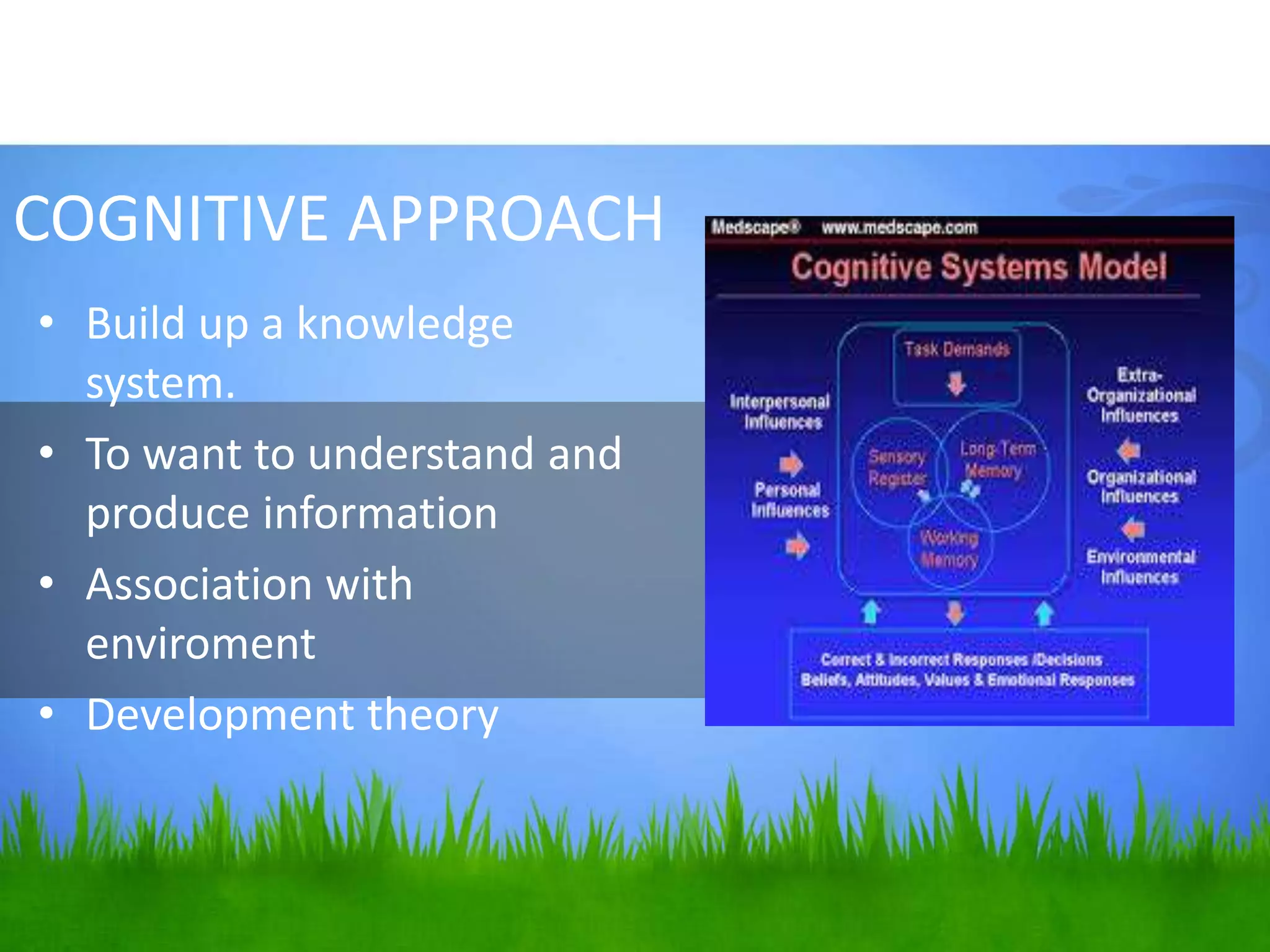
COGNITIVE APPROACH
• Build up a knowledge
system.
• To want to understand and
produce information
• Association with
enviroment
• Development theory
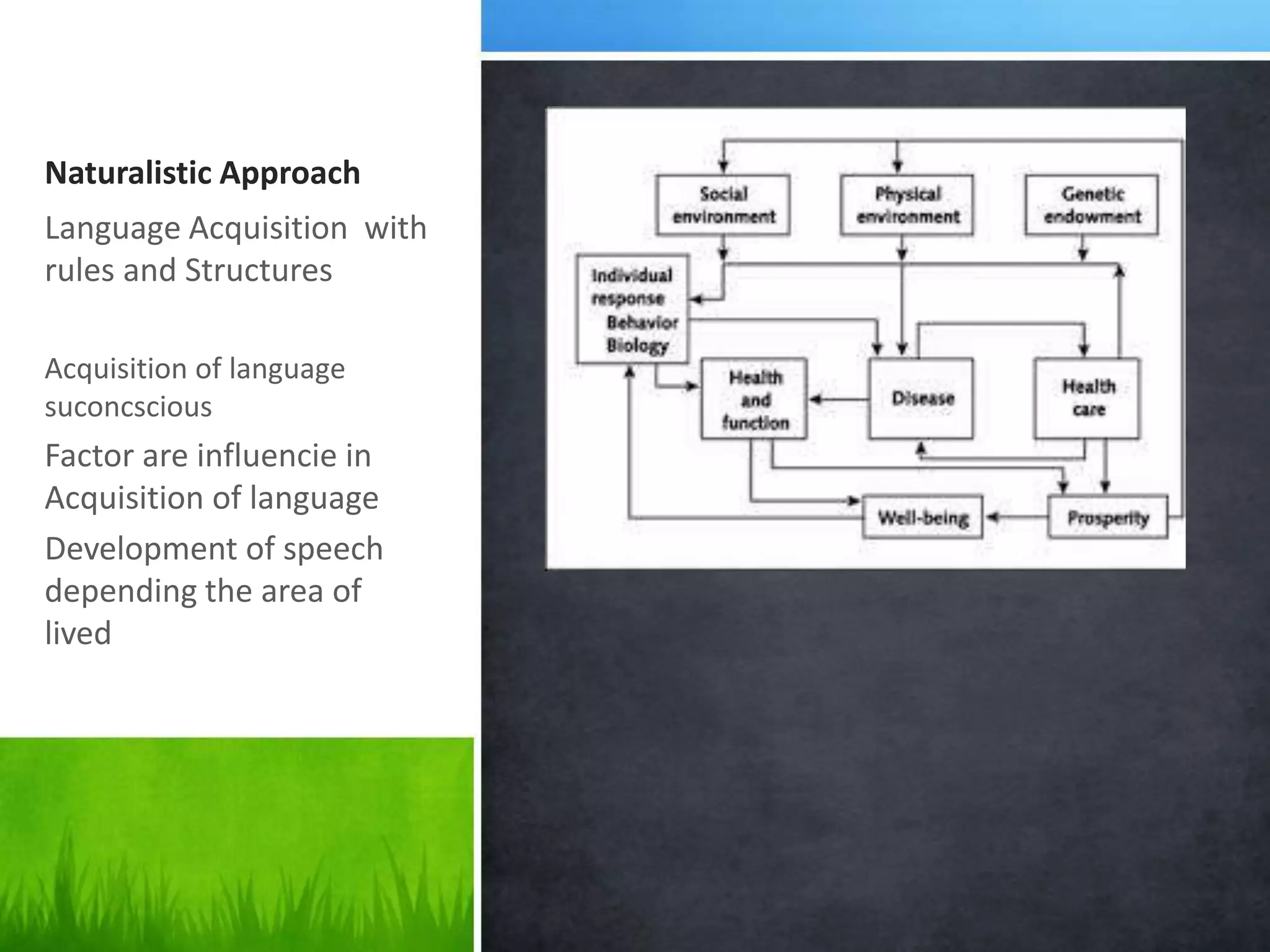
Naturalistic Approach
Language Acquisition with
rules and Structures
Acquisition of language
suconcscious
Factor are influencie in
Acquisition of language
Development of speech
depending the area of
lived
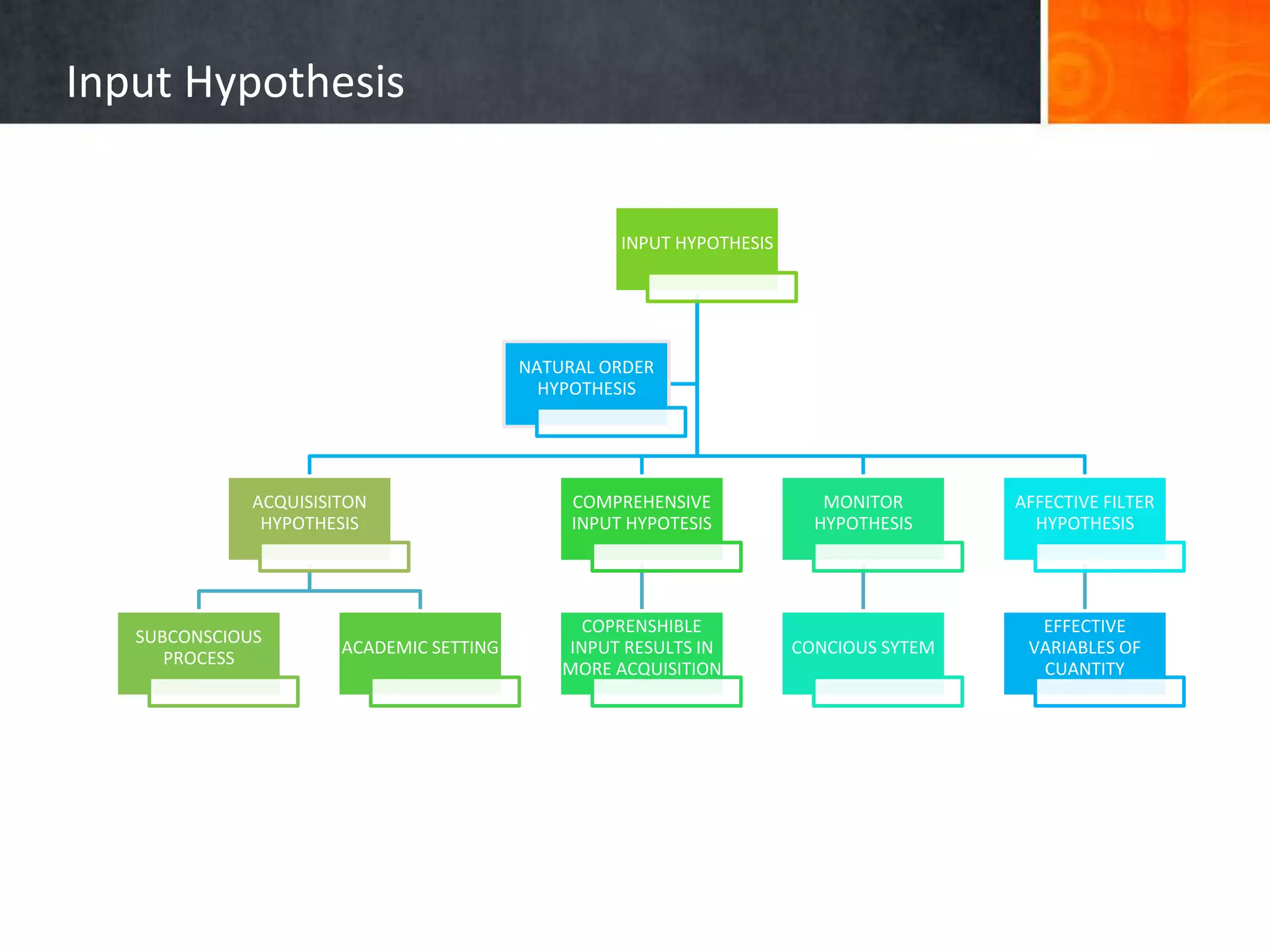
Input Hypothesis
INPUT HYPOTHESIS
ACQUISISITON
HYPOTHESIS
SUBCONSCIOUS
PROCESS
ACADEMIC SETTING
COMPREHENSIVE
INPUT HYPOTESIS
COPRENSHIBLE
INPUT RESULTS IN
MORE ACQUISITION
MONITOR
HYPOTHESIS
CONCIOUS SYTEM
AFFECTIVE FILTER
HYPOTHESIS
EFFECTIVE
VARIABLES OF
CUANTITY
NATURAL ORDER
HYPOTHESIS
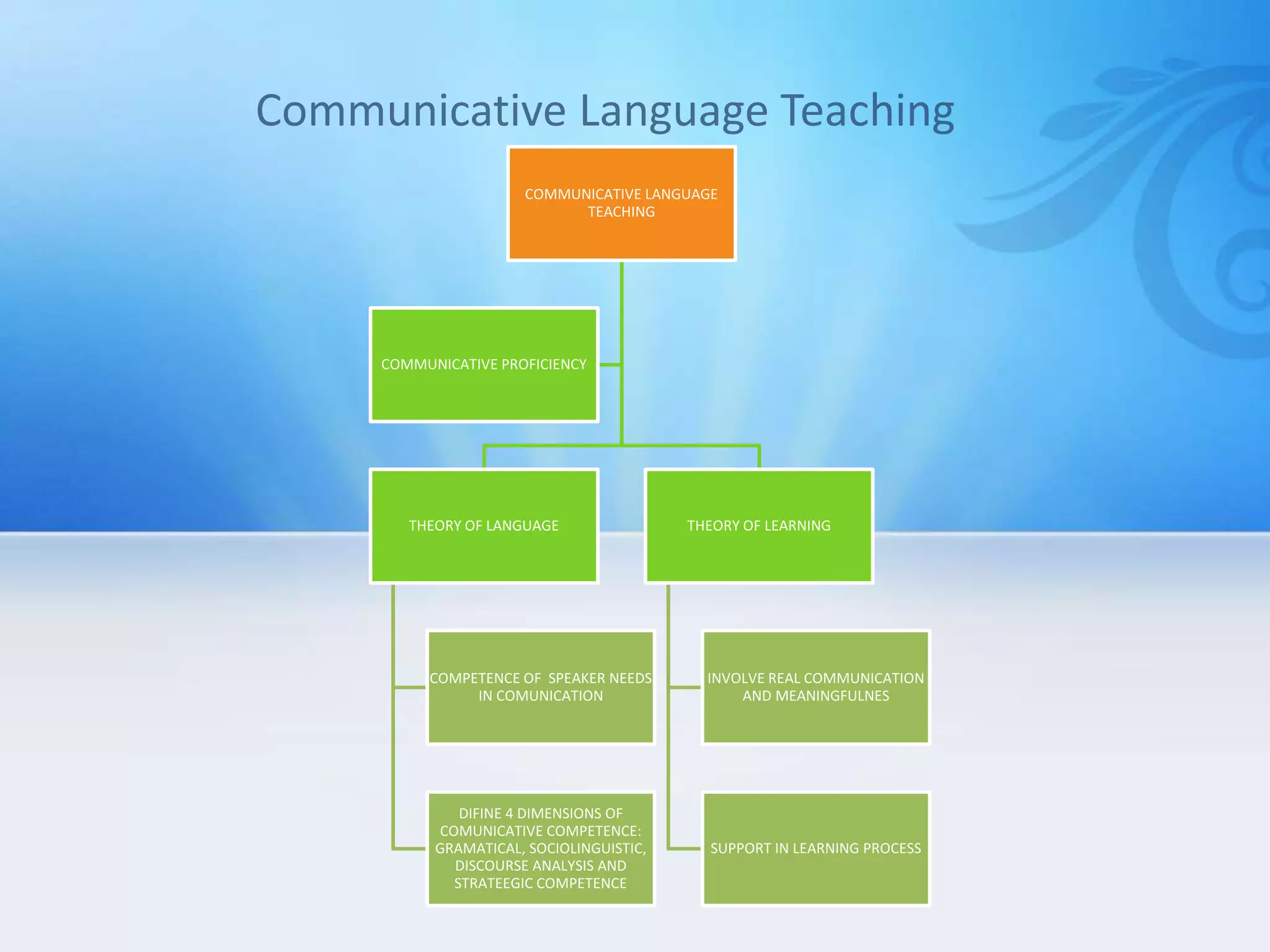
COMMUNICATIVE LANGUAGE
TEACHING
THEORY OF LANGUAGE
COMPETENCE OF SPEAKER NEEDS
IN COMUNICATION
DIFINE 4 DIMENSIONS OF
COMUNICATIVE COMPETENCE:
GRAMATICAL, SOCIOLINGUISTIC,
DISCOURSE ANALYSIS AND
STRATEEGIC COMPETENCE
THEORY OF LEARNING
INVOLVE REAL COMMUNICATION
AND MEANINGFULNES
SUPPORT IN LEARNING PROCESS
COMMUNICATIVE PROFICIENCY
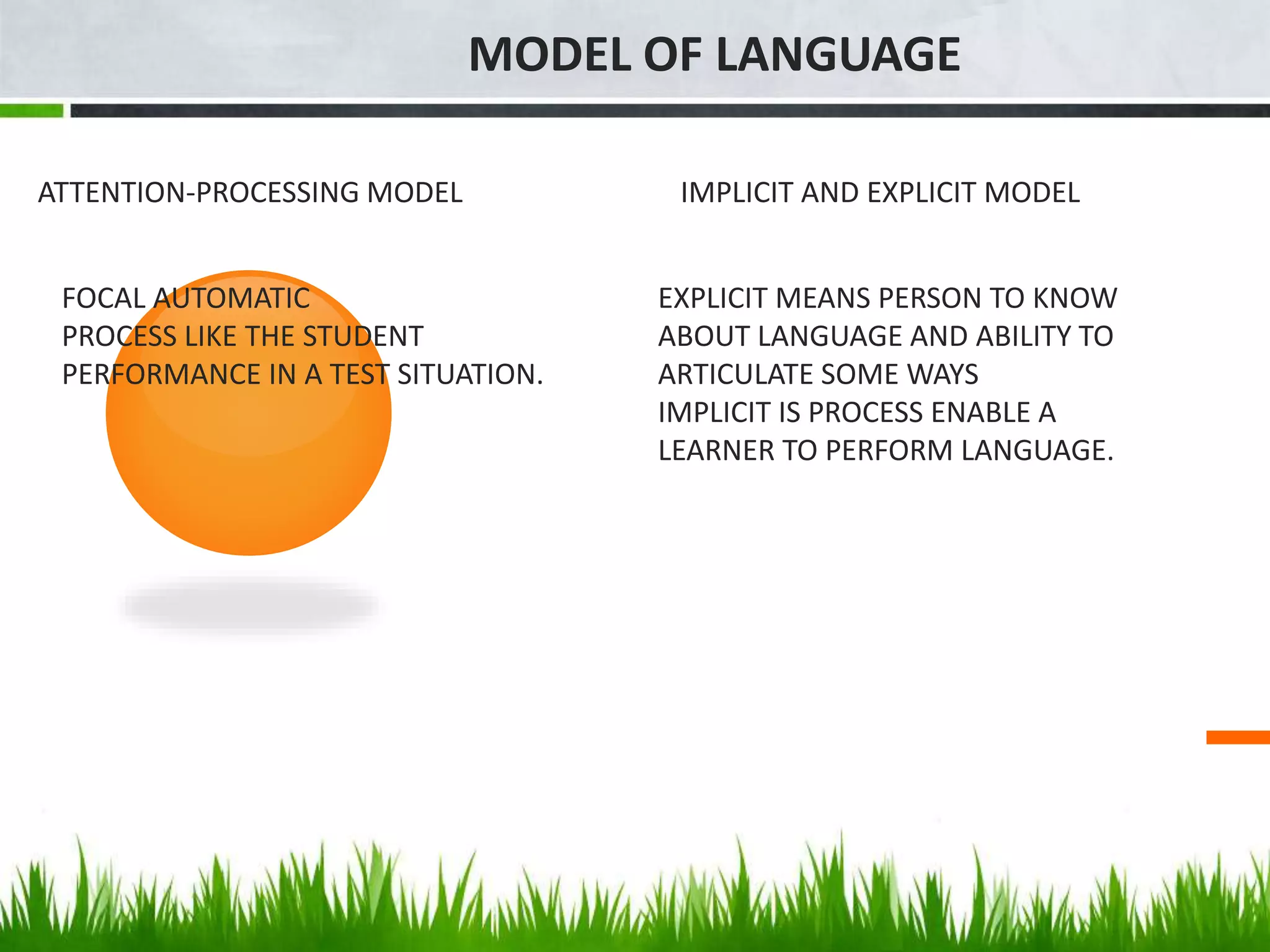
MODEL OF LANGUAGE
ATTENTION-PROCESSING MODEL
FOCAL AUTOMATIC
PROCESS LIKE THE STUDENT
PERFORMANCE IN A TEST SITUATION.
IMPLICIT AND EXPLICIT MODEL
EXPLICIT MEANS PERSON TO KNOW
ABOUT LANGUAGE AND ABILITY TO
ARTICULATE SOME WAYS
IMPLICIT IS PROCESS ENABLE A
LEARNER TO PERFORM LANGUAGE.
REFERENCES
REFERENCES
Brown, Henry D. (2002). Principles of Language Learning and Teaching. New York:
Longman.
Dulay, Heidi, Marina Burt and Stephen Krashen (1982). Language Two. New York: OUP.
Howatt, A.P.R. (1984). A History of English Language Teaching. Oxford: OUP.
Krashen, Stephen D. and Tracy D. Terrell (1983). The Natural Approach. Language
Acquisition in the Classroom. Oxford: Pergamon Press.
Lightbown, Patsy M. and Nina Spada (1995). How languages are learned. Oxford: OUP.
What’s Your Message?Thanks

Approaches to language teaching

Editor's Notes

  • #2 This presentation demonstrates the new capabilities of PowerPoint and it is best viewed in Slide Show. These slides are designed to give you great ideas for the presentations you’ll create in PowerPoint 2010! For more sample templates, click the File tab, and then on the New tab, click Sample Templates.