
Tania Gómez Posso
ESPE- LINGUISTICS
APPROACHES TO
LANGUAGE TEACHING
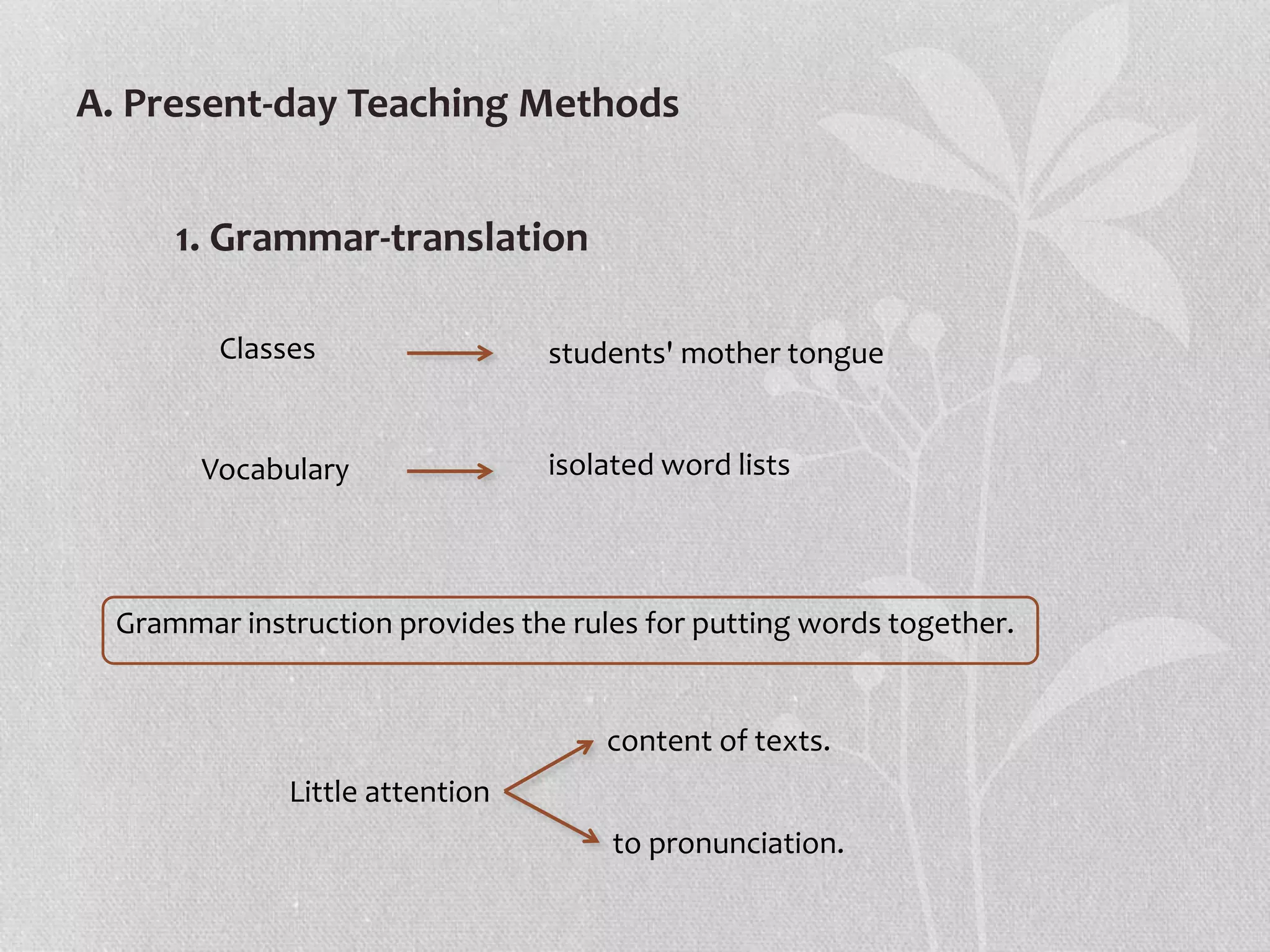
A. Present-day Teaching Methods
1. Grammar-translation
Classes students' mother tongue
Vocabulary isolated word lists
Grammar instruction provides the rules for putting words together.
Little attention
content of texts.
to pronunciation.
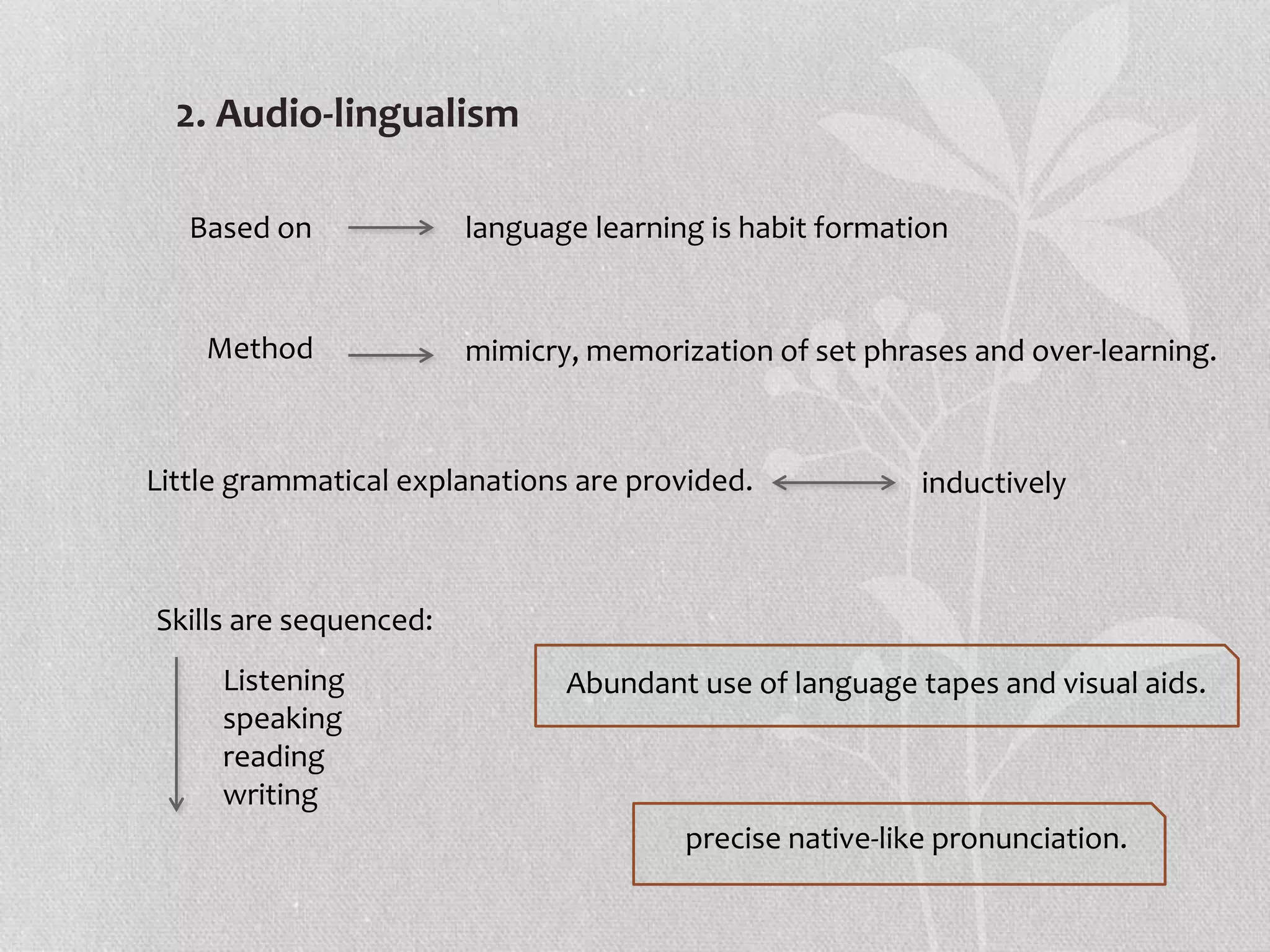
2. Audio-lingualism
Based on language learning is habit formation
Method mimicry, memorization of set phrases and over-learning.
Little grammatical explanations are provided. inductively
Skills are sequenced:
Listening
speaking
reading
writing
Abundant use of language tapes and visual aids.
precise native-like pronunciation.
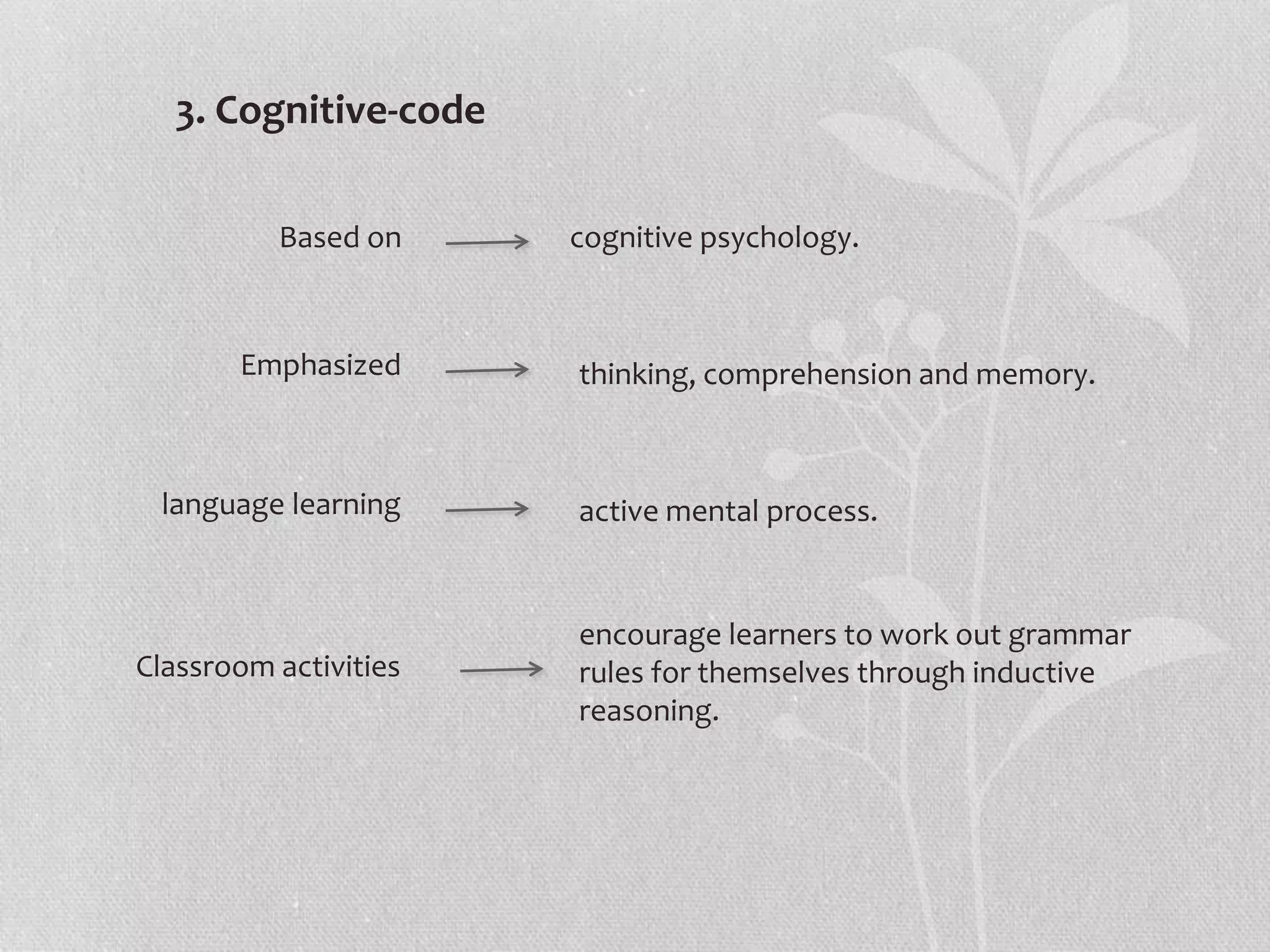
3. Cognitive-code
Emphasized thinking, comprehension and memory.
language learning active mental process.
Classroom activities
encourage learners to work out grammar
rules for themselves through inductive
reasoning.
Based on cognitive psychology.
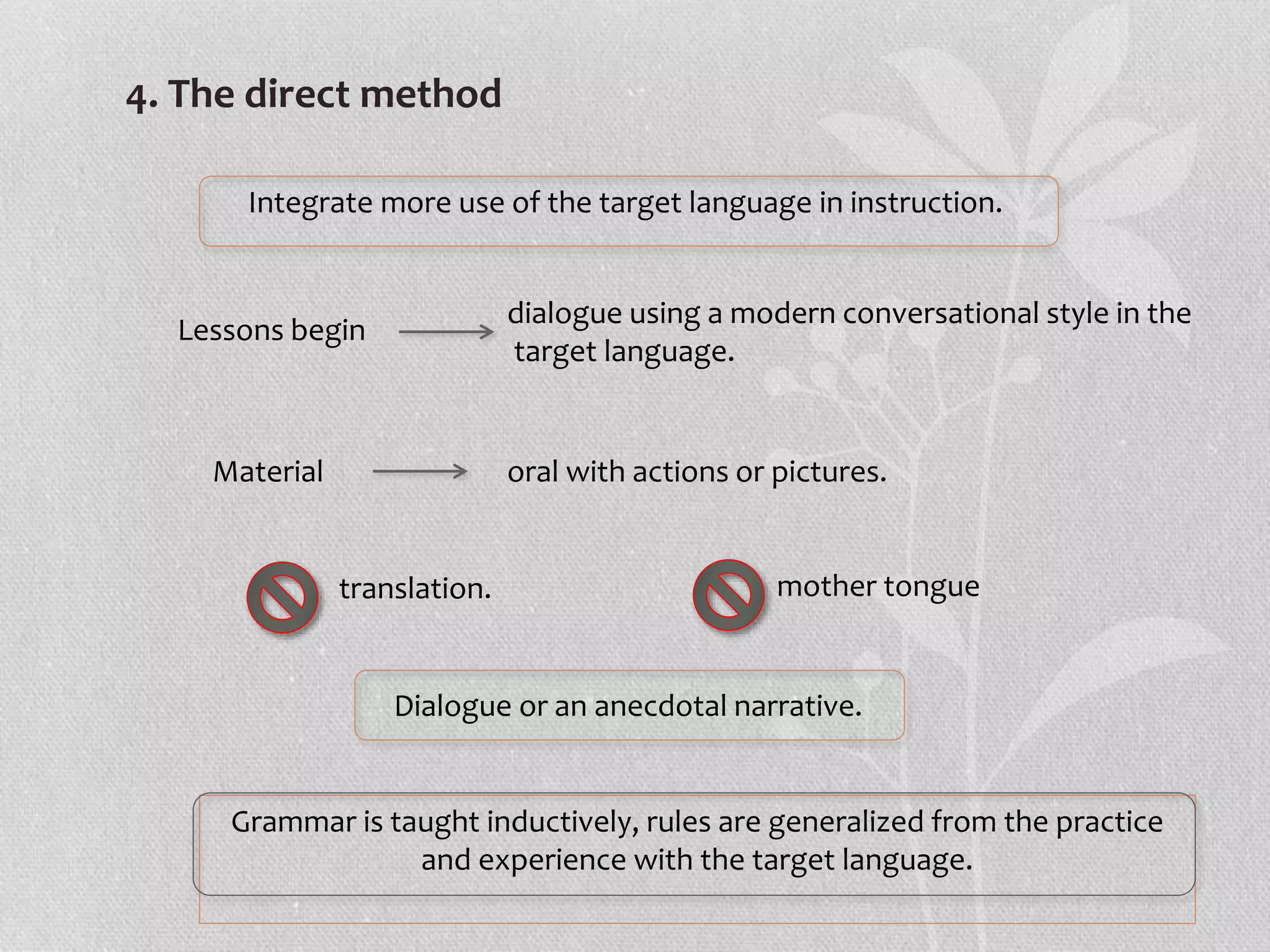
4. The direct method
Integrate more use of the target language in instruction.
Lessons begin
dialogue using a modern conversational style in the
target language.
Material oral with actions or pictures.
mother tongue
translation.
Dialogue or an anecdotal narrative.
Grammar is taught inductively, rules are generalized from the practice
and experience with the target language.
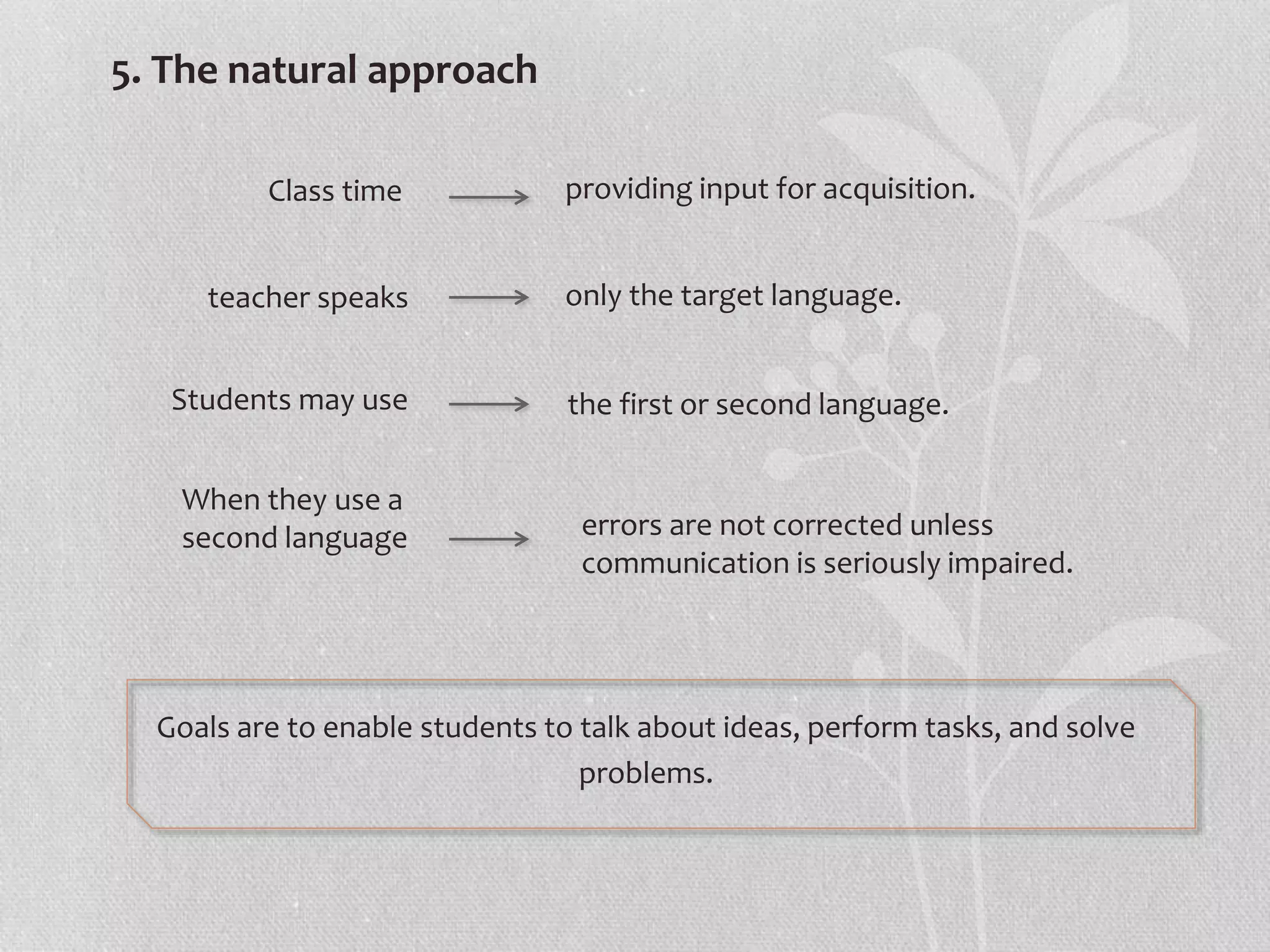
5. The natural approach
Goals are to enable students to talk about ideas, perform tasks, and solve
problems.
Class time providing input for acquisition.
teacher speaks only the target language.
Students may use the first or second language.
When they use a
second language errors are not corrected unless
communication is seriously impaired.
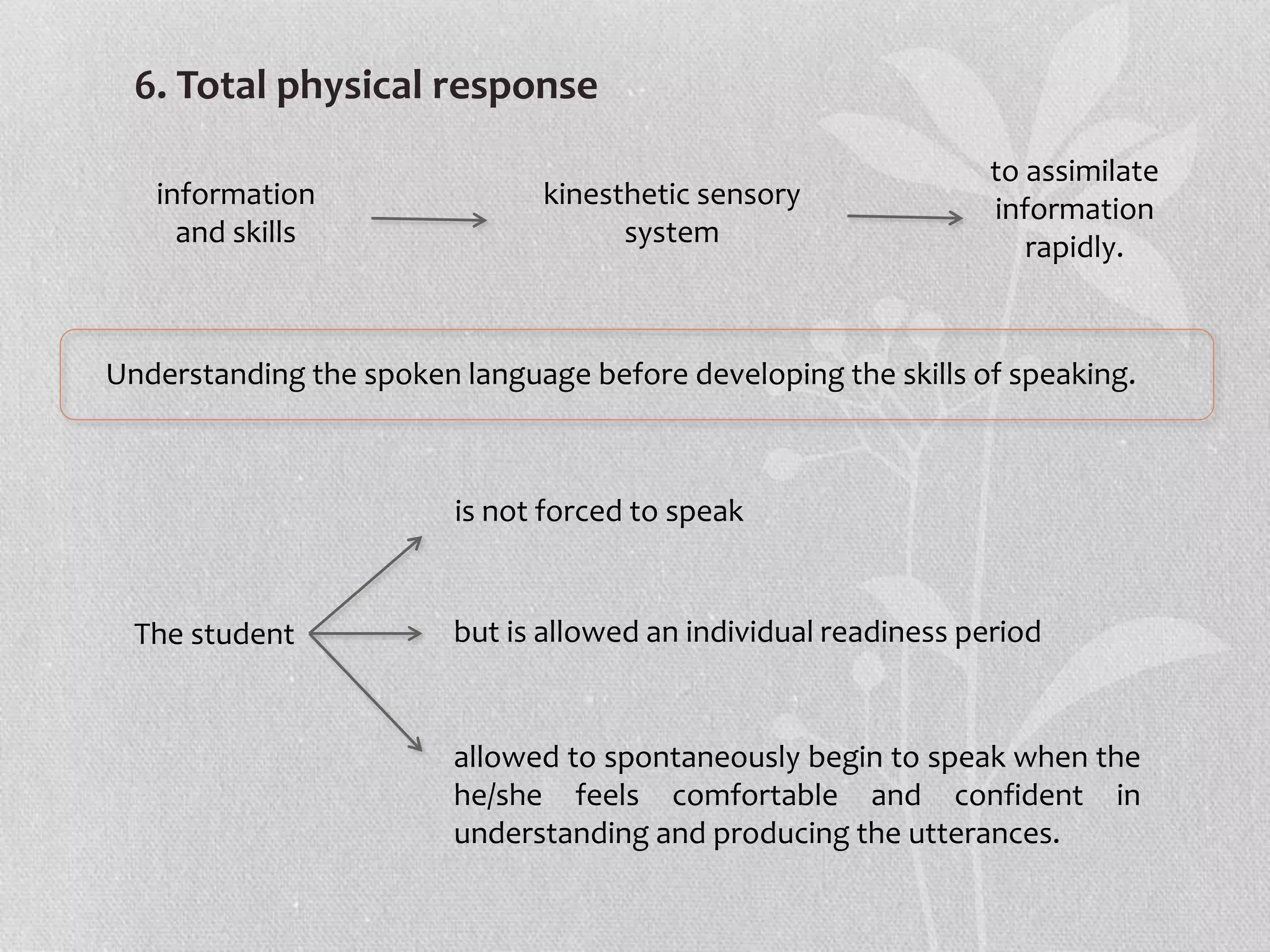
6. Total physical response
information
and skills
kinesthetic sensory
system
to assimilate
information
rapidly.
Understanding the spoken language before developing the skills of speaking.
The student
is not forced to speak
but is allowed an individual readiness period
allowed to spontaneously begin to speak when the
he/she feels comfortable and confident in
understanding and producing the utterances.
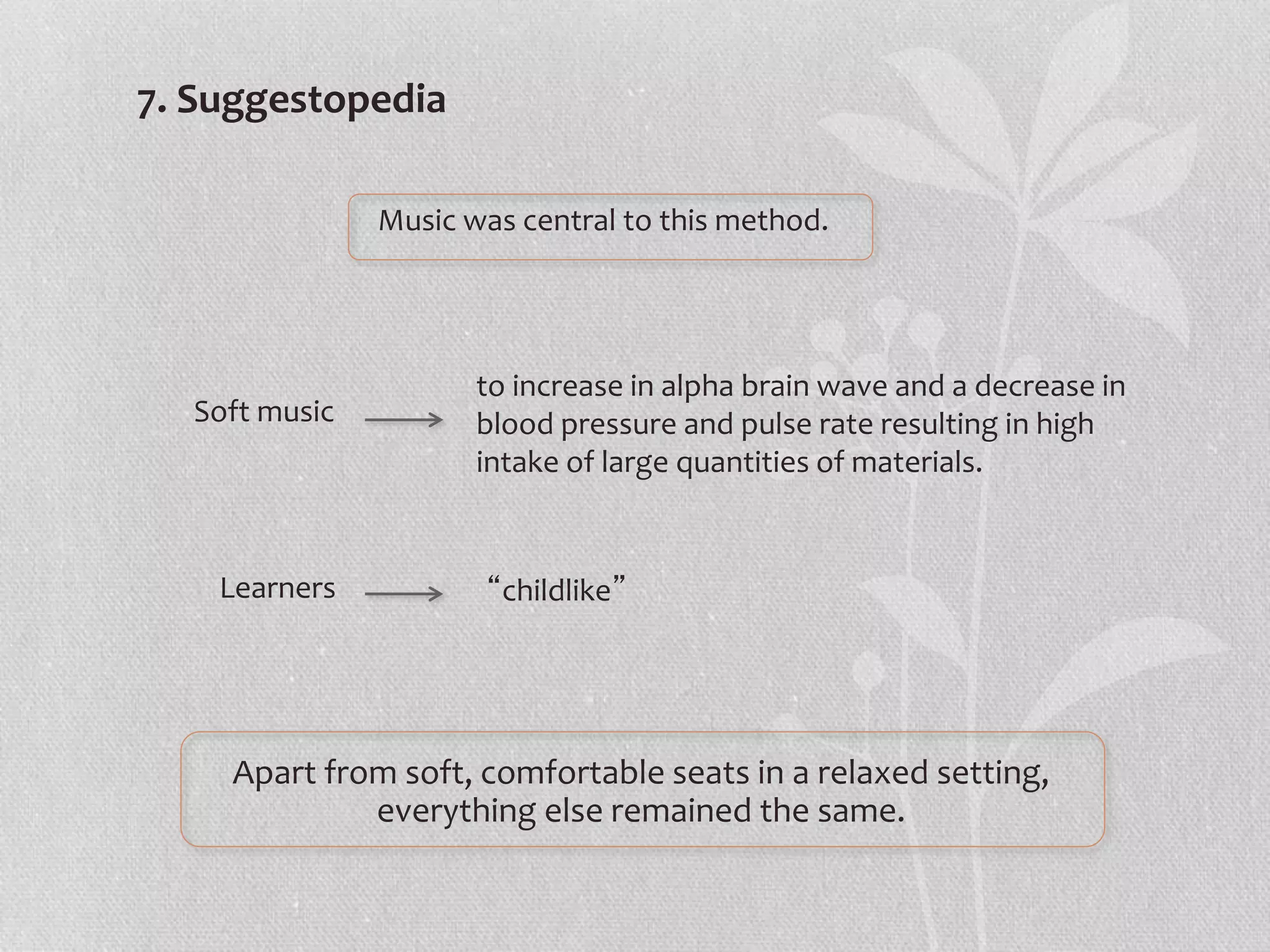
7. Suggestopedia
Apart from soft, comfortable seats in a relaxed setting,
everything else remained the same.
Music was central to this method.
Soft music
to increase in alpha brain wave and a decrease in
blood pressure and pulse rate resulting in high
intake of large quantities of materials.
Learners “childlike”
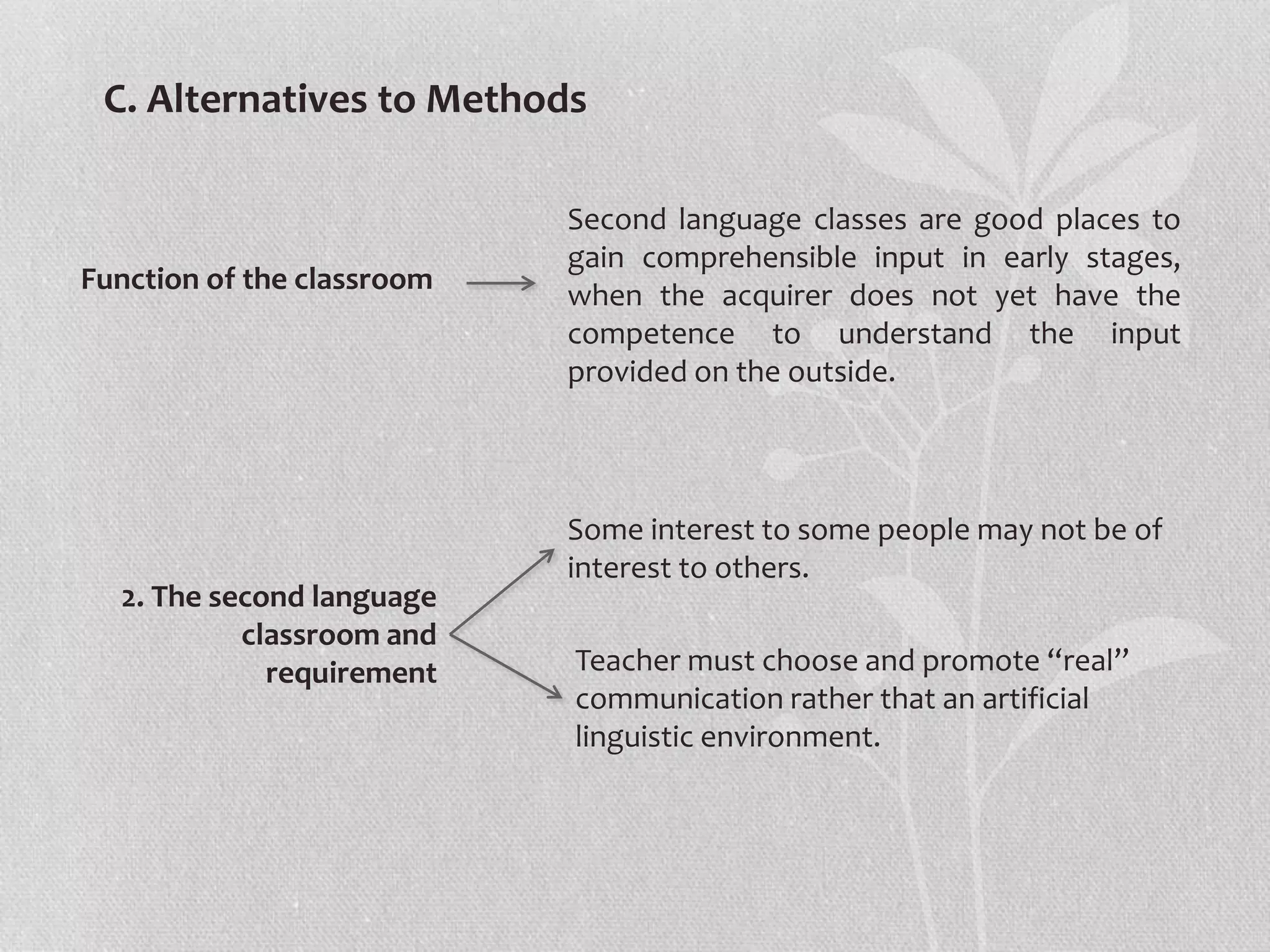
C. Alternatives to Methods
Function of the classroom
Second language classes are good places to
gain comprehensible input in early stages,
when the acquirer does not yet have the
competence to understand the input
provided on the outside.
2. The second language
classroom and
requirement
Some interest to some people may not be of
interest to others.
Teacher must choose and promote “real”
communication rather that an artificial
linguistic environment.
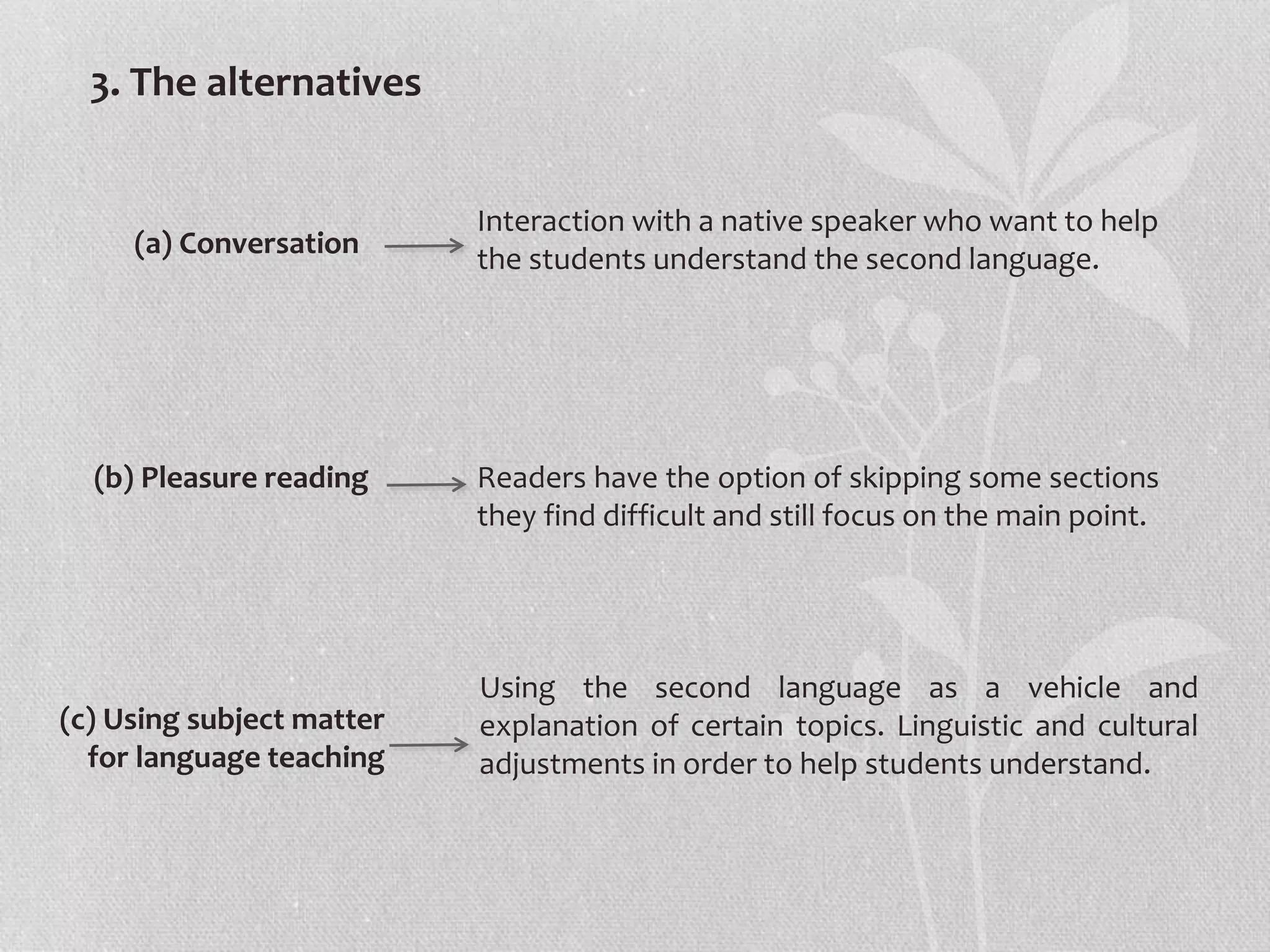
3. The alternatives
(a) Conversation
(b) Pleasure reading Readers have the option of skipping some sections
they find difficult and still focus on the main point.
(c) Using subject matter
for language teaching
Using the second language as a vehicle and
explanation of certain topics. Linguistic and cultural
adjustments in order to help students understand.
Interaction with a native speaker who want to help
the students understand the second language.
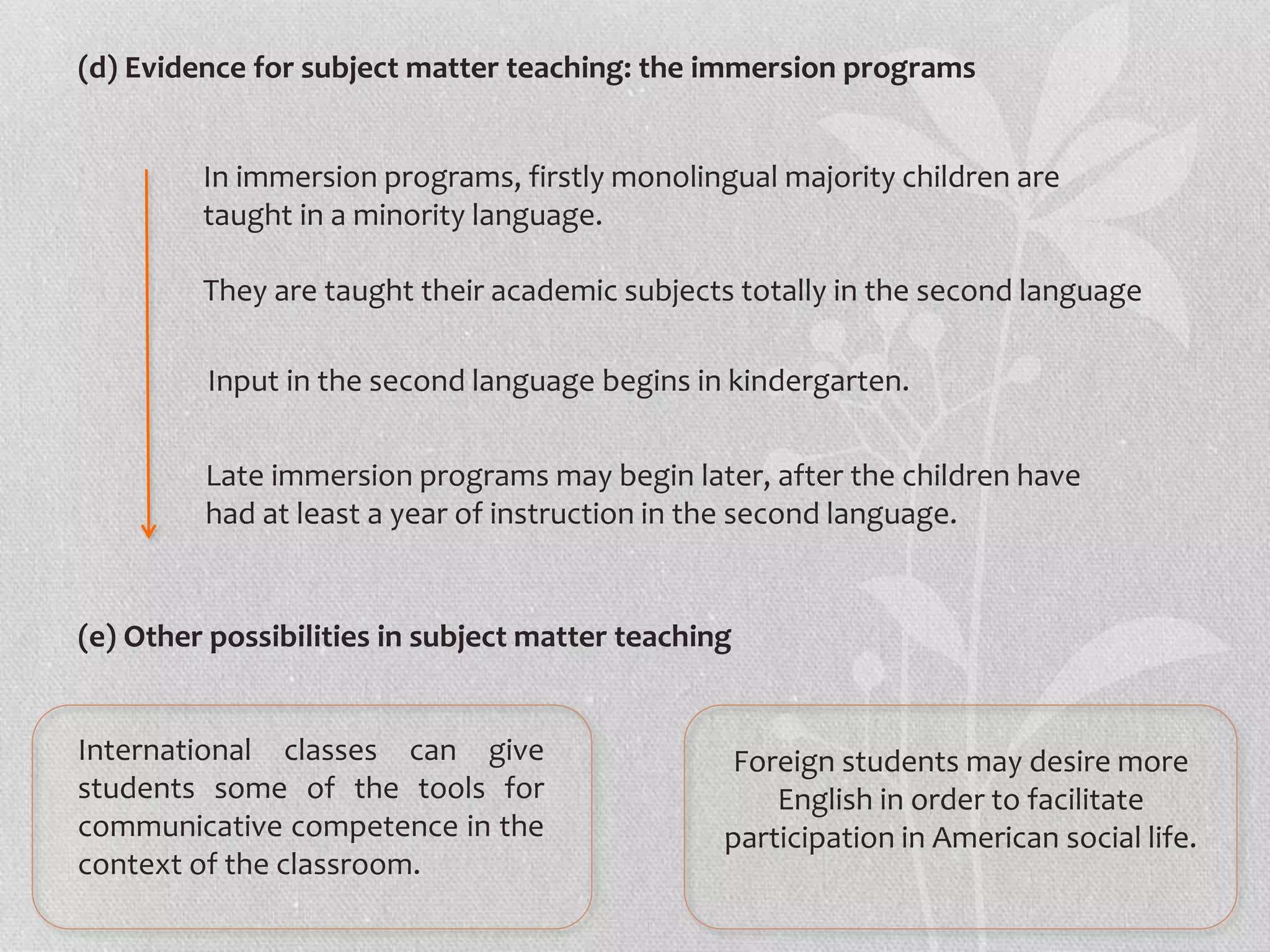
(d) Evidence for subject matter teaching: the immersion programs
(e) Other possibilities in subject matter teaching
In immersion programs, firstly monolingual majority children are
taught in a minority language.
They are taught their academic subjects totally in the second language
Input in the second language begins in kindergarten.
Late immersion programs may begin later, after the children have
had at least a year of instruction in the second language.
International classes can give
students some of the tools for
communicative competence in the
context of the classroom.
Foreign students may desire more
English in order to facilitate
participation in American social life.
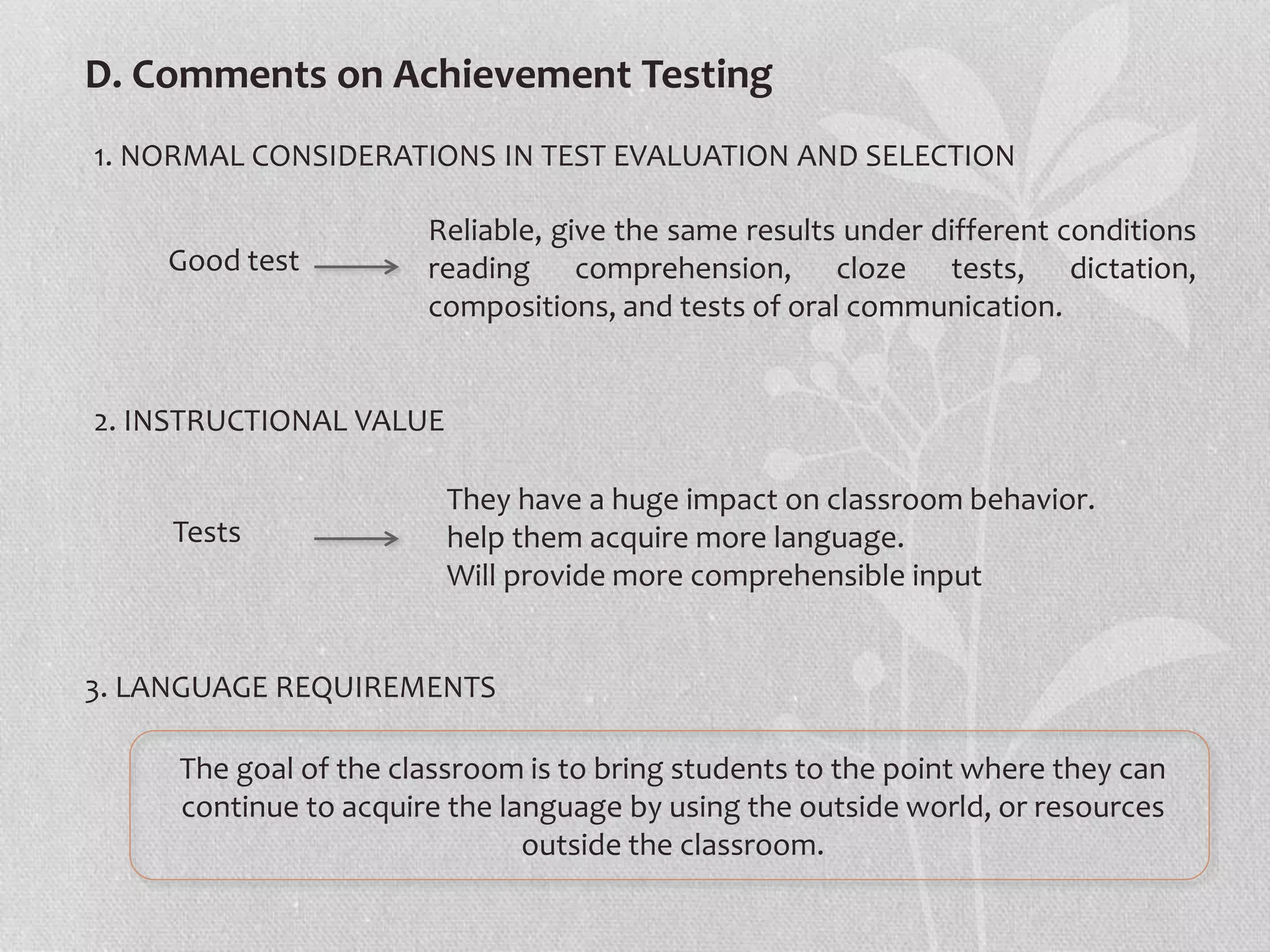
D. Comments on Achievement Testing
1. NORMAL CONSIDERATIONS IN TEST EVALUATION AND SELECTION
2. INSTRUCTIONAL VALUE
3. LANGUAGE REQUIREMENTS
The goal of the classroom is to bring students to the point where they can
continue to acquire the language by using the outside world, or resources
outside the classroom.
Good test
Reliable, give the same results under different conditions
reading comprehension, cloze tests, dictation,
compositions, and tests of oral communication.
Tests
They have a huge impact on classroom behavior.
help them acquire more language.
Will provide more comprehensible input
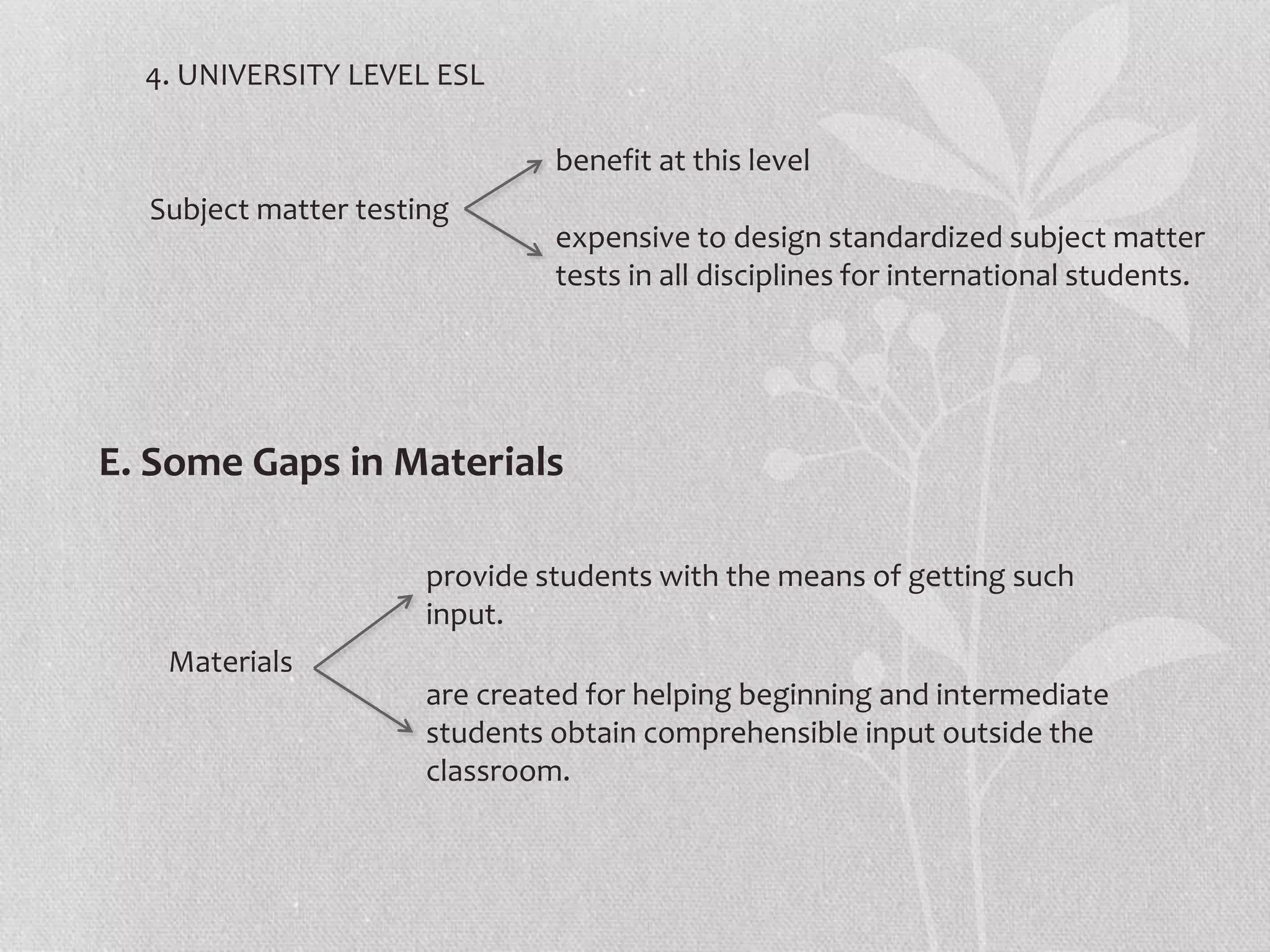
4. UNIVERSITY LEVEL ESL
E. Some Gaps in Materials
Subject matter testing
benefit at this level
expensive to design standardized subject matter
tests in all disciplines for international students.
Materials
provide students with the means of getting such
input.
are created for helping beginning and intermediate
students obtain comprehensible input outside the
classroom.
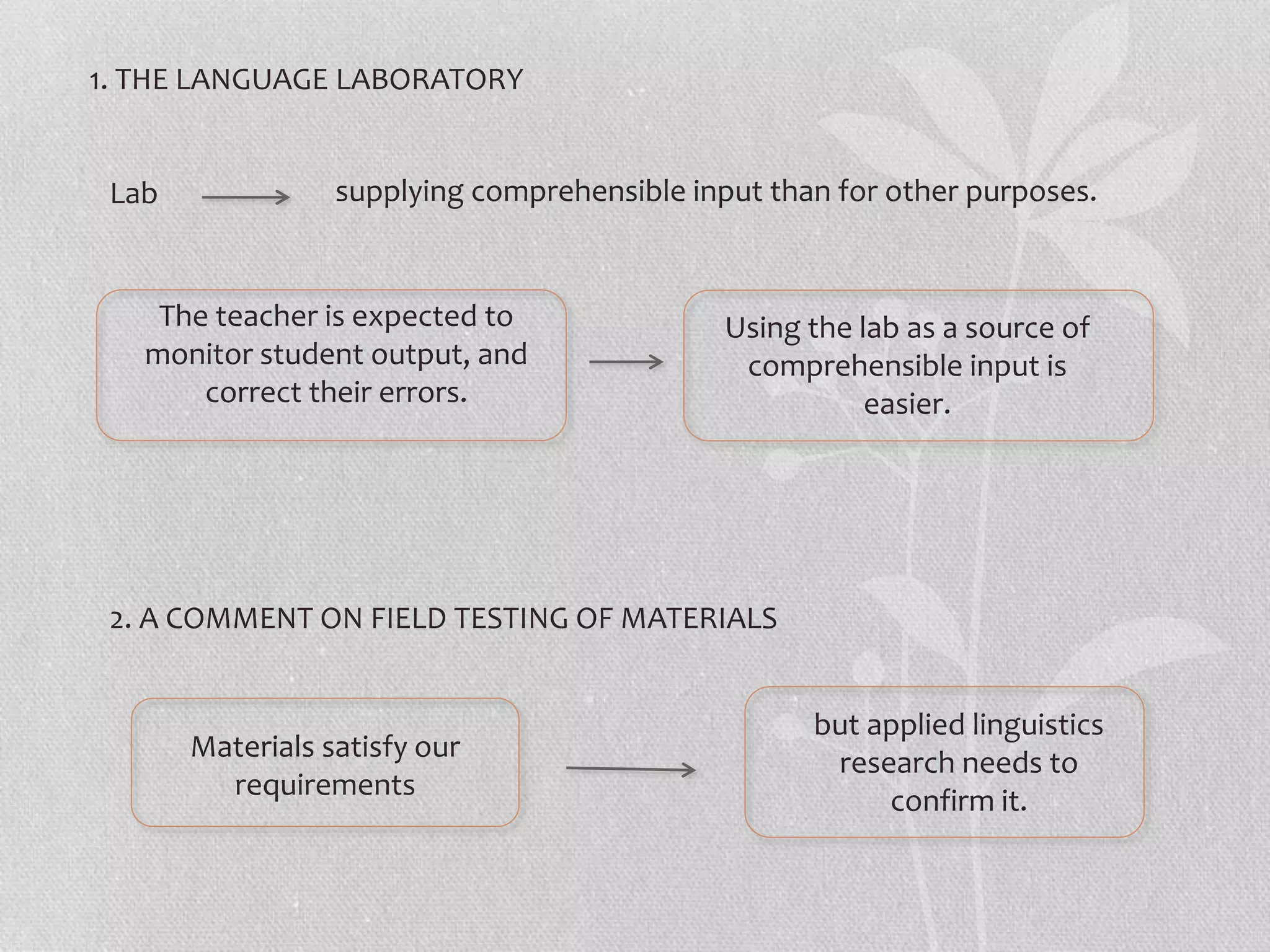
2. A COMMENT ON FIELD TESTING OF MATERIALS
1. THE LANGUAGE LABORATORY
Lab supplying comprehensible input than for other purposes.
The teacher is expected to
monitor student output, and
correct their errors.
Using the lab as a source of
comprehensible input is
easier.
Materials satisfy our
requirements
but applied linguistics
research needs to
confirm it.
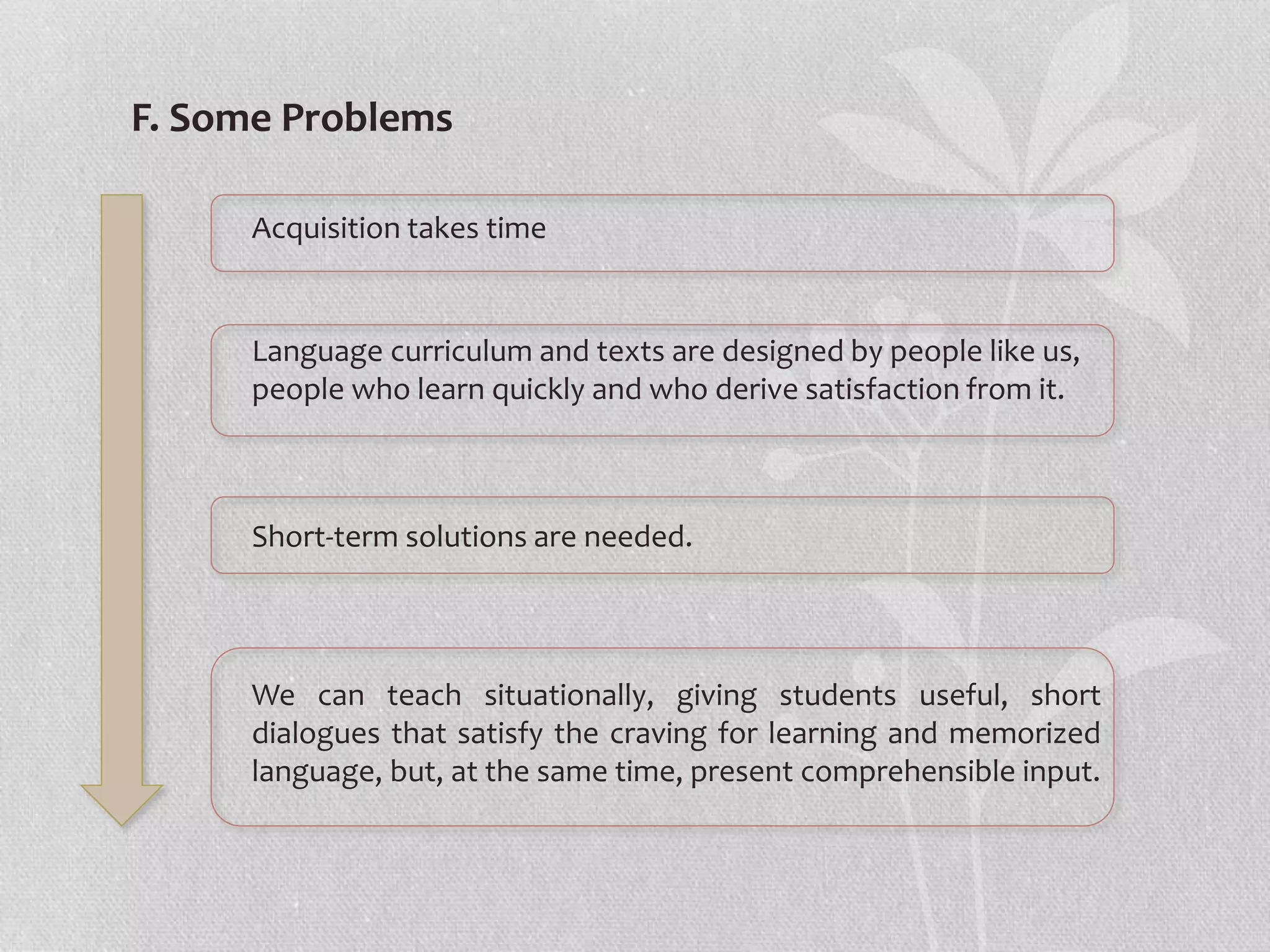
We can teach situationally, giving students useful, short
dialogues that satisfy the craving for learning and memorized
language, but, at the same time, present comprehensible input.
F. Some Problems
Acquisition takes time
Language curriculum and texts are designed by people like us,
people who learn quickly and who derive satisfaction from it.
Short-term solutions are needed.

Approaches to Language Teaching

  • 1.
    Tania Gómez Posso ESPE-LINGUISTICS APPROACHES TO LANGUAGE TEACHING
  • 2.
    A. Present-day TeachingMethods 1. Grammar-translation Classes students' mother tongue Vocabulary isolated word lists Grammar instruction provides the rules for putting words together. Little attention content of texts. to pronunciation.
  • 3.
    2. Audio-lingualism Based onlanguage learning is habit formation Method mimicry, memorization of set phrases and over-learning. Little grammatical explanations are provided. inductively Skills are sequenced: Listening speaking reading writing Abundant use of language tapes and visual aids. precise native-like pronunciation.
  • 4.
    3. Cognitive-code Emphasized thinking,comprehension and memory. language learning active mental process. Classroom activities encourage learners to work out grammar rules for themselves through inductive reasoning. Based on cognitive psychology.
  • 5.
    4. The directmethod Integrate more use of the target language in instruction. Lessons begin dialogue using a modern conversational style in the target language. Material oral with actions or pictures. mother tongue translation. Dialogue or an anecdotal narrative. Grammar is taught inductively, rules are generalized from the practice and experience with the target language.
  • 6.
    5. The naturalapproach Goals are to enable students to talk about ideas, perform tasks, and solve problems. Class time providing input for acquisition. teacher speaks only the target language. Students may use the first or second language. When they use a second language errors are not corrected unless communication is seriously impaired.
  • 7.
    6. Total physicalresponse information and skills kinesthetic sensory system to assimilate information rapidly. Understanding the spoken language before developing the skills of speaking. The student is not forced to speak but is allowed an individual readiness period allowed to spontaneously begin to speak when the he/she feels comfortable and confident in understanding and producing the utterances.
  • 8.
    7. Suggestopedia Apart fromsoft, comfortable seats in a relaxed setting, everything else remained the same. Music was central to this method. Soft music to increase in alpha brain wave and a decrease in blood pressure and pulse rate resulting in high intake of large quantities of materials. Learners “childlike”
  • 9.
    C. Alternatives toMethods Function of the classroom Second language classes are good places to gain comprehensible input in early stages, when the acquirer does not yet have the competence to understand the input provided on the outside. 2. The second language classroom and requirement Some interest to some people may not be of interest to others. Teacher must choose and promote “real” communication rather that an artificial linguistic environment.
  • 10.
    3. The alternatives (a)Conversation (b) Pleasure reading Readers have the option of skipping some sections they find difficult and still focus on the main point. (c) Using subject matter for language teaching Using the second language as a vehicle and explanation of certain topics. Linguistic and cultural adjustments in order to help students understand. Interaction with a native speaker who want to help the students understand the second language.
  • 11.
    (d) Evidence forsubject matter teaching: the immersion programs (e) Other possibilities in subject matter teaching In immersion programs, firstly monolingual majority children are taught in a minority language. They are taught their academic subjects totally in the second language Input in the second language begins in kindergarten. Late immersion programs may begin later, after the children have had at least a year of instruction in the second language. International classes can give students some of the tools for communicative competence in the context of the classroom. Foreign students may desire more English in order to facilitate participation in American social life.
  • 12.
    D. Comments onAchievement Testing 1. NORMAL CONSIDERATIONS IN TEST EVALUATION AND SELECTION 2. INSTRUCTIONAL VALUE 3. LANGUAGE REQUIREMENTS The goal of the classroom is to bring students to the point where they can continue to acquire the language by using the outside world, or resources outside the classroom. Good test Reliable, give the same results under different conditions reading comprehension, cloze tests, dictation, compositions, and tests of oral communication. Tests They have a huge impact on classroom behavior. help them acquire more language. Will provide more comprehensible input
  • 13.
    4. UNIVERSITY LEVELESL E. Some Gaps in Materials Subject matter testing benefit at this level expensive to design standardized subject matter tests in all disciplines for international students. Materials provide students with the means of getting such input. are created for helping beginning and intermediate students obtain comprehensible input outside the classroom.
  • 14.
    2. A COMMENTON FIELD TESTING OF MATERIALS 1. THE LANGUAGE LABORATORY Lab supplying comprehensible input than for other purposes. The teacher is expected to monitor student output, and correct their errors. Using the lab as a source of comprehensible input is easier. Materials satisfy our requirements but applied linguistics research needs to confirm it.
  • 15.
    We can teachsituationally, giving students useful, short dialogues that satisfy the craving for learning and memorized language, but, at the same time, present comprehensible input. F. Some Problems Acquisition takes time Language curriculum and texts are designed by people like us, people who learn quickly and who derive satisfaction from it. Short-term solutions are needed.