Module 3- Session 5
Methods of Collecting Data
by
BILAL SULTAN
Ph.D. Research Scholar
School of Computer Science
MGU,KERALA
11/11/2020 1SOCS, MGU, Kerala
What is data collection?
Data collection is a systematic method of
collecting and measuring data gathered from
different sources of information in order to
provide answers to relevant questions.
Methods of data collection
The system of data collection is based on the
type of study being conducted. Depending on
the researcher’s research plan and design,
there are several ways data can be collected
11/11/2020 2SOCS, MGU, Kerala
Types of Data Collection
1. Primary Data
-Data that has been collected from first-hand experience is
known as primary data.
-Primary data has not been published yet and is more reliable,
authentic and objective.
-Primary data has not been changed or altered by human
beings, therefore its validity is greater than secondary data.
11/11/2020 3SOCS, MGU, Kerala
Factor effect method of Data collection
1.Type of research subject: Quantitative ,
Qualitative Descriptive , Applied research.
2. Purpose of research study : The research purpose
is a statement of "why" the study is being conducted
3. Size of study sample
4. Distribution of target population: it target population
is the group of individuals that the intervention intends to
conduct research in and draw conclusions from.
5. Time frame of the study
11/11/2020 4SOCS, MGU, Kerala
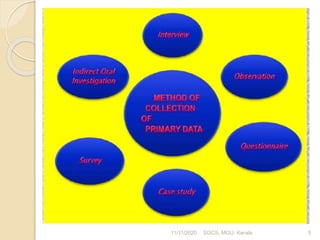
11/11/2020 5SOCS, MGU, Kerala
1. Observation Methods-:
is a methodical way of recognising & noting a fact of
occurrence.
 Types of Observation
Structured: When the observation is characterized
by a careful definition of the units to be observed, the
style of recording the observed information,
standardized conditions of observation and the
selection of related data of observation.
Unstructured : When it takes place without the
above characteristics.
Participative: When the observer is member of the
group which he is observing then it is Participant
Observation.
Non –Participative : When observer is observing
people without giving any information to them then it is
Non-Paricipant Observation.
11/11/2020 6SOCS, MGU, Kerala
Uncontrolled Observation:
When the observation takes place in
natural condition .
Controlled Observation
When observation takes place
according to pre arranged plans, with
experimental procedure then it is
controlled observation
generally done in laboratory under
controlled condition.
11/11/2020 7SOCS, MGU, Kerala
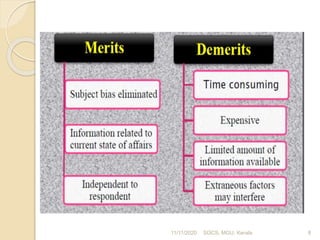
11/11/2020 8SOCS, MGU, Kerala
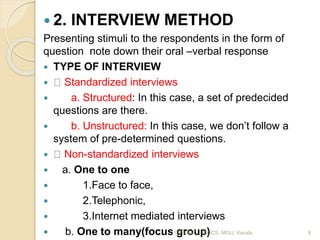
 2. INTERVIEW METHOD
Presenting stimuli to the respondents in the form of
question note down their oral –verbal response
 TYPE OF INTERVIEW
 Standardized interviews
 a. Structured: In this case, a set of predecided
questions are there.
 b. Unstructured: In this case, we don’t follow a
system of pre-determined questions.
 Non-standardized interviews
 a. One to one
 1.Face to face,
 2.Telephonic,
 3.Internet mediated interviews
 b. One to many(focus group)11/11/2020 9SOCS, MGU, Kerala
11/11/2020 10SOCS, MGU, Kerala
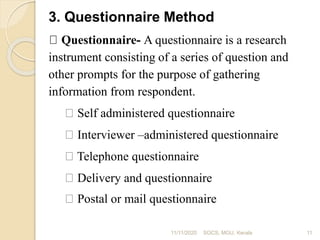
3. Questionnaire Method
Questionnaire- A questionnaire is a research
instrument consisting of a series of question and
other prompts for the purpose of gathering
information from respondent.
Self administered questionnaire
Interviewer –administered questionnaire
Telephone questionnaire
Delivery and questionnaire
Postal or mail questionnaire
11/11/2020 11SOCS, MGU, Kerala
11/11/2020 12SOCS, MGU, Kerala
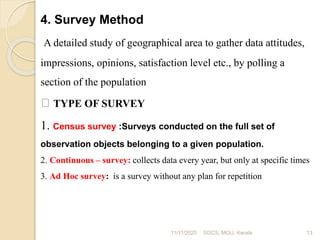
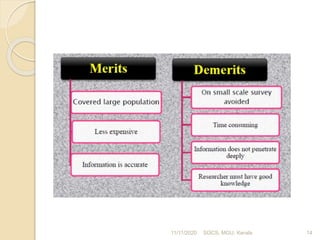
4. Survey Method
A detailed study of geographical area to gather data attitudes,
impressions, opinions, satisfaction level etc., by polling a
section of the population
TYPE OF SURVEY
1. Census survey :Surveys conducted on the full set of
observation objects belonging to a given population.
2. Continuous – survey: collects data every year, but only at specific times
3. Ad Hoc survey: is a survey without any plan for repetition
11/11/2020 13SOCS, MGU, Kerala
11/11/2020 14SOCS, MGU, Kerala
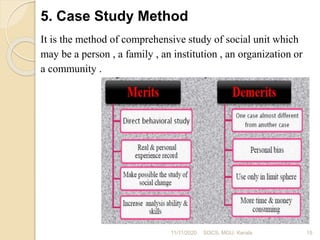
5. Case Study Method
It is the method of comprehensive study of social unit which
may be a person , a family , an institution , an organization or
a community .
11/11/2020 15SOCS, MGU, Kerala
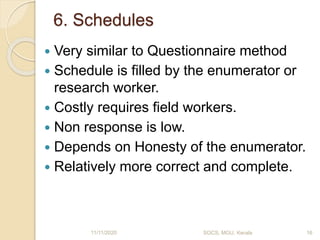
6. Schedules
 Very similar to Questionnaire method
 Schedule is filled by the enumerator or
research worker.
 Costly requires field workers.
 Non response is low.
 Depends on Honesty of the enumerator.
 Relatively more correct and complete.
11/11/2020 SOCS, MGU, Kerala 16
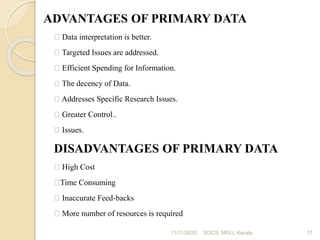
ADVANTAGES OF PRIMARY DATA
Data interpretation is better.
Targeted Issues are addressed.
Efficient Spending for Information.
The decency of Data.
Addresses Specific Research Issues.
Greater Control..
Issues.
DISADVANTAGES OF PRIMARY DATA
High Cost
Time Consuming
Inaccurate Feed-backs
More number of resources is required
11/11/2020 17SOCS, MGU, Kerala
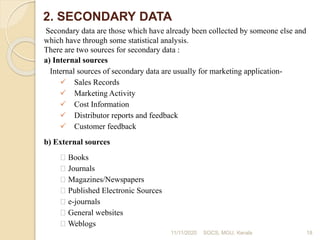
2. SECONDARY DATA
Secondary data are those which have already been collected by someone else and
which have through some statistical analysis.
There are two sources for secondary data :
a) Internal sources
Internal sources of secondary data are usually for marketing application-
Sales Records
Marketing Activity
Cost Information
Distributor reports and feedback
Customer feedback
b) External sources
Books
Journals
Magazines/Newspapers
Published Electronic Sources
e-journals
General websites
Weblogs
11/11/2020 18SOCS, MGU, Kerala
11/11/2020 19
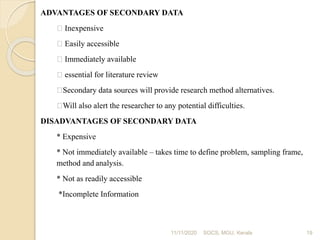
ADVANTAGES OF SECONDARY DATA
Inexpensive
Easily accessible
Immediately available
essential for literature review
Secondary data sources will provide research method alternatives.
Will also alert the researcher to any potential difficulties.
DISADVANTAGES OF SECONDARY DATA
* Expensive
* Not immediately available – takes time to define problem, sampling frame,
method and analysis.
* Not as readily accessible
*Incomplete Information
SOCS, MGU, Kerala
11/11/2020 20SOCS, MGU, Kerala
References
 C R Kothari, Gaurav Garg, Research Methodology
Methods and Techniques, Third Edition, Age
International(P) Limited,2014
 Contents of the presentation are also taken from
different websites from the Internet.
11/11/2020 21SOCS, MGU, Kerala
Thank You
11/11/2020 22SOCS, MGU, Kerala

methods of collecting data

  • 1.
    Module 3- Session5 Methods of Collecting Data by BILAL SULTAN Ph.D. Research Scholar School of Computer Science MGU,KERALA 11/11/2020 1SOCS, MGU, Kerala
  • 2.
    What is datacollection? Data collection is a systematic method of collecting and measuring data gathered from different sources of information in order to provide answers to relevant questions. Methods of data collection The system of data collection is based on the type of study being conducted. Depending on the researcher’s research plan and design, there are several ways data can be collected 11/11/2020 2SOCS, MGU, Kerala
  • 3.
    Types of DataCollection 1. Primary Data -Data that has been collected from first-hand experience is known as primary data. -Primary data has not been published yet and is more reliable, authentic and objective. -Primary data has not been changed or altered by human beings, therefore its validity is greater than secondary data. 11/11/2020 3SOCS, MGU, Kerala
  • 4.
    Factor effect methodof Data collection 1.Type of research subject: Quantitative , Qualitative Descriptive , Applied research. 2. Purpose of research study : The research purpose is a statement of "why" the study is being conducted 3. Size of study sample 4. Distribution of target population: it target population is the group of individuals that the intervention intends to conduct research in and draw conclusions from. 5. Time frame of the study 11/11/2020 4SOCS, MGU, Kerala
  • 5.
  • 6.
    1. Observation Methods-: isa methodical way of recognising & noting a fact of occurrence.  Types of Observation Structured: When the observation is characterized by a careful definition of the units to be observed, the style of recording the observed information, standardized conditions of observation and the selection of related data of observation. Unstructured : When it takes place without the above characteristics. Participative: When the observer is member of the group which he is observing then it is Participant Observation. Non –Participative : When observer is observing people without giving any information to them then it is Non-Paricipant Observation. 11/11/2020 6SOCS, MGU, Kerala
  • 7.
    Uncontrolled Observation: When theobservation takes place in natural condition . Controlled Observation When observation takes place according to pre arranged plans, with experimental procedure then it is controlled observation generally done in laboratory under controlled condition. 11/11/2020 7SOCS, MGU, Kerala
  • 8.
  • 9.
     2. INTERVIEWMETHOD Presenting stimuli to the respondents in the form of question note down their oral –verbal response  TYPE OF INTERVIEW  Standardized interviews  a. Structured: In this case, a set of predecided questions are there.  b. Unstructured: In this case, we don’t follow a system of pre-determined questions.  Non-standardized interviews  a. One to one  1.Face to face,  2.Telephonic,  3.Internet mediated interviews  b. One to many(focus group)11/11/2020 9SOCS, MGU, Kerala
  • 10.
  • 11.
    3. Questionnaire Method Questionnaire-A questionnaire is a research instrument consisting of a series of question and other prompts for the purpose of gathering information from respondent. Self administered questionnaire Interviewer –administered questionnaire Telephone questionnaire Delivery and questionnaire Postal or mail questionnaire 11/11/2020 11SOCS, MGU, Kerala
  • 12.
  • 13.
    4. Survey Method Adetailed study of geographical area to gather data attitudes, impressions, opinions, satisfaction level etc., by polling a section of the population TYPE OF SURVEY 1. Census survey :Surveys conducted on the full set of observation objects belonging to a given population. 2. Continuous – survey: collects data every year, but only at specific times 3. Ad Hoc survey: is a survey without any plan for repetition 11/11/2020 13SOCS, MGU, Kerala
  • 14.
  • 15.
    5. Case StudyMethod It is the method of comprehensive study of social unit which may be a person , a family , an institution , an organization or a community . 11/11/2020 15SOCS, MGU, Kerala
  • 16.
    6. Schedules  Verysimilar to Questionnaire method  Schedule is filled by the enumerator or research worker.  Costly requires field workers.  Non response is low.  Depends on Honesty of the enumerator.  Relatively more correct and complete. 11/11/2020 SOCS, MGU, Kerala 16
  • 17.
    ADVANTAGES OF PRIMARYDATA Data interpretation is better. Targeted Issues are addressed. Efficient Spending for Information. The decency of Data. Addresses Specific Research Issues. Greater Control.. Issues. DISADVANTAGES OF PRIMARY DATA High Cost Time Consuming Inaccurate Feed-backs More number of resources is required 11/11/2020 17SOCS, MGU, Kerala
  • 18.
    2. SECONDARY DATA Secondarydata are those which have already been collected by someone else and which have through some statistical analysis. There are two sources for secondary data : a) Internal sources Internal sources of secondary data are usually for marketing application- Sales Records Marketing Activity Cost Information Distributor reports and feedback Customer feedback b) External sources Books Journals Magazines/Newspapers Published Electronic Sources e-journals General websites Weblogs 11/11/2020 18SOCS, MGU, Kerala
  • 19.
    11/11/2020 19 ADVANTAGES OFSECONDARY DATA Inexpensive Easily accessible Immediately available essential for literature review Secondary data sources will provide research method alternatives. Will also alert the researcher to any potential difficulties. DISADVANTAGES OF SECONDARY DATA * Expensive * Not immediately available – takes time to define problem, sampling frame, method and analysis. * Not as readily accessible *Incomplete Information SOCS, MGU, Kerala
  • 20.
  • 21.
    References  C RKothari, Gaurav Garg, Research Methodology Methods and Techniques, Third Edition, Age International(P) Limited,2014  Contents of the presentation are also taken from different websites from the Internet. 11/11/2020 21SOCS, MGU, Kerala
  • 22.