METAMOPH
IC
ROCKS
By: Group 3
What is Metamorphic rock?
Metamorphic rocks started out as
some other type of rock, but have been
substantially changed from their original
igneous, sedimentary, or earlier
metamorphic form.
What is Metamorphic rock?
Metamorphic rocks form when
rocks are subjected to high heat, high
pressure, hot mineral-rich fluids or,
more commonly, some combination of
these factors.
Metamorphism is the change in the
mineral’s composition and texture of the
rock when subjected to high temperature
and pressure within the earth; there is
transformation of pre-existing rocks. The
degree of metamorphism is shown in
the rocks texture and mineralogy.
Types of
Metamorphism
1.Low-grade ( slight
changes) e.g., shale
becomes slate.
2.High-grade( substantial
changes) causes the
original features to
obliterated.
Metamorphic settings
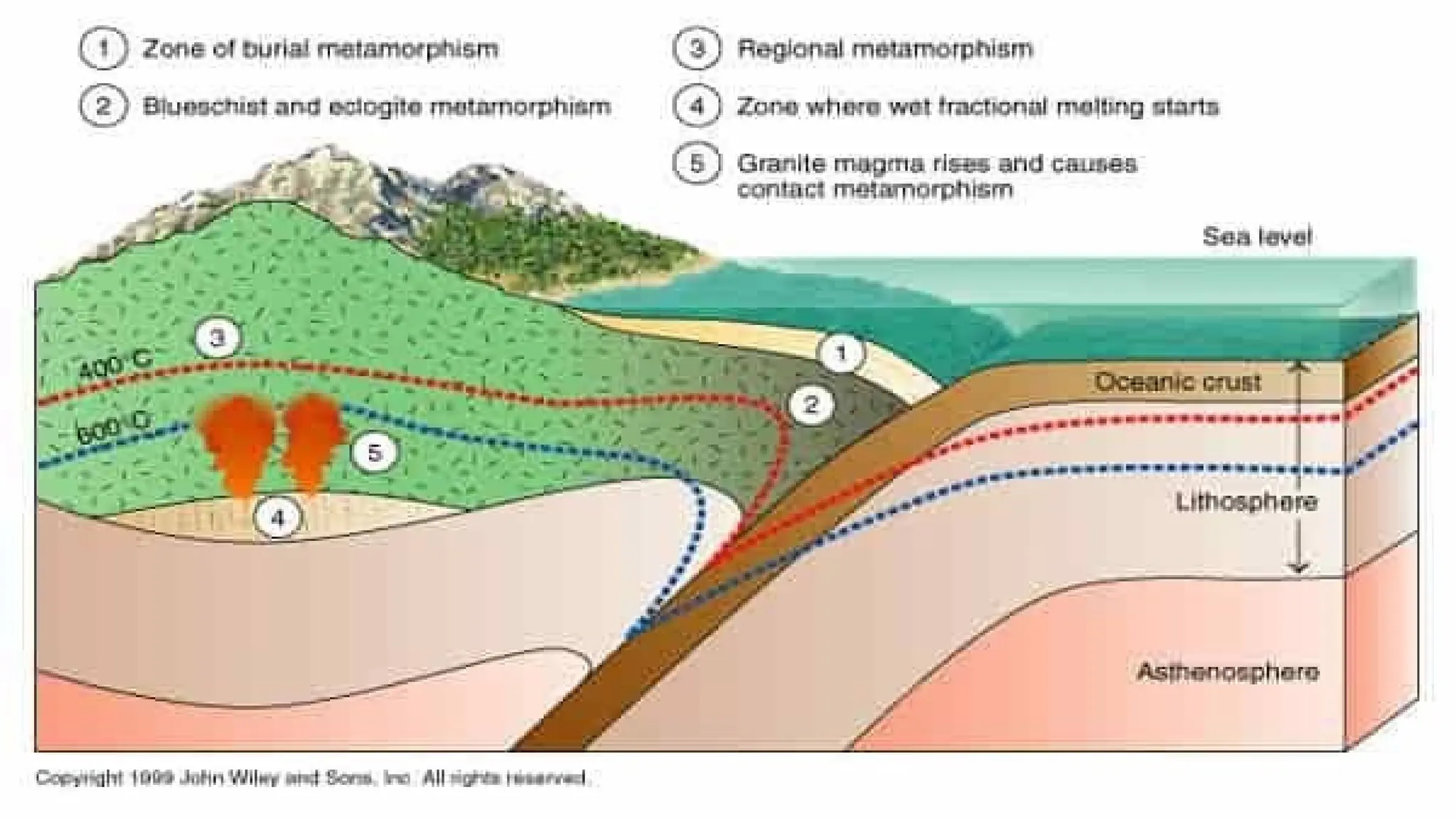
1. Contact or thermal metamorphism takes
place when the rock is intruded by magma.
Here, change is driven by the rise in
temperature within the host rock surrounding a
molten igneous body.
Metamorphic settings
2. Regional metamorphism occurs when a
large area is affected due to large-scale heat
and pressure such as mountain building. When
this happens, metamorphism produces a great
volume of metamorphic rocks.
Agents of
Metamorphism
They are three (3) agents of
metamorphism, these are: (1) heat, (2)
pressure or stress due to confining pressure
and differential stress during mountain
building, and (3) chemically active fluids
(mainly water and other volatiles) which
promote recrystallization by enhancing ion
migration.
Metamorphic textures
When rocks are subjected to low-grade
metamorphism, they become more compact
and thus denser. A common example is the
metamorphic slate. Here some types of
metamorphic textures:
1. Foliated texture results in the
mineral alignment perpendicular to
the compressional force and usually
gives the rock a layered or banded
appearance.
Common foliated metamorphic rock:
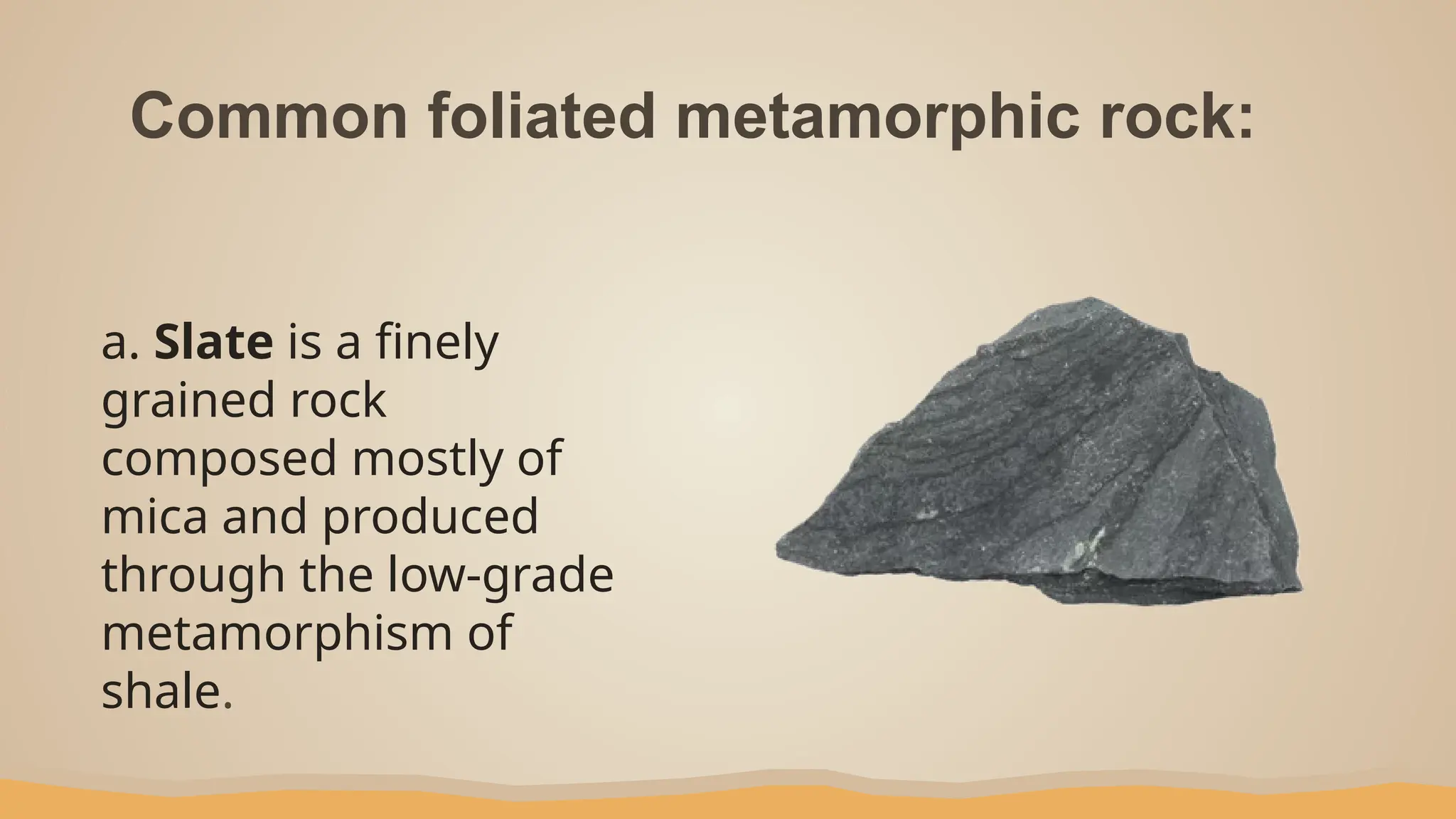
a. Slate is a finely
grained rock
composed mostly of
mica and produced
through the low-grade
metamorphism of
shale.
Common foliated metamorphic rock:
b. Schist (pronounce "shists")
is a strongly foliated rock and
described as platy meaning,
the rock's crystals are thin and
leaf-like". Its types are based
on composition.
Common foliated metamorphic rock:
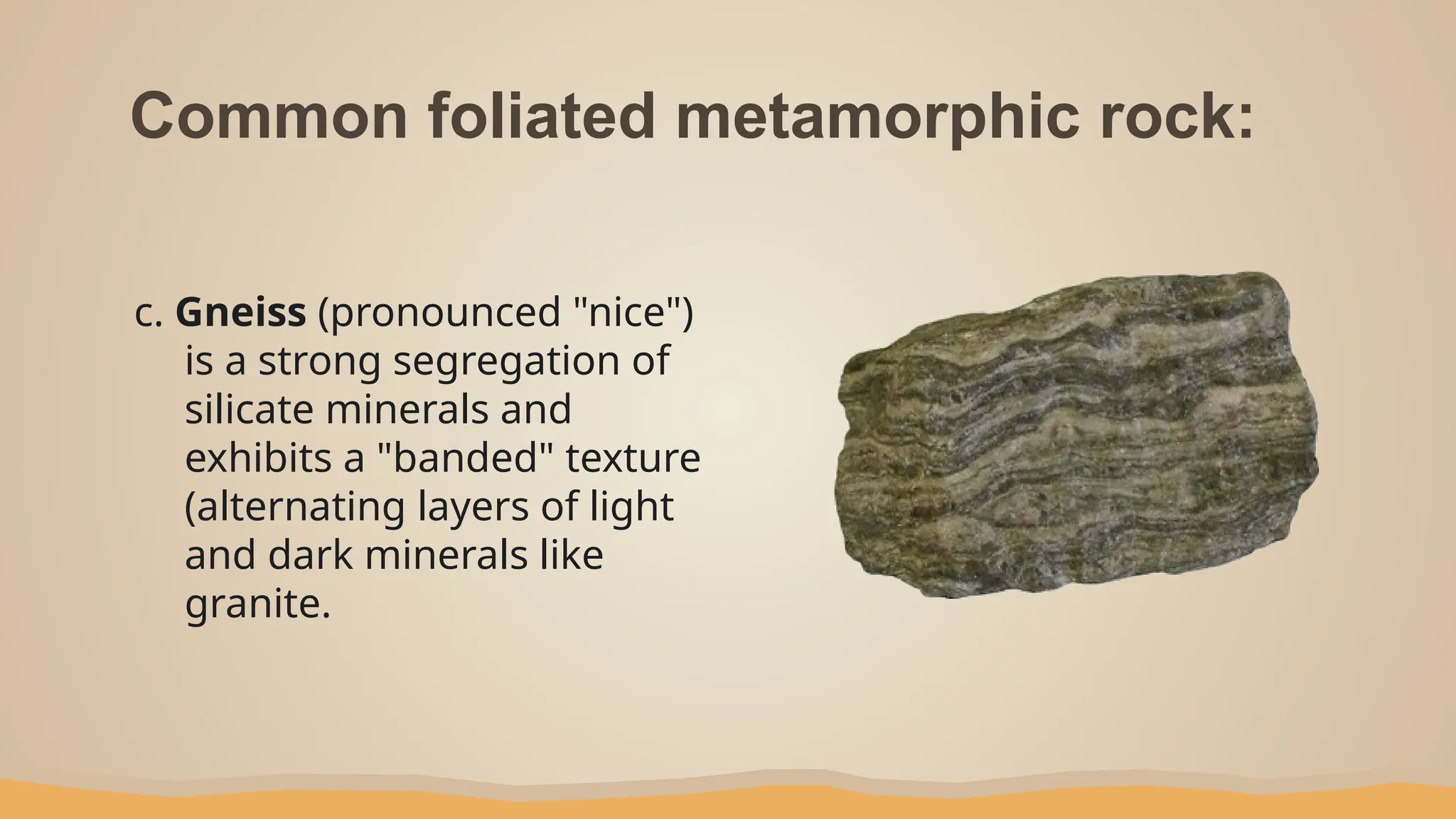
c. Gneiss (pronounced "nice")
is a strong segregation of
silicate minerals and
exhibits a "banded" texture
(alternating layers of light
and dark minerals like
granite.
2. Non-foliated texture contains
equidimensional crystals and
resembles a coarse-grained igneous
rock. Examples of non-foliated rocks
are the following:
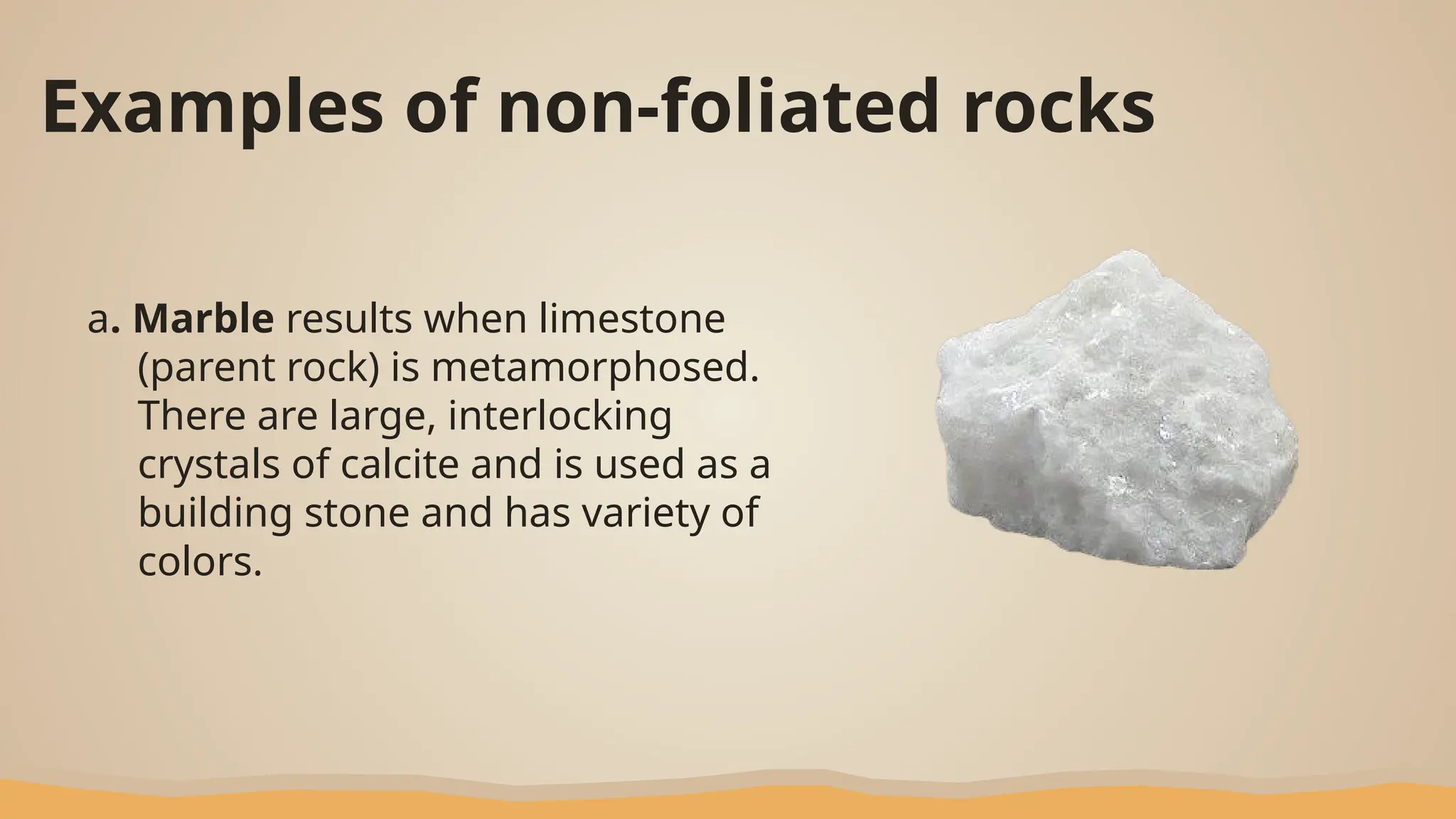
a. Marble results when limestone
(parent rock) is metamorphosed.
There are large, interlocking
crystals of calcite and is used as a
building stone and has variety of
colors.
Examples of non-foliated rocks
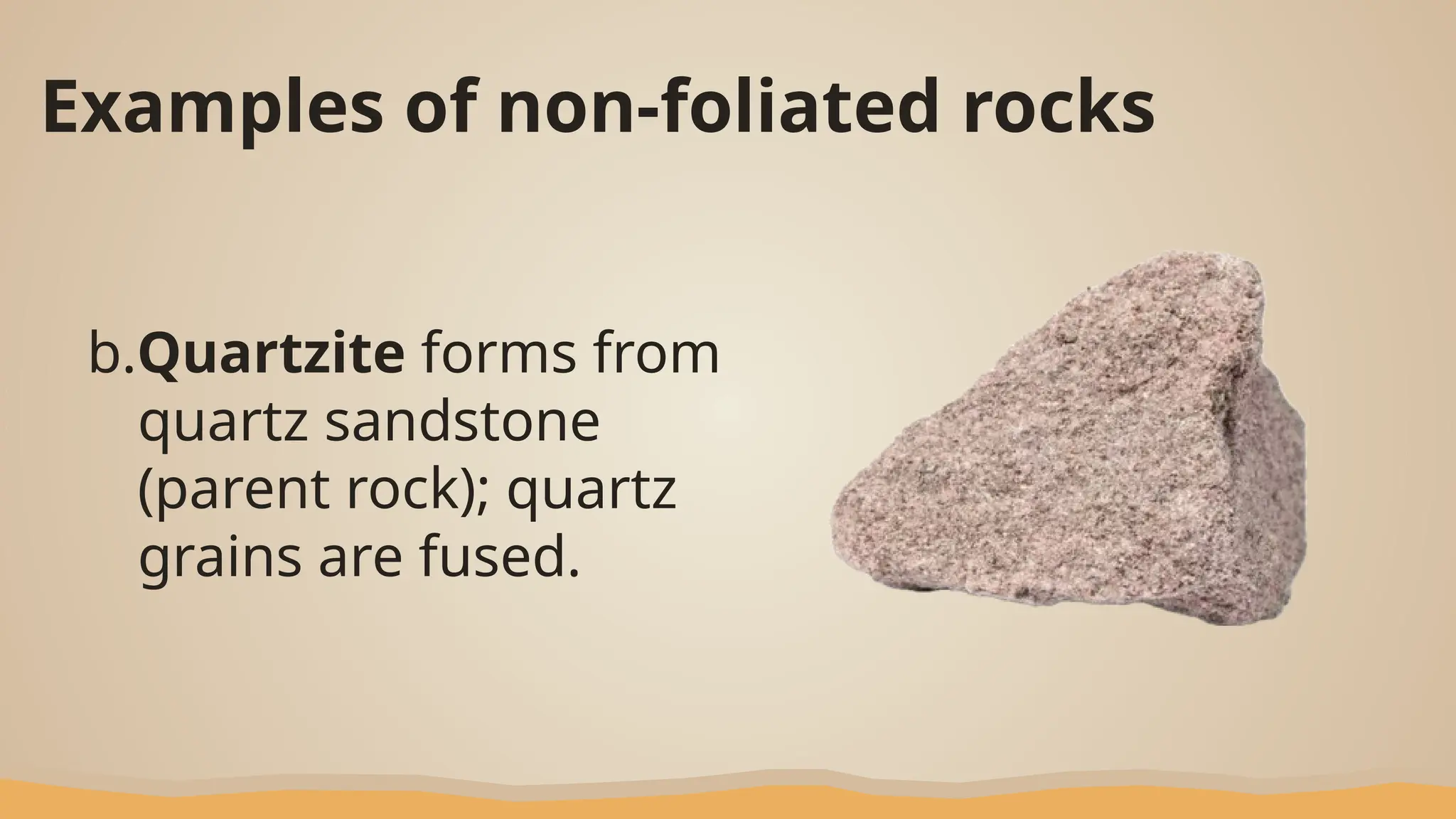
b.Quartzite forms from
quartz sandstone
(parent rock); quartz
grains are fused.
Examples of non-foliated rocks

igneous-sedimentary-metamorphic-rocks-class.pptx

  • 1.
  • 2.
    What is Metamorphicrock? Metamorphic rocks started out as some other type of rock, but have been substantially changed from their original igneous, sedimentary, or earlier metamorphic form.
  • 3.
    What is Metamorphicrock? Metamorphic rocks form when rocks are subjected to high heat, high pressure, hot mineral-rich fluids or, more commonly, some combination of these factors.
  • 4.
    Metamorphism is thechange in the mineral’s composition and texture of the rock when subjected to high temperature and pressure within the earth; there is transformation of pre-existing rocks. The degree of metamorphism is shown in the rocks texture and mineralogy.
  • 5.
    Types of Metamorphism 1.Low-grade (slight changes) e.g., shale becomes slate. 2.High-grade( substantial changes) causes the original features to obliterated.
  • 6.
    Metamorphic settings 1. Contactor thermal metamorphism takes place when the rock is intruded by magma. Here, change is driven by the rise in temperature within the host rock surrounding a molten igneous body.
  • 8.
    Metamorphic settings 2. Regionalmetamorphism occurs when a large area is affected due to large-scale heat and pressure such as mountain building. When this happens, metamorphism produces a great volume of metamorphic rocks.
  • 10.
    Agents of Metamorphism They arethree (3) agents of metamorphism, these are: (1) heat, (2) pressure or stress due to confining pressure and differential stress during mountain building, and (3) chemically active fluids (mainly water and other volatiles) which promote recrystallization by enhancing ion migration.
  • 11.
    Metamorphic textures When rocksare subjected to low-grade metamorphism, they become more compact and thus denser. A common example is the metamorphic slate. Here some types of metamorphic textures:
  • 12.
    1. Foliated textureresults in the mineral alignment perpendicular to the compressional force and usually gives the rock a layered or banded appearance.
  • 13.
    Common foliated metamorphicrock: a. Slate is a finely grained rock composed mostly of mica and produced through the low-grade metamorphism of shale.
  • 14.
    Common foliated metamorphicrock: b. Schist (pronounce "shists") is a strongly foliated rock and described as platy meaning, the rock's crystals are thin and leaf-like". Its types are based on composition.
  • 15.
    Common foliated metamorphicrock: c. Gneiss (pronounced "nice") is a strong segregation of silicate minerals and exhibits a "banded" texture (alternating layers of light and dark minerals like granite.
  • 16.
    2. Non-foliated texturecontains equidimensional crystals and resembles a coarse-grained igneous rock. Examples of non-foliated rocks are the following:
  • 17.
    a. Marble resultswhen limestone (parent rock) is metamorphosed. There are large, interlocking crystals of calcite and is used as a building stone and has variety of colors. Examples of non-foliated rocks
  • 18.
    b.Quartzite forms from quartzsandstone (parent rock); quartz grains are fused. Examples of non-foliated rocks