Unit 1 Metals 
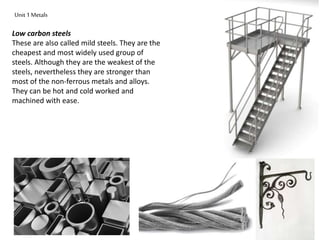
Low carbon steels 
These are also called mild steels. They are the 
cheapest and most widely used group of 
steels. Although they are the weakest of the 
steels, nevertheless they are stronger than 
most of the non-ferrous metals and alloys. 
They can be hot and cold worked and 
machined with ease.
Unit 1 Metals 
Medium carbon steels 
These are harder, tougher, stronger and more costly than the low 
carbon steels. They are less ductile than the low carbon steels and 
cannot be bent or formed to any great extent in the cold condition 
without risk of cracking. Greater force is required to bend and 
form them. Medium carbon steels hot forge well but close 
temperature control is essential. Two carbon ranges are shown. 
The lower carbon range can only be toughened by heating and 
quenching (cooling quickly by dipping in water). They cannot be 
hardened. The higher carbon range can be hardened and 
tempered by heating and quenching.
Unit 1 Metals 
High carbon steels 
These are harder, stronger and more costly 
than medium carbon steels. They are also 
less tough. High carbon steels are available as 
hot rolled bars and forgings. Cold drawn high 
carbon steel wire (piano wire) is available in a 
limited range of sizes. Centreless ground high 
carbon steel rods (silver steel) are available in 
a wide range of diameters (inch and metric 
sizes) in lengths of 333 mm, 1 m and 2 m. 
High carbon steels can only be bent cold to a 
limited extent before cracking. They are 
mostly used for making cutting tools such as 
files, knives and carpenters’ tools.
Unit 1 Metals
Copper 
Pure copper is widely used for electrical conductors and switchgear 
components. It is second only to silver in conductivity but it is much 
more plentiful and very much less costly. Pure copper is too soft and 
ductile for most mechanical applications. 
For general purpose applications such as roofing, chemical plant, 
decorative metal work and copper-smithing, tough-pitch copper is 
used. This contains some copper oxide which makes it stronger, 
more rigid and less likely to tear when being machined. Because it is 
not so highly refined, it is less expensive than high conductivity 
copper. 
There are many other grades of copper for special applications. 
Copper is also the basis of many important alloys such as brass and 
bronze, and we will be considering these next. The general properties 
of copper are: 
• relatively high strength 
• very ductile so that it is usually cold worked. An annealed 
(softened) copper wire can be stretched to nearly twice its length 
before it snaps 
• corrosion resistant 
• second only to silver as a conductor of heat and electricity 
• easily joined by soldering and brazing. For welding, a 
phosphorous deoxidized grade of copper must be used. 
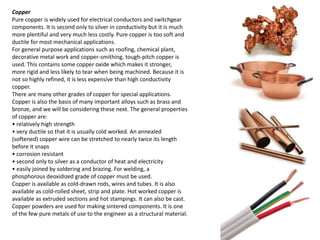
Copper is available as cold-drawn rods, wires and tubes. It is also 
available as cold-rolled sheet, strip and plate. Hot worked copper is 
available as extruded sections and hot stampings. It can also be cast. 
Copper powders are used for making sintered components. It is one 
of the few pure metals of use to the engineer as a structural material.
Brass 
Brass is an alloy of copper and zinc. The properties of a brass alloy 
and the applications for which you can use it depends upon the 
amount of zinc present. Most brasses are attacked by sea water. 
The salt water eats away the zinc (dezincification) and leaves a 
weak, porous, spongy mass of copper. To prevent this happening, a 
small amount of tin is added to the alloy. There are two types of 
brass that can be used at sea or on land near the sea. These are 
Naval brass and Admiralty brass. 
Brass is a difficult metal to cast and brass castings tend to be 
coarse grained and porous. Brass depends upon hot rolling from 
cast ingots, followed by cold rolling or drawing to give it its 
mechanical strength. It can also be hot extruded and plumbing 
fittings are made by hot stamping. Brass machines to a better finish 
than copper as it is more rigid and less ductile than that metal. 
Table 1.2 lists some 
typical brasses, together with their compositions, properties and 
applications.
Tin bronze 
As the name implies, the tin bronzes are alloys of copper and tin. 
These alloys also have to have a deoxidizing element present to 
prevent the tin from oxidizing during casting and hot working. If 
the 
tin oxidizes the metal becomes hard and ‘scratchy’ and is 
weakened. 
The two deoxidizing elements commonly used are: 
• zinc in the gun-metal alloys. 
• phosphorus in the phosphor–bronze alloys. 
Unlike the brass alloys, the bronze alloys are usually used as 
castings. However low-tin content phosphor–bronze alloys can 
be extensively cold worked. 
Tin–bronze alloys are extremely resistant to corrosion and wear 
and are used for high pressure valve bodies and heavy duty 
bearings. Table 1.3 lists some typical bronze alloys together with 
their compositions, properties and applications.
Aluminium 
Aluminium has a density approximately one third that of steel. 
However it is also very much weaker so its strength/weight ratio is 
inferior. For stressed components, such as those found in aircraft, 
aluminium alloys have to be used. These can be as strong as steel and 
nearly as light as pure aluminium. 
High purity aluminium is second only to copper as a conductor of 
heat and electricity. It is very difficult to join by welding or soldering 
and aluminium conductors are often terminated by crimping. Despite 
these difficulties, it is increasingly used for electrical conductors 
where its light weight and low cost compared with copper is an 
advantage. Pure aluminium is resistant to normal atmospheric corrosion but it 
is unsuitable for marine environments. It is available as wire, rod, cold-rolled 
sheet and extruded sections for heat sinks. 
Commercially pure aluminium is not as pure as high purity aluminium and it 
also contains up to 1% silicon to improve its strength and stiffness. As a result 
it is not such a good conductor of electricity nor is it so corrosion resistant. It is 
available as wire, rod, cold-rolled sheet and extruded sections. It is also 
available as castings and forgings. Being stiffer than high purity aluminium it 
machines better with less tendency to tear. It forms non-toxic oxides on its 
surface which makes it suitable for food processing plant and utensils. It is also 
used for forged and die-cast small machine parts.

Metals2 mtu

  • 1.
    Unit 1 Metals Low carbon steels These are also called mild steels. They are the cheapest and most widely used group of steels. Although they are the weakest of the steels, nevertheless they are stronger than most of the non-ferrous metals and alloys. They can be hot and cold worked and machined with ease.
  • 2.
    Unit 1 Metals Medium carbon steels These are harder, tougher, stronger and more costly than the low carbon steels. They are less ductile than the low carbon steels and cannot be bent or formed to any great extent in the cold condition without risk of cracking. Greater force is required to bend and form them. Medium carbon steels hot forge well but close temperature control is essential. Two carbon ranges are shown. The lower carbon range can only be toughened by heating and quenching (cooling quickly by dipping in water). They cannot be hardened. The higher carbon range can be hardened and tempered by heating and quenching.
  • 3.
    Unit 1 Metals High carbon steels These are harder, stronger and more costly than medium carbon steels. They are also less tough. High carbon steels are available as hot rolled bars and forgings. Cold drawn high carbon steel wire (piano wire) is available in a limited range of sizes. Centreless ground high carbon steel rods (silver steel) are available in a wide range of diameters (inch and metric sizes) in lengths of 333 mm, 1 m and 2 m. High carbon steels can only be bent cold to a limited extent before cracking. They are mostly used for making cutting tools such as files, knives and carpenters’ tools.
  • 4.
  • 5.
    Copper Pure copperis widely used for electrical conductors and switchgear components. It is second only to silver in conductivity but it is much more plentiful and very much less costly. Pure copper is too soft and ductile for most mechanical applications. For general purpose applications such as roofing, chemical plant, decorative metal work and copper-smithing, tough-pitch copper is used. This contains some copper oxide which makes it stronger, more rigid and less likely to tear when being machined. Because it is not so highly refined, it is less expensive than high conductivity copper. There are many other grades of copper for special applications. Copper is also the basis of many important alloys such as brass and bronze, and we will be considering these next. The general properties of copper are: • relatively high strength • very ductile so that it is usually cold worked. An annealed (softened) copper wire can be stretched to nearly twice its length before it snaps • corrosion resistant • second only to silver as a conductor of heat and electricity • easily joined by soldering and brazing. For welding, a phosphorous deoxidized grade of copper must be used. Copper is available as cold-drawn rods, wires and tubes. It is also available as cold-rolled sheet, strip and plate. Hot worked copper is available as extruded sections and hot stampings. It can also be cast. Copper powders are used for making sintered components. It is one of the few pure metals of use to the engineer as a structural material.
  • 6.
    Brass Brass isan alloy of copper and zinc. The properties of a brass alloy and the applications for which you can use it depends upon the amount of zinc present. Most brasses are attacked by sea water. The salt water eats away the zinc (dezincification) and leaves a weak, porous, spongy mass of copper. To prevent this happening, a small amount of tin is added to the alloy. There are two types of brass that can be used at sea or on land near the sea. These are Naval brass and Admiralty brass. Brass is a difficult metal to cast and brass castings tend to be coarse grained and porous. Brass depends upon hot rolling from cast ingots, followed by cold rolling or drawing to give it its mechanical strength. It can also be hot extruded and plumbing fittings are made by hot stamping. Brass machines to a better finish than copper as it is more rigid and less ductile than that metal. Table 1.2 lists some typical brasses, together with their compositions, properties and applications.
  • 8.
    Tin bronze Asthe name implies, the tin bronzes are alloys of copper and tin. These alloys also have to have a deoxidizing element present to prevent the tin from oxidizing during casting and hot working. If the tin oxidizes the metal becomes hard and ‘scratchy’ and is weakened. The two deoxidizing elements commonly used are: • zinc in the gun-metal alloys. • phosphorus in the phosphor–bronze alloys. Unlike the brass alloys, the bronze alloys are usually used as castings. However low-tin content phosphor–bronze alloys can be extensively cold worked. Tin–bronze alloys are extremely resistant to corrosion and wear and are used for high pressure valve bodies and heavy duty bearings. Table 1.3 lists some typical bronze alloys together with their compositions, properties and applications.
  • 10.
    Aluminium Aluminium hasa density approximately one third that of steel. However it is also very much weaker so its strength/weight ratio is inferior. For stressed components, such as those found in aircraft, aluminium alloys have to be used. These can be as strong as steel and nearly as light as pure aluminium. High purity aluminium is second only to copper as a conductor of heat and electricity. It is very difficult to join by welding or soldering and aluminium conductors are often terminated by crimping. Despite these difficulties, it is increasingly used for electrical conductors where its light weight and low cost compared with copper is an advantage. Pure aluminium is resistant to normal atmospheric corrosion but it is unsuitable for marine environments. It is available as wire, rod, cold-rolled sheet and extruded sections for heat sinks. Commercially pure aluminium is not as pure as high purity aluminium and it also contains up to 1% silicon to improve its strength and stiffness. As a result it is not such a good conductor of electricity nor is it so corrosion resistant. It is available as wire, rod, cold-rolled sheet and extruded sections. It is also available as castings and forgings. Being stiffer than high purity aluminium it machines better with less tendency to tear. It forms non-toxic oxides on its surface which makes it suitable for food processing plant and utensils. It is also used for forged and die-cast small machine parts.