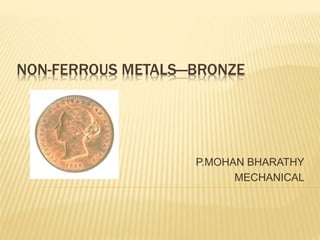
NON-FERROUS METALS—BRONZE
P.MOHAN BHARATHY
MECHANICAL
BRONZE
 Bronze is an alloy made of copper and
another metal, usually tin.
 Bronze is 88% copper and 12% tin.
 Bronze usually is a golden hard, brittle metal
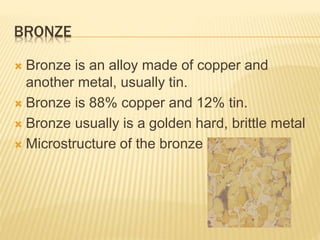
 Microstructure of the bronze
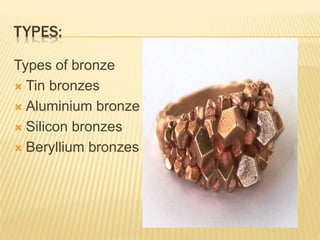
TYPES:
Types of bronze
 Tin bronzes
 Aluminium bronze
 Silicon bronzes
 Beryllium bronzes
TIN BRONZES
 Bronzes of alloy of copper and tin.
 It is soluble in 1% in tin at room temperature
 It is 13.5% of tin at 798oc.
Plain tin bronze:
Bronze and Tin containings:
Wrought iron:
Alloy containing up to 8% tin
They contain only α- phase. They are
absence in β phase enable to shape
easily in cold working operation.
These are mostly used for sheets
and wires.
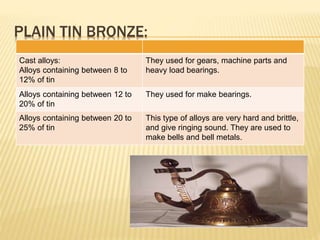
PLAIN TIN BRONZE:
Cast alloys:
Alloys containing between 8 to
12% of tin
They used for gears, machine parts and
heavy load bearings.
Alloys containing between 12 to
20% of tin
They used for make bearings.
Alloys containing between 20 to
25% of tin
This type of alloys are very hard and brittle,
and give ringing sound. They are used to
make bells and bell metals.
TIN BRONZE
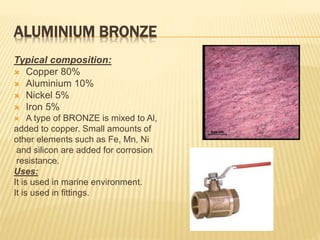
ALUMINIUM BRONZE
Typical composition:
 Copper 80%
 Aluminium 10%
 Nickel 5%
 Iron 5%
 A type of BRONZE is mixed to Al,
added to copper. Small amounts of
other elements such as Fe, Mn, Ni
and silicon are added for corrosion
resistance.
Uses:
It is used in marine environment.
It is used in fittings.
SILICON BRONZE
Typical composition:
 Copper 96%
 Silicon 3%
 Manganase 1%
 Has small amounts of silicon
to allow it to be wrought or cold
worked into a stronger alloy
such as by rolling.
Uses:
 It is also resistant to corrosion
and therefore good for use in the
marine environment.
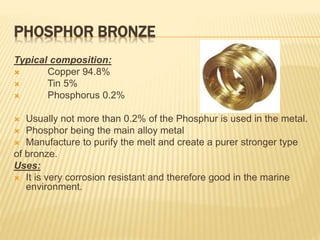
PHOSPHOR BRONZE
Typical composition:
 Copper 94.8%
 Tin 5%
 Phosphorus 0.2%
 Usually not more than 0.2% of the Phosphur is used in the metal.
 Phosphor being the main alloy metal
 Manufacture to purify the melt and create a purer stronger type
of bronze.
Uses:
 It is very corrosion resistant and therefore good in the marine
environment.
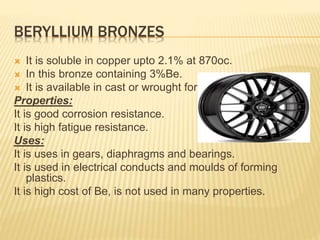
BERYLLIUM BRONZES
 It is soluble in copper upto 2.1% at 870oc.
 In this bronze containing 3%Be.
 It is available in cast or wrought form.
Properties:
It is good corrosion resistance.
It is high fatigue resistance.
Uses:
It is uses in gears, diaphragms and bearings.
It is used in electrical conducts and moulds of forming
plastics.
It is high cost of Be, is not used in many properties.
LEADED BRONZE
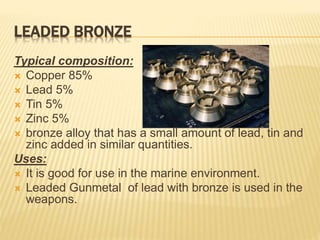
Typical composition:
 Copper 85%
 Lead 5%
 Tin 5%
 Zinc 5%
 bronze alloy that has a small amount of lead, tin and
zinc added in similar quantities.
Uses:
 It is good for use in the marine environment.
 Leaded Gunmetal of lead with bronze is used in the
weapons.
ADVANDAGES AND DISADVANDAGES:
 Advantages: Bronze is an alloy consisting mainly of copper but the
addition of other metals (usually tin) produces an alloy much harder
than plain copper. Bronze metal fatigue better, and conducts heat
and electricity, better than most steels.
 Corrosion Resistance - By forming a protective surface film, most
copper alloys resist many corrosive environments
 Withstand High Temperatures - Several families of bronze alloys
work well in elevated temperature environments
 Friction and Wear - Copper alloys wear well against steel and are
used in numerous bearing and gear components
 Good Machinability - In general, copper alloys are easy to machine
compared to steel
 Weldability - Many grades can be welded
 Brazing and Soldering - All grades of copper alloys can be brazed
and soldered
 Disadvantages: Bronzes are generally softer, weaker and more
expensive than steel.
.
APPLICATION:
 Bronze was especially suitable for use in boat and
ship due to toughness and resistance to salt water
corrosion.
 Bronze parts are tough and typically used
forbearings, clips, electrical connectors and springs
 Bronze is still commonly used in ship propellers and
submerged bearings.
 Sculptors may prefer silicon bronze because of the
ready availability of silicon bronze.
 Aluminium bronze widely used for cast bronze
sculpture.
 Phosphor bronze used in guitar and piano strings
THANK
YOU!

BRONZE

  • 1.
  • 2.
    BRONZE  Bronze isan alloy made of copper and another metal, usually tin.  Bronze is 88% copper and 12% tin.  Bronze usually is a golden hard, brittle metal  Microstructure of the bronze
  • 3.
    TYPES: Types of bronze Tin bronzes  Aluminium bronze  Silicon bronzes  Beryllium bronzes
  • 4.
    TIN BRONZES  Bronzesof alloy of copper and tin.  It is soluble in 1% in tin at room temperature  It is 13.5% of tin at 798oc. Plain tin bronze: Bronze and Tin containings: Wrought iron: Alloy containing up to 8% tin They contain only α- phase. They are absence in β phase enable to shape easily in cold working operation. These are mostly used for sheets and wires.
  • 5.
    PLAIN TIN BRONZE: Castalloys: Alloys containing between 8 to 12% of tin They used for gears, machine parts and heavy load bearings. Alloys containing between 12 to 20% of tin They used for make bearings. Alloys containing between 20 to 25% of tin This type of alloys are very hard and brittle, and give ringing sound. They are used to make bells and bell metals.
  • 6.
  • 7.
    ALUMINIUM BRONZE Typical composition: Copper 80%  Aluminium 10%  Nickel 5%  Iron 5%  A type of BRONZE is mixed to Al, added to copper. Small amounts of other elements such as Fe, Mn, Ni and silicon are added for corrosion resistance. Uses: It is used in marine environment. It is used in fittings.
  • 8.
    SILICON BRONZE Typical composition: Copper 96%  Silicon 3%  Manganase 1%  Has small amounts of silicon to allow it to be wrought or cold worked into a stronger alloy such as by rolling. Uses:  It is also resistant to corrosion and therefore good for use in the marine environment.
  • 9.
    PHOSPHOR BRONZE Typical composition: Copper 94.8%  Tin 5%  Phosphorus 0.2%  Usually not more than 0.2% of the Phosphur is used in the metal.  Phosphor being the main alloy metal  Manufacture to purify the melt and create a purer stronger type of bronze. Uses:  It is very corrosion resistant and therefore good in the marine environment.
  • 10.
    BERYLLIUM BRONZES  Itis soluble in copper upto 2.1% at 870oc.  In this bronze containing 3%Be.  It is available in cast or wrought form. Properties: It is good corrosion resistance. It is high fatigue resistance. Uses: It is uses in gears, diaphragms and bearings. It is used in electrical conducts and moulds of forming plastics. It is high cost of Be, is not used in many properties.
  • 11.
    LEADED BRONZE Typical composition: Copper 85%  Lead 5%  Tin 5%  Zinc 5%  bronze alloy that has a small amount of lead, tin and zinc added in similar quantities. Uses:  It is good for use in the marine environment.  Leaded Gunmetal of lead with bronze is used in the weapons.
  • 12.
    ADVANDAGES AND DISADVANDAGES: Advantages: Bronze is an alloy consisting mainly of copper but the addition of other metals (usually tin) produces an alloy much harder than plain copper. Bronze metal fatigue better, and conducts heat and electricity, better than most steels.  Corrosion Resistance - By forming a protective surface film, most copper alloys resist many corrosive environments  Withstand High Temperatures - Several families of bronze alloys work well in elevated temperature environments  Friction and Wear - Copper alloys wear well against steel and are used in numerous bearing and gear components  Good Machinability - In general, copper alloys are easy to machine compared to steel  Weldability - Many grades can be welded  Brazing and Soldering - All grades of copper alloys can be brazed and soldered  Disadvantages: Bronzes are generally softer, weaker and more expensive than steel. .
  • 13.
    APPLICATION:  Bronze wasespecially suitable for use in boat and ship due to toughness and resistance to salt water corrosion.  Bronze parts are tough and typically used forbearings, clips, electrical connectors and springs  Bronze is still commonly used in ship propellers and submerged bearings.  Sculptors may prefer silicon bronze because of the ready availability of silicon bronze.  Aluminium bronze widely used for cast bronze sculpture.  Phosphor bronze used in guitar and piano strings
  • 14.