METALS
IN
MEDICINE
Submitted by:-
Dropati Sidh
M.Sc.(Final), Inorganic chemistry
Govt. Dungar college,Bikaner
Content
1. Bioinorganic chemistry
2. Medicinal bioinorganic chemistry
3. Classification of Elements
4. Importance of Metal ions in Biological system
5. Aspect of Metal in Medicine
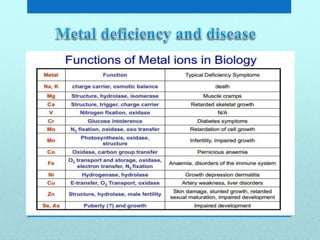
6. Metal Deficiency and Disease
7. Toxic effects of Metals
8. Metals used for Diagnosis and Chemotherapy
Medicinal Bioinorganic chemistry
The New science that is evolving at the interface of
Bioinorganic chemistry and Medicine.
Major aspect of Bioinorganic Chemistry
 To understand at the molecular level
 Biochemistry and Molecular biology
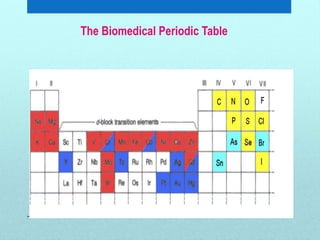
The Biomedical Periodic Table
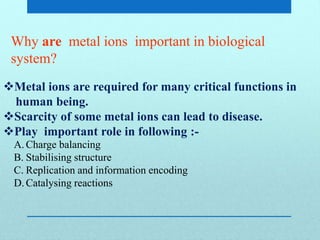
Why are metal ions important in biological
system?
Metal ions are required for many critical functions in
human being.
Scarcity of some metal ions can lead to disease.
Play important role in following :-
A. Charge balancing
B. Stabilising structure
C. Replication and information encoding
D. Catalysing reactions
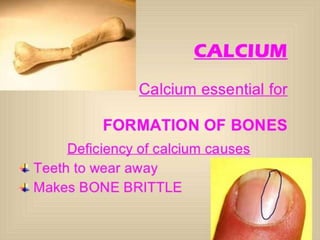
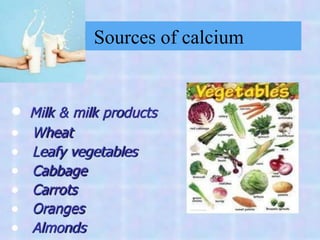
Sources of calcium
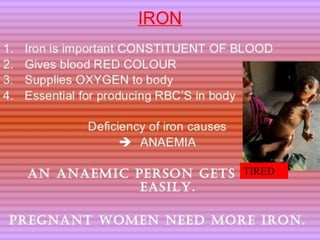
TIRED
Is a Metal ion can be Deleterious?
Yes , when present in excess.
Two class of toxic metal compounds:-
1. From accidental ingestion of the element / From metabolic disorders.
2. From entry of non-essential metals.
Toxic effect of metals
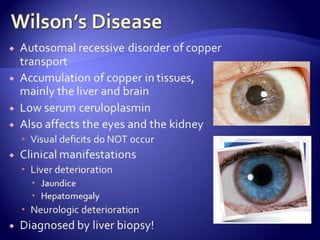
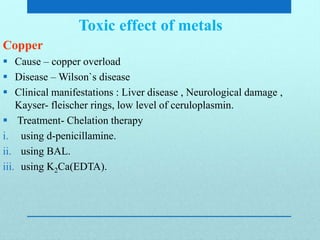
Copper
 Cause – copper overload
 Disease – Wilson`s disease
 Clinical manifestations : Liver disease , Neurological damage ,
Kayser- fleischer rings, low level of ceruloplasmin.
 Treatment- Chelation therapy
i. using d-penicillamine.
ii. using BAL.
iii. using K2Ca(EDTA).
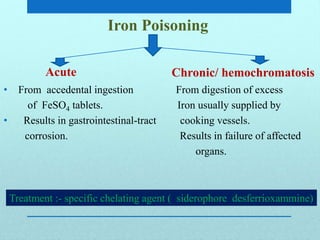
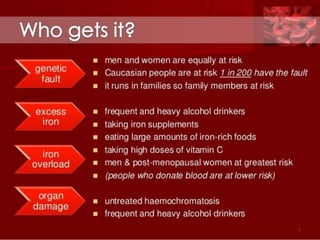
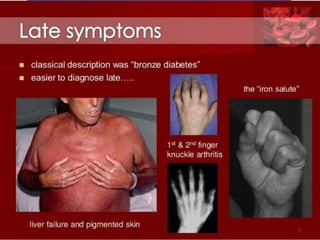
Iron Poisoning
Chronic/ hemochromatosis
• From accedental ingestion From digestion of excess
of FeSO4 tablets. Iron usually supplied by
• Results in gastrointestinal-tract cooking vessels.
corrosion. Results in failure of affected
organs.
Acute
Treatment :- specific chelating agent ( siderophore desferrioxammine)
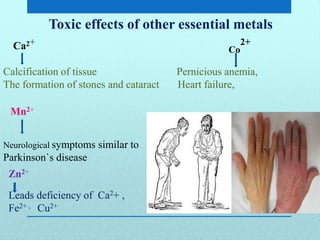
Toxic effects of other essential metals
Ca2+
Co
2+
Mn2+
Calcification of tissue Pernicious anemia,
The formation of stones and cataract Heart failure,
Neurological symptoms similar to
Parkinson`s disease
Zn2+
Leads deficiency of Ca2+ ,
Fe2+ , Cu2+
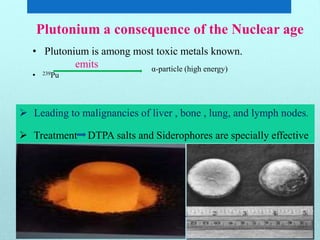
Plutonium a consequence of the Nuclear age
• Plutonium is among most toxic metals known.
emits
• 239Pu
α-particle (high energy)
 Leading to malignancies of liver , bone , lung, and lymph nodes.
 Treatment DTPA salts and Siderophores are specially effective
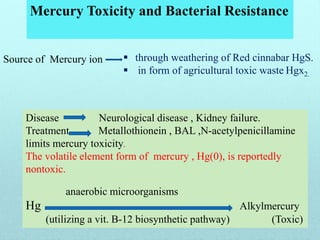
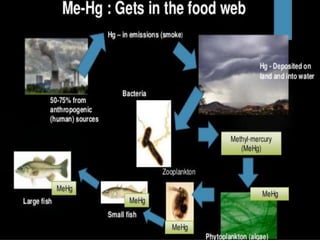
Mercury Toxicity and Bacterial Resistance
Source of Mercury ion  through weathering of Red cinnabar HgS.
 in form of agricultural toxic waste Hgx2.
Disease Neurological disease , Kidney failure.
Treatment Metallothionein , BAL ,N-acetylpenicillamine
limits mercury toxicity.
The volatile element form of mercury , Hg(0), is reportedly
nontoxic.
anaerobic microorganisms
Hg Alkylmercury
(utilizing a vit. B-12 biosynthetic pathway) (Toxic)
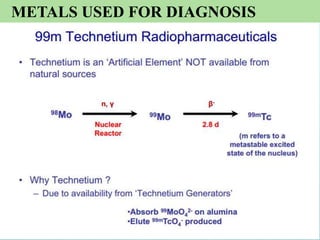
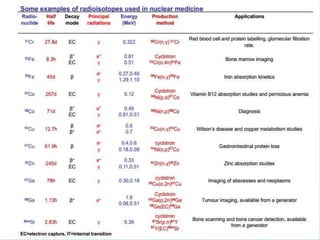
METALS USED FOR DIAGNOSIS
Future
 Synthesis of ion-specific ligands.
 Designing on metal based drugs.
 Application of the new tools of
molecular biology.
BIBILIOGRAPHY
1. Bioinorganic chemistry :- Stephen J Lippard
2. http://www.slideshare.net/mohdsakharkar/metal-
ion?qid=47d7e4f2-48e3-4754-8e65-
65d1693c8764&v=qf1&b=&from_search=1
3. http://www.slideshare.net/harrietcarpenter/vitamins-and-
minerals-8079599?qid=11bf6b76-8e00-4955-9b4a-
6cf9bc8f65d2&v=default&b=&from_search=1
4. http://www.slideshare.net/KJSCCETR/panks?qid=a4fb6ae
1-49ce-4f67-becc-
4947456122c2&v=qf1&b=&from_search=4
metals in medicine

metals in medicine

  • 1.
    METALS IN MEDICINE Submitted by:- Dropati Sidh M.Sc.(Final),Inorganic chemistry Govt. Dungar college,Bikaner
  • 2.
    Content 1. Bioinorganic chemistry 2.Medicinal bioinorganic chemistry 3. Classification of Elements 4. Importance of Metal ions in Biological system 5. Aspect of Metal in Medicine 6. Metal Deficiency and Disease 7. Toxic effects of Metals 8. Metals used for Diagnosis and Chemotherapy
  • 4.
    Medicinal Bioinorganic chemistry TheNew science that is evolving at the interface of Bioinorganic chemistry and Medicine. Major aspect of Bioinorganic Chemistry  To understand at the molecular level  Biochemistry and Molecular biology
  • 5.
  • 6.
    Why are metalions important in biological system? Metal ions are required for many critical functions in human being. Scarcity of some metal ions can lead to disease. Play important role in following :- A. Charge balancing B. Stabilising structure C. Replication and information encoding D. Catalysing reactions
  • 9.
  • 12.
  • 22.
    Is a Metalion can be Deleterious? Yes , when present in excess. Two class of toxic metal compounds:- 1. From accidental ingestion of the element / From metabolic disorders. 2. From entry of non-essential metals.
  • 23.
    Toxic effect ofmetals Copper  Cause – copper overload  Disease – Wilson`s disease  Clinical manifestations : Liver disease , Neurological damage , Kayser- fleischer rings, low level of ceruloplasmin.  Treatment- Chelation therapy i. using d-penicillamine. ii. using BAL. iii. using K2Ca(EDTA).
  • 24.
    Iron Poisoning Chronic/ hemochromatosis •From accedental ingestion From digestion of excess of FeSO4 tablets. Iron usually supplied by • Results in gastrointestinal-tract cooking vessels. corrosion. Results in failure of affected organs. Acute Treatment :- specific chelating agent ( siderophore desferrioxammine)
  • 27.
    Toxic effects ofother essential metals Ca2+ Co 2+ Mn2+ Calcification of tissue Pernicious anemia, The formation of stones and cataract Heart failure, Neurological symptoms similar to Parkinson`s disease Zn2+ Leads deficiency of Ca2+ , Fe2+ , Cu2+
  • 28.
    Plutonium a consequenceof the Nuclear age • Plutonium is among most toxic metals known. emits • 239Pu α-particle (high energy)  Leading to malignancies of liver , bone , lung, and lymph nodes.  Treatment DTPA salts and Siderophores are specially effective
  • 29.
    Mercury Toxicity andBacterial Resistance Source of Mercury ion  through weathering of Red cinnabar HgS.  in form of agricultural toxic waste Hgx2. Disease Neurological disease , Kidney failure. Treatment Metallothionein , BAL ,N-acetylpenicillamine limits mercury toxicity. The volatile element form of mercury , Hg(0), is reportedly nontoxic. anaerobic microorganisms Hg Alkylmercury (utilizing a vit. B-12 biosynthetic pathway) (Toxic)
  • 35.
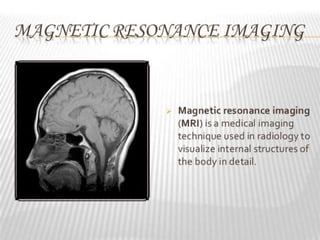
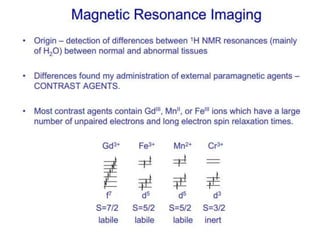
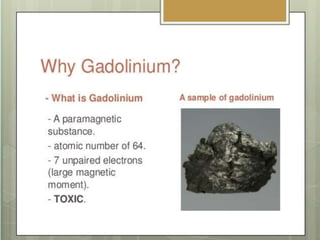
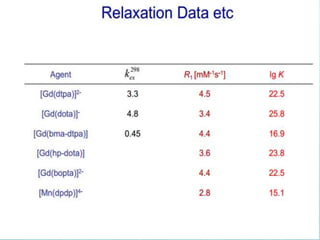
    METALS USED FORDIAGNOSIS
  • 45.
    Future  Synthesis ofion-specific ligands.  Designing on metal based drugs.  Application of the new tools of molecular biology.
  • 46.
    BIBILIOGRAPHY 1. Bioinorganic chemistry:- Stephen J Lippard 2. http://www.slideshare.net/mohdsakharkar/metal- ion?qid=47d7e4f2-48e3-4754-8e65- 65d1693c8764&v=qf1&b=&from_search=1 3. http://www.slideshare.net/harrietcarpenter/vitamins-and- minerals-8079599?qid=11bf6b76-8e00-4955-9b4a- 6cf9bc8f65d2&v=default&b=&from_search=1 4. http://www.slideshare.net/KJSCCETR/panks?qid=a4fb6ae 1-49ce-4f67-becc- 4947456122c2&v=qf1&b=&from_search=4