Mental Models  Joel Kline Texas Tech University May 23, 2007
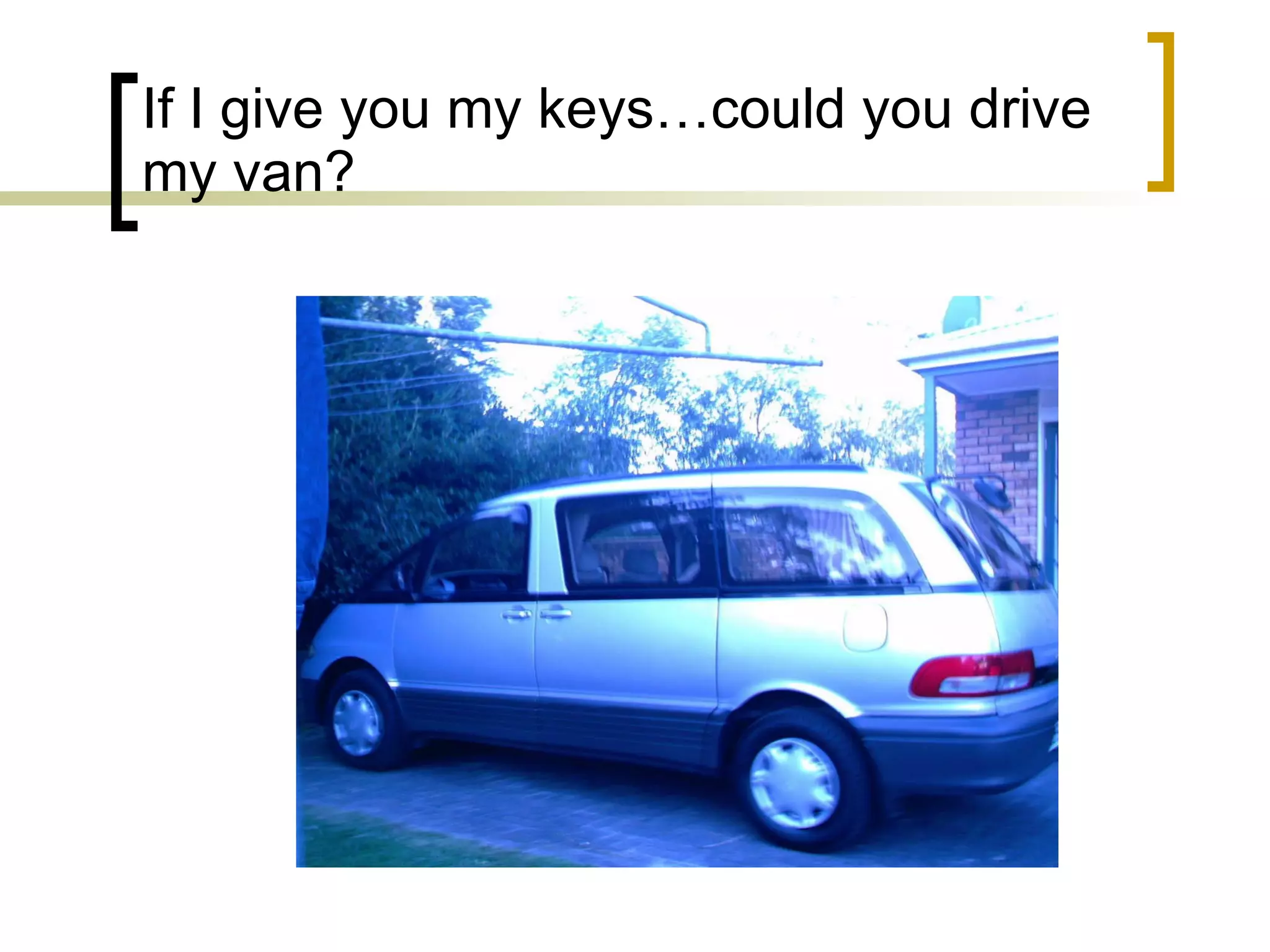
If I give you my keys…could you drive my van?
Mental Model Theory Originates from Scottish Psychologist Kenneth Craik’s work that suggests the mind constructs "small-scale models" of reality (1943). Mental models can be constructed from perception, imagination, or the comprehension of discourse. They normally underlie visual images, but  can also be abstract and represent situations that cannot be visualized. Mental models have structure that is analogous to the structure of what they represent. Resemble the “picture” theory of language described by Ludwig Wittgenstein in 1922.  Critics of the theory argue that the mind uses inference rules not models as the basis for deductive reasoning. Donald Norman and Richard Young (independently) were the first to devise a terminology for Mental Models for use in HCI around 1983
Definition Representations of systems and environments derived from experience. A mental model is accurate when the real and imagined outcomes correspond  Two Categories Models of how systems work Models of how people interact with systems
Good Design Occurs… Results when designers have an accurate view of the system (easy) and an accurate view of the user’s interaction with the system (hard). The designer then designs a system interface that merges both models.
Designers can learn the user: Through personal use of the system Laboratory testing (usability, focus groups) Direct Observation of users
Where do we “get” models? External interface conventions - come to your interface with the users Internal interface conventions - build or break trust
For both interface users and media developers Print model has 600 years behind it Build trust with consistency Consistency can evolve Consistency is Contextual
MM Examples Automobile Doors with knobs that don’t turn Any computer interface device. Have you ever tried a Dvorak keyboard?
InDesign Examples Folios Right to left reading Consistent Hierarchy Consistent use of bold, italics, and underline Typically an issue with longer documents
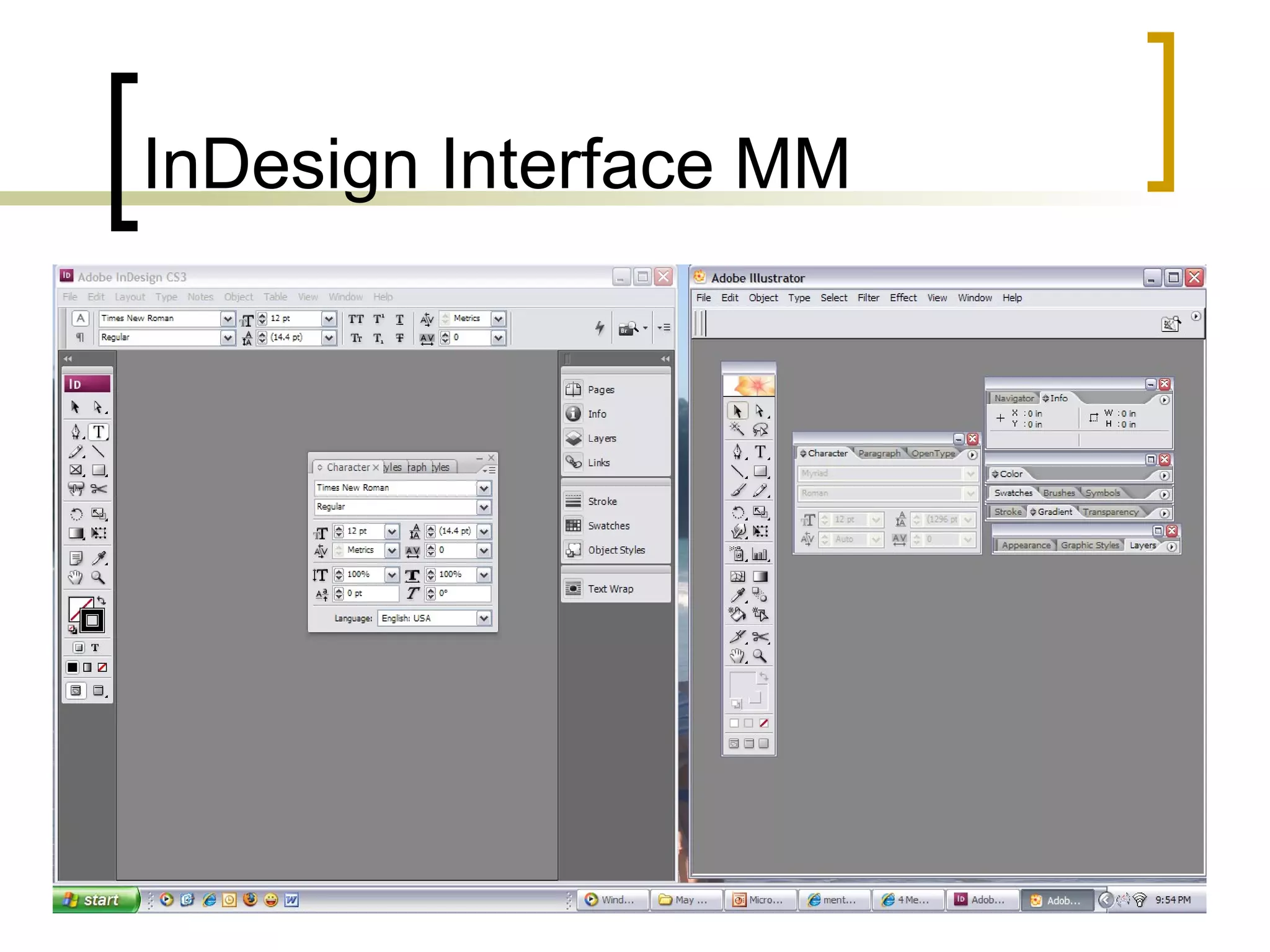
InDesign Interface MM
When you have no MM?

Mental models

  • 1.
    Mental Models Joel Kline Texas Tech University May 23, 2007
  • 2.
    If I giveyou my keys…could you drive my van?
  • 3.
    Mental Model TheoryOriginates from Scottish Psychologist Kenneth Craik’s work that suggests the mind constructs "small-scale models" of reality (1943). Mental models can be constructed from perception, imagination, or the comprehension of discourse. They normally underlie visual images, but can also be abstract and represent situations that cannot be visualized. Mental models have structure that is analogous to the structure of what they represent. Resemble the “picture” theory of language described by Ludwig Wittgenstein in 1922. Critics of the theory argue that the mind uses inference rules not models as the basis for deductive reasoning. Donald Norman and Richard Young (independently) were the first to devise a terminology for Mental Models for use in HCI around 1983
  • 4.
    Definition Representations ofsystems and environments derived from experience. A mental model is accurate when the real and imagined outcomes correspond Two Categories Models of how systems work Models of how people interact with systems
  • 5.
    Good Design Occurs…Results when designers have an accurate view of the system (easy) and an accurate view of the user’s interaction with the system (hard). The designer then designs a system interface that merges both models.
  • 6.
    Designers can learnthe user: Through personal use of the system Laboratory testing (usability, focus groups) Direct Observation of users
  • 7.
    Where do we“get” models? External interface conventions - come to your interface with the users Internal interface conventions - build or break trust
  • 8.
    For both interfaceusers and media developers Print model has 600 years behind it Build trust with consistency Consistency can evolve Consistency is Contextual
  • 9.
    MM Examples AutomobileDoors with knobs that don’t turn Any computer interface device. Have you ever tried a Dvorak keyboard?
  • 10.
    InDesign Examples FoliosRight to left reading Consistent Hierarchy Consistent use of bold, italics, and underline Typically an issue with longer documents
  • 11.
  • 12.