Melioidosis 
Introduction 
By Dr Nurul Athirah Naserrudin 
Medical 0fficer 
Klinik Kesihatan Tandek
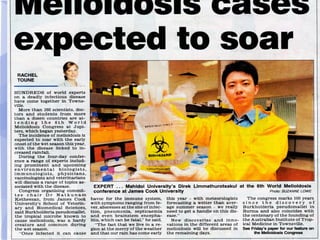
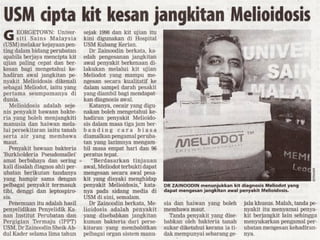
● Menteri Besar, Datuk Seri Adnan Yaakob, dirawat di Pusat 
Perubatan Prince Court, Kuala Lumpur selama seminggu lebih, 
disyaki dijangkiti Leptospirosis (kencing tikus) atau Melioidosis 
(bakteria disebabkan air dan tanah)
Melioidosis in Pahang 
January 2000 to June 2003 
157 cultured positive in Pahang 
The calculated annual incidence of adult melioidosis in 
Pahang state was 6.07 per 100, 000 population per year. 
78.5% were male. 
Malays:83%, Chinese:9.6%, Indians:3%, 
Orang Asli :3%
Lubuk Yu Outbreak 2010 
A boy was suspected to have drowned 
A 150-member team of police and army officers, divers, 
firemen and volunteers from a nearby village searched 
for his body 
Following this rescue operation, 22 people presented 
with an acute febrile illness 
10 were blood culture confirmed melioidosis (4 were 
positive for leptospirosis based on PCR) 
Among those cultured confirmed: 7 died(all DM, with 
severe pneumonia, 1 patient died at home, no culture)
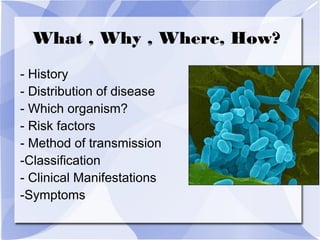
What , Why , Where, How? 
- History 
- Distribution of disease 
- Which organism? 
- Risk factors 
- Method of transmission 
-Classification 
- Clinical Manifestations 
-Symptoms
History 
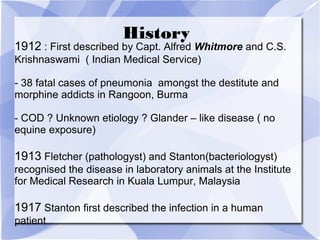
1912 : First described by Capt. Alfred Whitmore and C.S. 
Krishnaswami ( Indian Medical Service) 
- 38 fatal cases of pneumonia amongst the destitute and 
morphine addicts in Rangoon, Burma 
- COD ? Unknown etiology ? Glander – like disease ( no 
equine exposure) 
1913 Fletcher (pathologyst) and Stanton(bacteriologyst) 
recognised the disease in laboratory animals at the Institute 
for Medical Research in Kuala Lumpur, Malaysia 
1917 Stanton first described the infection in a human 
patient
History – during WW II 
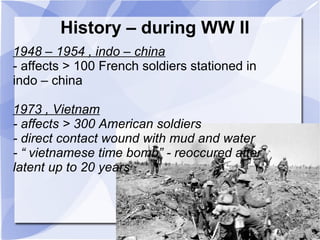
1948 – 1954 , indo – china 
- affects > 100 French soldiers stationed in 
indo – china 
1973 , Vietnam 
- affects > 300 American soldiers 
- direct contact wound with mud and water 
- “ vietnamese time bomb” - reoccured after 
latent up to 20 years
First International Symposium on 
Melioidosis 
By the Malaysian Society of Infectious Diseases and 
Chemotherapy, under the Chairmanship of Prof. S D 
Puthucheary, was held in Kuala Lumpur from April 
7-8, 1994. 
About 100 participants from around the world 
attended and the papers presented were 
subsequently edited and published 
as a book
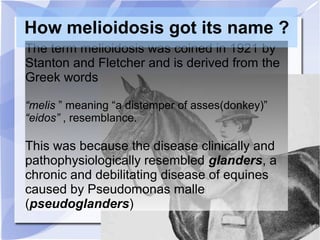
How melioidosis got its name ? 
The term melioidosis was coined in 1921 by 
Stanton and Fletcher and is derived from the 
Greek words 
“melis ” meaning “a distemper of asses(donkey)” 
“eidos” , resemblance. 
This was because the disease clinically and 
pathophysiologically resembled glanders, a 
chronic and debilitating disease of equines 
caused by Pseudomonas malle 
(pseudoglanders)
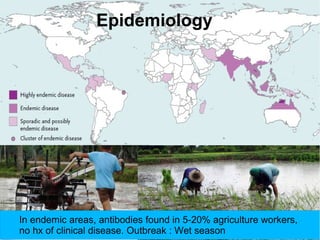
Epidemiology 
In endemic areas, antibodies found in 5-20% agriculture workers, 
no hx of clinical disease. Outbreak : Wet season
Etiology 
● Burkholderia pseudomallei , 
aerobic, gram- negative, motile 
bacillus, soil saprophyte 
● Oppurtunistic pathogen 
● Can survive in phagocytic cells 
→ latent infection 
● Phylogenetically alike 
Pseudomonas mallei 
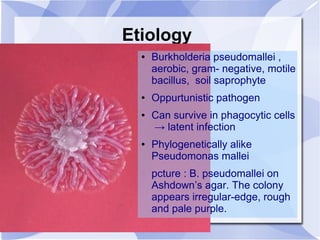
pcture : B. pseudomallei on 
Ashdown’s agar. The colony 
appears irregular-edge, rough 
and pale purple.
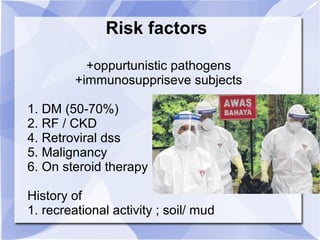
Risk factors 
+oppurtunistic pathogens 
+immunosuppriseve subjects 
1. DM (50-70%) 
2. RF / CKD 
4. Retroviral dss 
5. Malignancy 
6. On steroid therapy 
History of 
1. recreational activity ; soil/ mud
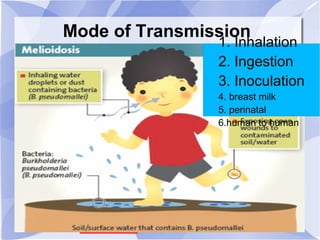
Mode of Transmission 
1. Inhalation 
2. Ingestion 
3. Inoculation 
4. breast milk 
5. perinatal 
6.human to human 
●State the intended goal
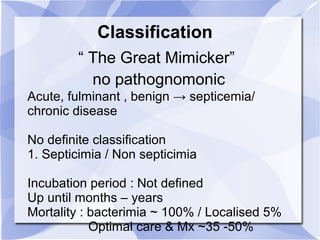
Classification 
“ The Great Mimicker” 
no pathognomonic 
Acute, fulminant , benign → septicemia/ 
chronic disease 
No definite classification 
1. Septicimia / Non septicimia 
Incubation period : Not defined 
Up until months – years 
Mortality : bacterimia ~ 100% / Localised 5% 
Optimal care & Mx ~35 -50%
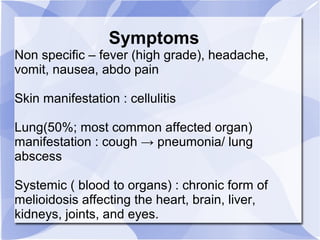
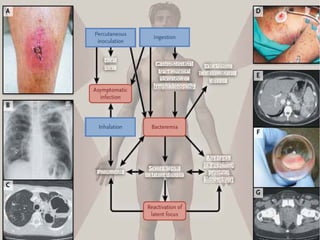
Symptoms 
Non specific – fever (high grade), headache, 
vomit, nausea, abdo pain 
Skin manifestation : cellulitis 
Lung(50%; most common affected organ) 
manifestation : cough → pneumonia/ lung 
abscess 
Systemic ( blood to organs) : chronic form of 
melioidosis affecting the heart, brain, liver, 
kidneys, joints, and eyes.
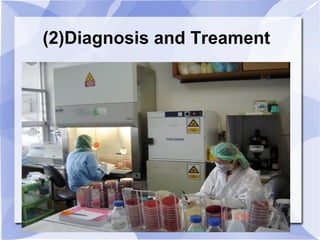
(2)Diagnosis and Treament
Diagnosis 
+history of presenting illness ( HOPI) 
+hx of travelling to endemic area / soil / oil 
area 
+risk factors : DM/ malignancy/ taking 
steroid / immunoc , etc 
+ symptoms ( non specific) ; fever + 
respiratory complaints 
+ clinical examination : lung, skin
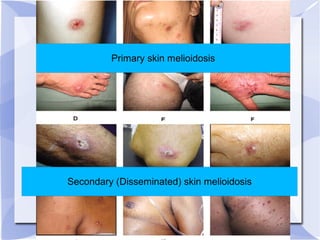
Primary skin melioidosis 
Secondary (Disseminated) skin melioidosis
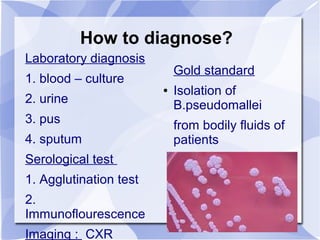
How to diagnose? 
Laboratory diagnosis 
1. blood – culture 
2. urine 
3. pus 
4. sputum 
Serological test 
1. Agglutination test 
2. 
Immunoflourescence 
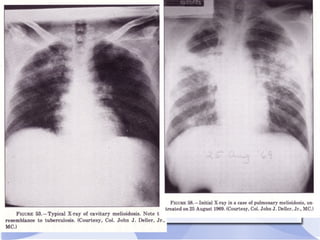
Imaging : CXR 
Gold standard 
● Isolation of 
B.pseudomallei 
from bodily fluids of 
patients
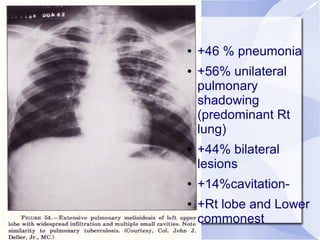
● +46 % pneumonia 
● +56% unilateral 
pulmonary 
shadowing 
(predominant Rt 
lung) 
● +44% bilateral 
lesions 
● +14%cavitation- 
● +Rt lobe and Lower 
commonest
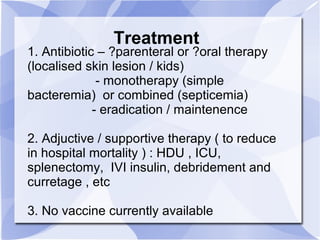
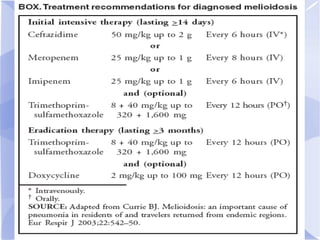
Treatment 
1. Antibiotic – ?parenteral or ?oral therapy 
(localised skin lesion / kids) 
- monotherapy (simple 
bacteremia) or combined (septicemia) 
- eradication / maintenence 
2. Adjuctive / supportive therapy ( to reduce 
in hospital mortality ) : HDU , ICU, 
splenectomy, IVI insulin, debridement and 
curretage , etc 
3. No vaccine currently available
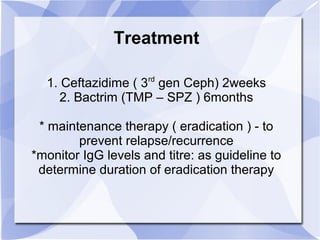
Treatment 
1. Ceftazidime ( 3rd gen Ceph) 2weeks 
2. Bactrim (TMP – SPZ ) 6months 
* maintenance therapy ( eradication ) - to 
prevent relapse/recurrence 
*monitor IgG levels and titre: as guideline to 
determine duration of eradication therapy
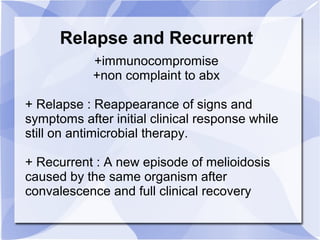
Relapse and Recurrent 
+immunocompromise 
+non complaint to abx 
+ Relapse : Reappearance of signs and 
symptoms after initial clinical response while 
still on antimicrobial therapy. 
+ Recurrent : A new episode of melioidosis 
caused by the same organism after 
convalescence and full clinical recovery
Conclusion 
-Melioidosis is an infectious disease 
caused by a bacterium, Burkholderia 
pseudomallei. 
-Melioidosis infection commonly involves 
the lungs. 
-Melioidosis is diagnosed with the help of 
blood, urine, sputum, or skin-lesion testing. 
-Melioidosis is treated with antibiotics. 
- The overall mortality rate is 50-70%.

Melioidosis

  • 1.
    Melioidosis Introduction ByDr Nurul Athirah Naserrudin Medical 0fficer Klinik Kesihatan Tandek
  • 2.
    ● Menteri Besar,Datuk Seri Adnan Yaakob, dirawat di Pusat Perubatan Prince Court, Kuala Lumpur selama seminggu lebih, disyaki dijangkiti Leptospirosis (kencing tikus) atau Melioidosis (bakteria disebabkan air dan tanah)
  • 3.
    Melioidosis in Pahang January 2000 to June 2003 157 cultured positive in Pahang The calculated annual incidence of adult melioidosis in Pahang state was 6.07 per 100, 000 population per year. 78.5% were male. Malays:83%, Chinese:9.6%, Indians:3%, Orang Asli :3%
  • 4.
    Lubuk Yu Outbreak2010 A boy was suspected to have drowned A 150-member team of police and army officers, divers, firemen and volunteers from a nearby village searched for his body Following this rescue operation, 22 people presented with an acute febrile illness 10 were blood culture confirmed melioidosis (4 were positive for leptospirosis based on PCR) Among those cultured confirmed: 7 died(all DM, with severe pneumonia, 1 patient died at home, no culture)
  • 5.
    What , Why, Where, How? - History - Distribution of disease - Which organism? - Risk factors - Method of transmission -Classification - Clinical Manifestations -Symptoms
  • 7.
    History 1912 :First described by Capt. Alfred Whitmore and C.S. Krishnaswami ( Indian Medical Service) - 38 fatal cases of pneumonia amongst the destitute and morphine addicts in Rangoon, Burma - COD ? Unknown etiology ? Glander – like disease ( no equine exposure) 1913 Fletcher (pathologyst) and Stanton(bacteriologyst) recognised the disease in laboratory animals at the Institute for Medical Research in Kuala Lumpur, Malaysia 1917 Stanton first described the infection in a human patient
  • 8.
    History – duringWW II 1948 – 1954 , indo – china - affects > 100 French soldiers stationed in indo – china 1973 , Vietnam - affects > 300 American soldiers - direct contact wound with mud and water - “ vietnamese time bomb” - reoccured after latent up to 20 years
  • 9.
    First International Symposiumon Melioidosis By the Malaysian Society of Infectious Diseases and Chemotherapy, under the Chairmanship of Prof. S D Puthucheary, was held in Kuala Lumpur from April 7-8, 1994. About 100 participants from around the world attended and the papers presented were subsequently edited and published as a book
  • 10.
    How melioidosis gotits name ? The term melioidosis was coined in 1921 by Stanton and Fletcher and is derived from the Greek words “melis ” meaning “a distemper of asses(donkey)” “eidos” , resemblance. This was because the disease clinically and pathophysiologically resembled glanders, a chronic and debilitating disease of equines caused by Pseudomonas malle (pseudoglanders)
  • 11.
    Epidemiology In endemicareas, antibodies found in 5-20% agriculture workers, no hx of clinical disease. Outbreak : Wet season
  • 12.
    Etiology ● Burkholderiapseudomallei , aerobic, gram- negative, motile bacillus, soil saprophyte ● Oppurtunistic pathogen ● Can survive in phagocytic cells → latent infection ● Phylogenetically alike Pseudomonas mallei pcture : B. pseudomallei on Ashdown’s agar. The colony appears irregular-edge, rough and pale purple.
  • 13.
    Risk factors +oppurtunisticpathogens +immunosuppriseve subjects 1. DM (50-70%) 2. RF / CKD 4. Retroviral dss 5. Malignancy 6. On steroid therapy History of 1. recreational activity ; soil/ mud
  • 14.
    Mode of Transmission 1. Inhalation 2. Ingestion 3. Inoculation 4. breast milk 5. perinatal 6.human to human ●State the intended goal
  • 15.
    Classification “ TheGreat Mimicker” no pathognomonic Acute, fulminant , benign → septicemia/ chronic disease No definite classification 1. Septicimia / Non septicimia Incubation period : Not defined Up until months – years Mortality : bacterimia ~ 100% / Localised 5% Optimal care & Mx ~35 -50%
  • 16.
    Symptoms Non specific– fever (high grade), headache, vomit, nausea, abdo pain Skin manifestation : cellulitis Lung(50%; most common affected organ) manifestation : cough → pneumonia/ lung abscess Systemic ( blood to organs) : chronic form of melioidosis affecting the heart, brain, liver, kidneys, joints, and eyes.
  • 18.
  • 19.
    Diagnosis +history ofpresenting illness ( HOPI) +hx of travelling to endemic area / soil / oil area +risk factors : DM/ malignancy/ taking steroid / immunoc , etc + symptoms ( non specific) ; fever + respiratory complaints + clinical examination : lung, skin
  • 20.
    Primary skin melioidosis Secondary (Disseminated) skin melioidosis
  • 21.
    How to diagnose? Laboratory diagnosis 1. blood – culture 2. urine 3. pus 4. sputum Serological test 1. Agglutination test 2. Immunoflourescence Imaging : CXR Gold standard ● Isolation of B.pseudomallei from bodily fluids of patients
  • 24.
    ● +46 %pneumonia ● +56% unilateral pulmonary shadowing (predominant Rt lung) ● +44% bilateral lesions ● +14%cavitation- ● +Rt lobe and Lower commonest
  • 25.
    Treatment 1. Antibiotic– ?parenteral or ?oral therapy (localised skin lesion / kids) - monotherapy (simple bacteremia) or combined (septicemia) - eradication / maintenence 2. Adjuctive / supportive therapy ( to reduce in hospital mortality ) : HDU , ICU, splenectomy, IVI insulin, debridement and curretage , etc 3. No vaccine currently available
  • 27.
    Treatment 1. Ceftazidime( 3rd gen Ceph) 2weeks 2. Bactrim (TMP – SPZ ) 6months * maintenance therapy ( eradication ) - to prevent relapse/recurrence *monitor IgG levels and titre: as guideline to determine duration of eradication therapy
  • 28.
    Relapse and Recurrent +immunocompromise +non complaint to abx + Relapse : Reappearance of signs and symptoms after initial clinical response while still on antimicrobial therapy. + Recurrent : A new episode of melioidosis caused by the same organism after convalescence and full clinical recovery
  • 29.
    Conclusion -Melioidosis isan infectious disease caused by a bacterium, Burkholderia pseudomallei. -Melioidosis infection commonly involves the lungs. -Melioidosis is diagnosed with the help of blood, urine, sputum, or skin-lesion testing. -Melioidosis is treated with antibiotics. - The overall mortality rate is 50-70%.