Awareness Training on Melioidosis
Swaraj Kumar
Manager EHS, EAP&CIS
Power T & D CablesRailways CivilSolar Smart InfraRailways
2
Overview
 What is Melioidosis
 Endemicity of Melioidosis
 Transmission of Melioidosis
 Symptoms
 Exposure and Risks
 Prevention
 Treatment
3
What is Melioidosis
Melioidosis (also known as Whitmore’s disease) is a bacterial disease caused by
bacteria BURKHOLDERIA PSEUDOMALLEI.
This bacteria live below the soil surface but after heavy rainfall are found in surface
water and mud and may become airborne
• It affects human being and many species of animals
• Found in moist soil, rice paddies and muddy water
• Spread to humans and animals through direct contact with the contaminated
source
• It the environment it can remain dormant for years or kill within 48 hours
 Mortality ranges from 40-75% despite the proper use of antimicrobial therapy.
 Around 165000 cases per year estimated out of 90000 death.
 It Persists in Environment up to 6 years
4
Endemicity of Melioidosis
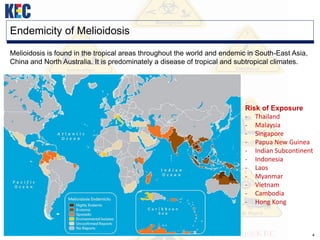
Melioidosis is found in the tropical areas throughout the world and endemic in South-East Asia,
China and North Australia. It is predominately a disease of tropical and subtropical climates.
Risk of Exposure
- Thailand
- Malaysia
- Singapore
- Papua New Guinea
- Indian Subcontinent
- Indonesia
- Laos
- Myanmar
- Vietnam
- Cambodia
- Hong Kong
5
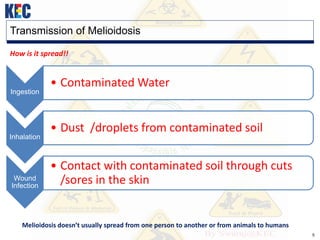
Transmission of Melioidosis
How is it spread!!
Ingestion
• Contaminated Water
Inhalation
• Dust /droplets from contaminated soil
Wound
Infection
• Contact with contaminated soil through cuts
/sores in the skin
Melioidosis doesn’t usually spread from one person to another or from animals to humans
6
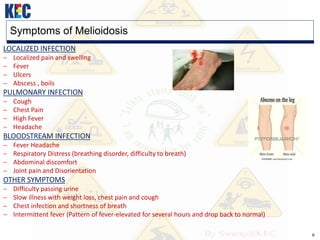
Symptoms of Melioidosis
LOCALIZED INFECTION
 Localized pain and swelling
 Fever
 Ulcers
 Abscess , boils
PULMONARY INFECTION
 Cough
 Chest Pain
 High Fever
 Headache
BLOODSTREAM INFECTION
 Fever Headache
 Respiratory Distress (breathing disorder, difficulty to breath)
 Abdominal discomfort
 Joint pain and Disorientation
OTHER SYMPTOMS
 Difficulty passing urine
 Slow illness with weight loss, chest pain and cough
 Chest infection and shortness of breath
 Intermittent fever (Pattern of fever-elevated for several hours and drop back to normal)
7
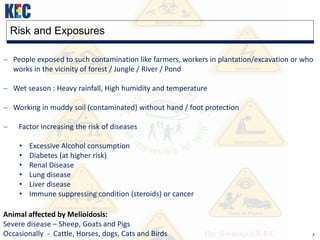
Risk and Exposures
 People exposed to such contamination like farmers, workers in plantation/excavation or who
works in the vicinity of forest / Jungle / River / Pond
 Wet season : Heavy rainfall, High humidity and temperature
 Working in muddy soil (contaminated) without hand / foot protection
 Factor increasing the risk of diseases
• Excessive Alcohol consumption
• Diabetes (at higher risk)
• Renal Disease
• Lung disease
• Liver disease
• Immune suppressing condition (steroids) or cancer
Animal affected by Melioidosis:
Severe disease – Sheep, Goats and Pigs
Occasionally - Cattle, Horses, dogs, Cats and Birds
8
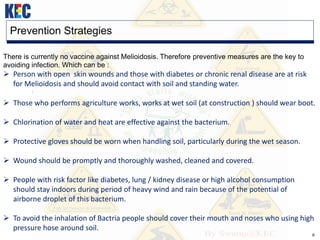
Prevention Strategies
There is currently no vaccine against Melioidosis. Therefore preventive measures are the key to
avoiding infection. Which can be :
 Person with open skin wounds and those with diabetes or chronic renal disease are at risk
for Melioidosis and should avoid contact with soil and standing water.
 Those who performs agriculture works, works at wet soil (at construction ) should wear boot.
 Chlorination of water and heat are effective against the bacterium.
 Protective gloves should be worn when handling soil, particularly during the wet season.
 Wound should be promptly and thoroughly washed, cleaned and covered.
 People with risk factor like diabetes, lung / kidney disease or high alcohol consumption
should stay indoors during period of heavy wind and rain because of the potential of
airborne droplet of this bacterium.
 To avoid the inhalation of Bactria people should cover their mouth and noses who using high
pressure hose around soil.
9
Treatment
 All patients (or suspected ) must be admitted to Hospital initially.
 Antibiotics to be administered and to be continued for at least 3 month.
 Starts with intravenous antimicrobial therapy
 Followed by oral antimicrobial therapy (3-6 months)
THANK YOU
Reference:
 Center of disease control and prevention
 Melioidosis : Clinical microbiology Review : 2005, Currey BJ
 Emerging Infectious disease ; Internet
 A review of Melioidosis case in America : Internet
www.kecrpg.com
Registered Office
RPG House, 463, Dr. Annie Besant Road, Worli, Mumbai - 400 030.
Phone: +91-22-6667 0200 Email: kecindia@kecrpg.com
Global Footprint in
100 countries*
*Includes EPC and Supply
Follow us on:

Melioidosis Awareness

  • 1.
    Awareness Training onMelioidosis Swaraj Kumar Manager EHS, EAP&CIS Power T & D CablesRailways CivilSolar Smart InfraRailways
  • 2.
    2 Overview  What isMelioidosis  Endemicity of Melioidosis  Transmission of Melioidosis  Symptoms  Exposure and Risks  Prevention  Treatment
  • 3.
    3 What is Melioidosis Melioidosis(also known as Whitmore’s disease) is a bacterial disease caused by bacteria BURKHOLDERIA PSEUDOMALLEI. This bacteria live below the soil surface but after heavy rainfall are found in surface water and mud and may become airborne • It affects human being and many species of animals • Found in moist soil, rice paddies and muddy water • Spread to humans and animals through direct contact with the contaminated source • It the environment it can remain dormant for years or kill within 48 hours  Mortality ranges from 40-75% despite the proper use of antimicrobial therapy.  Around 165000 cases per year estimated out of 90000 death.  It Persists in Environment up to 6 years
  • 4.
    4 Endemicity of Melioidosis Melioidosisis found in the tropical areas throughout the world and endemic in South-East Asia, China and North Australia. It is predominately a disease of tropical and subtropical climates. Risk of Exposure - Thailand - Malaysia - Singapore - Papua New Guinea - Indian Subcontinent - Indonesia - Laos - Myanmar - Vietnam - Cambodia - Hong Kong
  • 5.
    5 Transmission of Melioidosis Howis it spread!! Ingestion • Contaminated Water Inhalation • Dust /droplets from contaminated soil Wound Infection • Contact with contaminated soil through cuts /sores in the skin Melioidosis doesn’t usually spread from one person to another or from animals to humans
  • 6.
    6 Symptoms of Melioidosis LOCALIZEDINFECTION  Localized pain and swelling  Fever  Ulcers  Abscess , boils PULMONARY INFECTION  Cough  Chest Pain  High Fever  Headache BLOODSTREAM INFECTION  Fever Headache  Respiratory Distress (breathing disorder, difficulty to breath)  Abdominal discomfort  Joint pain and Disorientation OTHER SYMPTOMS  Difficulty passing urine  Slow illness with weight loss, chest pain and cough  Chest infection and shortness of breath  Intermittent fever (Pattern of fever-elevated for several hours and drop back to normal)
  • 7.
    7 Risk and Exposures People exposed to such contamination like farmers, workers in plantation/excavation or who works in the vicinity of forest / Jungle / River / Pond  Wet season : Heavy rainfall, High humidity and temperature  Working in muddy soil (contaminated) without hand / foot protection  Factor increasing the risk of diseases • Excessive Alcohol consumption • Diabetes (at higher risk) • Renal Disease • Lung disease • Liver disease • Immune suppressing condition (steroids) or cancer Animal affected by Melioidosis: Severe disease – Sheep, Goats and Pigs Occasionally - Cattle, Horses, dogs, Cats and Birds
  • 8.
    8 Prevention Strategies There iscurrently no vaccine against Melioidosis. Therefore preventive measures are the key to avoiding infection. Which can be :  Person with open skin wounds and those with diabetes or chronic renal disease are at risk for Melioidosis and should avoid contact with soil and standing water.  Those who performs agriculture works, works at wet soil (at construction ) should wear boot.  Chlorination of water and heat are effective against the bacterium.  Protective gloves should be worn when handling soil, particularly during the wet season.  Wound should be promptly and thoroughly washed, cleaned and covered.  People with risk factor like diabetes, lung / kidney disease or high alcohol consumption should stay indoors during period of heavy wind and rain because of the potential of airborne droplet of this bacterium.  To avoid the inhalation of Bactria people should cover their mouth and noses who using high pressure hose around soil.
  • 9.
    9 Treatment  All patients(or suspected ) must be admitted to Hospital initially.  Antibiotics to be administered and to be continued for at least 3 month.  Starts with intravenous antimicrobial therapy  Followed by oral antimicrobial therapy (3-6 months)
  • 10.
    THANK YOU Reference:  Centerof disease control and prevention  Melioidosis : Clinical microbiology Review : 2005, Currey BJ  Emerging Infectious disease ; Internet  A review of Melioidosis case in America : Internet www.kecrpg.com Registered Office RPG House, 463, Dr. Annie Besant Road, Worli, Mumbai - 400 030. Phone: +91-22-6667 0200 Email: kecindia@kecrpg.com Global Footprint in 100 countries* *Includes EPC and Supply Follow us on: