The Global Distribution and
Burden of Melioidosis
Direk Limmathurotsakul, MD MSc PhD
Mahidol-Oxford Tropical Medicine Research Unit, Mahidol University, Thailand
Wellcome Trust Intermediate Fellow in Public Health and Tropical Medicine
Presented at 2nd GRF One Health Summit 2013, Davos
HAVE YOU EVER HEARD OF
THIS DISEASE ?
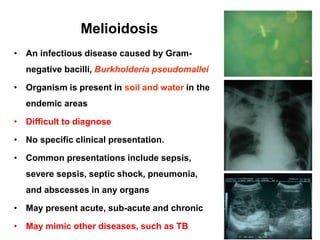
Melioidosis
• An infectious disease caused by Gram-

negative bacilli, Burkholderia pseudomallei
• Organism is present in soil and water in the
endemic areas
• Difficult to diagnose
• No specific clinical presentation.

• Common presentations include sepsis,
severe sepsis, septic shock, pneumonia,
and abscesses in any organs
• May present acute, sub-acute and chronic
• May mimic other diseases, such as TB
Melioidosis
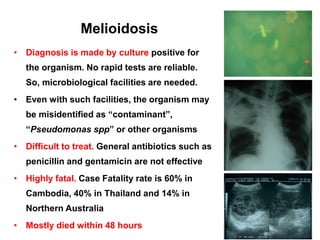
• Diagnosis is made by culture positive for

the organism. No rapid tests are reliable.
So, microbiological facilities are needed.
• Even with such facilities, the organism may

be misidentified as “contaminant”,
“Pseudomonas spp” or other organisms
• Difficult to treat. General antibiotics such as
penicillin and gentamicin are not effective
• Highly fatal. Case Fatality rate is 60% in
Cambodia, 40% in Thailand and 14% in
Northern Australia
• Mostly died within 48 hours
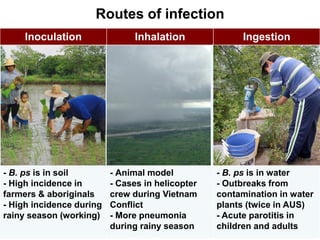
Routes of infection
Inoculation

- B. ps is in soil
- High incidence in
farmers & aboriginals
- High incidence during
rainy season (working)

Inhalation

- Animal model
- Cases in helicopter
crew during Vietnam
Conflict
- More pneumonia
during rainy season

Ingestion

- B. ps is in water
- Outbreaks from
contamination in water
plants (twice in AUS)
- Acute parotitis in
children and adults
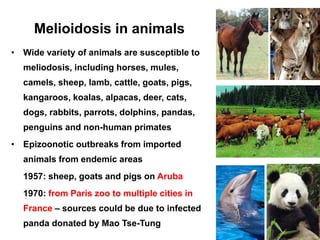
Melioidosis in animals
• Wide variety of animals are susceptible to

meliodosis, including horses, mules,
camels, sheep, lamb, cattle, goats, pigs,
kangaroos, koalas, alpacas, deer, cats,

dogs, rabbits, parrots, dolphins, pandas,
penguins and non-human primates
• Epizoonotic outbreaks from imported
animals from endemic areas
1957: sheep, goats and pigs on Aruba
1970: from Paris zoo to multiple cities in
France – sources could be due to infected
panda donated by Mao Tse-Tung
Interesting points
• Melioidosis is not contagious

• Melioidosis has zoonotic potential, but
it has been rarely reported.
• Both human and animals acquire the
diseases directly from the environment

• B. pseudomallei is classified as Tier 1
select agent by the US Federal Select
Agent Program (together with Bacillus
anthracis, Ebola virus, and the others)
HOW MANY ARE KILLED BY
MELIOIDOSIS EACH YEAR ?
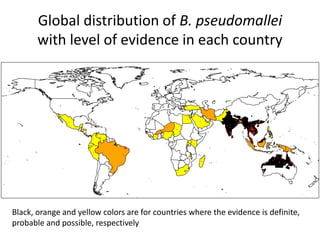
Global distribution of B. pseudomallei
with level of evidence in each country

● ●
●● ●
●
●
●

●

●
●

●

●

●
●

●
● ●
●

●
●

●
●
●

●●
●

●

●
●

●
● ●●

●●

●

●

●

●

● ●
●
●
●
●
●
● ● ●●
●
●
●
●
● ●

●

●

●
●
●
●
●

●
●

●

●

●●
●●●
●
●
●
● ●

● ●
●

●

●

●
●
●
●●
● ●●
● ●
●
●

●
●
●
●
●
●
●
●● ●●
●
●
●
●
● ● ●●
●
●●
● ●● ●
●
●
●●
●
●
●
●
●● ●
●●
●●
● ● ●●
●
●
●
●
● ●●●●●
●
●
●● ●● ●
●● ●
●● ● ●
● ●
●●
●●
●
●●
● ●●●●●
● ●●
● ●●●●●
●
●
●●
●●
●●
●●
●●
●●
●● ●
●●
●
● ●●
●
●●
●● ●
●●
●
●●
●
●●●
●●
●
●

●

●

●
●
●
●
●
● ●
●
●
●
●
●
●
● ●
●
●
● ●
●
●
●
●
●
●
● ● ● ●●
●
●

●

●

●
●
●

●
●

●

●
●
●

●

●

●
●
●
●

●●
●
●
●
●

Black, orange and yellow colors are for countries where the evidence is definite,
probable and possible, respectively
−150
−100
−50
0
50
100
150

●
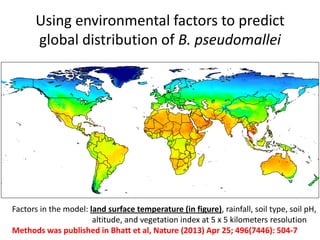
Using environmental factors to predict
global distribution of B. pseudomallei

●
● ●
●
●
●

●

●
●

●

●

●
●

●
● ●
●

●
●

●

●
●

●

●

●
● ●●

●●

●

●●

● ●
●
●
●
●
●
● ● ●●
●
●
●
● ●
●
●
●

●

●
●

●
●

●

●

●
●

●

●
● ●●
●
●
●
●

● ●
●

●

●

●

●
●
●
●●
●● ● ●
●
●

●

●
●
●
●
●
●●
●
●
●●
● ●●
●
● ●●
●
●●
●
●
● ● ●● ●
●
● ●
●
●●
●● ●
● ● ●●●
●
●
● ●●●●●
●
●
● ● ●● ●
●●● ●
●
●●
●●●
●●●
● ●●●●●
●
●
● ● ●●
●
●
●
●
●
●
●●
●●
● ●●
●● ●
●●
● ●●
●
●●
●● ●
●●
●
●●
●
●●
●●
●
●

●

●

●
●
●
●
●
●

●

●
●
●
●

●
●

●

● ●
●
●
●
● ●
●
●
●

●

●

●

●
●
●

● ●
●

●

●
●
●
●
●
●

●
●
●

●

●

●
●
●●
●
●
●

Factors in the model: land surface temperature (in figure), rainfall, soil type, soil pH,
altitude, and vegetation index 50 5 x 5 kilometers resolution
at
−150
−100
−50
0
100
150
Methods was published in Bhatt et al, Nature (2013) Apr 25; 496(7446): 504-7
Latitude
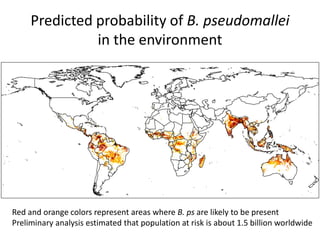
Predicted probability of B. pseudomallei
in the environment

Red and orange colors represent areas where B. ps are likely to be present
Preliminary analysis estimated that population at risk is about 1.5 billion worldwide
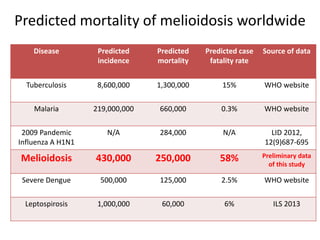
Predicted mortality of melioidosis worldwide
Disease

Predicted
incidence

Predicted
mortality

Predicted case
fatality rate

Source of data

Tuberculosis

8,600,000

1,300,000

15%

WHO website

Malaria

219,000,000

660,000

0.3%

WHO website

2009 Pandemic
Influenza A H1N1

N/A

284,000

N/A

LID 2012,
12(9)687-695

Melioidosis

430,000

250,000

58%

Preliminary data
of this study

Severe Dengue

500,000

125,000

2.5%

WHO website

Leptospirosis

1,000,000

60,000

6%

ILS 2013
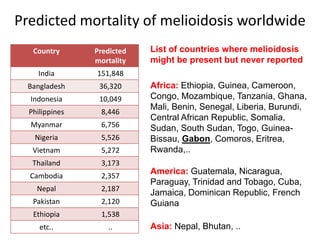
Predicted mortality of melioidosis worldwide
Country

Predicted
mortality

India

151,848

Bangladesh

36,320

Indonesia

10,049

Philippines

8,446

Myanmar

6,756

Nigeria

5,526

Vietnam

5,272

Thailand

3,173

Cambodia

2,357

Nepal

2,187

Pakistan

2,120

Ethiopia

1,538

etc..

..

List of countries where melioidosis
might be present but never reported

Africa: Ethiopia, Guinea, Cameroon,
Congo, Mozambique, Tanzania, Ghana,
Mali, Benin, Senegal, Liberia, Burundi,
Central African Republic, Somalia,
Sudan, South Sudan, Togo, GuineaBissau, Gabon, Comoros, Eritrea,
Rwanda,..
America: Guatemala, Nicaragua,
Paraguay, Trinidad and Tobago, Cuba,
Jamaica, Dominican Republic, French
Guiana
Asia: Nepal, Bhutan, ..
DO YOU NEED INFORMATION
ABOUT THIS DEADLY DISEASE ?
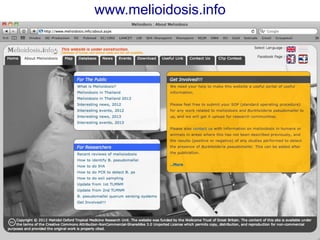
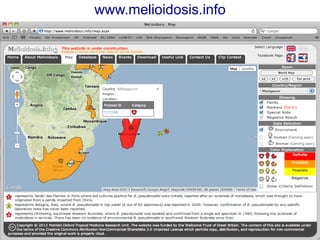
www.melioidosis.info
Conclusion
• Melioidosis is an important but overlooked infectious disease
• It is estimated that melioidosis kills 250,000 people per year,
and most are likely to be undiagnosed
• Further investigations need to be done in many tropical
countries
• Proper prevention, diagnosis and treatment should then be
provided to those areas
Acknowledgement

Nick Golding,
SEEG, Oxford

Eric Bertherat
WHO

David Dance,
LOMWRU, Laos

Prof Sharon Peacock,
Cambridge

Prof Nicholas Day
MORU, Thailand

Rungrueng Kitphati
Ministry of Public Health, Thailand

Prof Simon Hay
SEEG, Oxford
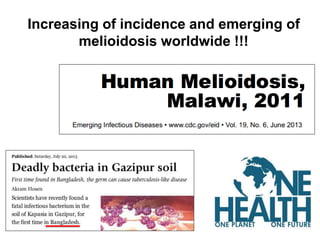
Increasing of incidence and emerging of
melioidosis worldwide !!!

The Global Distribution and Burden of Melioidosis, an Overlooked Emerging Infectious Disease

  • 1.
    The Global Distributionand Burden of Melioidosis Direk Limmathurotsakul, MD MSc PhD Mahidol-Oxford Tropical Medicine Research Unit, Mahidol University, Thailand Wellcome Trust Intermediate Fellow in Public Health and Tropical Medicine Presented at 2nd GRF One Health Summit 2013, Davos
  • 2.
    HAVE YOU EVERHEARD OF THIS DISEASE ?
  • 3.
    Melioidosis • An infectiousdisease caused by Gram- negative bacilli, Burkholderia pseudomallei • Organism is present in soil and water in the endemic areas • Difficult to diagnose • No specific clinical presentation. • Common presentations include sepsis, severe sepsis, septic shock, pneumonia, and abscesses in any organs • May present acute, sub-acute and chronic • May mimic other diseases, such as TB
  • 4.
    Melioidosis • Diagnosis ismade by culture positive for the organism. No rapid tests are reliable. So, microbiological facilities are needed. • Even with such facilities, the organism may be misidentified as “contaminant”, “Pseudomonas spp” or other organisms • Difficult to treat. General antibiotics such as penicillin and gentamicin are not effective • Highly fatal. Case Fatality rate is 60% in Cambodia, 40% in Thailand and 14% in Northern Australia • Mostly died within 48 hours
  • 5.
    Routes of infection Inoculation -B. ps is in soil - High incidence in farmers & aboriginals - High incidence during rainy season (working) Inhalation - Animal model - Cases in helicopter crew during Vietnam Conflict - More pneumonia during rainy season Ingestion - B. ps is in water - Outbreaks from contamination in water plants (twice in AUS) - Acute parotitis in children and adults
  • 6.
    Melioidosis in animals •Wide variety of animals are susceptible to meliodosis, including horses, mules, camels, sheep, lamb, cattle, goats, pigs, kangaroos, koalas, alpacas, deer, cats, dogs, rabbits, parrots, dolphins, pandas, penguins and non-human primates • Epizoonotic outbreaks from imported animals from endemic areas 1957: sheep, goats and pigs on Aruba 1970: from Paris zoo to multiple cities in France – sources could be due to infected panda donated by Mao Tse-Tung
  • 7.
    Interesting points • Melioidosisis not contagious • Melioidosis has zoonotic potential, but it has been rarely reported. • Both human and animals acquire the diseases directly from the environment • B. pseudomallei is classified as Tier 1 select agent by the US Federal Select Agent Program (together with Bacillus anthracis, Ebola virus, and the others)
  • 8.
    HOW MANY AREKILLED BY MELIOIDOSIS EACH YEAR ?
  • 9.
    Global distribution ofB. pseudomallei with level of evidence in each country ● ● ●● ● ● ● ● ● ● ● ● ● ● ● ● ● ● ● ● ● ● ● ● ●● ● ● ● ● ● ● ●● ●● ● ● ● ● ● ● ● ● ● ● ● ● ● ●● ● ● ● ● ● ● ● ● ● ● ● ● ● ● ● ● ● ●● ●●● ● ● ● ● ● ● ● ● ● ● ● ● ● ●● ● ●● ● ● ● ● ● ● ● ● ● ● ● ●● ●● ● ● ● ● ● ● ●● ● ●● ● ●● ● ● ● ●● ● ● ● ● ●● ● ●● ●● ● ● ●● ● ● ● ● ● ●●●●● ● ● ●● ●● ● ●● ● ●● ● ● ● ● ●● ●● ● ●● ● ●●●●● ● ●● ● ●●●●● ● ● ●● ●● ●● ●● ●● ●● ●● ● ●● ● ● ●● ● ●● ●● ● ●● ● ●● ● ●●● ●● ● ● ● ● ● ● ● ● ● ● ● ● ● ● ● ● ● ● ● ● ● ● ● ● ● ● ● ● ● ● ● ● ●● ● ● ● ● ● ● ● ● ● ● ● ● ● ● ● ● ● ● ● ●● ● ● ● ● Black, orange and yellow colors are for countries where the evidence is definite, probable and possible, respectively −150 −100 −50 0 50 100 150 ●
  • 10.
    Using environmental factorsto predict global distribution of B. pseudomallei ● ● ● ● ● ● ● ● ● ● ● ● ● ● ● ● ● ● ● ● ● ● ● ● ● ● ●● ●● ● ●● ● ● ● ● ● ● ● ● ● ●● ● ● ● ● ● ● ● ● ● ● ● ● ● ● ● ● ● ● ● ● ●● ● ● ● ● ● ● ● ● ● ● ● ● ● ●● ●● ● ● ● ● ● ● ● ● ● ● ●● ● ● ●● ● ●● ● ● ●● ● ●● ● ● ● ● ●● ● ● ● ● ● ●● ●● ● ● ● ●●● ● ● ● ●●●●● ● ● ● ● ●● ● ●●● ● ● ●● ●●● ●●● ● ●●●●● ● ● ● ● ●● ● ● ● ● ● ● ●● ●● ● ●● ●● ● ●● ● ●● ● ●● ●● ● ●● ● ●● ● ●● ●● ● ● ● ● ● ● ● ● ● ● ● ● ● ● ● ● ● ● ● ● ● ● ● ● ● ● ● ● ● ● ● ● ● ● ● ● ● ● ● ● ● ● ● ● ● ● ● ● ● ● ● ●● ● ● ● Factors in the model: land surface temperature (in figure), rainfall, soil type, soil pH, altitude, and vegetation index 50 5 x 5 kilometers resolution at −150 −100 −50 0 100 150 Methods was published in Bhatt et al, Nature (2013) Apr 25; 496(7446): 504-7 Latitude
  • 11.
    Predicted probability ofB. pseudomallei in the environment Red and orange colors represent areas where B. ps are likely to be present Preliminary analysis estimated that population at risk is about 1.5 billion worldwide
  • 12.
    Predicted mortality ofmelioidosis worldwide Disease Predicted incidence Predicted mortality Predicted case fatality rate Source of data Tuberculosis 8,600,000 1,300,000 15% WHO website Malaria 219,000,000 660,000 0.3% WHO website 2009 Pandemic Influenza A H1N1 N/A 284,000 N/A LID 2012, 12(9)687-695 Melioidosis 430,000 250,000 58% Preliminary data of this study Severe Dengue 500,000 125,000 2.5% WHO website Leptospirosis 1,000,000 60,000 6% ILS 2013
  • 13.
    Predicted mortality ofmelioidosis worldwide Country Predicted mortality India 151,848 Bangladesh 36,320 Indonesia 10,049 Philippines 8,446 Myanmar 6,756 Nigeria 5,526 Vietnam 5,272 Thailand 3,173 Cambodia 2,357 Nepal 2,187 Pakistan 2,120 Ethiopia 1,538 etc.. .. List of countries where melioidosis might be present but never reported Africa: Ethiopia, Guinea, Cameroon, Congo, Mozambique, Tanzania, Ghana, Mali, Benin, Senegal, Liberia, Burundi, Central African Republic, Somalia, Sudan, South Sudan, Togo, GuineaBissau, Gabon, Comoros, Eritrea, Rwanda,.. America: Guatemala, Nicaragua, Paraguay, Trinidad and Tobago, Cuba, Jamaica, Dominican Republic, French Guiana Asia: Nepal, Bhutan, ..
  • 14.
    DO YOU NEEDINFORMATION ABOUT THIS DEADLY DISEASE ?
  • 15.
  • 16.
  • 17.
    Conclusion • Melioidosis isan important but overlooked infectious disease • It is estimated that melioidosis kills 250,000 people per year, and most are likely to be undiagnosed • Further investigations need to be done in many tropical countries • Proper prevention, diagnosis and treatment should then be provided to those areas
  • 18.
    Acknowledgement Nick Golding, SEEG, Oxford EricBertherat WHO David Dance, LOMWRU, Laos Prof Sharon Peacock, Cambridge Prof Nicholas Day MORU, Thailand Rungrueng Kitphati Ministry of Public Health, Thailand Prof Simon Hay SEEG, Oxford
  • 19.
    Increasing of incidenceand emerging of melioidosis worldwide !!!