Meiosis: Two nuclear divisions
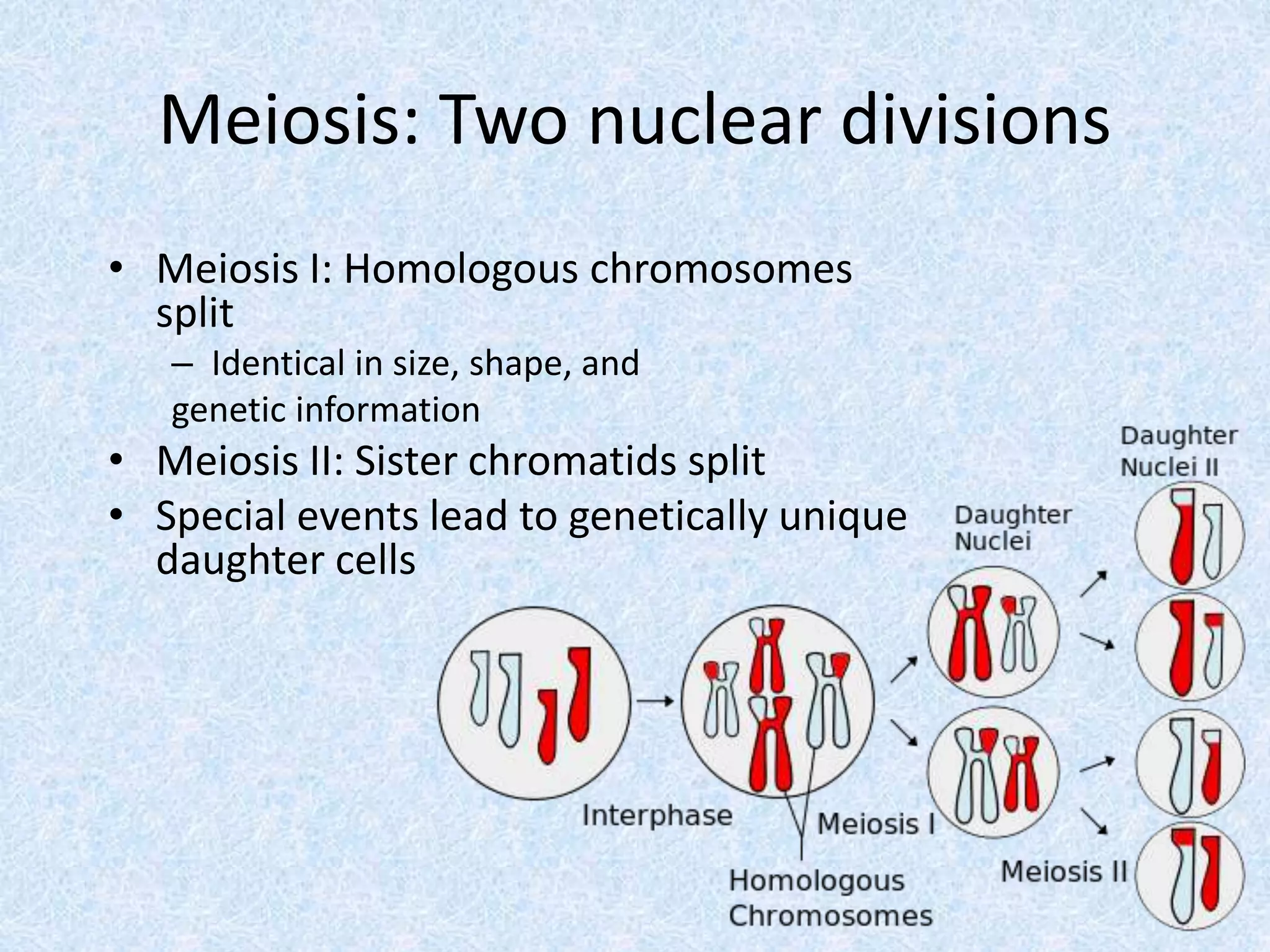
• Meiosis I: Homologous chromosomes
split
– Identical in size, shape, and
genetic information
• Meiosis II: Sister chromatids split
• Special events lead to genetically unique
daughter cells
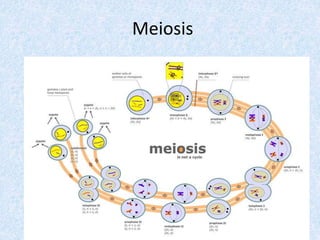
Meiosis
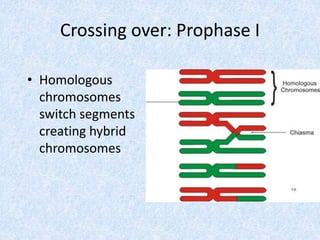
Crossing over: Prophase I
• Homologous
chromosomes
switch segments
creating hybrid
chromosomes
Random Alignment: Metaphase I
• It is random which microtubule attaches to which
chromosome and ends up in which daughter cell
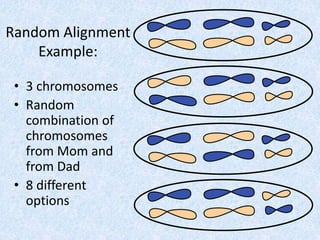
Random Alignment
Example:
• 3 chromosomes
• Random
combination of
chromosomes
from Mom and
from Dad
• 8 different
options
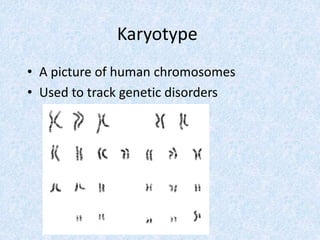
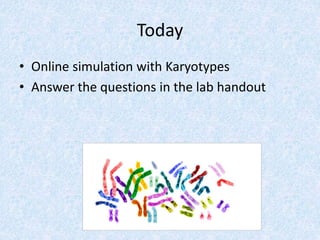
Karyotype
• A picture of human chromosomes
• Used to track genetic disorders
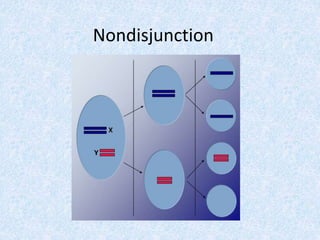
Nondisjunction
• Failure of chromosomes to separate
correctly in Meiosis
• Results in an aneuploid individual
• If there is one too few chromosomes called
monosomic (2n – 1)
• If one too many chromosomes called
trisomic (2n + 1)
Nondisjunction
Today
• Online simulation with Karyotypes
• Answer the questions in the lab handout

Meiosis Lab

  • 1.
    Meiosis: Two nucleardivisions • Meiosis I: Homologous chromosomes split – Identical in size, shape, and genetic information • Meiosis II: Sister chromatids split • Special events lead to genetically unique daughter cells
  • 2.
  • 3.
    Crossing over: ProphaseI • Homologous chromosomes switch segments creating hybrid chromosomes
  • 4.
    Random Alignment: MetaphaseI • It is random which microtubule attaches to which chromosome and ends up in which daughter cell
  • 5.
    Random Alignment Example: • 3chromosomes • Random combination of chromosomes from Mom and from Dad • 8 different options
  • 6.
    Karyotype • A pictureof human chromosomes • Used to track genetic disorders
  • 7.
    Nondisjunction • Failure ofchromosomes to separate correctly in Meiosis • Results in an aneuploid individual • If there is one too few chromosomes called monosomic (2n – 1) • If one too many chromosomes called trisomic (2n + 1)
  • 8.
  • 9.
    Today • Online simulationwith Karyotypes • Answer the questions in the lab handout