Download to read offline


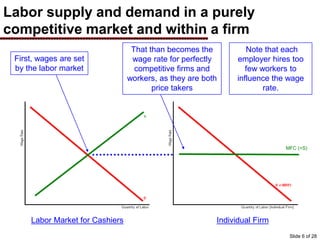
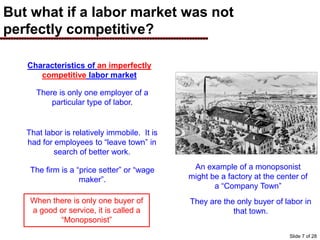
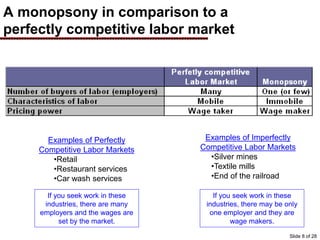
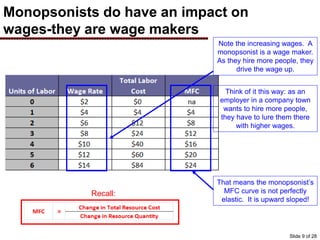
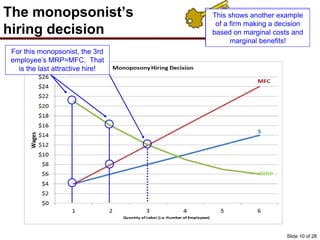
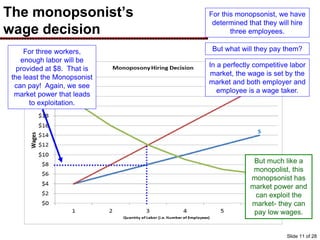
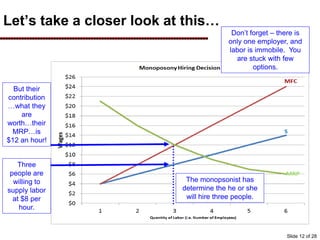
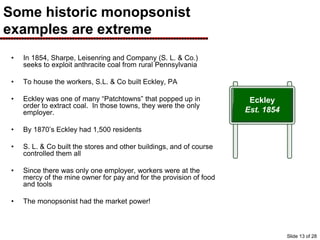
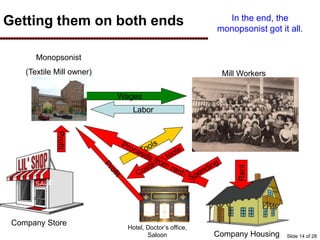

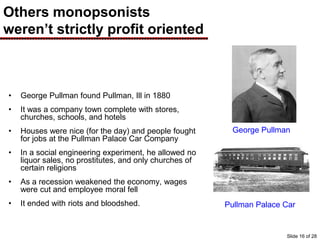
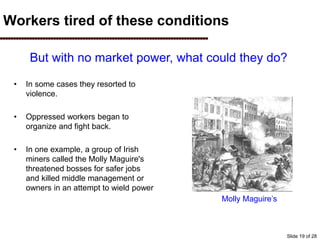
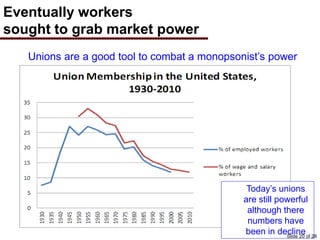

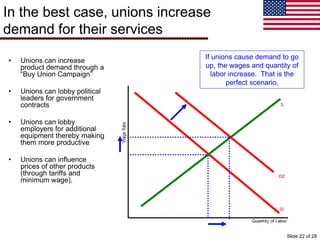
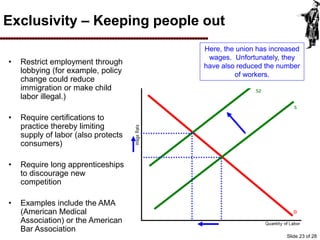
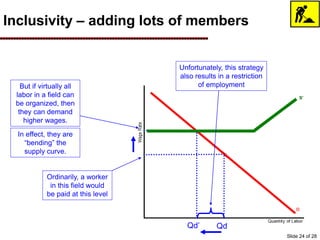

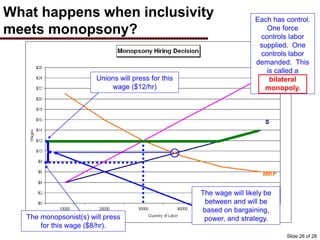
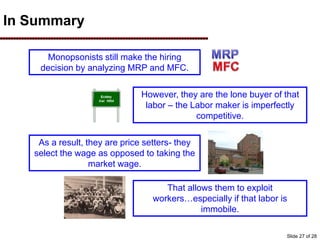


An imperfectly competitive labor market exists when there is a single employer, or monopsonist, for a particular type of labor in a given geographic area. This gives the employer market power as the sole buyer of labor, allowing it to exploit workers by paying wages below what the marginal revenue product of labor would be in a competitive market. Unions seek to countervail this monopsony power and achieve higher wages for workers by organizing large numbers of employees to increase their collective bargaining power against the employer. When unions are able to represent most or all workers in a field, they can negotiate wages closer to the competitive level by increasing the supply of labor and countering the monopsonist's control over the labor market.


