
Rigor Mortis
By: Imtiaz ur Rehman
4th Year MBBS
Khyber Medical College Peshawar
Definition
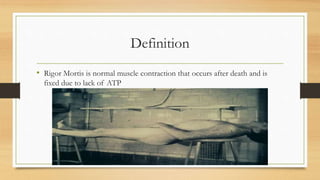
• Rigor Mortis is normal muscle contraction that occurs after death and is
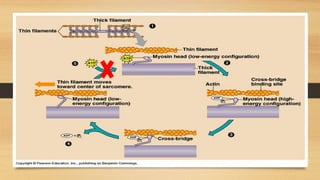
fixed due to lack of ATP
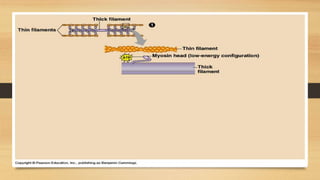
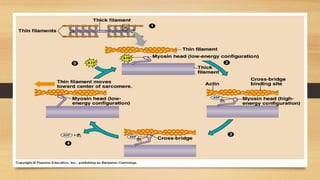
Mechanism of Rigor
Mortis
Characteristics
• Occurs in both involuntary and voluntary muscles
• Appears first in short muscles and then in larger muscles
• It has nothing to do with nerve supply as it can occur in paralyzed limbs as well
• Muscle become brittle and tearable
• Heart will be in permanent contracted state and will contain very little blood
• Skin will have granular appearance due to contraction of Erector Pilae muscles. This condition is called
Cutis Ansernia or goose skin
• Discharge of semen due to involvement of seminal vesicles
• Iris will contract abnormally
• Post mortem delivery
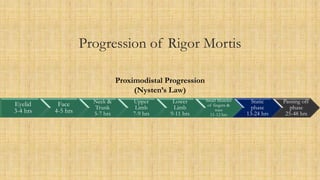
Progression of Rigor Mortis
Eyelid
3-4 hrs
Face
4-5 hrs
Neck &
Trunk
5-7 hrs
Upper
Limb
7-9 hrs
Lower
Limb
9-11 hrs
Small Muscles
of fingers &
toes
11-12 hrs
Static
phase
13-24 hrs
Passing off
phase
25-48 hrs
Proximodistal Progression
(Nysten’s Law)
Testing of Rigor Mortis
• Attempting to open eyelid
• Depressing the jaw
• Flexing neck and other joints
Factors effecting Rigor Mortis
• Temperature
• Age
• Body structure
• Nutritional status
• Muscular activity
• Mode of death
Medicolegal importance
• Diagnosis of death
• Determining postmortem interval
• Determining manner of death
• Position of body at the time of death
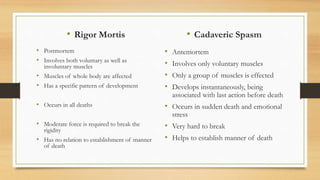
• Postmortem
• Involves both voluntary as well as
involuntary muscles
• Muscles of whole body are affected
• Has a specific pattern of development
• Occurs in all deaths
• Moderate force is required to break the
rigidity
• Has no relation to establishment of manner
of death
• Antemortem
• Involves only voluntary muscles
• Only a group of muscles is effected
• Develops instantaneously, being
associated with last action before death
• Occurs in sudden death and emotional
stress
• Very hard to break
• Helps to establish manner of death
• Rigor Mortis • Cadaveric Spasm
Thanks!!!

Rigor mortis

  • 2.
    Rigor Mortis By: Imtiazur Rehman 4th Year MBBS Khyber Medical College Peshawar
  • 3.
    Definition • Rigor Mortisis normal muscle contraction that occurs after death and is fixed due to lack of ATP
  • 4.
  • 10.
    Characteristics • Occurs inboth involuntary and voluntary muscles • Appears first in short muscles and then in larger muscles • It has nothing to do with nerve supply as it can occur in paralyzed limbs as well • Muscle become brittle and tearable • Heart will be in permanent contracted state and will contain very little blood • Skin will have granular appearance due to contraction of Erector Pilae muscles. This condition is called Cutis Ansernia or goose skin • Discharge of semen due to involvement of seminal vesicles • Iris will contract abnormally • Post mortem delivery
  • 11.
    Progression of RigorMortis Eyelid 3-4 hrs Face 4-5 hrs Neck & Trunk 5-7 hrs Upper Limb 7-9 hrs Lower Limb 9-11 hrs Small Muscles of fingers & toes 11-12 hrs Static phase 13-24 hrs Passing off phase 25-48 hrs Proximodistal Progression (Nysten’s Law)
  • 12.
    Testing of RigorMortis • Attempting to open eyelid • Depressing the jaw • Flexing neck and other joints
  • 13.
    Factors effecting RigorMortis • Temperature • Age • Body structure • Nutritional status • Muscular activity • Mode of death
  • 14.
    Medicolegal importance • Diagnosisof death • Determining postmortem interval • Determining manner of death • Position of body at the time of death
  • 15.
    • Postmortem • Involvesboth voluntary as well as involuntary muscles • Muscles of whole body are affected • Has a specific pattern of development • Occurs in all deaths • Moderate force is required to break the rigidity • Has no relation to establishment of manner of death • Antemortem • Involves only voluntary muscles • Only a group of muscles is effected • Develops instantaneously, being associated with last action before death • Occurs in sudden death and emotional stress • Very hard to break • Helps to establish manner of death • Rigor Mortis • Cadaveric Spasm
  • 16.