SHATKRIYA KALA
Presented by- Guided by-
Dr. Twinkle Joshi(JR 1) Dr. Vaishali Kuchewar
Department of Kayachikitsa Professor
Department of Kayachiktisa
SHATKRIYA KALA
It refers to the recognition of the stages of a
disease’s progress and the appropriate time of
treatment.
Shat - Six
Kriya - Treatment
Kala - Time or Stages
Acharya Sushrut has described Shatkriya kala in
vranaprashna adhyaya.
It is very essential for early diagnosis ,prognosis
and for adopting timely preventive and curative
measures.
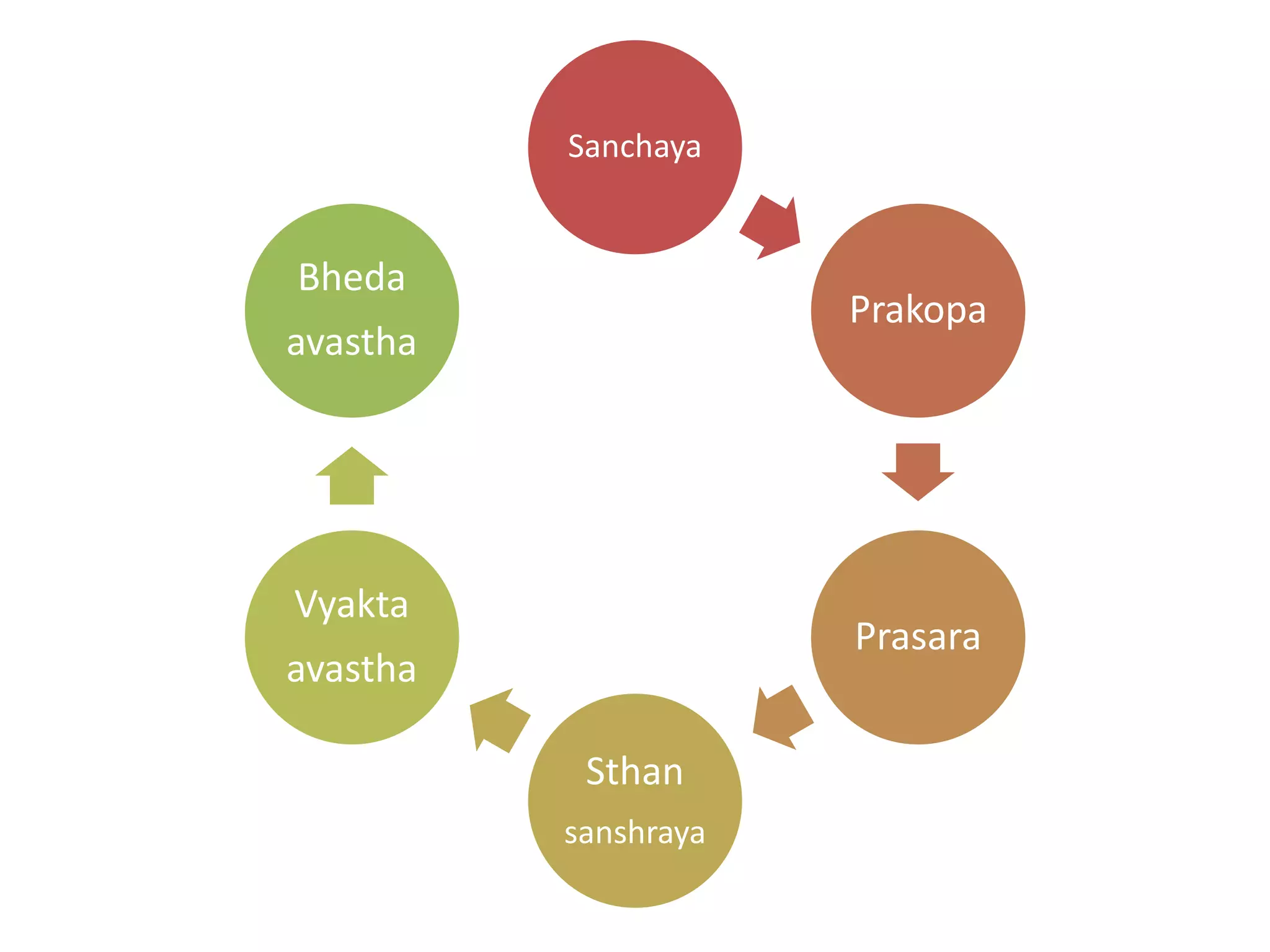
Sanchaya
Prakopa
Prasara
Sthan
sanshraya
Vyakta
avastha
Bheda
avastha
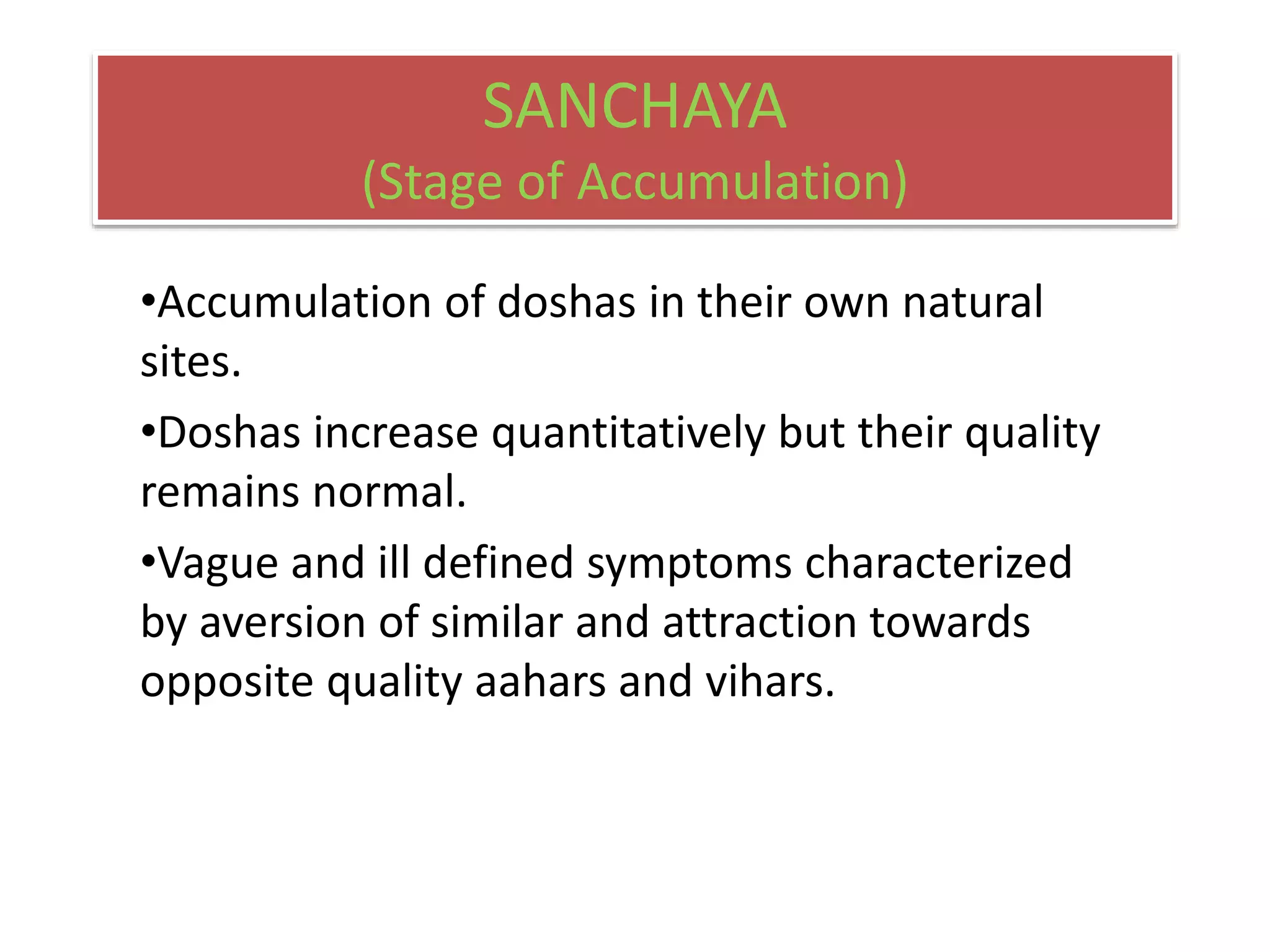
SANCHAYA
(Stage of Accumulation)
•Accumulation of doshas in their own natural
sites.
•Doshas increase quantitatively but their quality
remains normal.
•Vague and ill defined symptoms characterized
by aversion of similar and attraction towards
opposite quality aahars and vihars.
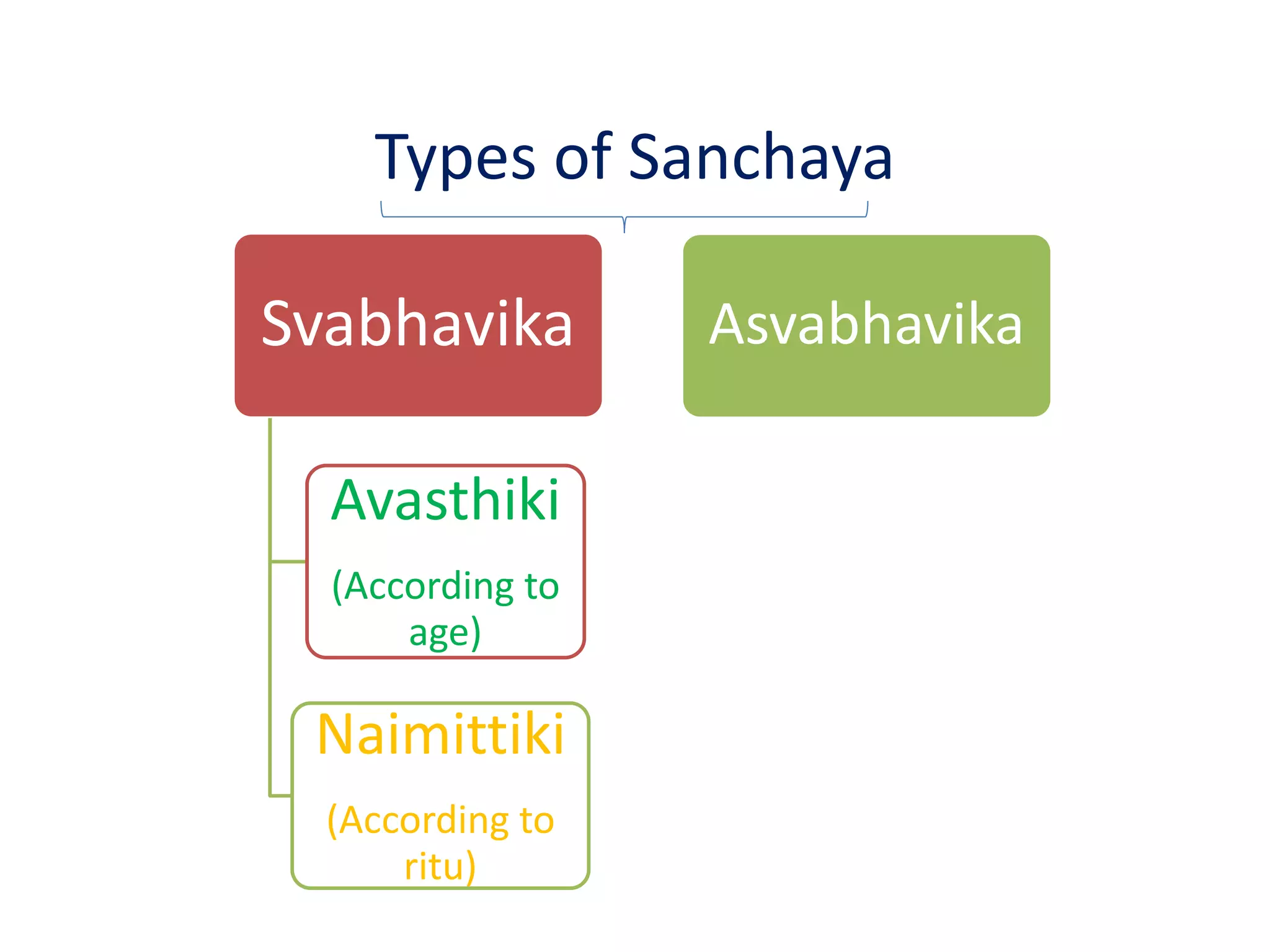
Types of Sanchaya
Svabhavika
Avasthiki
(According to
age)
Naimittiki
(According to
ritu)
Asvabhavika
Dosha Clinical Features in sanchaya
avastha
Vata Stabdha purna koshthata
Pitta Pitavabhasata, mandoshmata
Kapha Anganam gauravam, alasya
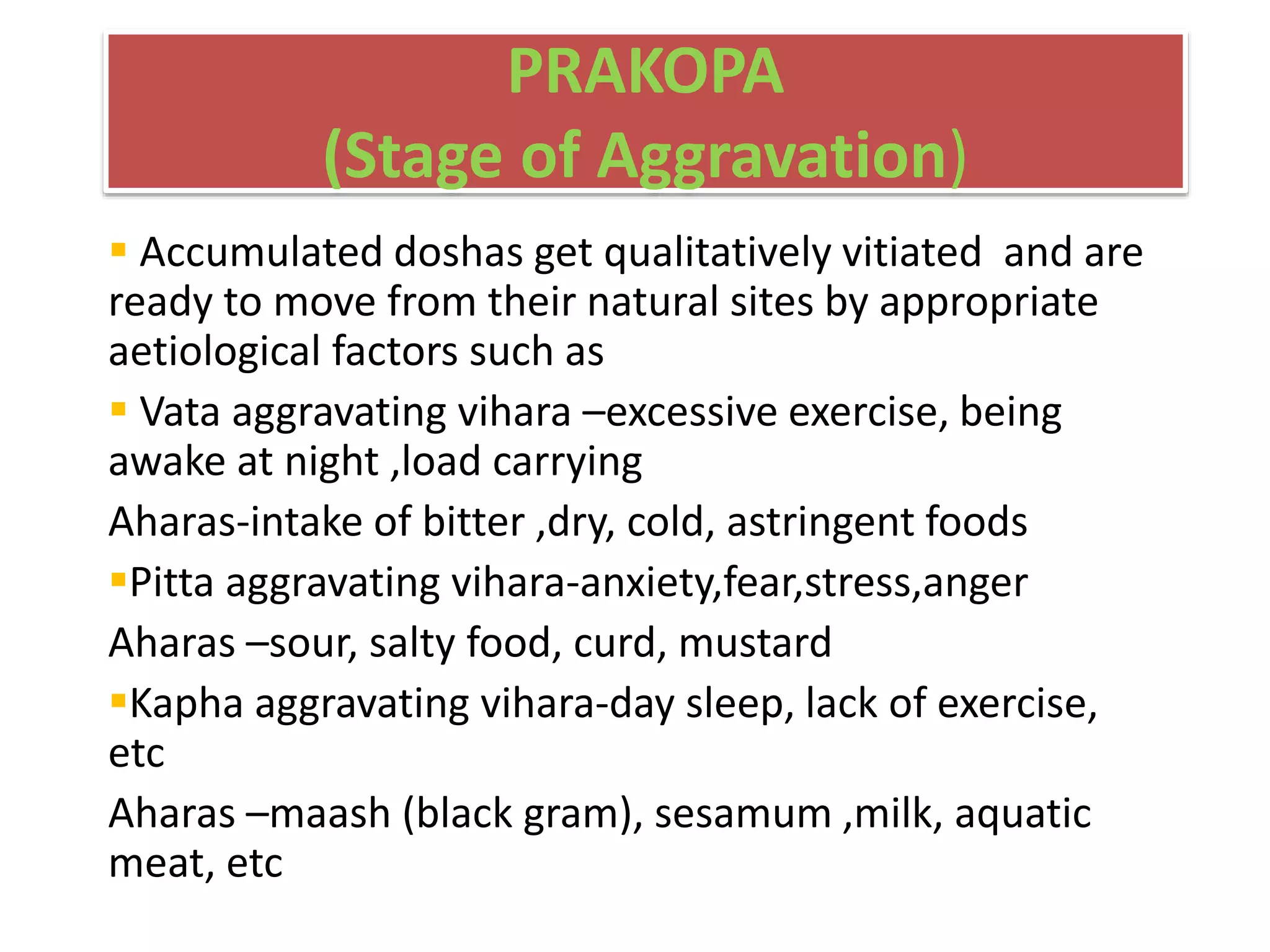
PRAKOPA
(Stage of Aggravation)
 Accumulated doshas get qualitatively vitiated and are
ready to move from their natural sites by appropriate
aetiological factors such as
 Vata aggravating vihara –excessive exercise, being
awake at night ,load carrying
Aharas-intake of bitter ,dry, cold, astringent foods
Pitta aggravating vihara-anxiety,fear,stress,anger
Aharas –sour, salty food, curd, mustard
Kapha aggravating vihara-day sleep, lack of exercise,
etc
Aharas –maash (black gram), sesamum ,milk, aquatic
meat, etc
Doshas Clinical features in
Prakopa avastha
Vata Koshtha toda
Vata Sancharana
Pitta Amla udgar
Pipasa
Paridaha
Kapha Anna dvesha
Hridaya utkleda
PRASARA
(Stage of Spread)
In this stage, doshas aggravated by above factors
start overflowing from their respective seats to
other sites like the overflowing of a mixture of
yeast, water and flour.
Vata being the causative agent, spreads other
doshas like a large accumulation of water, breaks
the barrier and flowing of water takes place in all
the directions.
This spread occurs in 15 types.
Types of Prasara
1. Vata
2. Pitta
3. Kapha
4. Rakta
5. Vata-Pitta
6. Vata-Kapha
7. Vata-Rakta
8. Pitta-Kapha
9. Pitta-Rakta
10. Kapha-Rakta
11. Vata-Pitta-Rakta
12. Vata-Kapha-Rakta
13. Pitta-Kapha-Rakta
14. Vata-Pitta-Kapha
15. Vata-Pitta-Kapha-Rakta
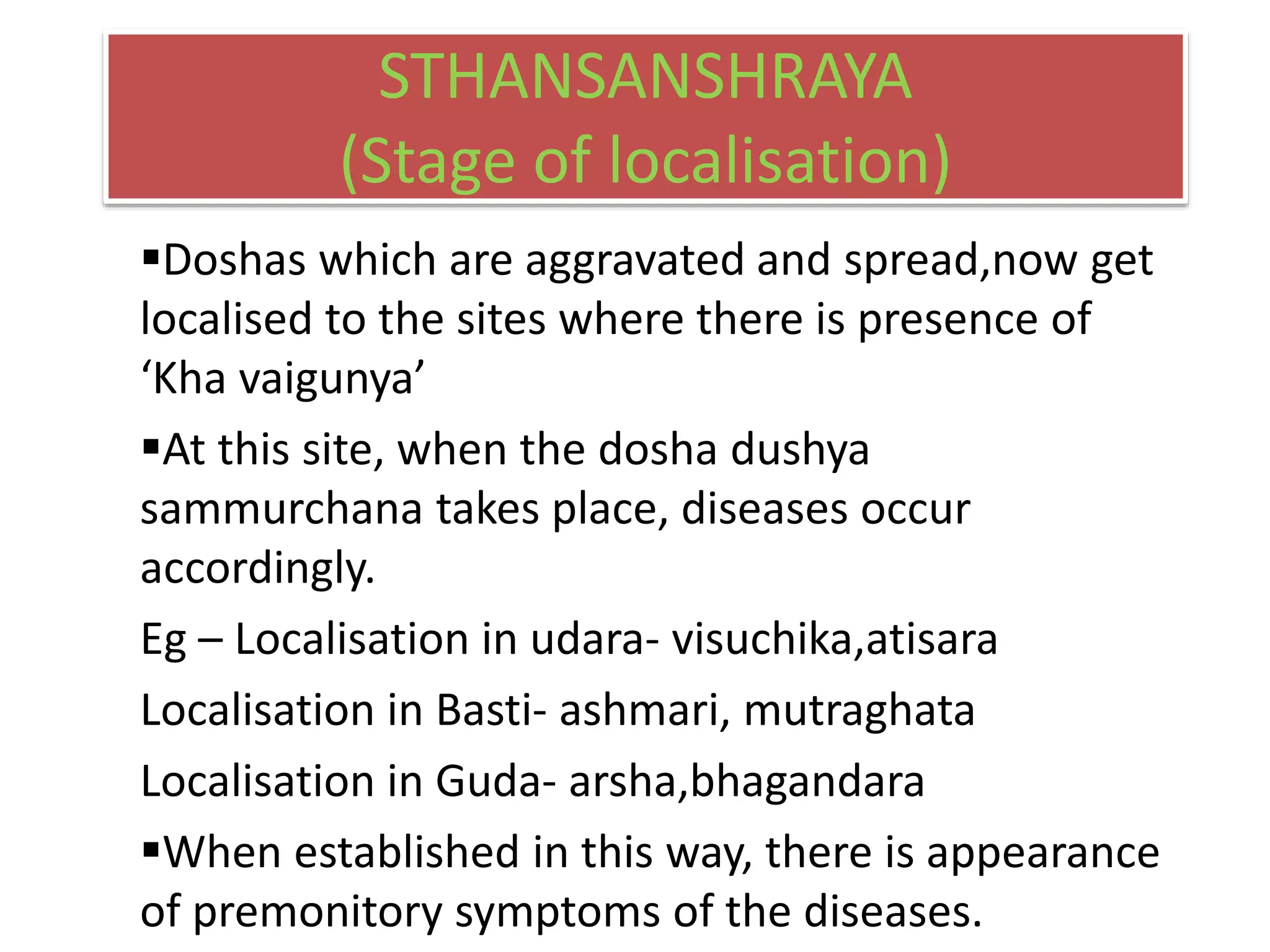
STHANSANSHRAYA
(Stage of localisation)
Doshas which are aggravated and spread,now get
localised to the sites where there is presence of
‘Kha vaigunya’
At this site, when the dosha dushya
sammurchana takes place, diseases occur
accordingly.
Eg – Localisation in udara- visuchika,atisara
Localisation in Basti- ashmari, mutraghata
Localisation in Guda- arsha,bhagandara
When established in this way, there is appearance
of premonitory symptoms of the diseases.
S.Su.24/10
VYAKTAVASTHA
(Stage of Manifestation)
In this stage, well manifested symptoms of the
disease appear.
It is also known as Vyadhidarshana avastha.
Santapa lakshan – Jwar
Atidrava sarana – Atisara
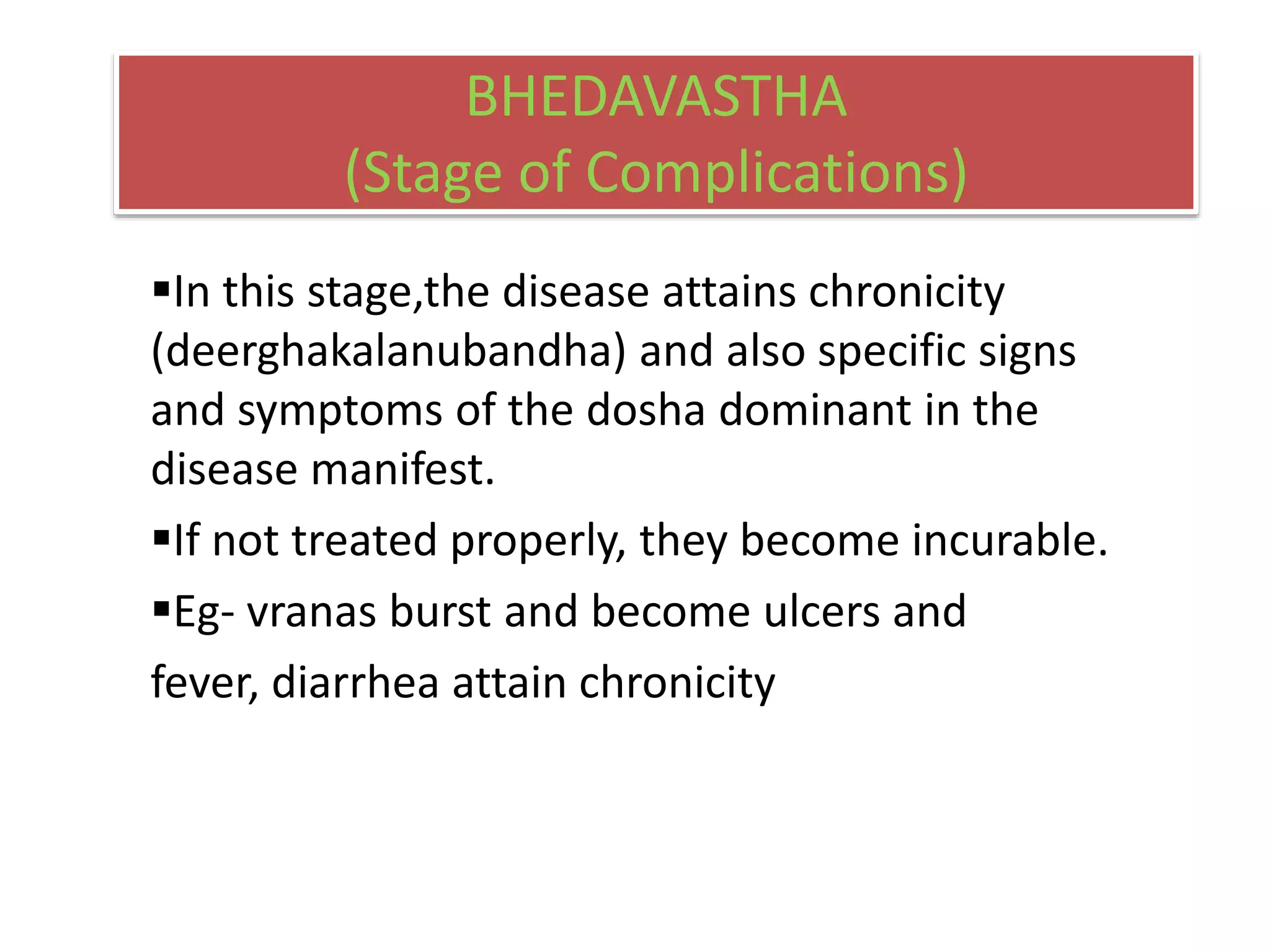
BHEDAVASTHA
(Stage of Complications)
In this stage,the disease attains chronicity
(deerghakalanubandha) and also specific signs
and symptoms of the dosha dominant in the
disease manifest.
If not treated properly, they become incurable.
Eg- vranas burst and become ulcers and
fever, diarrhea attain chronicity
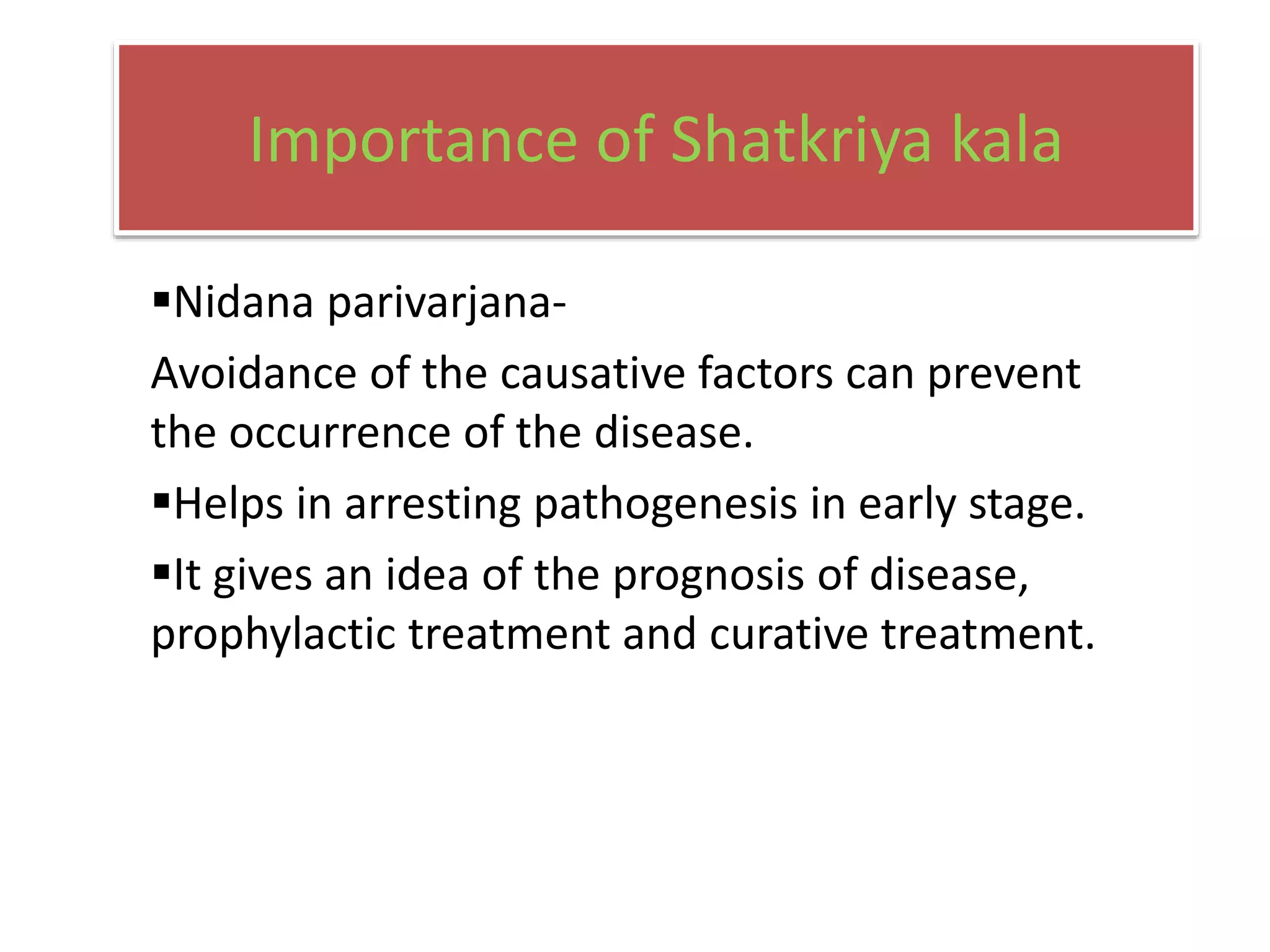
Importance of Shatkriya kala
Nidana parivarjana-
Avoidance of the causative factors can prevent
the occurrence of the disease.
Helps in arresting pathogenesis in early stage.
It gives an idea of the prognosis of disease,
prophylactic treatment and curative treatment.
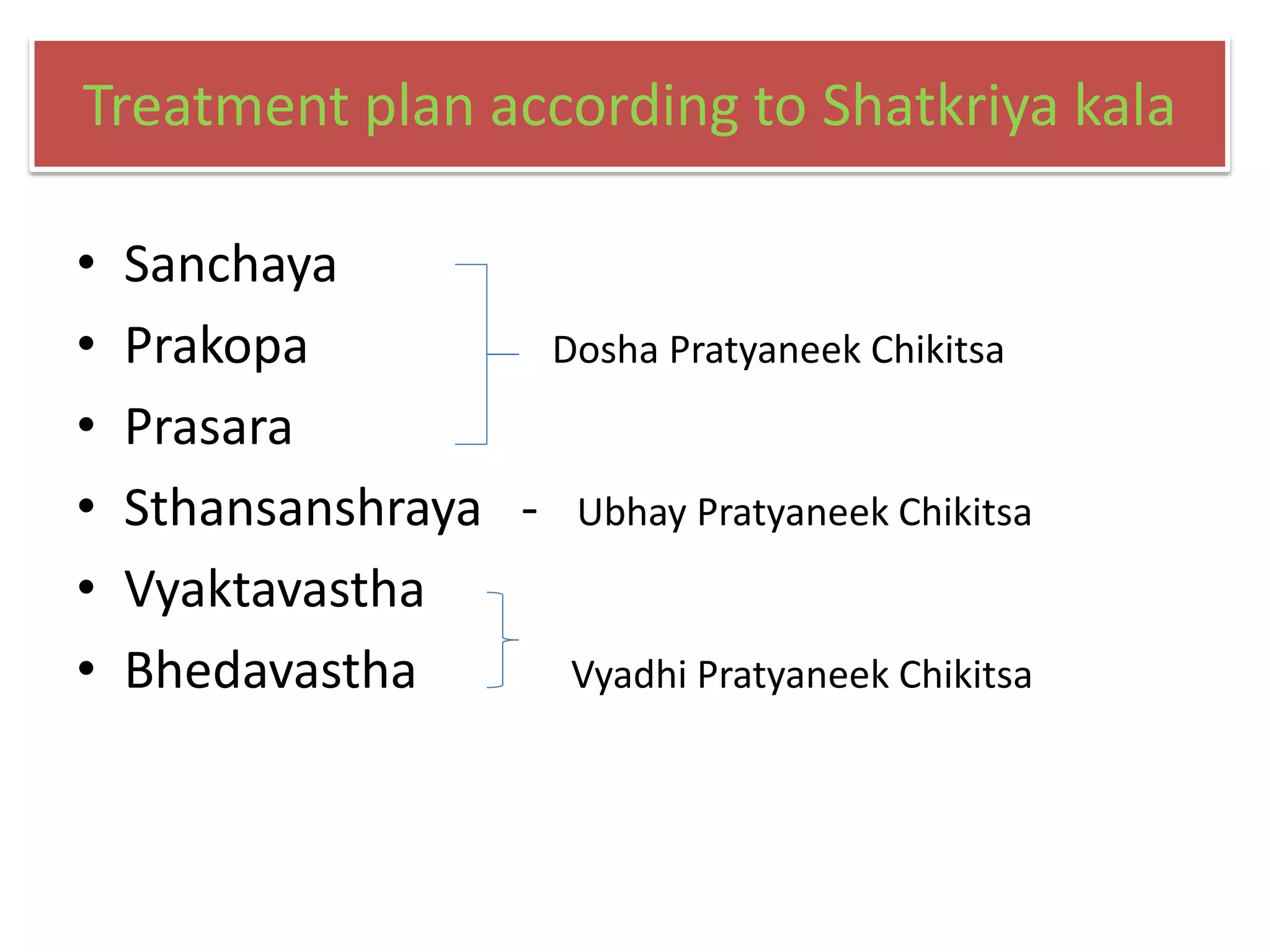
Treatment plan according to Shatkriya kala
• Sanchaya
• Prakopa Dosha Pratyaneek Chikitsa
• Prasara
• Sthansanshraya - Ubhay Pratyaneek Chikitsa
• Vyaktavastha
• Bhedavastha Vyadhi Pratyaneek Chikitsa
Correlation between Nidana Panchak
and Shatkriya kala
Sanchaya
Prakopa
Nidana
Prasara
Sthansanshraya Purvarupa
Vyaktavastha Roopa
Bhedavastha Upshaya and Anupshaya
Samprapti
Shatkriya kala
Shatkriya kala

Shatkriya kala

  • 1.
    SHATKRIYA KALA Presented by-Guided by- Dr. Twinkle Joshi(JR 1) Dr. Vaishali Kuchewar Department of Kayachikitsa Professor Department of Kayachiktisa
  • 2.
    SHATKRIYA KALA It refersto the recognition of the stages of a disease’s progress and the appropriate time of treatment. Shat - Six Kriya - Treatment Kala - Time or Stages Acharya Sushrut has described Shatkriya kala in vranaprashna adhyaya. It is very essential for early diagnosis ,prognosis and for adopting timely preventive and curative measures.
  • 4.
  • 5.
    SANCHAYA (Stage of Accumulation) •Accumulationof doshas in their own natural sites. •Doshas increase quantitatively but their quality remains normal. •Vague and ill defined symptoms characterized by aversion of similar and attraction towards opposite quality aahars and vihars.
  • 6.
    Types of Sanchaya Svabhavika Avasthiki (Accordingto age) Naimittiki (According to ritu) Asvabhavika
  • 7.
    Dosha Clinical Featuresin sanchaya avastha Vata Stabdha purna koshthata Pitta Pitavabhasata, mandoshmata Kapha Anganam gauravam, alasya
  • 8.
    PRAKOPA (Stage of Aggravation) Accumulated doshas get qualitatively vitiated and are ready to move from their natural sites by appropriate aetiological factors such as  Vata aggravating vihara –excessive exercise, being awake at night ,load carrying Aharas-intake of bitter ,dry, cold, astringent foods Pitta aggravating vihara-anxiety,fear,stress,anger Aharas –sour, salty food, curd, mustard Kapha aggravating vihara-day sleep, lack of exercise, etc Aharas –maash (black gram), sesamum ,milk, aquatic meat, etc
  • 9.
    Doshas Clinical featuresin Prakopa avastha Vata Koshtha toda Vata Sancharana Pitta Amla udgar Pipasa Paridaha Kapha Anna dvesha Hridaya utkleda
  • 10.
    PRASARA (Stage of Spread) Inthis stage, doshas aggravated by above factors start overflowing from their respective seats to other sites like the overflowing of a mixture of yeast, water and flour. Vata being the causative agent, spreads other doshas like a large accumulation of water, breaks the barrier and flowing of water takes place in all the directions. This spread occurs in 15 types.
  • 11.
    Types of Prasara 1.Vata 2. Pitta 3. Kapha 4. Rakta 5. Vata-Pitta 6. Vata-Kapha 7. Vata-Rakta 8. Pitta-Kapha 9. Pitta-Rakta 10. Kapha-Rakta 11. Vata-Pitta-Rakta 12. Vata-Kapha-Rakta 13. Pitta-Kapha-Rakta 14. Vata-Pitta-Kapha 15. Vata-Pitta-Kapha-Rakta
  • 12.
    STHANSANSHRAYA (Stage of localisation) Doshaswhich are aggravated and spread,now get localised to the sites where there is presence of ‘Kha vaigunya’ At this site, when the dosha dushya sammurchana takes place, diseases occur accordingly. Eg – Localisation in udara- visuchika,atisara Localisation in Basti- ashmari, mutraghata Localisation in Guda- arsha,bhagandara When established in this way, there is appearance of premonitory symptoms of the diseases.
  • 13.
  • 14.
    VYAKTAVASTHA (Stage of Manifestation) Inthis stage, well manifested symptoms of the disease appear. It is also known as Vyadhidarshana avastha. Santapa lakshan – Jwar Atidrava sarana – Atisara
  • 15.
    BHEDAVASTHA (Stage of Complications) Inthis stage,the disease attains chronicity (deerghakalanubandha) and also specific signs and symptoms of the dosha dominant in the disease manifest. If not treated properly, they become incurable. Eg- vranas burst and become ulcers and fever, diarrhea attain chronicity
  • 16.
    Importance of Shatkriyakala Nidana parivarjana- Avoidance of the causative factors can prevent the occurrence of the disease. Helps in arresting pathogenesis in early stage. It gives an idea of the prognosis of disease, prophylactic treatment and curative treatment.
  • 17.
    Treatment plan accordingto Shatkriya kala • Sanchaya • Prakopa Dosha Pratyaneek Chikitsa • Prasara • Sthansanshraya - Ubhay Pratyaneek Chikitsa • Vyaktavastha • Bhedavastha Vyadhi Pratyaneek Chikitsa
  • 18.
    Correlation between NidanaPanchak and Shatkriya kala Sanchaya Prakopa Nidana Prasara Sthansanshraya Purvarupa Vyaktavastha Roopa Bhedavastha Upshaya and Anupshaya Samprapti