INTRODUCTION

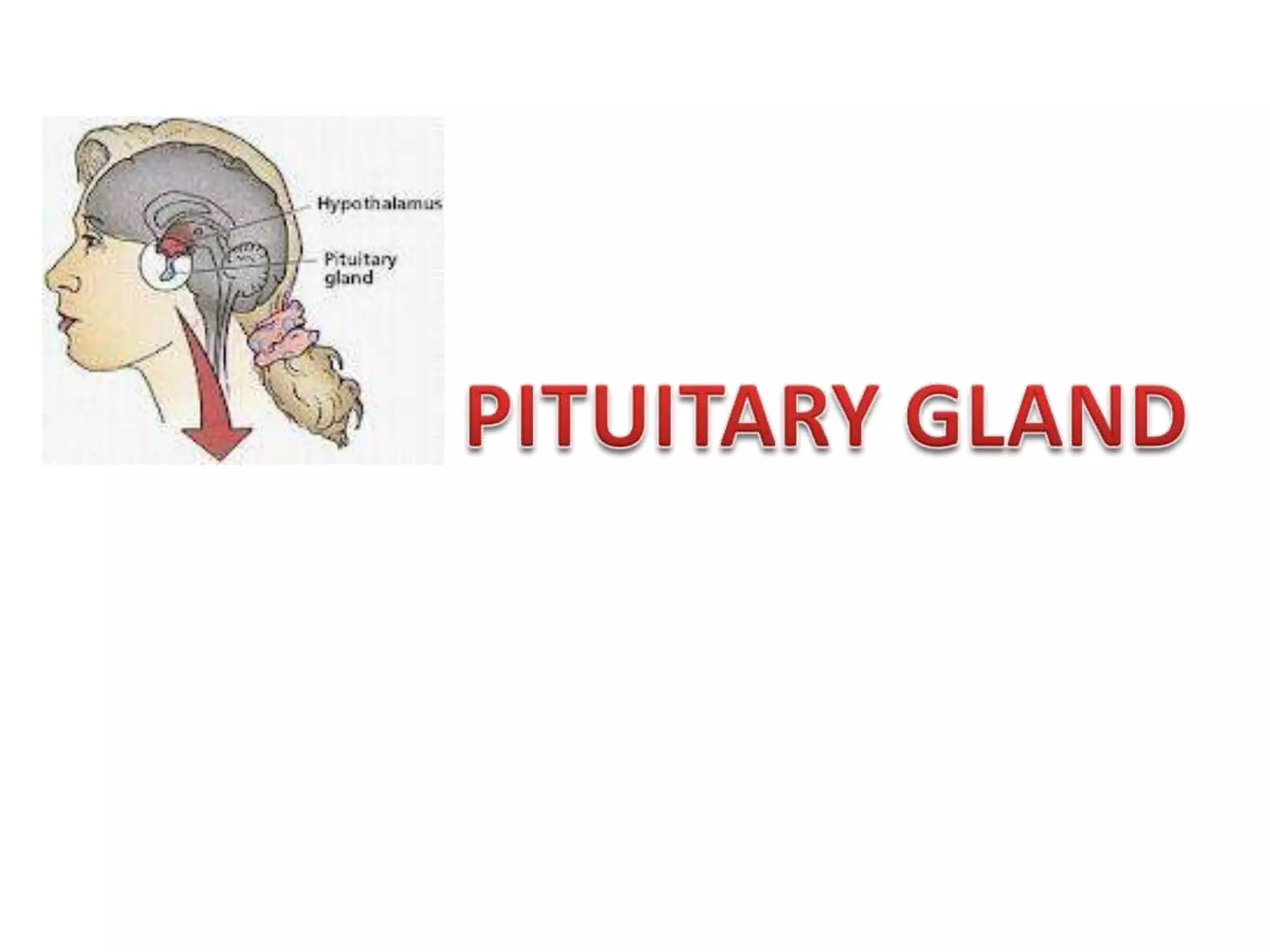
    What is the pituitary gland?

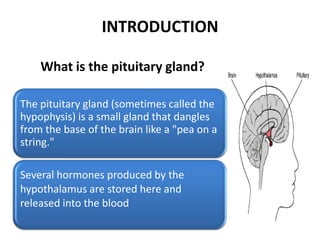
The pituitary gland (sometimes called the
hypophysis) is a small gland that dangles
from the base of the brain like a "pea on a
string."

Several hormones produced by the
hypothalamus are stored here and
released into the blood
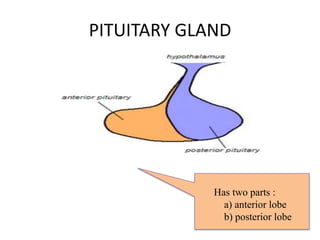
PITUITARY GLAND


             Has two parts :
               a) anterior lobe
               b) posterior lobe
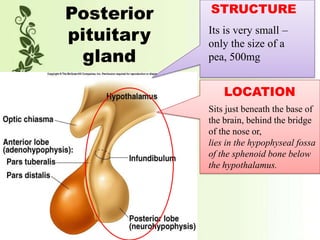
Posterior   STRUCTURE

pituitary   Its is very small –
            only the size of a
 gland      pea, 500mg


                LOCATION
            Sits just beneath the base of
            the brain, behind the bridge
            of the nose or,
            lies in the hypophyseal fossa
            of the sphenoid bone below
            the hypothalamus.
As it takes messages from the
                            brain (via a gland called
                            hypothalamus) and uses these
                            messages to produce
                            hormone that affect many
                            parts of the body.


                           Including stimulating all the
                           other hormone – producing gland
For this reason it is                        •
                           to produce their own. hormones
often referred to as the
master gland.
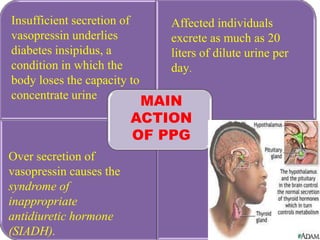
Insufficient secretion of    Affected individuals
vasopressin underlies        excrete as much as 20
diabetes insipidus, a        liters of dilute urine per
condition in which the       day.
body loses the capacity to
concentrate urine
                          MAIN
                         ACTION
                         OF PPG
Over secretion of
vasopressin causes the
syndrome of
inappropriate
antidiuretic hormone
(SIADH).
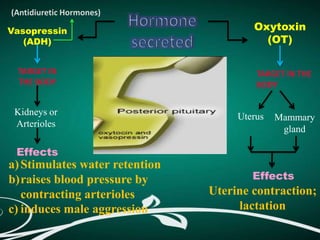
(Antidiuretic Hormones)

Vasopressin                             Oxytoxin
   (ADH)                                  (OT)


 Kidneys or                          Uterus   Mammary
 Arterioles
                                               gland

 Effects
a) Stimulates water retention
b)raises blood pressure by              Effects
   contracting arterioles       Uterine contraction;
c) induces male aggression           lactation
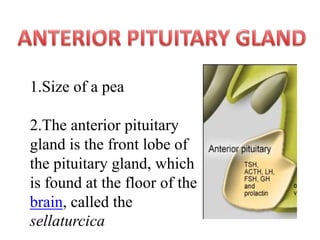
1.Size of a pea

2.The anterior pituitary
gland is the front lobe of
the pituitary gland, which
is found at the floor of the
brain, called the
sellaturcica
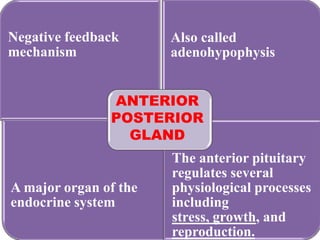
Negative feedback      Also called
mechanism              adenohypophysis


               ANTERIOR
               POSTERIOR
                 GLAND
                       The anterior pituitary
                       regulates several
A major organ of the   physiological processes
endocrine system       including
                       stress, growth, and
                       reproduction.
.
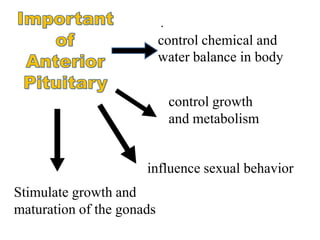
                           control chemical and
                           water balance in body


                               control growth
                               and metabolism


                      influence sexual behavior
Stimulate growth and
maturation of the gonads
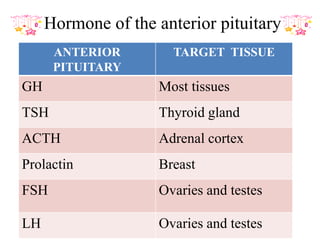
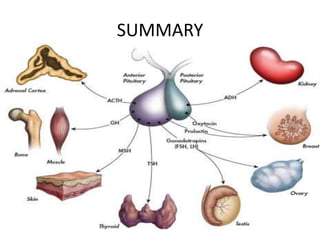
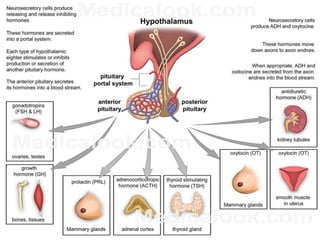
Hormone of the anterior pituitary
      ANTERIOR         TARGET TISSUE
      PITUITARY
GH                  Most tissues
TSH                 Thyroid gland
ACTH                Adrenal cortex
Prolactin           Breast
FSH                 Ovaries and testes

LH                  Ovaries and testes
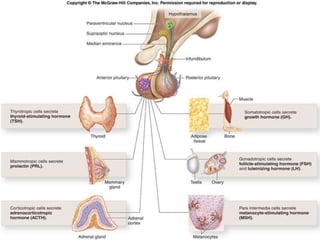
Growth hormone
• Stimulates the growth of bones,muscle,and other
  organ by increasing protein synthesis.
• affects protein, fat and carbohydrate metabolism.
• Too little growth hormone secretion can be the result
  of abnormal development of the pituitary gland.
• Release is stimulated by GHRH
• Suppression is by GHRIH
Thyroid stimulating hormone (TSH)
• Stimulated by Thyroidtropin-releasing hormone
  (TRH )from hypothalamus
• Inhibit by Somatostatin from hypothalamus
• Stimulate the thyroid gland to secrete hormone
  thyroxin
• Stimulates growth and activity of the thyroid gland
• When too much TSH is secreted,it cause the thyroid
  gland to enlarge and secrete too much thyroxin
Adrenocorticotropic hormone
        (corticotrophin, ACTH)
• Stimulated by Corticotropin-releasing
  hormone(CRH) from the hypothalamus
• ACTH stimulate the adrenal gland(cortex) to secret a
  hormone call glucocorticoids.
• Secretion is regulated by negative feedback
   (Suppressed when blood level ACTH raises )
Prolactin
• Also known as lactogenic hormone
• Stimulated by Prolactin-releasing hormone (PRH)
  from hypothalamus
• Inhibit by Dopamin from hypothalamus
• Target cell is mammary gland
• Stimulates the production of milk in the breast
  following pregnancy.
• Negative feedback when blood level prolactin increase
• Prolactin hypersecretion in males cause erectile
  dysfunction.
Gonadotrophins
• LUTENIZING HORMONE (LH) –
~>stimulated by gonadotropin-releasing
  hormone(GnRH) from hypothalamus
~> In males, stimulates the testes to secrete testosterone
 ~>In females, stimulates release of ovum by ovary.
 ~>After ovulation,it stimulate the formation of corpus
  luteum in ovary and secret hormone progesterone .
• FOLLICLE-STIMULATING HORMONE (FSH)
~>in male,stimulate production of sperm cells in the
  testes.
~> in females, stimulates maturation of ovarian follicle
  and secrete estrogen by ovaries
SUMMARY
pituitary gland
pituitary gland

pituitary gland

  • 2.
    INTRODUCTION What is the pituitary gland? The pituitary gland (sometimes called the hypophysis) is a small gland that dangles from the base of the brain like a "pea on a string." Several hormones produced by the hypothalamus are stored here and released into the blood
  • 3.
    PITUITARY GLAND Has two parts : a) anterior lobe b) posterior lobe
  • 4.
    Posterior STRUCTURE pituitary Its is very small – only the size of a gland pea, 500mg LOCATION Sits just beneath the base of the brain, behind the bridge of the nose or, lies in the hypophyseal fossa of the sphenoid bone below the hypothalamus.
  • 5.
    As it takesmessages from the brain (via a gland called hypothalamus) and uses these messages to produce hormone that affect many parts of the body. Including stimulating all the other hormone – producing gland For this reason it is • to produce their own. hormones often referred to as the master gland.
  • 6.
    Insufficient secretion of Affected individuals vasopressin underlies excrete as much as 20 diabetes insipidus, a liters of dilute urine per condition in which the day. body loses the capacity to concentrate urine MAIN ACTION OF PPG Over secretion of vasopressin causes the syndrome of inappropriate antidiuretic hormone (SIADH).
  • 7.
    (Antidiuretic Hormones) Vasopressin Oxytoxin (ADH) (OT) Kidneys or Uterus Mammary Arterioles gland Effects a) Stimulates water retention b)raises blood pressure by Effects contracting arterioles Uterine contraction; c) induces male aggression lactation
  • 8.
    1.Size of apea 2.The anterior pituitary gland is the front lobe of the pituitary gland, which is found at the floor of the brain, called the sellaturcica
  • 9.
    Negative feedback Also called mechanism adenohypophysis ANTERIOR POSTERIOR GLAND The anterior pituitary regulates several A major organ of the physiological processes endocrine system including stress, growth, and reproduction.
  • 10.
    . control chemical and water balance in body control growth and metabolism influence sexual behavior Stimulate growth and maturation of the gonads
  • 11.
    Hormone of theanterior pituitary ANTERIOR TARGET TISSUE PITUITARY GH Most tissues TSH Thyroid gland ACTH Adrenal cortex Prolactin Breast FSH Ovaries and testes LH Ovaries and testes
  • 13.
    Growth hormone • Stimulatesthe growth of bones,muscle,and other organ by increasing protein synthesis. • affects protein, fat and carbohydrate metabolism. • Too little growth hormone secretion can be the result of abnormal development of the pituitary gland. • Release is stimulated by GHRH • Suppression is by GHRIH
  • 14.
    Thyroid stimulating hormone(TSH) • Stimulated by Thyroidtropin-releasing hormone (TRH )from hypothalamus • Inhibit by Somatostatin from hypothalamus • Stimulate the thyroid gland to secrete hormone thyroxin • Stimulates growth and activity of the thyroid gland • When too much TSH is secreted,it cause the thyroid gland to enlarge and secrete too much thyroxin
  • 15.
    Adrenocorticotropic hormone (corticotrophin, ACTH) • Stimulated by Corticotropin-releasing hormone(CRH) from the hypothalamus • ACTH stimulate the adrenal gland(cortex) to secret a hormone call glucocorticoids. • Secretion is regulated by negative feedback (Suppressed when blood level ACTH raises )
  • 16.
    Prolactin • Also knownas lactogenic hormone • Stimulated by Prolactin-releasing hormone (PRH) from hypothalamus • Inhibit by Dopamin from hypothalamus • Target cell is mammary gland • Stimulates the production of milk in the breast following pregnancy. • Negative feedback when blood level prolactin increase • Prolactin hypersecretion in males cause erectile dysfunction.
  • 17.
    Gonadotrophins • LUTENIZING HORMONE(LH) – ~>stimulated by gonadotropin-releasing hormone(GnRH) from hypothalamus ~> In males, stimulates the testes to secrete testosterone ~>In females, stimulates release of ovum by ovary. ~>After ovulation,it stimulate the formation of corpus luteum in ovary and secret hormone progesterone .
  • 18.
    • FOLLICLE-STIMULATING HORMONE(FSH) ~>in male,stimulate production of sperm cells in the testes. ~> in females, stimulates maturation of ovarian follicle and secrete estrogen by ovaries
  • 19.