Medieval to
Renaissance
Part 1
1
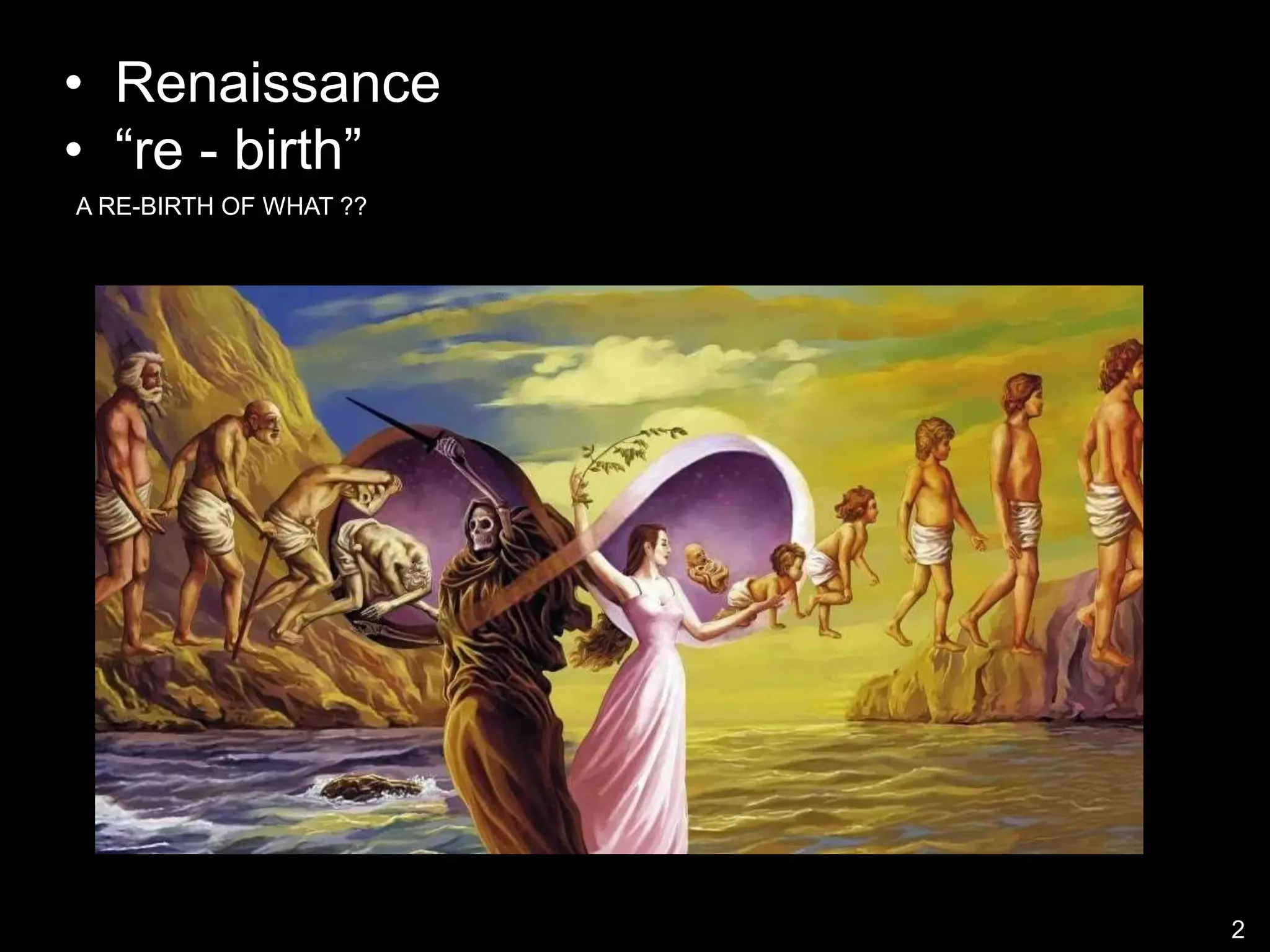
• Renaissance
• “re - birth”
A RE-BIRTH OF WHAT ??
2
Ancient Rome “CLASSICAL ANTIQUITY”
3
4
5
6
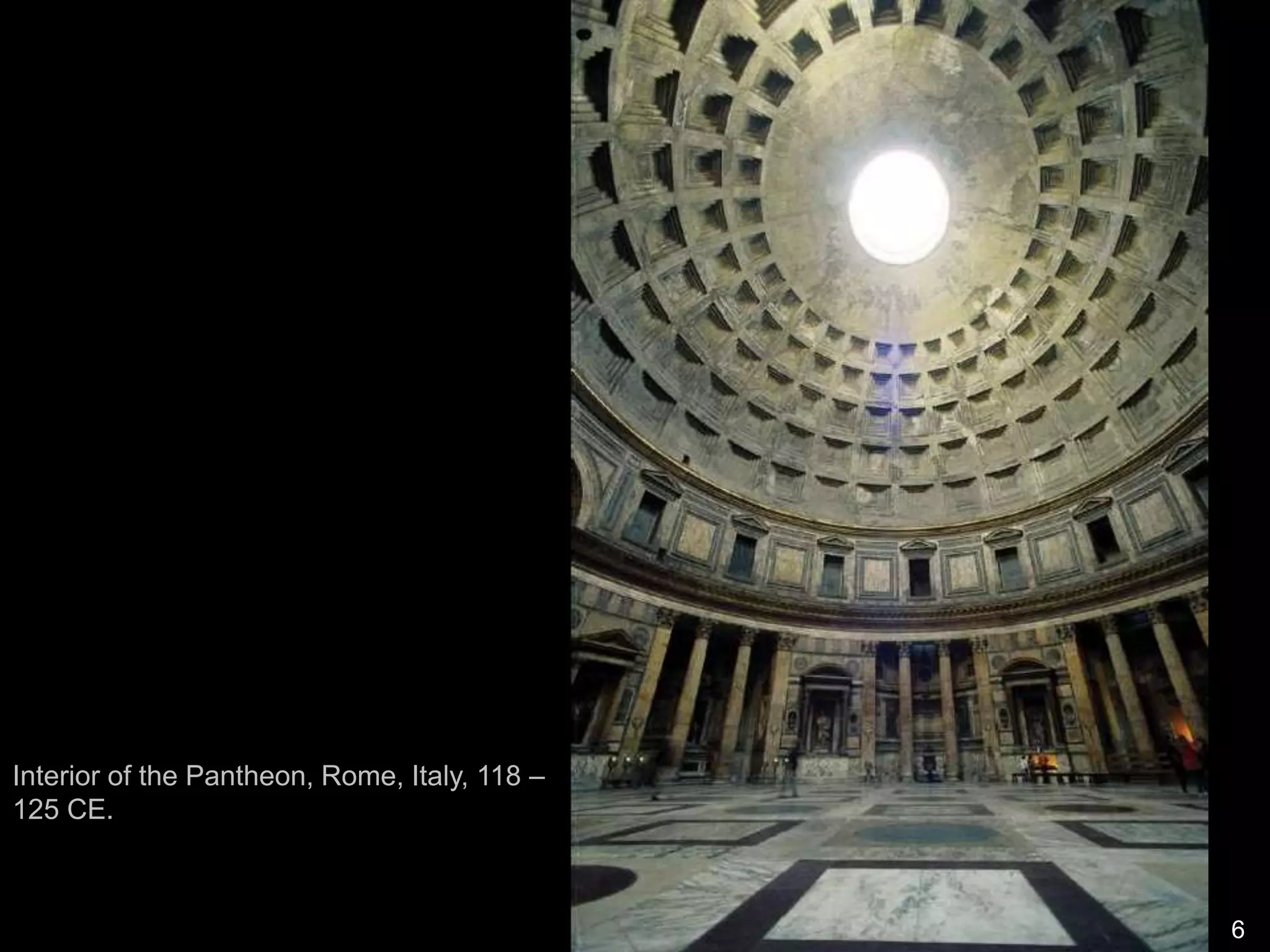
Interior of the Pantheon, Rome, Italy, 118 –
125 CE.
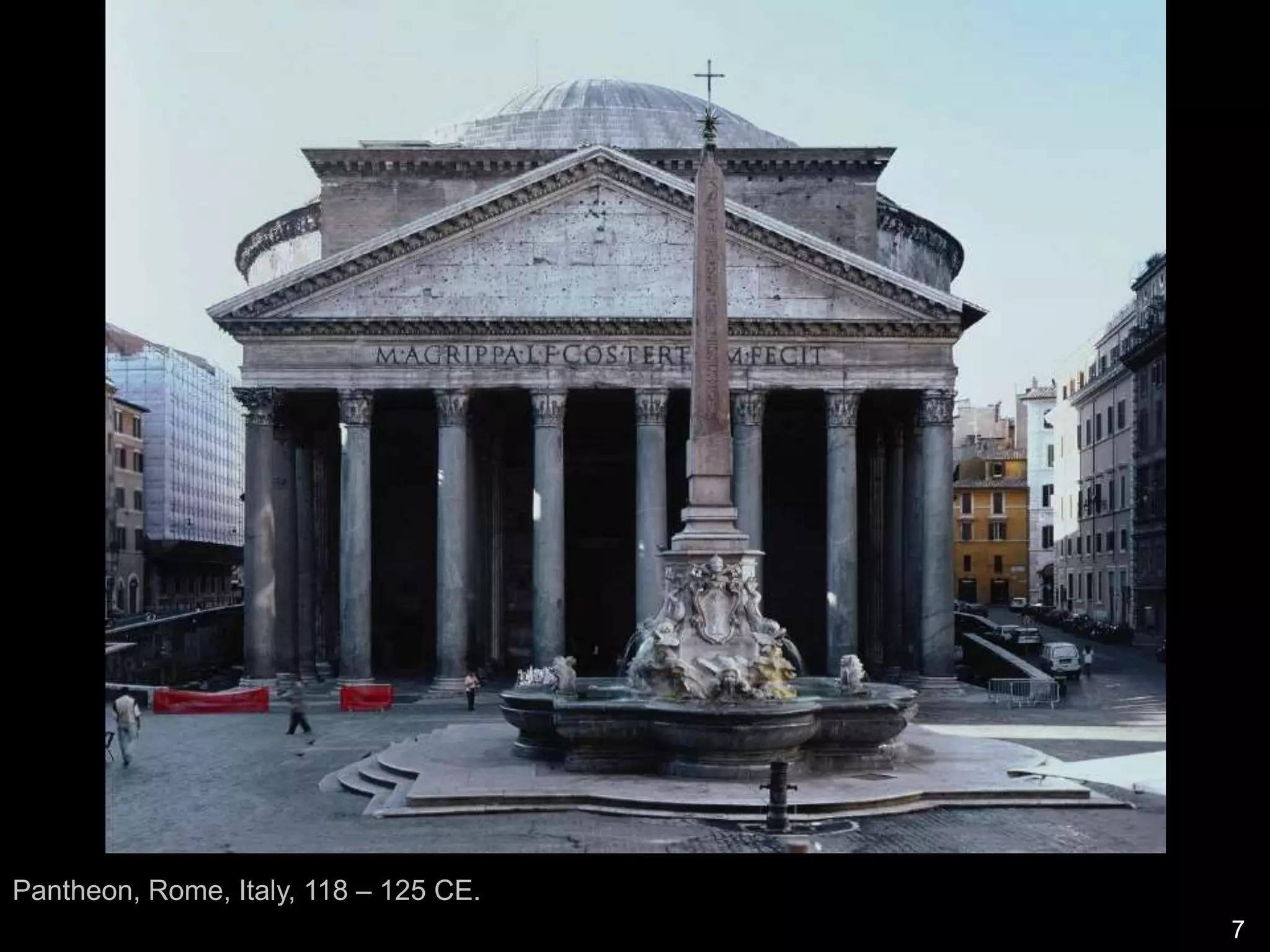
Pantheon, Rome, Italy, 118 – 125 CE.
7
By 467 AD Rome had fallen, and within a few hundred years only ruins remained…
8
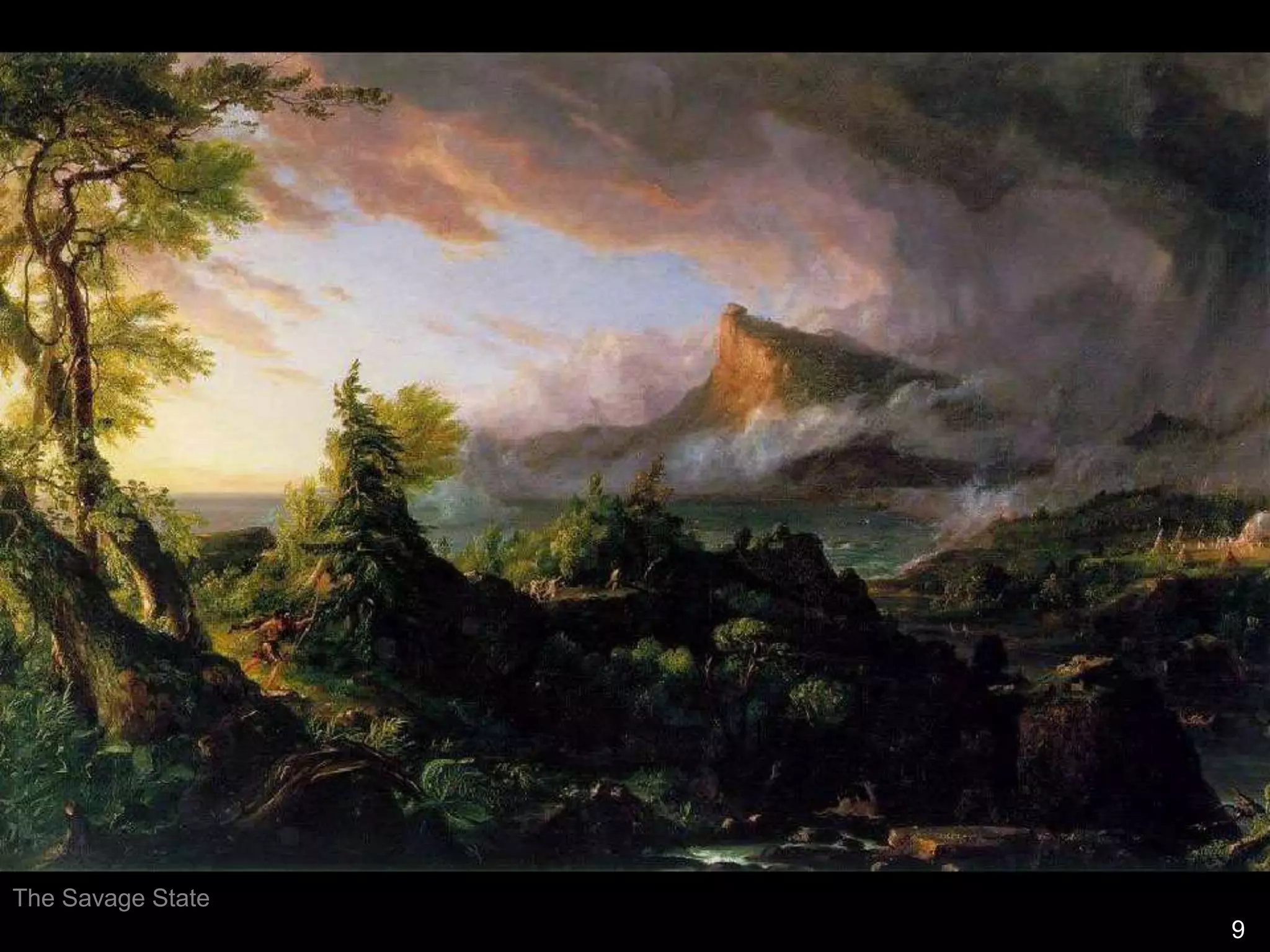
The Savage State
9
The Arcadian or Pastoral State
10
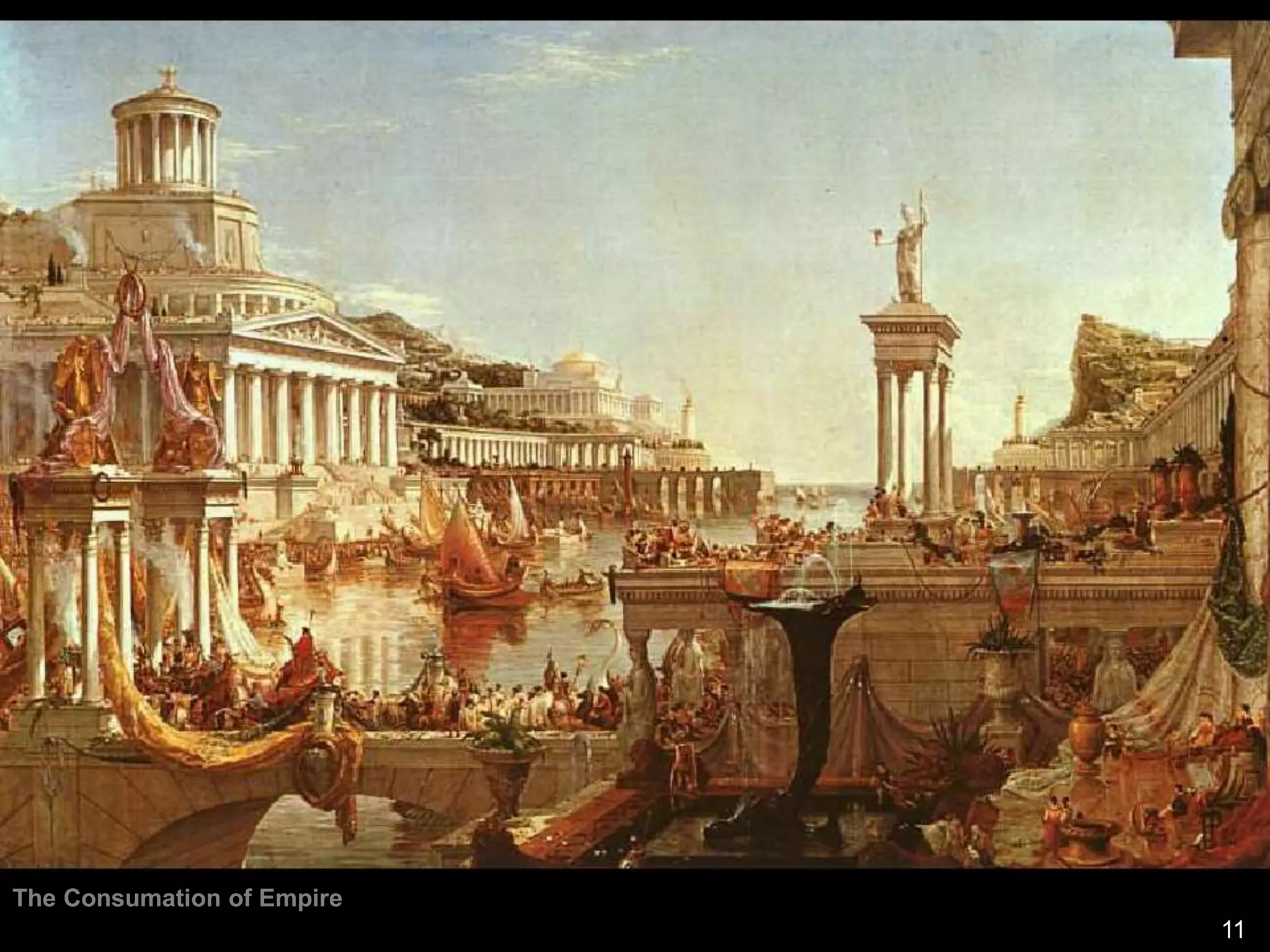
The Consumation of Empire
11
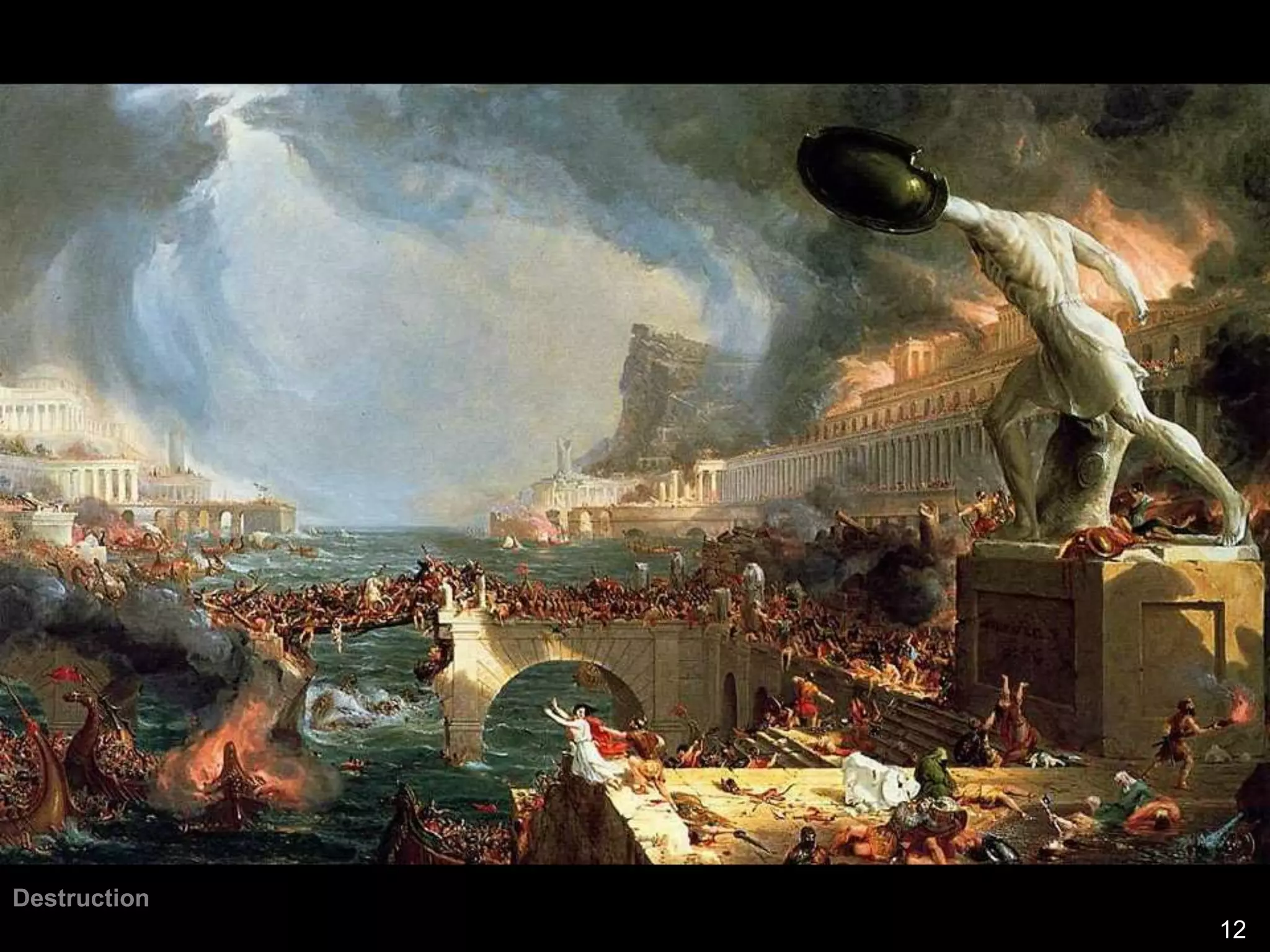
Destruction
12
Desolation
13
The Dark Ages
…..were really this dark?
….and why were they called “The
Dark Ages”
14
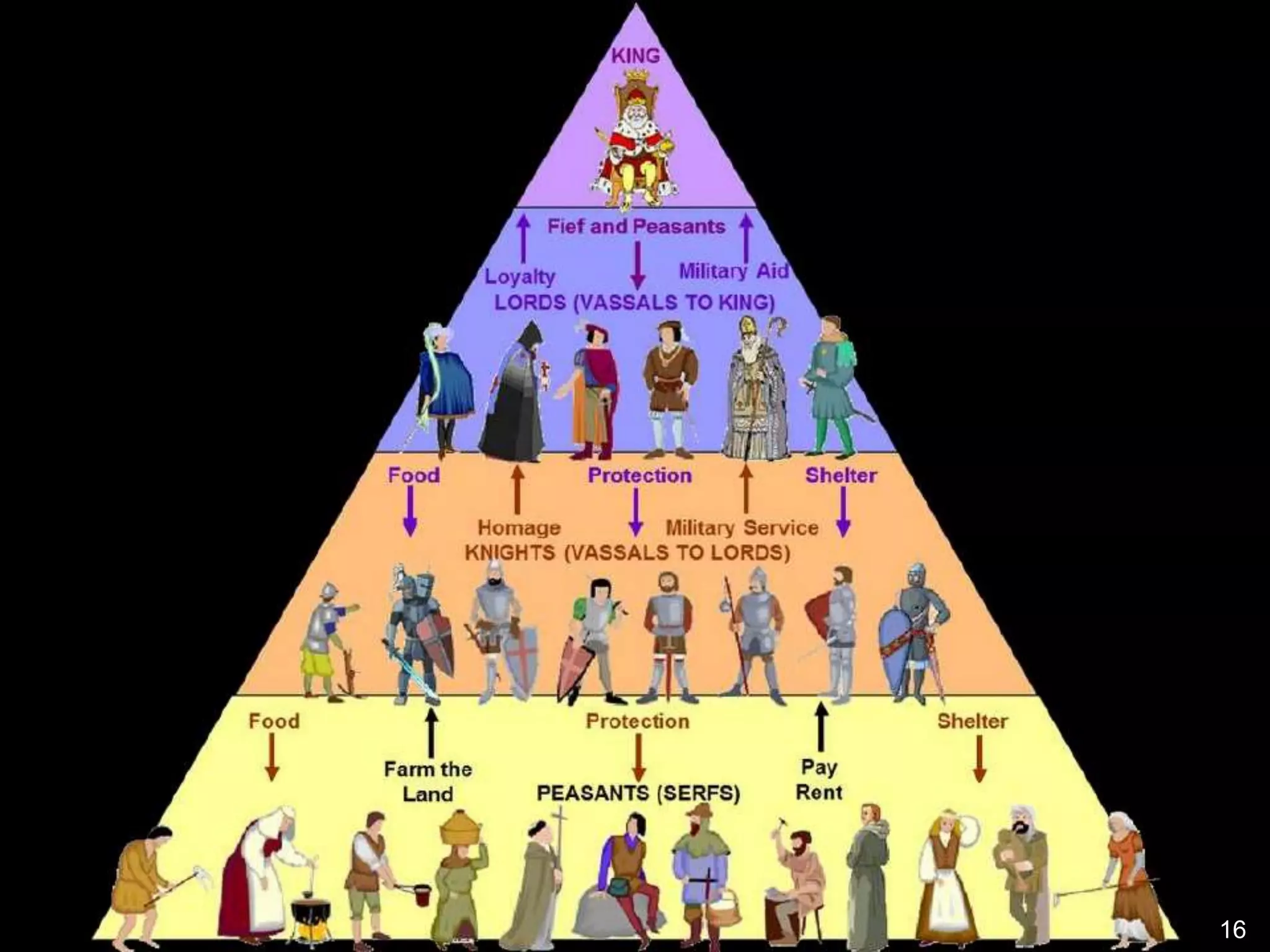
those who work, those who fight, those who pray
15
16
Farming is not that fun
17
Feudal serfs of the middle ages had
almost no say in the direction of their
own lives.
18
Christian Cosmology
The Ptolemaic World
“The World Dome”
Understanding of the word was
limited, and your place in it was
static and unquestioned.
19
The Great Chain of Being
20
T he world of “now” was seen as
less real or important the the world
after death…the kingdom of heaven
Your suffering and pain…soon to
be redeemed
21
“Antiquity vs. Middle
Ages
Where Greek and Romans painted
everyday subjects like portraits and
cityscapes, Art of the “Middle Ages”
focused on spiritual rather than physical
realities.
22
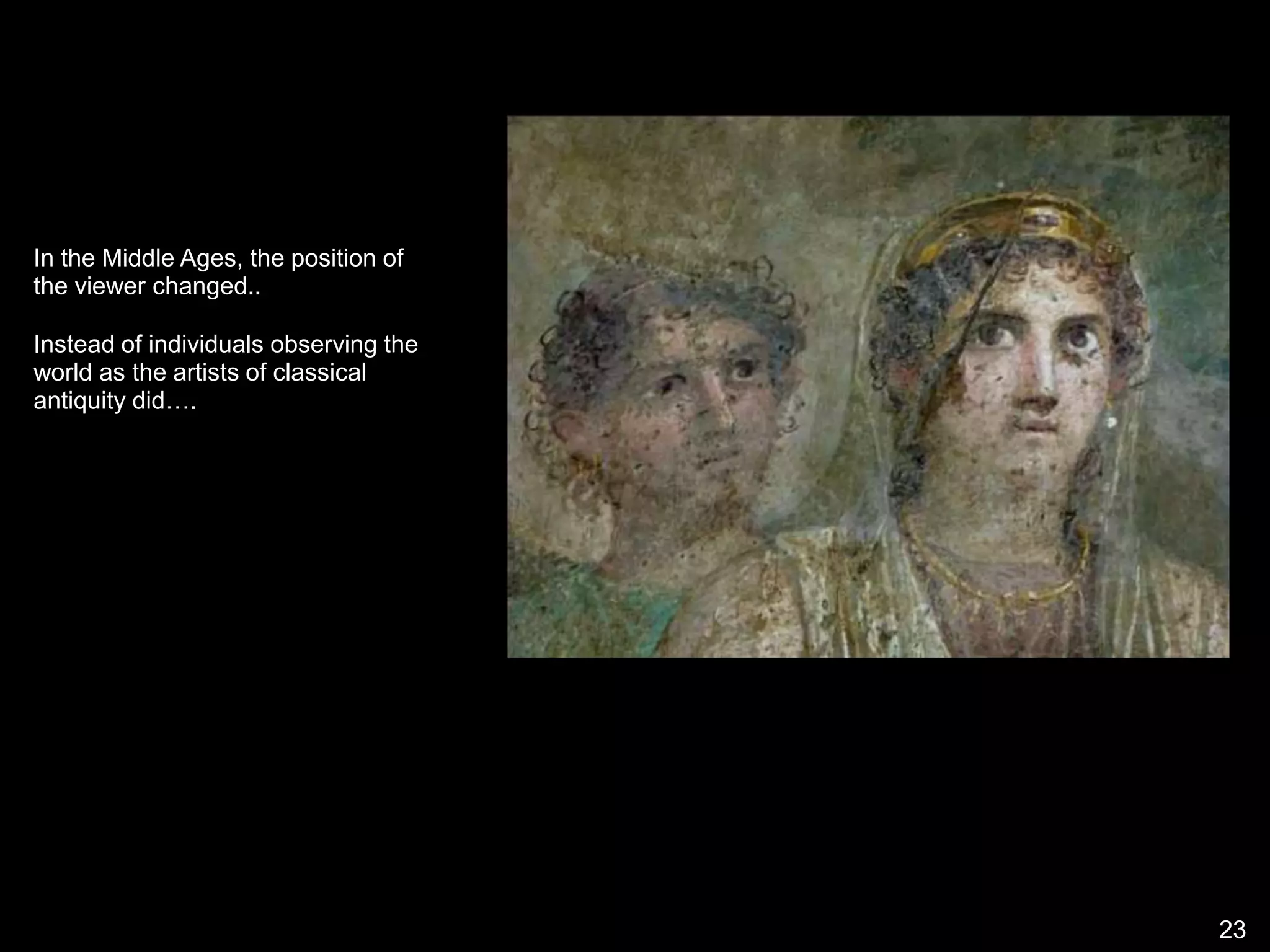
In the Middle Ages, the position of
the viewer changed..
Instead of individuals observing the
world as the artists of classical
antiquity did….
23
…..the “individual” is dissolved and
is looked down upon by larger,
intimidating spiritual forces
24
25
Additionally, space becomes flat,
Forms become abstract, simplistic
26
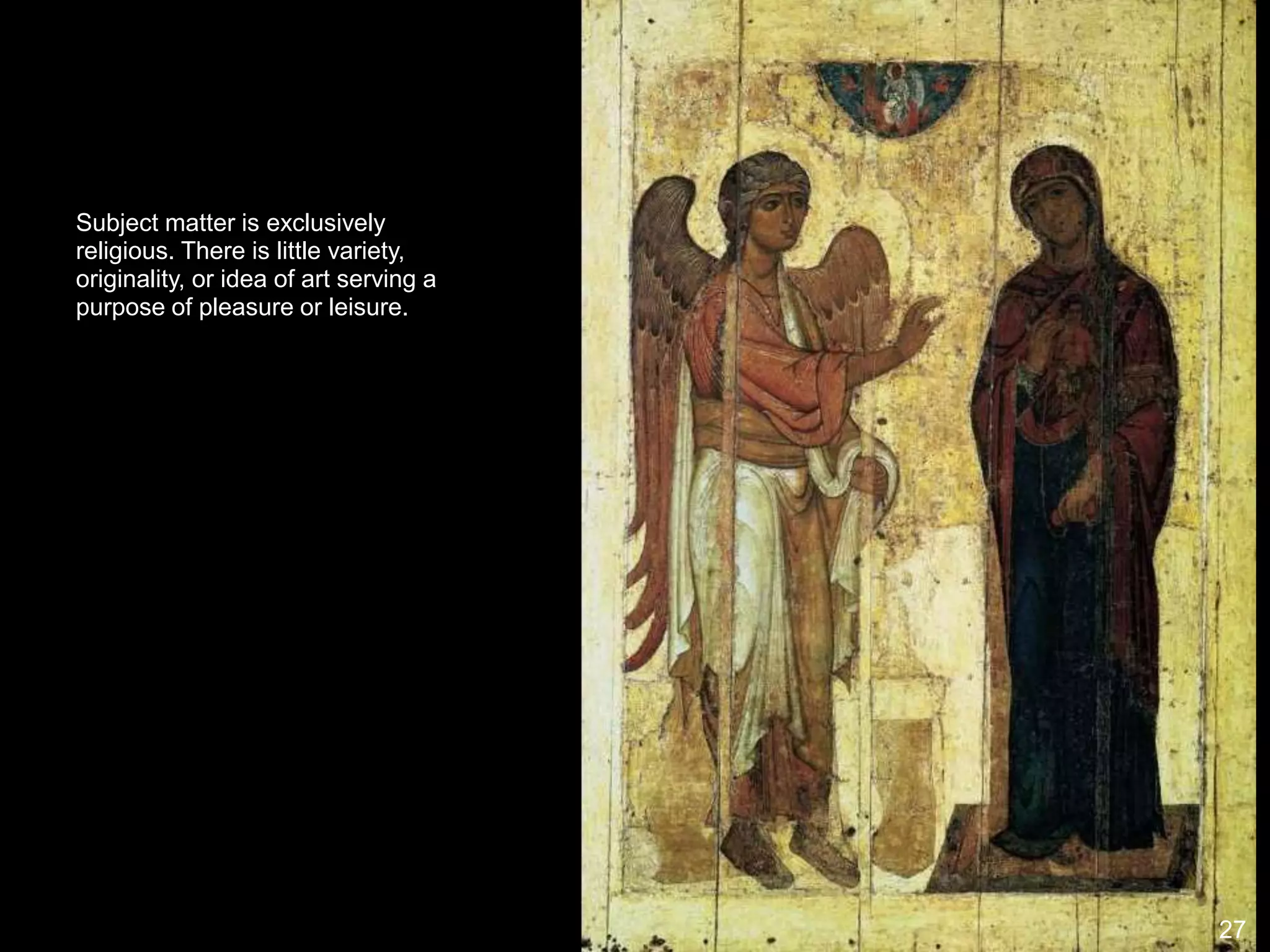
Subject matter is exclusively
religious. There is little variety,
originality, or idea of art serving a
purpose of pleasure or leisure.
27
It seemed like everything would just stay the same forever……
28
29
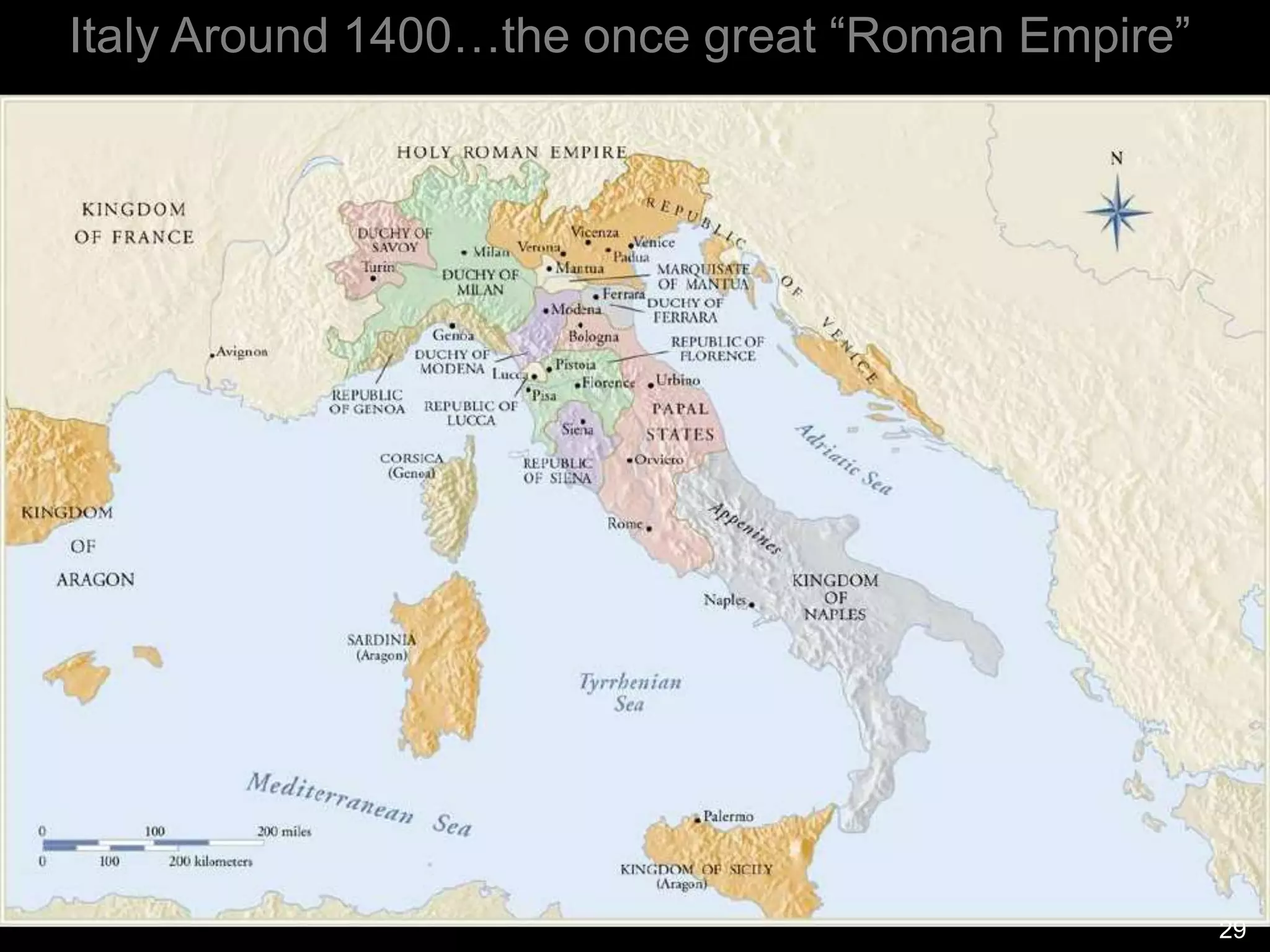
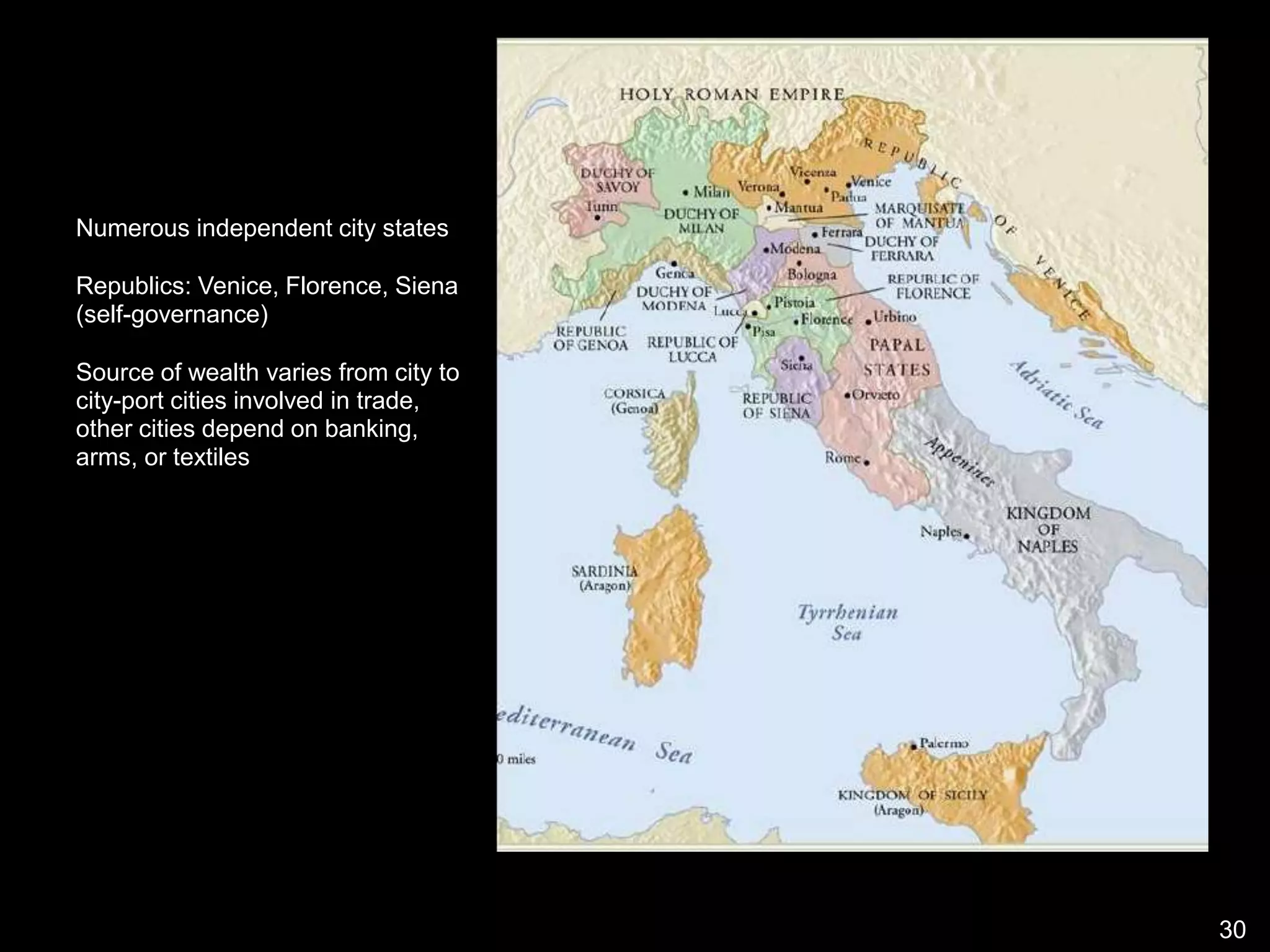
Italy Around 1400…the once great “Roman Empire”
Numerous independent city states
Republics: Venice, Florence, Siena
(self-governance)
Source of wealth varies from city to
city-port cities involved in trade,
other cities depend on banking,
arms, or textiles
30
31
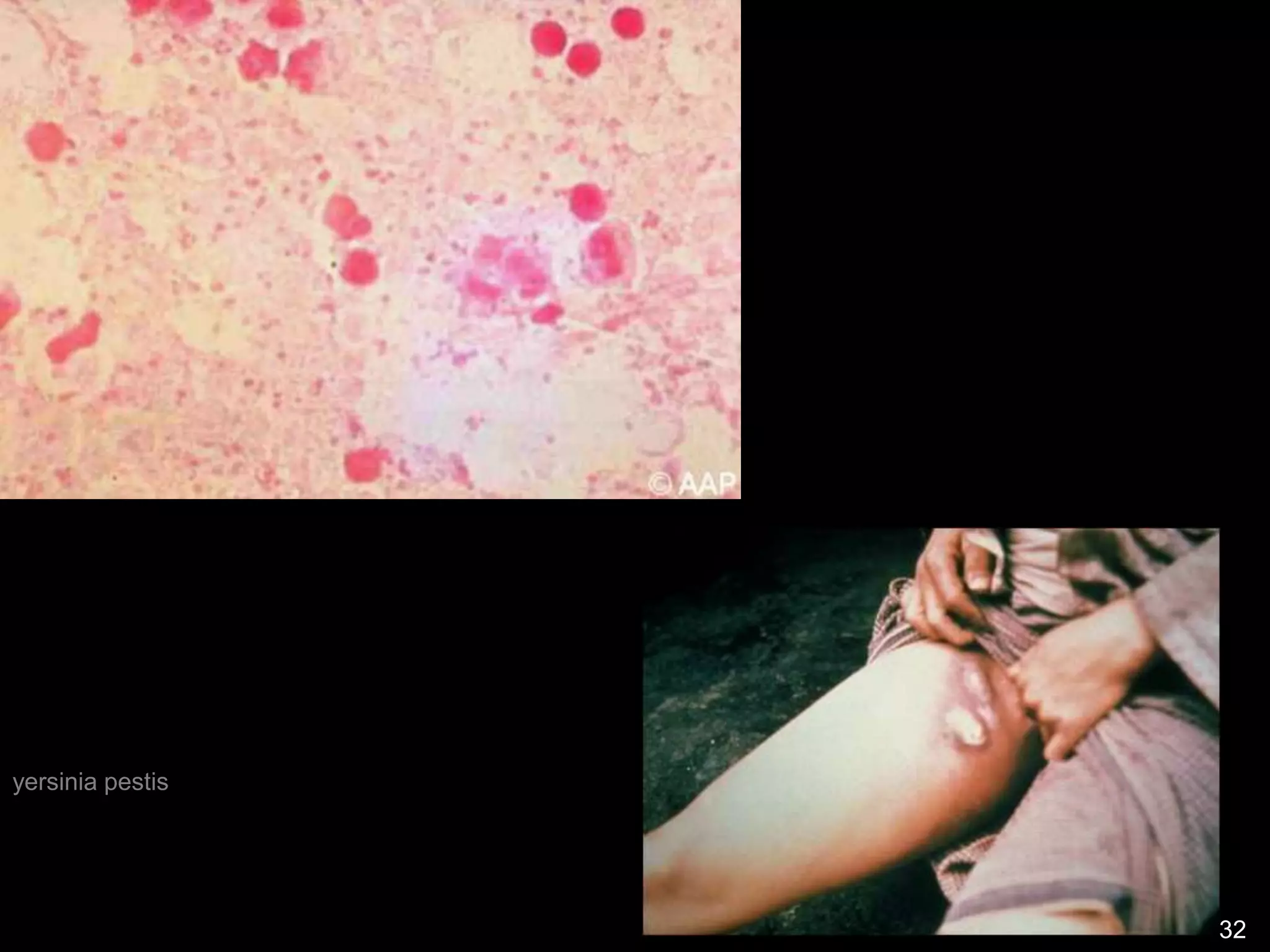
yersinia pestis
32
Widespread death caused odd and varied reactions in people…from celebratory nihilism, to
extreme piety. All belief in social institutions were weakened.
Jews were often persecuted because their hygienic practices meant they did not die in as great
numbers.
33
1348 --The Black Death
• Estimated to have killed 30% – 60% of Europe's population , reducing the
world’s population from an estimated 450 million to between 350 and
375 million in 1400. This has been seen as creating a series of religious,
social and economic upheavals which had profound effects on the course
of European History. It took 150 years for Europe's population to recover.
• Because the plague killed so many of the poor population, wealthy land
owners were forced to pay the remaining workers what they asked, in terms
of wages.
• Because there was now a surplus in consumer goods, luxury crops could
now be grown. This meant that for the first time in history, many, formerly of
the peasant population, now had a chance to live a better life. Most
historians now feel that this was the start of the middle class in Europe and
England.
34
…meanwhile
The Fall of Constantinople (formerly
the Byzantine Empire) in1453 to the
Ottoman Empire meant that many
scholars soon arrived in Italy with
knowledge of Greek thinkers like Plato
that had been lost or forgotten in the
Middle Ages.
A new interest in “antiquity” is sparked
35
Humanism changes
Culture
Italian scholars recovered a large part
of Greek and Roman Literature
(Cicero)
Humanism emulates Roman Civic
Virtues:
Self-sacrifice to the state, stoic
indifference to personal misfortune,
participation in government.
Humans can solve their own problems
through reason and don’t have to turn
to a higher authority.
Reward for good deeds is “fame” not
“sainthood”.
This thought began in Florence, Italy
then spread all throughout Europe.
36
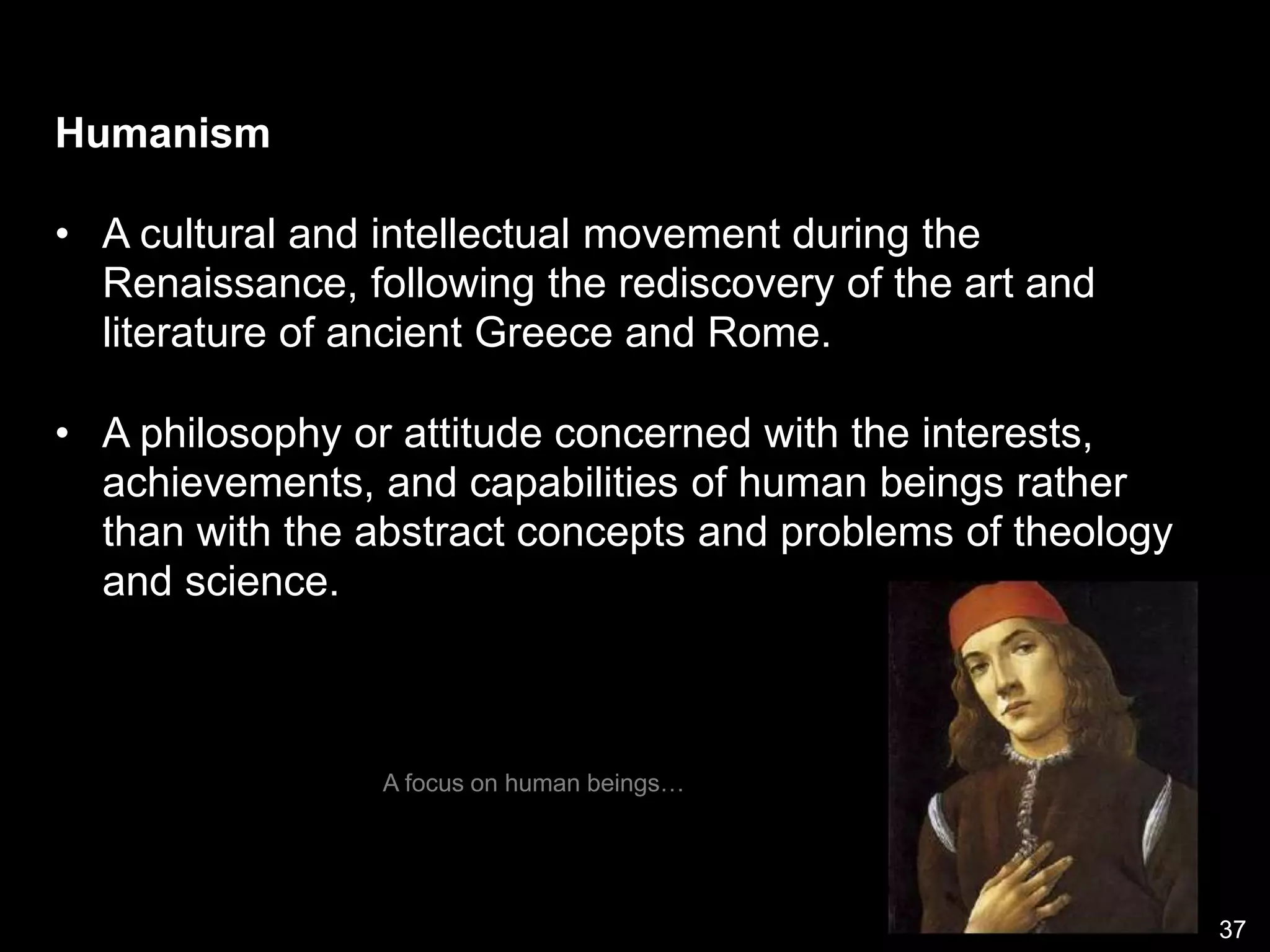
A focus on human beings…
Humanism
• A cultural and intellectual movement during the
Renaissance, following the rediscovery of the art and
literature of ancient Greece and Rome.
• A philosophy or attitude concerned with the interests,
achievements, and capabilities of human beings rather
than with the abstract concepts and problems of theology
and science.
37
Marsilio Ficino
Translated Plato into Latin
(from Greek)
38
Niccolò Machiavelli
“The Prince”
A practical manual for young rulers
that did not appeal to Christian
Morality.
“Machiavellian” today refers to
someone who is scheming and
sometimes unethical.
39
Giordano Bruno
“infinity”
Proposed that stars were distant
suns with their own planets.
Burned at the stake for his
heresies.
40
The Decameron
Renaissance Humanists
• Petrarch
• Giovanni Boccaccio
– Established a “vernacular” literature
41
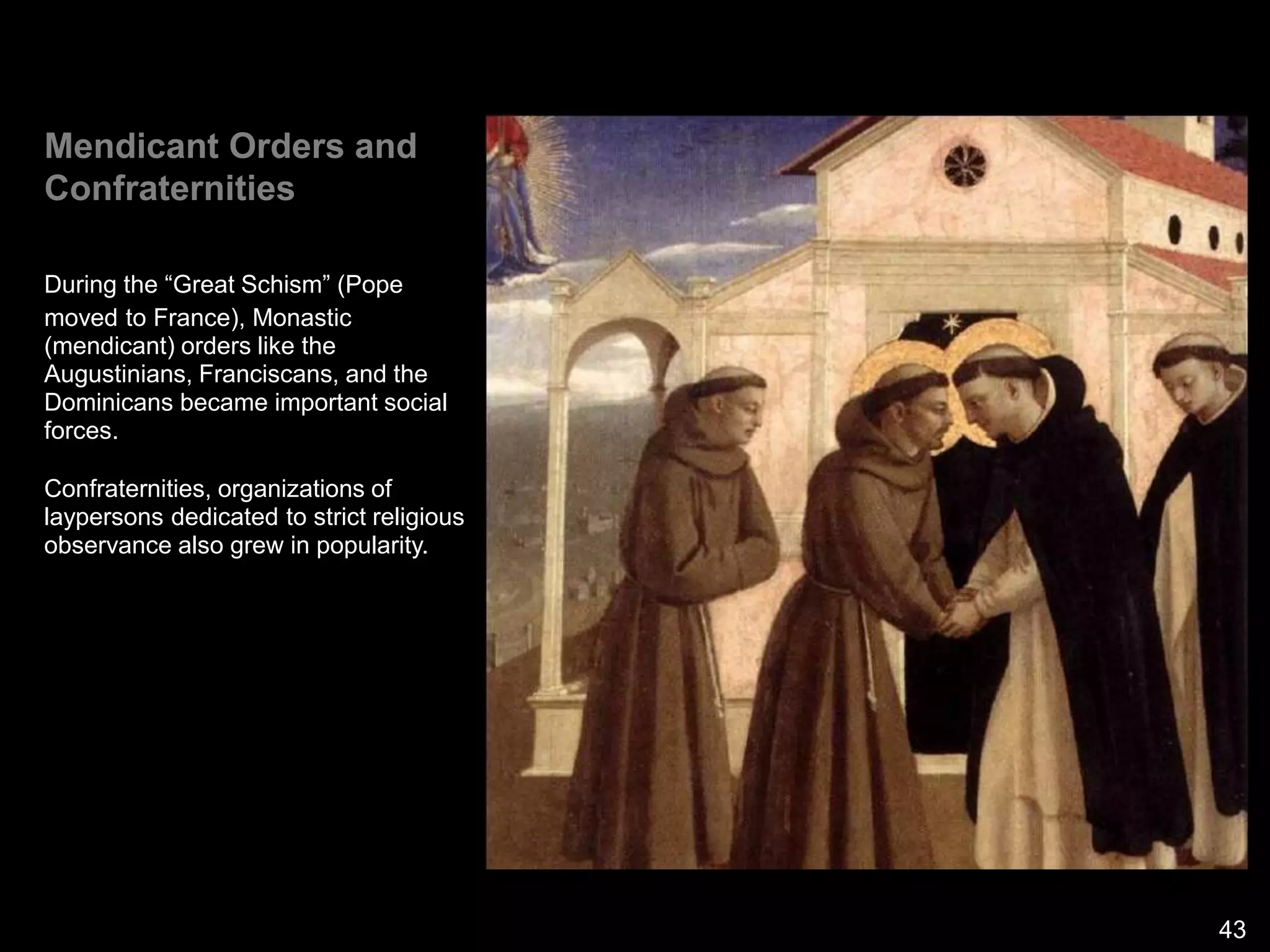
Mendicant Orders and
Confraternities
During the “Great Schism” (Pope
moved to France), Monastic
(mendicant) orders like the
Augustinians, Franciscans, and the
Dominicans became important social
forces.
Confraternities, organizations of
laypersons dedicated to strict religious
observance also grew in popularity.
43
44
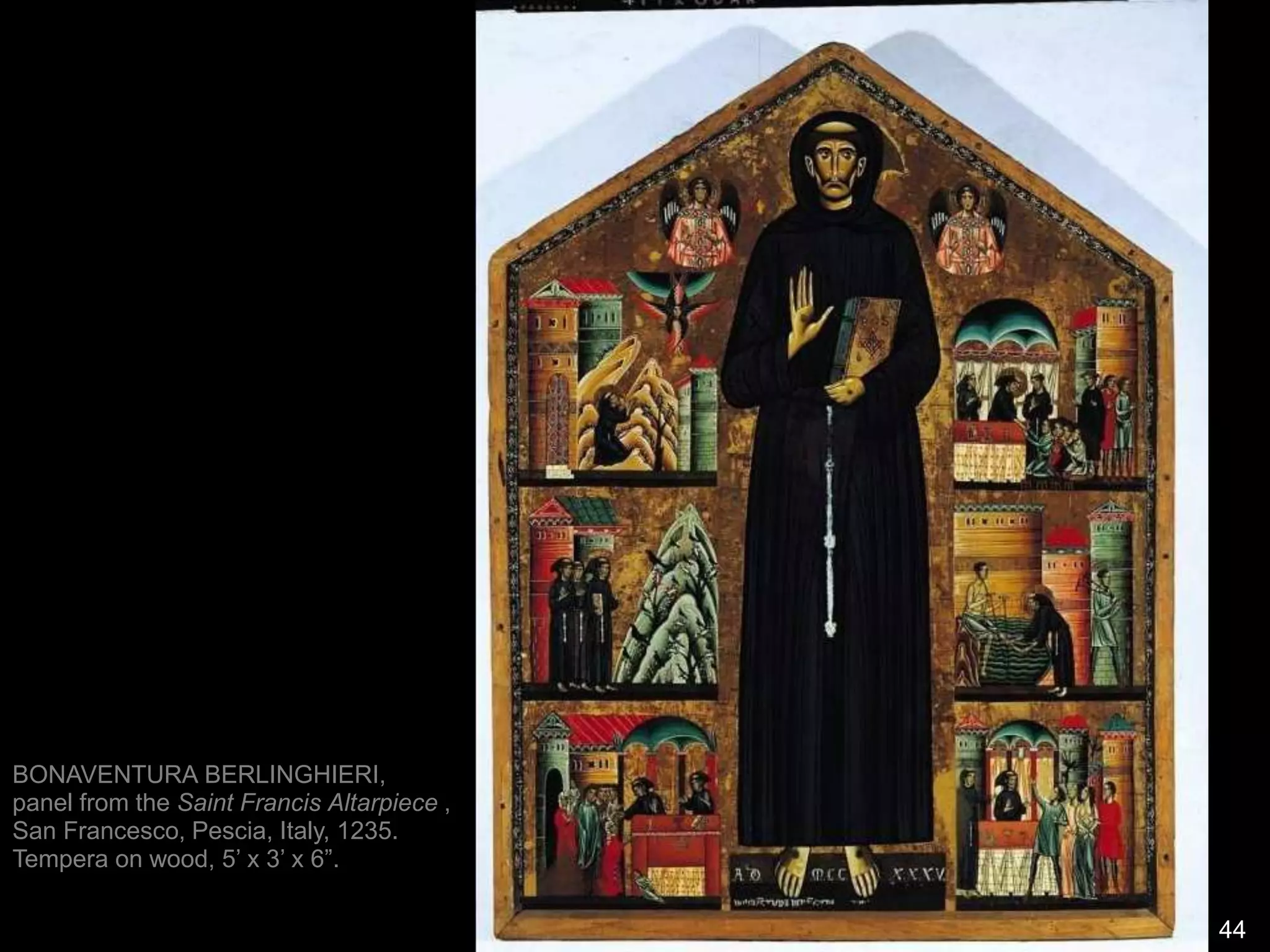
BONAVENTURA BERLINGHIERI,
panel from the Saint Francis Altarpiece ,
San Francesco, Pescia, Italy, 1235.
Tempera on wood, 5’ x 3’ x 6”.
“ Maniera Greca ” or Italo-Byzantine
Style
Painted 9 years after Francis’s
death
Displays “stigmata” (2 nd Christ?)
Gold leaf, flatness, other-worldy
spiritual nature
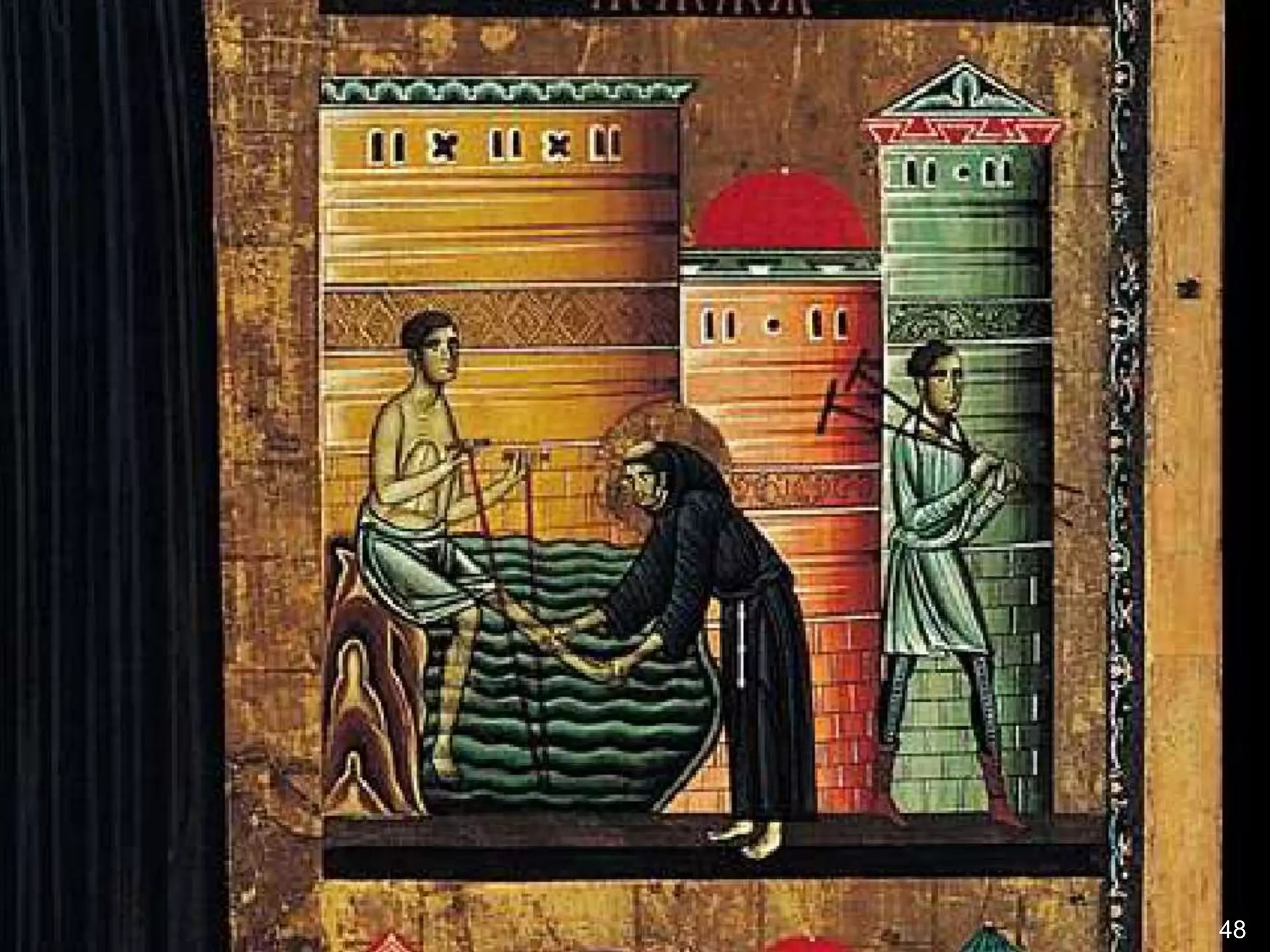
4 of 6 narrative scenes depict
miraculous healings
45
46
47
48
49
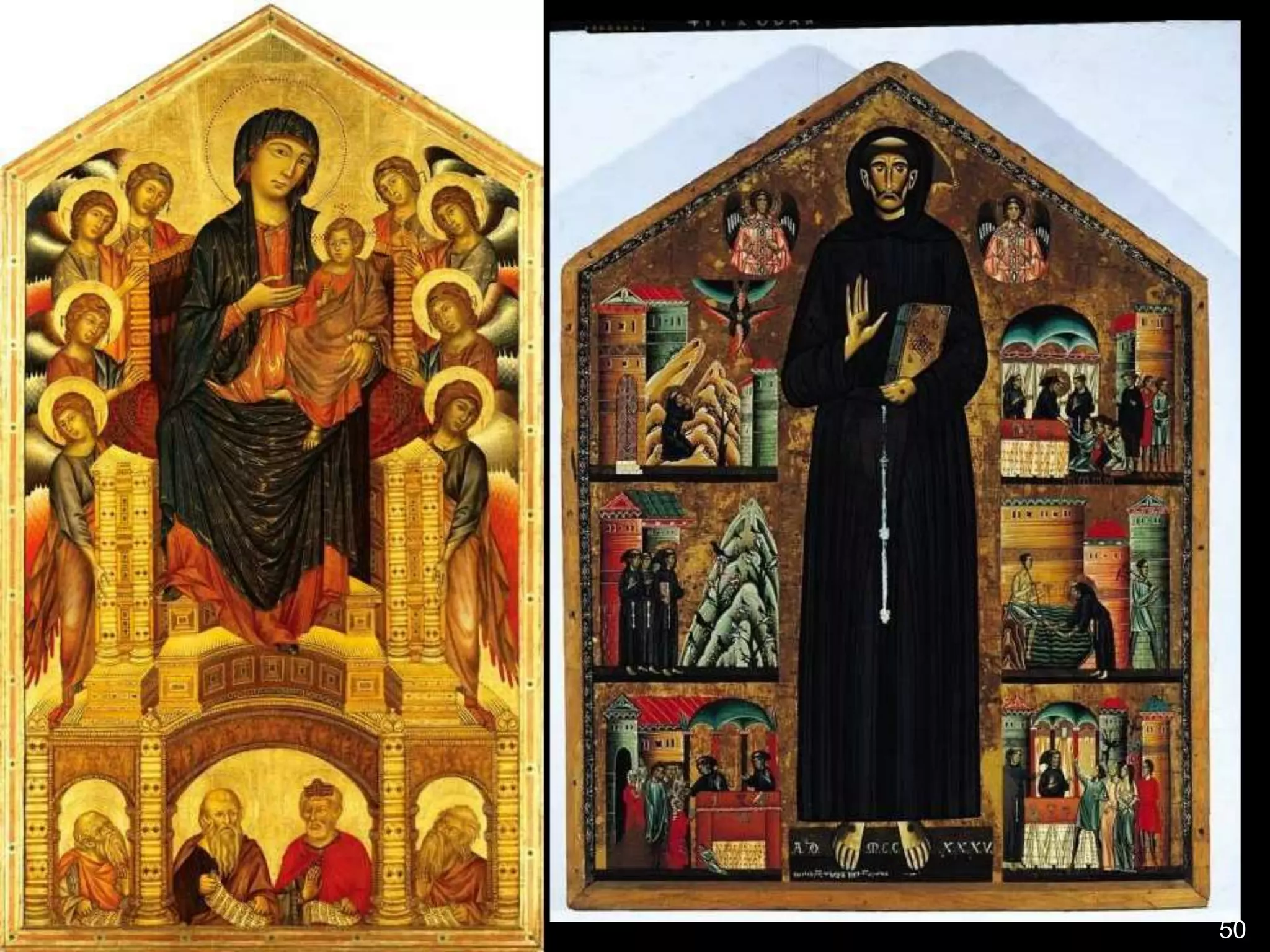
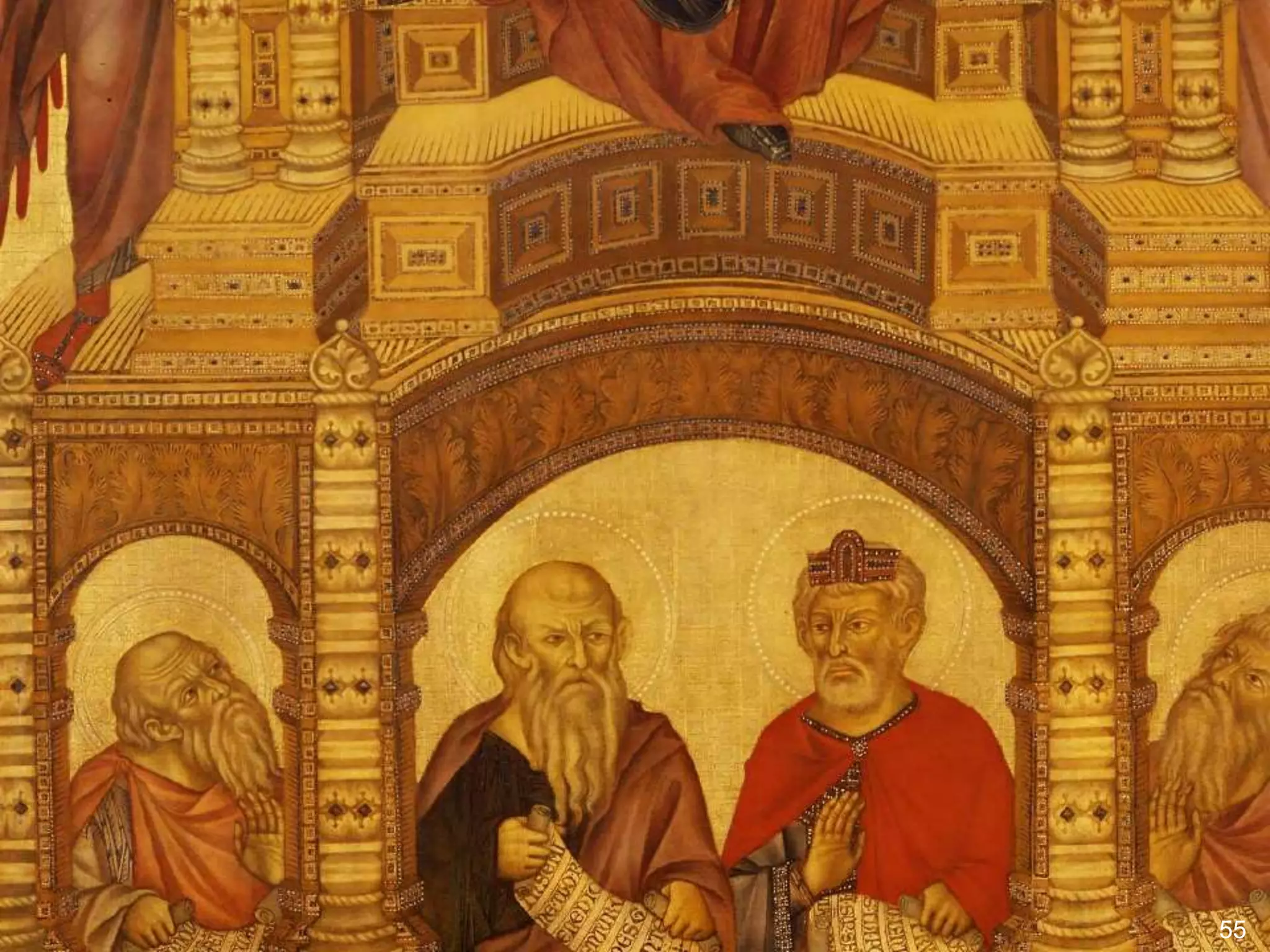
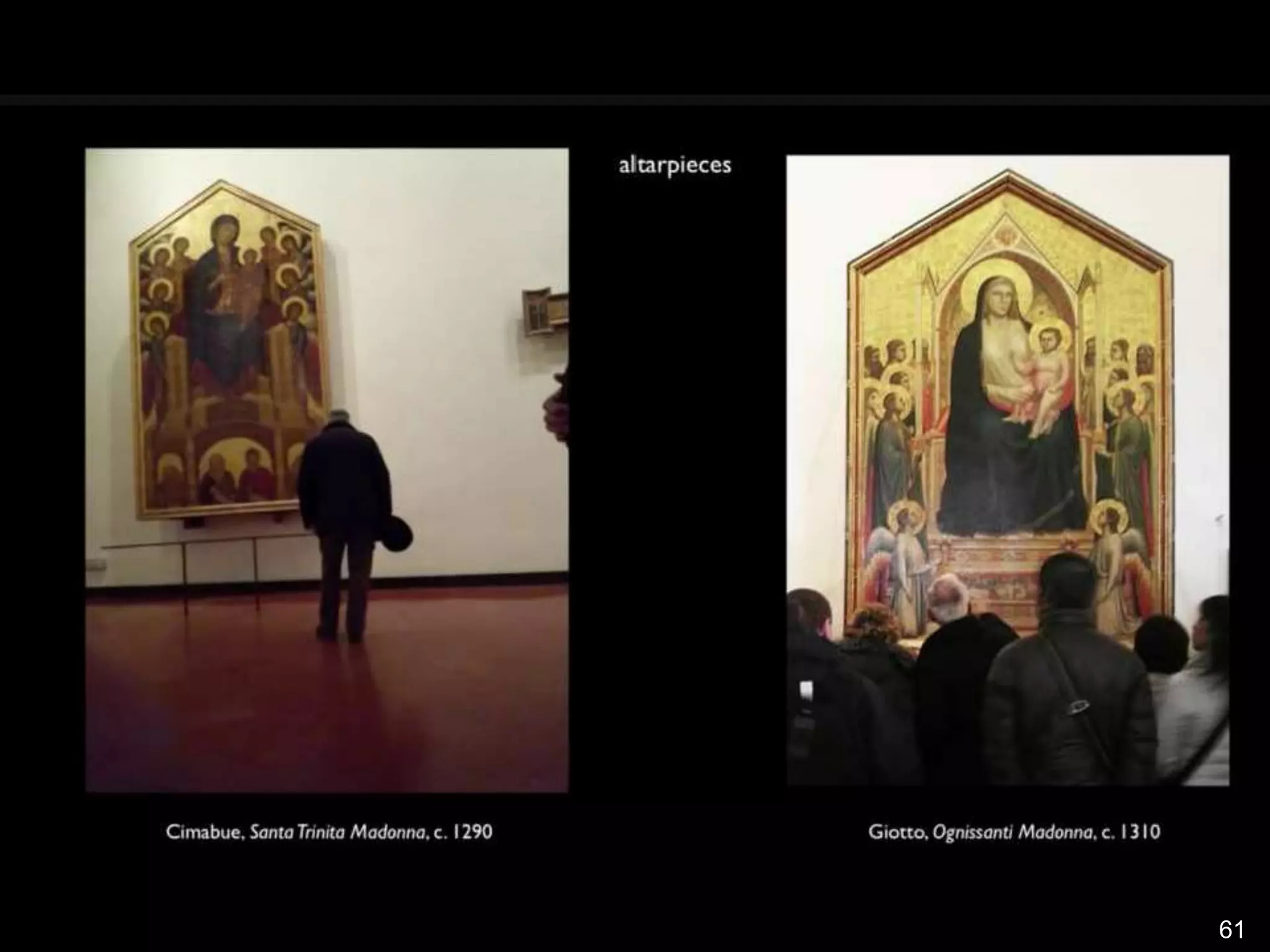
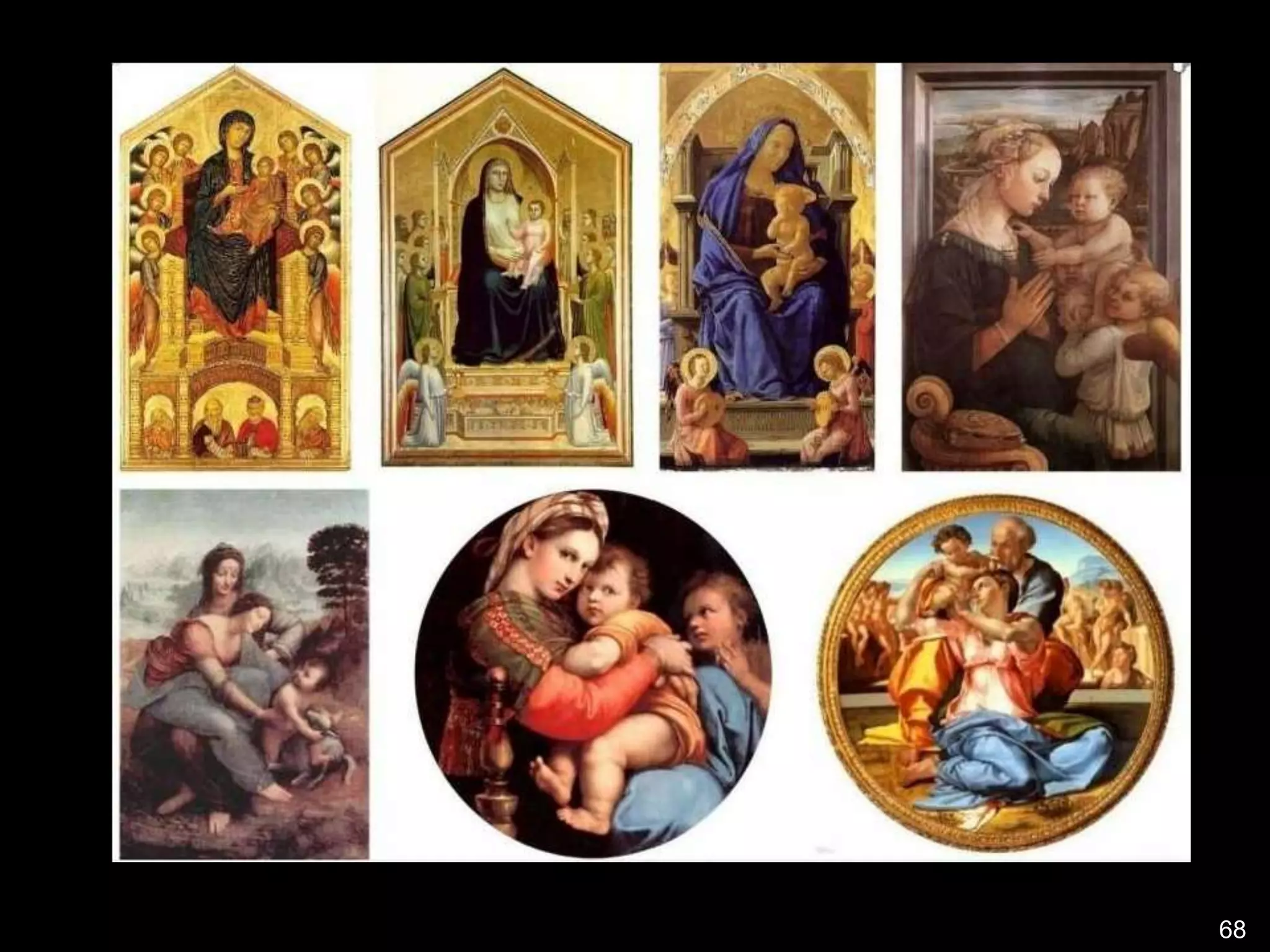
CIMABUE, Madonna Enthroned with Angels and
Prophets , from Santa Trinità, Florence, Italy, ca. 1280 –
1290. Tempera and gold leaf on wood, 12’ 7” x 7’ 4”.
Galleria degli Uffizi, Florence.
50
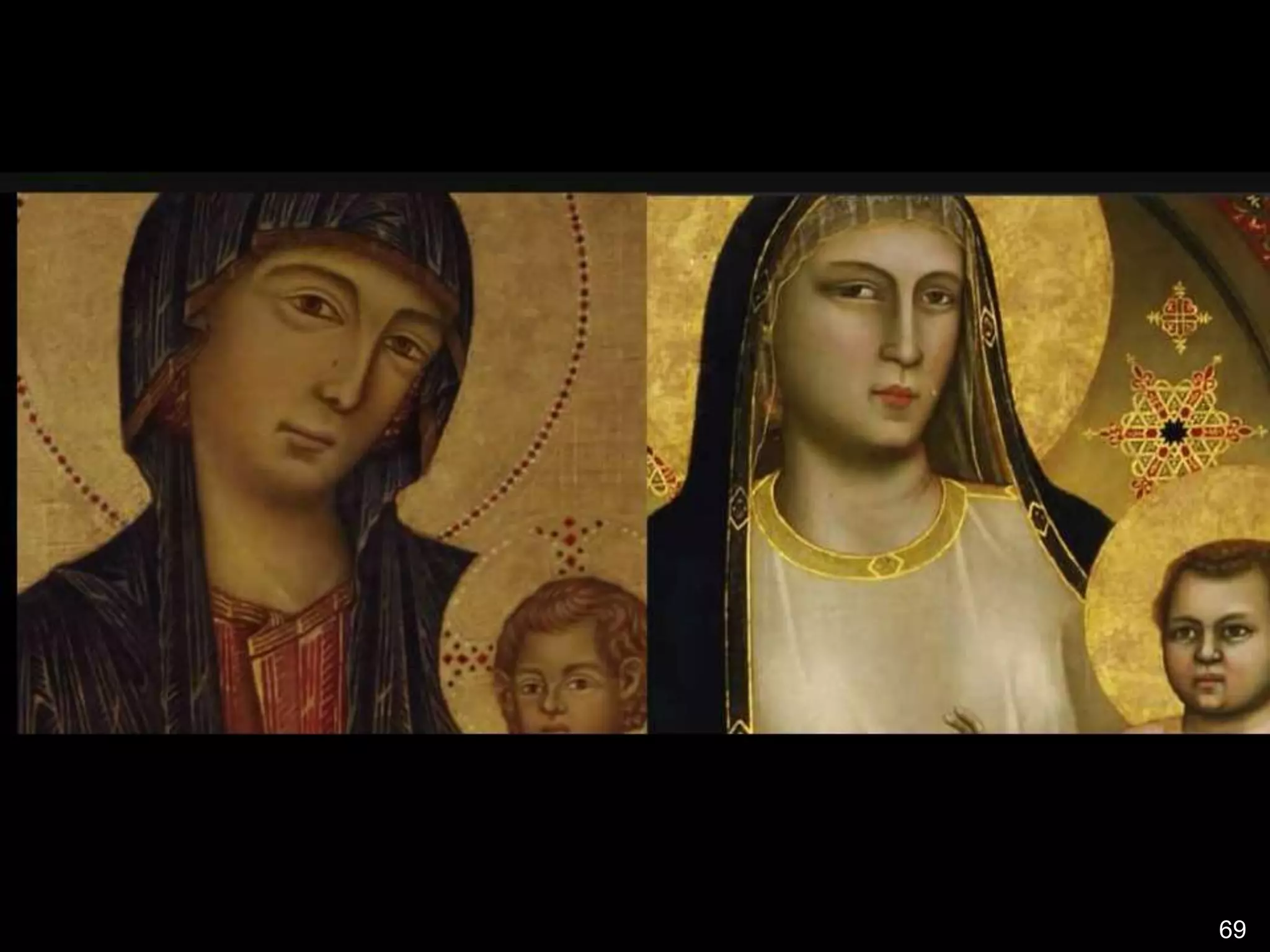
A movement slightly forward…
Gold=light of heaven
Spatial contradictions
Diagonals draw you slightly in
Cult of Mary important to the
Medieval mind-less intimidating,
speaks to god on your behalf
Christ is small, but does not have
proportions of an infant
Shows influence of Byzantine
tradition
51
52
53
54
55
56
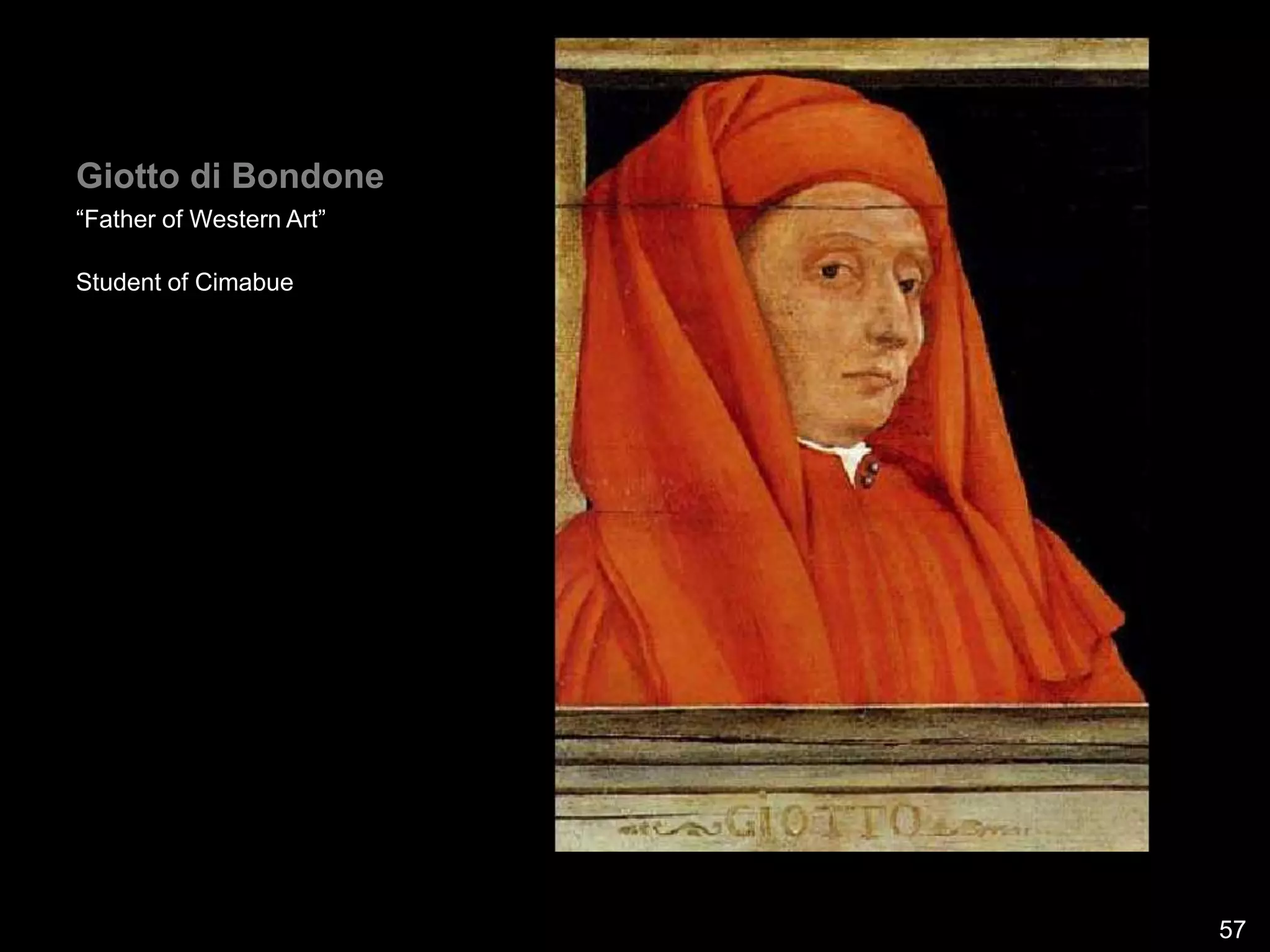
Giotto di Bondone
“Father of Western Art”
Student of Cimabue
57
58
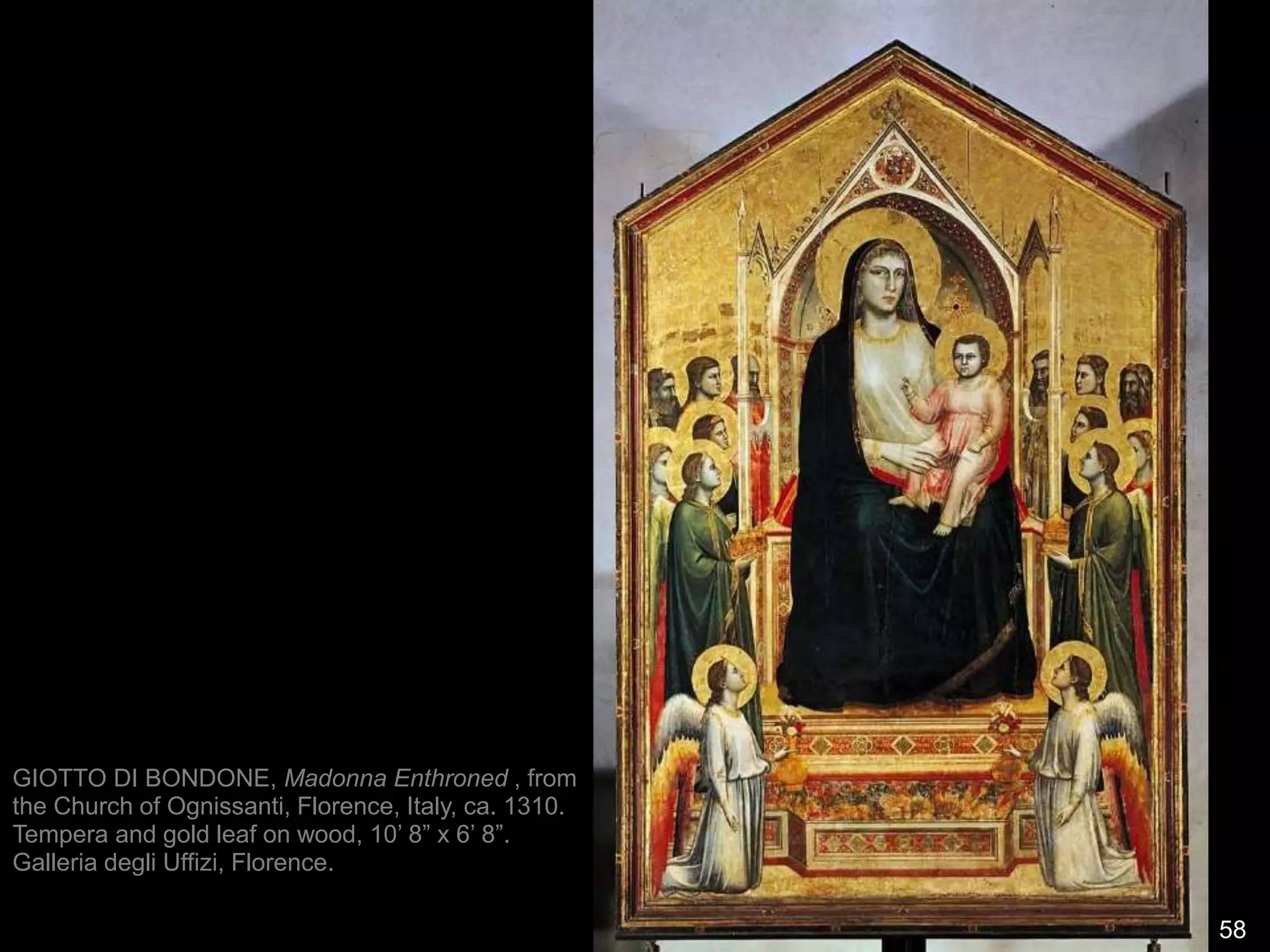
GIOTTO DI BONDONE, Madonna Enthroned , from
the Church of Ognissanti, Florence, Italy, ca. 1310.
Tempera and gold leaf on wood, 10’ 8” x 6’ 8”.
Galleria degli Uffizi, Florence.
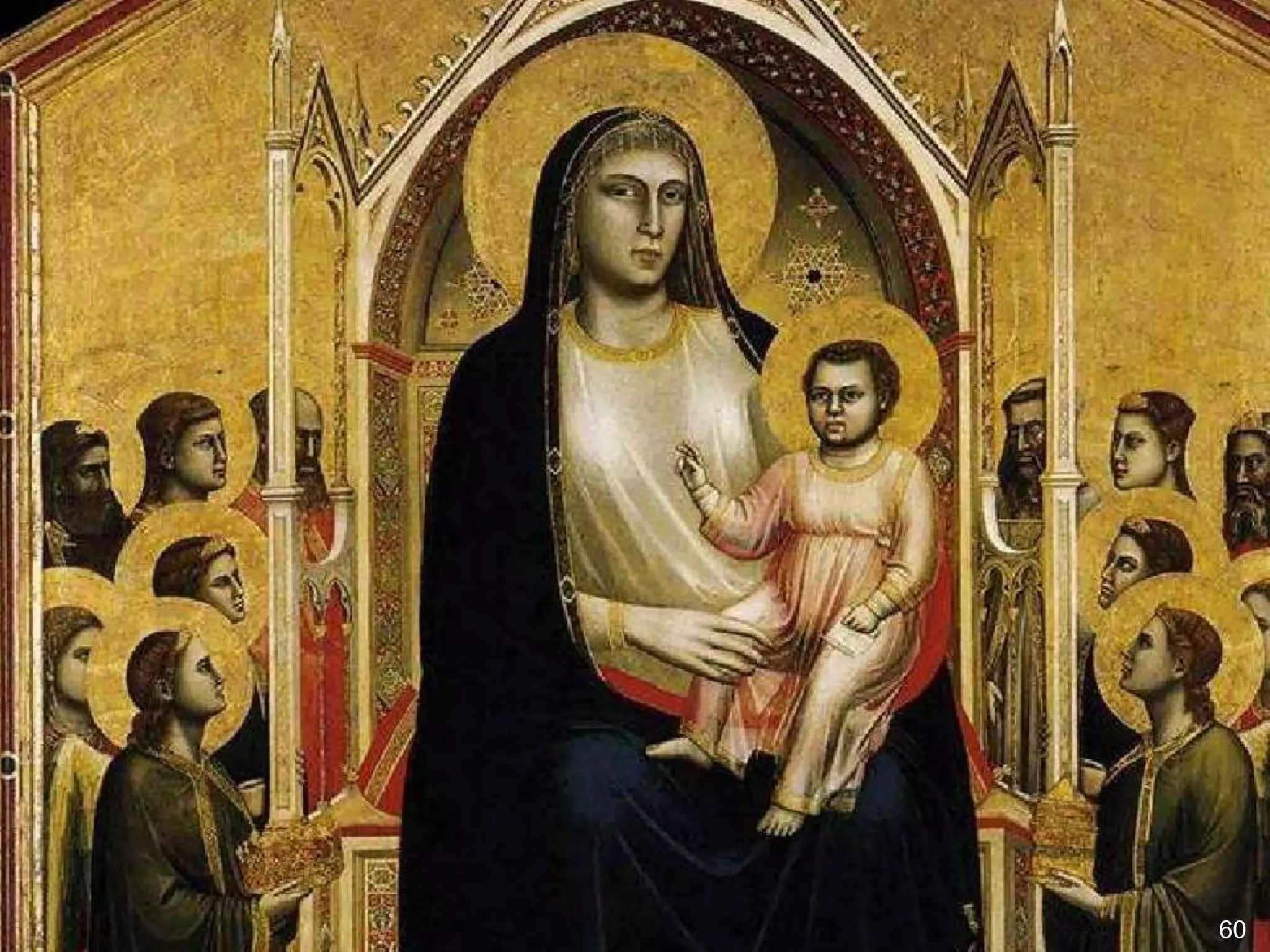
Mary has solidity, stability,
substance-not spiritual immateriality
Angels stand on a more common
level
Light and shadow “chiaroscuro”, not
flatness
59
60
61
62
63
64
65
66
67
68
69
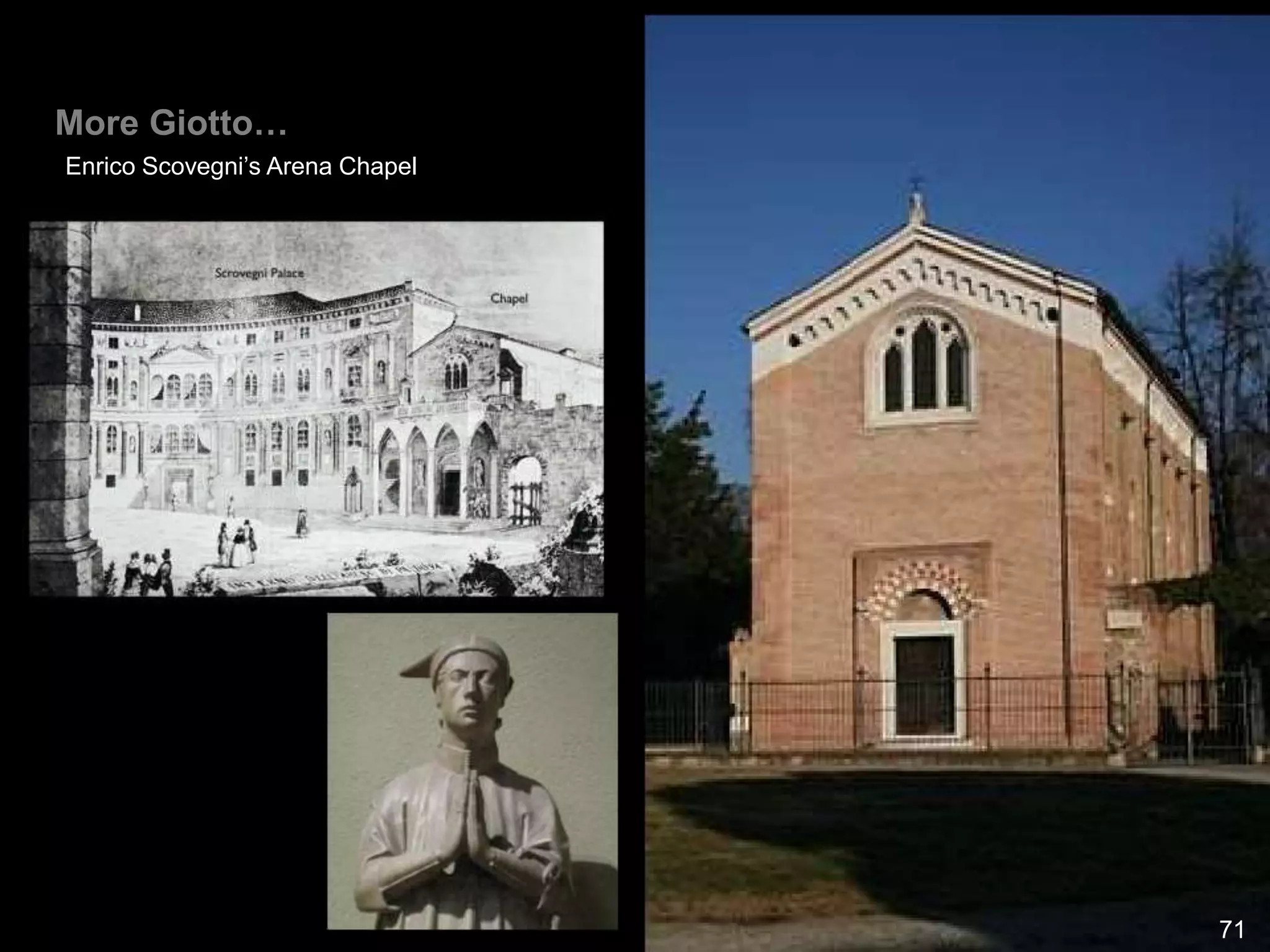
More Giotto…
Enrico Scovegni’s Arena Chapel
71
Next to ancient Roman ARENA
72
73
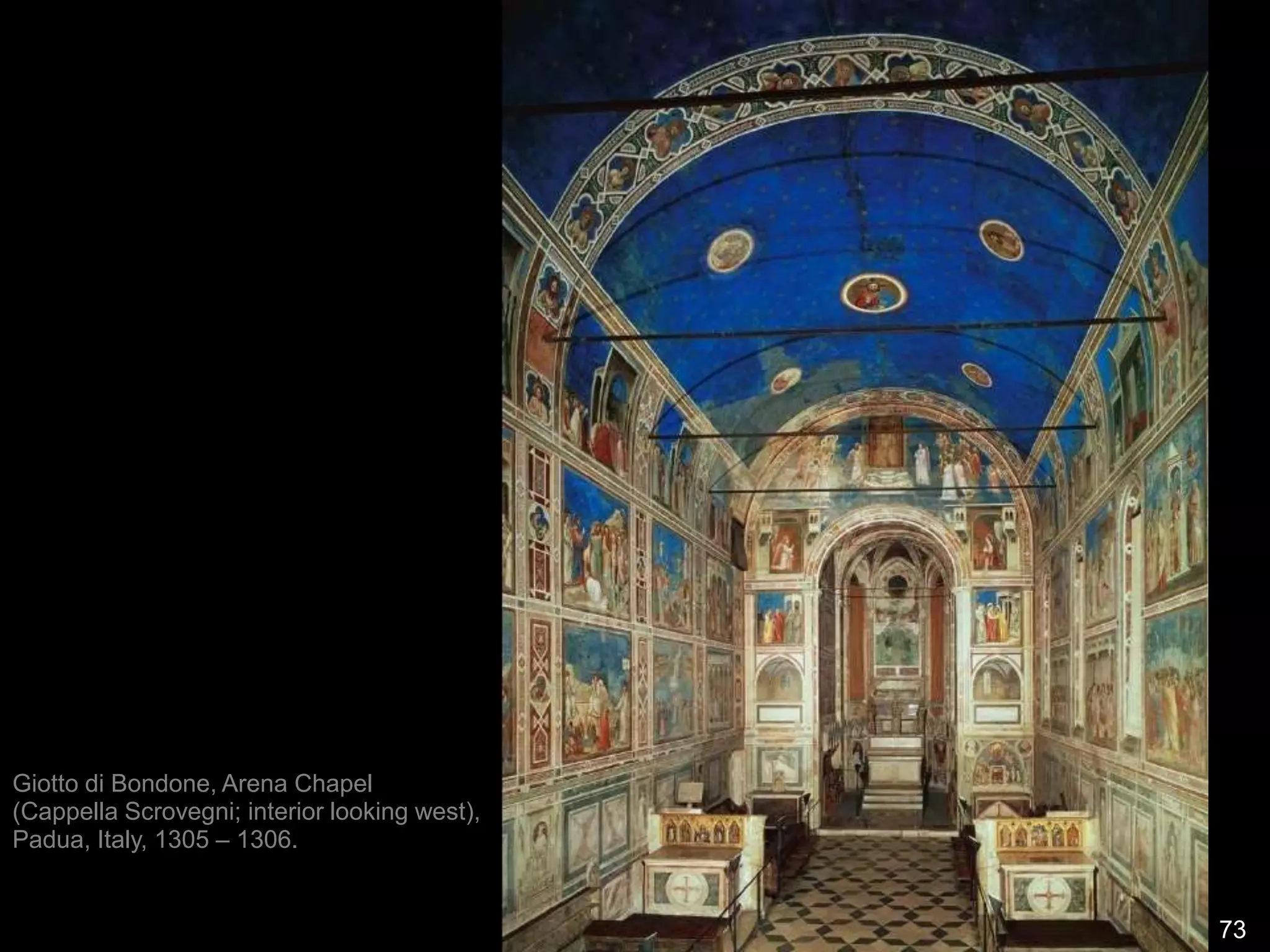
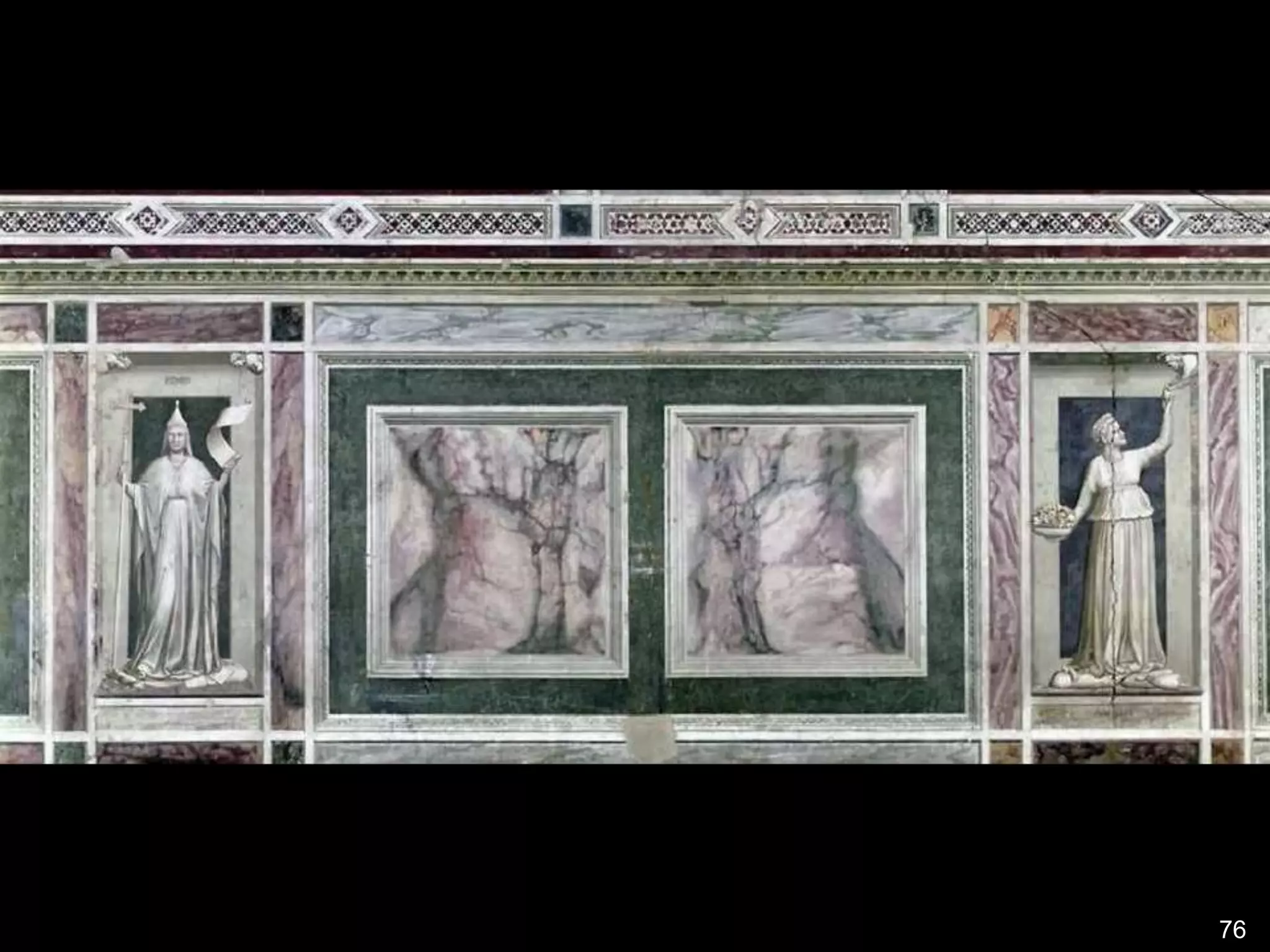
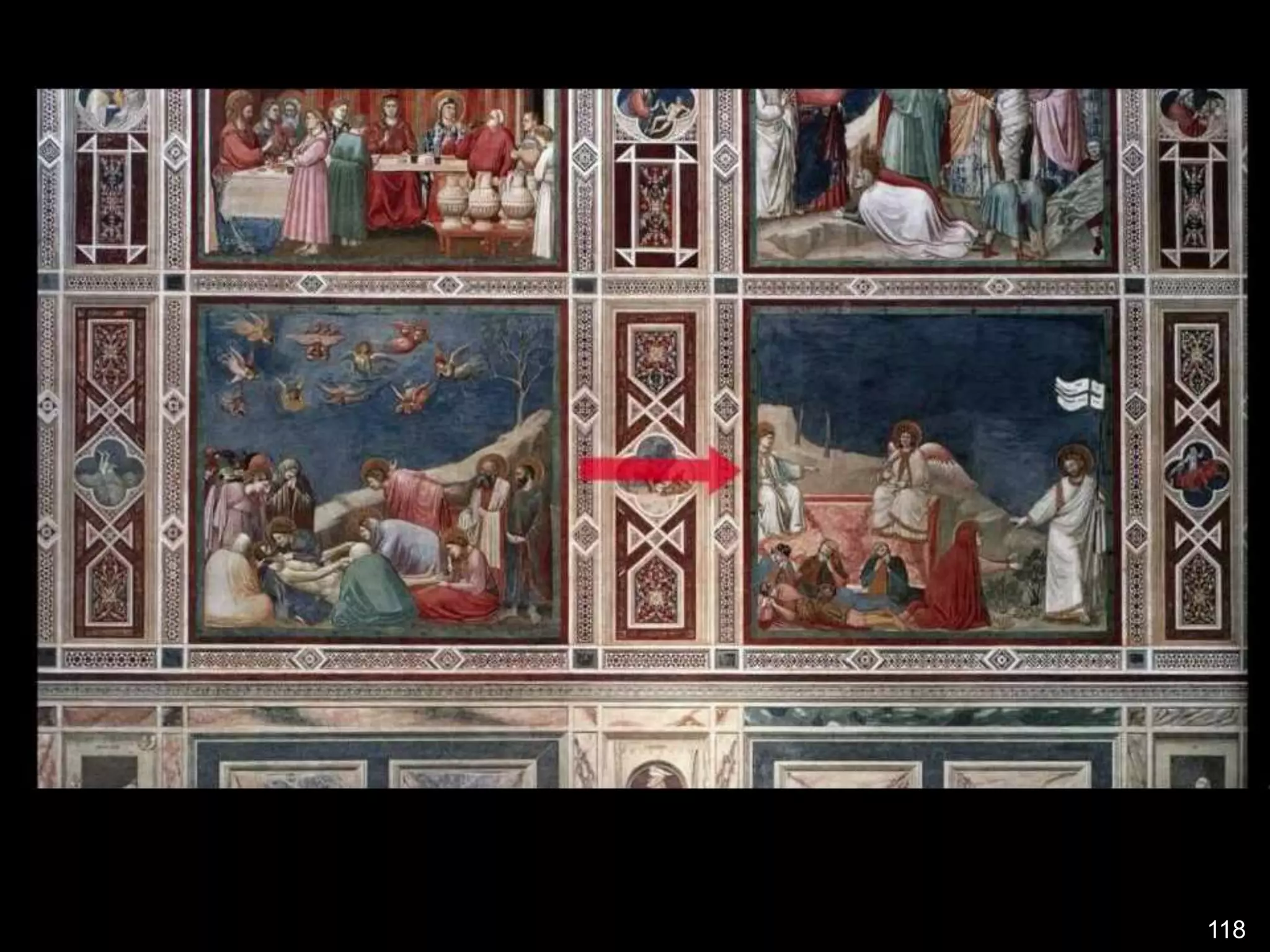
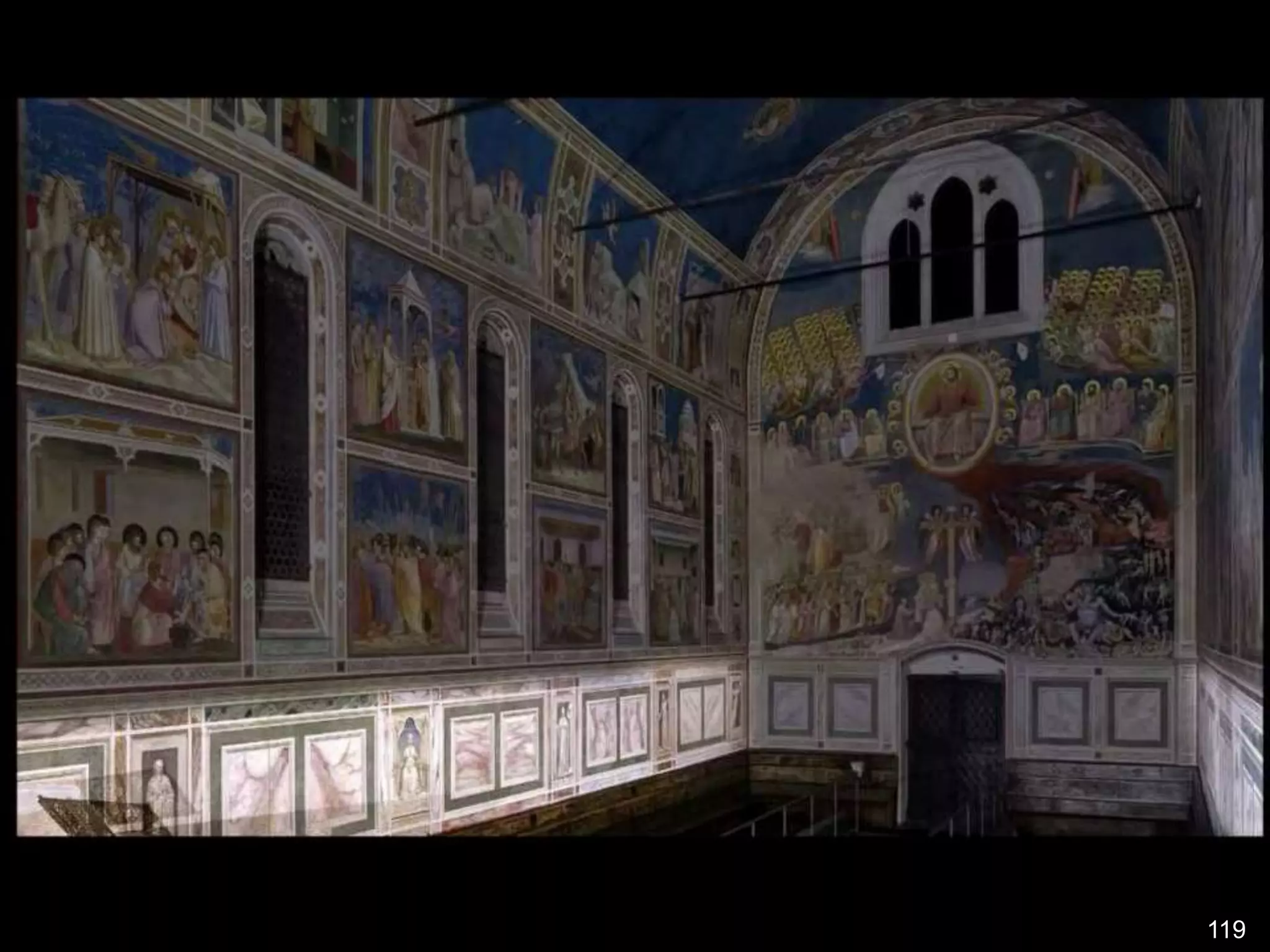
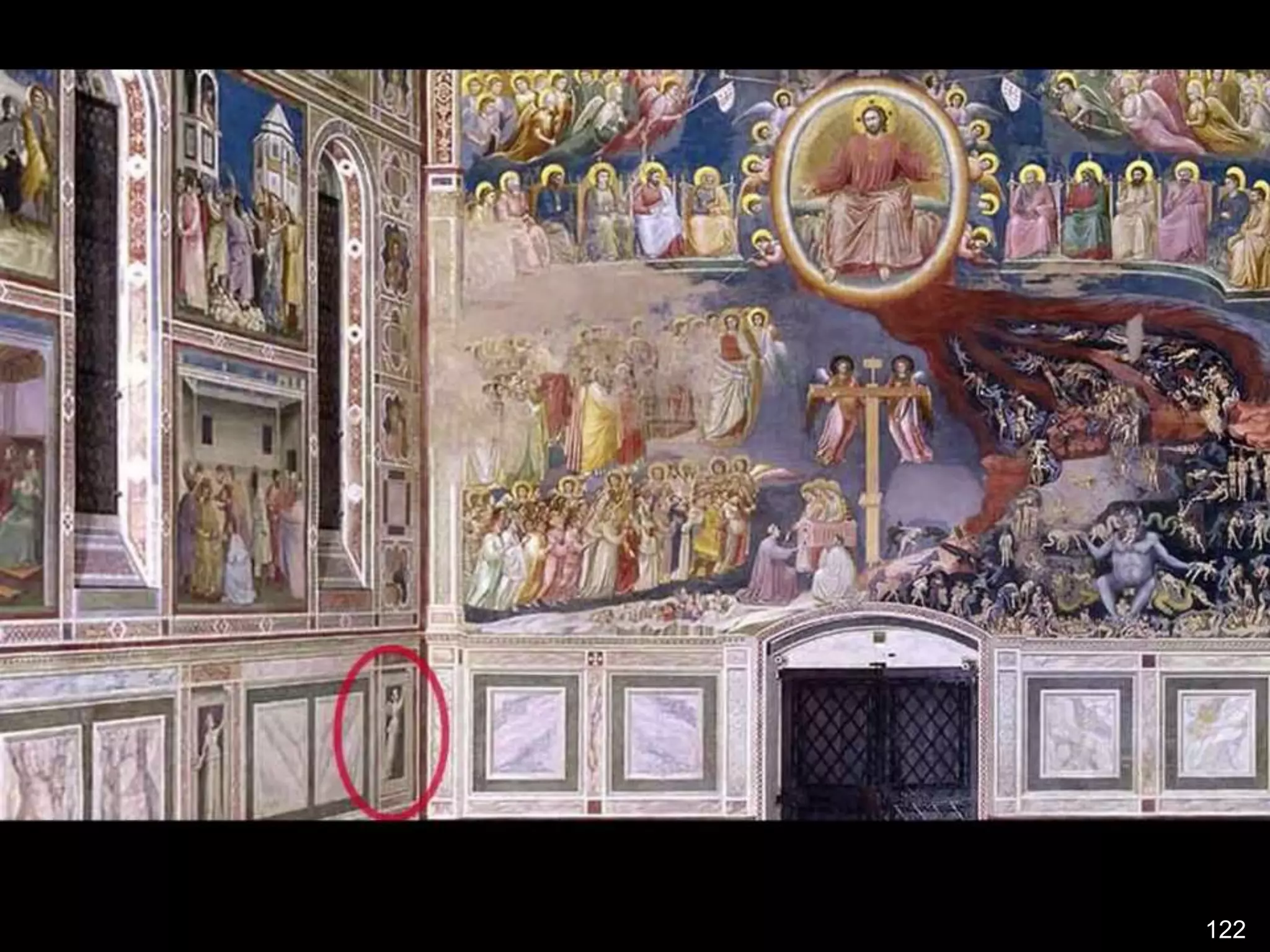
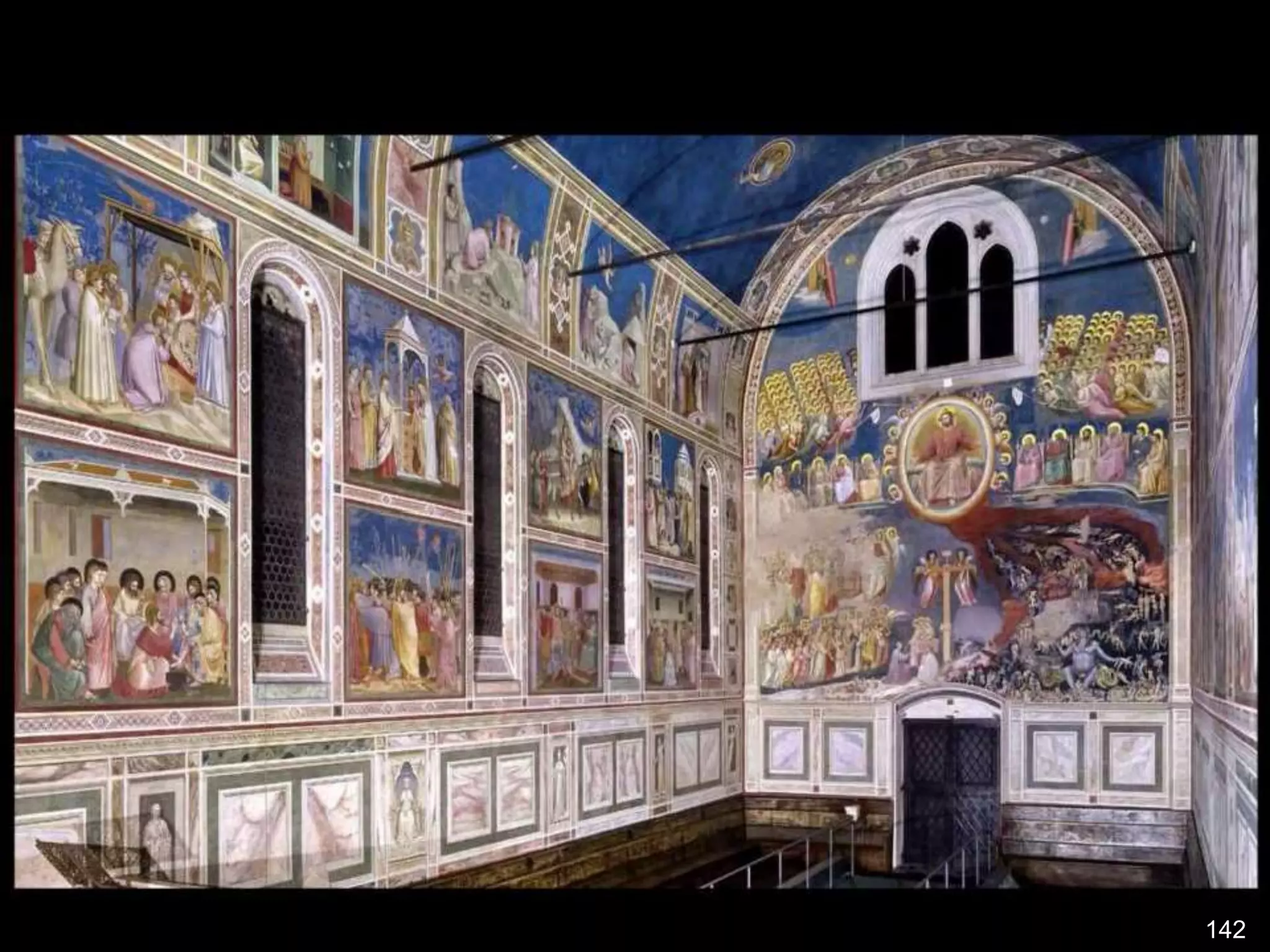
Giotto di Bondone, Arena Chapel
(Cappella Scrovegni; interior looking west),
Padua, Italy, 1305 – 1306.
74
75
76
77
Lapis lazuli
78
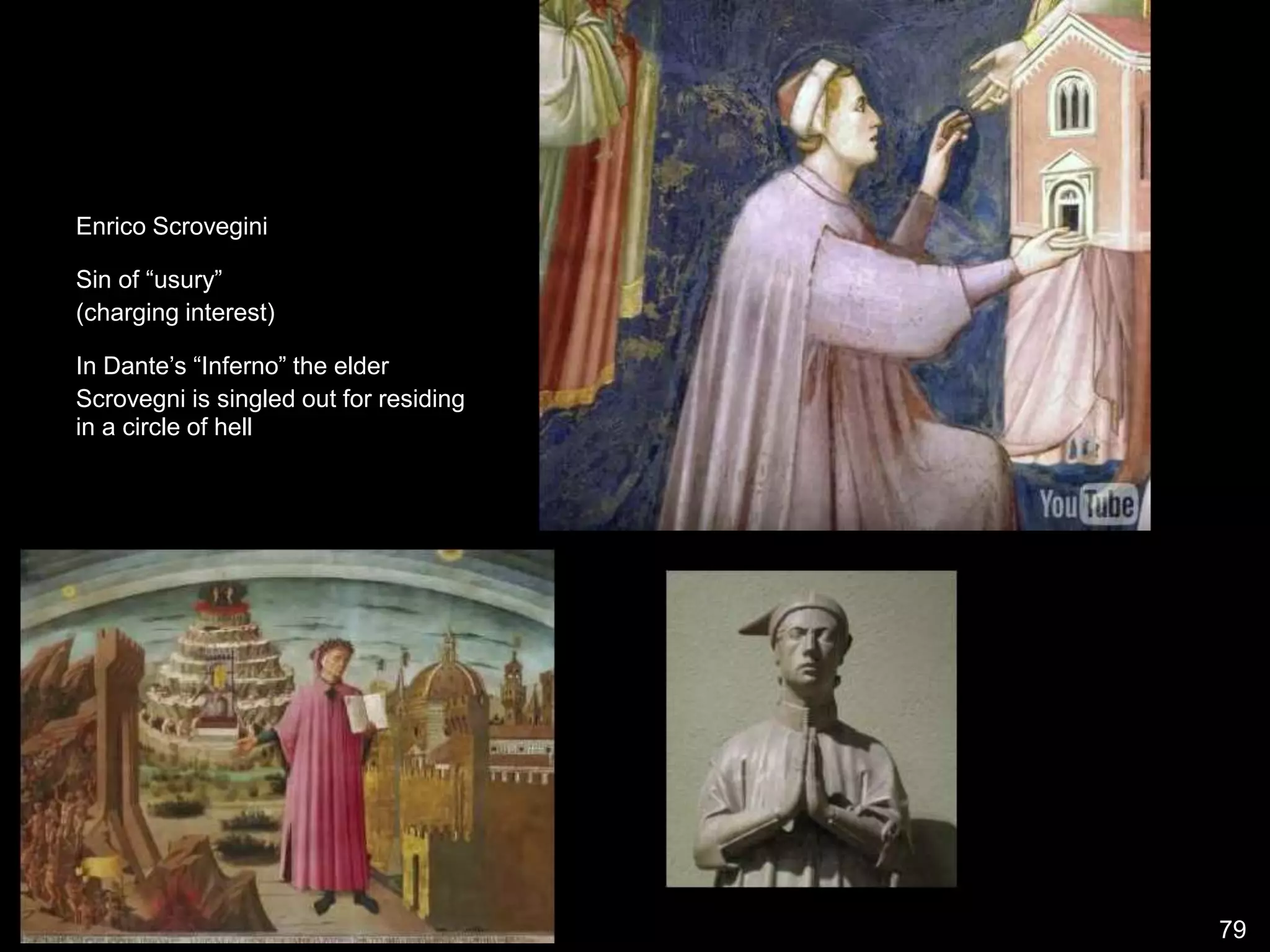
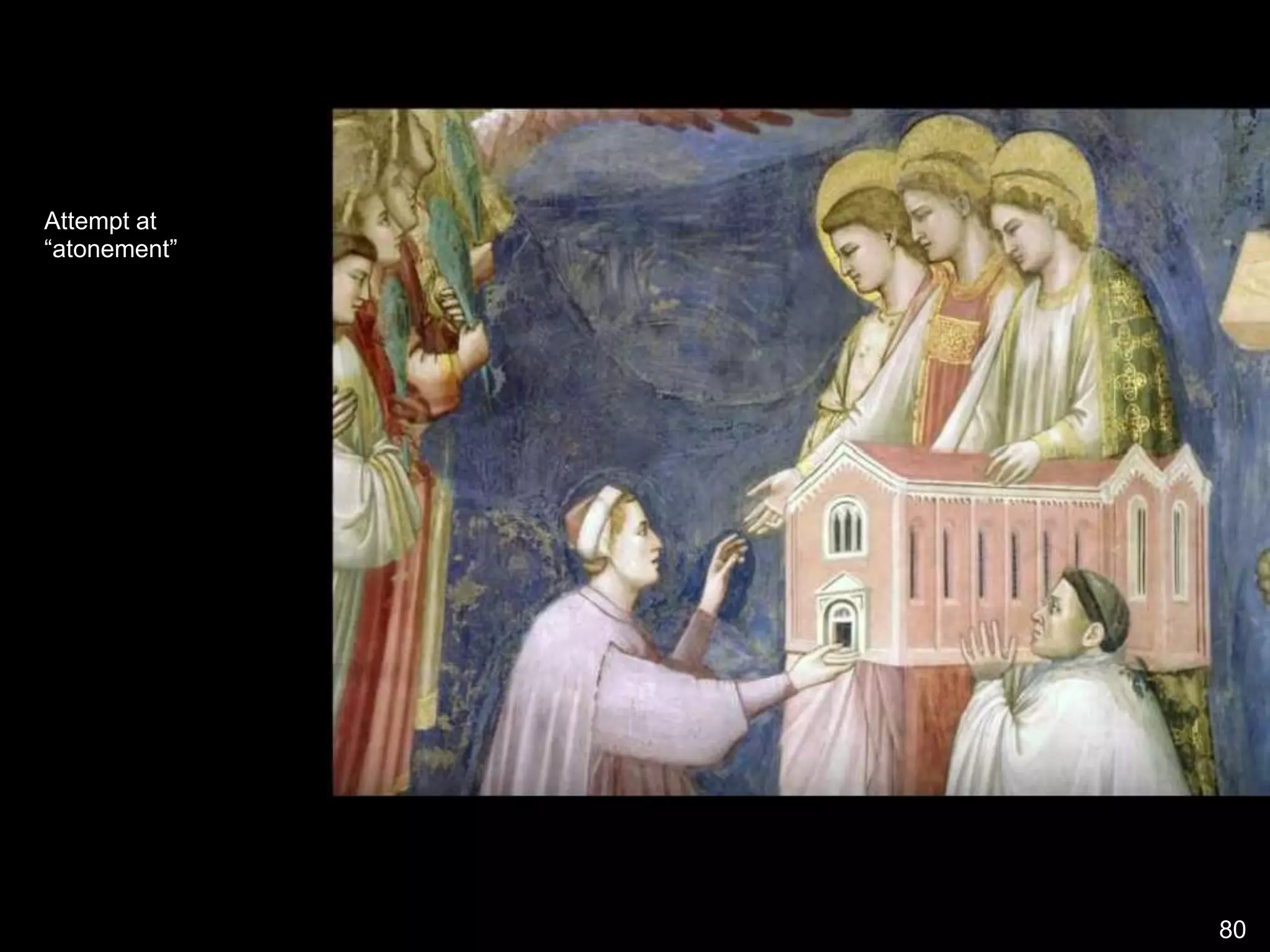
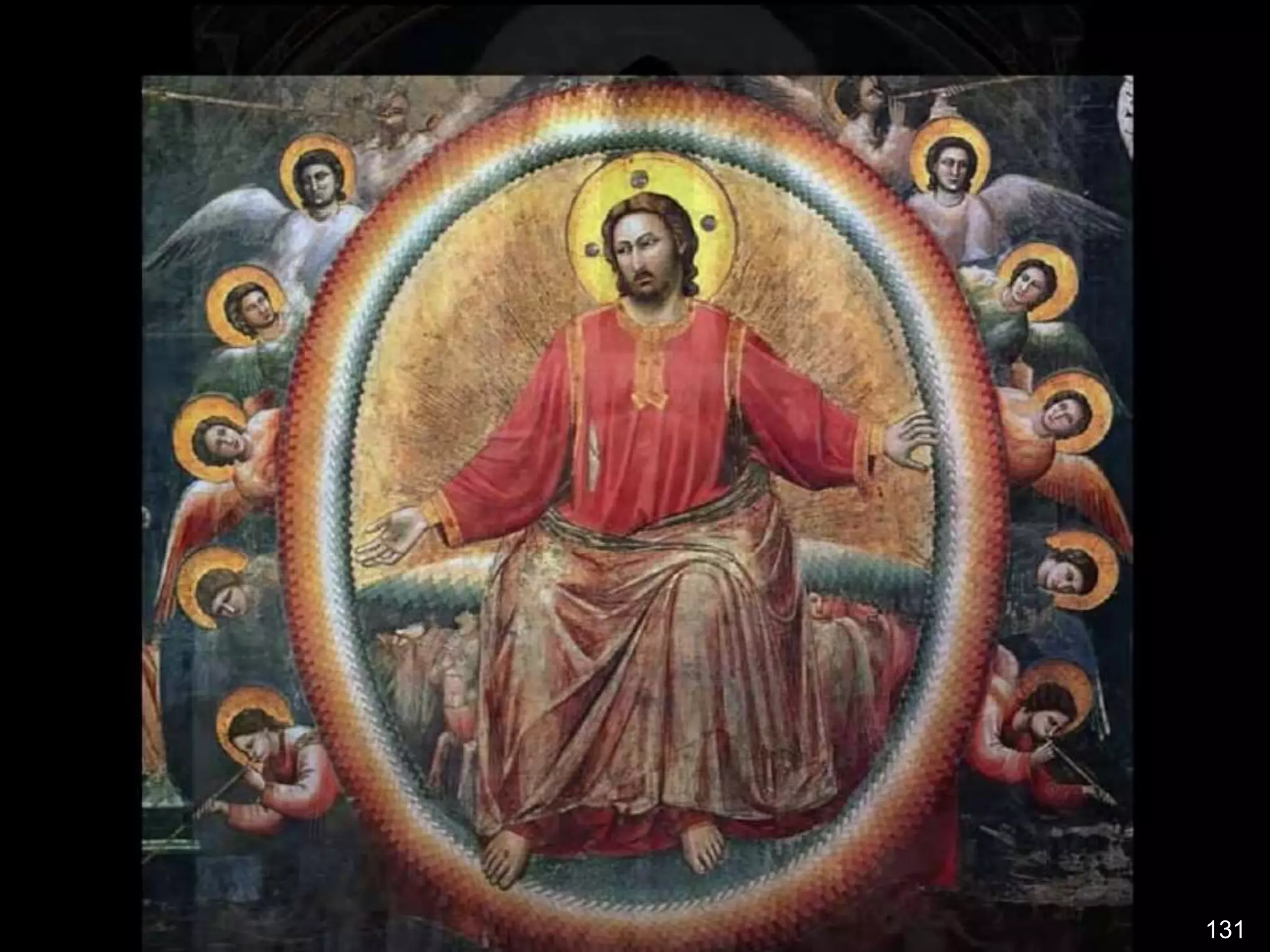
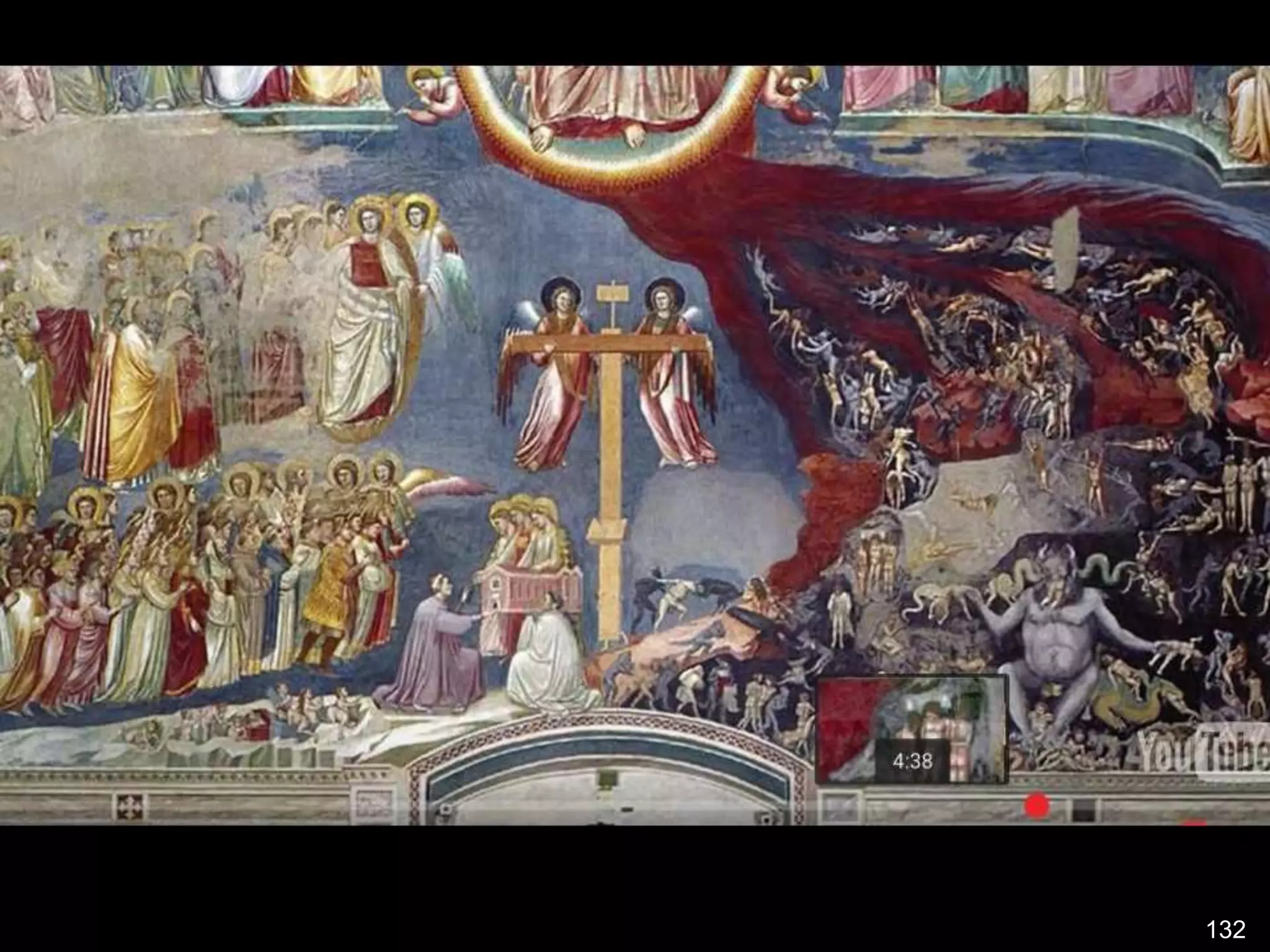
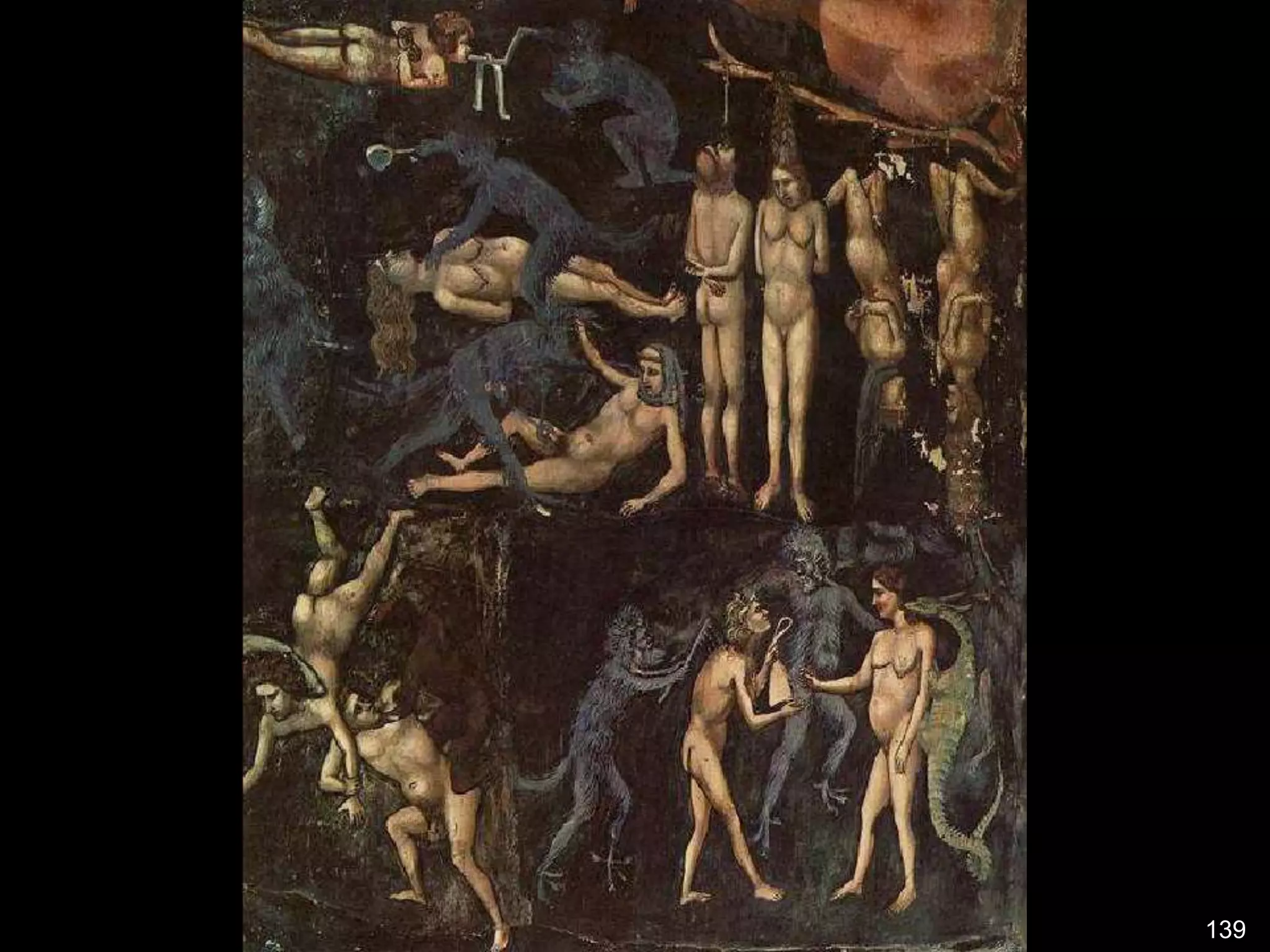
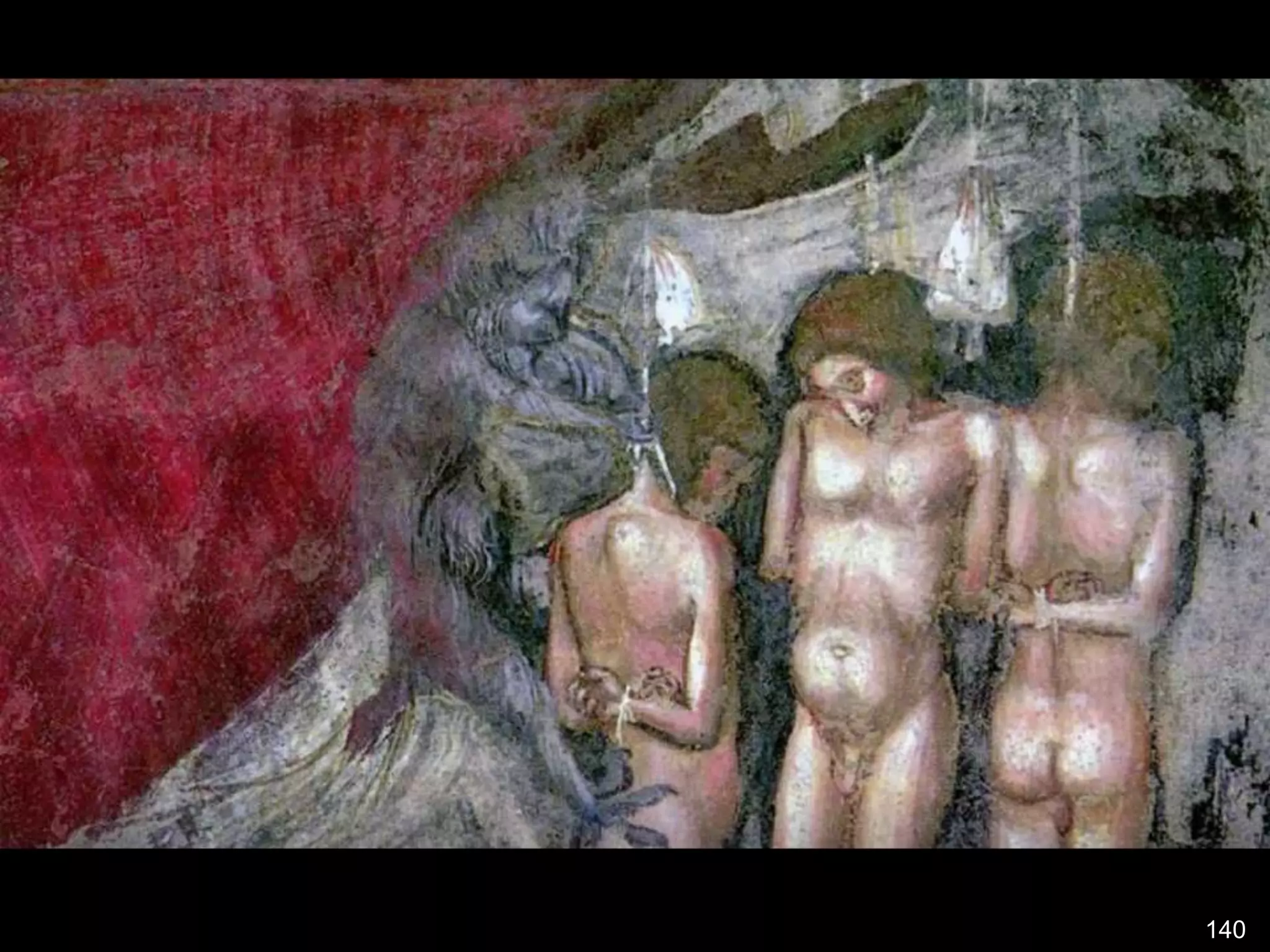
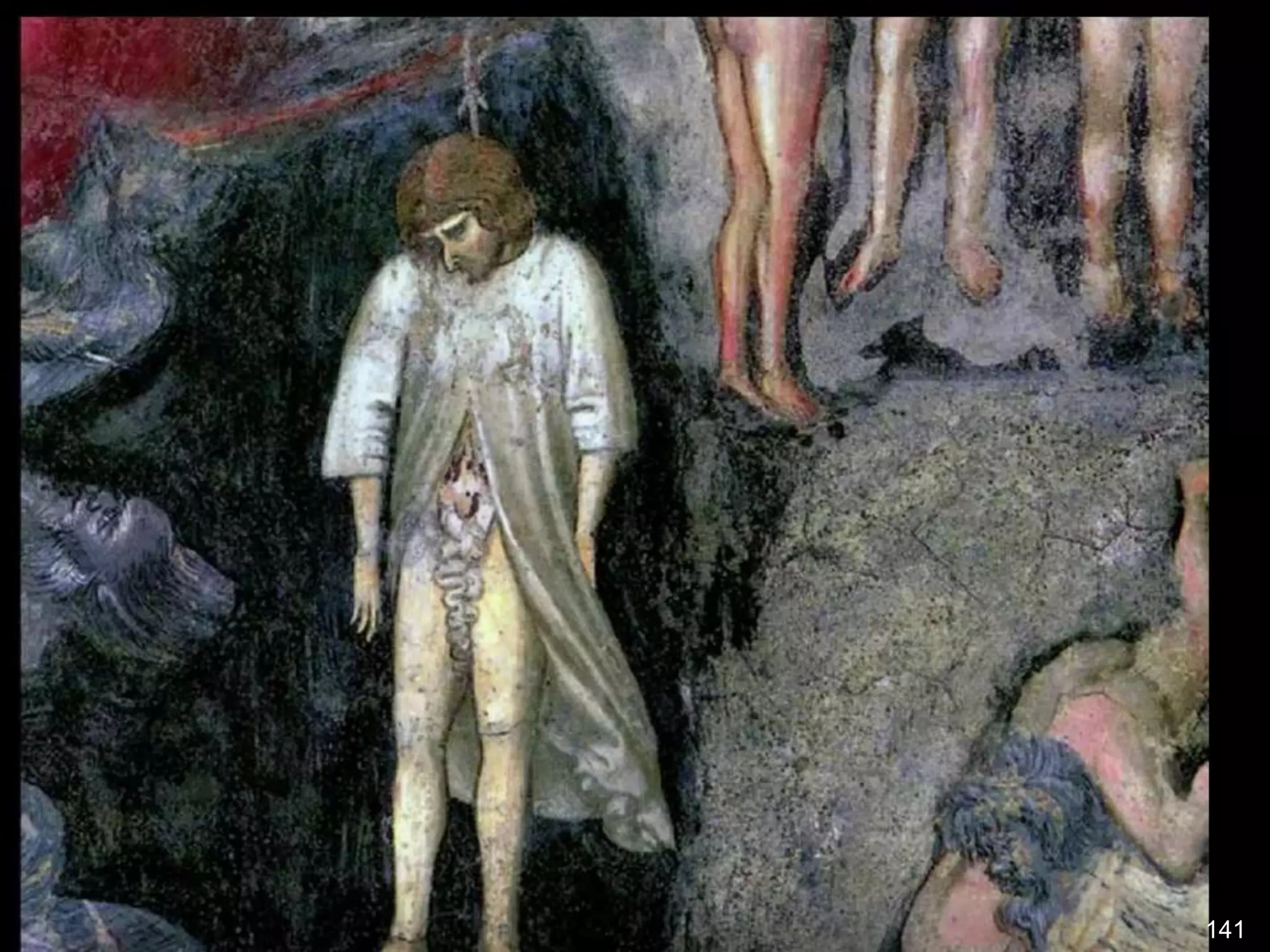
Enrico Scrovegini
Sin of “usury”
(charging interest)
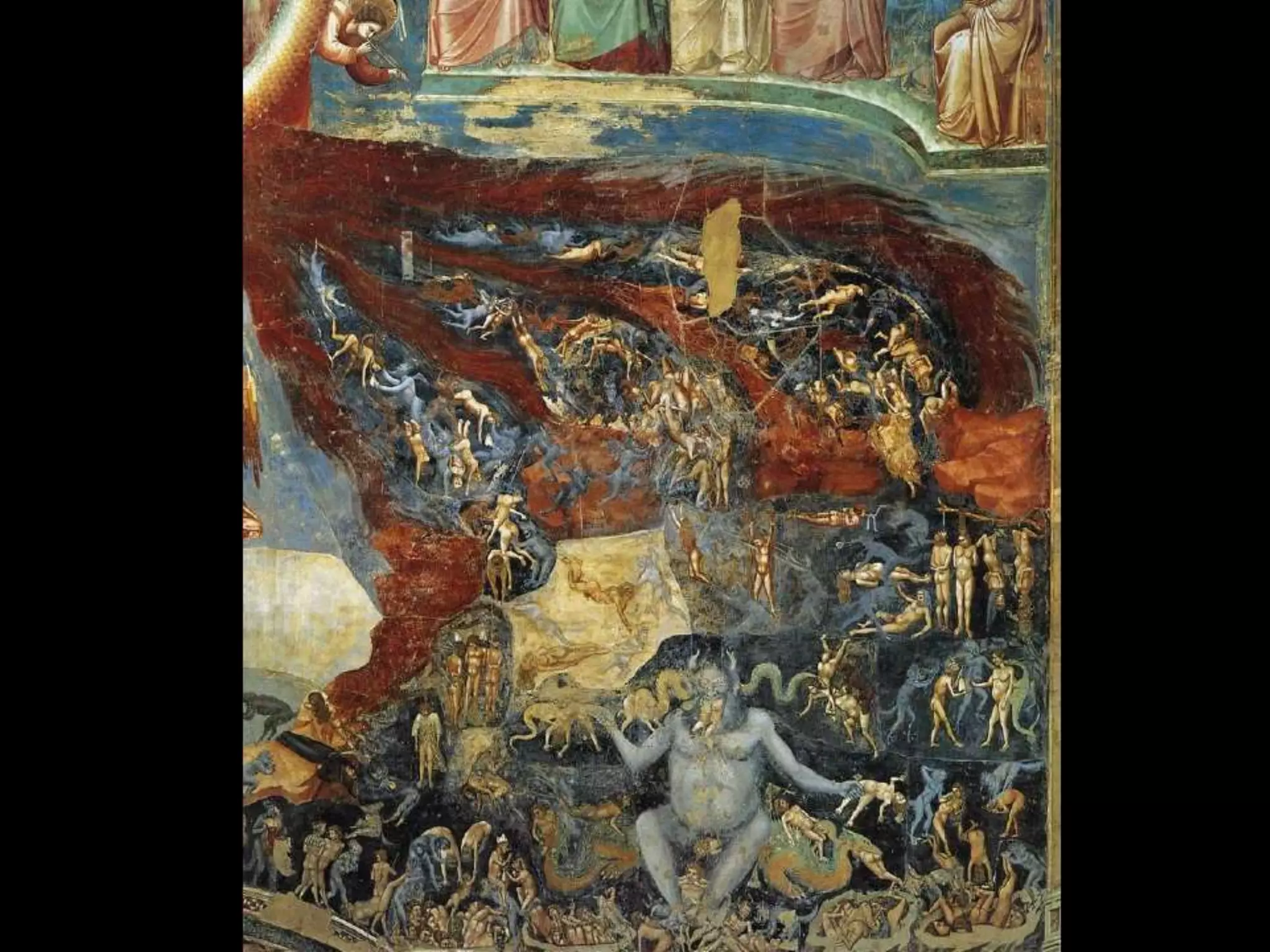
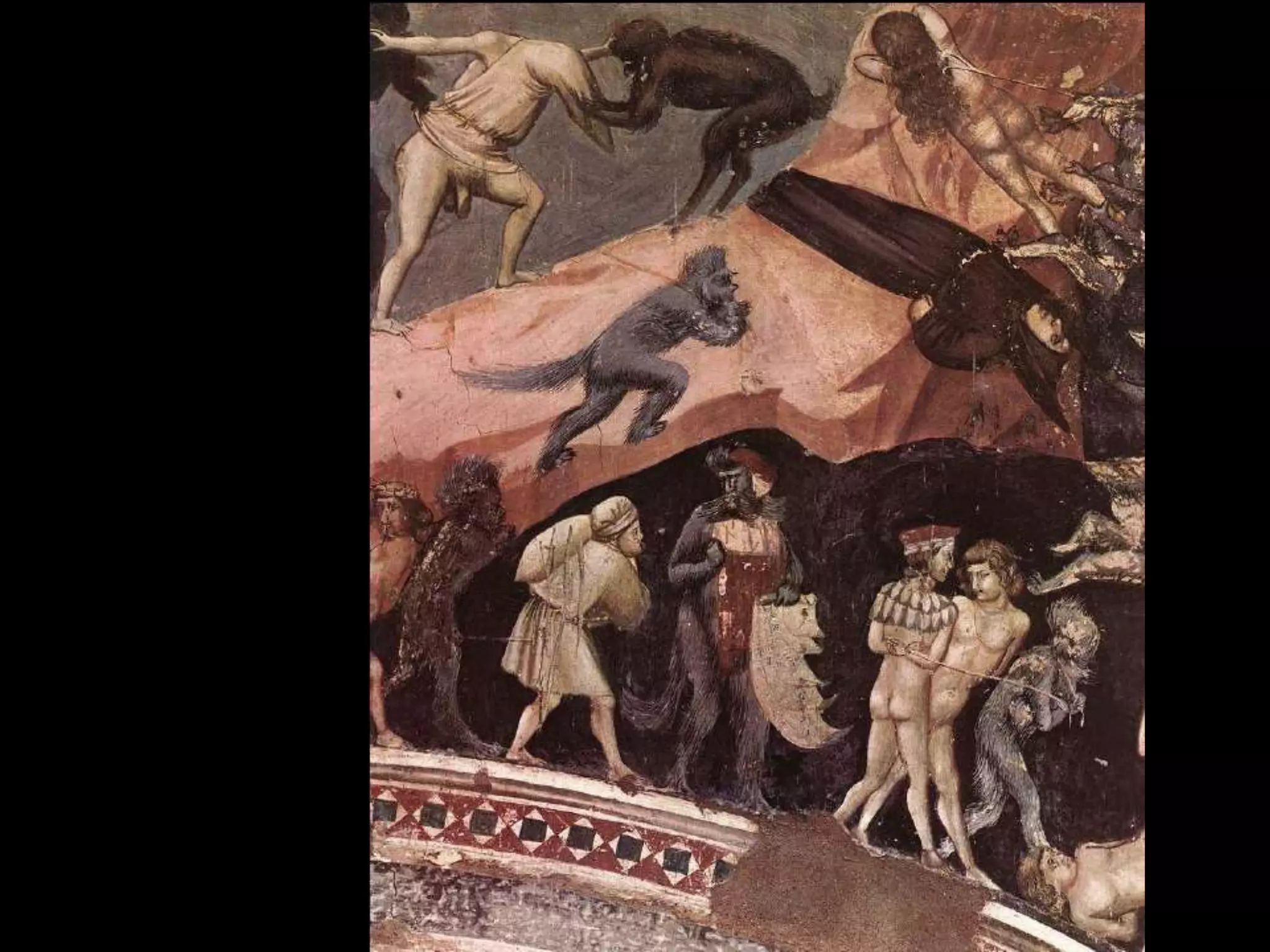
In Dante’s “Inferno” the elder
Scrovegni is singled out for residing
in a circle of hell
79
Attempt at
“atonement”
80
81
Giotto has created and architectural space for Mary and the Angel
Earthly settings-not gold panel paintings
82
83
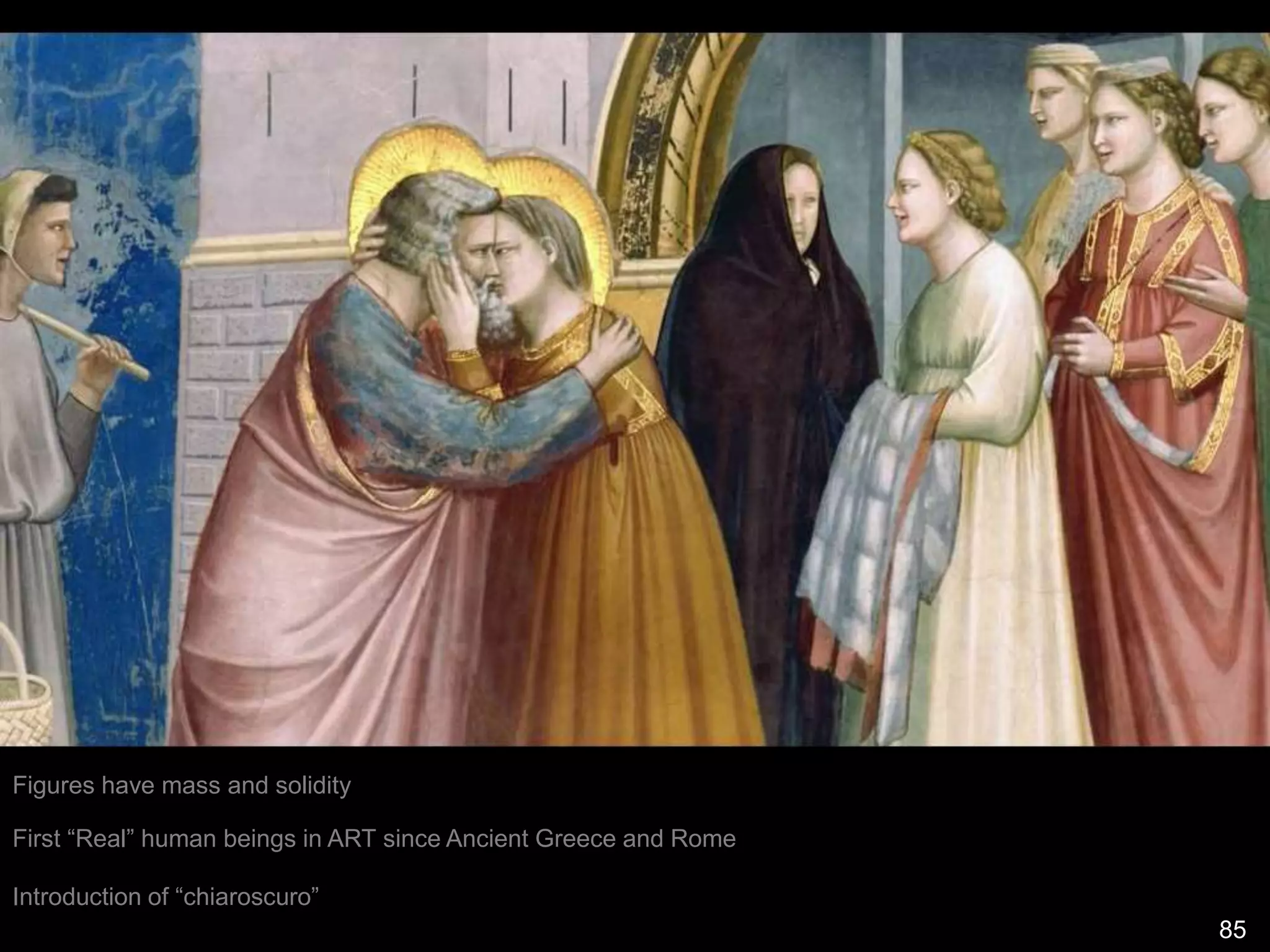
Joachims vision
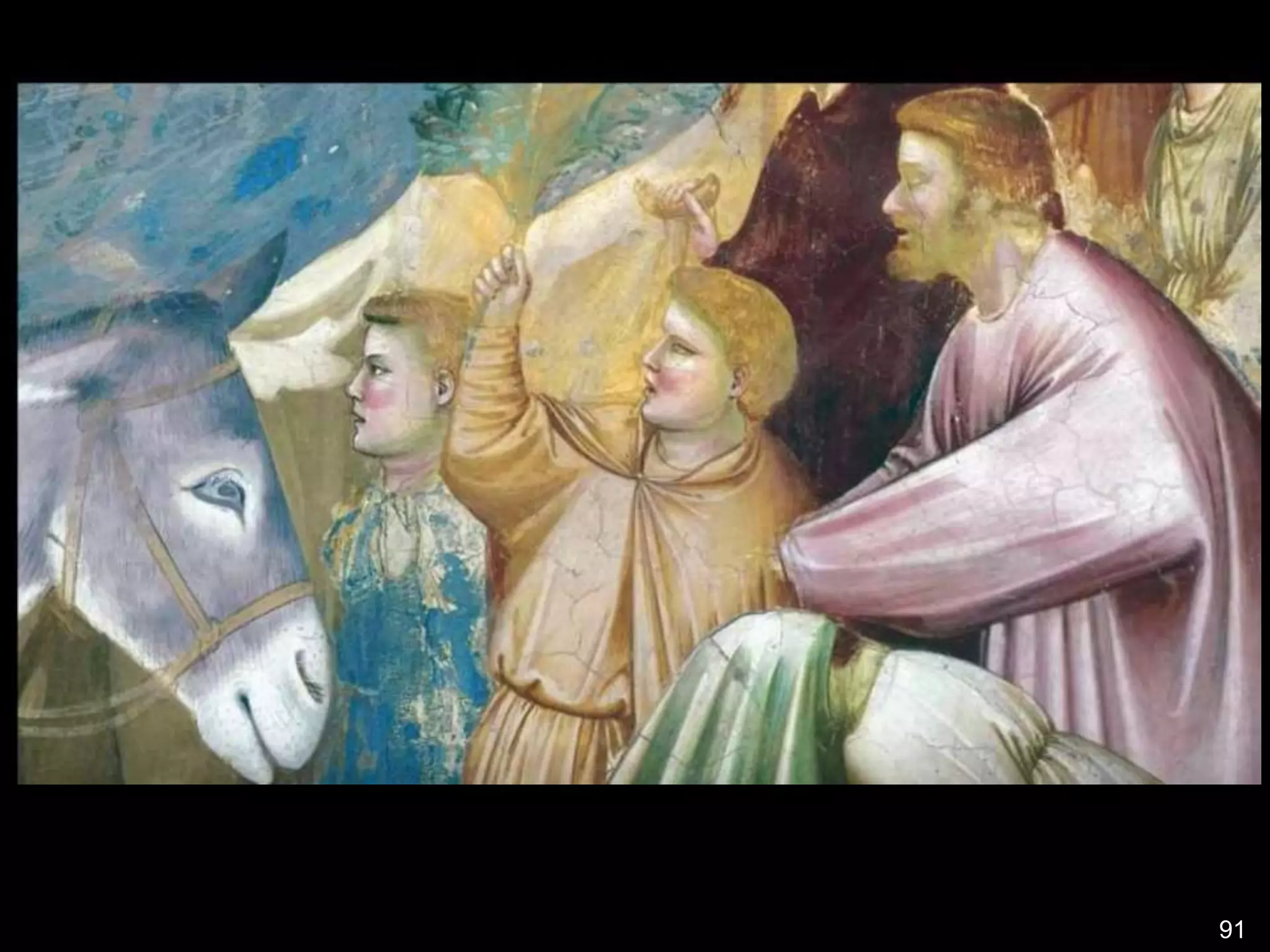
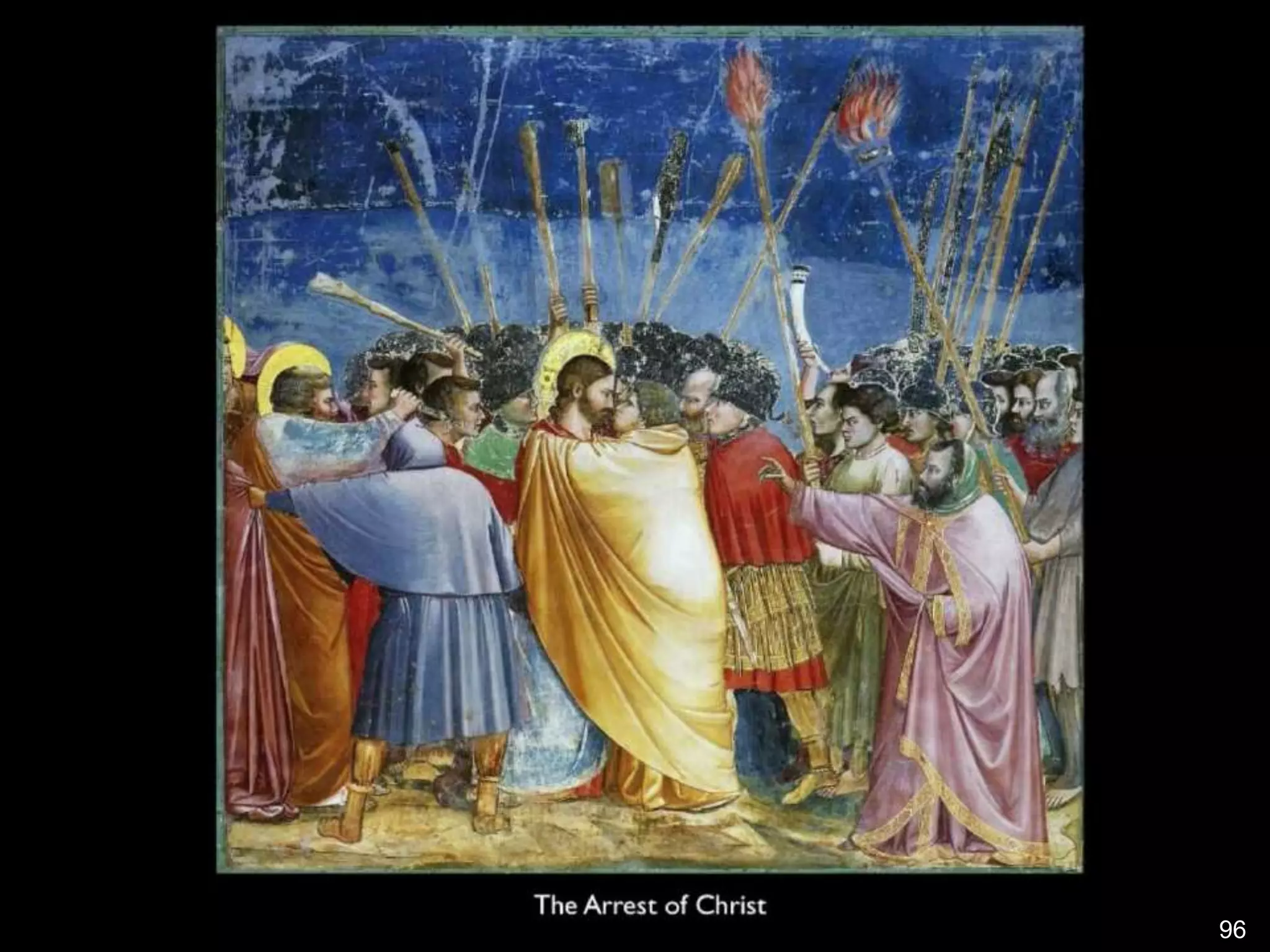
Figures have mass and solidity
First “Real” human beings in ART since Ancient Greece and Rome
Introduction of “chiaroscuro”
85
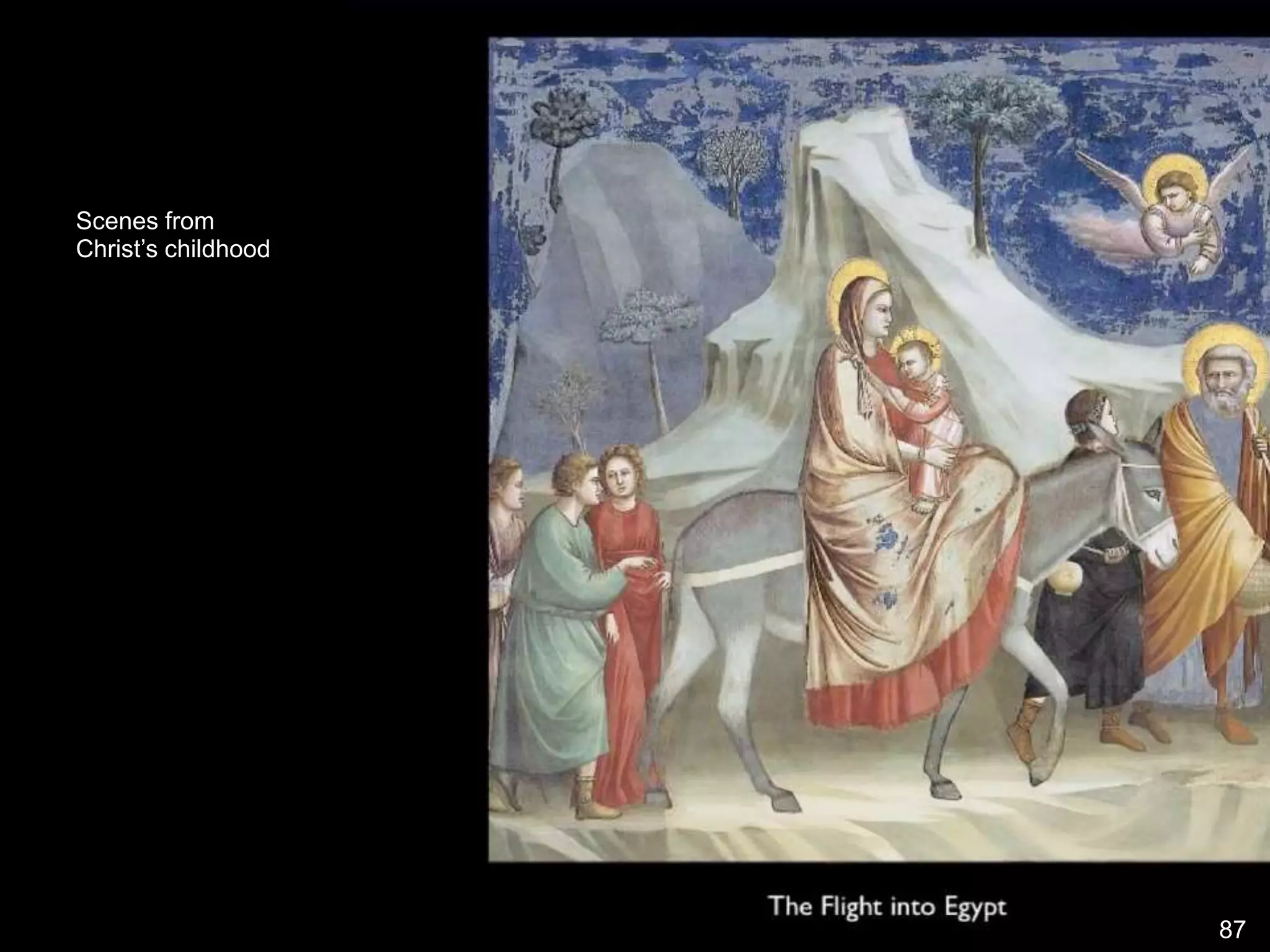
Scenes from
Christ’s childhood
86
Scenes from
Christ’s childhood
87
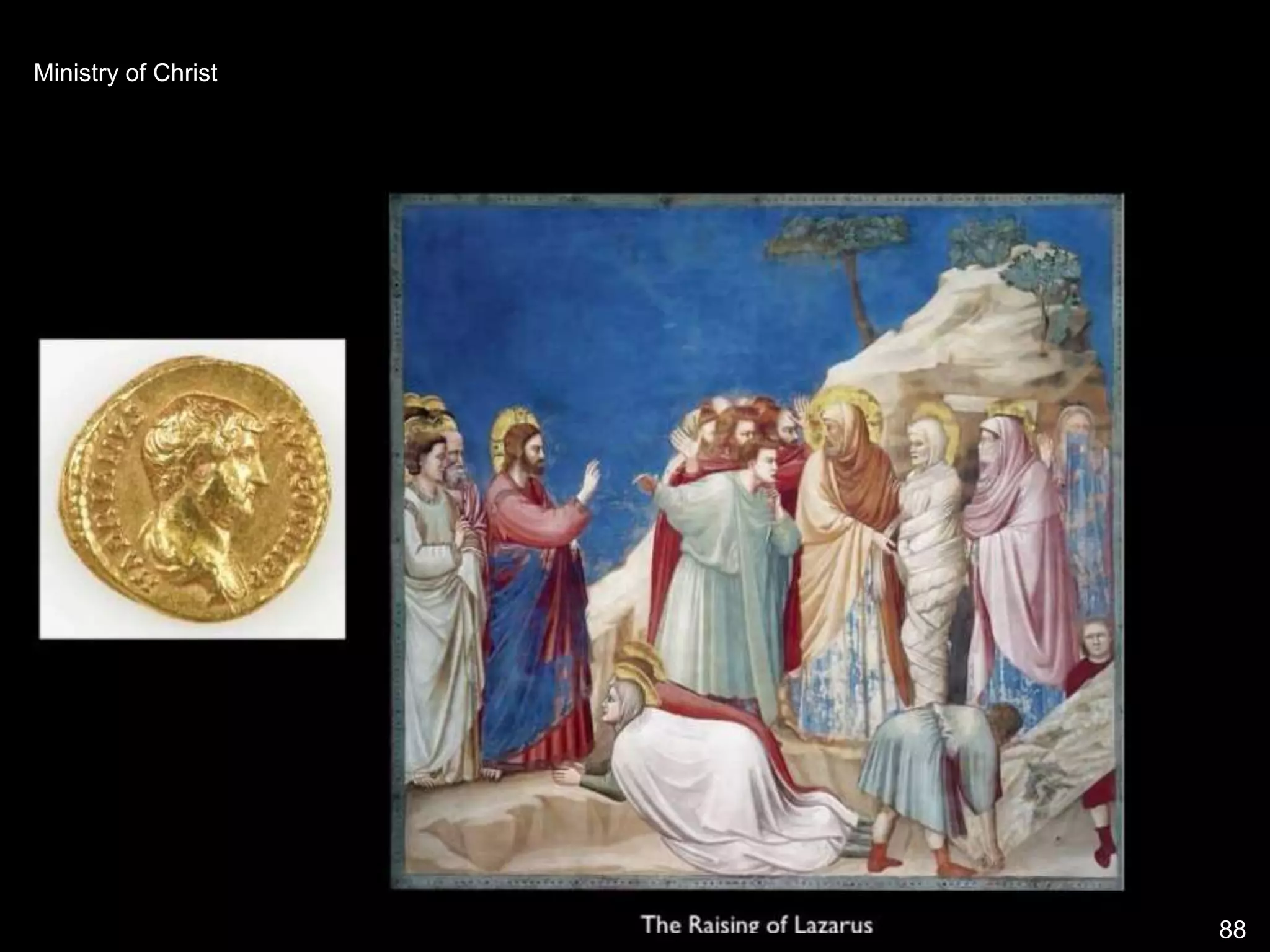
Ministry of Christ
88
89
90
91
92
93
95
96
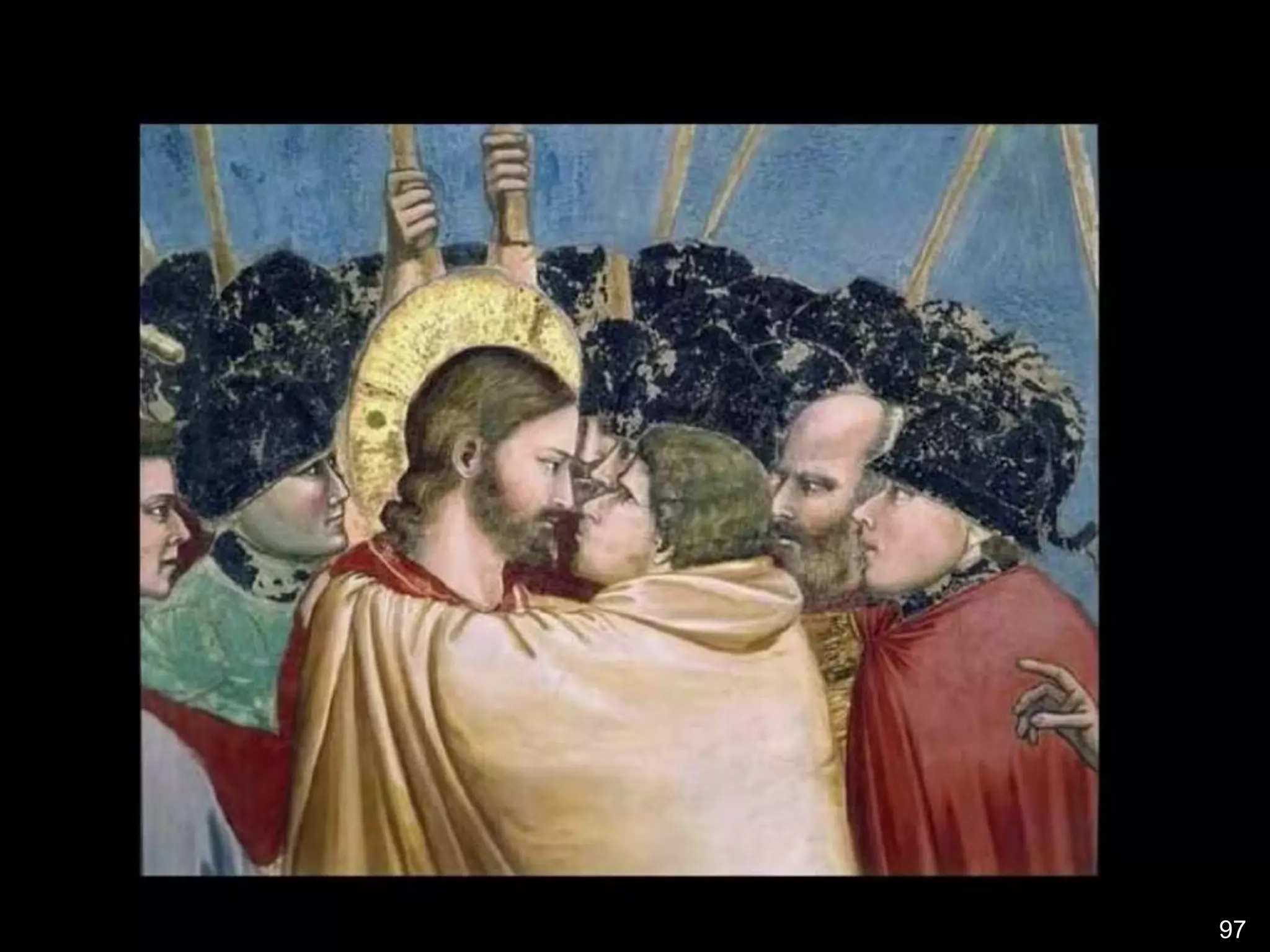
97
Duccio’s version
98
99
100
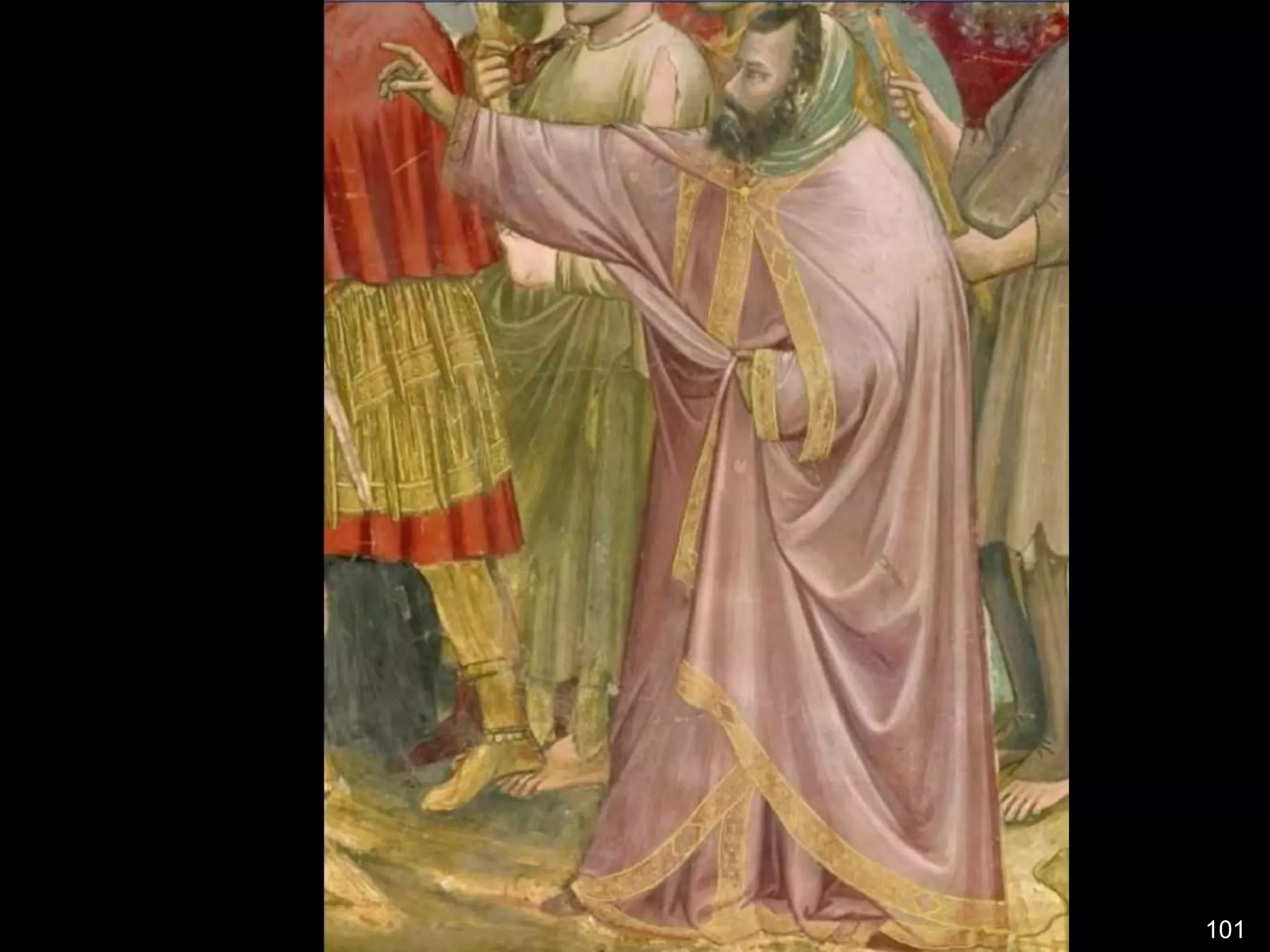
101
102
103
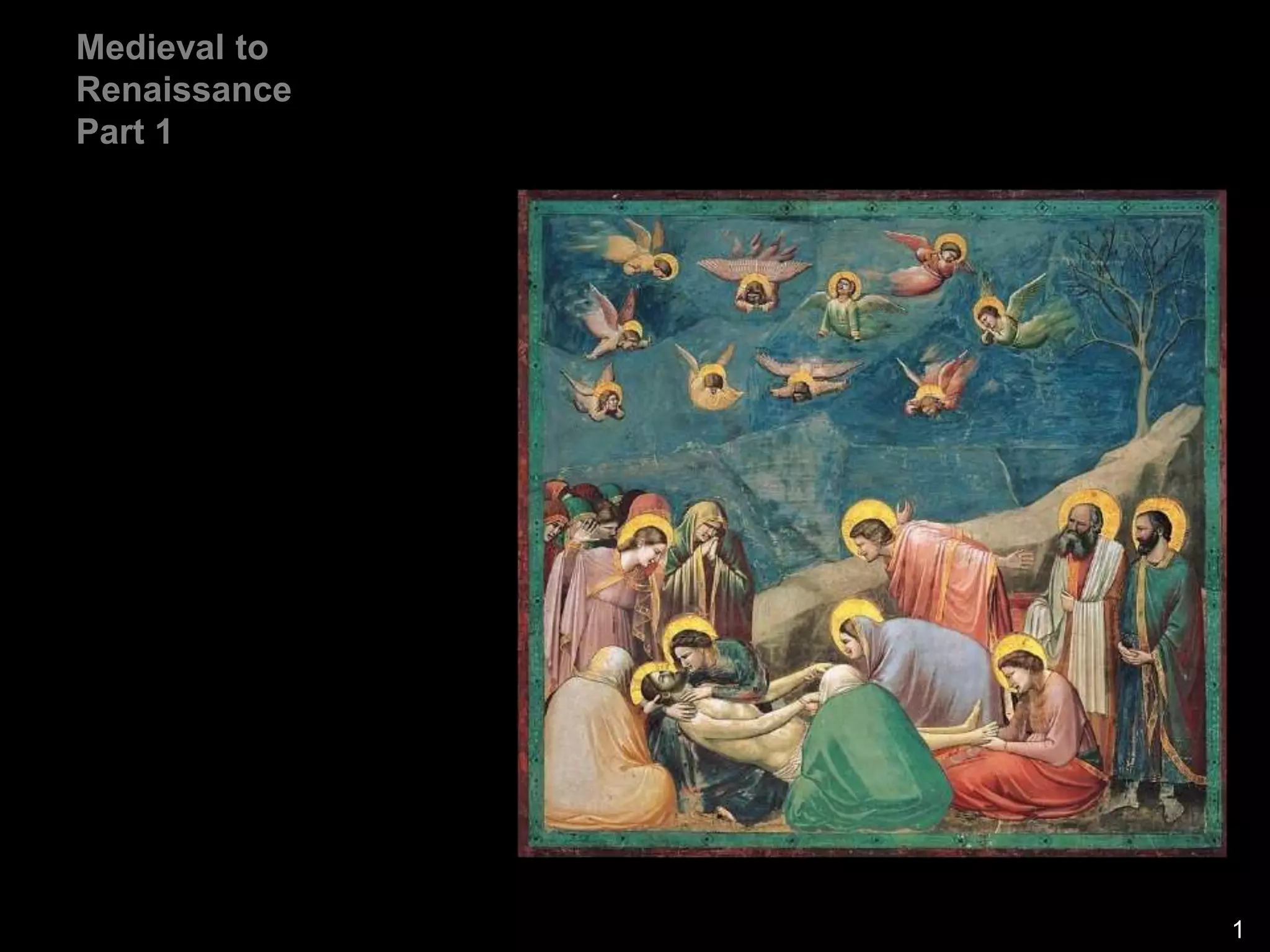
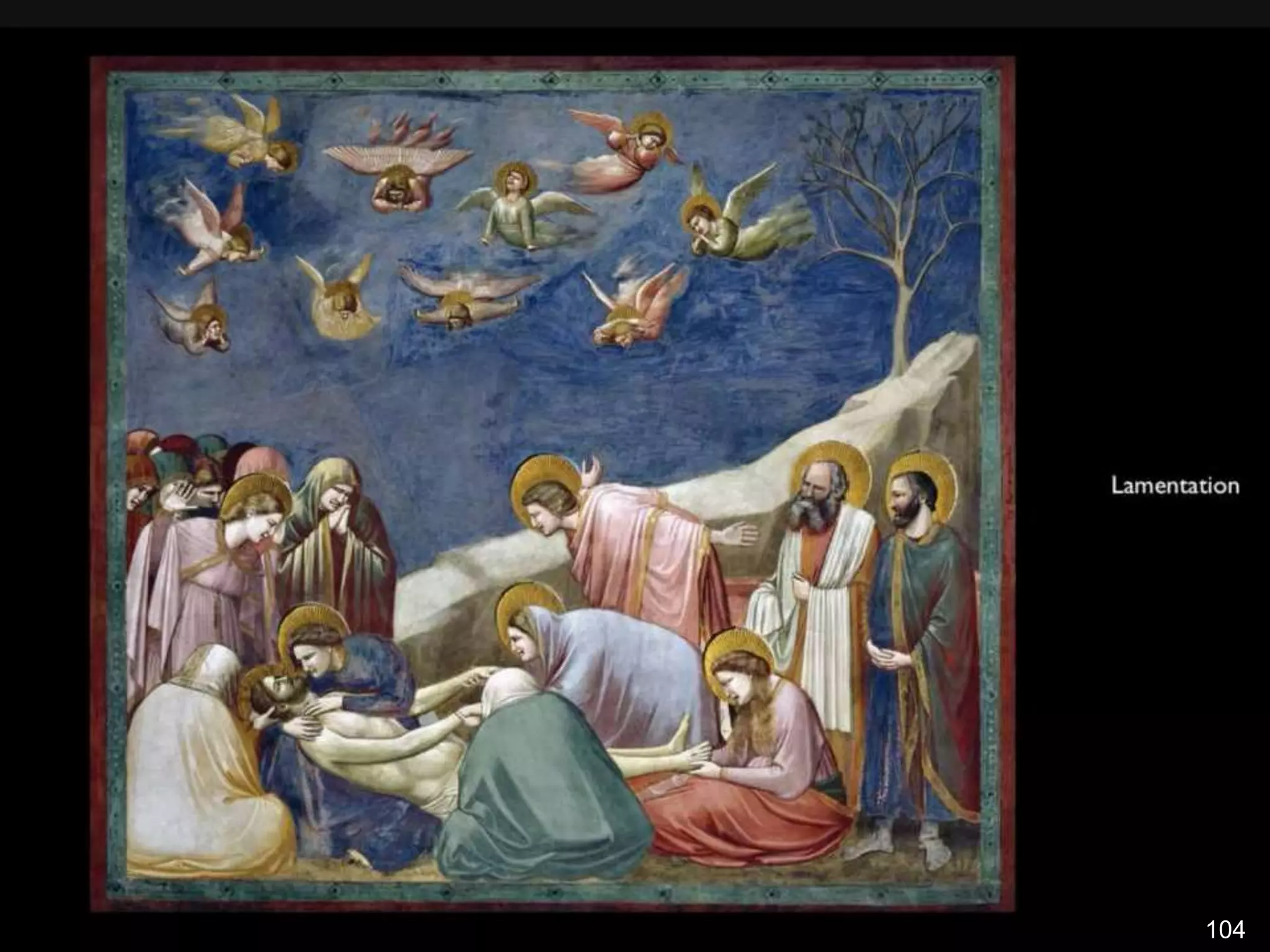
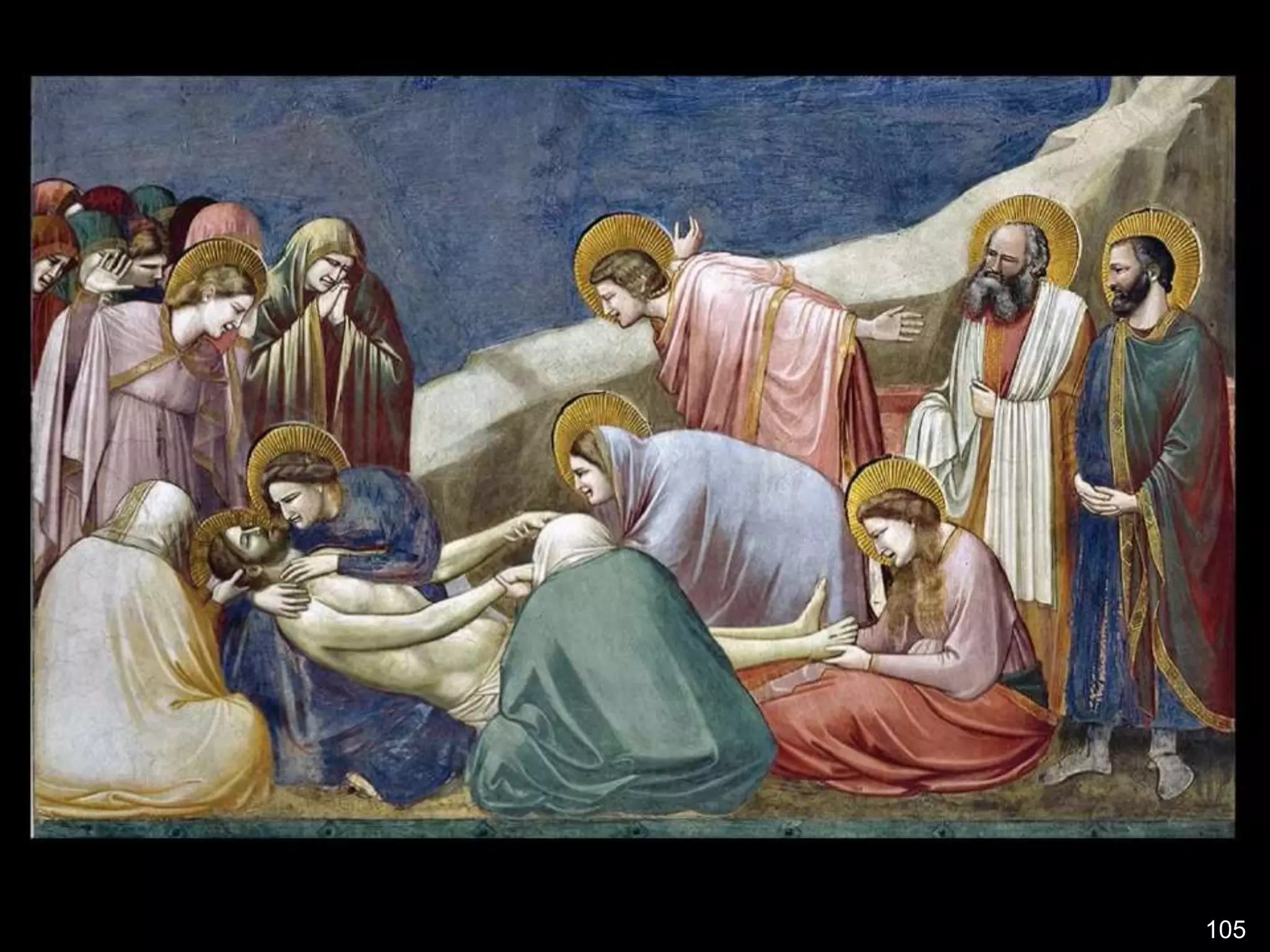
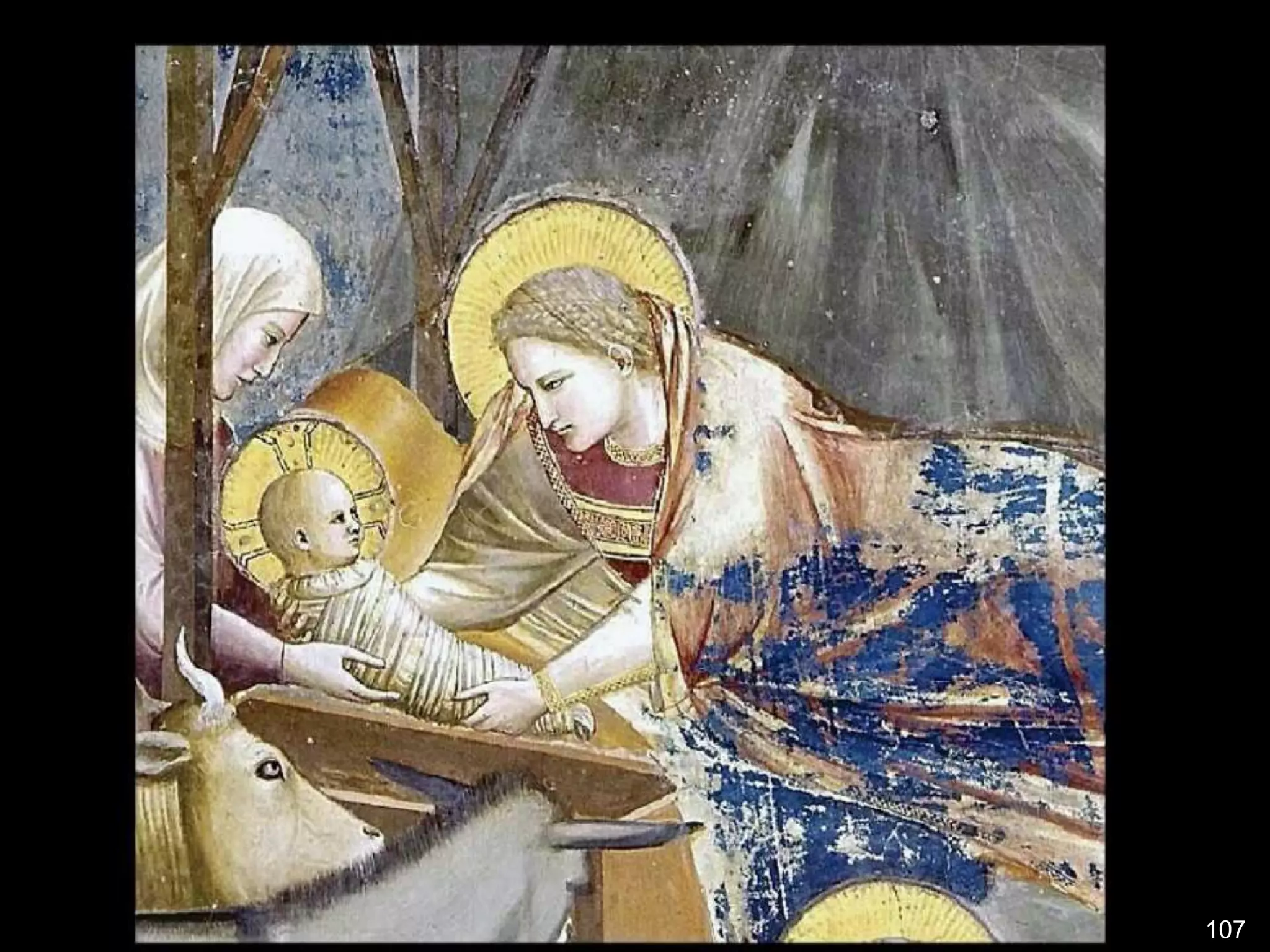
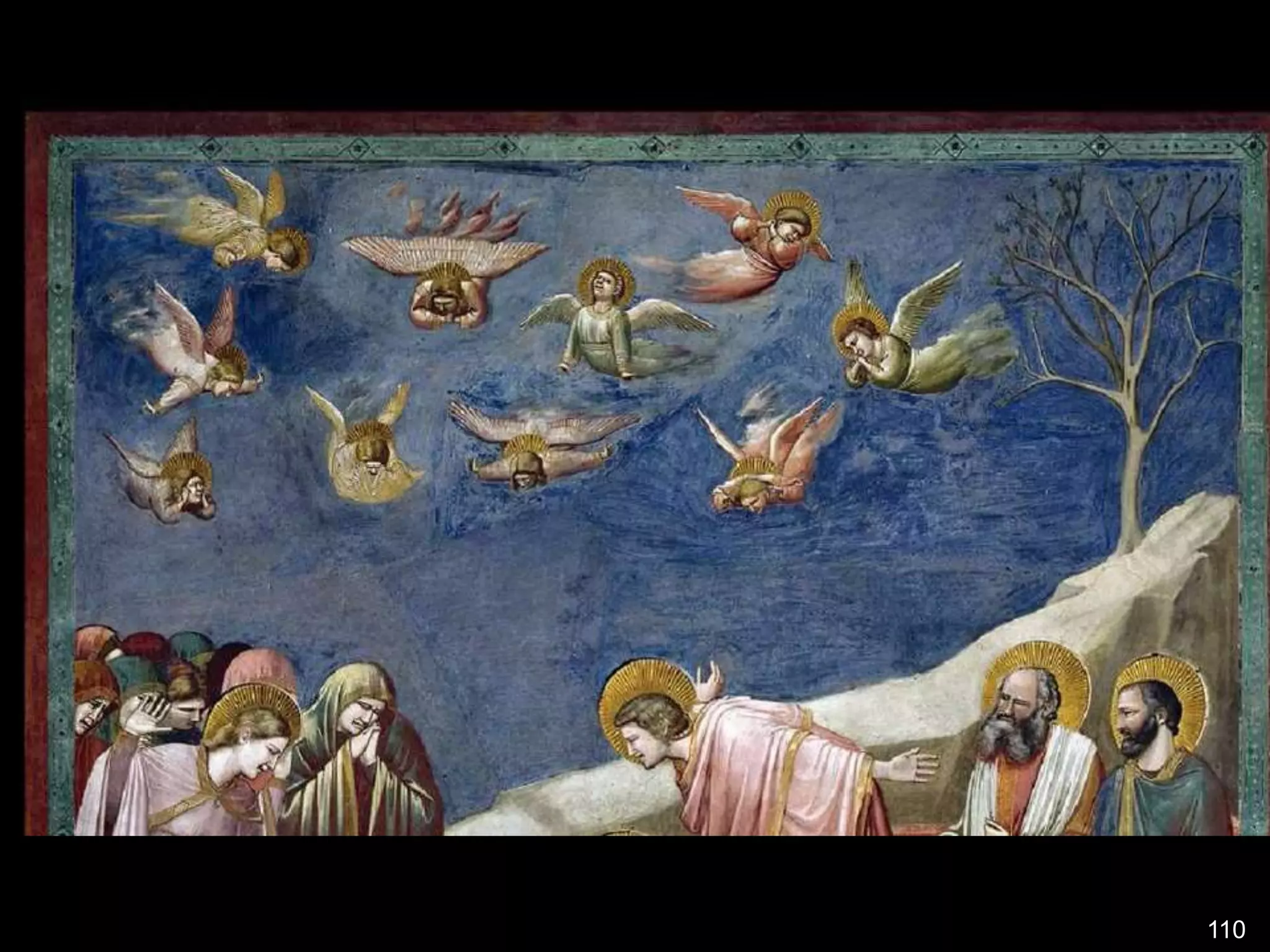
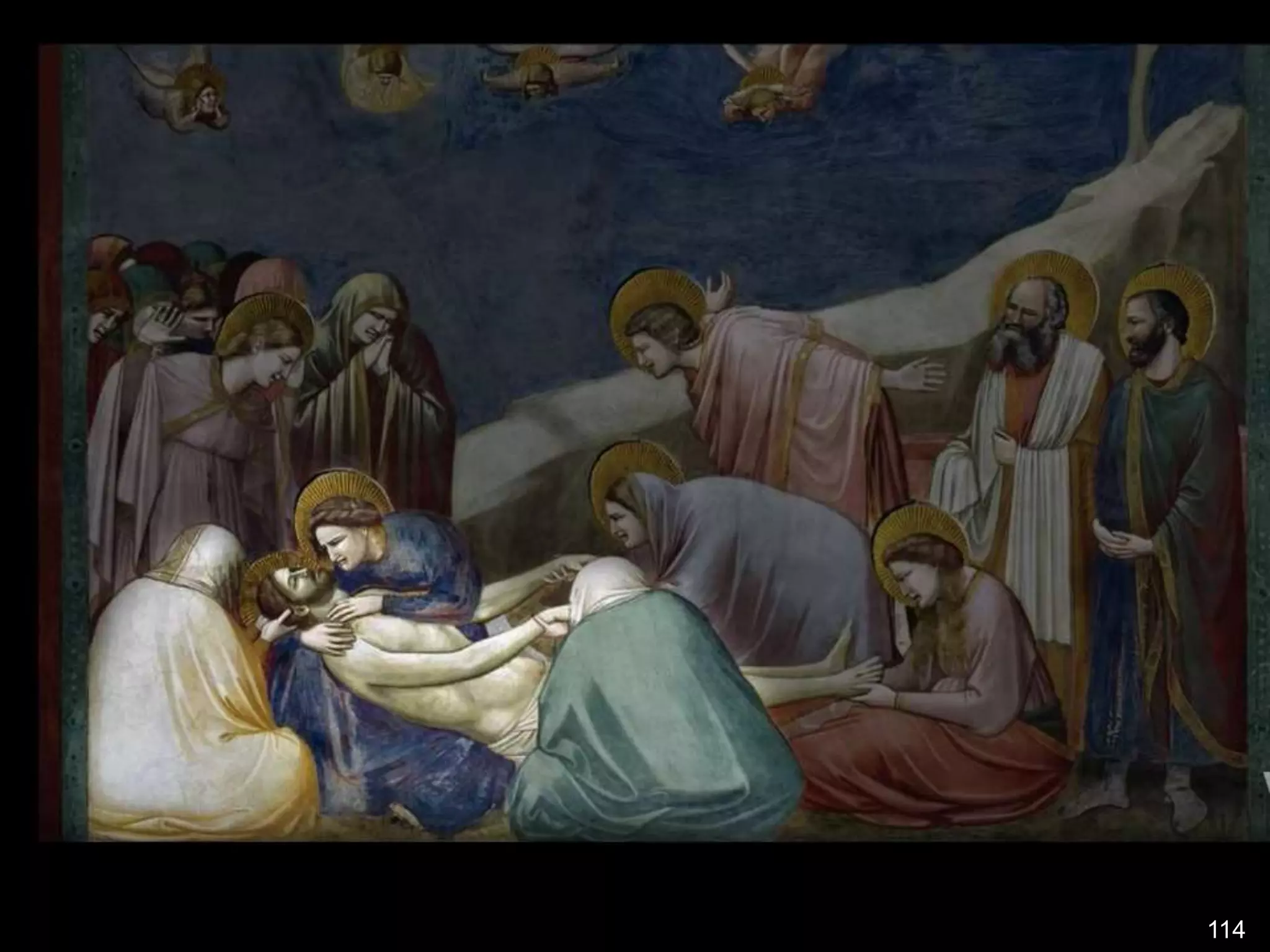
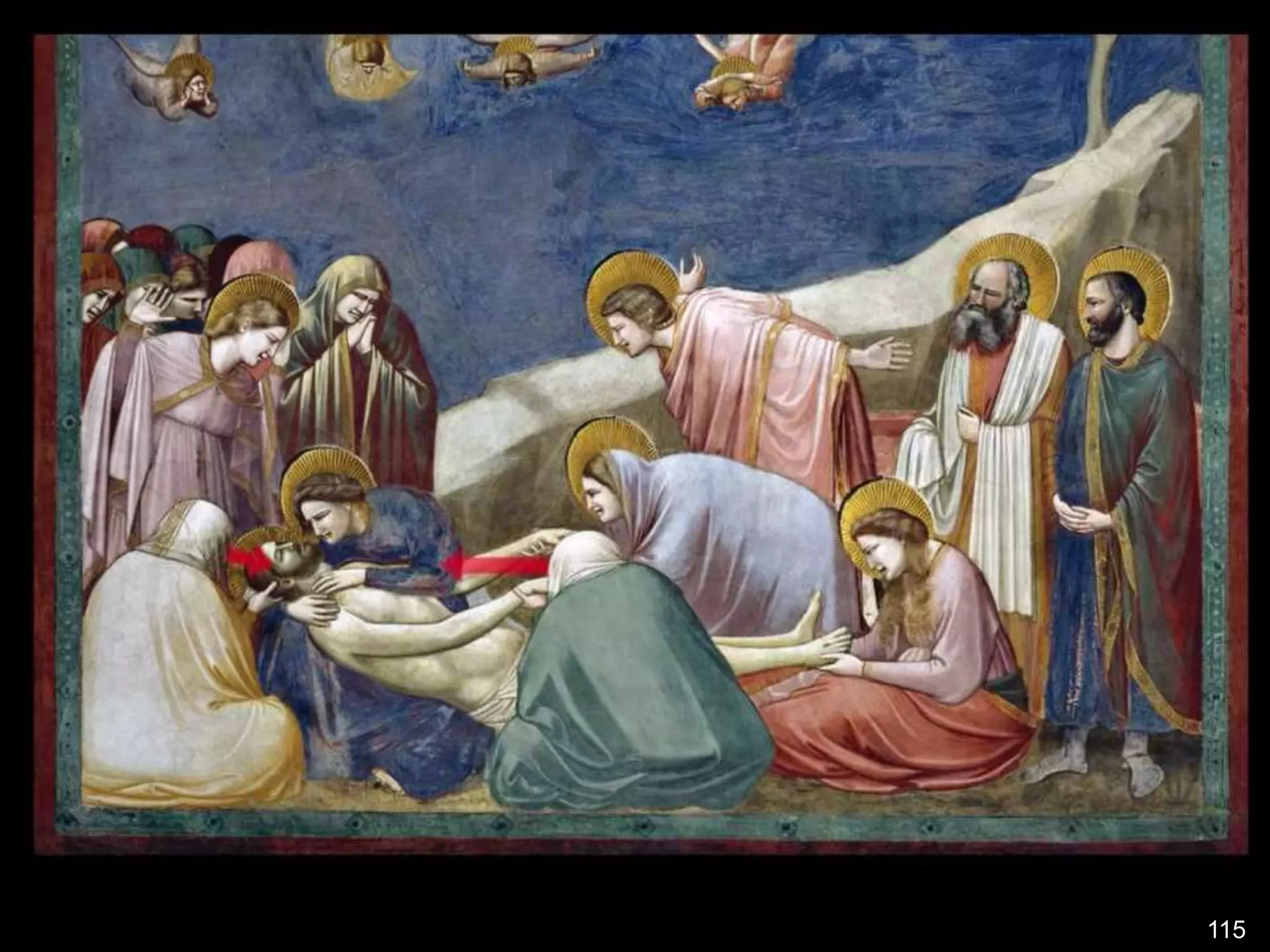
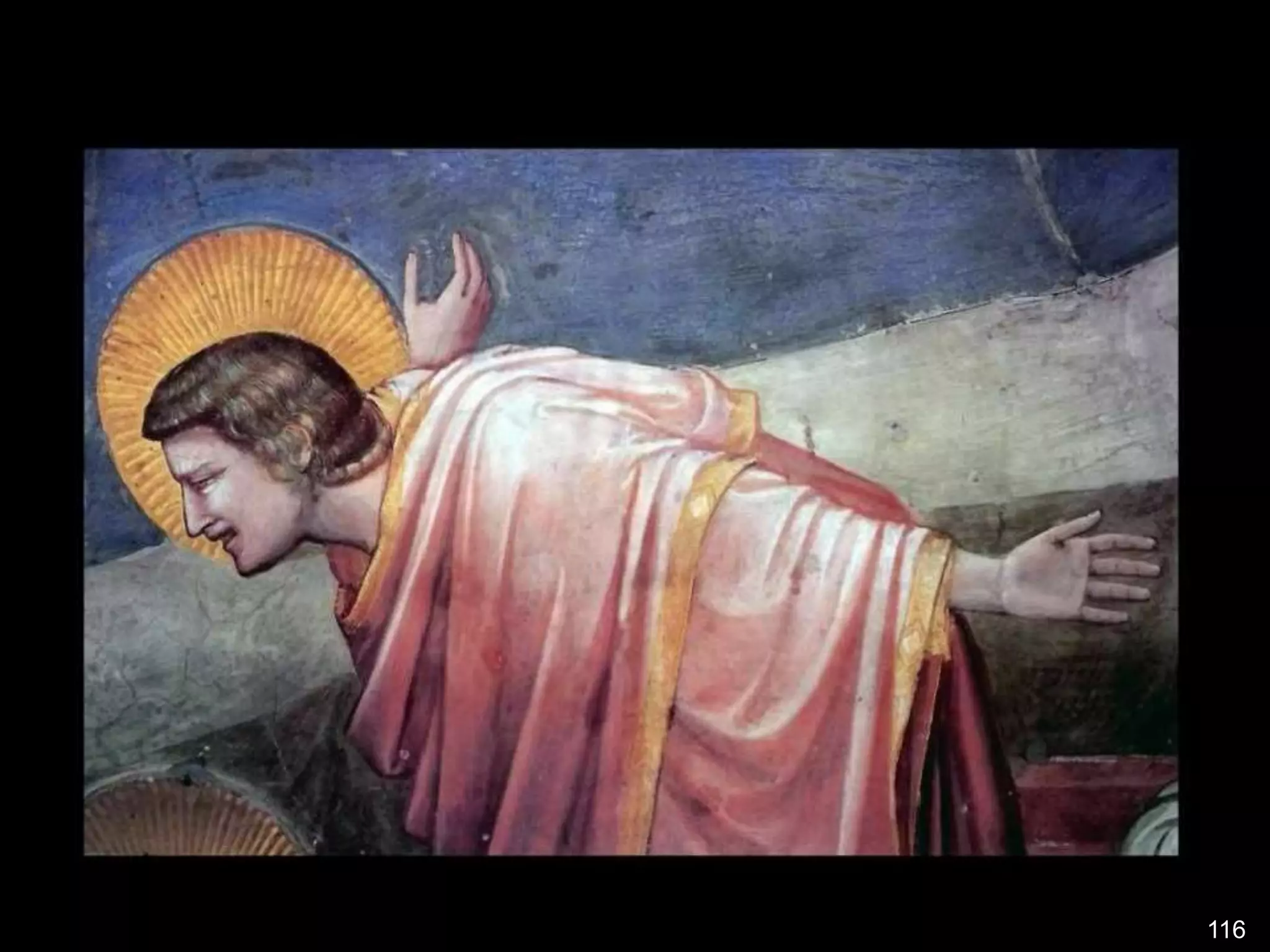
GIOTTO DI BONDONE, Lamentation , Arena Chapel, (Cappella Scrovegni ), Padua, Italy, ca. 1305. Fresco, 6’ 6
3/4” x 6’ 3/4”.
104
105
106
107
108
109
110
111
112
113
114
115
116
117
118
119
120
121
122
123
124
125
126
127
128
129
130
131
132
134
136
137
138
139
140
141
142
Medieval to Renaissance vs 2

Medieval to Renaissance vs 2

  • 1.
  • 2.
    • Renaissance • “re- birth” A RE-BIRTH OF WHAT ?? 2
  • 3.
  • 4.
  • 5.
  • 6.
    6 Interior of thePantheon, Rome, Italy, 118 – 125 CE.
  • 7.
    Pantheon, Rome, Italy,118 – 125 CE. 7
  • 8.
    By 467 ADRome had fallen, and within a few hundred years only ruins remained… 8
  • 9.
  • 10.
    The Arcadian orPastoral State 10
  • 11.
  • 12.
  • 13.
  • 14.
    The Dark Ages …..werereally this dark? ….and why were they called “The Dark Ages” 14
  • 15.
    those who work,those who fight, those who pray 15
  • 16.
  • 17.
    Farming is notthat fun 17
  • 18.
    Feudal serfs ofthe middle ages had almost no say in the direction of their own lives. 18
  • 19.
    Christian Cosmology The PtolemaicWorld “The World Dome” Understanding of the word was limited, and your place in it was static and unquestioned. 19
  • 20.
    The Great Chainof Being 20
  • 21.
    T he worldof “now” was seen as less real or important the the world after death…the kingdom of heaven Your suffering and pain…soon to be redeemed 21
  • 22.
    “Antiquity vs. Middle Ages WhereGreek and Romans painted everyday subjects like portraits and cityscapes, Art of the “Middle Ages” focused on spiritual rather than physical realities. 22
  • 23.
    In the MiddleAges, the position of the viewer changed.. Instead of individuals observing the world as the artists of classical antiquity did…. 23
  • 24.
    …..the “individual” isdissolved and is looked down upon by larger, intimidating spiritual forces 24
  • 25.
  • 26.
    Additionally, space becomesflat, Forms become abstract, simplistic 26
  • 27.
    Subject matter isexclusively religious. There is little variety, originality, or idea of art serving a purpose of pleasure or leisure. 27
  • 28.
    It seemed likeeverything would just stay the same forever…… 28
  • 29.
    29 Italy Around 1400…theonce great “Roman Empire”
  • 30.
    Numerous independent citystates Republics: Venice, Florence, Siena (self-governance) Source of wealth varies from city to city-port cities involved in trade, other cities depend on banking, arms, or textiles 30
  • 31.
  • 32.
  • 33.
    Widespread death causedodd and varied reactions in people…from celebratory nihilism, to extreme piety. All belief in social institutions were weakened. Jews were often persecuted because their hygienic practices meant they did not die in as great numbers. 33
  • 34.
    1348 --The BlackDeath • Estimated to have killed 30% – 60% of Europe's population , reducing the world’s population from an estimated 450 million to between 350 and 375 million in 1400. This has been seen as creating a series of religious, social and economic upheavals which had profound effects on the course of European History. It took 150 years for Europe's population to recover. • Because the plague killed so many of the poor population, wealthy land owners were forced to pay the remaining workers what they asked, in terms of wages. • Because there was now a surplus in consumer goods, luxury crops could now be grown. This meant that for the first time in history, many, formerly of the peasant population, now had a chance to live a better life. Most historians now feel that this was the start of the middle class in Europe and England. 34
  • 35.
    …meanwhile The Fall ofConstantinople (formerly the Byzantine Empire) in1453 to the Ottoman Empire meant that many scholars soon arrived in Italy with knowledge of Greek thinkers like Plato that had been lost or forgotten in the Middle Ages. A new interest in “antiquity” is sparked 35
  • 36.
    Humanism changes Culture Italian scholarsrecovered a large part of Greek and Roman Literature (Cicero) Humanism emulates Roman Civic Virtues: Self-sacrifice to the state, stoic indifference to personal misfortune, participation in government. Humans can solve their own problems through reason and don’t have to turn to a higher authority. Reward for good deeds is “fame” not “sainthood”. This thought began in Florence, Italy then spread all throughout Europe. 36
  • 37.
    A focus onhuman beings… Humanism • A cultural and intellectual movement during the Renaissance, following the rediscovery of the art and literature of ancient Greece and Rome. • A philosophy or attitude concerned with the interests, achievements, and capabilities of human beings rather than with the abstract concepts and problems of theology and science. 37
  • 38.
    Marsilio Ficino Translated Platointo Latin (from Greek) 38
  • 39.
    Niccolò Machiavelli “The Prince” Apractical manual for young rulers that did not appeal to Christian Morality. “Machiavellian” today refers to someone who is scheming and sometimes unethical. 39
  • 40.
    Giordano Bruno “infinity” Proposed thatstars were distant suns with their own planets. Burned at the stake for his heresies. 40
  • 41.
    The Decameron Renaissance Humanists •Petrarch • Giovanni Boccaccio – Established a “vernacular” literature 41
  • 42.
    Mendicant Orders and Confraternities Duringthe “Great Schism” (Pope moved to France), Monastic (mendicant) orders like the Augustinians, Franciscans, and the Dominicans became important social forces. Confraternities, organizations of laypersons dedicated to strict religious observance also grew in popularity. 43
  • 43.
    44 BONAVENTURA BERLINGHIERI, panel fromthe Saint Francis Altarpiece , San Francesco, Pescia, Italy, 1235. Tempera on wood, 5’ x 3’ x 6”.
  • 44.
    “ Maniera Greca” or Italo-Byzantine Style Painted 9 years after Francis’s death Displays “stigmata” (2 nd Christ?) Gold leaf, flatness, other-worldy spiritual nature 4 of 6 narrative scenes depict miraculous healings 45
  • 45.
  • 46.
  • 47.
  • 48.
    49 CIMABUE, Madonna Enthronedwith Angels and Prophets , from Santa Trinità, Florence, Italy, ca. 1280 – 1290. Tempera and gold leaf on wood, 12’ 7” x 7’ 4”. Galleria degli Uffizi, Florence.
  • 49.
  • 50.
    A movement slightlyforward… Gold=light of heaven Spatial contradictions Diagonals draw you slightly in Cult of Mary important to the Medieval mind-less intimidating, speaks to god on your behalf Christ is small, but does not have proportions of an infant Shows influence of Byzantine tradition 51
  • 51.
  • 52.
  • 53.
  • 54.
  • 55.
  • 56.
    Giotto di Bondone “Fatherof Western Art” Student of Cimabue 57
  • 57.
    58 GIOTTO DI BONDONE,Madonna Enthroned , from the Church of Ognissanti, Florence, Italy, ca. 1310. Tempera and gold leaf on wood, 10’ 8” x 6’ 8”. Galleria degli Uffizi, Florence.
  • 58.
    Mary has solidity,stability, substance-not spiritual immateriality Angels stand on a more common level Light and shadow “chiaroscuro”, not flatness 59
  • 59.
  • 60.
  • 61.
  • 62.
  • 63.
  • 64.
  • 65.
  • 66.
  • 67.
  • 68.
  • 70.
  • 71.
    Next to ancientRoman ARENA 72
  • 72.
    73 Giotto di Bondone,Arena Chapel (Cappella Scrovegni; interior looking west), Padua, Italy, 1305 – 1306.
  • 73.
  • 74.
  • 75.
  • 76.
  • 77.
  • 78.
    Enrico Scrovegini Sin of“usury” (charging interest) In Dante’s “Inferno” the elder Scrovegni is singled out for residing in a circle of hell 79
  • 79.
  • 80.
  • 81.
    Giotto has createdand architectural space for Mary and the Angel Earthly settings-not gold panel paintings 82
  • 82.
  • 83.
  • 84.
    Figures have massand solidity First “Real” human beings in ART since Ancient Greece and Rome Introduction of “chiaroscuro” 85
  • 85.
  • 86.
  • 87.
  • 88.
  • 89.
  • 90.
  • 91.
  • 92.
  • 93.
  • 94.
  • 95.
  • 96.
  • 97.
  • 98.
  • 99.
  • 100.
  • 101.
    103 GIOTTO DI BONDONE,Lamentation , Arena Chapel, (Cappella Scrovegni ), Padua, Italy, ca. 1305. Fresco, 6’ 6 3/4” x 6’ 3/4”.
  • 102.
  • 103.
  • 104.
  • 105.
  • 106.
  • 107.
  • 108.
  • 109.
  • 110.
  • 111.
  • 112.
  • 113.
  • 114.
  • 115.
  • 116.
  • 117.
  • 118.
  • 119.
  • 120.
  • 121.
  • 122.
  • 123.
  • 124.
  • 125.
  • 126.
  • 127.
  • 128.
  • 129.
  • 130.
  • 132.
  • 134.
  • 135.
  • 136.
  • 137.
  • 138.
  • 139.
  • 140.