Medication-overuse
headache
Daniel Vela-Duarte, MD
PGY-3. Department of Neurology
Loyola University Medical Center
August 2013
Definition


MOH (Medication-Overuse headache)



Secondary chronic daily headache
Headache induced by the overuse of analgesics,
triptans or other acute headache compounds,
ocurring 15 days/month, 4hrs/day, per 3 months or
more.





Repeated medication reaches a threshold causing
transformation (chronification)
Introduction / Epidemiology


Higher preponderance in woman



In a study on episodic migraineurs (n=532), the 1-year
incidence of chronic headache was 14%, with a higher
risk for patients who had a higher headache frequency at
baseline and for patients taking greater amounts of
analgesics.



Ergotamine, analgesics, barbiturates and caffeine



Poorer quality of life (Measured by scales: higher score
on MIDAS: Migraine disability assessment scale)
Clinical manifestations






Criteria established by the International Headache
Society (IHS) in 2005
The primary headache disorder leading to MOH is
migraine in most cases.
MOH mainly occurs in patients with a primary headache
disorder
Comorbidities




Subclinical obsessive-compulsive disorder
Anxiety - Mood disorders
Type of medications overused.
Symptoms


Circadian periodicity
 Patients

may be awakened from sleep or have onset
upon arising



Neck pain / Cervicogenic pain.



Rhinorrhea, nasal stuffiness, postnasal drip, and
ocular or gastrointestinal symptoms, likely
caused by withdrawal and most evident in opioid
rebound.
Nonrestorative sleep disturbance


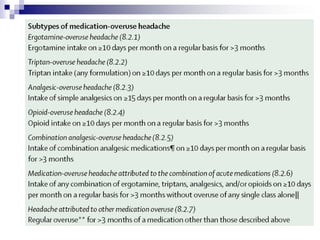
Diagnostic criteria

Lancet Neurol 2010 Apr; 9(4): 391-401.
Diagnostic criteria


There is no certainty whether combined drugs are more
likely to cause MOH or not, compared to single
substances.



The headache features of MOH caused by ergotamine
derivatives are more severe than those caused by
triptans.



Overuse of ergotamine + analgesics: daily tension-type-like
headache,
Overuse of triptans: (daily) migraine-like headache or an
increase in migraine frequency
Withdrawal treatment


Detoxification process
 Improve

responsiveness to acute and prophylactic

drugs
 Abrupt discontinuation vs. tapered withdrawal


Main symptoms of withdrawal
 worsening

of the headache
 nausea, vomiting
 arterial hypotension, tachycardia
 sleep disturbances
 restlessness, anxiety, nervousness
Withdrawal treatment


Inpatient vs. Outpatient
 Overuse

of opioids, barbiturates, or benzodiazepines
 psychological problems
 severe medical comorbidities
 severe withdrawal
 symptoms (eg, vomiting and status migrainous)
 previous medication withdrawal failure
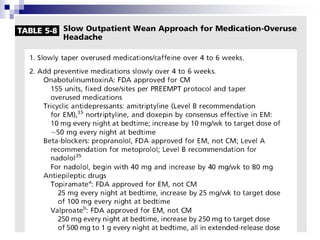
Tepper SJ, Continuum (Minneap Minn). 2012 Aug;18(4):807-22.

Medication overuse headache

  • 1.
    Medication-overuse headache Daniel Vela-Duarte, MD PGY-3.Department of Neurology Loyola University Medical Center August 2013
  • 2.
    Definition  MOH (Medication-Overuse headache)  Secondarychronic daily headache Headache induced by the overuse of analgesics, triptans or other acute headache compounds, ocurring 15 days/month, 4hrs/day, per 3 months or more.   Repeated medication reaches a threshold causing transformation (chronification)
  • 3.
    Introduction / Epidemiology  Higherpreponderance in woman  In a study on episodic migraineurs (n=532), the 1-year incidence of chronic headache was 14%, with a higher risk for patients who had a higher headache frequency at baseline and for patients taking greater amounts of analgesics.  Ergotamine, analgesics, barbiturates and caffeine  Poorer quality of life (Measured by scales: higher score on MIDAS: Migraine disability assessment scale)
  • 4.
    Clinical manifestations     Criteria establishedby the International Headache Society (IHS) in 2005 The primary headache disorder leading to MOH is migraine in most cases. MOH mainly occurs in patients with a primary headache disorder Comorbidities    Subclinical obsessive-compulsive disorder Anxiety - Mood disorders Type of medications overused.
  • 5.
    Symptoms  Circadian periodicity  Patients maybe awakened from sleep or have onset upon arising  Neck pain / Cervicogenic pain.  Rhinorrhea, nasal stuffiness, postnasal drip, and ocular or gastrointestinal symptoms, likely caused by withdrawal and most evident in opioid rebound. Nonrestorative sleep disturbance 
  • 6.
    Diagnostic criteria Lancet Neurol2010 Apr; 9(4): 391-401.
  • 8.
    Diagnostic criteria  There isno certainty whether combined drugs are more likely to cause MOH or not, compared to single substances.  The headache features of MOH caused by ergotamine derivatives are more severe than those caused by triptans.   Overuse of ergotamine + analgesics: daily tension-type-like headache, Overuse of triptans: (daily) migraine-like headache or an increase in migraine frequency
  • 9.
    Withdrawal treatment  Detoxification process Improve responsiveness to acute and prophylactic drugs  Abrupt discontinuation vs. tapered withdrawal  Main symptoms of withdrawal  worsening of the headache  nausea, vomiting  arterial hypotension, tachycardia  sleep disturbances  restlessness, anxiety, nervousness
  • 10.
    Withdrawal treatment  Inpatient vs.Outpatient  Overuse of opioids, barbiturates, or benzodiazepines  psychological problems  severe medical comorbidities  severe withdrawal  symptoms (eg, vomiting and status migrainous)  previous medication withdrawal failure
  • 12.
    Tepper SJ, Continuum(Minneap Minn). 2012 Aug;18(4):807-22.