Downloaded 38 times
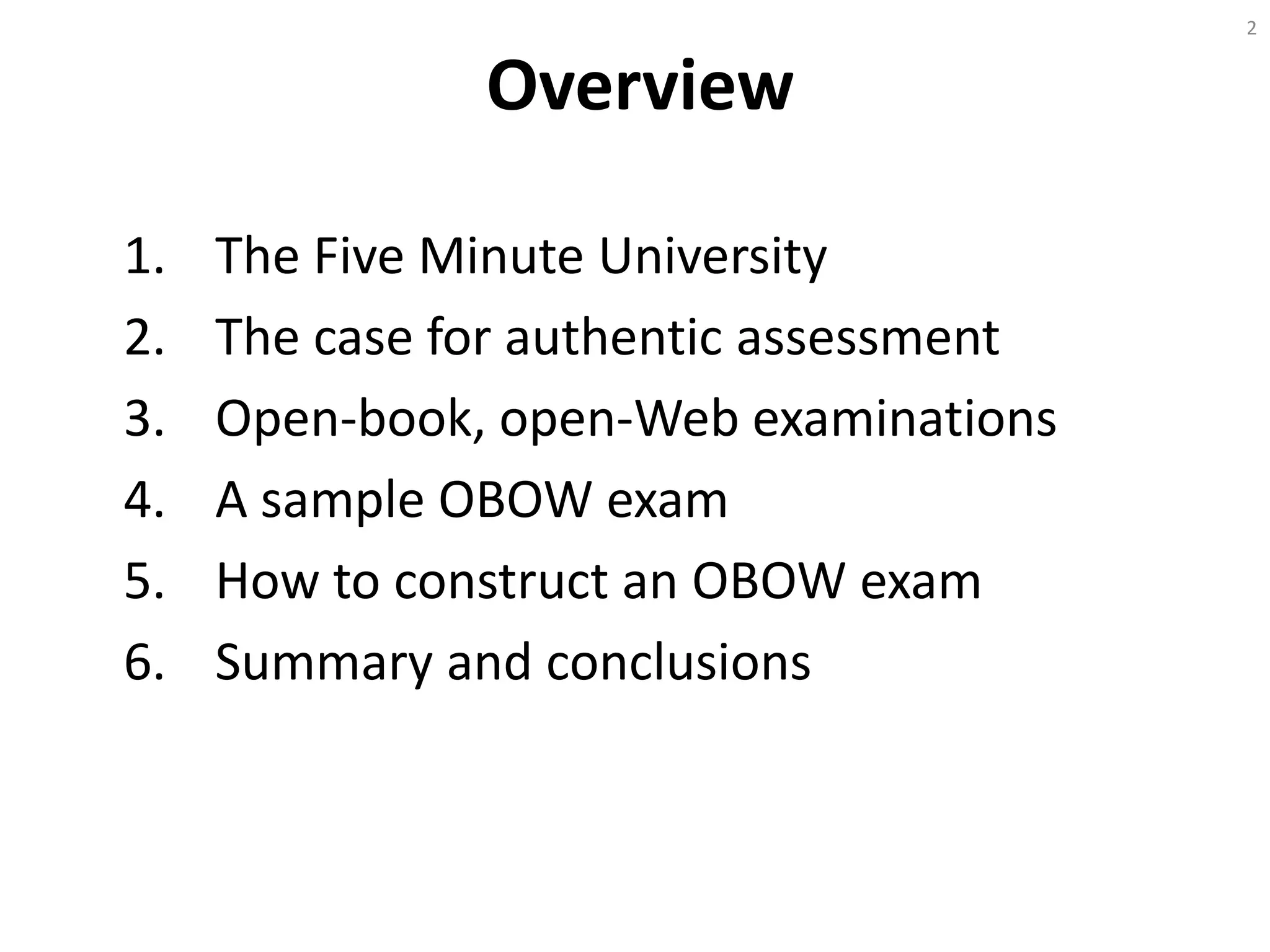
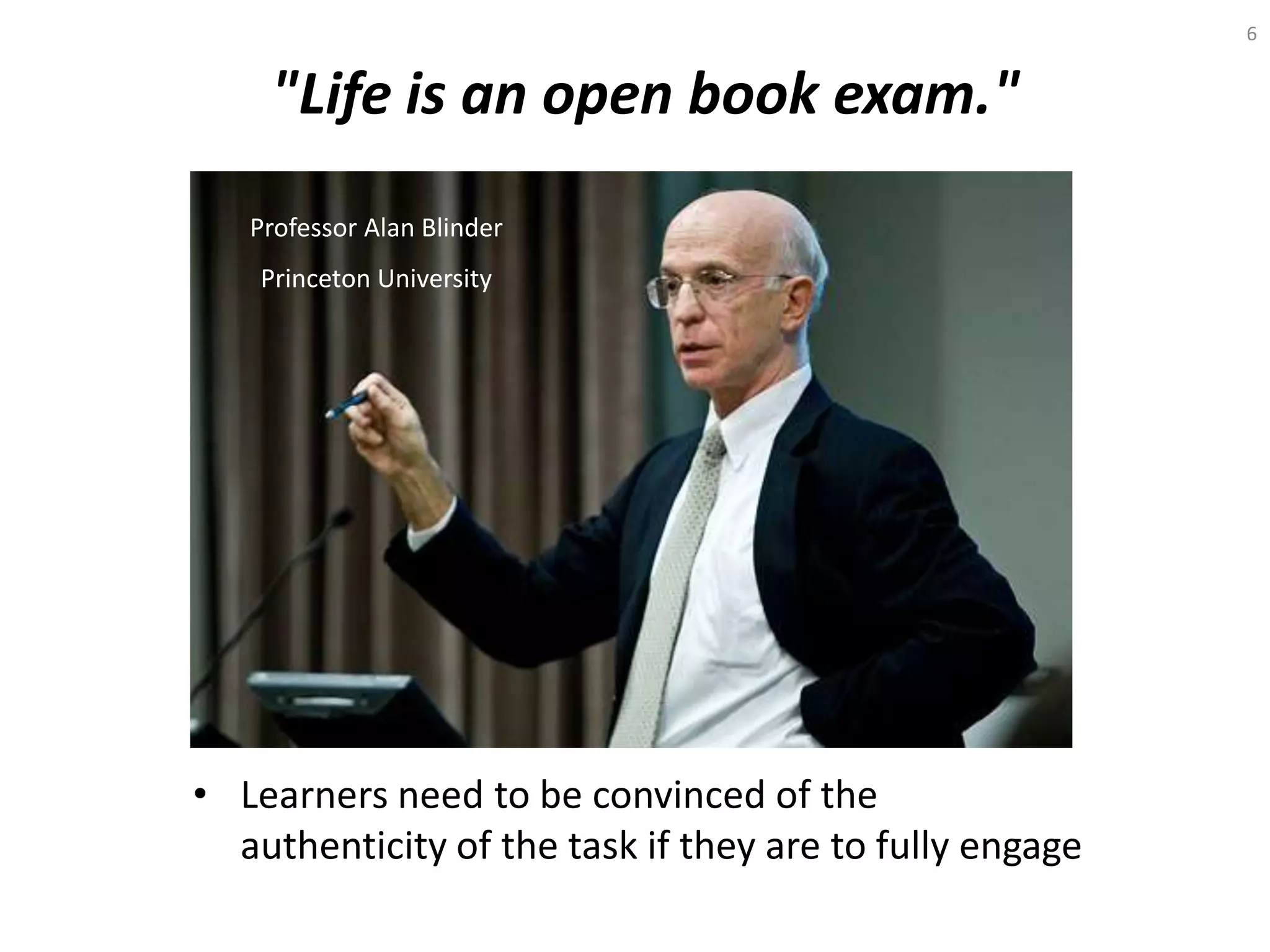
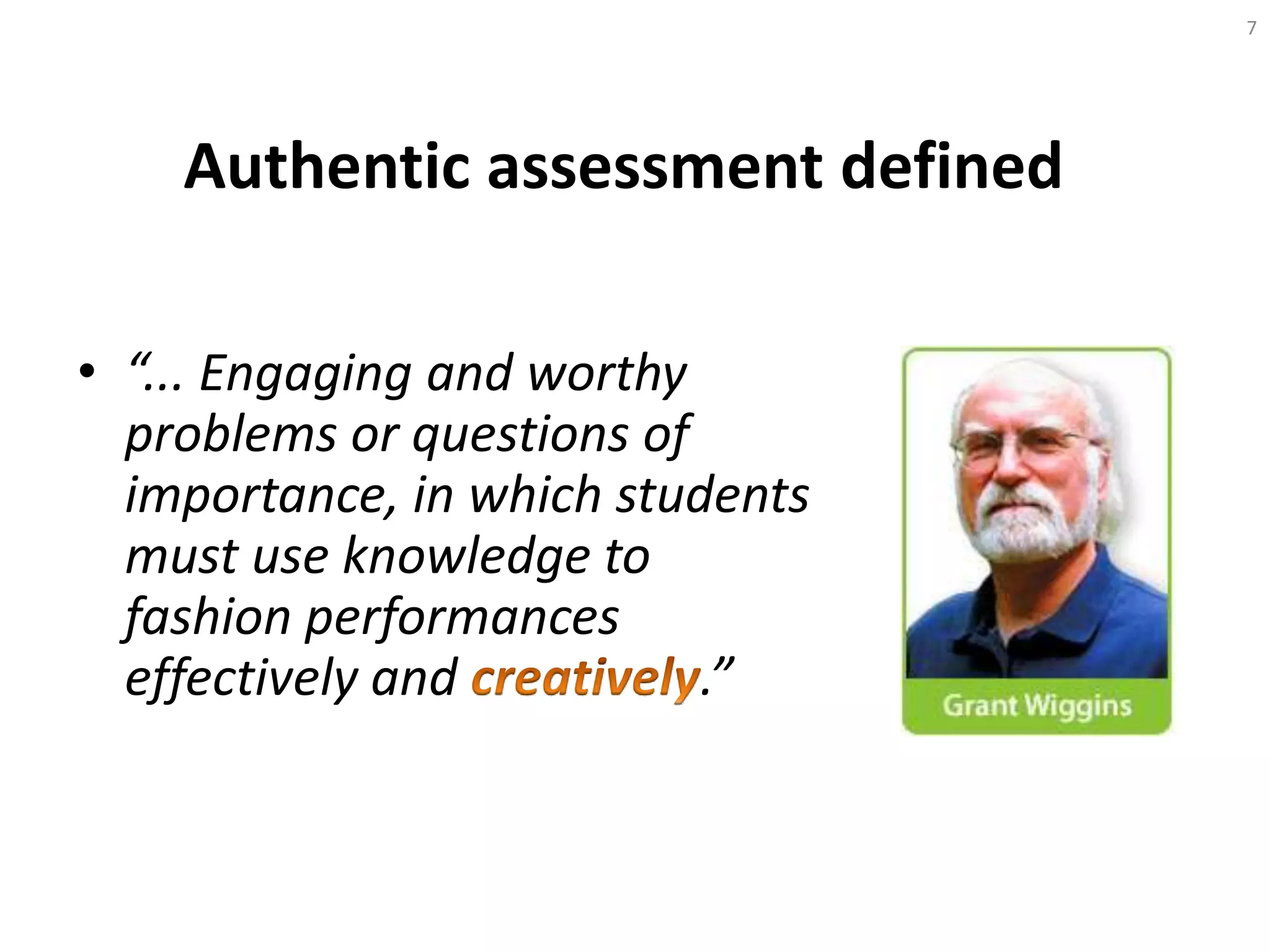
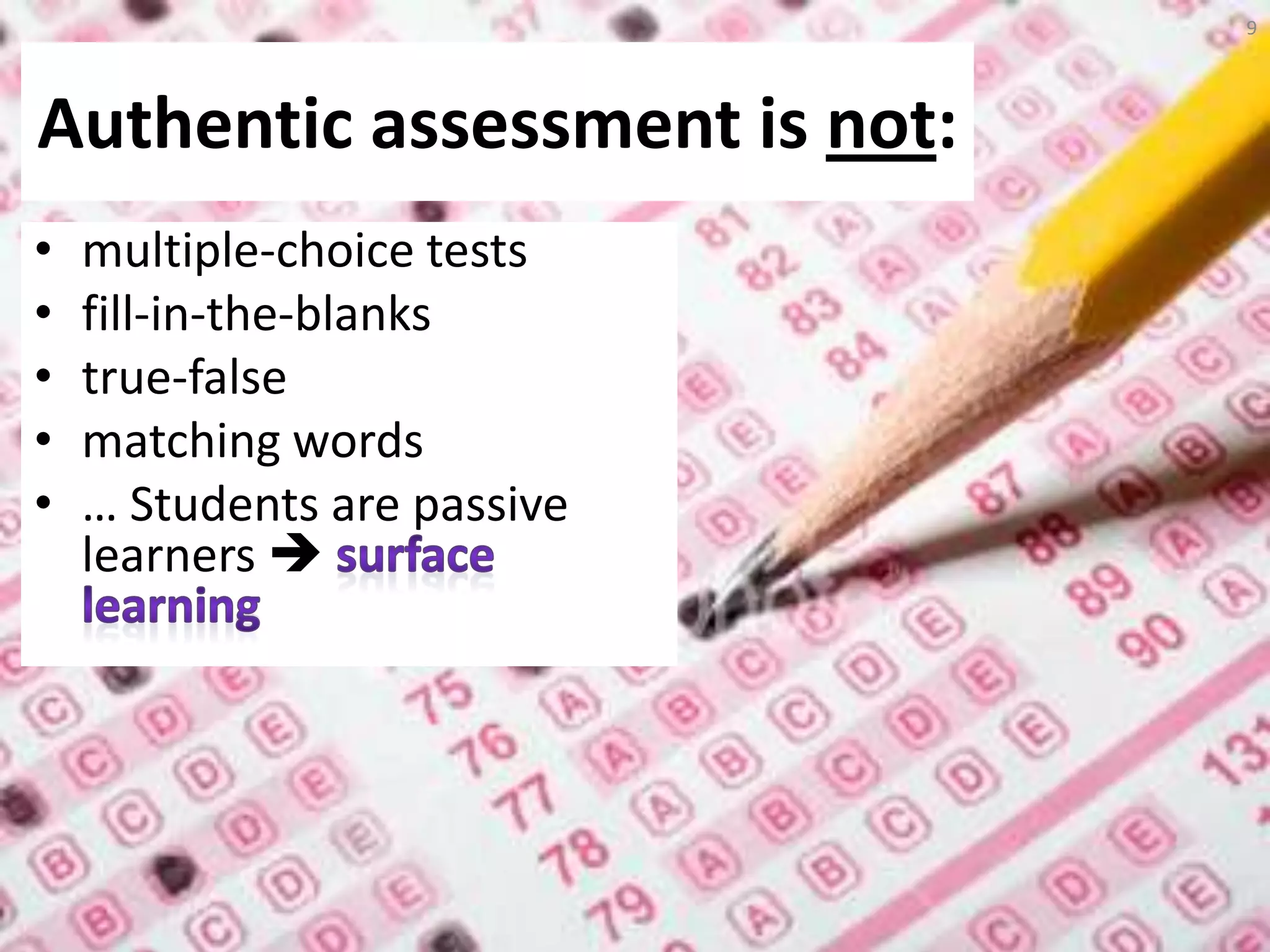
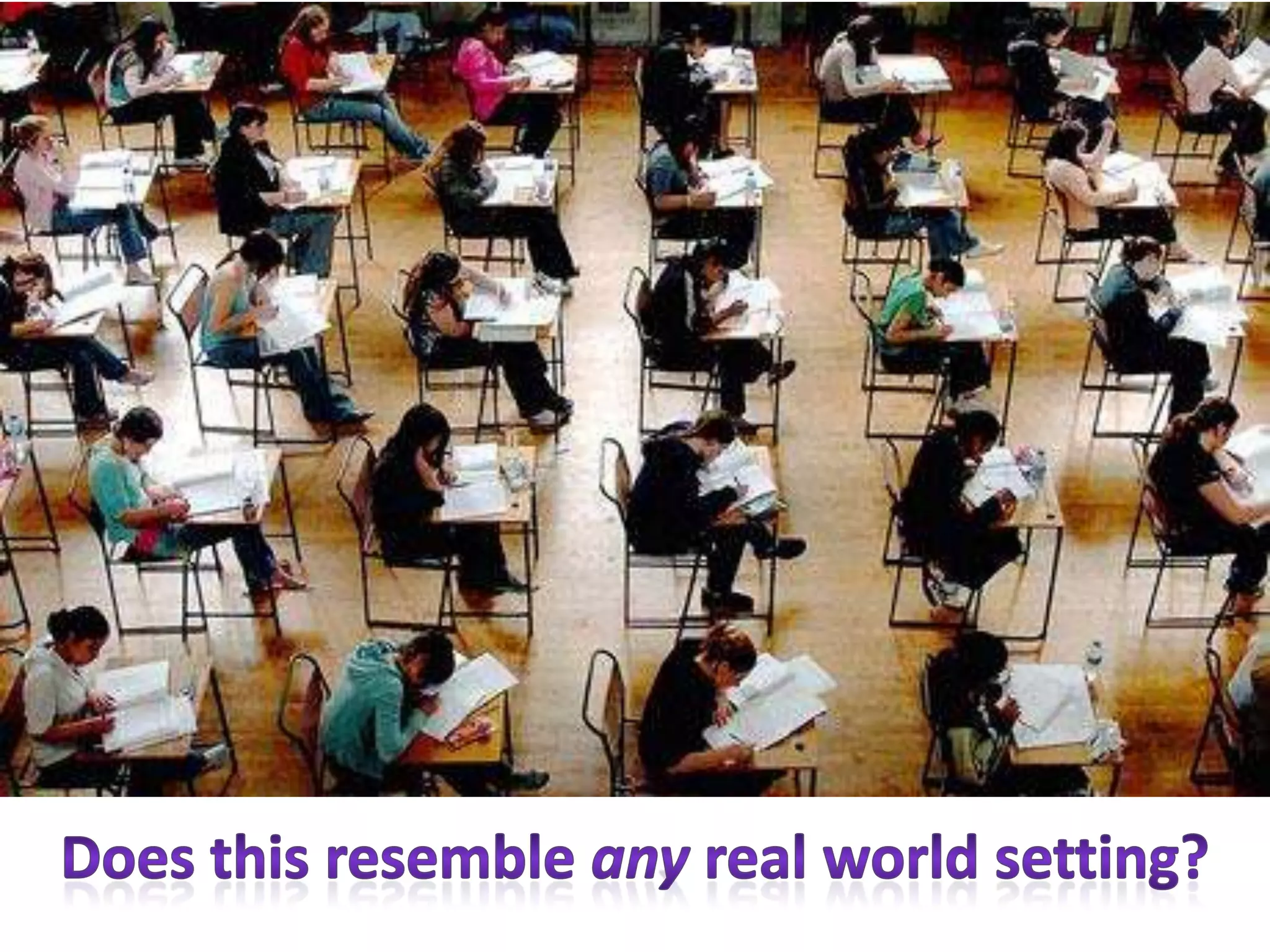
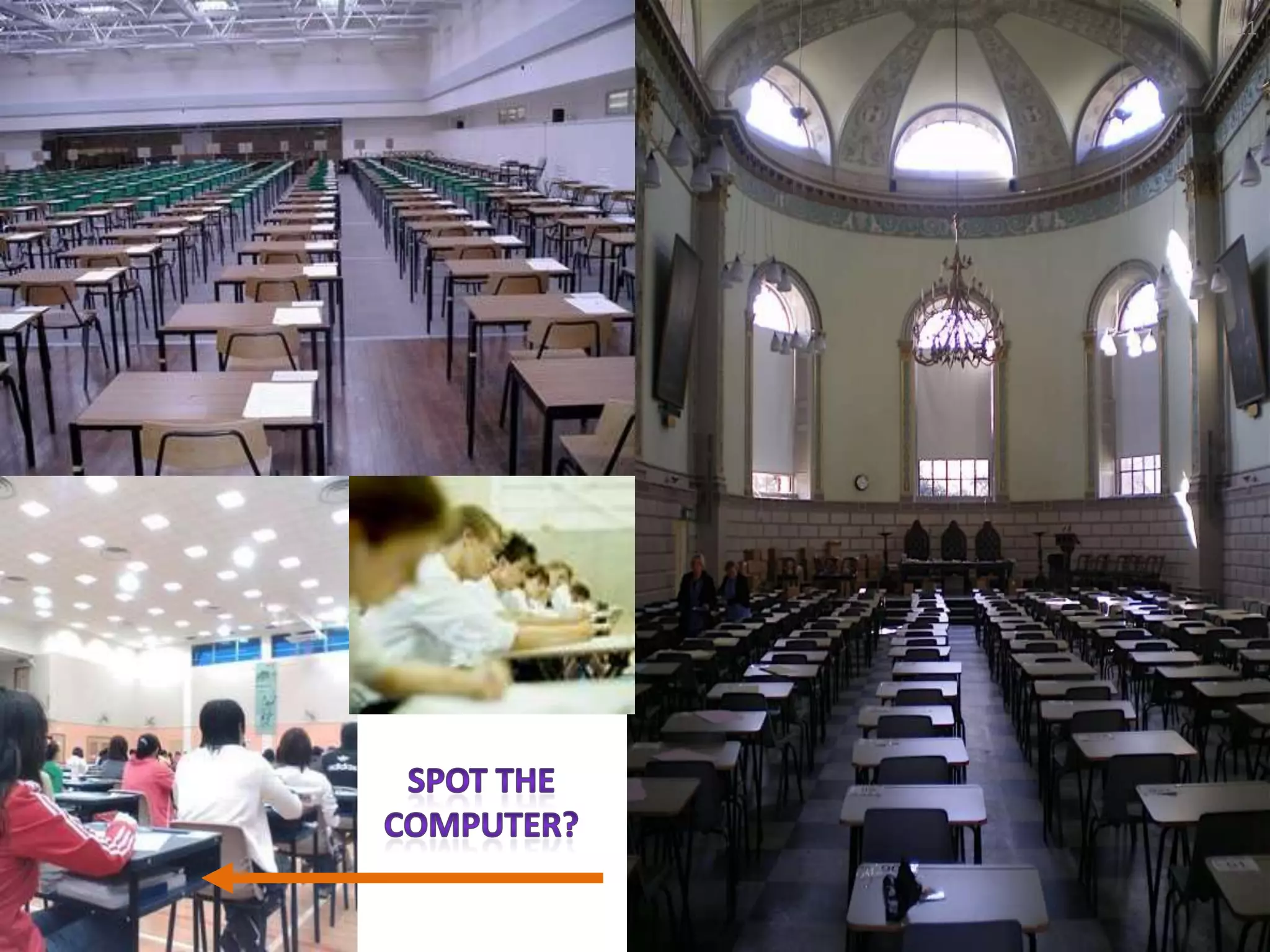
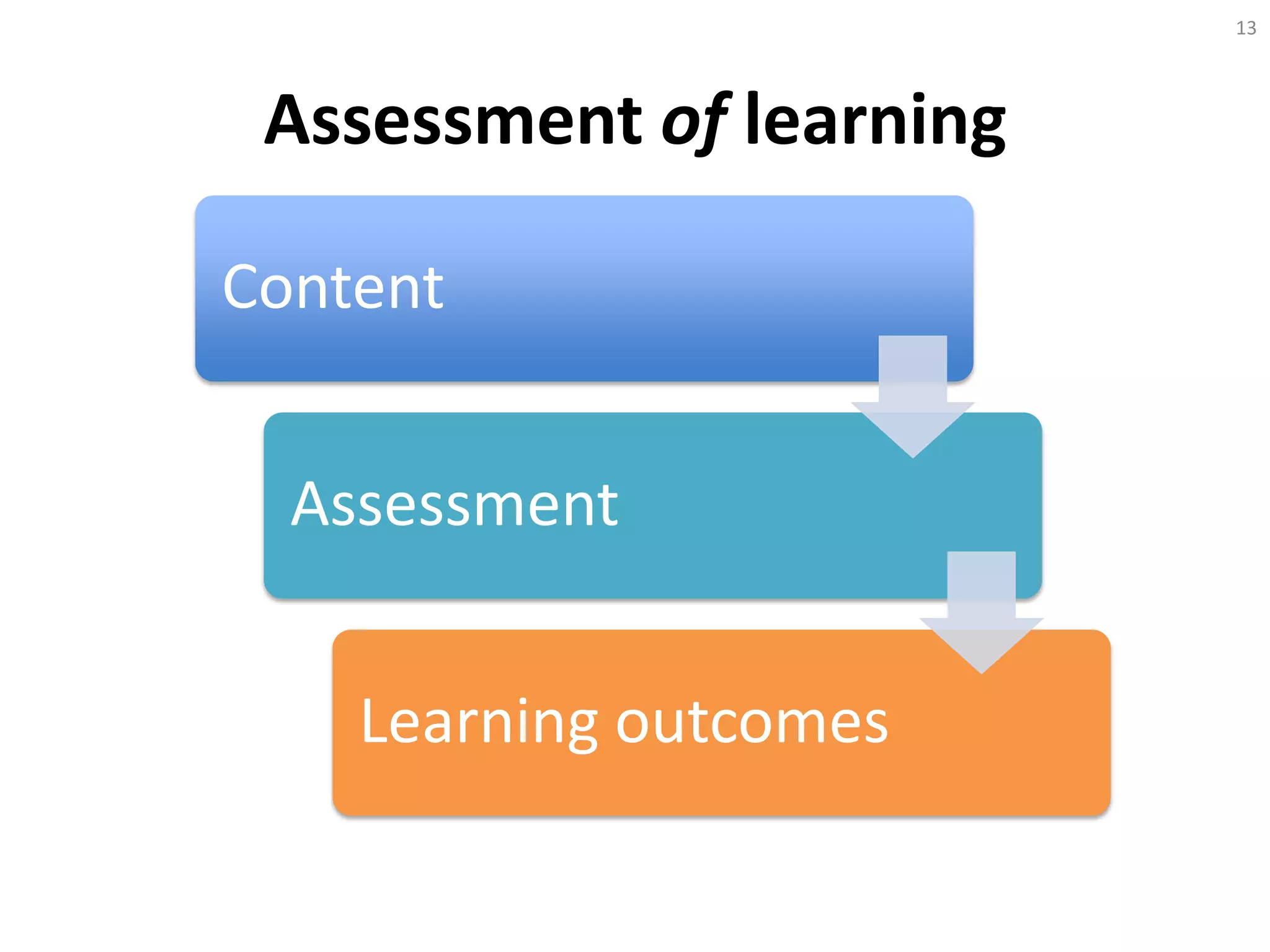
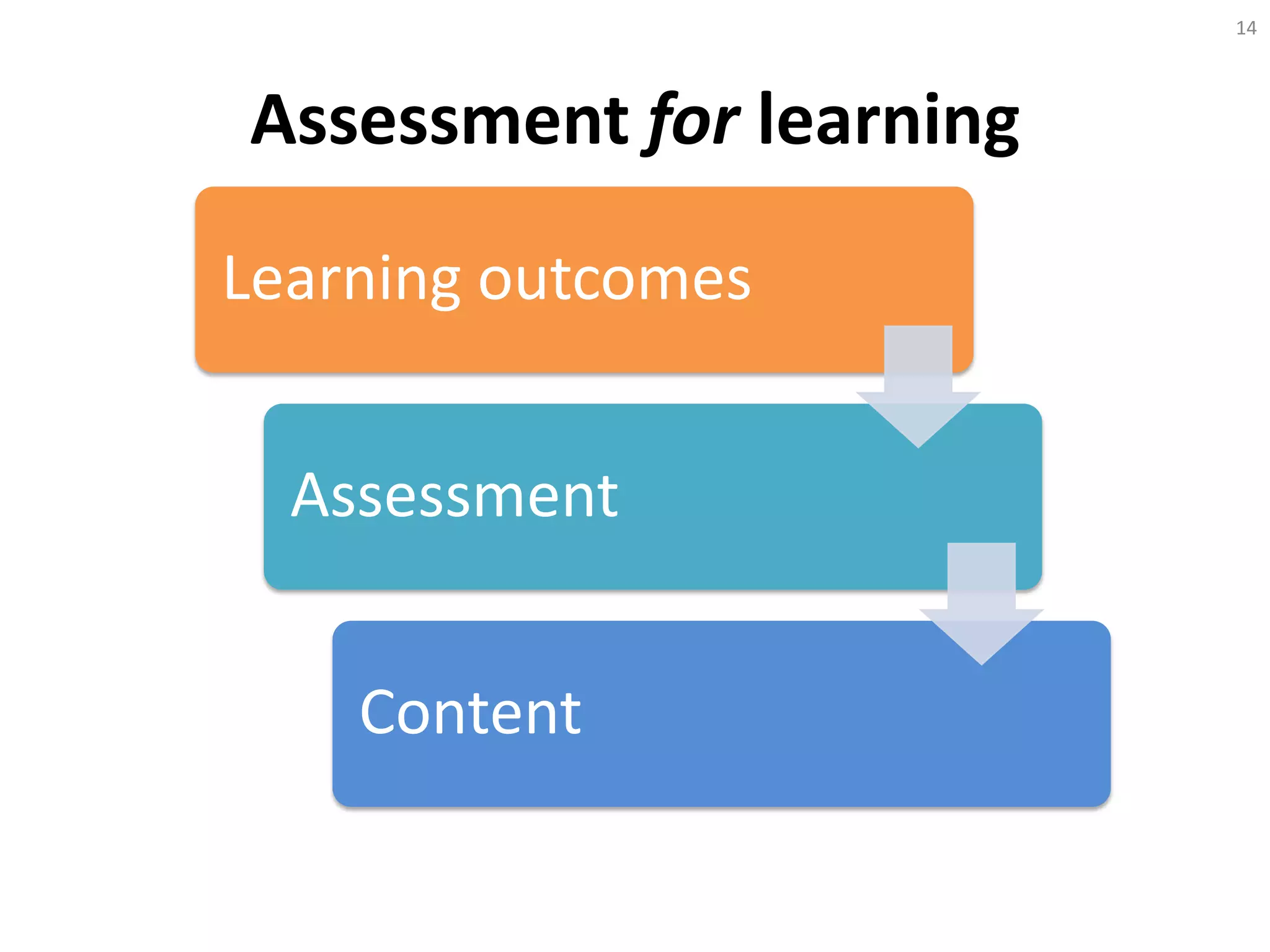
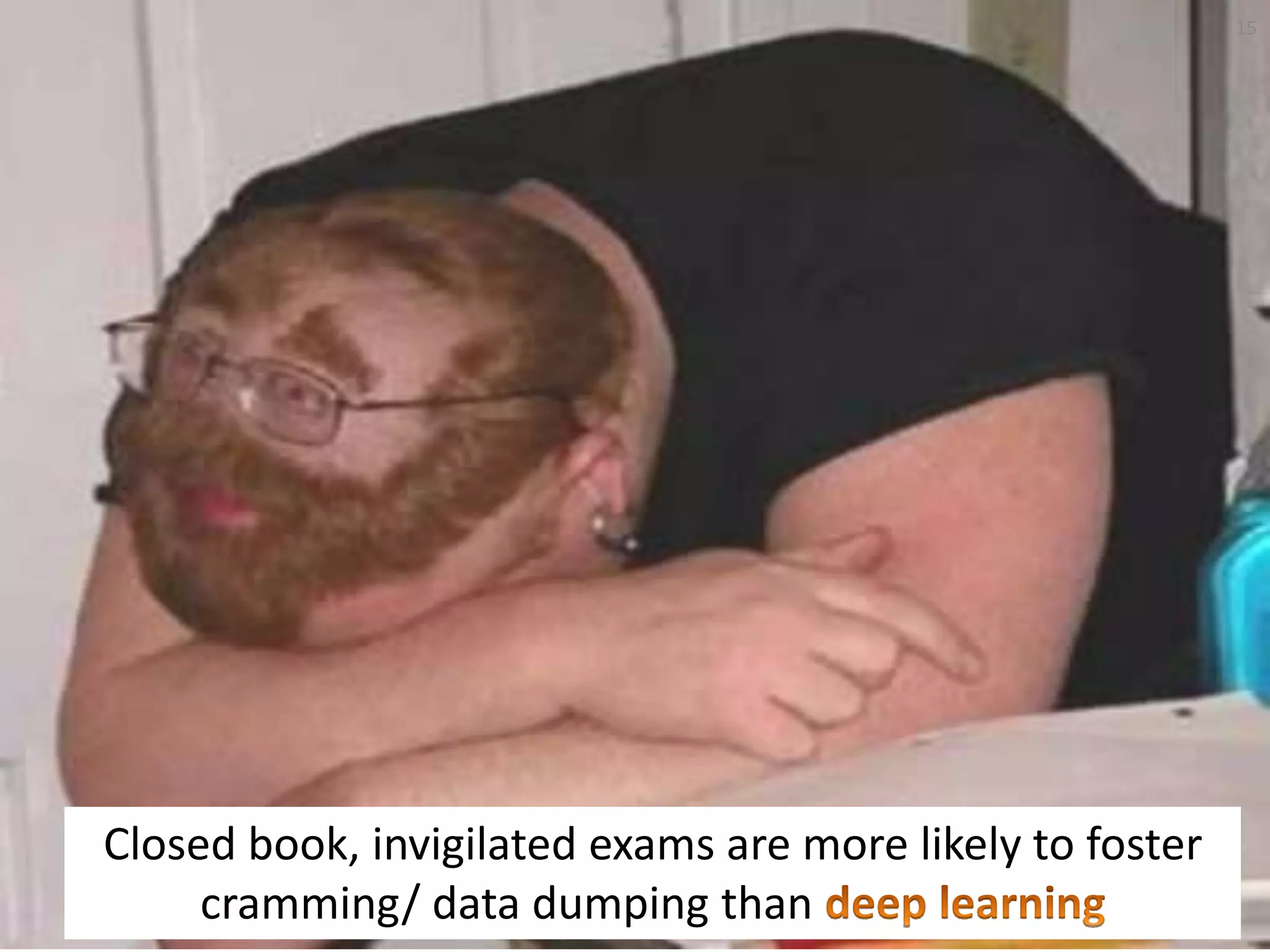
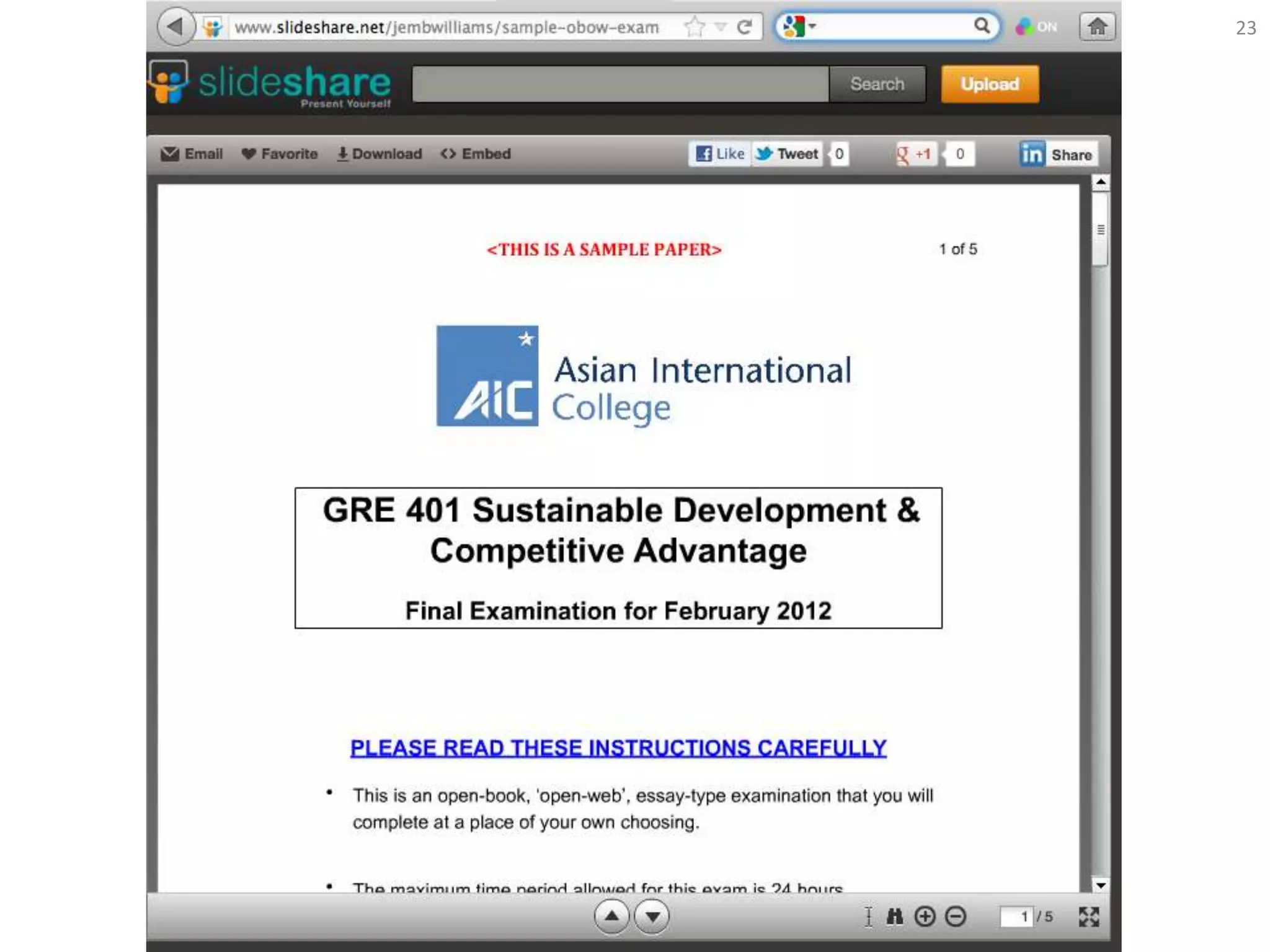
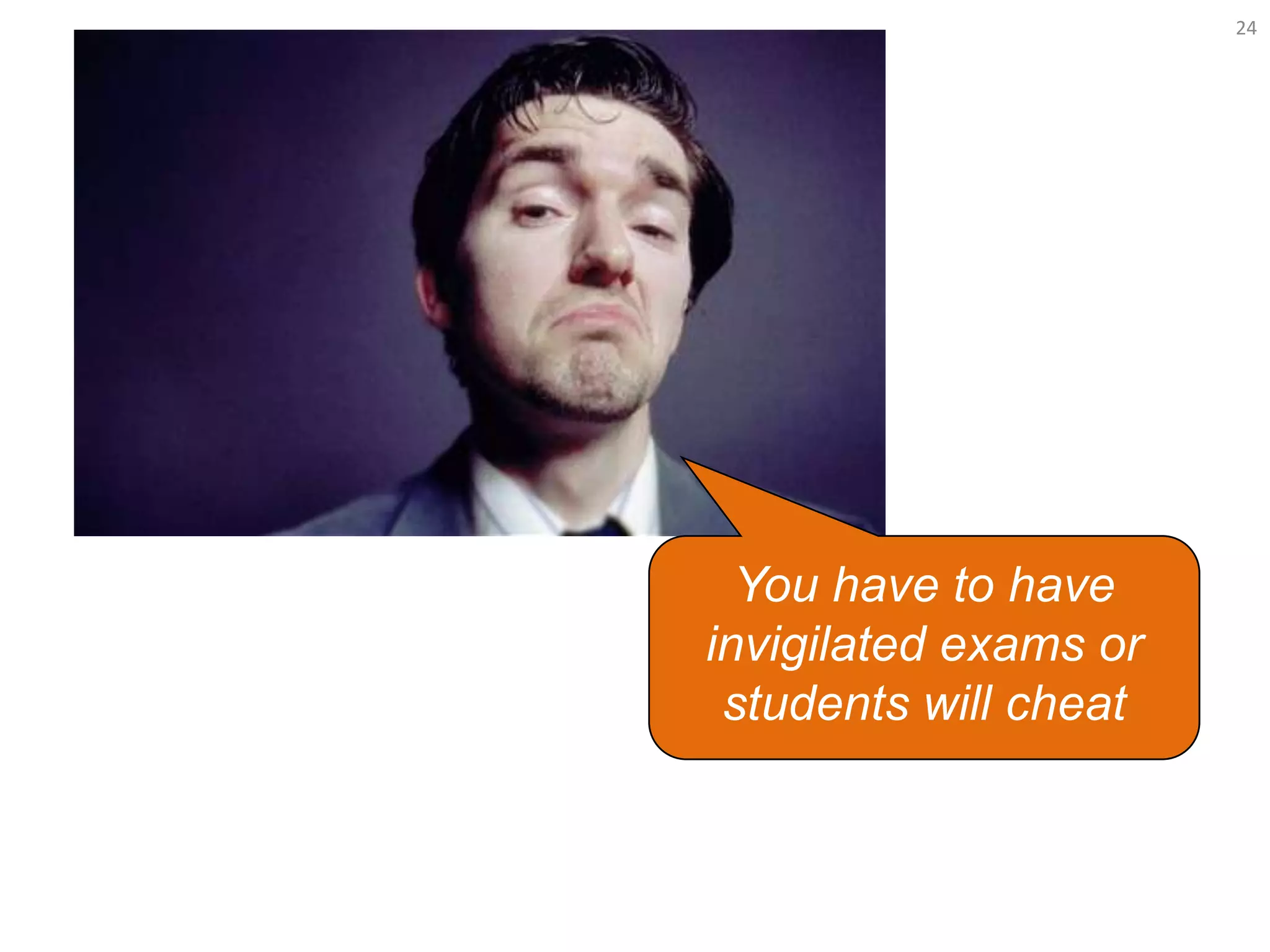
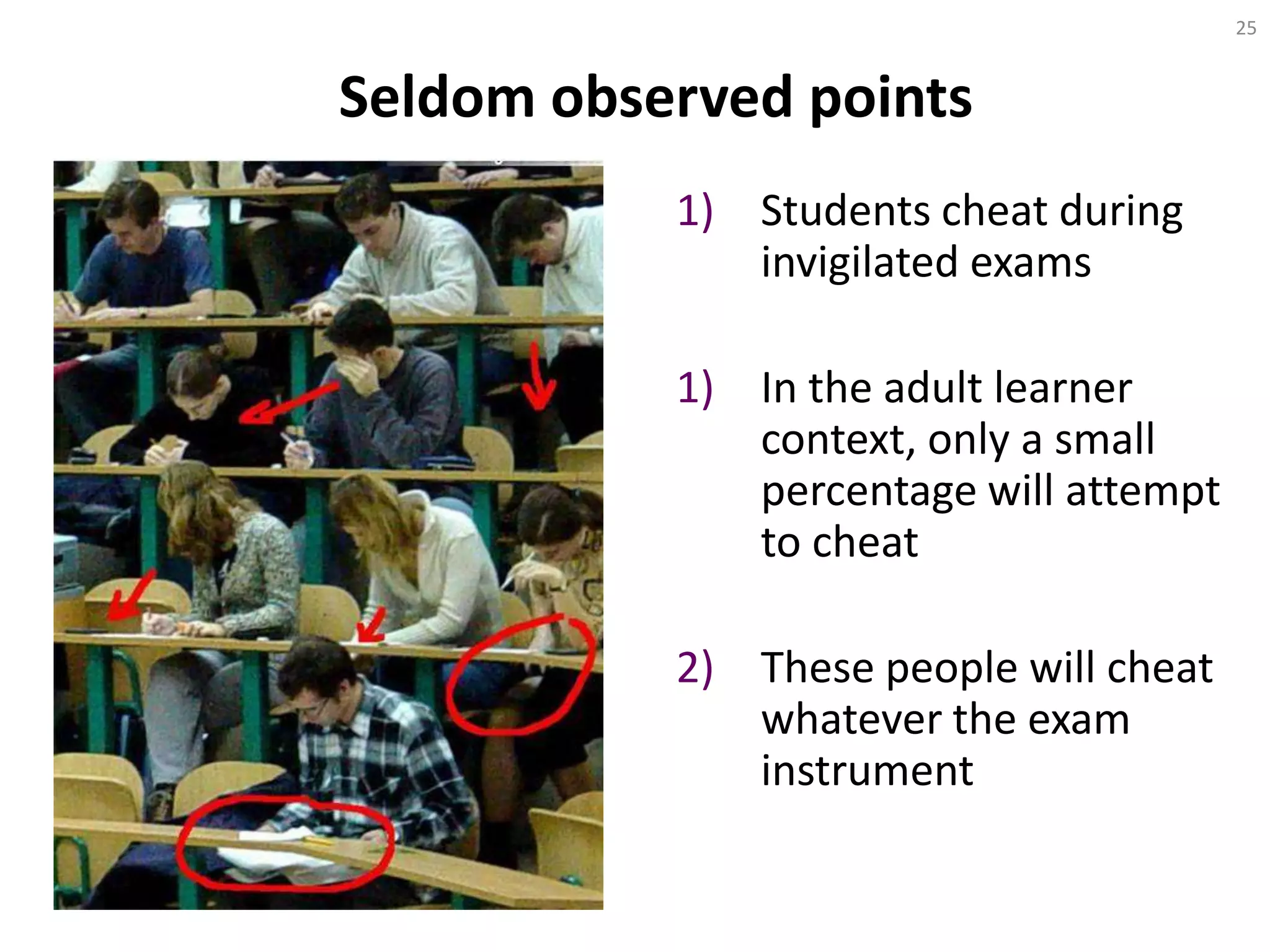

This document discusses open-book, open-web (OBOW) examinations as an alternative to traditional closed-book exams. It argues that OBOW exams better assess authentic learning by requiring students to apply their knowledge to solve real-world problems, rather than simply recalling information. The document provides guidelines for constructing OBOW exams, such as using an open-ended scenario or case study, setting parameters but not fully structuring the response, and evaluating students based on the relevance and quality of their analysis rather than the specific answers provided. OBOW exams are presented as a low-cost means of assessment that can increase student engagement by simulating real work experiences.


