PROJECT BASED
LEARNING (PBL)
PREPARED BY:
NADZATUL ELYA MD FUAD
NUR FARRAH NAJIHAH AMIR
AIN SOFEA SYAHIRAH MAHADI
MUHAMMAD FARHAN AZWAN BIN DAUD
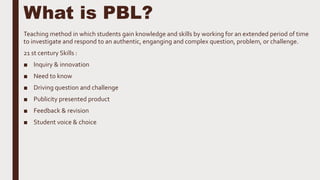
What is PBL?
Teaching method in which students gain knowledge and skills by working for an extended period of time
to investigate and respond to an authentic, enganging and complex question, problem, or challenge.
21 st century Skills :
■ Inquiry & innovation
■ Need to know
■ Driving question and challenge
■ Publicity presented product
■ Feedback & revision
■ Student voice & choice
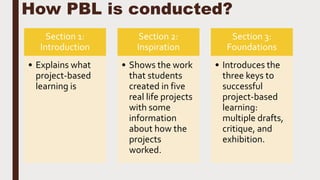
How PBL is conducted?
Section 1:
Introduction
• Explains what
project-based
learning is
Section 2:
Inspiration
• Shows the work
that students
created in five
real life projects
with some
information
about how the
projects
worked.
Section 3:
Foundations
• Introduces the
three keys to
successful
project-based
learning:
multiple drafts,
critique, and
exhibition.
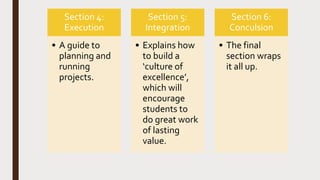
Section 4:
Execution
• A guide to
planning and
running
projects.
Section 5:
Integration
• Explains how
to build a
‘culture of
excellence’,
which will
encourage
students to
do great work
of lasting
value.
Section 6:
Conculsion
• The final
section wraps
it all up.
Why use PBL?
■ Ignite a shared passion for learning in both students and staff
■ Foster a wide range of skills (such as time management, collaboration, and problem solving) that
students will need at college, university, and in the workplace
■ They can be tailored to suit students with a wide range of abilities and learning needs.
■ Students can acquire the curriculum content they need through projects, without letting the test dictate
the curriculum.
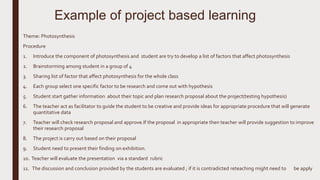
Example of project based learning
Theme: Photosynthesis
Procedure
1. Introduce the component of photosynthesis and student are try to develop a list of factors that affect photosynthesis
2. Brainstorming among student in a group of 4
3. Sharing list of factor that affect photosynthesis for the whole class
4. Each group select one specific factor to be research and come out with hypothesis
5. Student start gather information about their topic and plan research proposal about the project(testing hypothesis)
6. The teacher act as facilitator to guide the student to be creative and provide ideas for appropriate procedure that will generate
quantitative data
7. Teacher will check research proposal and approve.If the proposal in appropriate then teacher will provide suggestion to improve
their research proposal
8. The project is carry out based on their proposal
9. Student need to present their finding on exhibition.
10. Teacher will evaluate the presentation via a standard rubric
11. The discussion and conclusion provided by the students are evaluated ; if it is contradicted reteaching might need to be apply
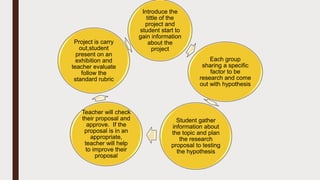
Introduce the
tittle of the
project and
student start to
gain information
about the
project
Each group
sharing a specific
factor to be
research and come
out with hypothesis
Student gather
information about
the topic and plan
the research
proposal to testing
the hypothesis
Teacher will check
their proposal and
approve. If the
proposal is in an
appropriate,
teacher will help
to improve their
proposal
Project is carry
out,student
present on an
exhibition and
teacher evaluate
follow the
standard rubric
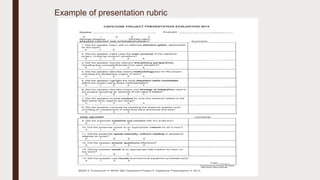
Example of presentation rubric
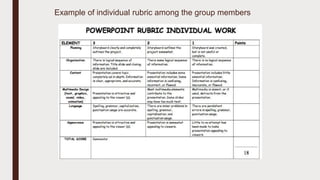
Example of individual rubric among the group members

Project based learning (PBL)

  • 1.
    PROJECT BASED LEARNING (PBL) PREPAREDBY: NADZATUL ELYA MD FUAD NUR FARRAH NAJIHAH AMIR AIN SOFEA SYAHIRAH MAHADI MUHAMMAD FARHAN AZWAN BIN DAUD
  • 2.
    What is PBL? Teachingmethod in which students gain knowledge and skills by working for an extended period of time to investigate and respond to an authentic, enganging and complex question, problem, or challenge. 21 st century Skills : ■ Inquiry & innovation ■ Need to know ■ Driving question and challenge ■ Publicity presented product ■ Feedback & revision ■ Student voice & choice
  • 3.
    How PBL isconducted? Section 1: Introduction • Explains what project-based learning is Section 2: Inspiration • Shows the work that students created in five real life projects with some information about how the projects worked. Section 3: Foundations • Introduces the three keys to successful project-based learning: multiple drafts, critique, and exhibition.
  • 4.
    Section 4: Execution • Aguide to planning and running projects. Section 5: Integration • Explains how to build a ‘culture of excellence’, which will encourage students to do great work of lasting value. Section 6: Conculsion • The final section wraps it all up.
  • 5.
    Why use PBL? ■Ignite a shared passion for learning in both students and staff ■ Foster a wide range of skills (such as time management, collaboration, and problem solving) that students will need at college, university, and in the workplace ■ They can be tailored to suit students with a wide range of abilities and learning needs. ■ Students can acquire the curriculum content they need through projects, without letting the test dictate the curriculum.
  • 6.
    Example of projectbased learning Theme: Photosynthesis Procedure 1. Introduce the component of photosynthesis and student are try to develop a list of factors that affect photosynthesis 2. Brainstorming among student in a group of 4 3. Sharing list of factor that affect photosynthesis for the whole class 4. Each group select one specific factor to be research and come out with hypothesis 5. Student start gather information about their topic and plan research proposal about the project(testing hypothesis) 6. The teacher act as facilitator to guide the student to be creative and provide ideas for appropriate procedure that will generate quantitative data 7. Teacher will check research proposal and approve.If the proposal in appropriate then teacher will provide suggestion to improve their research proposal 8. The project is carry out based on their proposal 9. Student need to present their finding on exhibition. 10. Teacher will evaluate the presentation via a standard rubric 11. The discussion and conclusion provided by the students are evaluated ; if it is contradicted reteaching might need to be apply
  • 7.
    Introduce the tittle ofthe project and student start to gain information about the project Each group sharing a specific factor to be research and come out with hypothesis Student gather information about the topic and plan the research proposal to testing the hypothesis Teacher will check their proposal and approve. If the proposal is in an appropriate, teacher will help to improve their proposal Project is carry out,student present on an exhibition and teacher evaluate follow the standard rubric
  • 8.
  • 9.
    Example of individualrubric among the group members