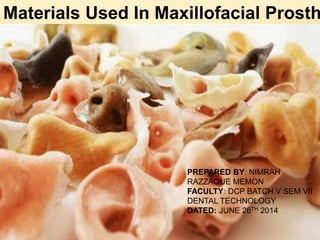
Materials Used In Maxillofacial Prosth
PREPARED BY: NIMRAH
RAZZAQUE MEMON
FACULTY: DCP BATCH V SEM VII
DENTAL TECHNOLOGY
DATED: JUNE 26TH 2014
OBJECTIVES:
•Desired properties of maxillofacial prosthetic
materials.
•Available materials for maxillofacial prosthesis.
•Conclusion.
•Reference.
DESIRED PROPERTIES:
ESTHETIC PROPERTIES:
•Color
•Texture
•Form
•Translucence
PHYSICAL PROPERTIES:
•Flexibility
•Thermal conductivity
•Edge strength
•Dimensionally stable
•Light in weight
BIOLOGICAL AND CHEMICAL PROPERTIES:
•Non-toxic, non-carcinogenic & non allergic
•Biocompatible
•Stain resistance
•Durable
•Chemically stable
FABRICATION PROPERTIES:
•Sufficient working time
•Adaptable to intrinsic and extrinsic coloring
•Should be easily processed
AVAILABLE MATERIALS FOR
MAXILLOFACIAL PROSTHESIS:
•Acrylics
•Polyvinyl chloride and co-polymer
•Polyurethaneelastomer
•Silicon
•Latex
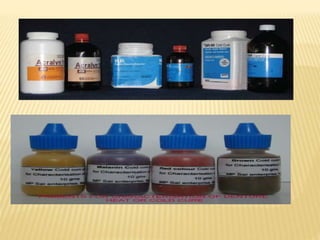
ACRYLIC
Two types of acrylic material are used
•Acrylic resin
•Acrylic co-polymer
ACRYLIC RESIN: Once commonly used, now
occasionally used
•Easily available, easy to stain, color, has good
strength, life span of 2 years
Drawback: rigid, high thermal conductivity
ACRYLIC CO POLYMER: Soft and elastic
Drawback: poor edge strength and durablity, tacky
handling
POLYVINYLY CHLORIDE AND
CO-POLYMER
•Rigid plastic, clear, odorless, tasteless
•Was WIDELY USED but replaced by newer materia
•Extended processing time
•Undesirable shrinkage
•Metal moulds used
POLYURETHANE ELASTOMERS
•Contains urethane linkage
•Physical properties can be modified
by varying reactants and their amount
•Elastic
•Ease of coloring
•Moisture sensitive
•Can cause local irritations
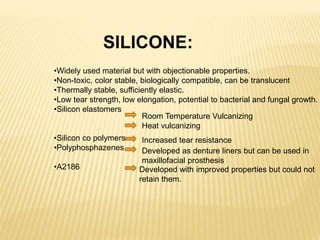
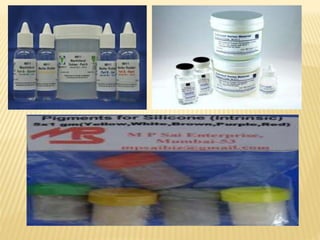
SILICONE:
•Widely used material but with objectionable properties.
•Non-toxic, color stable, biologically compatible, can be translucent
•Thermally stable, sufficiently elastic.
•Low tear strength, low elongation, potential to bacterial and fungal growth.
•Silicon elastomers
•Silicon co polymers
•Polyphosphazenes
•A2186
Room Temperature Vulcanizing
Heat vulcanizing
Increased tear resistance
Developed as denture liners but can be used in
maxillofacial prosthesis
Developed with improved properties but could not
retain them.
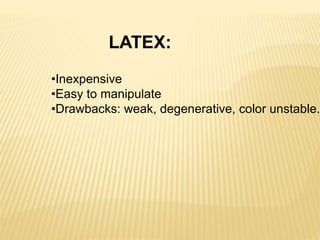
LATEX:
•Inexpensive
•Easy to manipulate
•Drawbacks: weak, degenerative, color unstable.
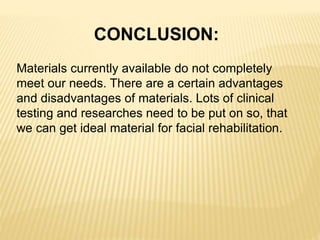
CONCLUSION:
Materials currently available do not completely
meet our needs. There are a certain advantages
and disadvantages of materials. Lots of clinical
testing and researches need to be put on so, that
we can get ideal material for facial rehabilitation.

REFERENCE:
•10.5005 Jp- journals 10026-1020, review article:
Mahajan H Gupta K. Maxillofacial prosthetic
materials: A literature review. J orofac Res 2012;
2 (2): 87-90
•Textbook of prosthodontics; Deepak
Nallaswamy.
materials used in maxillofacial prosthesis

materials used in maxillofacial prosthesis

  • 2.
    Materials Used InMaxillofacial Prosth PREPARED BY: NIMRAH RAZZAQUE MEMON FACULTY: DCP BATCH V SEM VII DENTAL TECHNOLOGY DATED: JUNE 26TH 2014
  • 3.
    OBJECTIVES: •Desired properties ofmaxillofacial prosthetic materials. •Available materials for maxillofacial prosthesis. •Conclusion. •Reference.
  • 4.
    DESIRED PROPERTIES: ESTHETIC PROPERTIES: •Color •Texture •Form •Translucence PHYSICALPROPERTIES: •Flexibility •Thermal conductivity •Edge strength •Dimensionally stable •Light in weight BIOLOGICAL AND CHEMICAL PROPERTIES: •Non-toxic, non-carcinogenic & non allergic •Biocompatible •Stain resistance •Durable •Chemically stable FABRICATION PROPERTIES: •Sufficient working time •Adaptable to intrinsic and extrinsic coloring •Should be easily processed
  • 5.
    AVAILABLE MATERIALS FOR MAXILLOFACIALPROSTHESIS: •Acrylics •Polyvinyl chloride and co-polymer •Polyurethaneelastomer •Silicon •Latex
  • 6.
    ACRYLIC Two types ofacrylic material are used •Acrylic resin •Acrylic co-polymer ACRYLIC RESIN: Once commonly used, now occasionally used •Easily available, easy to stain, color, has good strength, life span of 2 years Drawback: rigid, high thermal conductivity ACRYLIC CO POLYMER: Soft and elastic Drawback: poor edge strength and durablity, tacky handling
  • 8.
    POLYVINYLY CHLORIDE AND CO-POLYMER •Rigidplastic, clear, odorless, tasteless •Was WIDELY USED but replaced by newer materia •Extended processing time •Undesirable shrinkage •Metal moulds used
  • 9.
    POLYURETHANE ELASTOMERS •Contains urethanelinkage •Physical properties can be modified by varying reactants and their amount •Elastic •Ease of coloring •Moisture sensitive •Can cause local irritations
  • 10.
    SILICONE: •Widely used materialbut with objectionable properties. •Non-toxic, color stable, biologically compatible, can be translucent •Thermally stable, sufficiently elastic. •Low tear strength, low elongation, potential to bacterial and fungal growth. •Silicon elastomers •Silicon co polymers •Polyphosphazenes •A2186 Room Temperature Vulcanizing Heat vulcanizing Increased tear resistance Developed as denture liners but can be used in maxillofacial prosthesis Developed with improved properties but could not retain them.
  • 12.
  • 13.
    CONCLUSION: Materials currently availabledo not completely meet our needs. There are a certain advantages and disadvantages of materials. Lots of clinical testing and researches need to be put on so, that we can get ideal material for facial rehabilitation.

  • 14.
    REFERENCE: •10.5005 Jp- journals10026-1020, review article: Mahajan H Gupta K. Maxillofacial prosthetic materials: A literature review. J orofac Res 2012; 2 (2): 87-90 •Textbook of prosthodontics; Deepak Nallaswamy.