PRESENTED BY-
NAME - SOUMYABRATA BASAK
ROLL - 14MS06005
08/22/14 1
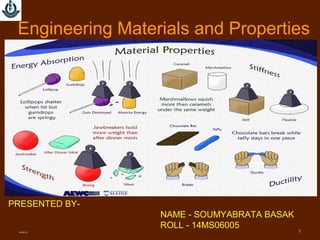
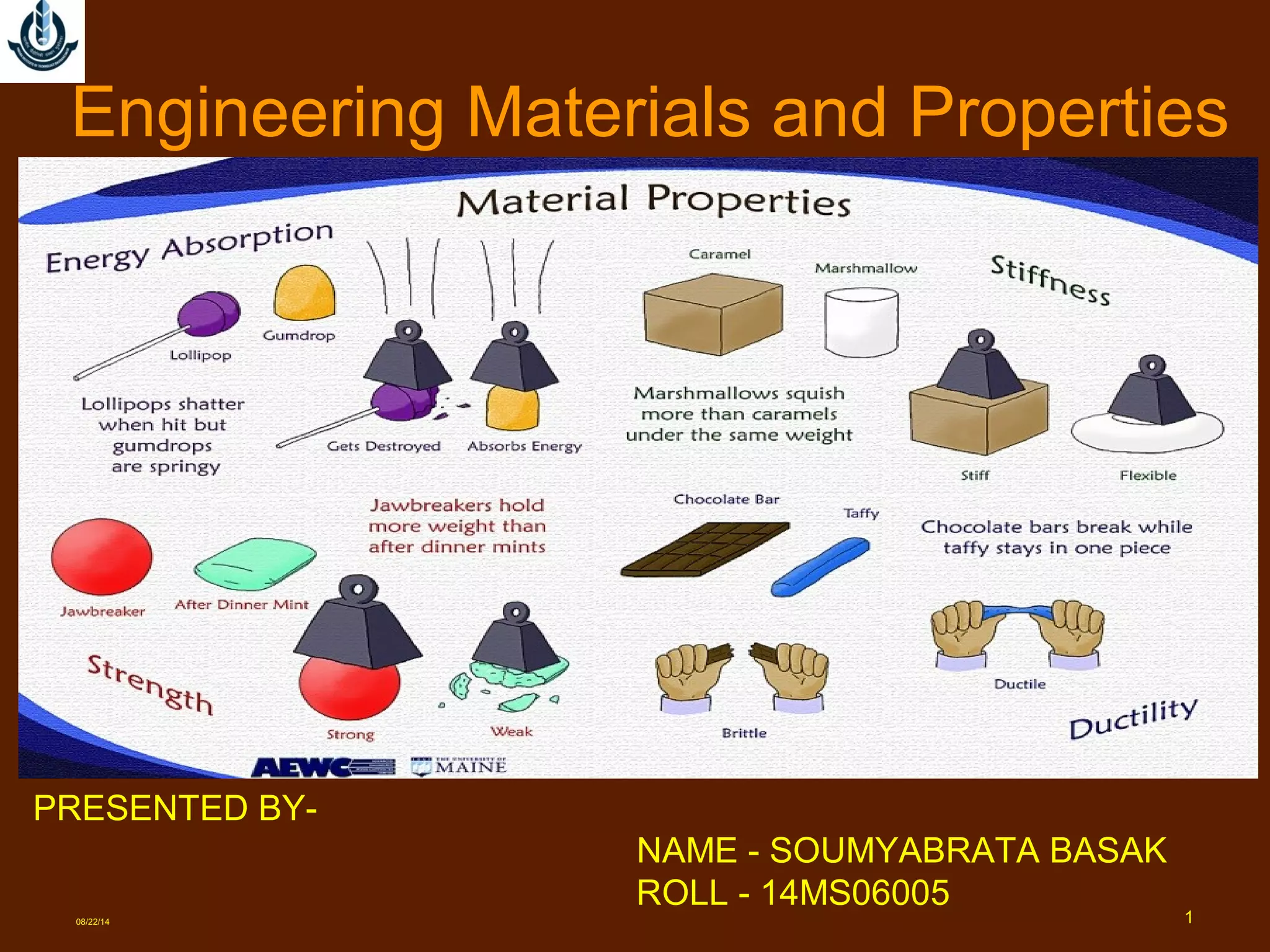
Engineering Materials and Properties
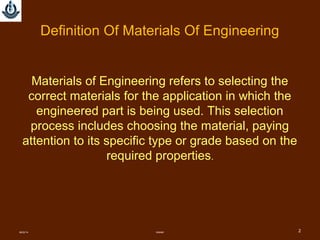
Definition Of Materials Of Engineering
Materials of Engineering refers to selecting the
correct materials for the application in which the
engineered part is being used. This selection
process includes choosing the material, paying
attention to its specific type or grade based on the
required properties.
SMMME 208/22/14
SMMME 3
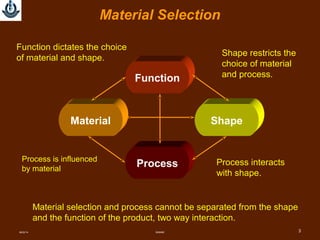
Material Selection
Function
Material Shape
Process
Material selection and process cannot be separated from the shape
and the function of the product, two way interaction.
Function dictates the choice
of material and shape.
Process interacts
with shape.
Process is influenced
by material
Shape restricts the
choice of material
and process.
08/22/14
SMMME 4
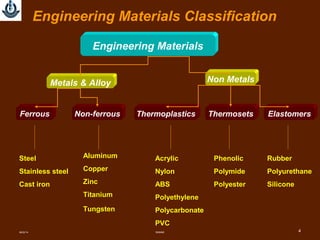
Engineering Materials Classification
Engineering Materials
Metals & Alloy Non Metals
Steel
Stainless steel
Cast iron
Ferrous Non-ferrous
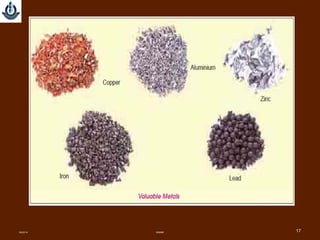
Aluminum
Copper
Zinc
Titanium
Tungsten
Thermoplastics
Acrylic
Nylon
ABS
Polyethylene
Polycarbonate
PVC
Thermosets
Phenolic
Polymide
Polyester
Elastomers
Rubber
Polyurethane
Silicone
08/22/14
SMMME 5
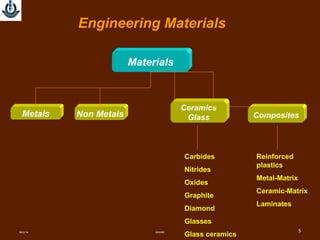
Engineering Materials
Materials
Metals Non Metals
Ceramics
Glass
Carbides
Nitrides
Oxides
Graphite
Diamond
Glasses
Glass ceramics
Composites
Reinforced
plastics
Metal-Matrix
Ceramic-Matrix
Laminates
08/22/14
SMMME 6
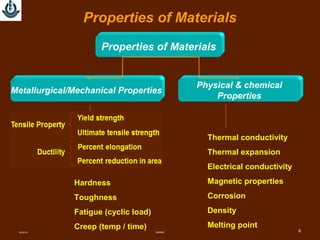
Properties of Materials
Metallurgical/Mechanical Properties
Hardness
Hardness
Toughness
Fatigue (cyclic load)
Creep (temp / time)
Physical & chemical
Properties
Thermal conductivity
Thermal expansion
Electrical conductivity
Magnetic properties
Corrosion
Density
Melting point
08/22/14
7
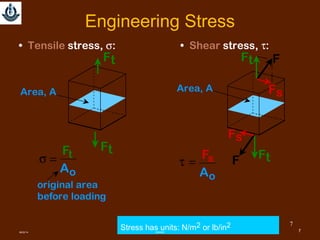
• Tensile stress, σ: • Shear stress, τ:
Area, A
Ft
Ft
σ =
Ft
Ao
original area
before loading
Area, A
Ft
Ft
Fs
F
F
Fs
τ =
Fs
Ao
Stress has units: N/m2 or lb/in2
Engineering Stress
08/22/14 SMMME 7
8
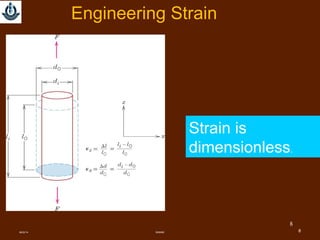
Engineering Strain
Strain is
dimensionless.
08/22/14 SMMME 8
SMMME 9
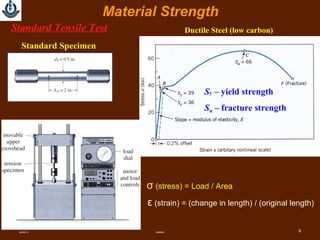
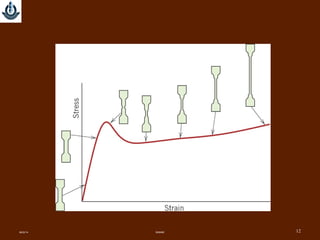
Material Strength
Standard Tensile Test
Standard Specimen
Ductile Steel (low carbon)
Sy – yield strength
Su – fracture strength
σ (stress) = Load / Area
ε (strain) = (change in length) / (original length)
08/22/14
10
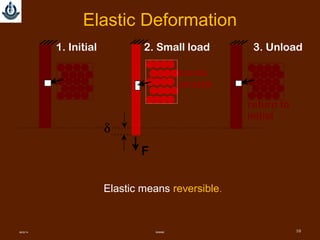
F
δ
bonds
stretch
return to
initial
1. Initial 2. Small load 3. Unload
Elastic means reversible.
Elastic Deformation
08/22/14 SMMME
11
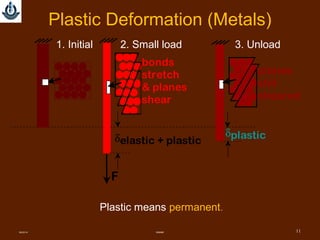
1. Initial 2. Small load 3. Unload
Plastic means permanent.
planes
still
sheared
F
δelastic + plastic
bonds
stretch
& planes
shear
δplastic
Plastic Deformation (Metals)
08/22/14 SMMME
1208/22/14 SMMME
(c)2003 Brooks/Cole, a division of Thomson Learning, Inc. Thomson Learning™ is a trademark used herein under license.
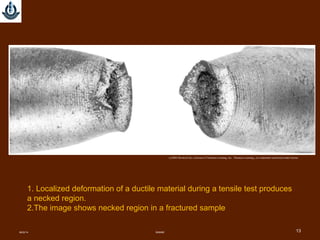
1. Localized deformation of a ductile material during a tensile test produces
a necked region.
2.The image shows necked region in a fractured sample
08/22/14 SMMME 13
SMMME 14
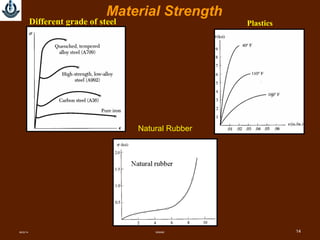
Material Strength
Different grade of steel Plastics
08/22/14
Natural Rubber
SMMME 15
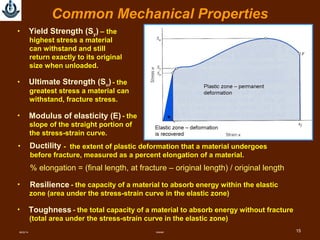
• - the extent of plastic deformation that a material undergoes
before fracture, measured as a percent elongation of a material.
% elongation = (final length, at fracture – original length) / original length
Ductility
Common Mechanical Properties
• – the
highest stress a material
can withstand and still
return exactly to its original
size when unloaded.
Yield Strength (Sy)
• - the
greatest stress a material can
withstand, fracture stress.
Ultimate Strength (Su)
• - the
slope of the straight portion of
the stress-strain curve.
Modulus of elasticity (E)
• - the capacity of a material to absorb energy within the elastic
zone (area under the stress-strain curve in the elastic zone)
Resilience
• - the total capacity of a material to absorb energy without fracture
(total area under the stress-strain curve in the elastic zone)
Toughness
08/22/14
08/22/14 SMMME 16
Metals
The most common materials characteristics which are useful in design,
production purpose in various Industries are :-
• Conduct electricity and heat.
• Have relatively high melting point, some metal alloys can
withstand temp. up to 2200 o
C.
• Metals are ductile, they can be shaped by extrusion (hot or
cold), rolling, forging and drawing.
• Metals are easy to machine with precision.
• Metals are strong, stiff, and tough.
• They can be made stronger by alloying and heat treatment.
• Metals are vulnerable to corrosion.
THANK YOU
08/22/14 SMMME 17
References
• www.wikipedia.org (collection of theory)
• www.google.com (photo collection)
• Materials Science And Engineering-
Callister’s
• Physical Metallurgy-V.Raghavan
• Mechanical Metallurgy-George E. Dieter
08/22/14 SMMME 18
THANK
YOU
08/22/14 SMMME 19

Material Science And Engineering

  • 1.
    PRESENTED BY- NAME -SOUMYABRATA BASAK ROLL - 14MS06005 08/22/14 1 Engineering Materials and Properties
  • 2.
    Definition Of MaterialsOf Engineering Materials of Engineering refers to selecting the correct materials for the application in which the engineered part is being used. This selection process includes choosing the material, paying attention to its specific type or grade based on the required properties. SMMME 208/22/14
  • 3.
    SMMME 3 Material Selection Function MaterialShape Process Material selection and process cannot be separated from the shape and the function of the product, two way interaction. Function dictates the choice of material and shape. Process interacts with shape. Process is influenced by material Shape restricts the choice of material and process. 08/22/14
  • 4.
    SMMME 4 Engineering MaterialsClassification Engineering Materials Metals & Alloy Non Metals Steel Stainless steel Cast iron Ferrous Non-ferrous Aluminum Copper Zinc Titanium Tungsten Thermoplastics Acrylic Nylon ABS Polyethylene Polycarbonate PVC Thermosets Phenolic Polymide Polyester Elastomers Rubber Polyurethane Silicone 08/22/14
  • 5.
    SMMME 5 Engineering Materials Materials MetalsNon Metals Ceramics Glass Carbides Nitrides Oxides Graphite Diamond Glasses Glass ceramics Composites Reinforced plastics Metal-Matrix Ceramic-Matrix Laminates 08/22/14
  • 6.
    SMMME 6 Properties ofMaterials Properties of Materials Metallurgical/Mechanical Properties Hardness Hardness Toughness Fatigue (cyclic load) Creep (temp / time) Physical & chemical Properties Thermal conductivity Thermal expansion Electrical conductivity Magnetic properties Corrosion Density Melting point 08/22/14
  • 7.
    7 • Tensile stress,σ: • Shear stress, τ: Area, A Ft Ft σ = Ft Ao original area before loading Area, A Ft Ft Fs F F Fs τ = Fs Ao Stress has units: N/m2 or lb/in2 Engineering Stress 08/22/14 SMMME 7
  • 8.
  • 9.
    SMMME 9 Material Strength StandardTensile Test Standard Specimen Ductile Steel (low carbon) Sy – yield strength Su – fracture strength σ (stress) = Load / Area ε (strain) = (change in length) / (original length) 08/22/14
  • 10.
    10 F δ bonds stretch return to initial 1. Initial2. Small load 3. Unload Elastic means reversible. Elastic Deformation 08/22/14 SMMME
  • 11.
    11 1. Initial 2.Small load 3. Unload Plastic means permanent. planes still sheared F δelastic + plastic bonds stretch & planes shear δplastic Plastic Deformation (Metals) 08/22/14 SMMME
  • 12.
  • 13.
    (c)2003 Brooks/Cole, adivision of Thomson Learning, Inc. Thomson Learning™ is a trademark used herein under license. 1. Localized deformation of a ductile material during a tensile test produces a necked region. 2.The image shows necked region in a fractured sample 08/22/14 SMMME 13
  • 14.
    SMMME 14 Material Strength Differentgrade of steel Plastics 08/22/14 Natural Rubber
  • 15.
    SMMME 15 • -the extent of plastic deformation that a material undergoes before fracture, measured as a percent elongation of a material. % elongation = (final length, at fracture – original length) / original length Ductility Common Mechanical Properties • – the highest stress a material can withstand and still return exactly to its original size when unloaded. Yield Strength (Sy) • - the greatest stress a material can withstand, fracture stress. Ultimate Strength (Su) • - the slope of the straight portion of the stress-strain curve. Modulus of elasticity (E) • - the capacity of a material to absorb energy within the elastic zone (area under the stress-strain curve in the elastic zone) Resilience • - the total capacity of a material to absorb energy without fracture (total area under the stress-strain curve in the elastic zone) Toughness 08/22/14
  • 16.
    08/22/14 SMMME 16 Metals Themost common materials characteristics which are useful in design, production purpose in various Industries are :- • Conduct electricity and heat. • Have relatively high melting point, some metal alloys can withstand temp. up to 2200 o C. • Metals are ductile, they can be shaped by extrusion (hot or cold), rolling, forging and drawing. • Metals are easy to machine with precision. • Metals are strong, stiff, and tough. • They can be made stronger by alloying and heat treatment. • Metals are vulnerable to corrosion.
  • 17.
  • 18.
    References • www.wikipedia.org (collectionof theory) • www.google.com (photo collection) • Materials Science And Engineering- Callister’s • Physical Metallurgy-V.Raghavan • Mechanical Metallurgy-George E. Dieter 08/22/14 SMMME 18
  • 19.