P R E S E N T E D B Y :
M . P R A D E E P A
V . V I N I T H A
J . J O H N B R I T T O
E . G O W T H A M A N
MATERIAL RESOURCE
PLANNING &
ITS IMPORTANCE
MRP
 MRP is a computer-based production
planning and inventory control system.
 Material control system that attempt to keep
adequate inventory level to ensure the
required material available when needed.
 The main theme of MRP is to “ getting the
right quantity of the right material at the
right time ”
 MRP will provide you with the ability to be
pro-active rather than re-active in the
management of your inventory levels and
material flow.
Inputs to MRP
 MRP is calculated based on the following inputs
Master production schedule.
Bill of material.
 Quantity on hand.
 lot size.
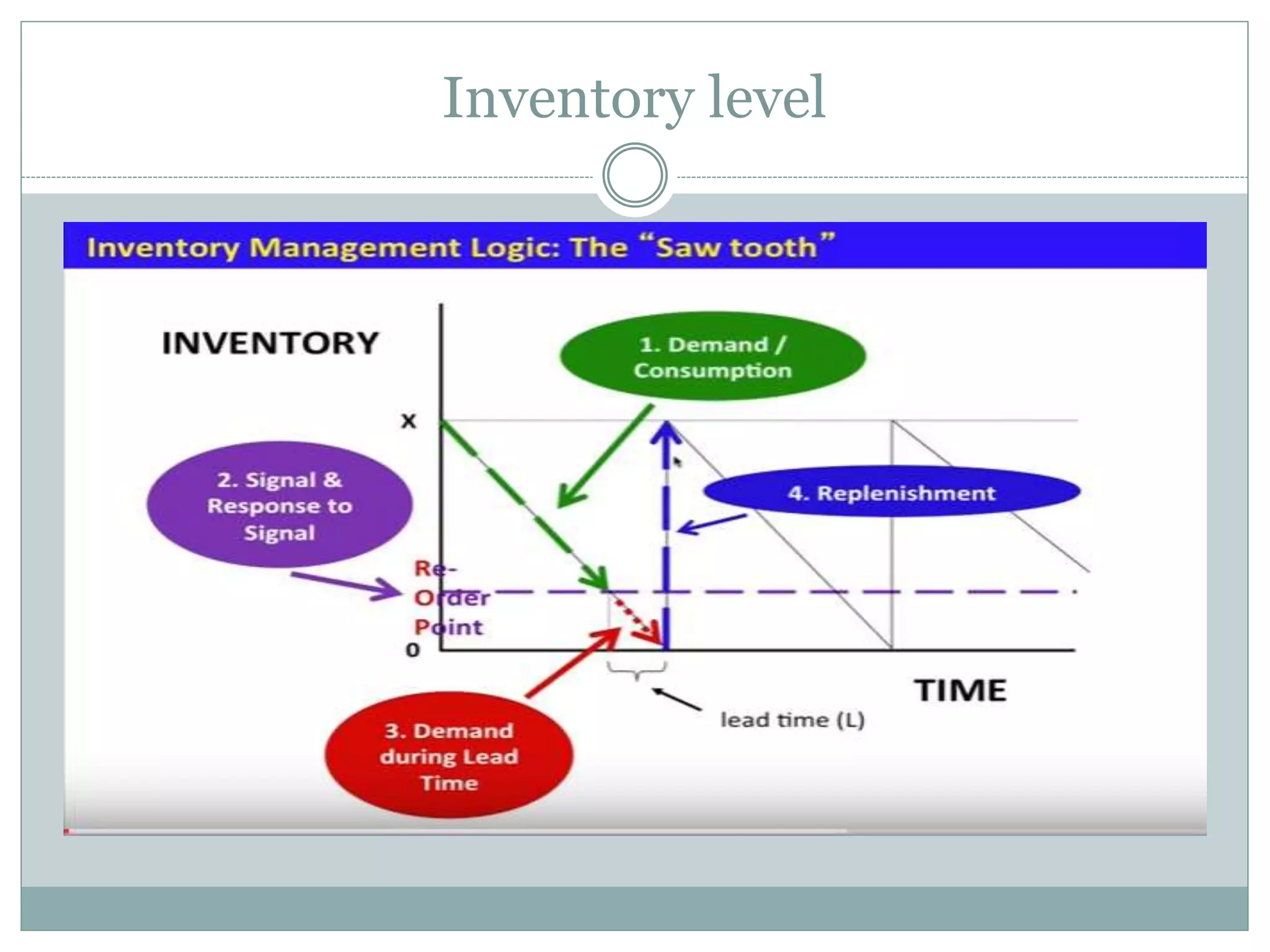
Inventory level.
Safety stock.
MPS
 A Master Production Schedule is the plan that a
company has developed for production, inventory,
staffing etc.
 A Master Production Schedule is the master of all
schedules. It is a plan for future production of end
items.
 The Master Production Schedule will drive detailed
material and production requirements in
the MRP module.
Input of MPS
 Forecast Demand.
 Production Costs.
 Inventory Costs.
 Customer Orders.
 Inventory Levels.
 Production Lead Time.
Output of MPS
 Amounts to be Produced.
 Staffing Levels.
 Quantity Available.
 Projected Available Balance.
Lot size
 The quantity of items required for an order. The
order may be either purchased from a vendor or
produced in house.
 Lot sizing is the process of specifying the order
size.
Bill of material
 A bill of materials (BoM) is a list of the parts or
components that are required to build a product.
 The BoM provides the manufacturer's part number
(MPN) and the quantity needed for each component.
 BOM is a multi-level document that provides build
data for multiple sub-assemblies (products within
products) and includes for each item.
 It may also include attached reference files, such as
part specifications, CAD files and part drawings.
Quantity on hand
 The total number of stock-keeping units that are
physically located in the warehouse location at the
current time.
 This includes items that are already allocated to
fulfilling production needs or sales orders. So, this
number may differ from the quantity available in
hand.
Safety stock
 Safety stock is an additional quantity of an item held
in the inventory.
 In order to reduce the risk that the item will be out of
stock.
 safety stock act as a buffer stock in case the sales are
greater than planned and or the supplier is unable to
deliver the additional units at the expected time.
Inventory level
Importance of MRP
 Reduced Inventory Levels.
 Reduced Component Shortages.
 Improved Shipping Performance.
 Improved Productivity.
 Simplified and Accurate Scheduling.
 Reduced Purchasing Cost.
 Reduced Lead Times.
 Reduction in Excess Inventory.
 Improved Calculation of Material Requirements.

Material requirement planning and its importance om

  • 1.
    P R ES E N T E D B Y : M . P R A D E E P A V . V I N I T H A J . J O H N B R I T T O E . G O W T H A M A N MATERIAL RESOURCE PLANNING & ITS IMPORTANCE
  • 2.
    MRP  MRP isa computer-based production planning and inventory control system.  Material control system that attempt to keep adequate inventory level to ensure the required material available when needed.
  • 3.
     The maintheme of MRP is to “ getting the right quantity of the right material at the right time ”  MRP will provide you with the ability to be pro-active rather than re-active in the management of your inventory levels and material flow.
  • 4.
    Inputs to MRP MRP is calculated based on the following inputs Master production schedule. Bill of material.  Quantity on hand.  lot size. Inventory level. Safety stock.
  • 5.
    MPS  A MasterProduction Schedule is the plan that a company has developed for production, inventory, staffing etc.  A Master Production Schedule is the master of all schedules. It is a plan for future production of end items.  The Master Production Schedule will drive detailed material and production requirements in the MRP module.
  • 6.
    Input of MPS Forecast Demand.  Production Costs.  Inventory Costs.  Customer Orders.  Inventory Levels.  Production Lead Time.
  • 7.
    Output of MPS Amounts to be Produced.  Staffing Levels.  Quantity Available.  Projected Available Balance.
  • 8.
    Lot size  Thequantity of items required for an order. The order may be either purchased from a vendor or produced in house.  Lot sizing is the process of specifying the order size.
  • 9.
    Bill of material A bill of materials (BoM) is a list of the parts or components that are required to build a product.  The BoM provides the manufacturer's part number (MPN) and the quantity needed for each component.  BOM is a multi-level document that provides build data for multiple sub-assemblies (products within products) and includes for each item.  It may also include attached reference files, such as part specifications, CAD files and part drawings.
  • 10.
    Quantity on hand The total number of stock-keeping units that are physically located in the warehouse location at the current time.  This includes items that are already allocated to fulfilling production needs or sales orders. So, this number may differ from the quantity available in hand.
  • 11.
    Safety stock  Safetystock is an additional quantity of an item held in the inventory.  In order to reduce the risk that the item will be out of stock.  safety stock act as a buffer stock in case the sales are greater than planned and or the supplier is unable to deliver the additional units at the expected time.
  • 12.
  • 13.
    Importance of MRP Reduced Inventory Levels.  Reduced Component Shortages.  Improved Shipping Performance.  Improved Productivity.  Simplified and Accurate Scheduling.  Reduced Purchasing Cost.  Reduced Lead Times.  Reduction in Excess Inventory.  Improved Calculation of Material Requirements.