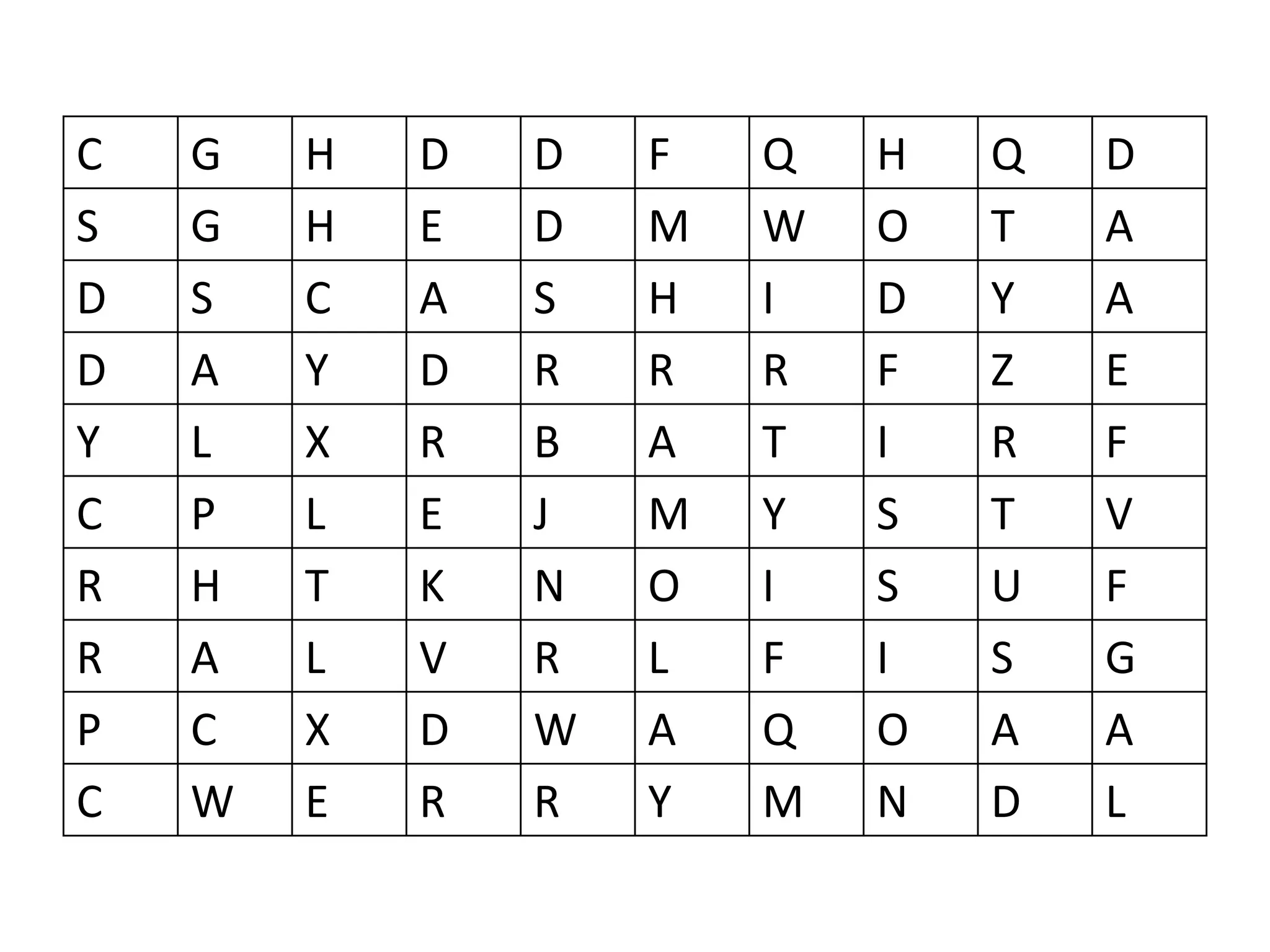
C   G   H   D   D   F   Q   H   Q   D
S   G   H   E   D   M   W   O   T   A
D   S   C   A   S   H   I   D   Y   A
D   A   Y   D   R   R   R   F   Z   E
Y   L   X   R   B   A   T   I   R   F
C   P   L   E   J   M   Y   S   T   V
R   H   T   K   N   O   I   S   U   F
R   A   L   V   R   L   F   I   S   G
P   C   X   D   W   A   Q   O   A   A
C   W   E   R   R   Y   M   N   D   L
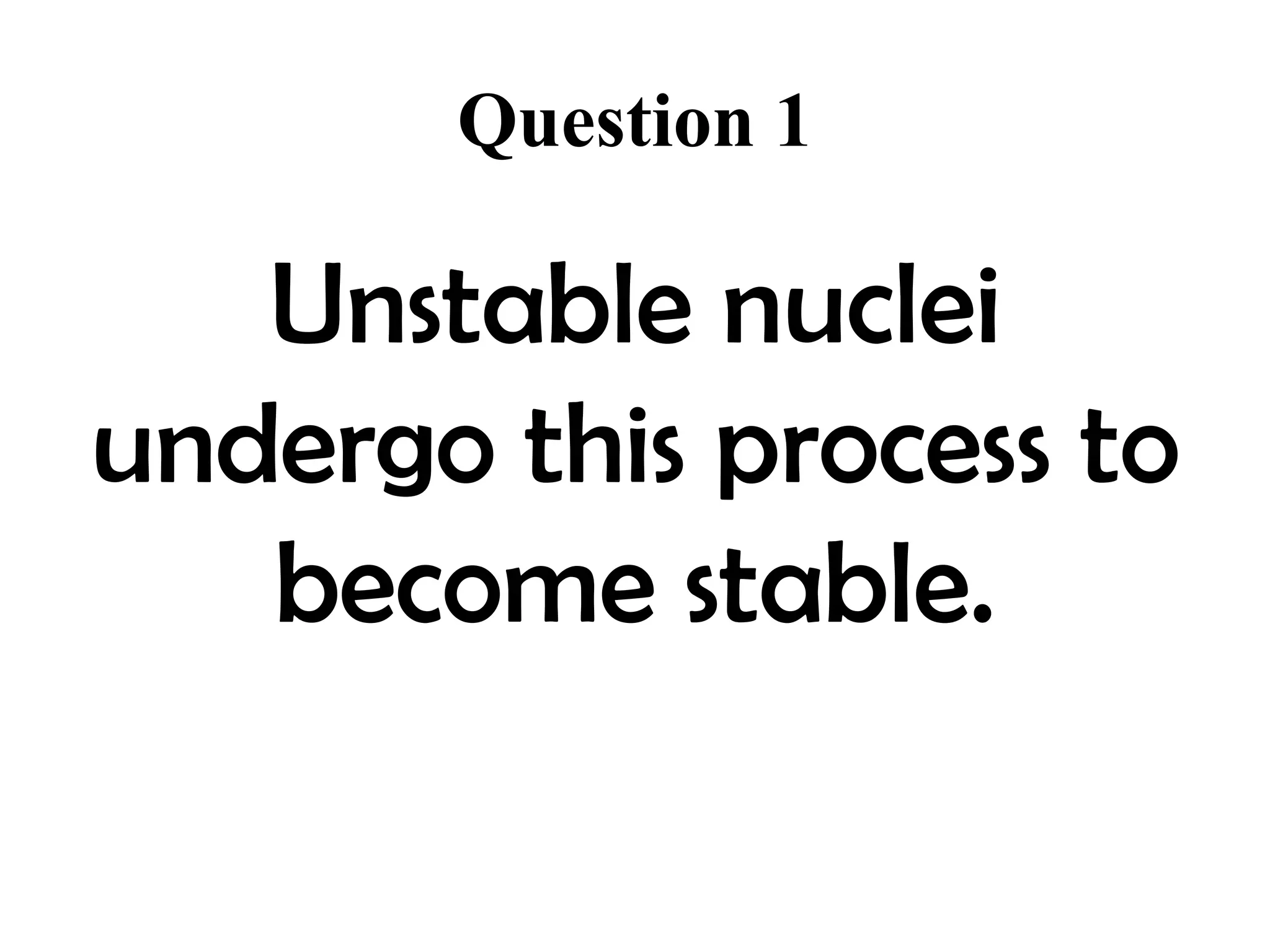
Question 1

   Unstable nuclei
undergo this process to
   become stable.
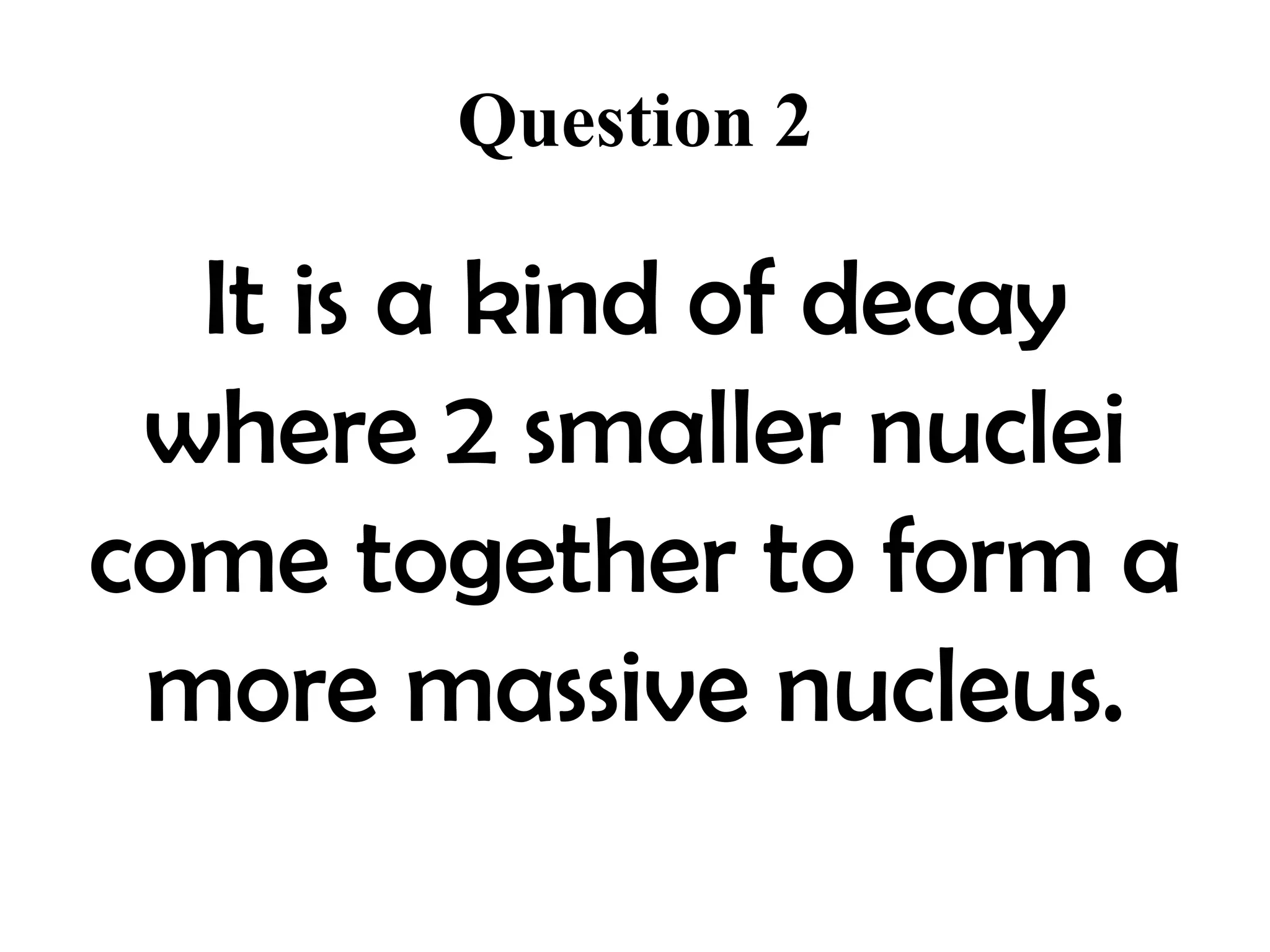
Question 2

  It is a kind of decay
 where 2 smaller nuclei
come together to form a
 more massive nucleus.
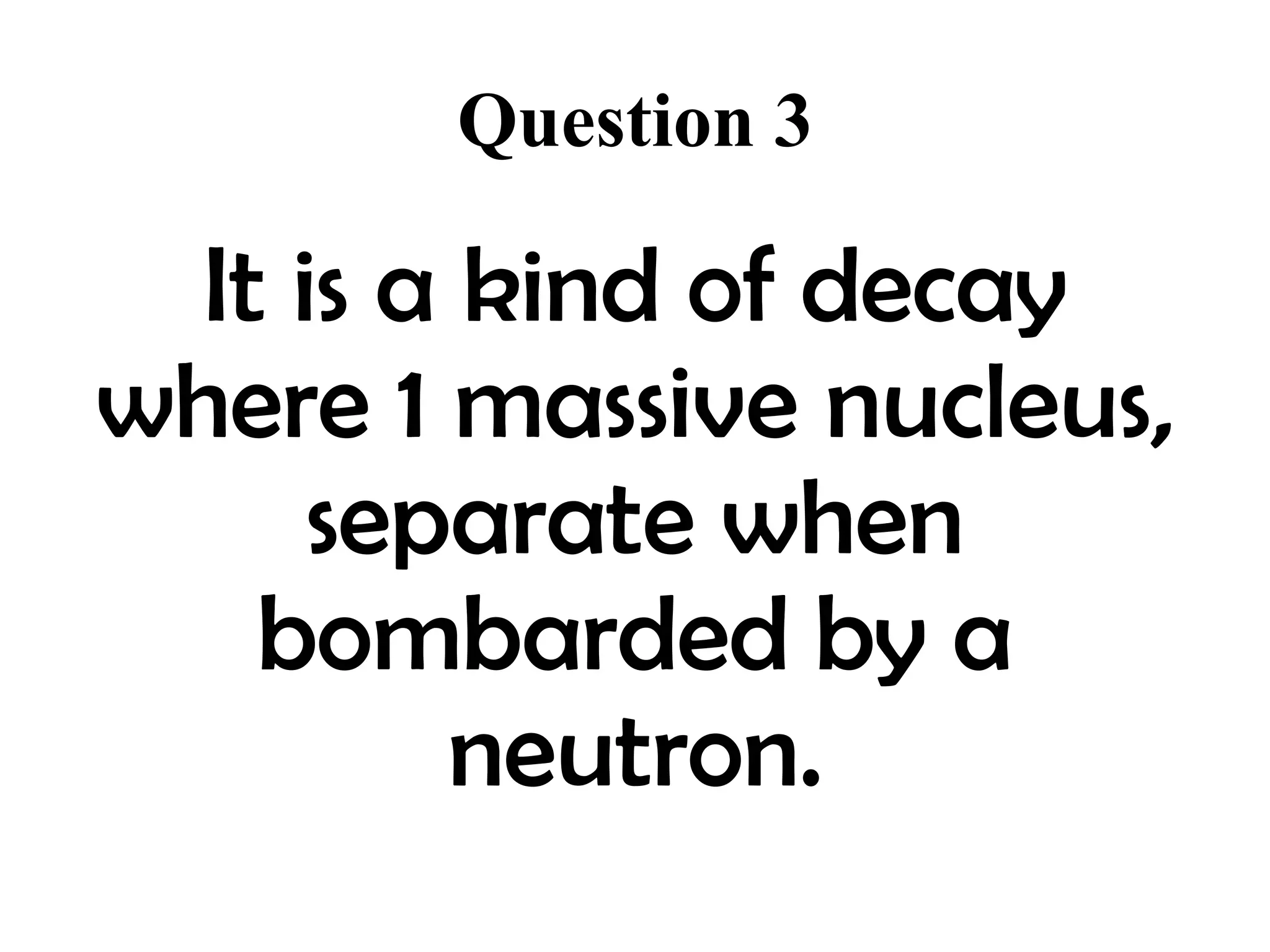
Question 3

  It is a kind of decay
where 1 massive nucleus,
      separate when
    bombarded by a
         neutron.
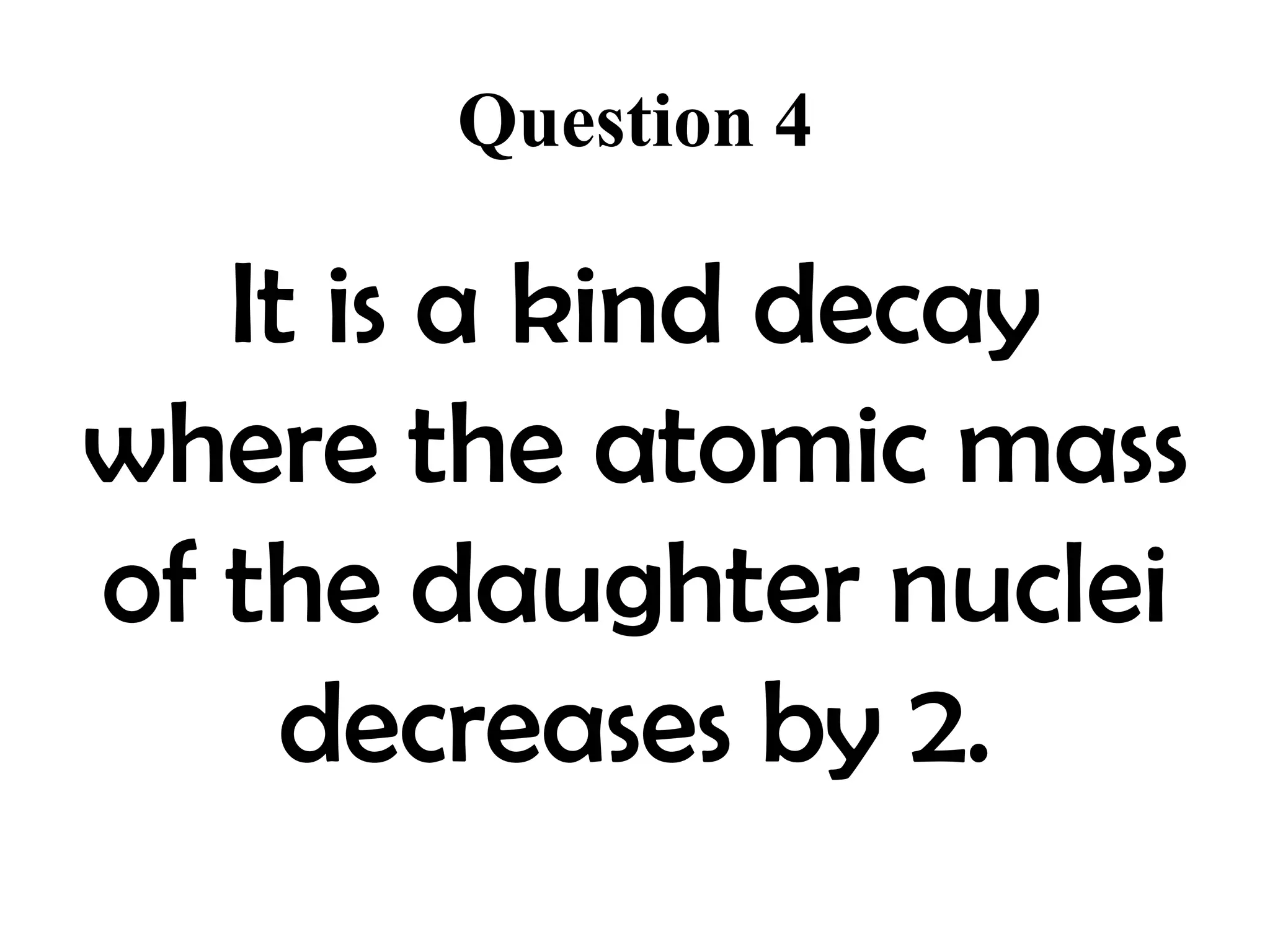
Question 4

   It is a kind decay
where the atomic mass
of the daughter nuclei
     decreases by 2.
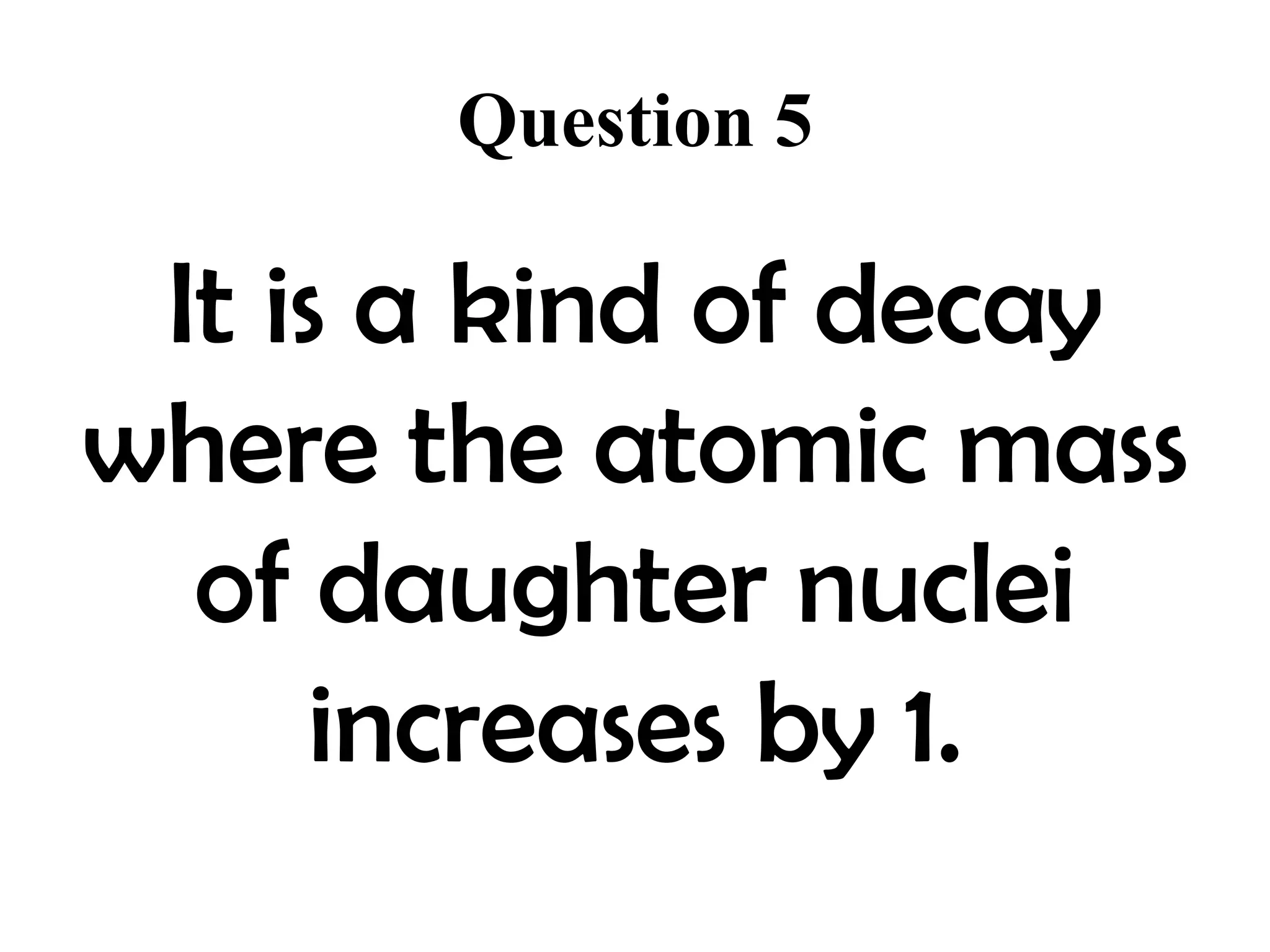
Question 5

 It is a kind of decay
where the atomic mass
  of daughter nuclei
      increases by 1.
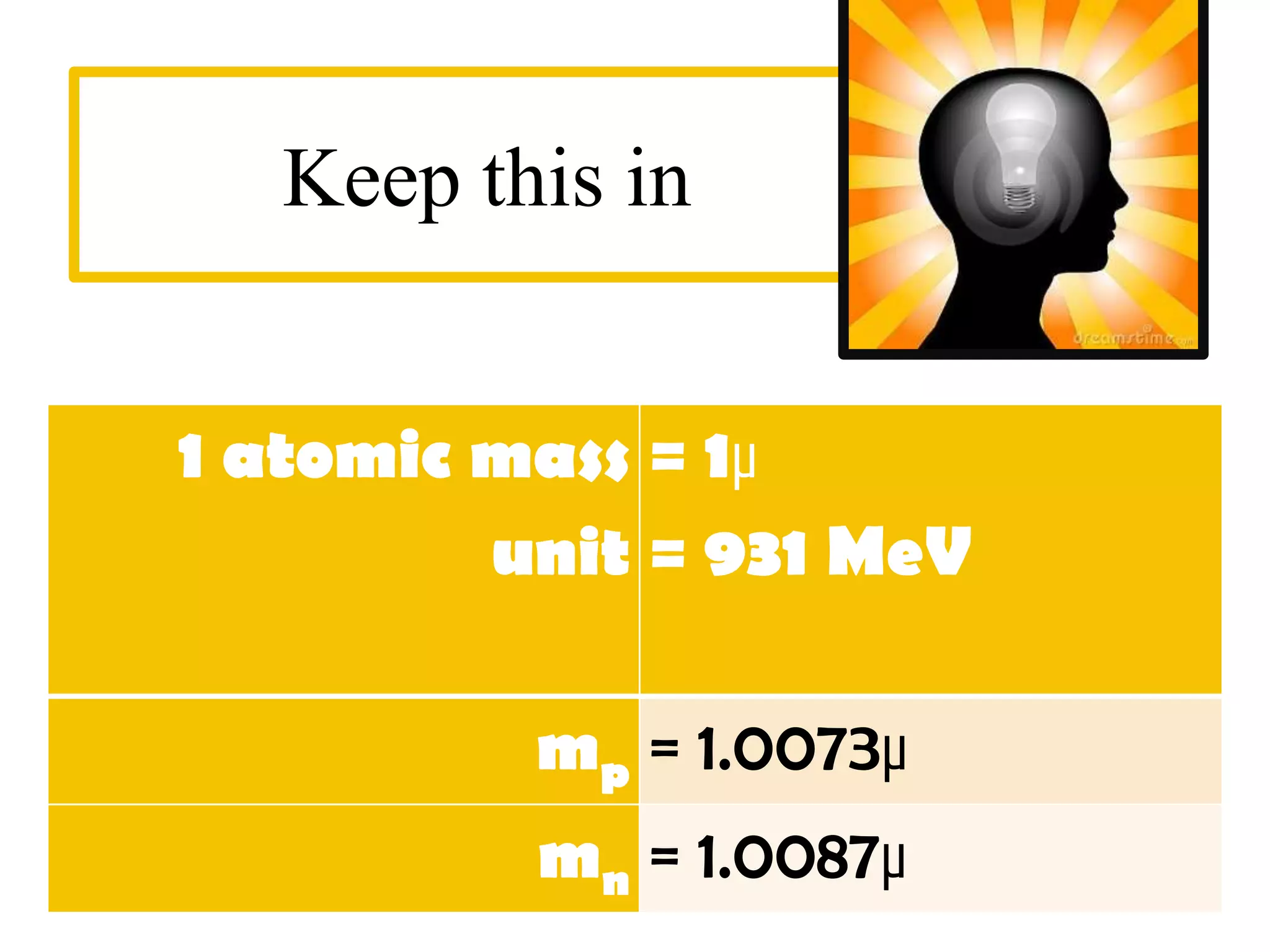
Keep this in


1 atomic mass = 1µ
         unit = 931 MeV

          mp = 1.0073µ
          mn = 1.0087µ
Alpha Decay
 of Uranium
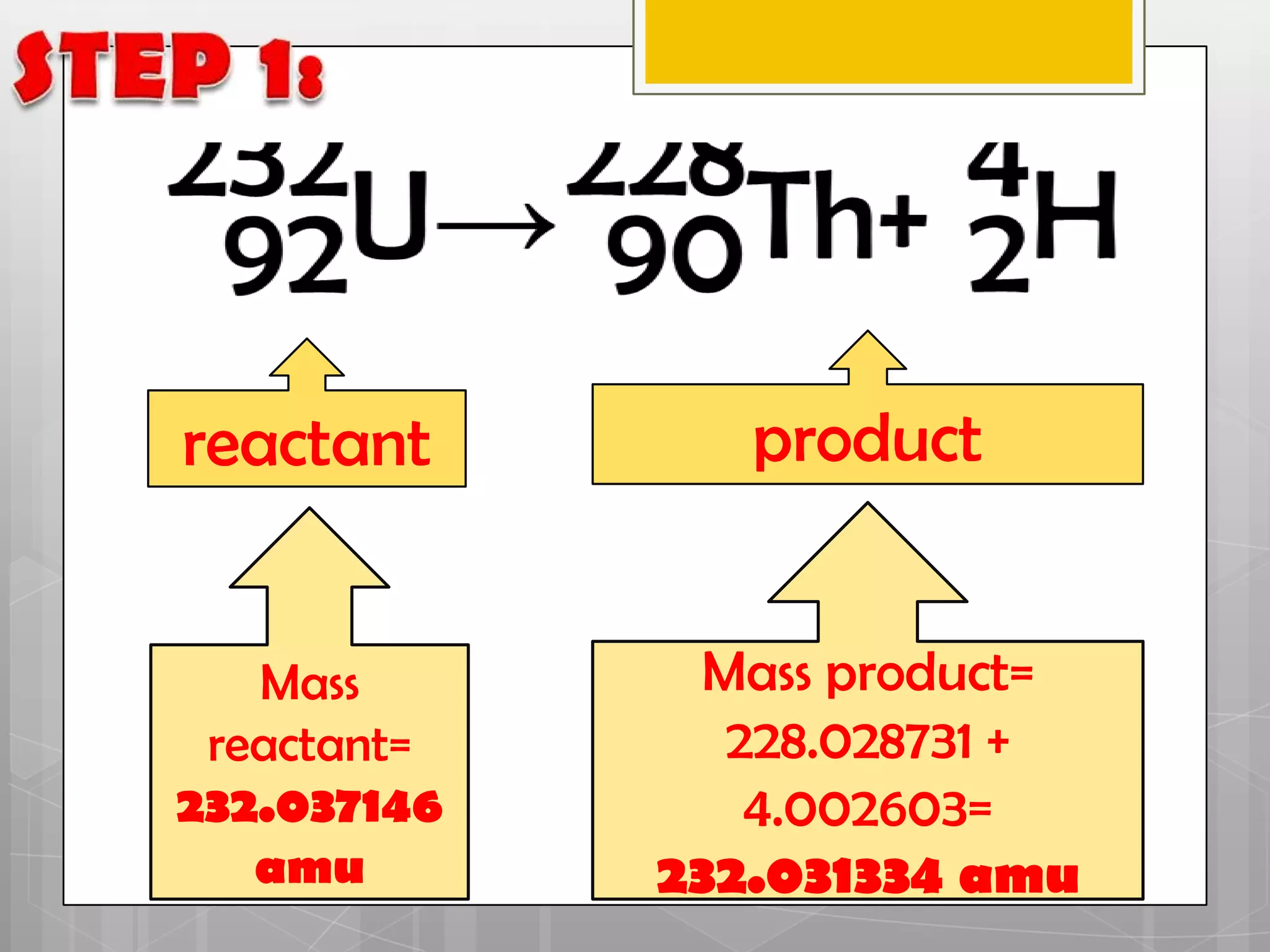
reactant        product


   Mass        Mass product=
 reactant=      228.028731 +
232.037146       4.002603=
   amu       232.031334 amu
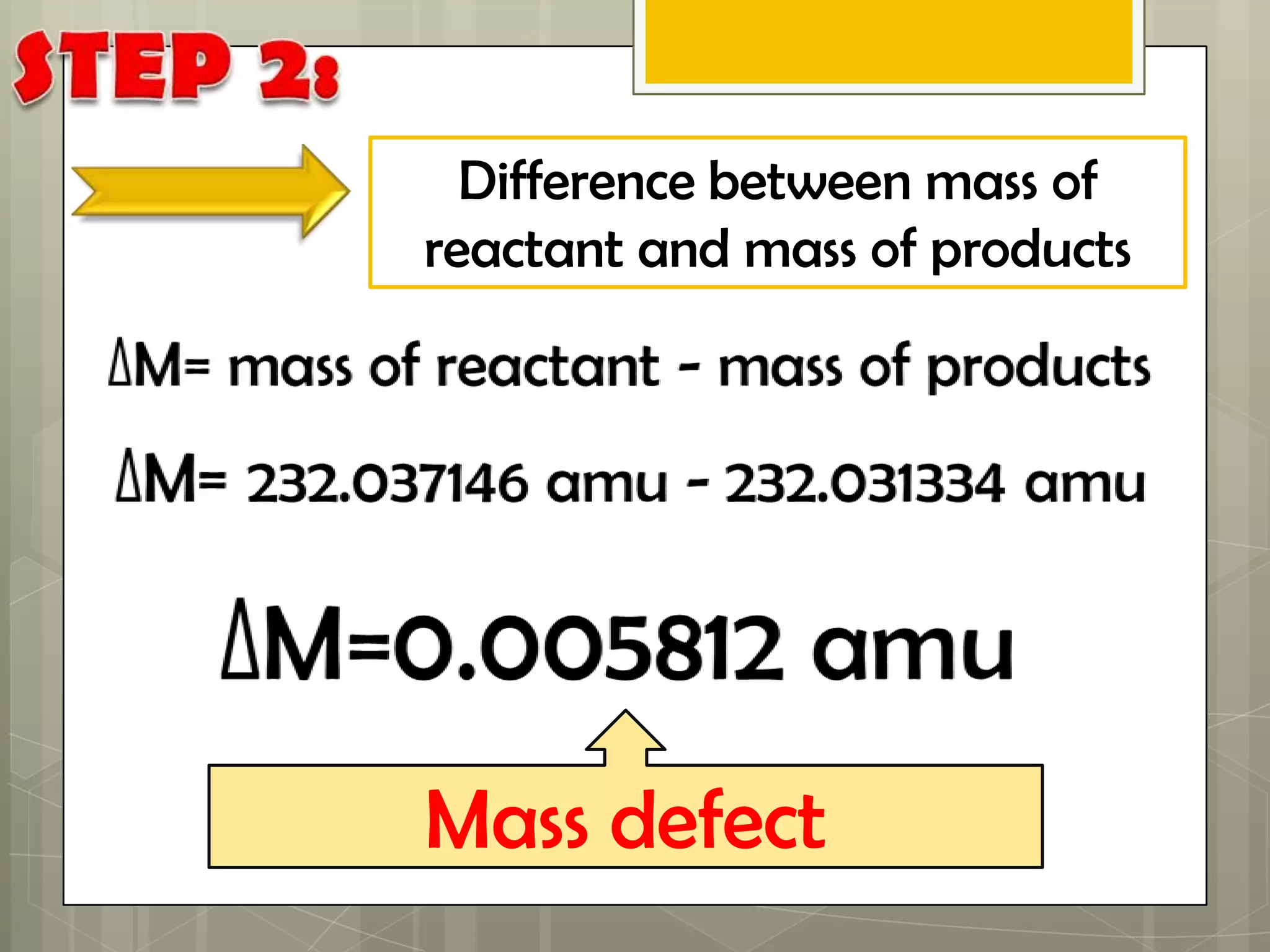
Difference between mass of
reactant and mass of products


Mass defect
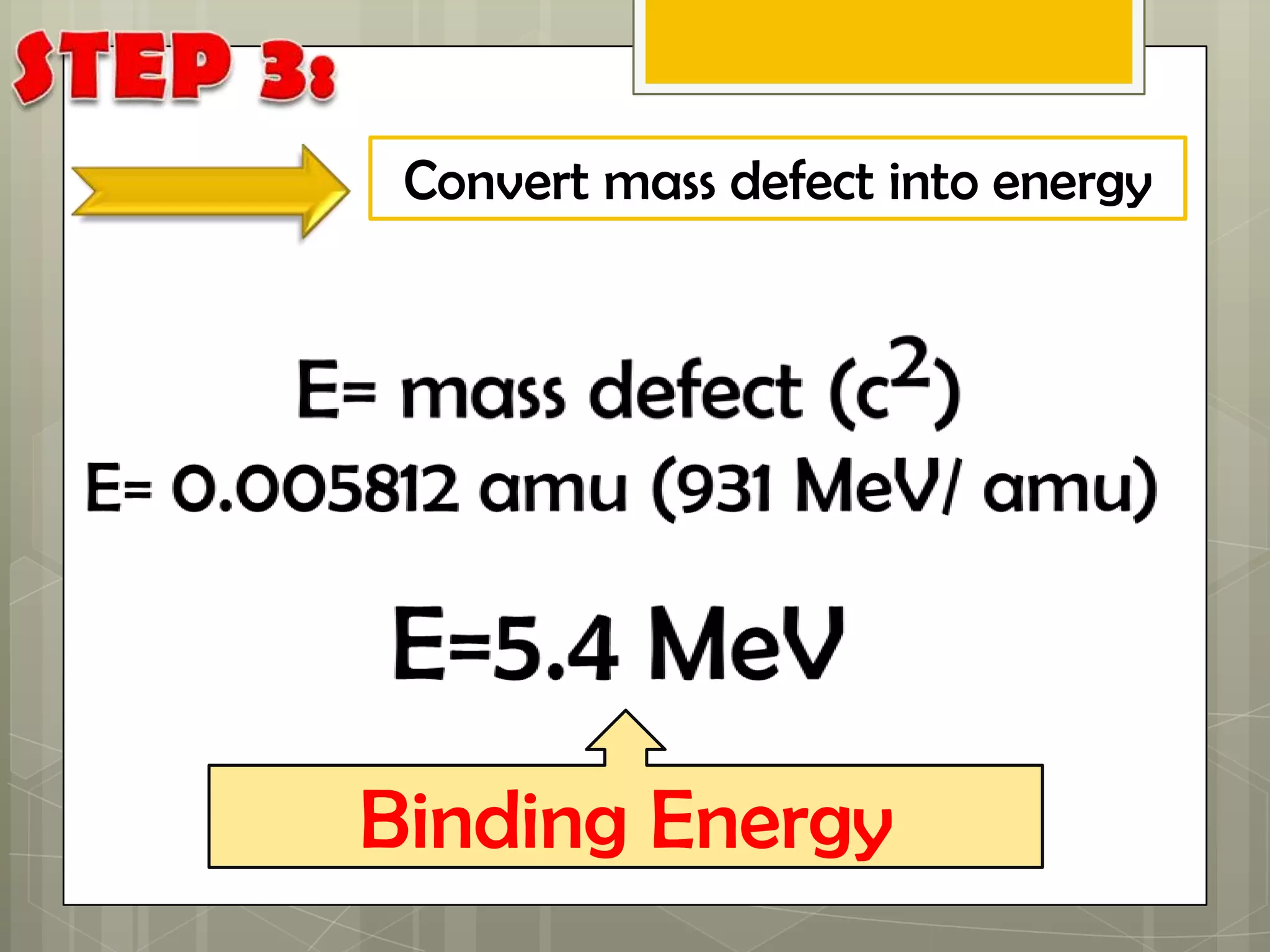
Convert mass defect into energy


Binding Energy
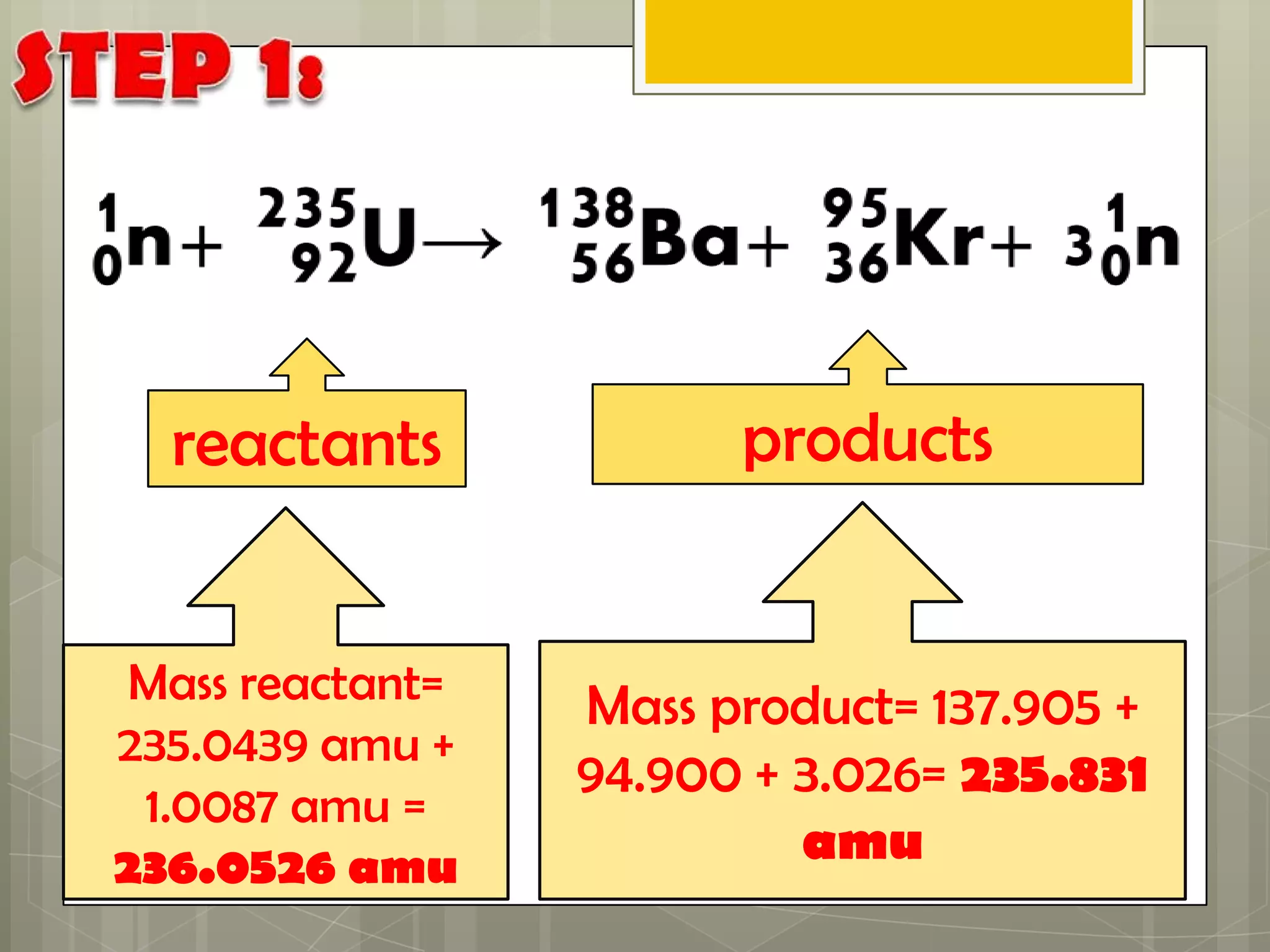
Fission of
Uranium
reactants             products


 Mass reactant=   Mass product= 137.905 +
235.0439 amu +
                  94.900 + 3.026= 235.831
 1.0087 amu =
236.0526 amu               amu
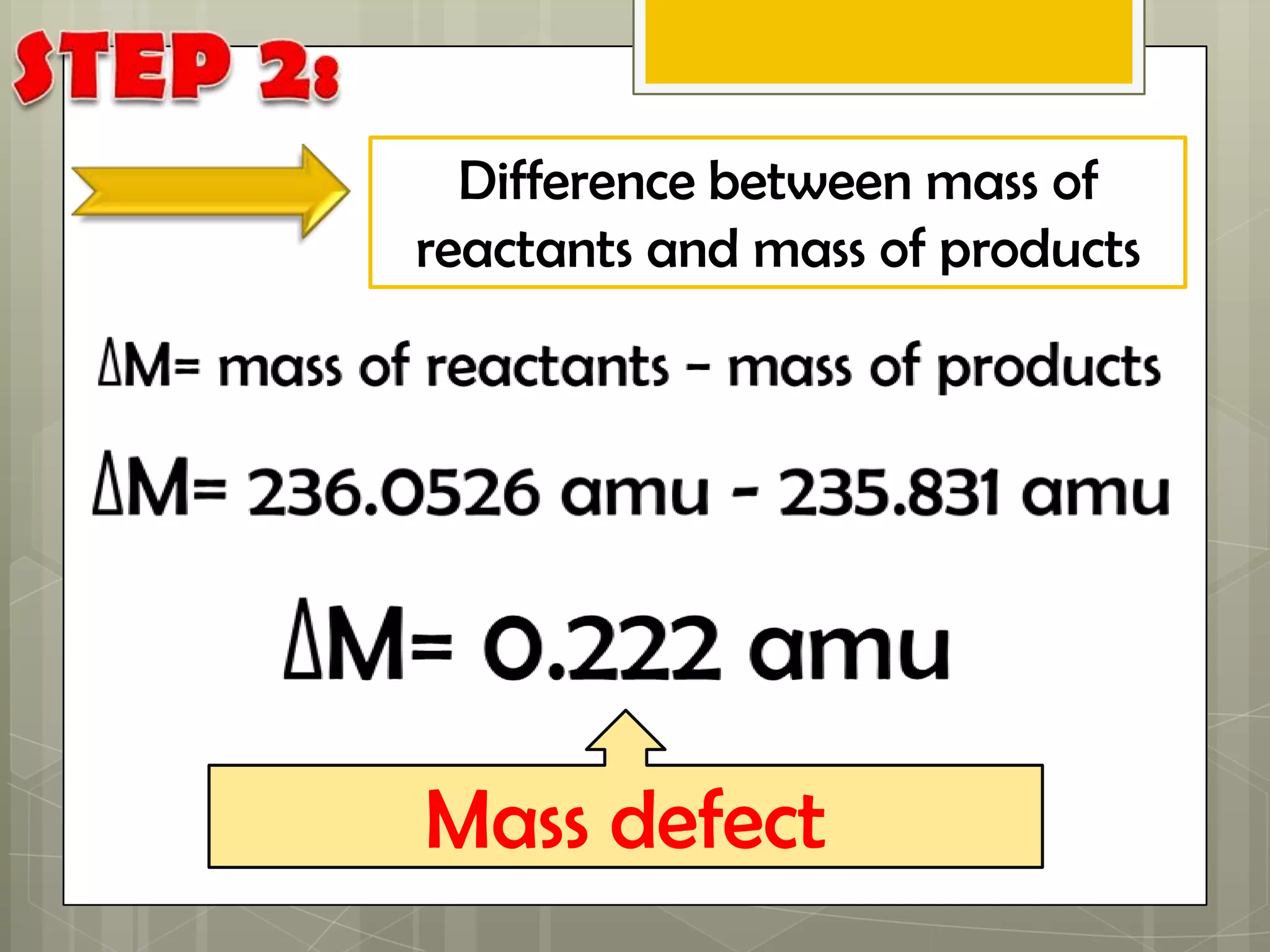
Difference between mass of
reactants and mass of products


Mass defect
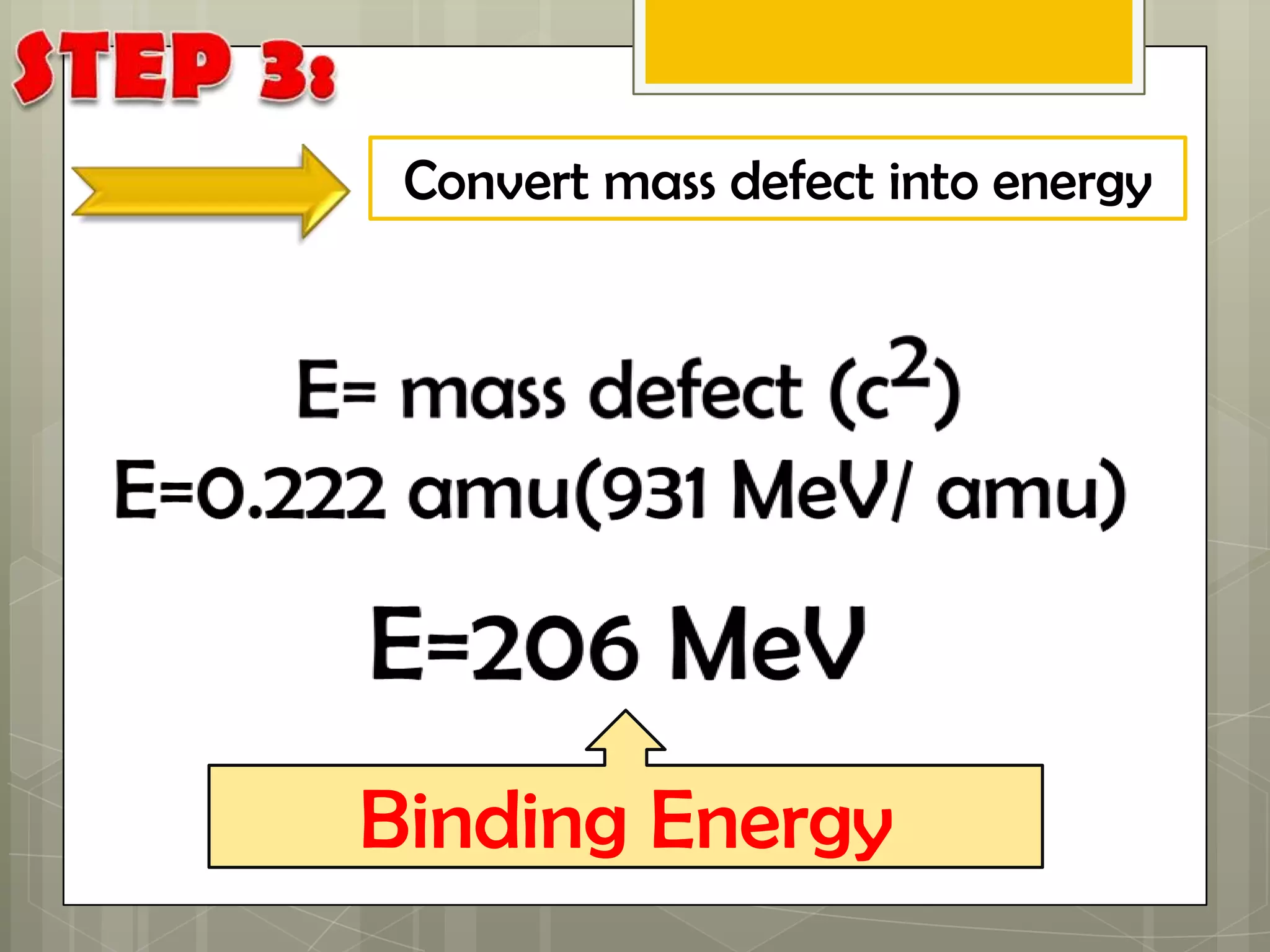
Convert mass defect into energy


Binding Energy
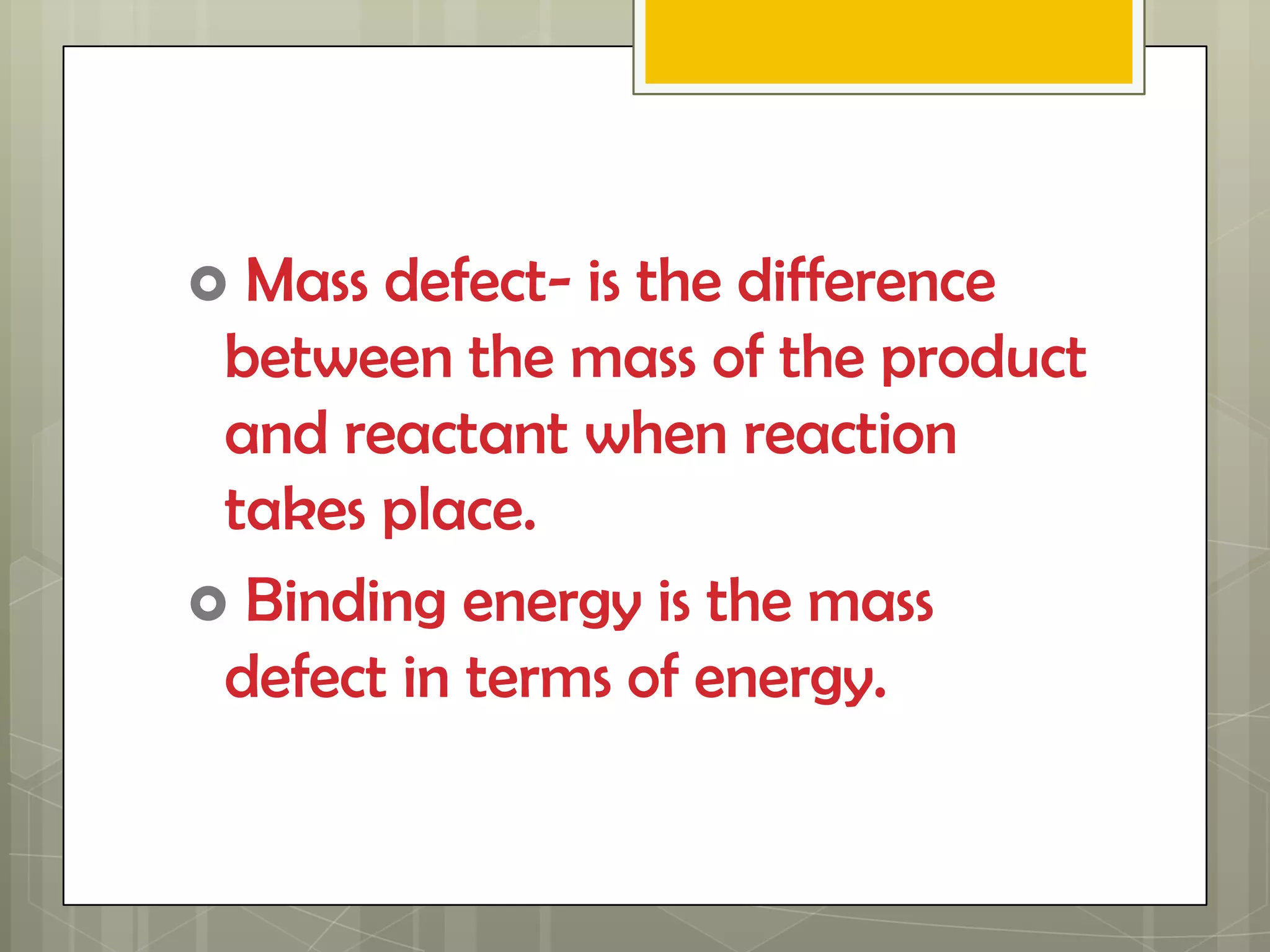
 Mass defect- is the difference
 between the mass of the product
 and reactant when reaction
 takes place.
 Binding energy is the mass
 defect in terms of energy.
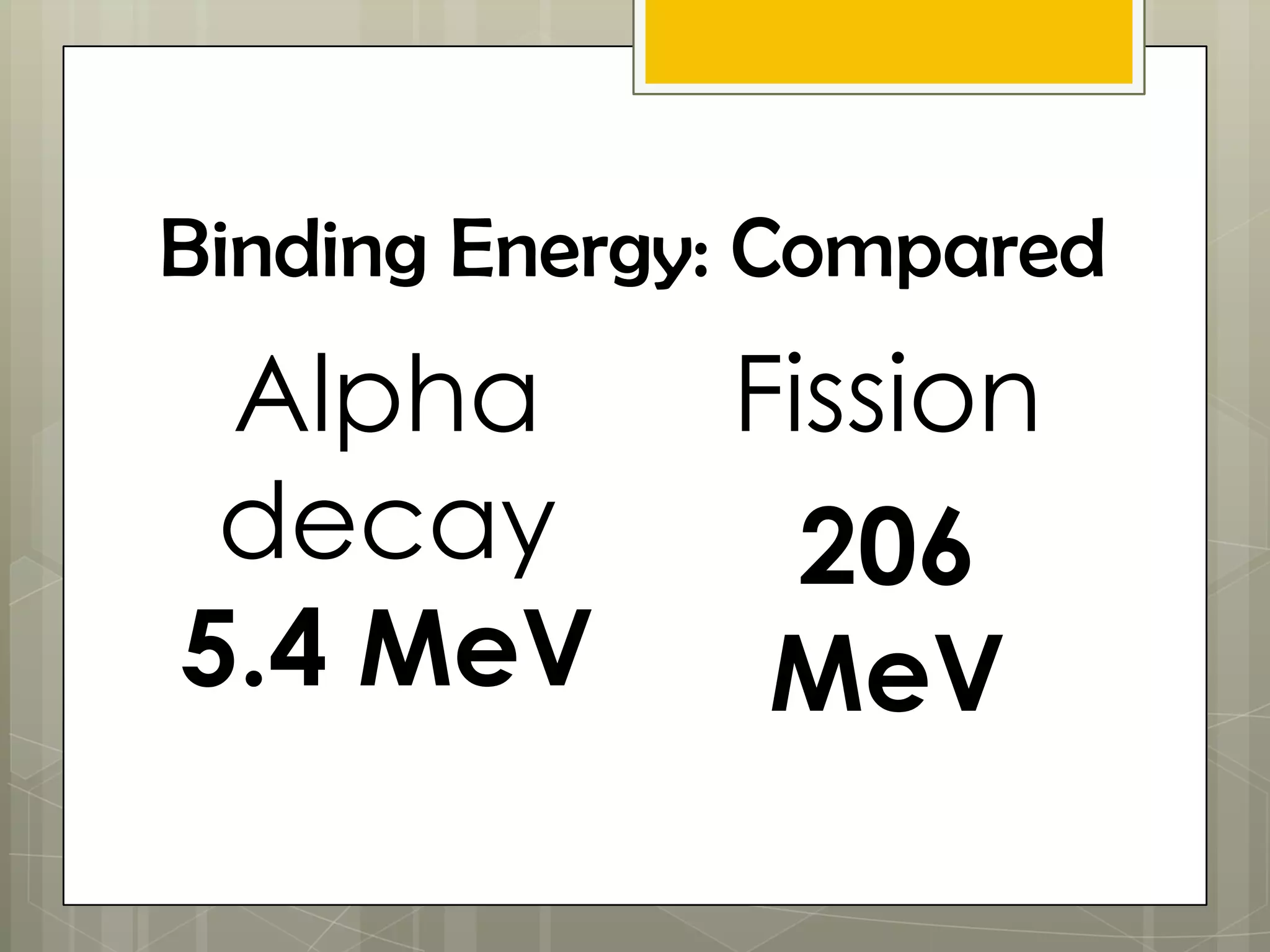
Binding Energy: Compared
 Alpha        Fission
 decay          206
5.4 MeV        MeV
“Where does the missing
  mass go in a fission
 reaction? What is the
  application of mass
  defect and Binding
       Energy?”
ASSIGNMENT
 Search for Bataan Nuclear
Power plant and explain why
 the Philippine Government
     does not operate it.
*Write your explanation on a
            ½ CW.

Mass defect and binding energy

  • 1.
    C G H D D F Q H Q D S G H E D M W O T A D S C A S H I D Y A D A Y D R R R F Z E Y L X R B A T I R F C P L E J M Y S T V R H T K N O I S U F R A L V R L F I S G P C X D W A Q O A A C W E R R Y M N D L
  • 2.
    Question 1 Unstable nuclei undergo this process to become stable.
  • 3.
    Question 2 It is a kind of decay where 2 smaller nuclei come together to form a more massive nucleus.
  • 4.
    Question 3 It is a kind of decay where 1 massive nucleus, separate when bombarded by a neutron.
  • 5.
    Question 4 It is a kind decay where the atomic mass of the daughter nuclei decreases by 2.
  • 6.
    Question 5 Itis a kind of decay where the atomic mass of daughter nuclei increases by 1.
  • 8.
    Keep this in 1atomic mass = 1µ unit = 931 MeV mp = 1.0073µ mn = 1.0087µ
  • 9.
  • 10.
    reactant product Mass Mass product= reactant= 228.028731 + 232.037146 4.002603= amu 232.031334 amu
  • 11.
    Difference between massof reactant and mass of products Mass defect
  • 12.
    Convert mass defectinto energy Binding Energy
  • 13.
  • 14.
    reactants products Mass reactant= Mass product= 137.905 + 235.0439 amu + 94.900 + 3.026= 235.831 1.0087 amu = 236.0526 amu amu
  • 15.
    Difference between massof reactants and mass of products Mass defect
  • 16.
    Convert mass defectinto energy Binding Energy
  • 17.
     Mass defect-is the difference between the mass of the product and reactant when reaction takes place.  Binding energy is the mass defect in terms of energy.
  • 18.
    Binding Energy: Compared Alpha Fission decay 206 5.4 MeV MeV
  • 19.
    “Where does themissing mass go in a fission reaction? What is the application of mass defect and Binding Energy?”
  • 20.
    ASSIGNMENT Search forBataan Nuclear Power plant and explain why the Philippine Government does not operate it. *Write your explanation on a ½ CW.