Chapter 2 Research Problems Mary Ersinghaus New Mexico State University
Highlights of Chapter 2 Research problem statements Quantitative research problems Qualitative research problems ...and questions we still have
3-2-1 List  3  concepts from this chapter that you think are the most important. List  2  things from this chapter that will be most useful to you. List  1  question you still have about the ideas in this chapter.
Sources of Research Problems Personal interests Current issues and problems as identified by professionals Current books or journals Apply theory Replication Clarification
Research Problem Statement Discussion question: “ How is it possible for a research problem to be too specific? (McMillan, 2008, p. 52)  How would you balance between being too specific or too general in writing the research statement?” http://www.youtube.com/watch?v=Z1yJEOtLsb8&feature=channel Start at 1:55
Quantitative Research Problems Three specific elements are identified: Type of research - description, comparison, relationship or difference, cause and effect Variables - relationships between or among variables Subjects -  population involved in the study
Qualitative Research Problems Focus on the study of a central phenomena (i.e., issues or processes) Examples of issues Drop out rates in high schools Lack of recess and increased disruptive classroom behavior Examples of processes How teachers communicate with students' parents How students perceive a teacher's care or lack of care
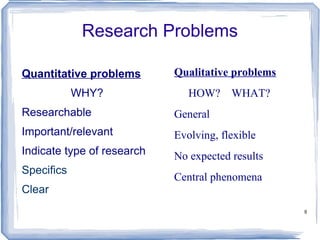
Research Problems Quantitative problems WHY? Researchable Important/relevant Indicate type of research Specifics Clear Qualitative problems HOW?  WHAT?  General Evolving, flexible No expected results Central phenomena
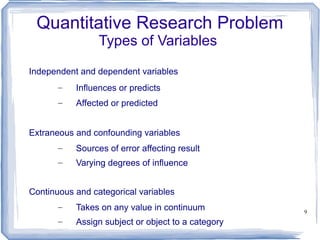
Quantitative Research Problem Types of Variables  Independent and dependent variables Influences or predicts Affected or predicted Extraneous and confounding variables Sources of error affecting result Varying degrees of influence Continuous and categorical variables Takes on any value in continuum Assign subject or object to a category
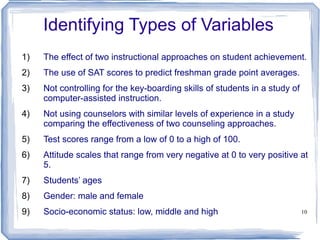
Identifying Types of Variables The effect of two instructional approaches on student achievement. The use of SAT scores to predict freshman grade point averages. Not controlling for the key-boarding skills of students in a study of computer-assisted instruction. Not using counselors with similar levels of experience in a study comparing the effectiveness of two counseling approaches. Test scores range from a low of 0 to a high of 100. Attitude scales that range from very negative at 0 to very positive at 5. Students’ ages Gender: male and female Socio-economic status: low, middle and high
Research Hypotheses Discussion question: “ In what types of situations is it appropriate to use research hypotheses? Is it more related to quantitative or qualitative research? Why?”
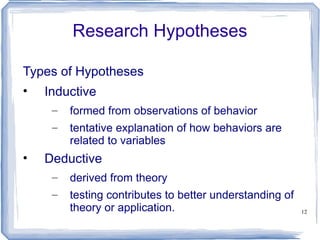
Research Hypotheses Types of Hypotheses Inductive formed from observations of behavior tentative explanation of how behaviors are related to variables Deductive  derived from theory testing contributes to better understanding of theory or application.
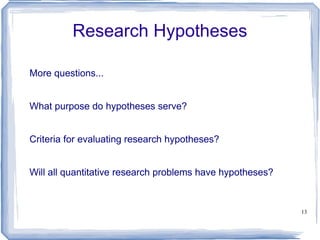
Research Hypotheses More questions... What purpose do hypotheses serve? Criteria for evaluating research hypotheses? Will all quantitative research problems have hypotheses?
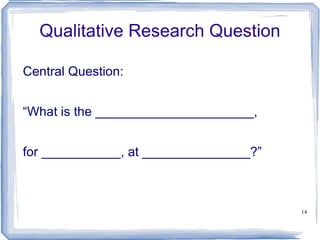
Qualitative Research Question Central Question: “ What is the ______________________, for ___________, at _______________?”
JEOPARDY!

Mary ch2 presentation

  • 1.
    Chapter 2 ResearchProblems Mary Ersinghaus New Mexico State University
  • 2.
    Highlights of Chapter2 Research problem statements Quantitative research problems Qualitative research problems ...and questions we still have
  • 3.
    3-2-1 List 3 concepts from this chapter that you think are the most important. List 2 things from this chapter that will be most useful to you. List 1 question you still have about the ideas in this chapter.
  • 4.
    Sources of ResearchProblems Personal interests Current issues and problems as identified by professionals Current books or journals Apply theory Replication Clarification
  • 5.
    Research Problem StatementDiscussion question: “ How is it possible for a research problem to be too specific? (McMillan, 2008, p. 52) How would you balance between being too specific or too general in writing the research statement?” http://www.youtube.com/watch?v=Z1yJEOtLsb8&feature=channel Start at 1:55
  • 6.
    Quantitative Research ProblemsThree specific elements are identified: Type of research - description, comparison, relationship or difference, cause and effect Variables - relationships between or among variables Subjects - population involved in the study
  • 7.
    Qualitative Research ProblemsFocus on the study of a central phenomena (i.e., issues or processes) Examples of issues Drop out rates in high schools Lack of recess and increased disruptive classroom behavior Examples of processes How teachers communicate with students' parents How students perceive a teacher's care or lack of care
  • 8.
    Research Problems Quantitativeproblems WHY? Researchable Important/relevant Indicate type of research Specifics Clear Qualitative problems HOW? WHAT? General Evolving, flexible No expected results Central phenomena
  • 9.
    Quantitative Research ProblemTypes of Variables Independent and dependent variables Influences or predicts Affected or predicted Extraneous and confounding variables Sources of error affecting result Varying degrees of influence Continuous and categorical variables Takes on any value in continuum Assign subject or object to a category
  • 10.
    Identifying Types ofVariables The effect of two instructional approaches on student achievement. The use of SAT scores to predict freshman grade point averages. Not controlling for the key-boarding skills of students in a study of computer-assisted instruction. Not using counselors with similar levels of experience in a study comparing the effectiveness of two counseling approaches. Test scores range from a low of 0 to a high of 100. Attitude scales that range from very negative at 0 to very positive at 5. Students’ ages Gender: male and female Socio-economic status: low, middle and high
  • 11.
    Research Hypotheses Discussionquestion: “ In what types of situations is it appropriate to use research hypotheses? Is it more related to quantitative or qualitative research? Why?”
  • 12.
    Research Hypotheses Typesof Hypotheses Inductive formed from observations of behavior tentative explanation of how behaviors are related to variables Deductive derived from theory testing contributes to better understanding of theory or application.
  • 13.
    Research Hypotheses Morequestions... What purpose do hypotheses serve? Criteria for evaluating research hypotheses? Will all quantitative research problems have hypotheses?
  • 14.
    Qualitative Research QuestionCentral Question: “ What is the ______________________, for ___________, at _______________?”
  • 15.