TYPES OF RESEARCH
Chapter 1
Naturalistic Observation
Observing behavior in a “natural”
environment
Often involves counting
behaviors, such as number of
aggressive acts, number of
smiles, etc.
Advantages
Behavior is naturally occurring
and is not manipulated by a
researcher
Can offer qualitative data, not just
quantitative information
Limitations
 The presence of someone observing
can cause those being observed to
alter behavior.
 Researcher’s beliefs can also alter
their observations
 Difficult to coordinate multiple
observers since observed behavior
must be operationally defined (e.g.
what constitutes an aggressive act)
Case Study
Following a single case, typically
over an extended period of time.
This can involve naturalistic
observations, and include
psychological testing, interviews,
and the application of a
treatment.
Advantages
Can gather extensive information,
both qualitative and quantitative
Can be helpful in better
understanding rare cases or very
specific interventions.
Limitations
Only one case is involved, severely
limiting the generalization to the rest of the
population.
Can be very time consuming and can
involve other problems specific to the
techniques used, including researcher
bias
Survey
Questionnaires are often used to gather
opinions.
Advantages
Can gather large amounts of information
in a relatively short time, especially now
with many surveys being conducted online
Limitations
People may not be truthful or accurate on
surveys or questionnaires.
Correlational Studies
Correlation means relationship, so the
purpose of a correlational study is to
determine if a relationship exists, what
direction the relationship is, and how
strong it is. For example: Is there a
relationship between amount of time
dedicated to studying and overall GPA?
Advantages
Can assess the strength of a relationship
Is popular with lay population because it is
relatively easy to explain and understand
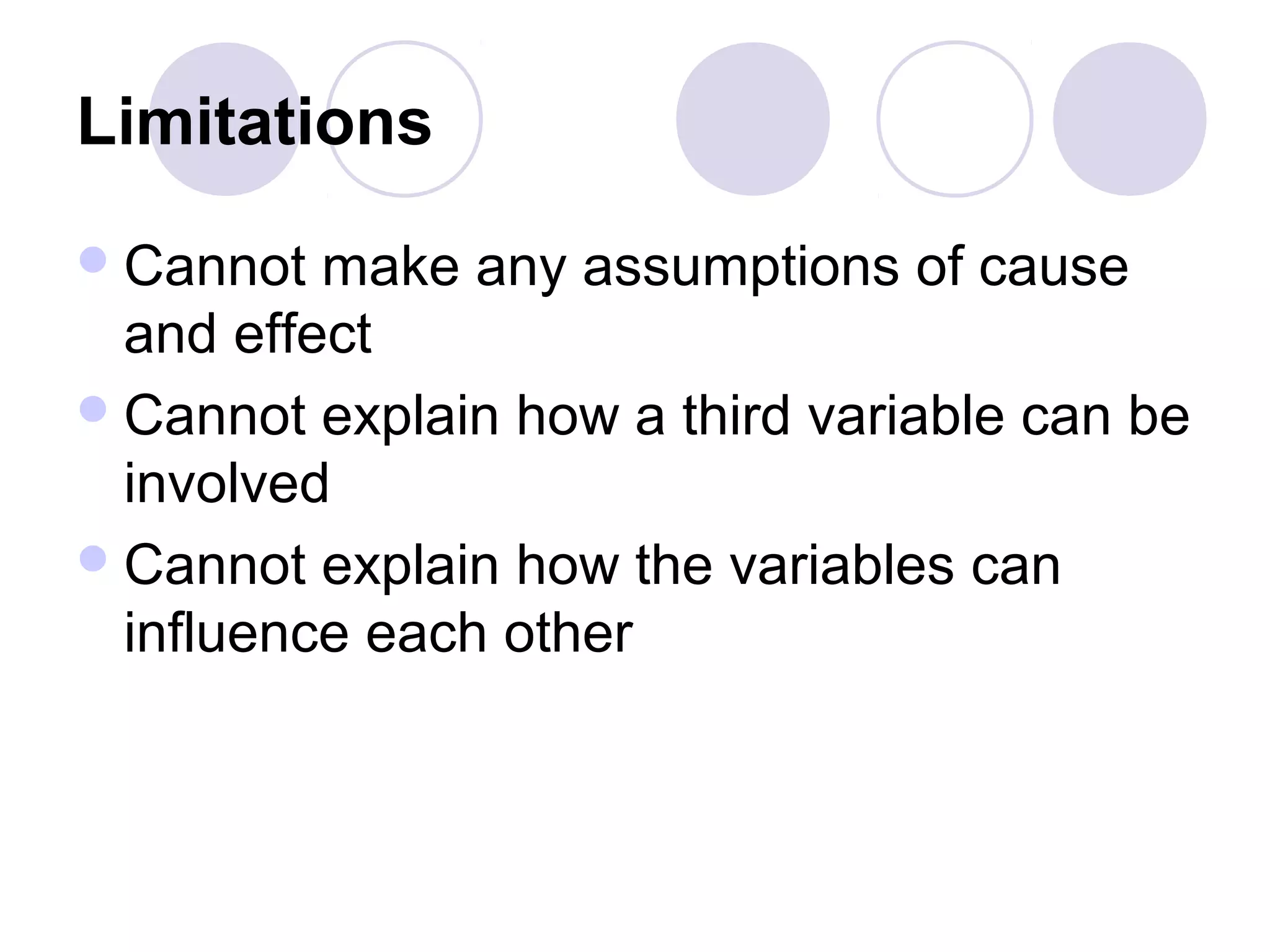
Limitations
Cannot make any assumptions of cause
and effect
Cannot explain how a third variable can be
involved
Cannot explain how the variables can
influence each other
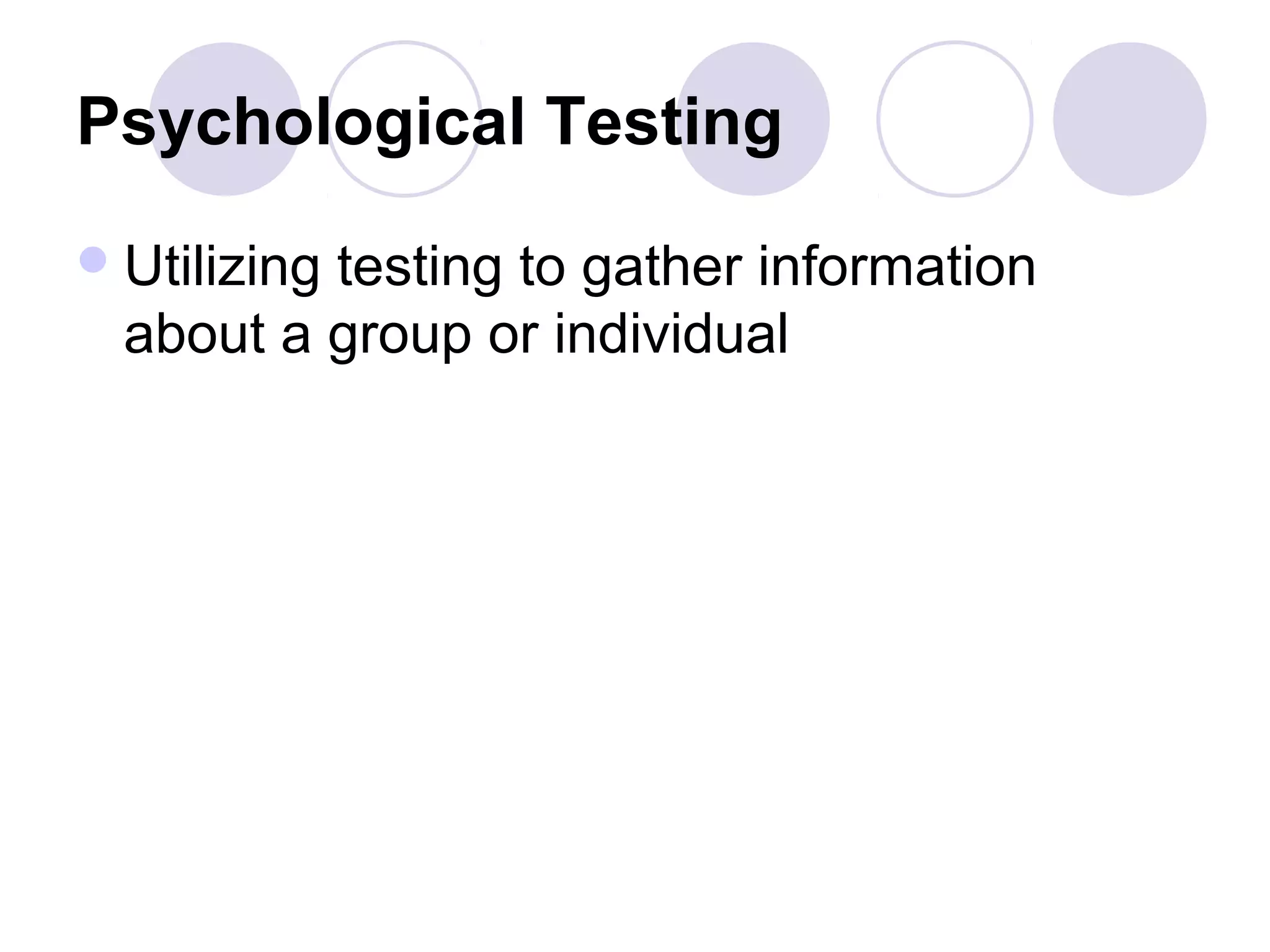
Psychological Testing
Utilizing testing to gather information
about a group or individual
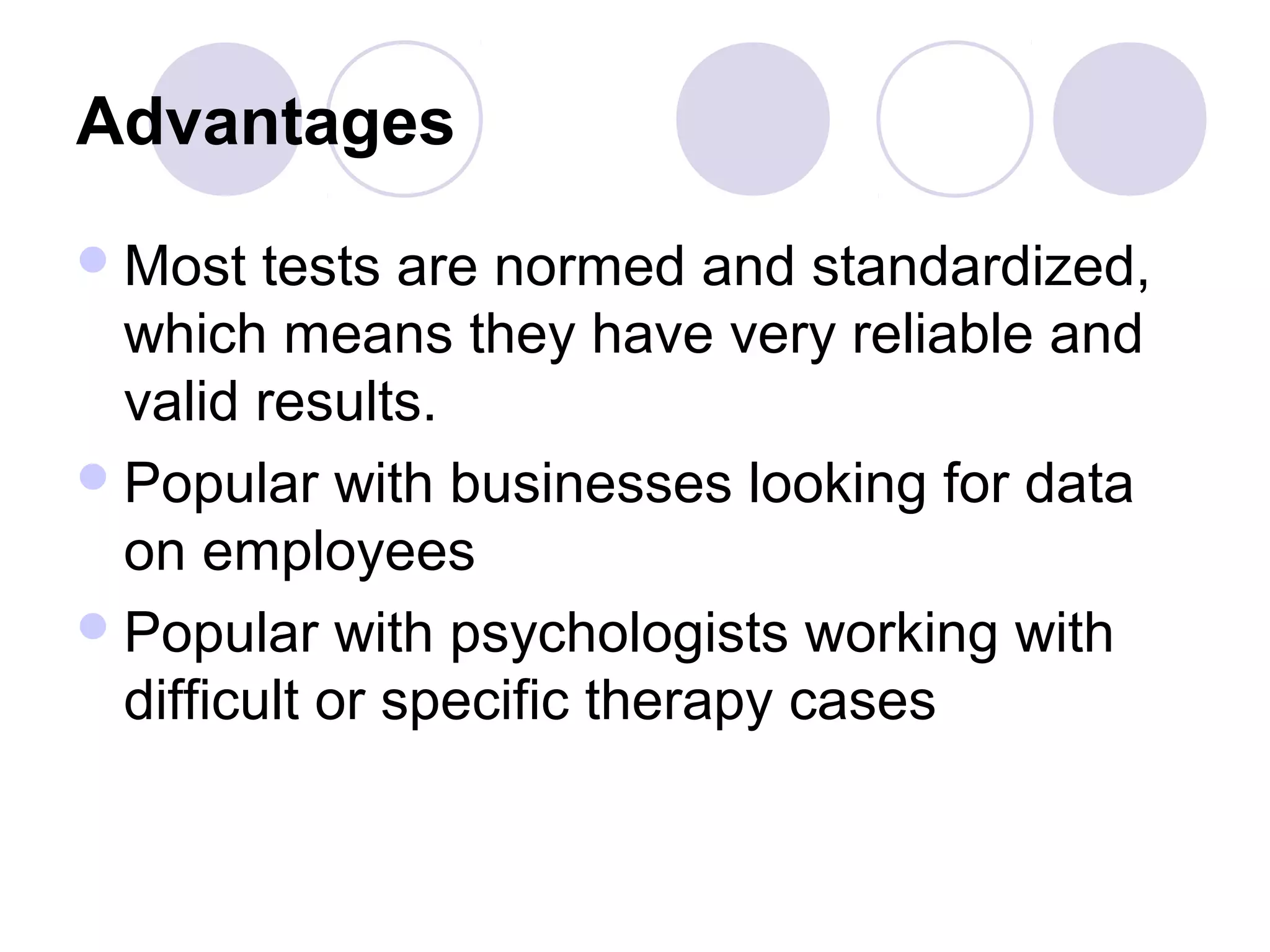
Advantages
Most tests are normed and standardized,
which means they have very reliable and
valid results.
Popular with businesses looking for data
on employees
Popular with psychologists working with
difficult or specific therapy cases
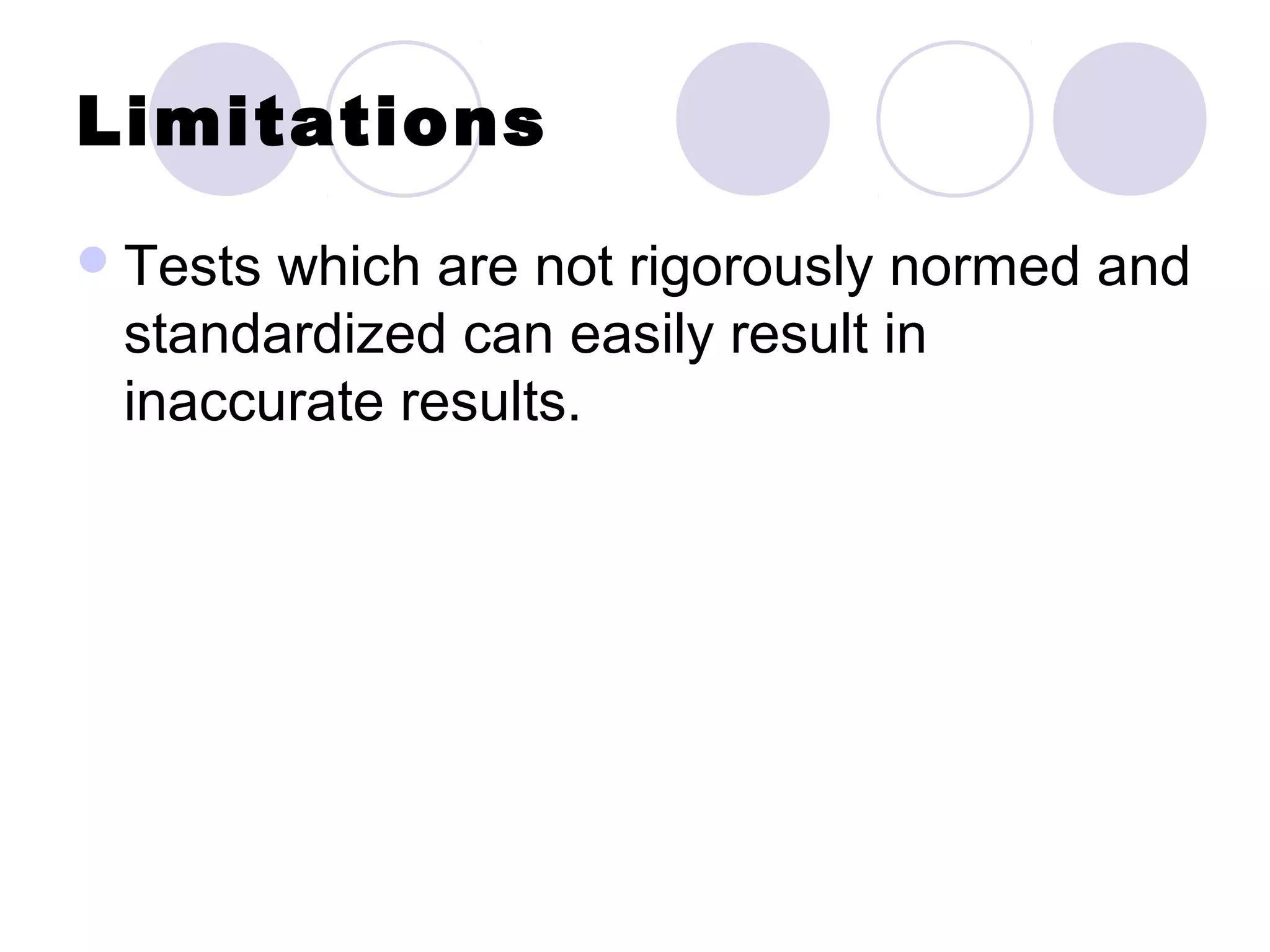
Limitations
Tests which are not rigorously normed and
standardized can easily result in
inaccurate results.

Types of research

  • 1.
  • 2.
    Naturalistic Observation Observing behaviorin a “natural” environment Often involves counting behaviors, such as number of aggressive acts, number of smiles, etc.
  • 3.
    Advantages Behavior is naturallyoccurring and is not manipulated by a researcher Can offer qualitative data, not just quantitative information
  • 4.
    Limitations  The presenceof someone observing can cause those being observed to alter behavior.  Researcher’s beliefs can also alter their observations  Difficult to coordinate multiple observers since observed behavior must be operationally defined (e.g. what constitutes an aggressive act)
  • 5.
    Case Study Following asingle case, typically over an extended period of time. This can involve naturalistic observations, and include psychological testing, interviews, and the application of a treatment.
  • 6.
    Advantages Can gather extensiveinformation, both qualitative and quantitative Can be helpful in better understanding rare cases or very specific interventions.
  • 7.
    Limitations Only one caseis involved, severely limiting the generalization to the rest of the population. Can be very time consuming and can involve other problems specific to the techniques used, including researcher bias
  • 8.
    Survey Questionnaires are oftenused to gather opinions.
  • 9.
    Advantages Can gather largeamounts of information in a relatively short time, especially now with many surveys being conducted online
  • 10.
    Limitations People may notbe truthful or accurate on surveys or questionnaires.
  • 11.
    Correlational Studies Correlation meansrelationship, so the purpose of a correlational study is to determine if a relationship exists, what direction the relationship is, and how strong it is. For example: Is there a relationship between amount of time dedicated to studying and overall GPA?
  • 12.
    Advantages Can assess thestrength of a relationship Is popular with lay population because it is relatively easy to explain and understand
  • 13.
    Limitations Cannot make anyassumptions of cause and effect Cannot explain how a third variable can be involved Cannot explain how the variables can influence each other
  • 14.
    Psychological Testing Utilizing testingto gather information about a group or individual
  • 15.
    Advantages Most tests arenormed and standardized, which means they have very reliable and valid results. Popular with businesses looking for data on employees Popular with psychologists working with difficult or specific therapy cases
  • 16.
    Limitations Tests which arenot rigorously normed and standardized can easily result in inaccurate results.