Market
Equilibrium
T- 1-855-694-8886
Email- info@iTutor.com
By iTutor.com
Supply and Demand Together
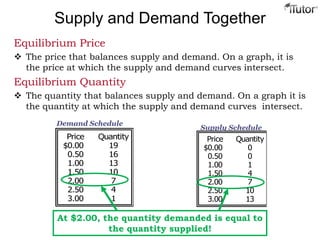
Equilibrium Price
 The price that balances supply and demand. On a graph, it is
the price at which the supply and demand curves intersect.
Equilibrium Quantity
 The quantity that balances supply and demand. On a graph it is
the quantity at which the supply and demand curves intersect.
Price Quantity
$0.00 0
0.50 0
1.00 1
1.50 4
2.00 7
2.50 10
3.00 13
Price Quantity
$0.00 19
0.50 16
1.00 13
1.50 10
2.00 7
2.50 4
3.00 1
Demand Schedule
Supply Schedule
At $2.00, the quantity demanded is equal to
the quantity supplied!
Market Equilibrium
 A market brings together those who are willing and able to supply
the good and those who are willing and able to purchase the good.
 In a competitive market, where there are many buyers and sellers,
the price of the good serves as a rationing mechanism.
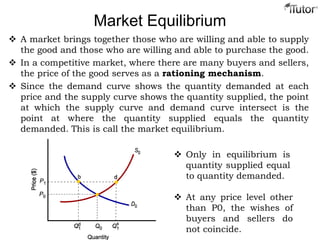
 Since the demand curve shows the quantity demanded at each
price and the supply curve shows the quantity supplied, the point
at which the supply curve and demand curve intersect is the
point at where the quantity supplied equals the quantity
demanded. This is call the market equilibrium.
 Only in equilibrium is
quantity supplied equal
to quantity demanded.
 At any price level other
than P0, the wishes of
buyers and sellers do
not coincide.
Consumer
Surplus
Consumer Surplus
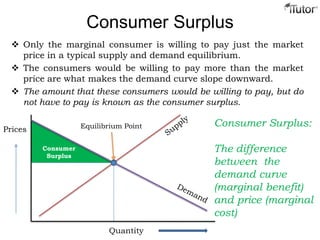
 Only the marginal consumer is willing to pay just the market
price in a typical supply and demand equilibrium.
 The consumers would be willing to pay more than the market
price are what makes the demand curve slope downward.
 The amount that these consumers would be willing to pay, but do
not have to pay is known as the consumer surplus.
Quantity
Prices
Consumer Surplus:
The difference
between the
demand curve
(marginal benefit)
and price (marginal
cost)
Equilibrium Point
Producer Surplus
 The marginal cost of producing a good is represented by the
supply curve.
 The price received by the sale of the good would be the marginal
benefit to the producer, so the difference between the price and
the supply curve is the producer surplus.
Quantity
Prices Equilibrium Point
Producer
surplus
Producer surplus:-The
difference between the
price (marginal benefit)
and the supply curve
(marginal cost).
Market Disequilibria
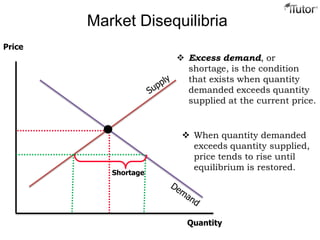
 Excess demand, or
shortage, is the condition
that exists when quantity
demanded exceeds quantity
supplied at the current price.
 When quantity demanded
exceeds quantity supplied,
price tends to rise until
equilibrium is restored.
Shortage
Price
Quantity
 Excess supply, or surplus,
is the condition that exists
when quantity supplied
exceeds quantity demanded
at the current price.
 When quantity supplied exceeds
quantity demanded, price tends
to fall until equilibrium is
restored.
Surplus
Price
Quantity
Market Disequilibria
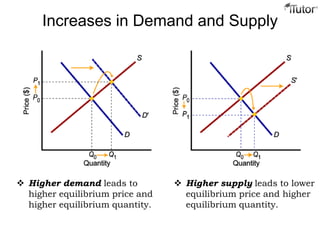
Increases in Demand and Supply
 Higher demand leads to
higher equilibrium price and
higher equilibrium quantity.
 Higher supply leads to lower
equilibrium price and higher
equilibrium quantity.
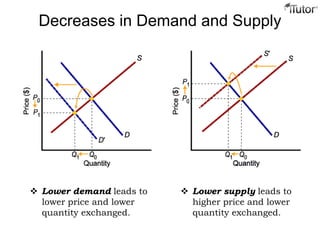
Decreases in Demand and Supply
 Lower demand leads to
lower price and lower
quantity exchanged.
 Lower supply leads to
higher price and lower
quantity exchanged.
The End
Visit www.iTutor.com
For more information call us
1-855-694-8886

Market Equilibrium

  • 1.
  • 2.
    Supply and DemandTogether Equilibrium Price  The price that balances supply and demand. On a graph, it is the price at which the supply and demand curves intersect. Equilibrium Quantity  The quantity that balances supply and demand. On a graph it is the quantity at which the supply and demand curves intersect. Price Quantity $0.00 0 0.50 0 1.00 1 1.50 4 2.00 7 2.50 10 3.00 13 Price Quantity $0.00 19 0.50 16 1.00 13 1.50 10 2.00 7 2.50 4 3.00 1 Demand Schedule Supply Schedule At $2.00, the quantity demanded is equal to the quantity supplied!
  • 3.
    Market Equilibrium  Amarket brings together those who are willing and able to supply the good and those who are willing and able to purchase the good.  In a competitive market, where there are many buyers and sellers, the price of the good serves as a rationing mechanism.  Since the demand curve shows the quantity demanded at each price and the supply curve shows the quantity supplied, the point at which the supply curve and demand curve intersect is the point at where the quantity supplied equals the quantity demanded. This is call the market equilibrium.  Only in equilibrium is quantity supplied equal to quantity demanded.  At any price level other than P0, the wishes of buyers and sellers do not coincide.
  • 4.
    Consumer Surplus Consumer Surplus  Onlythe marginal consumer is willing to pay just the market price in a typical supply and demand equilibrium.  The consumers would be willing to pay more than the market price are what makes the demand curve slope downward.  The amount that these consumers would be willing to pay, but do not have to pay is known as the consumer surplus. Quantity Prices Consumer Surplus: The difference between the demand curve (marginal benefit) and price (marginal cost) Equilibrium Point
  • 5.
    Producer Surplus  Themarginal cost of producing a good is represented by the supply curve.  The price received by the sale of the good would be the marginal benefit to the producer, so the difference between the price and the supply curve is the producer surplus. Quantity Prices Equilibrium Point Producer surplus Producer surplus:-The difference between the price (marginal benefit) and the supply curve (marginal cost).
  • 6.
    Market Disequilibria  Excessdemand, or shortage, is the condition that exists when quantity demanded exceeds quantity supplied at the current price.  When quantity demanded exceeds quantity supplied, price tends to rise until equilibrium is restored. Shortage Price Quantity
  • 7.
     Excess supply,or surplus, is the condition that exists when quantity supplied exceeds quantity demanded at the current price.  When quantity supplied exceeds quantity demanded, price tends to fall until equilibrium is restored. Surplus Price Quantity Market Disequilibria
  • 8.
    Increases in Demandand Supply  Higher demand leads to higher equilibrium price and higher equilibrium quantity.  Higher supply leads to lower equilibrium price and higher equilibrium quantity.
  • 9.
    Decreases in Demandand Supply  Lower demand leads to lower price and lower quantity exchanged.  Lower supply leads to higher price and lower quantity exchanged.
  • 10.
    The End Visit www.iTutor.com Formore information call us 1-855-694-8886