
PRESENTED BY-
SOMYA GOEL
SHIFT IN SUPPLY
CURVE
INCREASE AND DECREASE IN QUANTITY
SUPPLY
 Shift in supply curve refers to a situation of
increase or decrease in quantity supplied of a
commodity even when own price of the
commodity remains constant. It is caused by
factors, other than own price of the commodity.
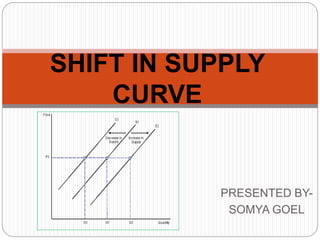
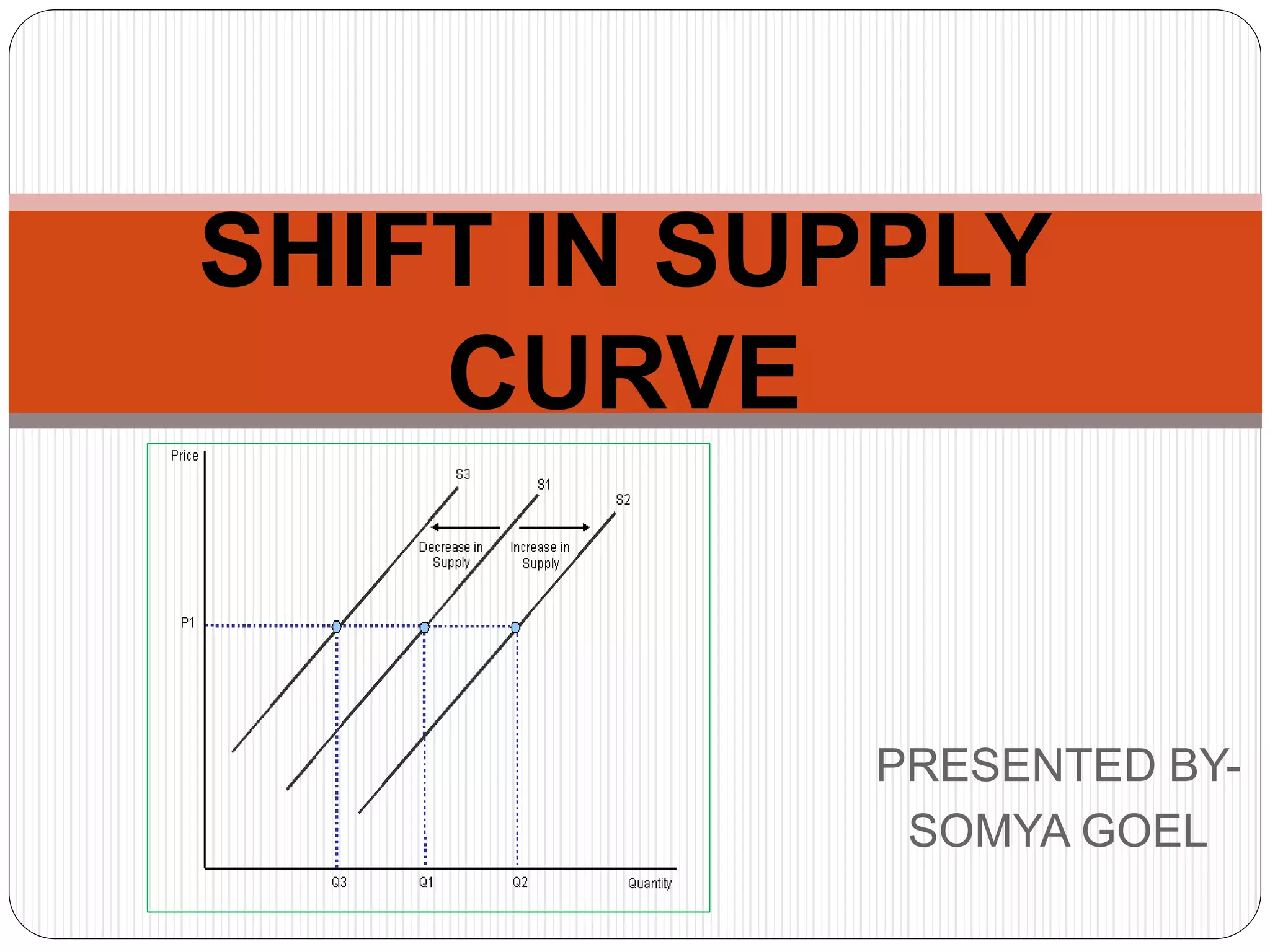
 Increase in supply is indicated by a forward shift
in supply curve.
 Decrease in supply is indicated by a backward
shift in supply curve.
Forward shift in Supply Curve
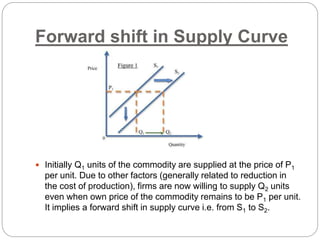
 Initially Q1 units of the commodity are supplied at the price of P1
per unit. Due to other factors (generally related to reduction in
the cost of production), firms are now willing to supply Q2 units
even when own price of the commodity remains to be P1 per unit.
It implies a forward shift in supply curve i.e. from S1 to S2.
Causes of Increase in Supply
Increase in supply may occur due to the following factors:
i. Improvement in technology leading to a fall in cost of production
and fall in cost of production.
ii. Reduction in factor prices causing a fall in cost of production.
iii. Decrease in the price of a competing product. It prompts the
producer to sell more at the existing price.
iv. Increase in number of firms in the industry. It causes increase in
market supply even when price of the commodity remains the
same.
v. High business expectations. It prompts the producers to
increase investments. Accordingly, supply increases.
vi. Shifts in goal of the firm to sales maximisation. ‘Clearance
Sale’ often leads to higher supplies even when price remains the
same.
vii. Decrease in taxation increases sales due to decrease in cost of
Backward shift in Supply
Curve
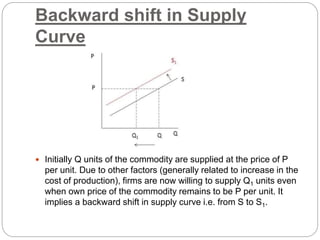
 Initially Q units of the commodity are supplied at the price of P
per unit. Due to other factors (generally related to increase in the
cost of production), firms are now willing to supply Q1 units even
when own price of the commodity remains to be P per unit. It
implies a backward shift in supply curve i.e. from S to S1.
Causes of Decrease in Supply
Decrease in supply occurs due to the following reasons:
i. Use of outdated technology, causing a fall in efficiency
and rise in cost of production.
ii. Increase in factor prices, causing increase in cost of
production.
iii. Increase in price of a competing product. It prompt
the producers to restrict their supplies at the prevailing
price.
iv. Decrease in number of firms in the industry. This
decreases market supply of the product even when price
remains constant.
v. Low business expectations. It prompts the producers
to reduce investment. Accordingly, supply reduces.
vi. Shift in goal of the firm to profit maximisation. When
the focus is on profit maximisation, firms often restricts
sale of their product.
vii. Increase in taxation decreases sales due to increase in
THANK YOU

Shift in supply curve

  • 1.
  • 2.
    INCREASE AND DECREASEIN QUANTITY SUPPLY  Shift in supply curve refers to a situation of increase or decrease in quantity supplied of a commodity even when own price of the commodity remains constant. It is caused by factors, other than own price of the commodity.  Increase in supply is indicated by a forward shift in supply curve.  Decrease in supply is indicated by a backward shift in supply curve.
  • 3.
    Forward shift inSupply Curve  Initially Q1 units of the commodity are supplied at the price of P1 per unit. Due to other factors (generally related to reduction in the cost of production), firms are now willing to supply Q2 units even when own price of the commodity remains to be P1 per unit. It implies a forward shift in supply curve i.e. from S1 to S2.
  • 4.
    Causes of Increasein Supply Increase in supply may occur due to the following factors: i. Improvement in technology leading to a fall in cost of production and fall in cost of production. ii. Reduction in factor prices causing a fall in cost of production. iii. Decrease in the price of a competing product. It prompts the producer to sell more at the existing price. iv. Increase in number of firms in the industry. It causes increase in market supply even when price of the commodity remains the same. v. High business expectations. It prompts the producers to increase investments. Accordingly, supply increases. vi. Shifts in goal of the firm to sales maximisation. ‘Clearance Sale’ often leads to higher supplies even when price remains the same. vii. Decrease in taxation increases sales due to decrease in cost of
  • 5.
    Backward shift inSupply Curve  Initially Q units of the commodity are supplied at the price of P per unit. Due to other factors (generally related to increase in the cost of production), firms are now willing to supply Q1 units even when own price of the commodity remains to be P per unit. It implies a backward shift in supply curve i.e. from S to S1.
  • 6.
    Causes of Decreasein Supply Decrease in supply occurs due to the following reasons: i. Use of outdated technology, causing a fall in efficiency and rise in cost of production. ii. Increase in factor prices, causing increase in cost of production. iii. Increase in price of a competing product. It prompt the producers to restrict their supplies at the prevailing price. iv. Decrease in number of firms in the industry. This decreases market supply of the product even when price remains constant. v. Low business expectations. It prompts the producers to reduce investment. Accordingly, supply reduces. vi. Shift in goal of the firm to profit maximisation. When the focus is on profit maximisation, firms often restricts sale of their product. vii. Increase in taxation decreases sales due to increase in
  • 7.