Ocean Life
Ocean Life
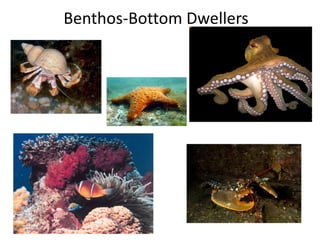
• Benthos: Bottom Dwellers – Animals or plants
that inhabit the ocean floor (crabs, sea stars,
lobsters, octopus)
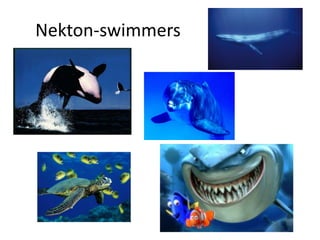
• Nekton: Swimmers – Animals that have the
ability to swim from place to place (squid,
most fish, whales, seals)
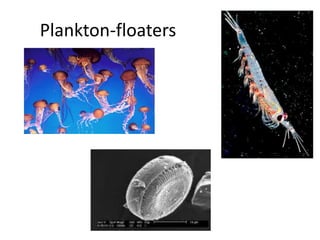
• Plankton: Floaters – Animals or plants that
depend on currents and waves (tiny young
fish, diatoms, some jelly fish)
Benthos-Bottom Dwellers
Nekton-swimmers
Plankton-floaters
Relationship between organisms
• Food Web: When one organism eats another
organism that eats a plant
• Example: Polar bear eats a seal which eats
artic cod which eats silversides which eats
algae.
• The energy is passed from one organism to
the next as they eat the objects.
O
C
E
A
N
F
OO
D
WE
B
Ocean Habitats
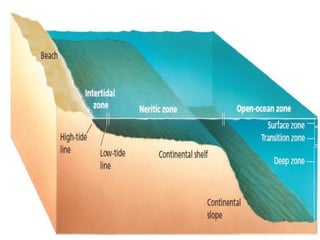
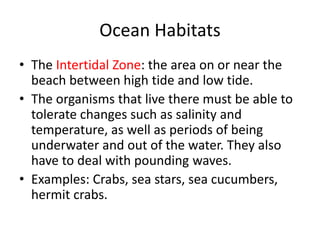
• The Intertidal Zone: the area on or near the
beach between high tide and low tide.
• The organisms that live there must be able to
tolerate changes such as salinity and
temperature, as well as periods of being
underwater and out of the water. They also
have to deal with pounding waves.
• Examples: Crabs, sea stars, sea cucumbers,
hermit crabs.
Intertidal Zone
Ocean Habitats
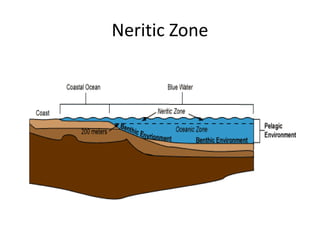
• Neritic Zone: Extends from the low tide line
out to the edge of the continental shelf.
• This area is shallow and receives a steady
supply of sunlight, so the water is warm and
full of plant life which makes it bursting with
animal life also!
• This would be the area where a lot of fishing
industries obtain their fish.
Neritic Zone
Ocean Habitats
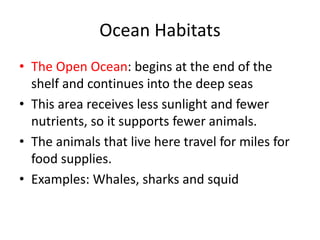
• The Open Ocean: begins at the end of the
shelf and continues into the deep seas
• This area receives less sunlight and fewer
nutrients, so it supports fewer animals.
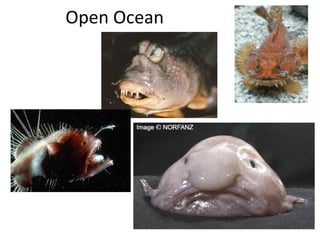
• The animals that live here travel for miles for
food supplies.
• Examples: Whales, sharks and squid
Open Ocean
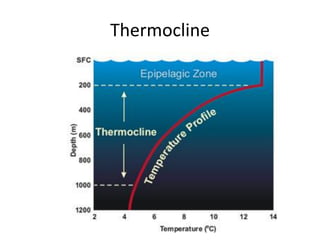
Water Column
• Don’t forget that the water also differs as you go
down into the ocean!
• Top Layer = Mixed layer or Surface Zone
• Middle Layer = Thermocline or Transition Zone
• Bottom Layer = Deep water (zone)
Thermocline
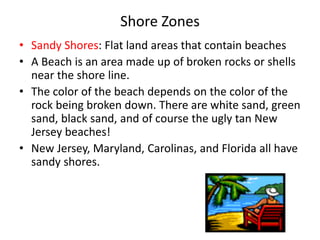
Shore Zones
• Sandy Shores: Flat land areas that contain beaches
• A Beach is an area made up of broken rocks or shells
near the shore line.
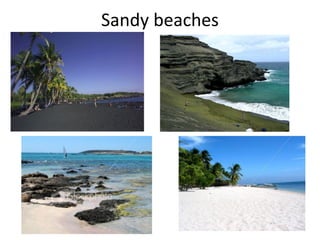
• The color of the beach depends on the color of the
rock being broken down. There are white sand, green
sand, black sand, and of course the ugly tan New
Jersey beaches!
• New Jersey, Maryland, Carolinas, and Florida all have
sandy shores.
Sandy beaches
Shore Zones
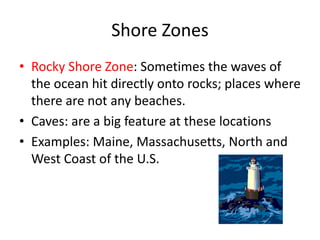
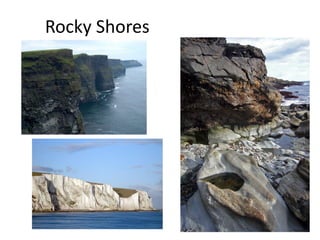
• Rocky Shore Zone: Sometimes the waves of
the ocean hit directly onto rocks; places where
there are not any beaches.
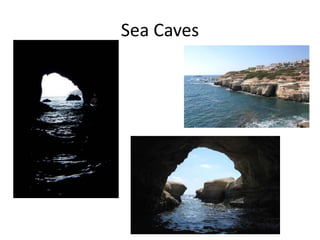
• Caves: are a big feature at these locations
• Examples: Maine, Massachusetts, North and
West Coast of the U.S.
Rocky Shores
Sea Caves
Questions
1) Identify the three categories of ocean organisms
and describe their characteristics.
2) What are conditions like in the intertidal zone?
3) Describe the physical conditions in the Neritic
Zone.
4) What are the two type of shore zones and give a
specific location where each would be found.

Ocean Zones and Life

  • 1.
  • 3.
    Ocean Life • Benthos:Bottom Dwellers – Animals or plants that inhabit the ocean floor (crabs, sea stars, lobsters, octopus) • Nekton: Swimmers – Animals that have the ability to swim from place to place (squid, most fish, whales, seals) • Plankton: Floaters – Animals or plants that depend on currents and waves (tiny young fish, diatoms, some jelly fish)
  • 4.
  • 5.
  • 6.
  • 7.
    Relationship between organisms •Food Web: When one organism eats another organism that eats a plant • Example: Polar bear eats a seal which eats artic cod which eats silversides which eats algae. • The energy is passed from one organism to the next as they eat the objects.
  • 8.
  • 9.
    Ocean Habitats • TheIntertidal Zone: the area on or near the beach between high tide and low tide. • The organisms that live there must be able to tolerate changes such as salinity and temperature, as well as periods of being underwater and out of the water. They also have to deal with pounding waves. • Examples: Crabs, sea stars, sea cucumbers, hermit crabs.
  • 10.
  • 11.
    Ocean Habitats • NeriticZone: Extends from the low tide line out to the edge of the continental shelf. • This area is shallow and receives a steady supply of sunlight, so the water is warm and full of plant life which makes it bursting with animal life also! • This would be the area where a lot of fishing industries obtain their fish.
  • 12.
  • 13.
    Ocean Habitats • TheOpen Ocean: begins at the end of the shelf and continues into the deep seas • This area receives less sunlight and fewer nutrients, so it supports fewer animals. • The animals that live here travel for miles for food supplies. • Examples: Whales, sharks and squid
  • 14.
  • 15.
    Water Column • Don’tforget that the water also differs as you go down into the ocean! • Top Layer = Mixed layer or Surface Zone • Middle Layer = Thermocline or Transition Zone • Bottom Layer = Deep water (zone)
  • 16.
  • 17.
    Shore Zones • SandyShores: Flat land areas that contain beaches • A Beach is an area made up of broken rocks or shells near the shore line. • The color of the beach depends on the color of the rock being broken down. There are white sand, green sand, black sand, and of course the ugly tan New Jersey beaches! • New Jersey, Maryland, Carolinas, and Florida all have sandy shores.
  • 18.
  • 19.
    Shore Zones • RockyShore Zone: Sometimes the waves of the ocean hit directly onto rocks; places where there are not any beaches. • Caves: are a big feature at these locations • Examples: Maine, Massachusetts, North and West Coast of the U.S.
  • 20.
  • 21.
  • 22.
    Questions 1) Identify thethree categories of ocean organisms and describe their characteristics. 2) What are conditions like in the intertidal zone? 3) Describe the physical conditions in the Neritic Zone. 4) What are the two type of shore zones and give a specific location where each would be found.