Manufacturing Process of
Ceramic Tiles
Vamsi Krishna. R
12ETMM10
Int. M.Tech / Ph.D
Materials Engineering
SEST, UoH
1. Brief introduction to ceramic tiles
2. Process flow chart
3. Raw materials
4. Powder preparation
5. Continuous ball mill
6. Spray drier
7. Hydraulic press
8. Glazing and printing
9. Kiln
10.Summary
11.References
One of the largest groups of materials
with the properties of nonmetals and all are
made by firing or burning, often including
silicates and metal oxides.
Cheap in terms of its starting materials.
Compared to metals, lightweight and
retain their strength up to 1000˚C where
metals tends to fail.
They have electrical, optical, and
magnetic properties of value in the
computer and electronic industries.
Tiles are generally manufactured using
ceramic or stone.
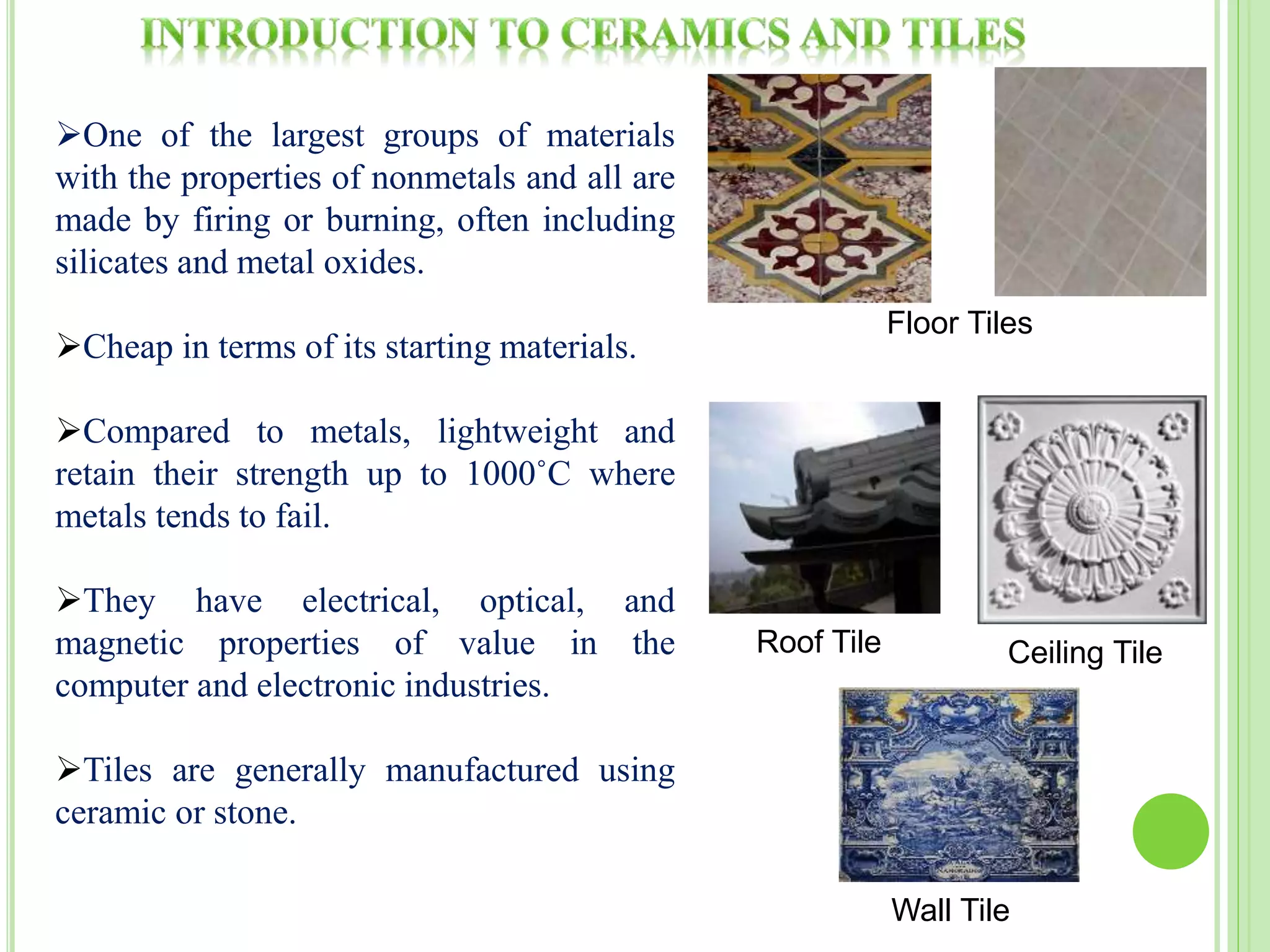
Floor Tiles
Ceiling TileRoof Tile
Wall Tile
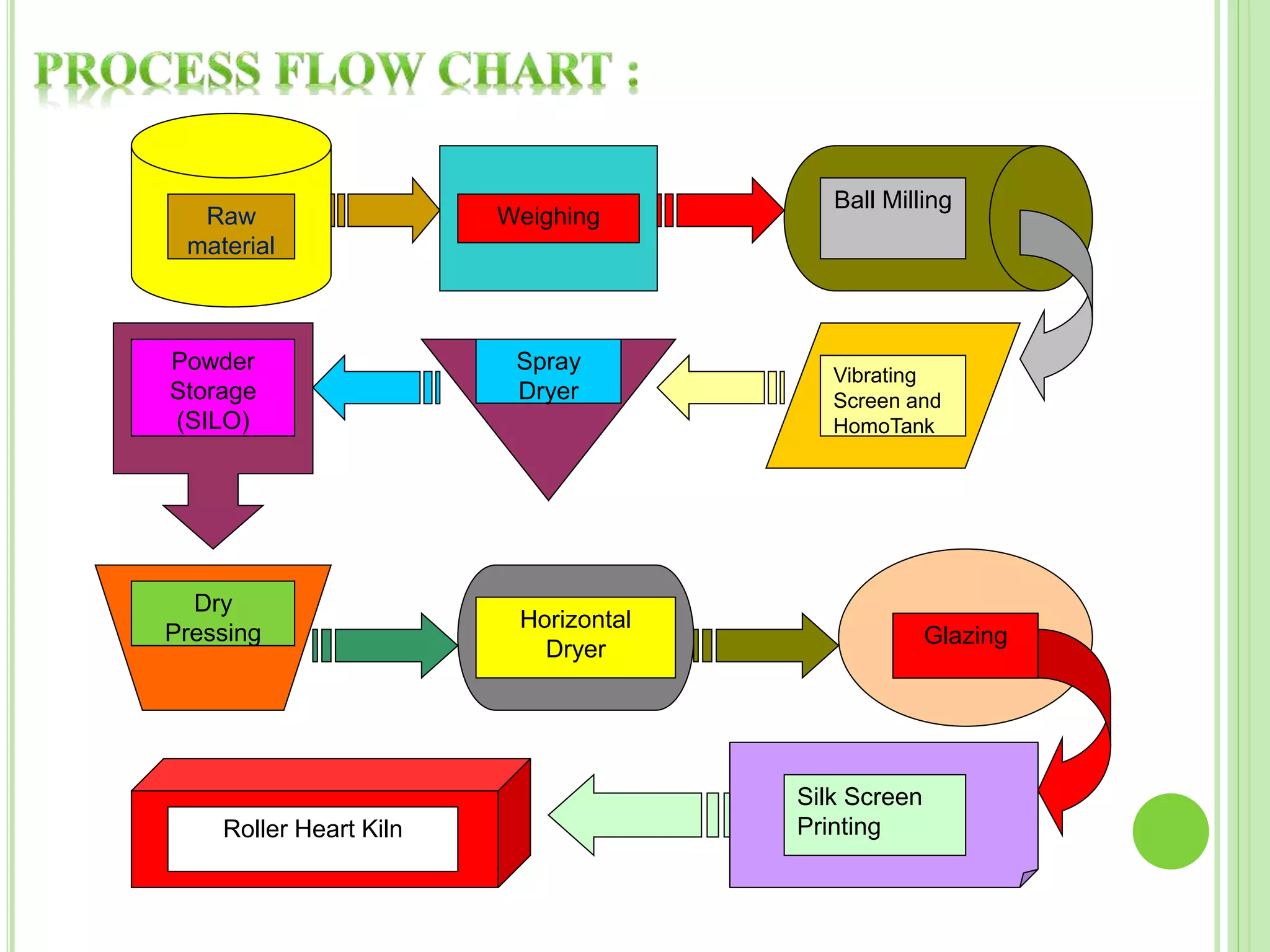
Raw
material
Weighing
Ball Milling
Vibrating
Screen and
HomoTank
Spray
Dryer
Powder
Storage
(SILO)
Dry
Pressing
Horizontal
Dryer
Glazing
Silk Screen
PrintingRoller Heart Kiln
The traditional ceramics industry is largely based
on various combinations of clay minerals, feldspar
and silica.
The mineral raw materials used in the ceramic
industry are mainly inorganic, nonmetallic,
crystalline solids formed by complex geologic
processes.
Clays have the ability to form clay-water
composition and to maintain their shape and strength
during drying and firing
Talc
Silica
Clay
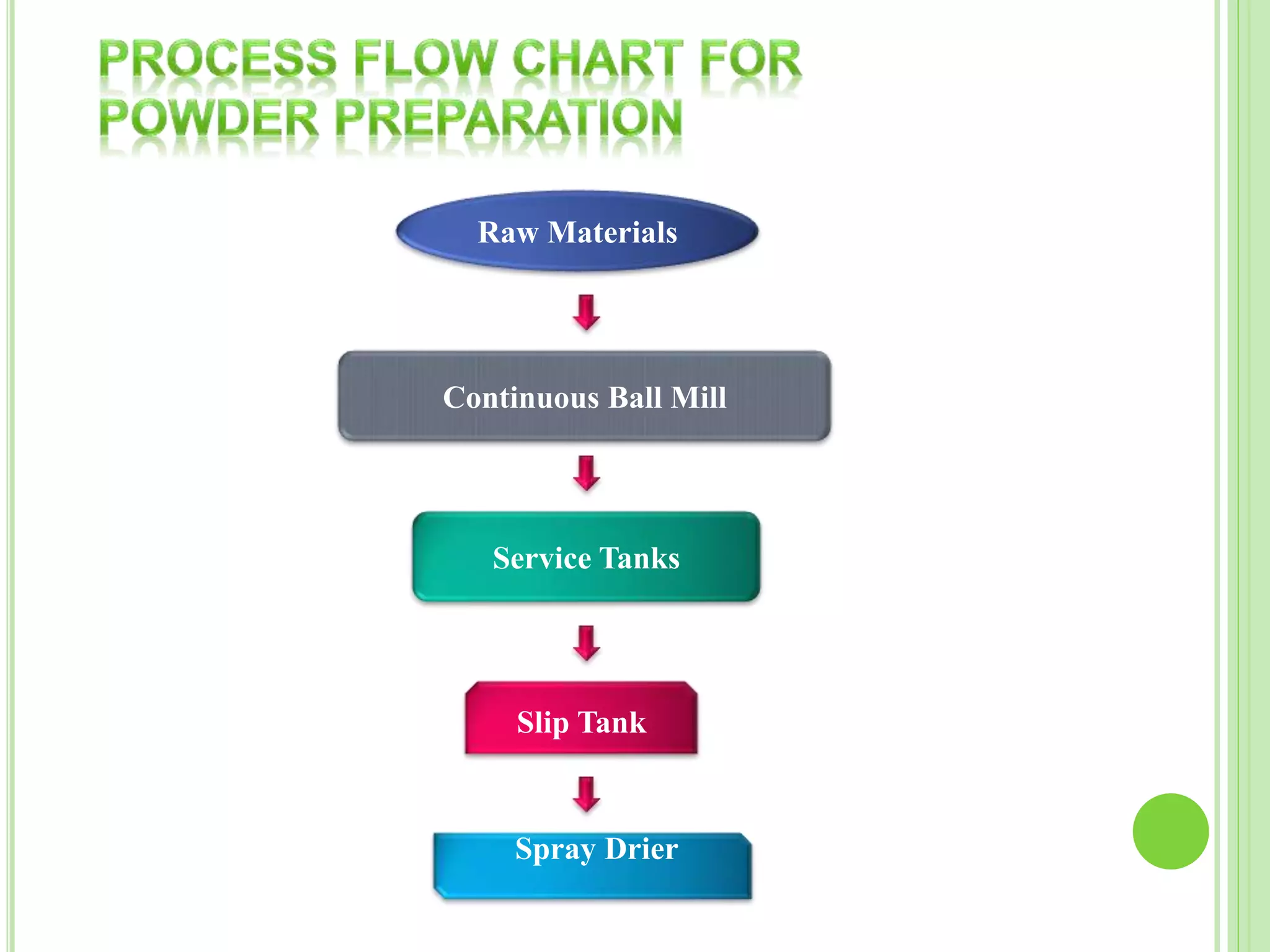
Raw Materials
Continuous Ball Mill
Slip Tank
Service Tanks
Spray Drier
The mixing of raw materials takes
place with the help of alumina pebbles.
This ball mill continuously rotates.
This rotation helps the pebbles to
grind the raw materials.
The grinded raw materials are mixed
with water to obtain slurry
Slurry Continuous ball mill
This service tank rotates continuously so
that it won’t allow highly viscous slurry to
set.
 In the vibration chamber filtration of
sand and stone takes place with the help of
huge vibrators.
The slurry free from sand and stone
enters into slip tank
The slurry in the slip tank is
continuously rotated in order to prevent
setting of slurry as it is highly viscous.
The slip flows from tanks to spray nozzles and the
slip is sprayed in the upward direction from the
nozzles
 Slip sprays in the downward direction and hot air
will pass upwards.
Due to this mechanism slip converts into powder.
The temperature in the spray drier is maintained at
720 degrees C.
The moisture content is around (4.5 – 5.5)%.
 The powder is carried through conveyors and
stored in silos.
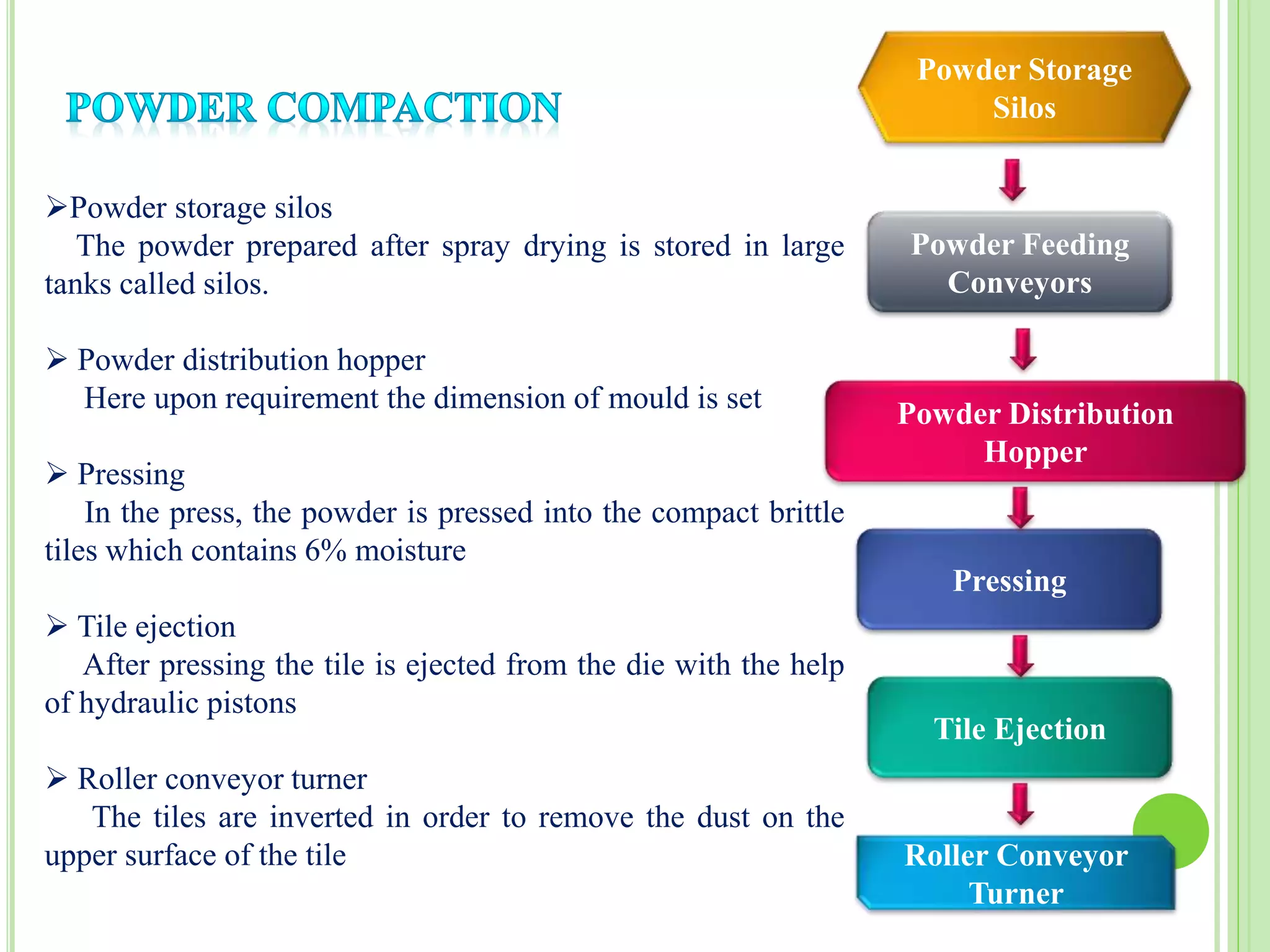
Powder storage silos
The powder prepared after spray drying is stored in large
tanks called silos.
 Powder distribution hopper
Here upon requirement the dimension of mould is set
 Pressing
In the press, the powder is pressed into the compact brittle
tiles which contains 6% moisture
 Tile ejection
After pressing the tile is ejected from the die with the help
of hydraulic pistons
 Roller conveyor turner
The tiles are inverted in order to remove the dust on the
upper surface of the tile
Tile Ejection
Powder Feeding
Conveyors
Pressing
Powder Distribution
Hopper
Powder Storage
Silos
Roller Conveyor
Turner
The powder is loaded from the silos
into the press.
The ram employs a forward and
backward stroke mechanism to load
powder into the mould.
The powder is pressed into the dies for
compaction.
The pressing of powder is done by the
hydraulic circuit which is in turn
controlled by the pumps.
The oil in the press cylinder is changed
after every 1500 hrs
Brushing
Air Blower
Glaze
Application
Coolers
Printing
Glaze line
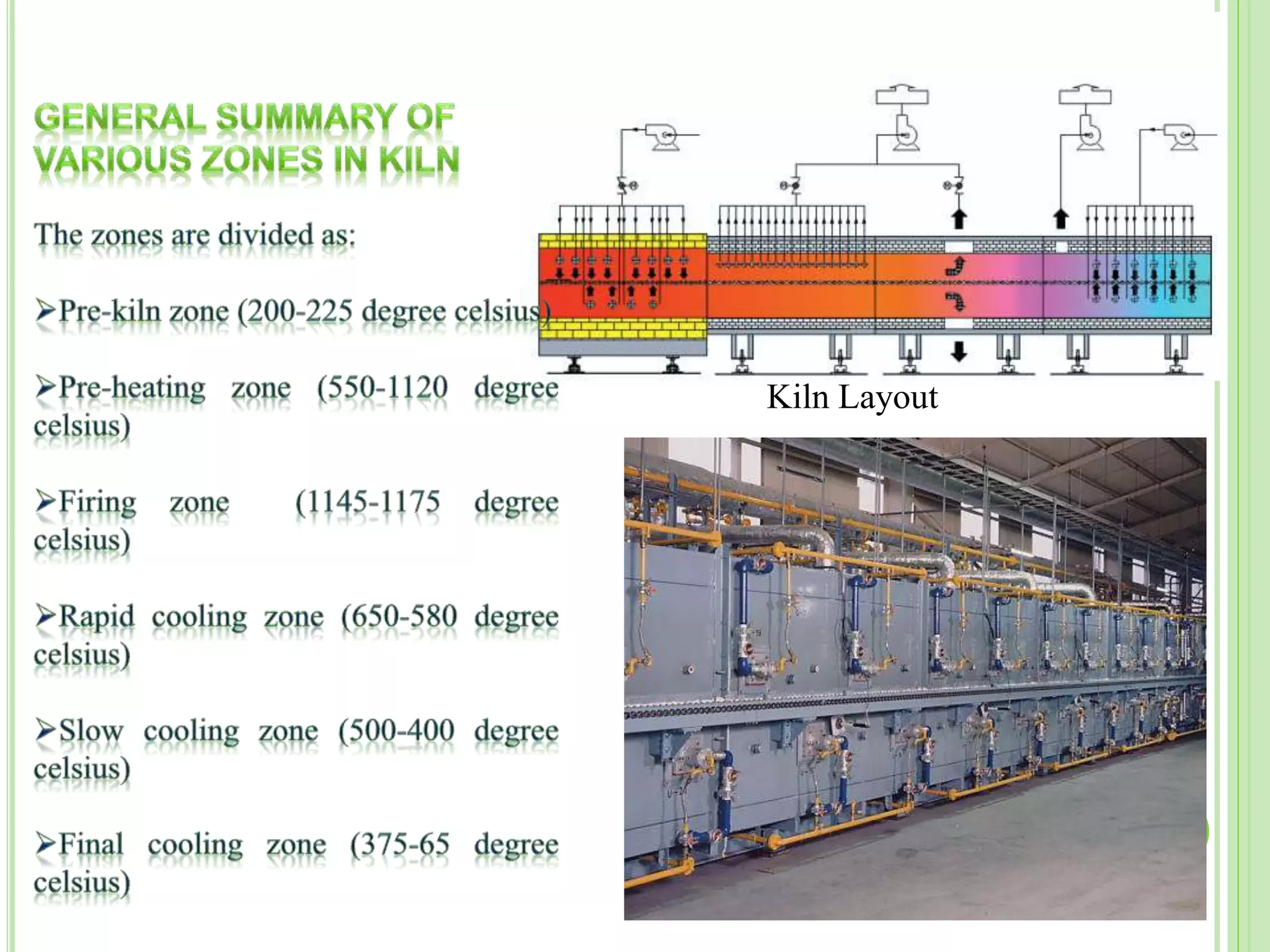
Kiln Layout
Tiles are generally used for covering roofs, floors, walls and
ceilings.
They are commonly made of ceramic or stone.
Major Part of the manufacturing process involves powder
metallurgy.
The raw materials are mixed in correct proportion and sent to ball
mill for slurry preparation.
The slurry is then passed to spray drier for making into fine powder.
This powder is compacted in a hydraulic press of required
dimensions.
The primary tile is glazed and printed, and sent to a kiln for an
increase in strength.
The final tile is sent for auto sorting and packaging and then for
dispatch.
 Fundamental building materials by K.Ward Harvey, page
no 51, 4th edition universal publishers.
 http://www.regencytiles.com
 Manuals from MIS department – Regency Library.
 http://www.wikipedia.org/ceramics
T H A N K U

Manufacturing process of ceramic tiles

  • 1.
    Manufacturing Process of CeramicTiles Vamsi Krishna. R 12ETMM10 Int. M.Tech / Ph.D Materials Engineering SEST, UoH
  • 2.
    1. Brief introductionto ceramic tiles 2. Process flow chart 3. Raw materials 4. Powder preparation 5. Continuous ball mill 6. Spray drier 7. Hydraulic press 8. Glazing and printing 9. Kiln 10.Summary 11.References
  • 3.
    One of thelargest groups of materials with the properties of nonmetals and all are made by firing or burning, often including silicates and metal oxides. Cheap in terms of its starting materials. Compared to metals, lightweight and retain their strength up to 1000˚C where metals tends to fail. They have electrical, optical, and magnetic properties of value in the computer and electronic industries. Tiles are generally manufactured using ceramic or stone. Floor Tiles Ceiling TileRoof Tile Wall Tile
  • 5.
  • 6.
    The traditional ceramicsindustry is largely based on various combinations of clay minerals, feldspar and silica. The mineral raw materials used in the ceramic industry are mainly inorganic, nonmetallic, crystalline solids formed by complex geologic processes. Clays have the ability to form clay-water composition and to maintain their shape and strength during drying and firing Talc Silica Clay
  • 7.
    Raw Materials Continuous BallMill Slip Tank Service Tanks Spray Drier
  • 8.
    The mixing ofraw materials takes place with the help of alumina pebbles. This ball mill continuously rotates. This rotation helps the pebbles to grind the raw materials. The grinded raw materials are mixed with water to obtain slurry Slurry Continuous ball mill
  • 9.
    This service tankrotates continuously so that it won’t allow highly viscous slurry to set.  In the vibration chamber filtration of sand and stone takes place with the help of huge vibrators. The slurry free from sand and stone enters into slip tank The slurry in the slip tank is continuously rotated in order to prevent setting of slurry as it is highly viscous.
  • 10.
    The slip flowsfrom tanks to spray nozzles and the slip is sprayed in the upward direction from the nozzles  Slip sprays in the downward direction and hot air will pass upwards. Due to this mechanism slip converts into powder. The temperature in the spray drier is maintained at 720 degrees C. The moisture content is around (4.5 – 5.5)%.  The powder is carried through conveyors and stored in silos.
  • 11.
    Powder storage silos Thepowder prepared after spray drying is stored in large tanks called silos.  Powder distribution hopper Here upon requirement the dimension of mould is set  Pressing In the press, the powder is pressed into the compact brittle tiles which contains 6% moisture  Tile ejection After pressing the tile is ejected from the die with the help of hydraulic pistons  Roller conveyor turner The tiles are inverted in order to remove the dust on the upper surface of the tile Tile Ejection Powder Feeding Conveyors Pressing Powder Distribution Hopper Powder Storage Silos Roller Conveyor Turner
  • 12.
    The powder isloaded from the silos into the press. The ram employs a forward and backward stroke mechanism to load powder into the mould. The powder is pressed into the dies for compaction. The pressing of powder is done by the hydraulic circuit which is in turn controlled by the pumps. The oil in the press cylinder is changed after every 1500 hrs
  • 13.
  • 14.
  • 15.
    Tiles are generallyused for covering roofs, floors, walls and ceilings. They are commonly made of ceramic or stone. Major Part of the manufacturing process involves powder metallurgy. The raw materials are mixed in correct proportion and sent to ball mill for slurry preparation. The slurry is then passed to spray drier for making into fine powder. This powder is compacted in a hydraulic press of required dimensions. The primary tile is glazed and printed, and sent to a kiln for an increase in strength. The final tile is sent for auto sorting and packaging and then for dispatch.
  • 16.
     Fundamental buildingmaterials by K.Ward Harvey, page no 51, 4th edition universal publishers.  http://www.regencytiles.com  Manuals from MIS department – Regency Library.  http://www.wikipedia.org/ceramics
  • 17.
    T H AN K U