Ceramic Tiles
How it’s made?
The Basics
• Ceramic means “fired clay” and tile means
  “covering.”
• Common raw materials are sand, clay, talc,
  feldspar.
• A typical example of ceramic powder metallurgy.
• A ceramic tile is just clay that's formed, glazed
  and baked.


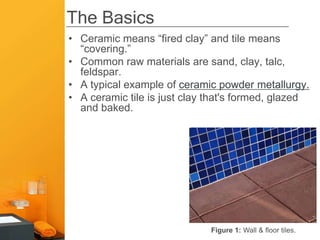
                              Figure 1: Wall & floor tiles.
Preparation of Powder
• Rock lumps reduction to powder through
  crushing and grinding.
• Crushing – reduction of large lumps to smaller.
  Jaw breaker, gyratory crushers, roller crushes,
  hammer mills. Picture
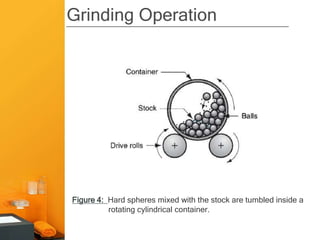
• Grinding - further reduction to fine powder. Ball
  mill.. Picture
• Wet milling - Water, alumina, silica, binders and
  lubricants mixed in ball mill with powder to form
  a slurry.
• Spray drying – Slurry is dried using a rising
  column of hot air.
• The raw materials are mixed in specific
  proportions according to weight. The specified
  mixture is achieved by varying the speed of
  conveyors that feed the master conveyor belt
                                               Video
Shaping Process


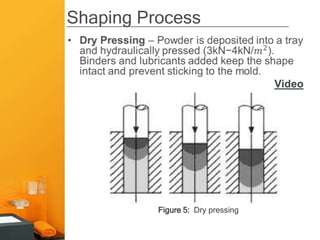
          Figure 5: Dry pressing
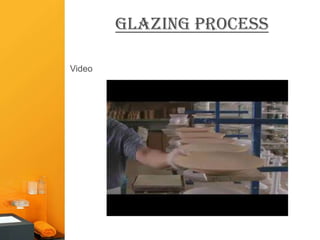
Glazing Process

Glaze is a layer or coating of a vitreous substance which has
been fired to fuse to a ceramic object to
color, decorate, strengthen or waterproof it.

Without glazing, ceramics would remain porous and would
remain unsuitable for holding liquids. Special glazing
processes are used to make dinnerware, porcelain and
stoneware beautiful.
Glazing Process
Composition:

         Ceramic glazes generally contain silica to form
glass, in combination with a mixture of metal oxides such as
sodium, potassium and calcium which act as a flux and allow
the glaze to melt at a particular temperature, alumina (usually
from added clay) to stiffen the glaze and prevent it from
running off the piece.
glazing Process
To prepare glaze the raw materials are weighed,
then mixed and dry or wet milled. The milled glazes
are then applied by following methods.

1. In centrifugal glazing or discing, the glaze is fed
   through a rotating disc that throws the glaze onto
   the tile.
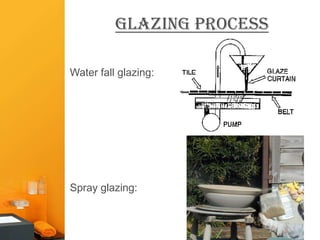
2. In the waterfall method, a stream of glaze falls
   onto the tile as it passes on a conveyor
   underneath.
3. Sometimes, the glaze is simply sprayed on.
4. For multiple glaze applications, screen printing
   method is used.
glazing Process

Water fall glazing:


Spray glazing:
glazing Process

Video
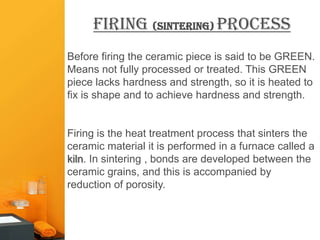
Firing (sintering) Process
Before firing the ceramic piece is said to be GREEN.
Means not fully processed or treated. This GREEN
piece lacks hardness and strength, so it is heated to
fix is shape and to achieve hardness and strength.


Firing is the heat treatment process that sinters the
ceramic material it is performed in a furnace called a
kiln. In sintering , bonds are developed between the
ceramic grains, and this is accompanied by
reduction of porosity.
Firing Process

• Typical firing temperatures for alumina, mullite, and
zirconia reach 2850 °F - 3100 °F.
• Typical firing cycles can range from 12 - 120 hours
depending upon the kiln type and product.
• Ceramics shrink approximately 20% during the
sintering process.
•Unglazed ceramic ware is fired only once but
glazed product s are fired twice. Fire the ware once
before glazing to harden the body of the piece, apply
the glaze, fire the piece a second time to harden the
glaze.
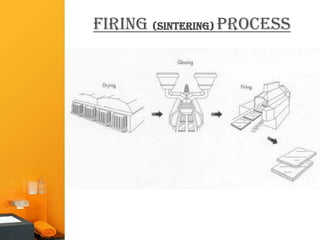
Firing (sintering) Process
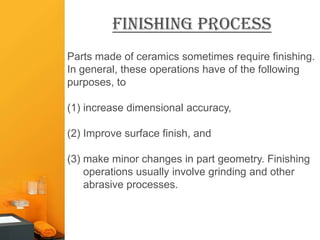
Finishing Process
Parts made of ceramics sometimes require finishing.
In general, these operations have of the following
purposes, to

(1) increase dimensional accuracy,

(2) Improve surface finish, and

(3) make minor changes in part geometry. Finishing
    operations usually involve grinding and other
    abrasive processes.
Glazing and Firing
THANK YOU.

“We hear only those questions for which we are in a position to find answers.”
Friedrich Nietzsche
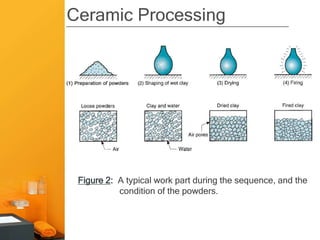
Ceramic Processing


 Figure 2: A typical work part during the sequence, and the
           condition of the powders.
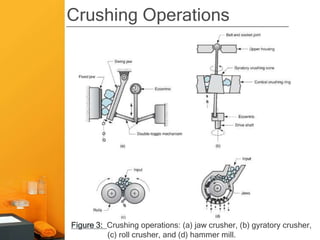
Crushing Operations


Figure 3: Crushing operations: (a) jaw crusher, (b) gyratory crusher,
          (c) roll crusher, and (d) hammer mill.
Grinding Operation


Figure 4: Hard spheres mixed with the stock are tumbled inside a
          rotating cylindrical container.

Ceramic tiles

  • 1.
  • 2.
    The Basics • Ceramicmeans “fired clay” and tile means “covering.” • Common raw materials are sand, clay, talc, feldspar. • A typical example of ceramic powder metallurgy. • A ceramic tile is just clay that's formed, glazed and baked. Figure 1: Wall & floor tiles.
  • 3.
    Preparation of Powder •Rock lumps reduction to powder through crushing and grinding. • Crushing – reduction of large lumps to smaller. Jaw breaker, gyratory crushers, roller crushes, hammer mills. Picture • Grinding - further reduction to fine powder. Ball mill.. Picture • Wet milling - Water, alumina, silica, binders and lubricants mixed in ball mill with powder to form a slurry. • Spray drying – Slurry is dried using a rising column of hot air. • The raw materials are mixed in specific proportions according to weight. The specified mixture is achieved by varying the speed of conveyors that feed the master conveyor belt Video
  • 4.
    Shaping Process Figure 5: Dry pressing
  • 5.
    Glazing Process Glaze isa layer or coating of a vitreous substance which has been fired to fuse to a ceramic object to color, decorate, strengthen or waterproof it. Without glazing, ceramics would remain porous and would remain unsuitable for holding liquids. Special glazing processes are used to make dinnerware, porcelain and stoneware beautiful.
  • 6.
    Glazing Process Composition: Ceramic glazes generally contain silica to form glass, in combination with a mixture of metal oxides such as sodium, potassium and calcium which act as a flux and allow the glaze to melt at a particular temperature, alumina (usually from added clay) to stiffen the glaze and prevent it from running off the piece.
  • 7.
    glazing Process To prepareglaze the raw materials are weighed, then mixed and dry or wet milled. The milled glazes are then applied by following methods. 1. In centrifugal glazing or discing, the glaze is fed through a rotating disc that throws the glaze onto the tile. 2. In the waterfall method, a stream of glaze falls onto the tile as it passes on a conveyor underneath. 3. Sometimes, the glaze is simply sprayed on. 4. For multiple glaze applications, screen printing method is used.
  • 8.
    glazing Process Water fallglazing: Spray glazing:
  • 9.
  • 10.
    Firing (sintering) Process Beforefiring the ceramic piece is said to be GREEN. Means not fully processed or treated. This GREEN piece lacks hardness and strength, so it is heated to fix is shape and to achieve hardness and strength. Firing is the heat treatment process that sinters the ceramic material it is performed in a furnace called a kiln. In sintering , bonds are developed between the ceramic grains, and this is accompanied by reduction of porosity.
  • 11.
    Firing Process • Typicalfiring temperatures for alumina, mullite, and zirconia reach 2850 °F - 3100 °F. • Typical firing cycles can range from 12 - 120 hours depending upon the kiln type and product. • Ceramics shrink approximately 20% during the sintering process. •Unglazed ceramic ware is fired only once but glazed product s are fired twice. Fire the ware once before glazing to harden the body of the piece, apply the glaze, fire the piece a second time to harden the glaze.
  • 12.
  • 13.
    Finishing Process Parts madeof ceramics sometimes require finishing. In general, these operations have of the following purposes, to (1) increase dimensional accuracy, (2) Improve surface finish, and (3) make minor changes in part geometry. Finishing operations usually involve grinding and other abrasive processes.
  • 14.
  • 15.
    THANK YOU. “We hearonly those questions for which we are in a position to find answers.” Friedrich Nietzsche
  • 16.
    Ceramic Processing Figure2: A typical work part during the sequence, and the condition of the powders.
  • 17.
    Crushing Operations Figure 3:Crushing operations: (a) jaw crusher, (b) gyratory crusher, (c) roll crusher, and (d) hammer mill.
  • 18.
    Grinding Operation Figure 4:Hard spheres mixed with the stock are tumbled inside a rotating cylindrical container.