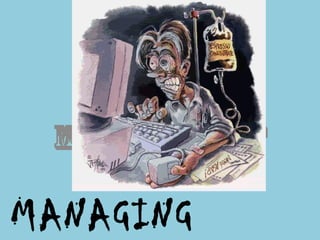
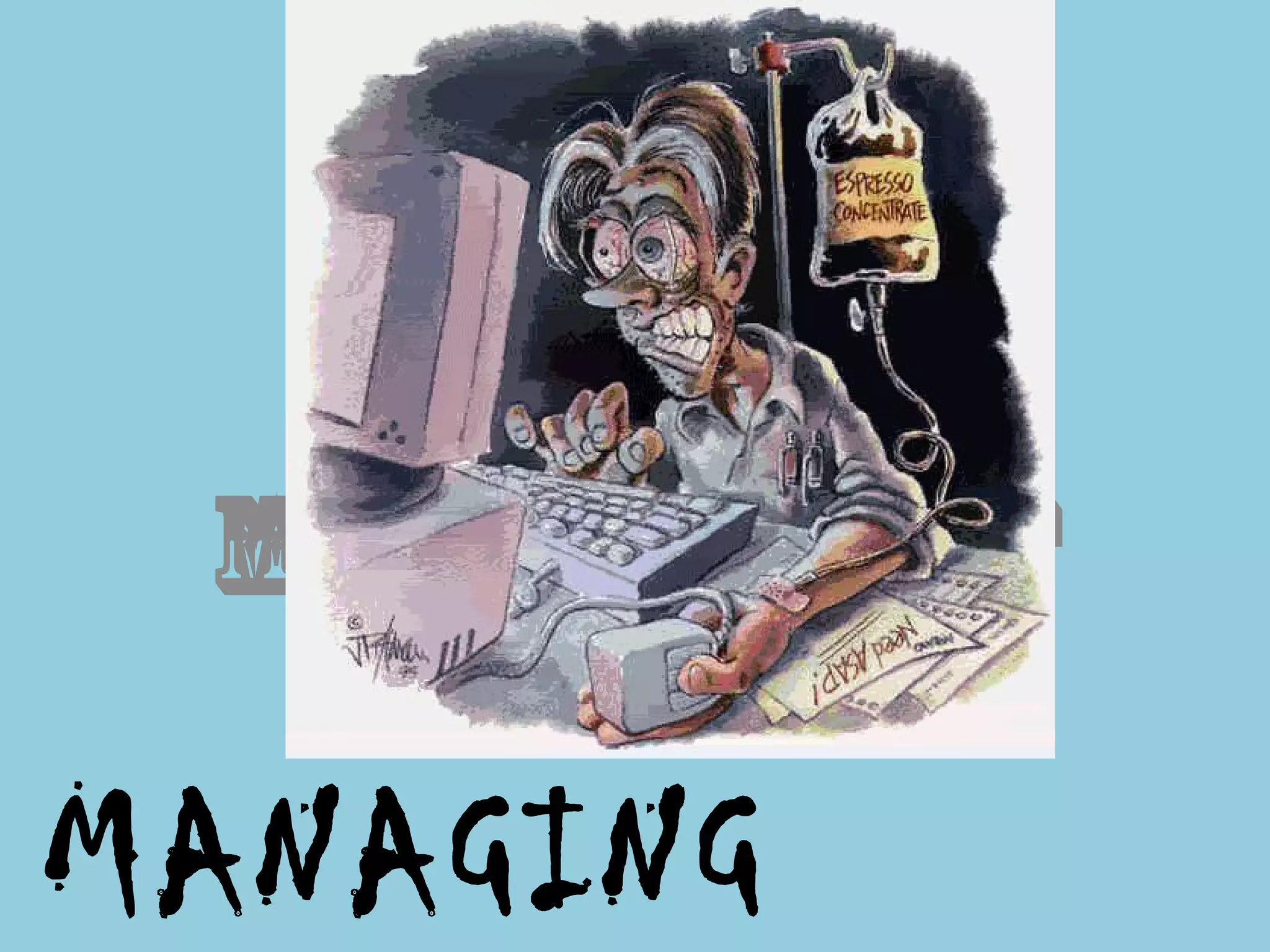
MANAGING
Stress
Management
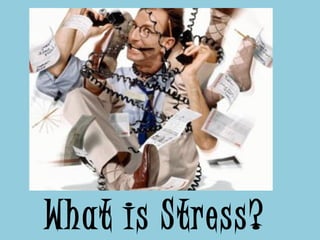
What is Stress?
What is Stress?
What is Stress?
What is Stress?
What is Stress?
What is Stress?
What is Stress?
What is Stress?
What is Stress?
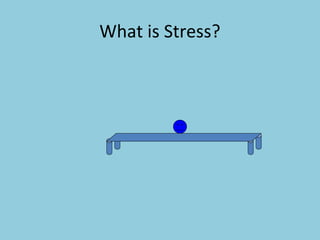
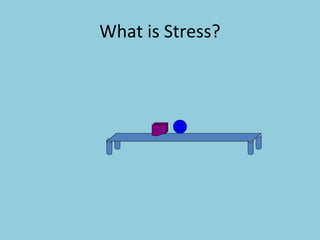
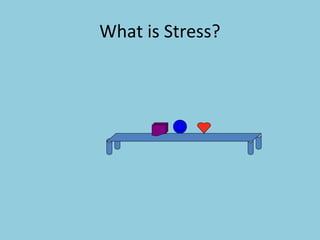
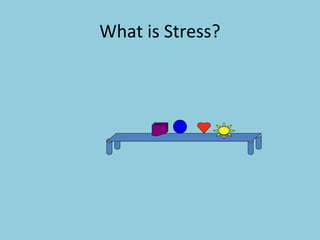
I. What is Stress?
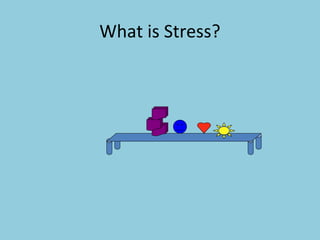
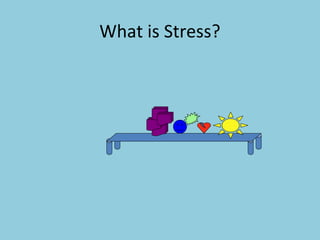
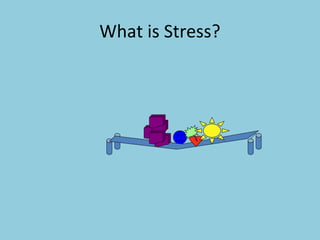
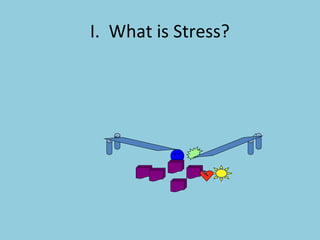
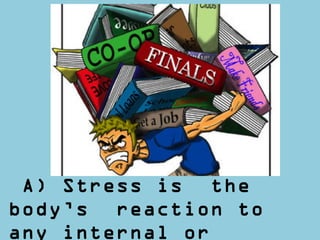
A) Stress is the
body’s reaction to
any internal or
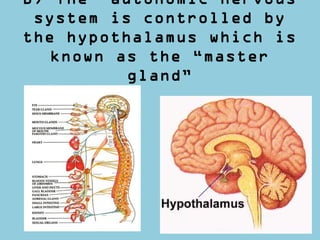
B) The autonomic nervous
system is controlled by
the hypothalamus which is
known as the “master
gland”
s
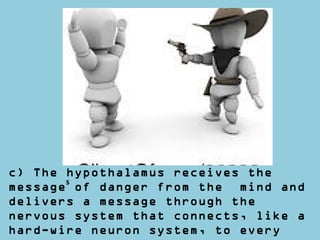
c) The hypothalamus receives the
message of danger from the mind and
delivers a message through the
nervous system that connects, like a
hard-wire neuron system, to every
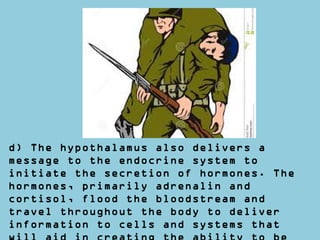
d) The hypothalamus also delivers a
message to the endocrine system to
initiate the secretion of hormones. The
hormones, primarily adrenalin and
cortisol, flood the bloodstream and
travel throughout the body to deliver
information to cells and systems that
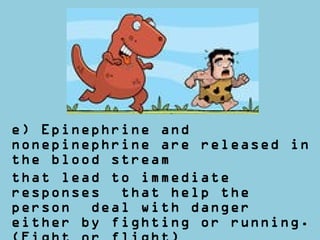
e) Epinephrine and
nonepinephrine are released in
the blood stream
that lead to immediate
responses that help the
person deal with danger
either by fighting or running.
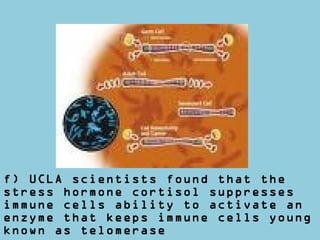
f) UCLA scientists found that the
stress hormone cortisol suppresses
immune cells ability to activate an
enzyme that keeps immune cells young
known as telomerase
g) Telomeres are the protective
DNA complex at the end of the
chromosome. The destruction of
this DNA complex shortens life
span and speeds the
body’deterioration which makes
the person grow old faster
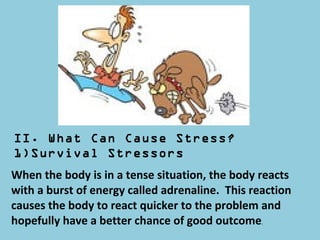
II. What Can Cause Stress?
1)Survival Stressors
When the body is in a tense situation, the body reacts
with a burst of energy called adrenaline. This reaction
causes the body to react quicker to the problem and
hopefully have a better chance of good outcome.
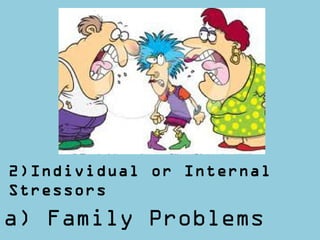
2)Individual or Internal
Stressors
a) Family Problems
b) Economic
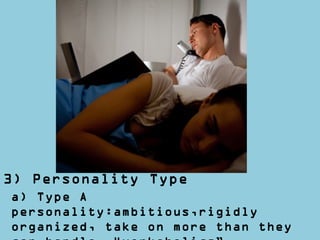
3) Personality Type
a) Type A
personality:ambitious,rigidly
organized, take on more than they
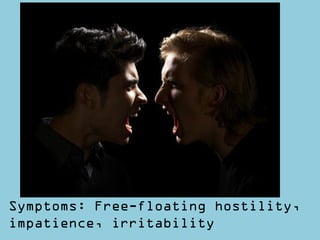
Symptoms: Free-floating hostility,
impatience, irritability
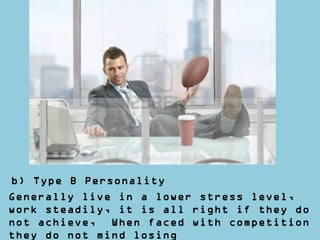
b) Type B Personality
Generally live in a lower stress level,
work steadily, it is all right if they do
not achieve, When faced with competition
they do not mind losing
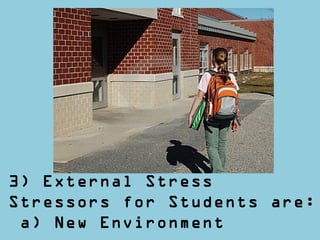
3) External Stress
Stressors for Students are:
a) New Environment
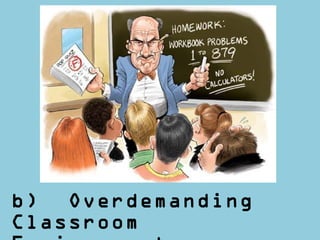
b) Overdemanding
Classroom
c) Athletic
Requirments
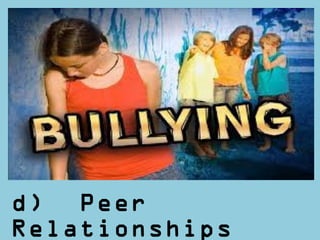
d) Peer
Relationships
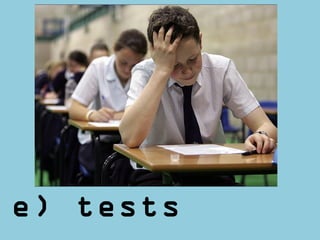
e) tests
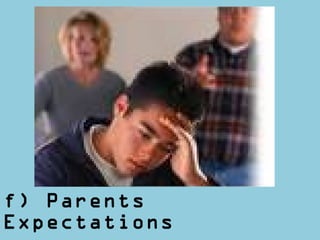
f) Parents
Expectations
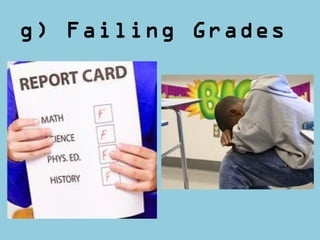
g) Failing Grades
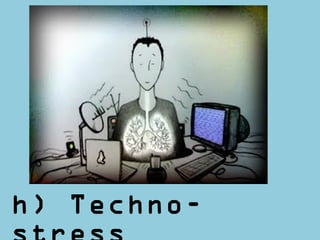
h) Techno-
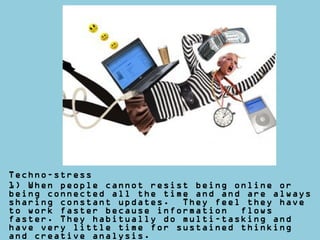
Techno-stress
1) When people cannot resist being online or
being connected all the time and and are always
sharing constant updates. They feel they have
to work faster because information flows
faster. They habitually do multi-tasking and
have very little time for sustained thinking
and creative analysis.
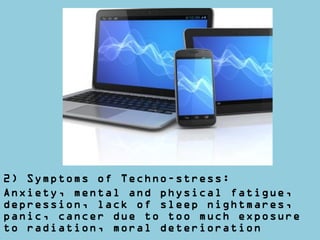
2) Symptoms of Techno-stress:
Anxiety, mental and physical fatigue,
depression, lack of sleep nightmares,
panic, cancer due to too much exposure
to radiation, moral deterioration
III. Types of Stress
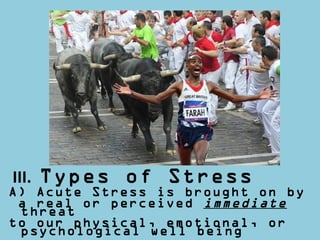
A) Acute Stress is brought on by
a real or perceived immediate
threat
to our physical, emotional, or
psychological well being
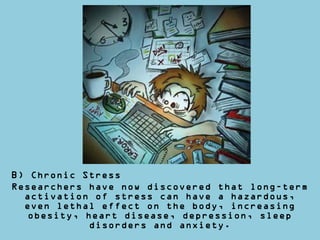
B) Chronic Stress
Researchers have now discovered that long-term
activation of stress can have a hazardous,
even lethal effect on the body, increasing
obesity, heart disease, depression, sleep
disorders and anxiety.
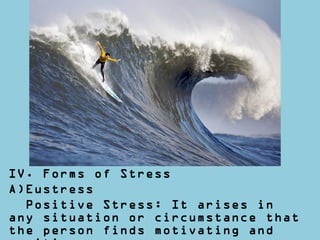
IV. Forms of Stress
A)Eustress
Positive Stress: It arises in
any situation or circumstance that
the person finds motivating and
ea
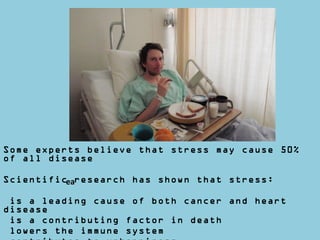
Some experts believe that stress may cause 50%
of all disease
Scientific research has shown that stress:
is a leading cause of both cancer and heart
disease
is a contributing factor in death
lowers the immune system
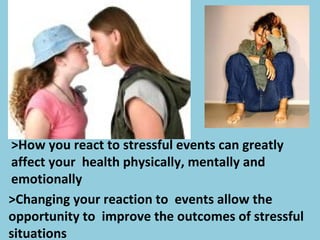
>How you react to stressful events can greatly
affect your health physically, mentally and
emotionally
>Changing your reaction to events allow the
opportunity to improve the outcomes of stressful
situations
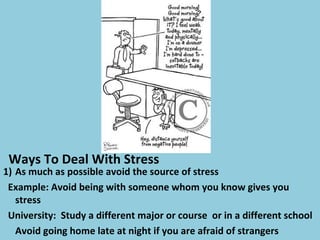
Ways To Deal With Stress
1) As much as possible avoid the source of stress
Example: Avoid being with someone whom you know gives you
stress
University: Study a different major or course or in a different school
Avoid going home late at night if you are afraid of strangers
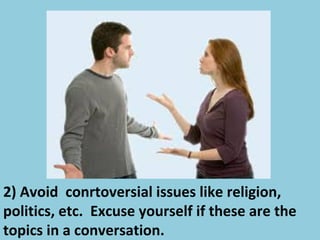
2) Avoid conrtoversial issues like religion,
politics, etc. Excuse yourself if these are the
topics in a conversation.
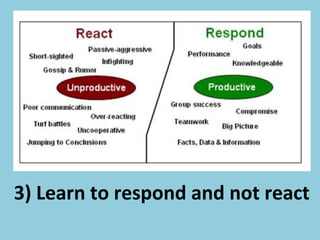
3) Learn to respond and not react
4) When you are stressed, take a deep
breath and calm your mind
5) Take a hot bath before making
decisions
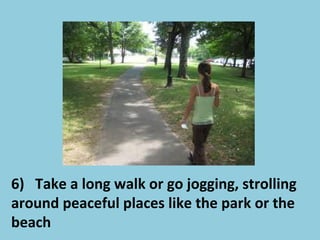
6) Take a long walk or go jogging, strolling
around peaceful places like the park or the
beach
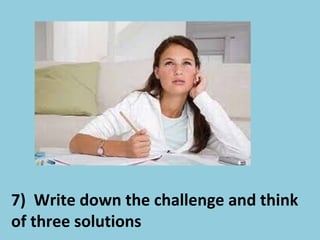
7) Write down the challenge and think
of three solutions
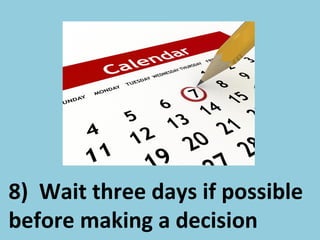
8) Wait three days if possible
before making a decision
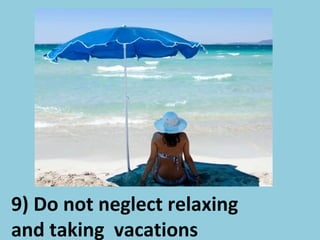
9) Do not neglect relaxing
and taking vacations
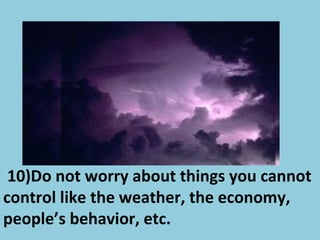
10)Do not worry about things you cannot
control like the weather, the economy,
people’s behavior, etc.
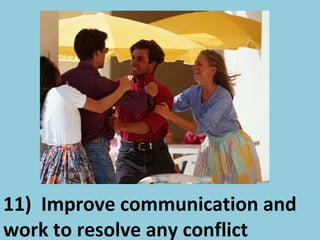
11) Improve communication and
work to resolve any conflict
12) Set realistic goals
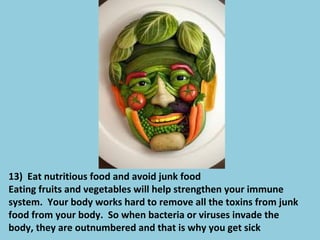
13) Eat nutritious food and avoid junk food
Eating fruits and vegetables will help strengthen your immune
system. Your body works hard to remove all the toxins from junk
food from your body. So when bacteria or viruses invade the
body, they are outnumbered and that is why you get sick
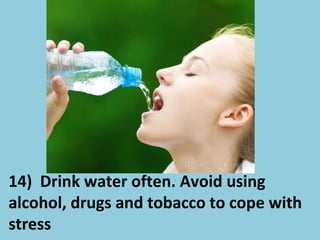
14) Drink water often. Avoid using
alcohol, drugs and tobacco to cope with
stress
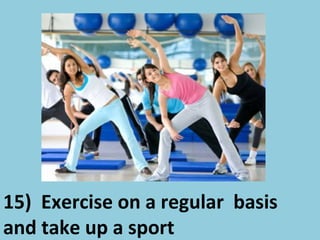
15) Exercise on a regular basis
and take up a sport
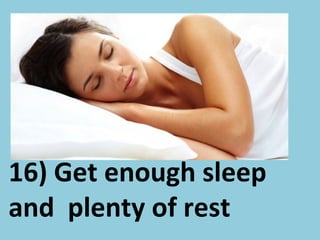
16) Get enough sleep
and plenty of rest
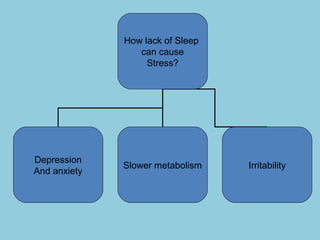
How lack of Sleep
can cause
Stress?
Depression
And anxiety
Slower metabolism Irritability
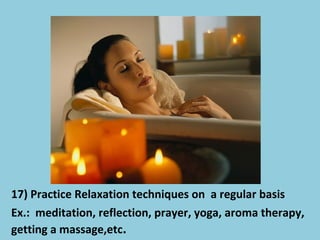
17) Practice Relaxation techniques on a regular basis
Ex.: meditation, reflection, prayer, yoga, aroma therapy,
getting a massage,etc.
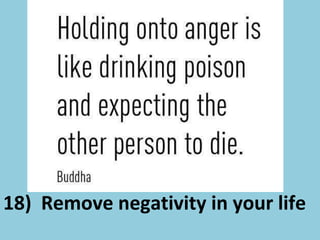
18) Remove negativity in your life
19) Realize your limitations,
learn to say no
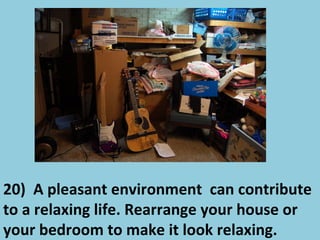
20) A pleasant environment can contribute
to a relaxing life. Rearrange your house or
your bedroom to make it look relaxing.
Maybe you need to change the paint, throw away
some stuff that clutter your space, install more
storage like drawers and cabinets, buy an aquarium,
put pictures of relaxing sceneries or sayings!
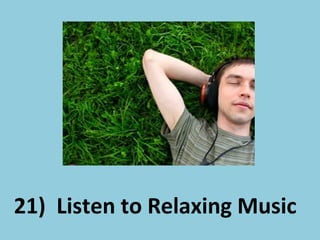
21) Listen to Relaxing Music
22) Learn to play a musical
instrument
23) Do something you enjoy like taking up a hobby like drawing, painting,
photography, cooking, baking, fishing, cross stitching, knitting, carpentry, crafts,
etc.
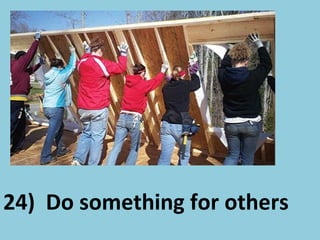
24) Do something for others
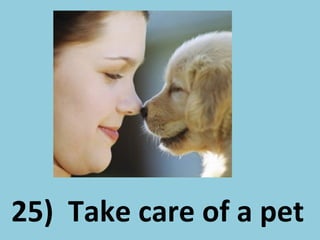
25) Take care of a pet
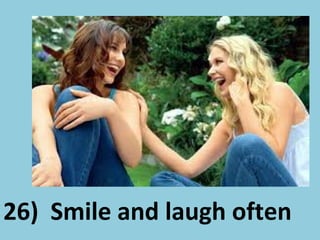
26) Smile and laugh often
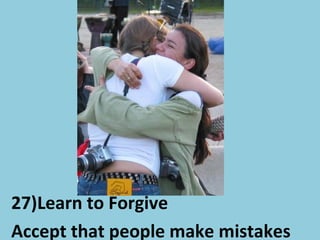
27)Learn to Forgive
Accept that people make mistakes
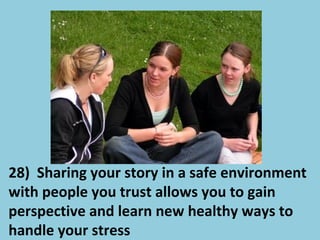
28) Sharing your story in a safe environment
with people you trust allows you to gain
perspective and learn new healthy ways to
handle your stress
Your ability to reduce your stress has a
direct effect on your ability to lower your
risk for disease, especially cancer and heart
disease
Managing stress=healthy lifestyle=strong
immune system=disease prevention
Managing stress555
Managing stress555

Managing stress555

  • 1.
  • 2.
  • 3.
  • 4.
  • 5.
  • 6.
  • 7.
  • 8.
  • 9.
  • 10.
  • 11.
    I. What isStress?
  • 12.
    A) Stress isthe body’s reaction to any internal or
  • 13.
    B) The autonomicnervous system is controlled by the hypothalamus which is known as the “master gland”
  • 14.
    s c) The hypothalamusreceives the message of danger from the mind and delivers a message through the nervous system that connects, like a hard-wire neuron system, to every
  • 15.
    d) The hypothalamusalso delivers a message to the endocrine system to initiate the secretion of hormones. The hormones, primarily adrenalin and cortisol, flood the bloodstream and travel throughout the body to deliver information to cells and systems that
  • 16.
    e) Epinephrine and nonepinephrineare released in the blood stream that lead to immediate responses that help the person deal with danger either by fighting or running.
  • 17.
    f) UCLA scientistsfound that the stress hormone cortisol suppresses immune cells ability to activate an enzyme that keeps immune cells young known as telomerase
  • 18.
    g) Telomeres arethe protective DNA complex at the end of the chromosome. The destruction of this DNA complex shortens life span and speeds the body’deterioration which makes the person grow old faster
  • 19.
    II. What CanCause Stress? 1)Survival Stressors When the body is in a tense situation, the body reacts with a burst of energy called adrenaline. This reaction causes the body to react quicker to the problem and hopefully have a better chance of good outcome.
  • 20.
  • 21.
  • 22.
    3) Personality Type a)Type A personality:ambitious,rigidly organized, take on more than they
  • 23.
  • 24.
    b) Type BPersonality Generally live in a lower stress level, work steadily, it is all right if they do not achieve, When faced with competition they do not mind losing
  • 25.
    3) External Stress Stressorsfor Students are: a) New Environment
  • 26.
  • 27.
  • 28.
  • 29.
  • 30.
  • 31.
  • 32.
  • 33.
    Techno-stress 1) When peoplecannot resist being online or being connected all the time and and are always sharing constant updates. They feel they have to work faster because information flows faster. They habitually do multi-tasking and have very little time for sustained thinking and creative analysis.
  • 34.
    2) Symptoms ofTechno-stress: Anxiety, mental and physical fatigue, depression, lack of sleep nightmares, panic, cancer due to too much exposure to radiation, moral deterioration
  • 35.
    III. Types ofStress A) Acute Stress is brought on by a real or perceived immediate threat to our physical, emotional, or psychological well being
  • 36.
    B) Chronic Stress Researchershave now discovered that long-term activation of stress can have a hazardous, even lethal effect on the body, increasing obesity, heart disease, depression, sleep disorders and anxiety.
  • 37.
    IV. Forms ofStress A)Eustress Positive Stress: It arises in any situation or circumstance that the person finds motivating and
  • 39.
    ea Some experts believethat stress may cause 50% of all disease Scientific research has shown that stress: is a leading cause of both cancer and heart disease is a contributing factor in death lowers the immune system
  • 40.
    >How you reactto stressful events can greatly affect your health physically, mentally and emotionally >Changing your reaction to events allow the opportunity to improve the outcomes of stressful situations
  • 41.
    Ways To DealWith Stress 1) As much as possible avoid the source of stress Example: Avoid being with someone whom you know gives you stress University: Study a different major or course or in a different school Avoid going home late at night if you are afraid of strangers
  • 42.
    2) Avoid conrtoversialissues like religion, politics, etc. Excuse yourself if these are the topics in a conversation.
  • 43.
    3) Learn torespond and not react
  • 44.
    4) When youare stressed, take a deep breath and calm your mind
  • 45.
    5) Take ahot bath before making decisions
  • 46.
    6) Take along walk or go jogging, strolling around peaceful places like the park or the beach
  • 47.
    7) Write downthe challenge and think of three solutions
  • 48.
    8) Wait threedays if possible before making a decision
  • 49.
    9) Do notneglect relaxing and taking vacations
  • 50.
    10)Do not worryabout things you cannot control like the weather, the economy, people’s behavior, etc.
  • 51.
    11) Improve communicationand work to resolve any conflict
  • 52.
  • 53.
    13) Eat nutritiousfood and avoid junk food Eating fruits and vegetables will help strengthen your immune system. Your body works hard to remove all the toxins from junk food from your body. So when bacteria or viruses invade the body, they are outnumbered and that is why you get sick
  • 54.
    14) Drink wateroften. Avoid using alcohol, drugs and tobacco to cope with stress
  • 55.
    15) Exercise ona regular basis and take up a sport
  • 56.
    16) Get enoughsleep and plenty of rest
  • 57.
    How lack ofSleep can cause Stress? Depression And anxiety Slower metabolism Irritability
  • 58.
    17) Practice Relaxationtechniques on a regular basis Ex.: meditation, reflection, prayer, yoga, aroma therapy, getting a massage,etc.
  • 59.
  • 60.
    19) Realize yourlimitations, learn to say no
  • 61.
    20) A pleasantenvironment can contribute to a relaxing life. Rearrange your house or your bedroom to make it look relaxing.
  • 62.
    Maybe you needto change the paint, throw away some stuff that clutter your space, install more storage like drawers and cabinets, buy an aquarium, put pictures of relaxing sceneries or sayings!
  • 63.
    21) Listen toRelaxing Music
  • 64.
    22) Learn toplay a musical instrument
  • 65.
    23) Do somethingyou enjoy like taking up a hobby like drawing, painting, photography, cooking, baking, fishing, cross stitching, knitting, carpentry, crafts, etc.
  • 66.
    24) Do somethingfor others
  • 67.
    25) Take careof a pet
  • 68.
    26) Smile andlaugh often
  • 69.
    27)Learn to Forgive Acceptthat people make mistakes
  • 70.
    28) Sharing yourstory in a safe environment with people you trust allows you to gain perspective and learn new healthy ways to handle your stress
  • 71.
    Your ability toreduce your stress has a direct effect on your ability to lower your risk for disease, especially cancer and heart disease Managing stress=healthy lifestyle=strong immune system=disease prevention