Managing Strategic Organizational Renewal
Strategic OverviewSelect, train, and organize employeesPreviously focused on the training and management development methodsConcepts and skills you need to more successfully implement organizational changes
Managing Change – What Do We Change?Strategic change – a company’s strategy, mission and visionCultural change – a company’s shared values and aimsStructural change – reorganizationDevelopmental change – people’s attitudes and skillsTechnological change –  work methods
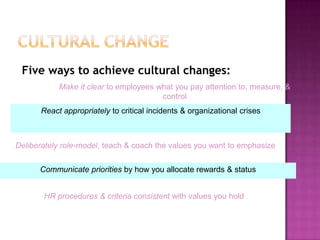
Cultural ChangeFive ways to achieve cultural changes:Make it clear to employees what you pay attention to, measure, & controlReact appropriately to critical incidents & organizational crisesDeliberately role-model, teach & coach the values you want to emphasizeCommunicate priorities by how you allocate rewards & statusHR procedures & criteria consistent with values you hold
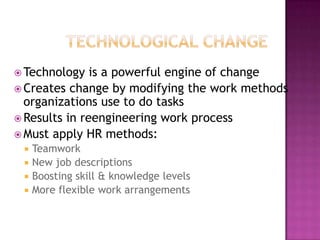
Technological ChangeTechnology is a powerful engine of changeCreates change by modifying the work methods organizations use to do tasksResults in reengineering work processMust apply HR methods:TeamworkNew job descriptionsBoosting skill & knowledge levelsMore flexible work arrangements
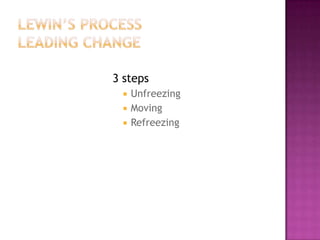
Lewin’s Process Leading Change3 stepsUnfreezingMovingRefreezing
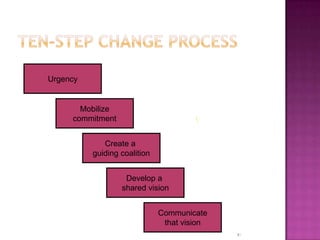
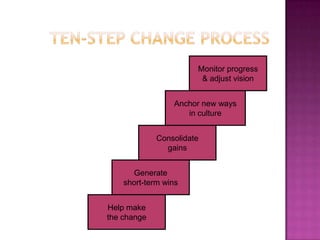
Ten-step Change ProcessMobilizecommitmentCommunicatethat visionUrgencyCreate a guiding coalitionDevelop a shared vision
Monitor progress& adjust visionTen-step Change ProcessAnchor new waysin cultureConsolidategainsGenerateshort-term winsHelp makethe change
Using OrganizationalDevelopment	Organizational development is a special approach to organizational change in which the employees themselves formulate the change that’s required and implement it, often with the assistance of a trained consultant
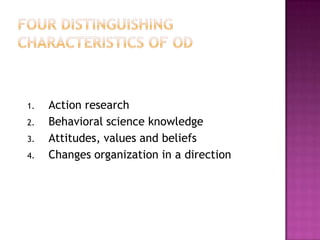
Four DistinguishingCharacteristics of ODAction researchBehavioral science knowledgeAttitudes, values and beliefsChanges organization in a direction
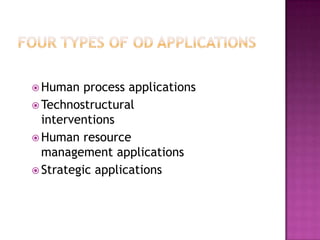
Four Types of OD ApplicationsHuman process applicationsTechnostructural interventionsHuman resource management applicationsStrategic applications
Human Process ApplicationsAim first at improving human relations skillsProvide insights and skills required to better analyze behaviorsA facilitator uses survey research to solve problems & plan action
Human Process ApplicationsSensitivity, laboratory, or T-group training are used minimally todayTeam building can improve effectivenessConfrontation meetings resolve misconceptions
Using OD to Increase ProductivityTechnostructural interventionsHR management applications use action research Strategic applications harmonize
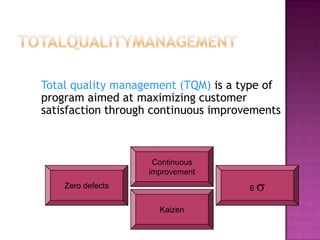
TotalQualityManagement	Total quality management (TQM) is a type of program aimed at maximizing customer satisfaction through continuous improvementsContinuousimprovementZero defects6 Kaizen
Creating Team Based Organizations82% of U.S. Companies use teams to perform some tasksSelf-directed teamshave several distinguishing characteristics:Perform naturally interdependent tasksUse consensus decision makingTeam’s members perform enriched jobsTeams are also highly trainedEmployers empower the teams & individual members
Entrepreneurs + HR - EmpowermentTime Vision finds employee empowerment works well in cases that directly involve employeesTeam investigates which retirement vehicle to use & has responsibility to switch to itFinds empowerment requires right employee and correct training
How to Build Productive TeamsEstablish demanding performance standardsSelect members for attitudes and skillsTrain leaders to “coach,” not “boss”Use positive feedbackSelect those who like teamworkTrain, train, and train some moreCross-train for flexibility
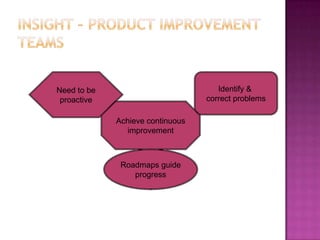
Insight – Product Improvement TeamsNeed to beproactiveIdentify & correct problemsAchieve continuousimprovementRoadmaps guideprogress
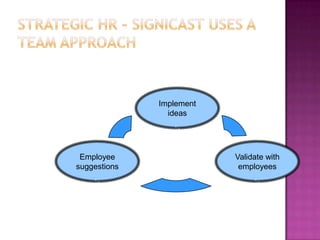
Strategic HR – Signicast Uses a Team ApproachImplementideasEmployeesuggestionsValidate withemployees
Employee Involvement ProgramsAn employee involvement program, a team activity,is any formal program that lets employees participate in formulating important work decisions or in supervising their own work activitiesManagers rank them as great productivity boosters
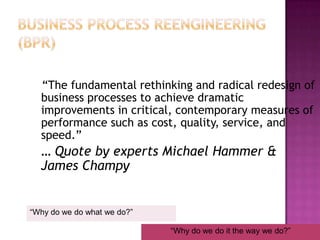
Business Process Reengineering (BPR)   “The fundamental rethinking and radical redesign of business processes to achieve dramatic improvements in critical, contemporary measures of performance such as cost, quality, service, and speed.” 	… Quote by experts Michael Hammer & James Champy“Why do we do what we do?”“Why do we do it the way we do?”
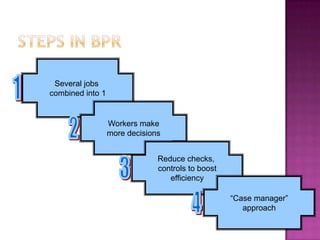
Steps in BPRSeveral jobs combined into 11Workers makemore decisions2Reduce checks, controls to boostefficiency3“Case manager”approach4
HR’s Role in Reengineering ProcessHelp build commitmentPromote team buildingRedesign compensationRedesign the work itselfCreate empowered jobs
Flexible Work ArrangementsOrganizational renewal does not require massive changeFlextime allows workers to build their day around core midday hoursCompressed workweeks offer longer workdays but fewer of them
More FlexibilityJob sharing – two or more people share a single full time jobWork sharing – a temporary group work-hour reduction during economic slowdownsWork from home or telecommuting – using the internet to “phone in” your work

Managing strategic organizational renewal

  • 1.
  • 2.
    Strategic OverviewSelect, train,and organize employeesPreviously focused on the training and management development methodsConcepts and skills you need to more successfully implement organizational changes
  • 3.
    Managing Change –What Do We Change?Strategic change – a company’s strategy, mission and visionCultural change – a company’s shared values and aimsStructural change – reorganizationDevelopmental change – people’s attitudes and skillsTechnological change – work methods
  • 4.
    Cultural ChangeFive waysto achieve cultural changes:Make it clear to employees what you pay attention to, measure, & controlReact appropriately to critical incidents & organizational crisesDeliberately role-model, teach & coach the values you want to emphasizeCommunicate priorities by how you allocate rewards & statusHR procedures & criteria consistent with values you hold
  • 5.
    Technological ChangeTechnology isa powerful engine of changeCreates change by modifying the work methods organizations use to do tasksResults in reengineering work processMust apply HR methods:TeamworkNew job descriptionsBoosting skill & knowledge levelsMore flexible work arrangements
  • 6.
    Lewin’s Process LeadingChange3 stepsUnfreezingMovingRefreezing
  • 7.
    Ten-step Change ProcessMobilizecommitmentCommunicatethatvisionUrgencyCreate a guiding coalitionDevelop a shared vision
  • 8.
    Monitor progress& adjustvisionTen-step Change ProcessAnchor new waysin cultureConsolidategainsGenerateshort-term winsHelp makethe change
  • 9.
    Using OrganizationalDevelopment Organizational developmentis a special approach to organizational change in which the employees themselves formulate the change that’s required and implement it, often with the assistance of a trained consultant
  • 10.
    Four DistinguishingCharacteristics ofODAction researchBehavioral science knowledgeAttitudes, values and beliefsChanges organization in a direction
  • 11.
    Four Types ofOD ApplicationsHuman process applicationsTechnostructural interventionsHuman resource management applicationsStrategic applications
  • 12.
    Human Process ApplicationsAimfirst at improving human relations skillsProvide insights and skills required to better analyze behaviorsA facilitator uses survey research to solve problems & plan action
  • 13.
    Human Process ApplicationsSensitivity,laboratory, or T-group training are used minimally todayTeam building can improve effectivenessConfrontation meetings resolve misconceptions
  • 14.
    Using OD toIncrease ProductivityTechnostructural interventionsHR management applications use action research Strategic applications harmonize
  • 15.
    TotalQualityManagement Total quality management(TQM) is a type of program aimed at maximizing customer satisfaction through continuous improvementsContinuousimprovementZero defects6 Kaizen
  • 16.
    Creating Team BasedOrganizations82% of U.S. Companies use teams to perform some tasksSelf-directed teamshave several distinguishing characteristics:Perform naturally interdependent tasksUse consensus decision makingTeam’s members perform enriched jobsTeams are also highly trainedEmployers empower the teams & individual members
  • 17.
    Entrepreneurs + HR- EmpowermentTime Vision finds employee empowerment works well in cases that directly involve employeesTeam investigates which retirement vehicle to use & has responsibility to switch to itFinds empowerment requires right employee and correct training
  • 18.
    How to BuildProductive TeamsEstablish demanding performance standardsSelect members for attitudes and skillsTrain leaders to “coach,” not “boss”Use positive feedbackSelect those who like teamworkTrain, train, and train some moreCross-train for flexibility
  • 19.
    Insight – ProductImprovement TeamsNeed to beproactiveIdentify & correct problemsAchieve continuousimprovementRoadmaps guideprogress
  • 20.
    Strategic HR –Signicast Uses a Team ApproachImplementideasEmployeesuggestionsValidate withemployees
  • 21.
    Employee Involvement ProgramsAnemployee involvement program, a team activity,is any formal program that lets employees participate in formulating important work decisions or in supervising their own work activitiesManagers rank them as great productivity boosters
  • 22.
    Business Process Reengineering(BPR) “The fundamental rethinking and radical redesign of business processes to achieve dramatic improvements in critical, contemporary measures of performance such as cost, quality, service, and speed.” … Quote by experts Michael Hammer & James Champy“Why do we do what we do?”“Why do we do it the way we do?”
  • 23.
    Steps in BPRSeveraljobs combined into 11Workers makemore decisions2Reduce checks, controls to boostefficiency3“Case manager”approach4
  • 24.
    HR’s Role inReengineering ProcessHelp build commitmentPromote team buildingRedesign compensationRedesign the work itselfCreate empowered jobs
  • 25.
    Flexible Work ArrangementsOrganizationalrenewal does not require massive changeFlextime allows workers to build their day around core midday hoursCompressed workweeks offer longer workdays but fewer of them
  • 26.
    More FlexibilityJob sharing– two or more people share a single full time jobWork sharing – a temporary group work-hour reduction during economic slowdownsWork from home or telecommuting – using the internet to “phone in” your work