By:
Abhay Yadav
Email: yadavabhay@gmail.com
www.micoserve.com
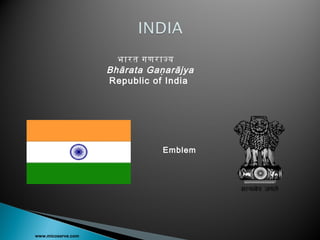
भारत गणराजय
Bhārata Gaṇarājya
Republic of India
Flag Emblem
www.micoserve.com
 The Republic of India (Sanskrit: Bhārata Gaṇarājya), also known as
India or Bharat, is a country in South Asia.
 It is the seventh-largest country by geographical area, the
second most populous country, and the most populous liberal democracy in
the world.
 India has a coastline of over seven thousand kilometres, bounded by the
Indian Ocean on the south, the Arabian Sea on the west, and the
Bay of Bengal on the east. India borders Pakistan to the west; China, Nepal
and Bhutan to the north-east; and Bangladesh and Myanmar to the east.
 In the Indian Ocean, India is in the vicinity of Sri Lanka, Maldives and
Indonesia.
www.micoserve.com
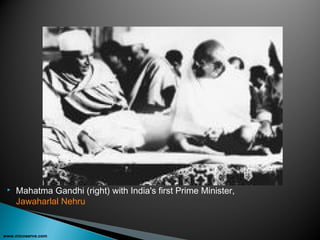
 Mahatma Gandhi (right) with India's first Prime Minister,
Jawaharlal Nehru
www.micoserve.com
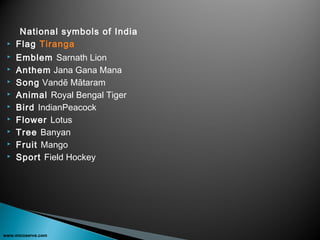
National symbols of India
 Flag Tiranga
 Emblem Sarnath Lion
 Anthem Jana Gana Mana
 Song Vandē Mātaram
 Animal Royal Bengal Tiger
 Bird IndianPeacock
 Flower Lotus
 Tree Banyan
 Fruit Mango
 Sport Field Hockey
www.micoserve.com
 HR Practices
www.micoserve.com
  Recruitment & Selection
 Training & Development
 
 Compensation Benefits
 Performance appraisal
 Employee Relations and Communications
www.micoserve.com
India is nowhere behind the international practices in HR. It is not
much different either. Small amount of brushing up and adjustment
is always needed even when you move from one job to another in
India also.
www.micoserve.com
 In order to operate effectively in the Indian business environment,
companies and their HR professionals need to fully understand the
specific nature of the business landscape.
 Managing India's HR Environment is full of practical information on
crucial HR issues, challenges and trends relating to a range of
topics including compensation, benefits, tax and expatriate issues.
www.micoserve.com
 HR in India would rank as the most dynamic and turbulent in the
whole world today. So many new jobs, so many to hire, so many to
train, so many to retain and so many to keep happy
 HR and organisation building issues are centre of the plate in any
Indian CEO's agenda today
www.micoserve.com
 CEOs are willing to spend as much as it takes to manage their
people and people processes well.
 What is on the minds of our CEOs is the competence gap. They are
most worried about the acute shortage of HR talent and HR
competence.
 At a time when good HR support is needed the most, it is just not
available in the measure they would like.
www.micoserve.com
CEOs in India report HR challenges as - HR executives:
 Creating a high-performance culture.
 Retaining talent.
 Recruiting.
 Moving from patriarchic, hierarchical management to a more team-
based, informal organizational culture.
 Linking training with performance.
 Compensating knowledge workers.
 Building interpersonal relationships/managing conflict.
 Going global.
www.micoserve.com
 Most of the nation’s job and economic growth has been generated
by family-owned Indian enterprises and multinationals in industries
such as information technology (IT), telecommunications, business
process outsourcing (BPO) and pharmaceuticals.
 Despite the fact that India has a population of more than 1 billion
people, and a workforce of 422 million, its literacy rate is a low 59.5
percent (compared with 99 percent in the United States). Further,
only about 48 million people—less than 12 percent of the entire
workforce—are college graduates. And those who do hold college
degrees often don’t possess the skills needed by the nation’s
surging industries.
www.micoserve.com
The HR Agenda
 With the national economy growing rapidly and with growth in such
industries as IT and business process outsourcing more than
doubling, HR challenges are coming fast and furious.
 Faced with growth at record levels in some industries and
skyrocketing attrition, HR professionals say they’re spending
upward of 80 percent of their time on recruitment.
www.micoserve.com
 Most important, finding workers with the right skills is a problem.
Even hot industries that can attract college graduates from the top-
tier business schools are being forced by market conditions to
inflate salaries and lower job expectations.
 Employers in India are forced to quickly boost pay for in-demand
employees—or risk losing them
www.micoserve.com
 Another factor driving up salaries is the fact that skilled Indian
workers know there is always another job opportunity and tend to
give long notices—four to six weeks—to survey prospects and
receive counteroffers from current employers.
 Retention, no matter the industry, is a nightmare—especially among
younger workers. Some new hires never even make it to the first
day of the job, having found a better offer elsewhere in the short
time between the offer and the start date.
www.micoserve.com
 Another key problem is finding workers with the right mind-set - that
changing the workplace culture is their most pressing HR concern.
 Middle-class Indian workers today, especially the younger ones,
have more disposable income and are increasingly interested in
gaining material possession right away.
www.micoserve.com
Every company’s tactics are geared toward quickly hiring good
candidates, rapidly boosting their skills and offering an environment
that appeals to them on a more personal level by:
 Rapidly handling screening and selection.
 Offering up-front training .
 Emphasizing horizontal and vertical opportunities .
 Offering continuing education .
 Stressing family ties.
www.micoserve.com
 There are many reasons why companies like Infosys might be
feeling a talent shortage in HR.
1. The large IT companies have a huge HR group, numbering
almost 200-300. Good HR folks want to move to smaller groups to
increase there chance of being visible.
2. The talent pool for good HR professionals is quite limited in India,
to institutes that are only a handful in number.
www.micoserve.com
 The Indian economy is booming! India is becoming more and more
popular as a low-cost place to manufacture goods and outsource
services.  But without a full grasp of the local HR framework, cost
savings can be elusive
www.micoserve.com

HR Practices in India

  • 1.
  • 2.
  • 3.
     The Republicof India (Sanskrit: Bhārata Gaṇarājya), also known as India or Bharat, is a country in South Asia.  It is the seventh-largest country by geographical area, the second most populous country, and the most populous liberal democracy in the world.  India has a coastline of over seven thousand kilometres, bounded by the Indian Ocean on the south, the Arabian Sea on the west, and the Bay of Bengal on the east. India borders Pakistan to the west; China, Nepal and Bhutan to the north-east; and Bangladesh and Myanmar to the east.  In the Indian Ocean, India is in the vicinity of Sri Lanka, Maldives and Indonesia. www.micoserve.com
  • 4.
     Mahatma Gandhi(right) with India's first Prime Minister, Jawaharlal Nehru www.micoserve.com
  • 5.
    National symbols ofIndia  Flag Tiranga  Emblem Sarnath Lion  Anthem Jana Gana Mana  Song Vandē Mātaram  Animal Royal Bengal Tiger  Bird IndianPeacock  Flower Lotus  Tree Banyan  Fruit Mango  Sport Field Hockey www.micoserve.com
  • 6.
  • 7.
      Recruitment &Selection  Training & Development    Compensation Benefits  Performance appraisal  Employee Relations and Communications www.micoserve.com
  • 8.
    India is nowherebehind the international practices in HR. It is not much different either. Small amount of brushing up and adjustment is always needed even when you move from one job to another in India also. www.micoserve.com
  • 9.
     In orderto operate effectively in the Indian business environment, companies and their HR professionals need to fully understand the specific nature of the business landscape.  Managing India's HR Environment is full of practical information on crucial HR issues, challenges and trends relating to a range of topics including compensation, benefits, tax and expatriate issues. www.micoserve.com
  • 10.
     HR inIndia would rank as the most dynamic and turbulent in the whole world today. So many new jobs, so many to hire, so many to train, so many to retain and so many to keep happy  HR and organisation building issues are centre of the plate in any Indian CEO's agenda today www.micoserve.com
  • 11.
     CEOs arewilling to spend as much as it takes to manage their people and people processes well.  What is on the minds of our CEOs is the competence gap. They are most worried about the acute shortage of HR talent and HR competence.  At a time when good HR support is needed the most, it is just not available in the measure they would like. www.micoserve.com
  • 12.
    CEOs in Indiareport HR challenges as - HR executives:  Creating a high-performance culture.  Retaining talent.  Recruiting.  Moving from patriarchic, hierarchical management to a more team- based, informal organizational culture.  Linking training with performance.  Compensating knowledge workers.  Building interpersonal relationships/managing conflict.  Going global. www.micoserve.com
  • 13.
     Most ofthe nation’s job and economic growth has been generated by family-owned Indian enterprises and multinationals in industries such as information technology (IT), telecommunications, business process outsourcing (BPO) and pharmaceuticals.  Despite the fact that India has a population of more than 1 billion people, and a workforce of 422 million, its literacy rate is a low 59.5 percent (compared with 99 percent in the United States). Further, only about 48 million people—less than 12 percent of the entire workforce—are college graduates. And those who do hold college degrees often don’t possess the skills needed by the nation’s surging industries. www.micoserve.com
  • 14.
    The HR Agenda With the national economy growing rapidly and with growth in such industries as IT and business process outsourcing more than doubling, HR challenges are coming fast and furious.  Faced with growth at record levels in some industries and skyrocketing attrition, HR professionals say they’re spending upward of 80 percent of their time on recruitment. www.micoserve.com
  • 15.
     Most important,finding workers with the right skills is a problem. Even hot industries that can attract college graduates from the top- tier business schools are being forced by market conditions to inflate salaries and lower job expectations.  Employers in India are forced to quickly boost pay for in-demand employees—or risk losing them www.micoserve.com
  • 16.
     Another factordriving up salaries is the fact that skilled Indian workers know there is always another job opportunity and tend to give long notices—four to six weeks—to survey prospects and receive counteroffers from current employers.  Retention, no matter the industry, is a nightmare—especially among younger workers. Some new hires never even make it to the first day of the job, having found a better offer elsewhere in the short time between the offer and the start date. www.micoserve.com
  • 17.
     Another keyproblem is finding workers with the right mind-set - that changing the workplace culture is their most pressing HR concern.  Middle-class Indian workers today, especially the younger ones, have more disposable income and are increasingly interested in gaining material possession right away. www.micoserve.com
  • 18.
    Every company’s tacticsare geared toward quickly hiring good candidates, rapidly boosting their skills and offering an environment that appeals to them on a more personal level by:  Rapidly handling screening and selection.  Offering up-front training .  Emphasizing horizontal and vertical opportunities .  Offering continuing education .  Stressing family ties. www.micoserve.com
  • 19.
     There aremany reasons why companies like Infosys might be feeling a talent shortage in HR. 1. The large IT companies have a huge HR group, numbering almost 200-300. Good HR folks want to move to smaller groups to increase there chance of being visible. 2. The talent pool for good HR professionals is quite limited in India, to institutes that are only a handful in number. www.micoserve.com
  • 20.
     The Indianeconomy is booming! India is becoming more and more popular as a low-cost place to manufacture goods and outsource services.  But without a full grasp of the local HR framework, cost savings can be elusive www.micoserve.com