Human Resource Development
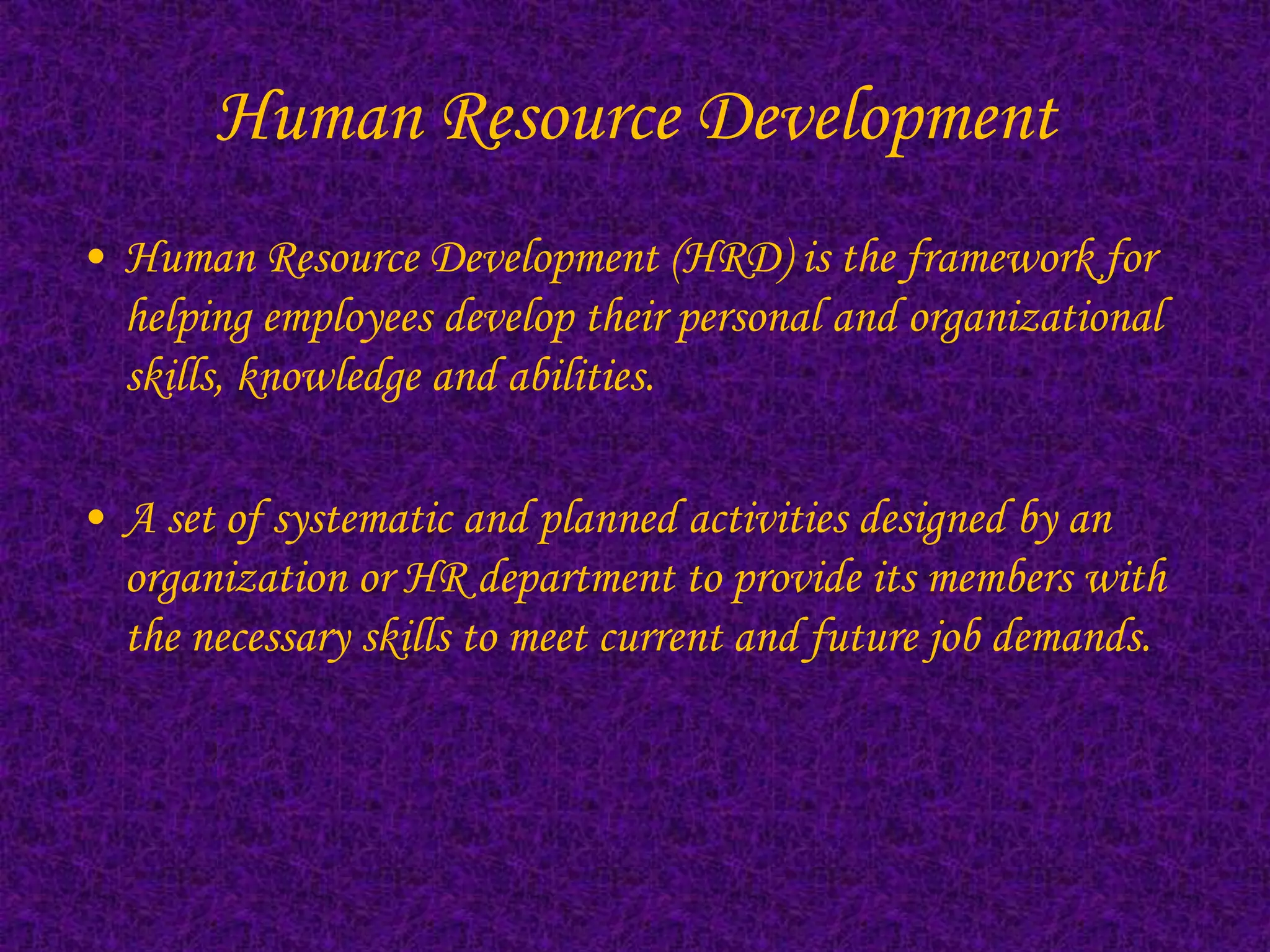
• Human Resource Development (HRD) is the framework for
  helping employees develop their personal and organizational
  skills, knowledge and abilities.

• A set of systematic and planned activities designed by an
  organization or HR department to provide its members with
  the necessary skills to meet current and future job demands.
HRD Strategies
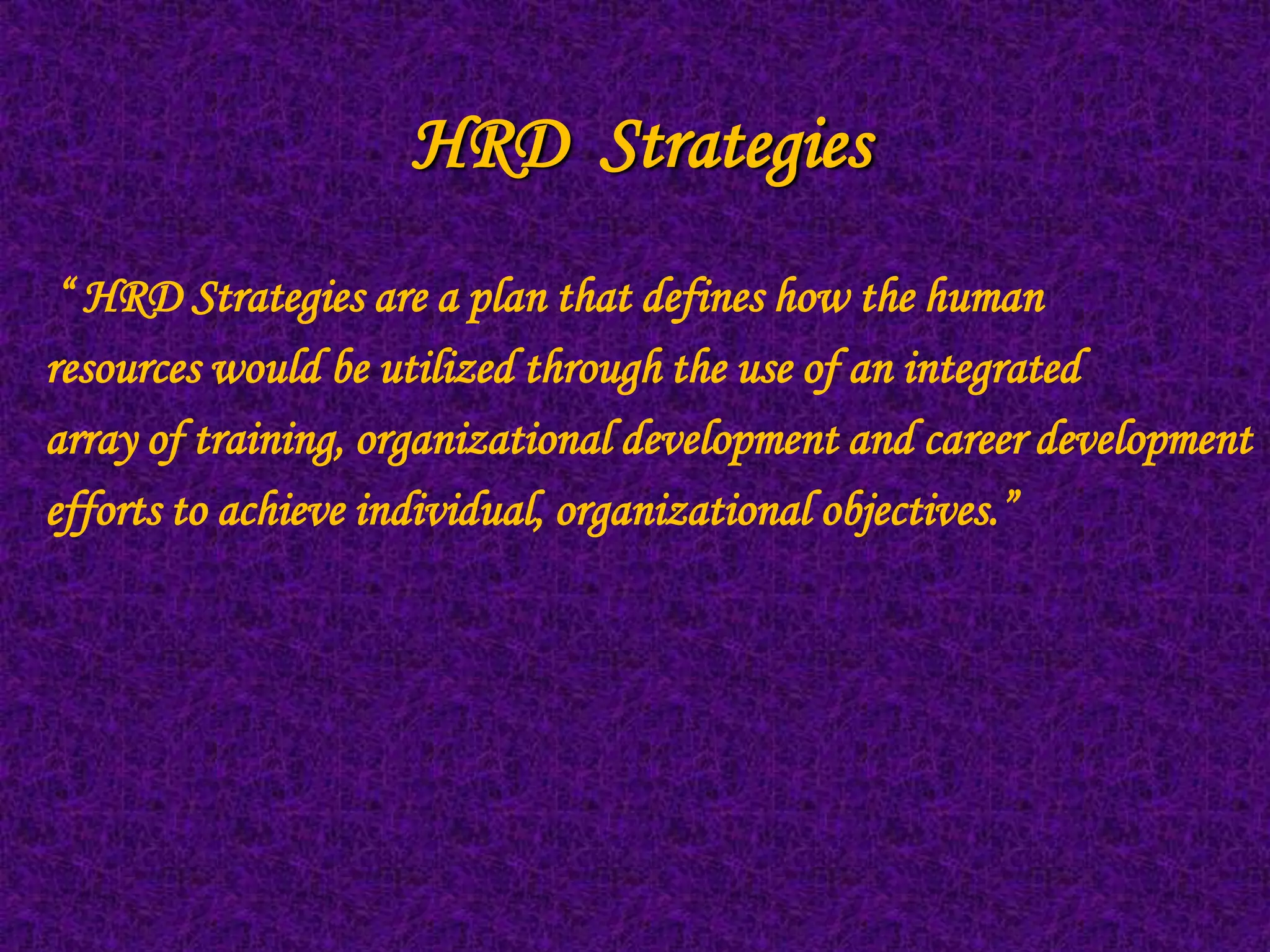
 “ HRD Strategies are a plan that defines how the human
resources would be utilized through the use of an integrated
array of training, organizational development and career development
efforts to achieve individual, organizational objectives.”
Major HRD Strategies

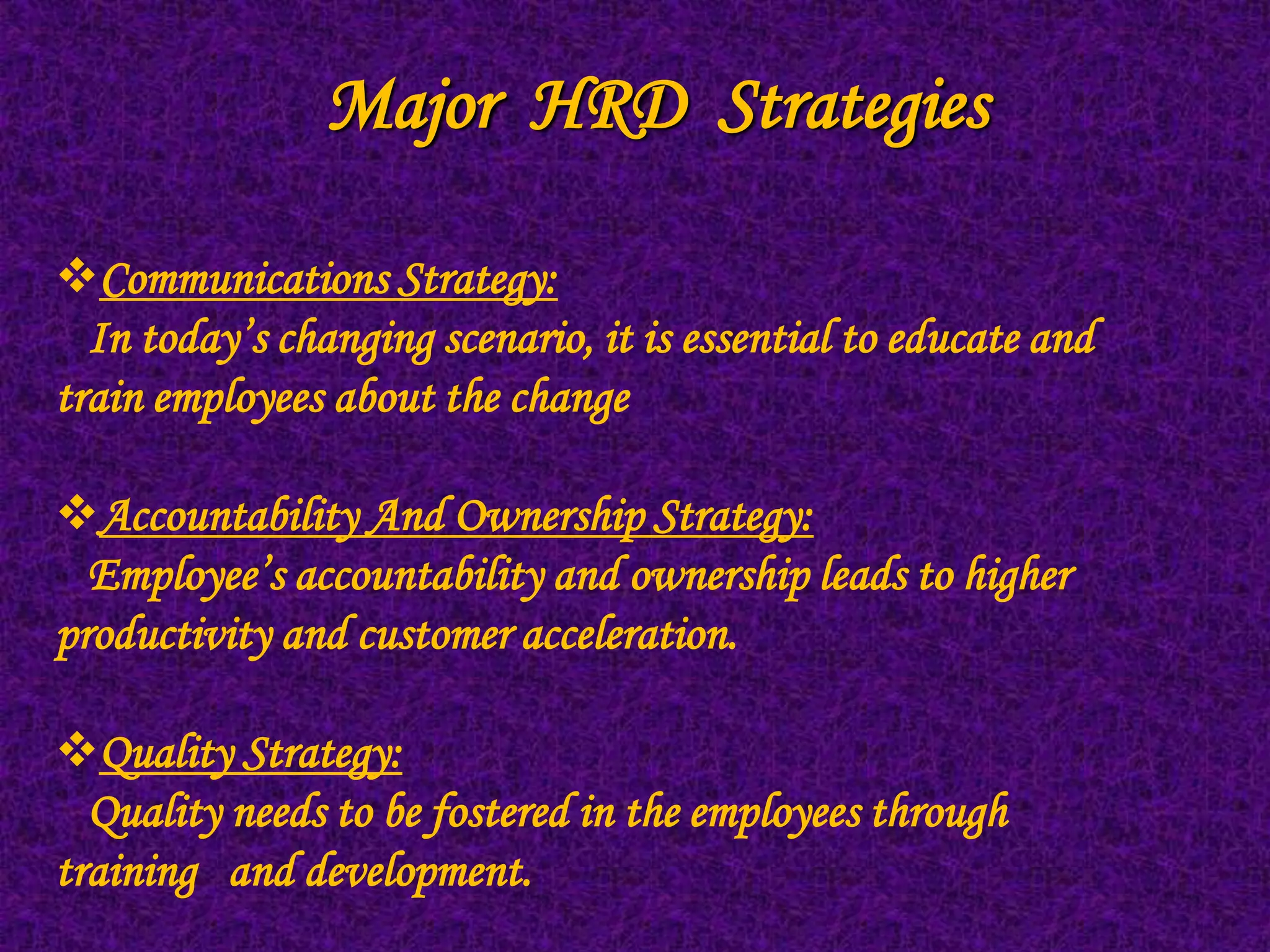
Communications Strategy:
  In today’s changing scenario, it is essential to educate and
train employees about the change

Accountability And Ownership Strategy:
  Employee’s accountability and ownership leads to higher
productivity and customer acceleration.

Quality Strategy:
  Quality needs to be fostered in the employees through
training and development.
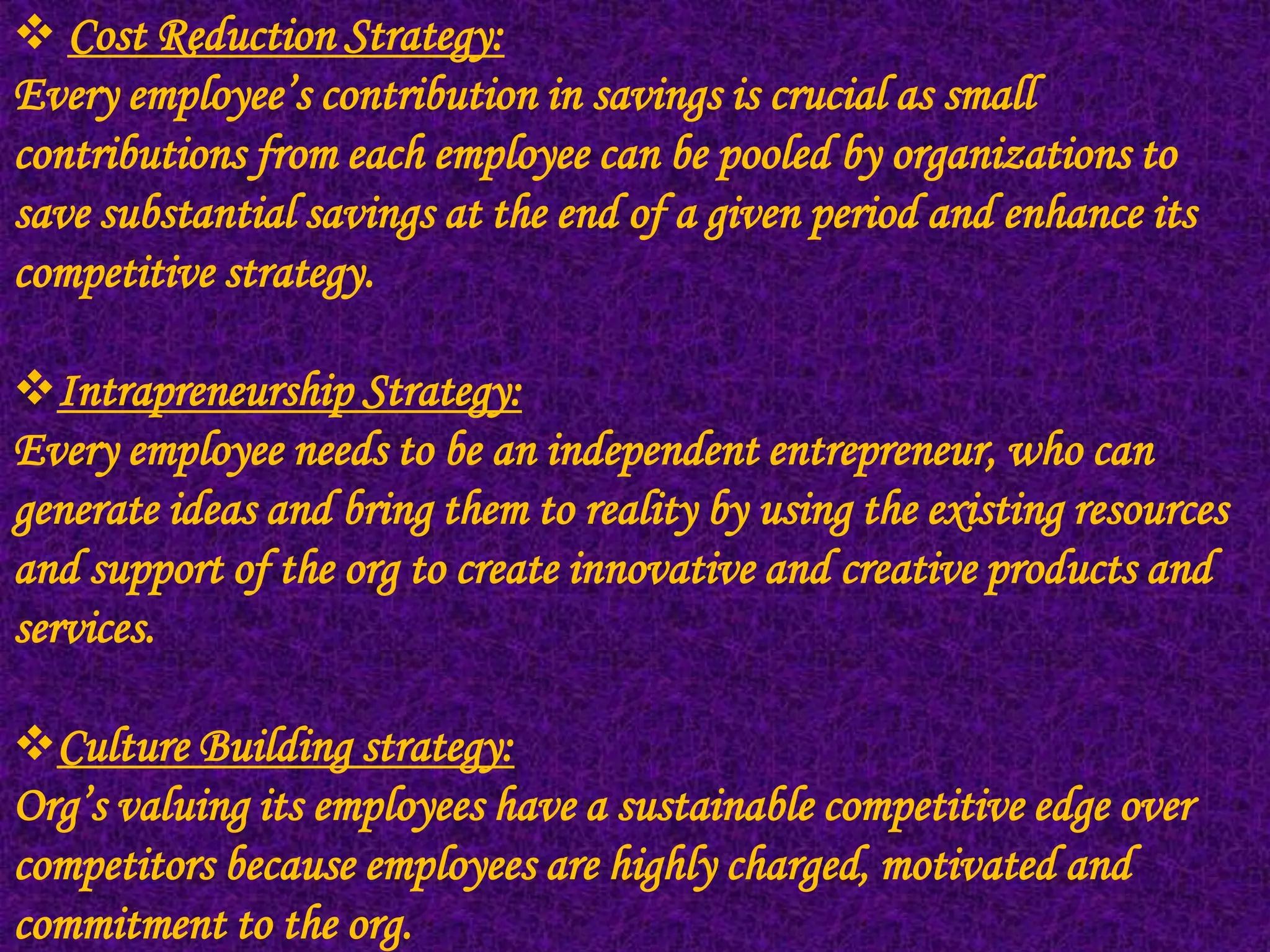
 Cost Reduction Strategy:
Every employee’s contribution in savings is crucial as small
contributions from each employee can be pooled by organizations to
save substantial savings at the end of a given period and enhance its
competitive strategy.

Intrapreneurship Strategy:
Every employee needs to be an independent entrepreneur, who can
generate ideas and bring them to reality by using the existing resources
and support of the org to create innovative and creative products and
services.

Culture Building strategy:
Org’s valuing its employees have a sustainable competitive edge over
competitors because employees are highly charged, motivated and
commitment to the org.
Systematic Training Strategy:
The planning and organization of formal on-job training and
off-job training leads to improving vital employee
characteristics, build and sustain appropriate work culture
and brings in more professionalism in action.

Learning Strategy:
Continuous development and learning environments promote
self development of employees, of self and by self.
Goals of HRD
 To enable the capability of each employee as an individual in
  relation to his present & future role.
 To develop relationship between each employee & his/her
  supervisor.
 Integration of people development with the organizational
  development.
 To develop team spirit in people working in an organization.
 To develop the human resources philosophy for the entire
  organization & get the top management committed to it openly.
 To develop cooperation & Collaboration among different units of
  the organization.
 Maximization of learning opportunities of individuals in an
  organisation
 To maintain the overall health of an organisation.
 Balancing of change & adaption.
 HRD is needed to develop competencies.
 Create environment for the trainees conducive to their character
  building.
 Promote a culture of creativity, innovation, human development,
  respect and dignity.
 Provide opportunity for development of different level of
  employees.
 Need based training programs.
 Prepare newly inducted staff to perform their work with high level
  of competency and excellence.
Hrd strategies

Hrd strategies

  • 2.
    Human Resource Development •Human Resource Development (HRD) is the framework for helping employees develop their personal and organizational skills, knowledge and abilities. • A set of systematic and planned activities designed by an organization or HR department to provide its members with the necessary skills to meet current and future job demands.
  • 3.
    HRD Strategies “HRD Strategies are a plan that defines how the human resources would be utilized through the use of an integrated array of training, organizational development and career development efforts to achieve individual, organizational objectives.”
  • 4.
    Major HRD Strategies CommunicationsStrategy: In today’s changing scenario, it is essential to educate and train employees about the change Accountability And Ownership Strategy: Employee’s accountability and ownership leads to higher productivity and customer acceleration. Quality Strategy: Quality needs to be fostered in the employees through training and development.
  • 5.
     Cost ReductionStrategy: Every employee’s contribution in savings is crucial as small contributions from each employee can be pooled by organizations to save substantial savings at the end of a given period and enhance its competitive strategy. Intrapreneurship Strategy: Every employee needs to be an independent entrepreneur, who can generate ideas and bring them to reality by using the existing resources and support of the org to create innovative and creative products and services. Culture Building strategy: Org’s valuing its employees have a sustainable competitive edge over competitors because employees are highly charged, motivated and commitment to the org.
  • 6.
    Systematic Training Strategy: Theplanning and organization of formal on-job training and off-job training leads to improving vital employee characteristics, build and sustain appropriate work culture and brings in more professionalism in action. Learning Strategy: Continuous development and learning environments promote self development of employees, of self and by self.
  • 7.
    Goals of HRD To enable the capability of each employee as an individual in relation to his present & future role.  To develop relationship between each employee & his/her supervisor.  Integration of people development with the organizational development.  To develop team spirit in people working in an organization.  To develop the human resources philosophy for the entire organization & get the top management committed to it openly.  To develop cooperation & Collaboration among different units of the organization.
  • 8.
     Maximization oflearning opportunities of individuals in an organisation  To maintain the overall health of an organisation.  Balancing of change & adaption.  HRD is needed to develop competencies.  Create environment for the trainees conducive to their character building.  Promote a culture of creativity, innovation, human development, respect and dignity.  Provide opportunity for development of different level of employees.  Need based training programs.  Prepare newly inducted staff to perform their work with high level of competency and excellence.