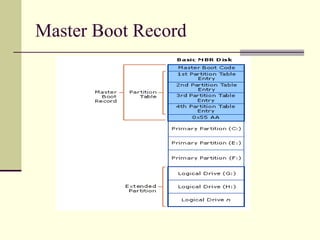
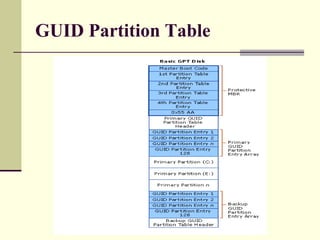
This document discusses disk storage and disk configurations in Windows Server 2008. It describes the differences between basic disks and dynamic disks. Basic disks use partitions, while dynamic disks use volumes that provide features like spanning across multiple disks. It also covers converting between disk types, the two partition styles (MBR and GPT), and the five types of dynamic volumes (simple, spanned, striped, mirrored, RAID-5). The Local Disk Manager and Virtual Disk Service manage dynamic disks and storage configurations.