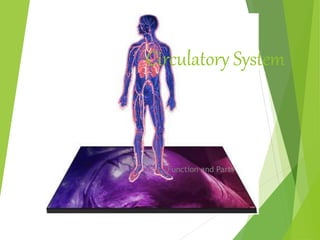
Circulatory System
Function and Parts
Definition
 It is a fluid-filled network of tubes (or vessels)
through which materials move between the
environment and the cells of a multicellular
animal.
Characteristics
 It connects all parts of an organism in a way
that allows individual cells to thrive as well as
for organisms to function as a unit
 It is an entirely closed system
Function
 Transport materials needed by cells
Oxygen
Glucose
 Remove waste materials from cells
Carbon dioxide
urea
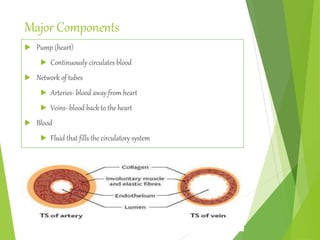
Major Components
 Pump (heart)
 Continuously circulates blood
 Network of tubes
 Arteries- blood away from heart
 Veins- blood back to the heart
 Blood
 Fluid that fills the circulatory system
Accessory Organs
 Lungs- organ where oxygen is taken up and CO2 is
released
 Kidneys- organ where wastes are removed from
blood; critical in regulating fluids in the body
 Small intestine- digestion
 Large intestine- water absorption
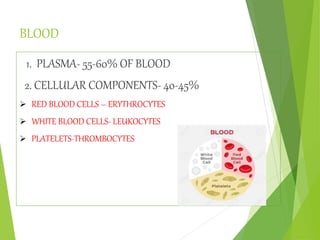
BLOOD
1. PLASMA- 55-60% OF BLOOD
2. CELLULAR COMPONENTS- 40-45%
 RED BLOOD CELLS – ERYTHROCYTES
 WHITE BLOOD CELLS- LEUKOCYTES
 PLATELETS-THROMBOCYTES
PLASMA
ALKALINE LIQUID
PALE COLORED
INORGANIC SALTS(1%)
 GLUCOSE ,AMINO ACIDS
 FIBRINOGEN,HORMONES(7-8%)
 90-92% WATER
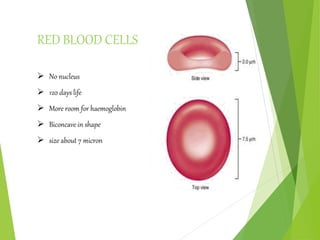
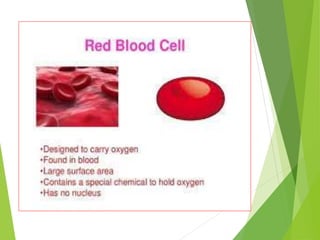
RED BLOOD CELLS
 No nucleus
 120 days life
 More room for haemoglobin
 Biconcave in shape
 size about 7 micron
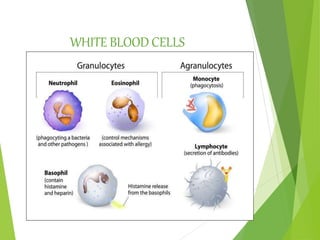
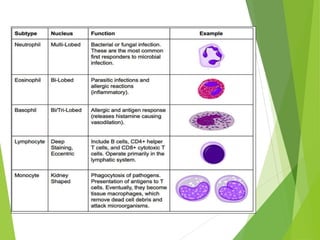
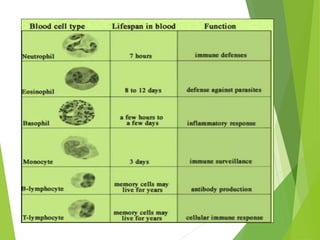
WHITE BLOOD CELLS
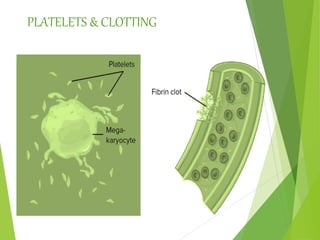
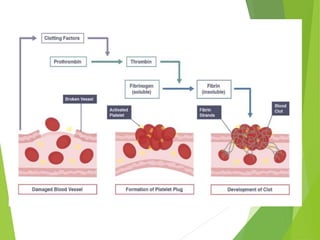
PLATELETS & CLOTTING
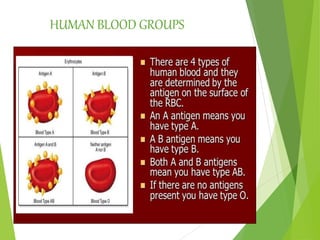
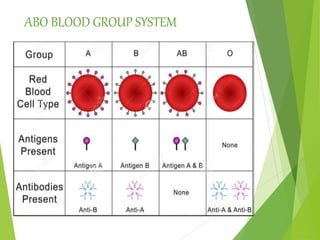
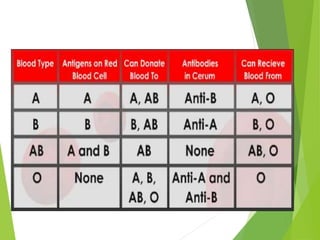
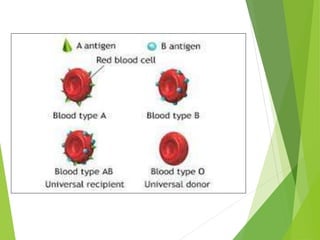
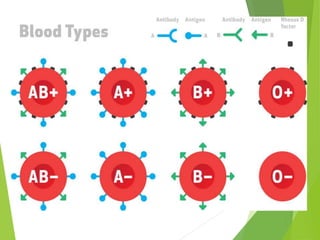
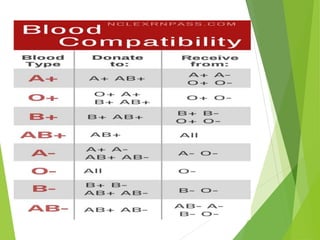
HUMAN BLOOD GROUPS
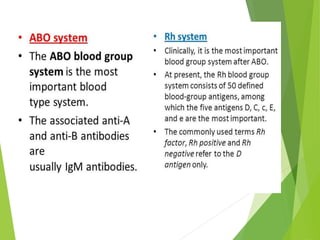
ABO BLOOD GROUP SYSTEM
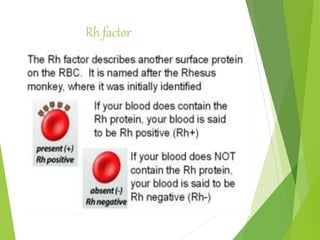
Rh factor
The Heart
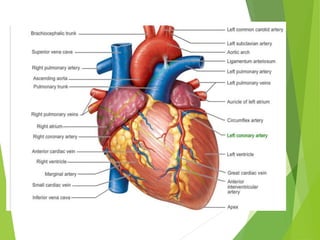
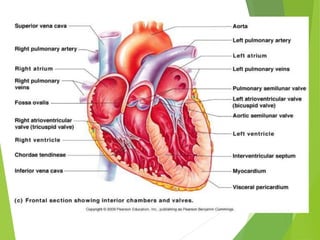
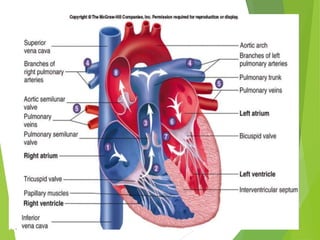
 The human heart has four chambers
 Left and right ventricle
 Left and right atrium
 The left side of the heart pumps oxygenated blood to the body while the right side
of the heart pumps deoxygenated blood to the lungs where oxygen can be
absorbed by the hemoglobin carrying red blood cells
Specific parts
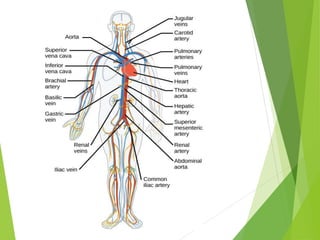
 Pulmonary arteries- transport blood to lungs
 Pulmonary veins- transport oxygenated blood to hear
 Aortic arch and trunk- main arteries from heart
 Common carotid artery- carries blood to brain
 Renal vein and artery- connects to kidneys
 Mesenteric veins- connects to intestine
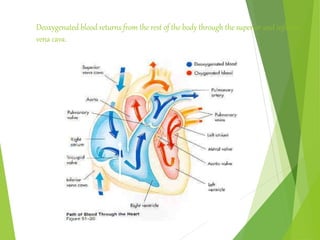
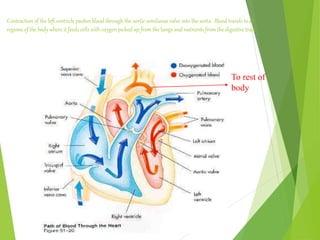
Deoxygenated blood returns from the rest of the body through the superior and inferior
vena cava.
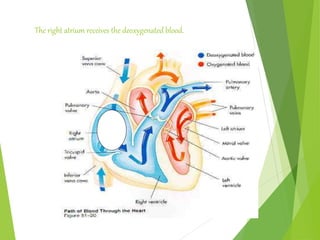
The right atrium receives the deoxygenated blood.
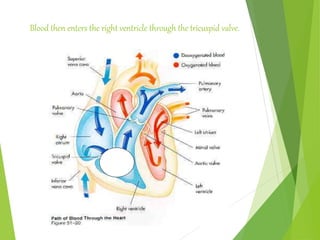
Blood then enters the right ventricle through the tricuspid valve.
To lungs
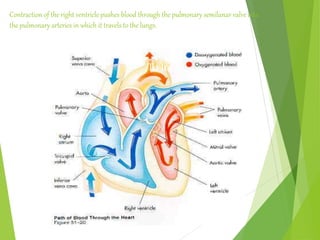
Contraction of the right ventricle pushes blood through the pulmonary semilunar valve into
the pulmonary arteries in which it travels to the lungs.
From lungs
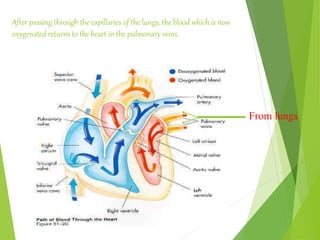
After passing through the capillaries of the lungs, the blood which is now
oxygenated returns to the heart in the pulmonary veins.
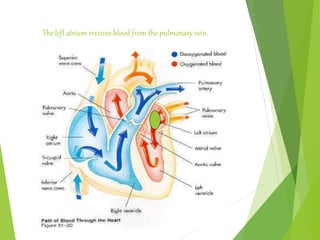
The left atrium receives blood from the pulmonary vein.
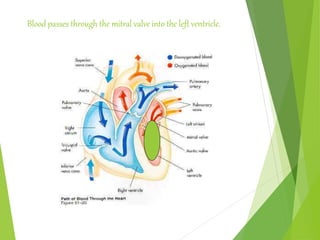
Blood passes through the mitral valve into the left ventricle.
To rest of
body
Contraction of the left ventricle pushes blood through the aortic semilunar valve into the aorta. Blood travels to all
regions of the body where it feeds cells with oxygen picked up from the lungs and nutrients from the digestive tract.
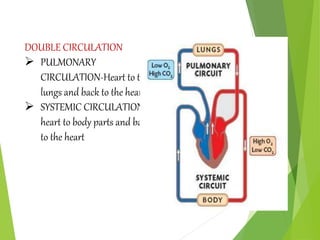
DOUBLE CIRCULATION
 PULMONARY
CIRCULATION-Heart to the
lungs and back to the heart.
 SYSTEMIC CIRCULATION-
heart to body parts and back
to the heart
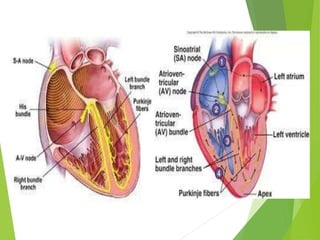
 Heart beat
 Pulse
 Cardiac cycle-systole & diastole
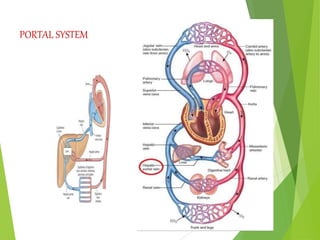
 Hepatic portal system
 Lymph & lymphatic system
 Tissue fluid
PORTAL SYSTEM
Blood Pressure
 Blood pressure is a measure of the force exerted by the blood on the wall of the
arteries.
 An example is 120/80 (systolic pressure/diastolic pressure.
 Systolic pressure is the result of the contraction of the ventricles (normal 110-140)
 Diastolic pressure is during the ventricle relaxation (normal 70-90)
Thank you and happy
learning. Stay safe all
of you.
--Dr. Gurminder
Rawal

Circulatory system

  • 1.
  • 2.
    Definition  It isa fluid-filled network of tubes (or vessels) through which materials move between the environment and the cells of a multicellular animal.
  • 3.
    Characteristics  It connectsall parts of an organism in a way that allows individual cells to thrive as well as for organisms to function as a unit  It is an entirely closed system
  • 4.
    Function  Transport materialsneeded by cells Oxygen Glucose  Remove waste materials from cells Carbon dioxide urea
  • 5.
    Major Components  Pump(heart)  Continuously circulates blood  Network of tubes  Arteries- blood away from heart  Veins- blood back to the heart  Blood  Fluid that fills the circulatory system
  • 6.
    Accessory Organs  Lungs-organ where oxygen is taken up and CO2 is released  Kidneys- organ where wastes are removed from blood; critical in regulating fluids in the body  Small intestine- digestion  Large intestine- water absorption
  • 7.
    BLOOD 1. PLASMA- 55-60%OF BLOOD 2. CELLULAR COMPONENTS- 40-45%  RED BLOOD CELLS – ERYTHROCYTES  WHITE BLOOD CELLS- LEUKOCYTES  PLATELETS-THROMBOCYTES
  • 8.
    PLASMA ALKALINE LIQUID PALE COLORED INORGANICSALTS(1%)  GLUCOSE ,AMINO ACIDS  FIBRINOGEN,HORMONES(7-8%)  90-92% WATER
  • 9.
    RED BLOOD CELLS No nucleus  120 days life  More room for haemoglobin  Biconcave in shape  size about 7 micron
  • 11.
  • 14.
  • 16.
  • 17.
  • 21.
  • 24.
    The Heart  Thehuman heart has four chambers  Left and right ventricle  Left and right atrium  The left side of the heart pumps oxygenated blood to the body while the right side of the heart pumps deoxygenated blood to the lungs where oxygen can be absorbed by the hemoglobin carrying red blood cells
  • 27.
    Specific parts  Pulmonaryarteries- transport blood to lungs  Pulmonary veins- transport oxygenated blood to hear  Aortic arch and trunk- main arteries from heart  Common carotid artery- carries blood to brain  Renal vein and artery- connects to kidneys  Mesenteric veins- connects to intestine
  • 30.
    Deoxygenated blood returnsfrom the rest of the body through the superior and inferior vena cava.
  • 31.
    The right atriumreceives the deoxygenated blood.
  • 32.
    Blood then entersthe right ventricle through the tricuspid valve.
  • 33.
    To lungs Contraction ofthe right ventricle pushes blood through the pulmonary semilunar valve into the pulmonary arteries in which it travels to the lungs.
  • 34.
    From lungs After passingthrough the capillaries of the lungs, the blood which is now oxygenated returns to the heart in the pulmonary veins.
  • 35.
    The left atriumreceives blood from the pulmonary vein.
  • 36.
    Blood passes throughthe mitral valve into the left ventricle.
  • 37.
    To rest of body Contractionof the left ventricle pushes blood through the aortic semilunar valve into the aorta. Blood travels to all regions of the body where it feeds cells with oxygen picked up from the lungs and nutrients from the digestive tract.
  • 39.
    DOUBLE CIRCULATION  PULMONARY CIRCULATION-Heartto the lungs and back to the heart.  SYSTEMIC CIRCULATION- heart to body parts and back to the heart
  • 40.
     Heart beat Pulse  Cardiac cycle-systole & diastole  Hepatic portal system  Lymph & lymphatic system  Tissue fluid
  • 41.
  • 42.
    Blood Pressure  Bloodpressure is a measure of the force exerted by the blood on the wall of the arteries.  An example is 120/80 (systolic pressure/diastolic pressure.  Systolic pressure is the result of the contraction of the ventricles (normal 110-140)  Diastolic pressure is during the ventricle relaxation (normal 70-90)
  • 43.
    Thank you andhappy learning. Stay safe all of you. --Dr. Gurminder Rawal