Concept 30.1The Circulatory system transports materials throughout the body
The Circulatory systemThe circulatory system transports nutrients, oxygen, and hormones throughout the body and carries wastes away from cells. The circulatory system includes the blood, heart, and blood vessels.
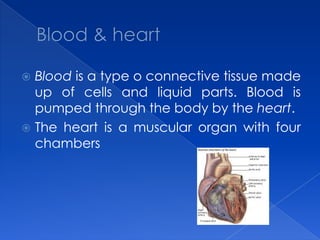
Blood & heartBlood is a type o connective tissue made up of cells and liquid parts. Blood is pumped through the body by the heart.The heart is a muscular organ with four chambers
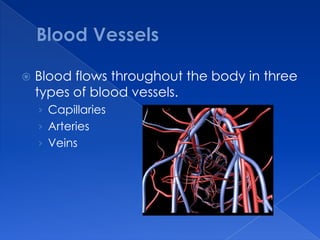
BloodVesselsBlood flows throughout the body in three types of blood vessels. CapillariesArteriesVeins
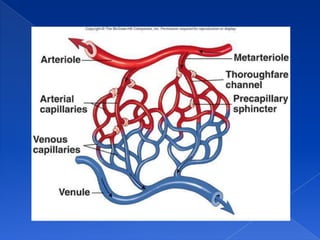
CapillariesCapillaries are microscopic vessels through which nutrients, oxygen, and wastes move between blood and interstitial fluid.
ArteriesArteries are thick-walled vessels that carry blood from the heart to the capillaries. The blood in arteries is under pressure, which helps to ensure that blood flows in the right direction.
VeinsVeins are vessels that carry blood form the capillaries to the heart. They are larger than capillaries but not as thick as arteries. Blood in veins is under very little pressure. Blood is moved through veins by contractions of the surrounding skeletal muscles. Most veins contain valves that allow blood to flow only toward the heart.
The Chemical exchange between blood and body tissues takes place in the interstitial fluid. At the artery end of a capillary, blood pressure forces fluid out through the capillary walls into the interstitial fluid. Blood cells and large proteins are too big to pass through capillary walls, so they stay in the capillary.
At the vein end of the capillary, the drop in blood pressure allows most of the fluid to reenter the capillary. The rest of the fluid is collected by vessels that make up the lymphatic system. Once inside the lymphatic vessels, the fluid is called lymph. Eventually, lymph drains into the circulatory system near the heart, allowing the fluid to be reused.

Concept 30.1

  • 1.
    Concept 30.1The Circulatorysystem transports materials throughout the body
  • 2.
    The Circulatory systemThecirculatory system transports nutrients, oxygen, and hormones throughout the body and carries wastes away from cells. The circulatory system includes the blood, heart, and blood vessels.
  • 3.
    Blood & heartBloodis a type o connective tissue made up of cells and liquid parts. Blood is pumped through the body by the heart.The heart is a muscular organ with four chambers
  • 4.
    BloodVesselsBlood flows throughoutthe body in three types of blood vessels. CapillariesArteriesVeins
  • 5.
    CapillariesCapillaries are microscopicvessels through which nutrients, oxygen, and wastes move between blood and interstitial fluid.
  • 6.
    ArteriesArteries are thick-walledvessels that carry blood from the heart to the capillaries. The blood in arteries is under pressure, which helps to ensure that blood flows in the right direction.
  • 7.
    VeinsVeins are vesselsthat carry blood form the capillaries to the heart. They are larger than capillaries but not as thick as arteries. Blood in veins is under very little pressure. Blood is moved through veins by contractions of the surrounding skeletal muscles. Most veins contain valves that allow blood to flow only toward the heart.
  • 9.
    The Chemical exchangebetween blood and body tissues takes place in the interstitial fluid. At the artery end of a capillary, blood pressure forces fluid out through the capillary walls into the interstitial fluid. Blood cells and large proteins are too big to pass through capillary walls, so they stay in the capillary.
  • 10.
    At the veinend of the capillary, the drop in blood pressure allows most of the fluid to reenter the capillary. The rest of the fluid is collected by vessels that make up the lymphatic system. Once inside the lymphatic vessels, the fluid is called lymph. Eventually, lymph drains into the circulatory system near the heart, allowing the fluid to be reused.