Launch What is the smallest thing that living things are made of? Where do you think the first living thing came from? What does “mono” mean?  What does “poly” mean?
Agenda Launch Introduction to Cells Macromolecules Practice Test Corrections/Retake procedure
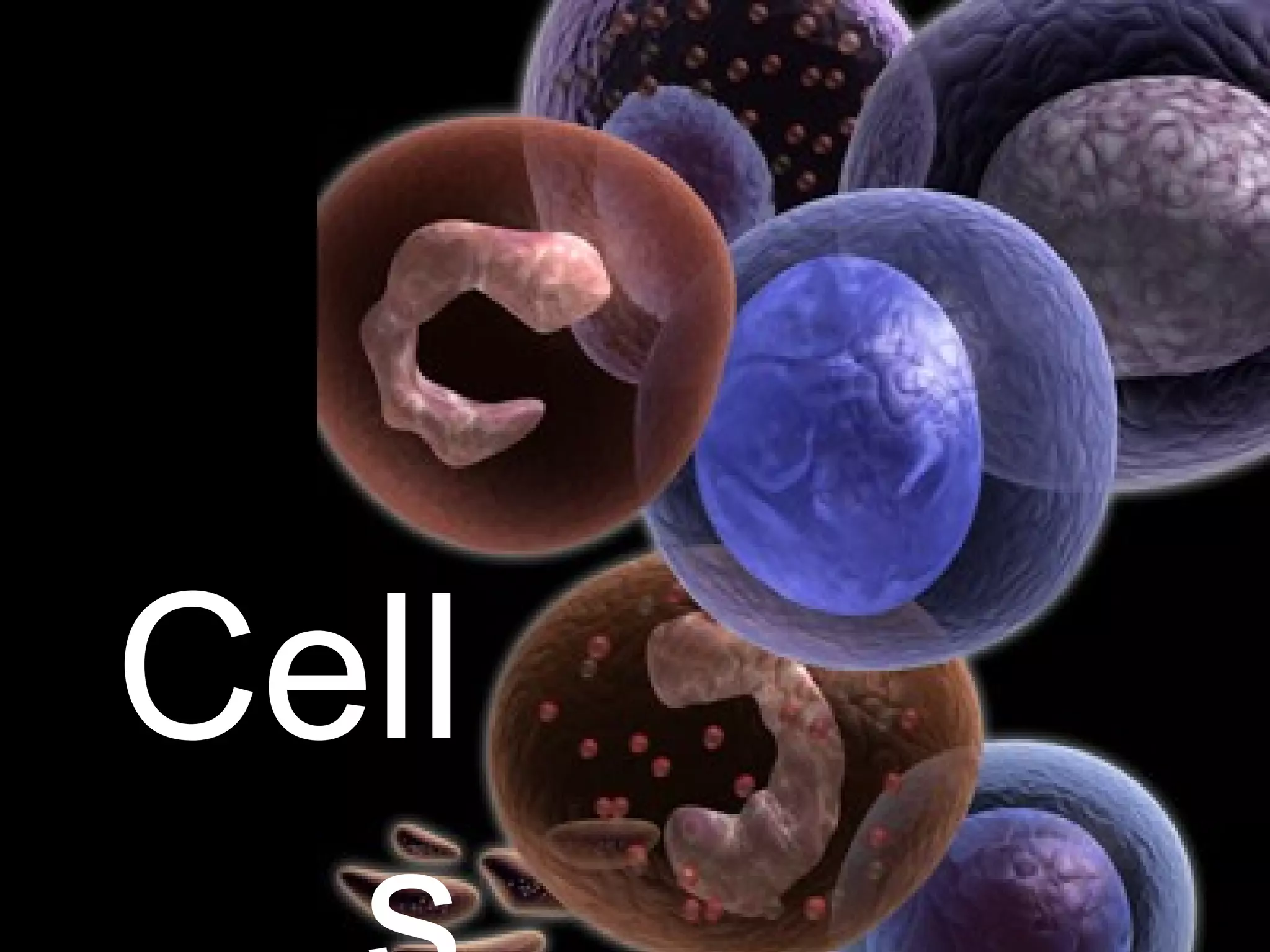
Cells
Cell Animation http://www.youtube.com/watch?v=BVvvx5HGpLg
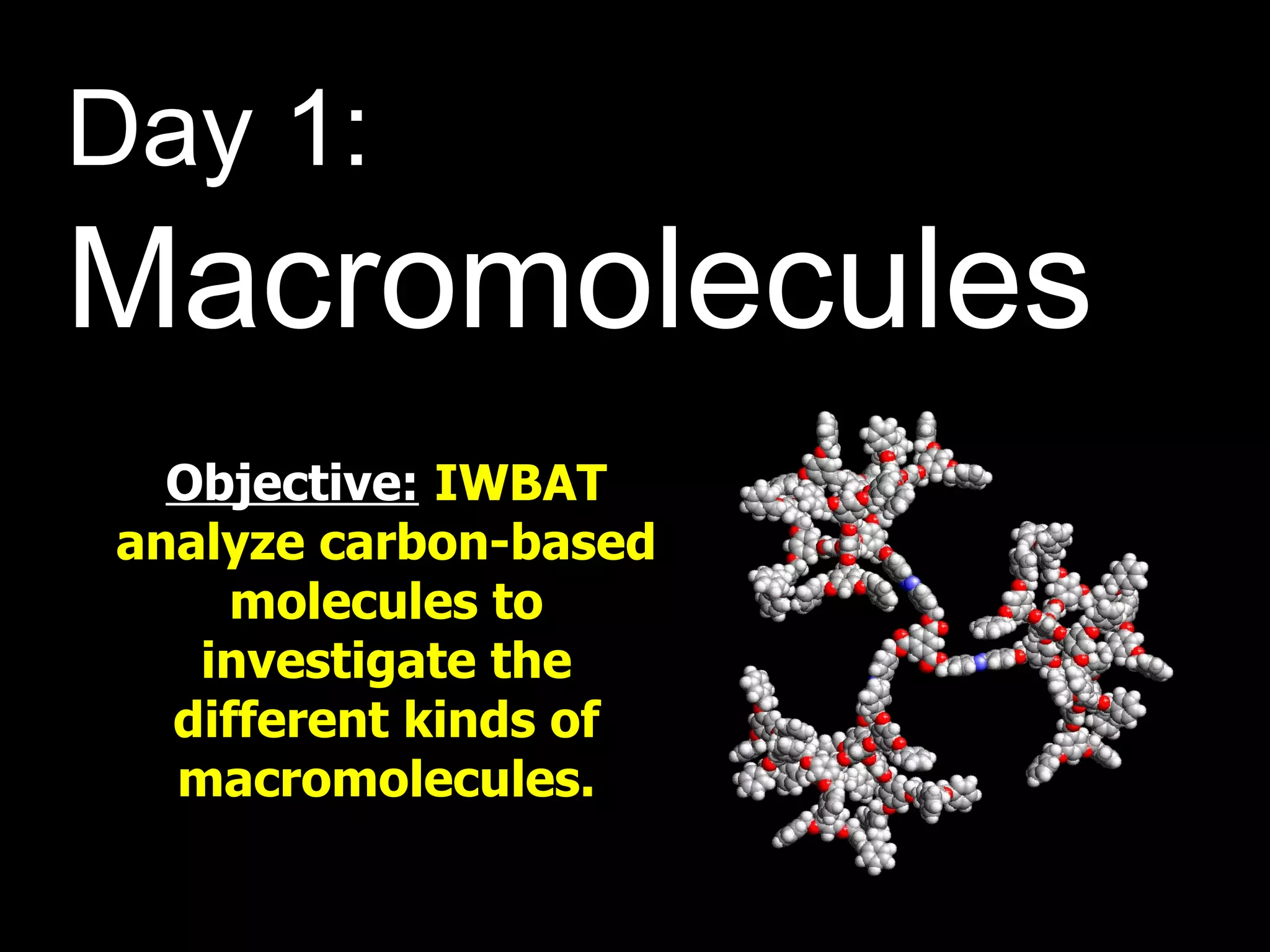
Objective:   IWBAT analyze carbon-based molecules to investigate the different kinds of macromolecules. Day 1: Macromolecules
Remember All living things are made up of CELLS Are viruses alive?
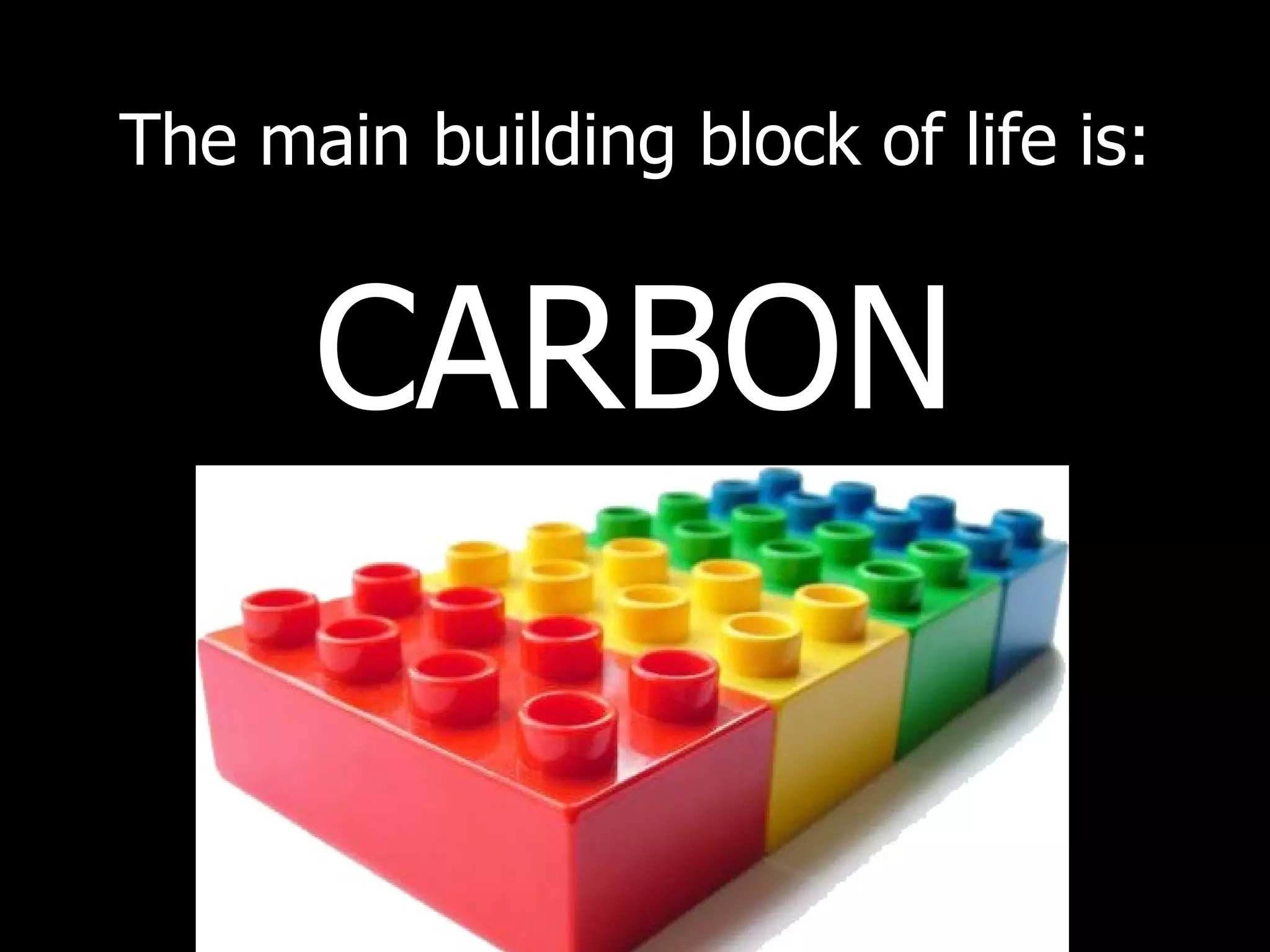
The main building block of life is: CARBON
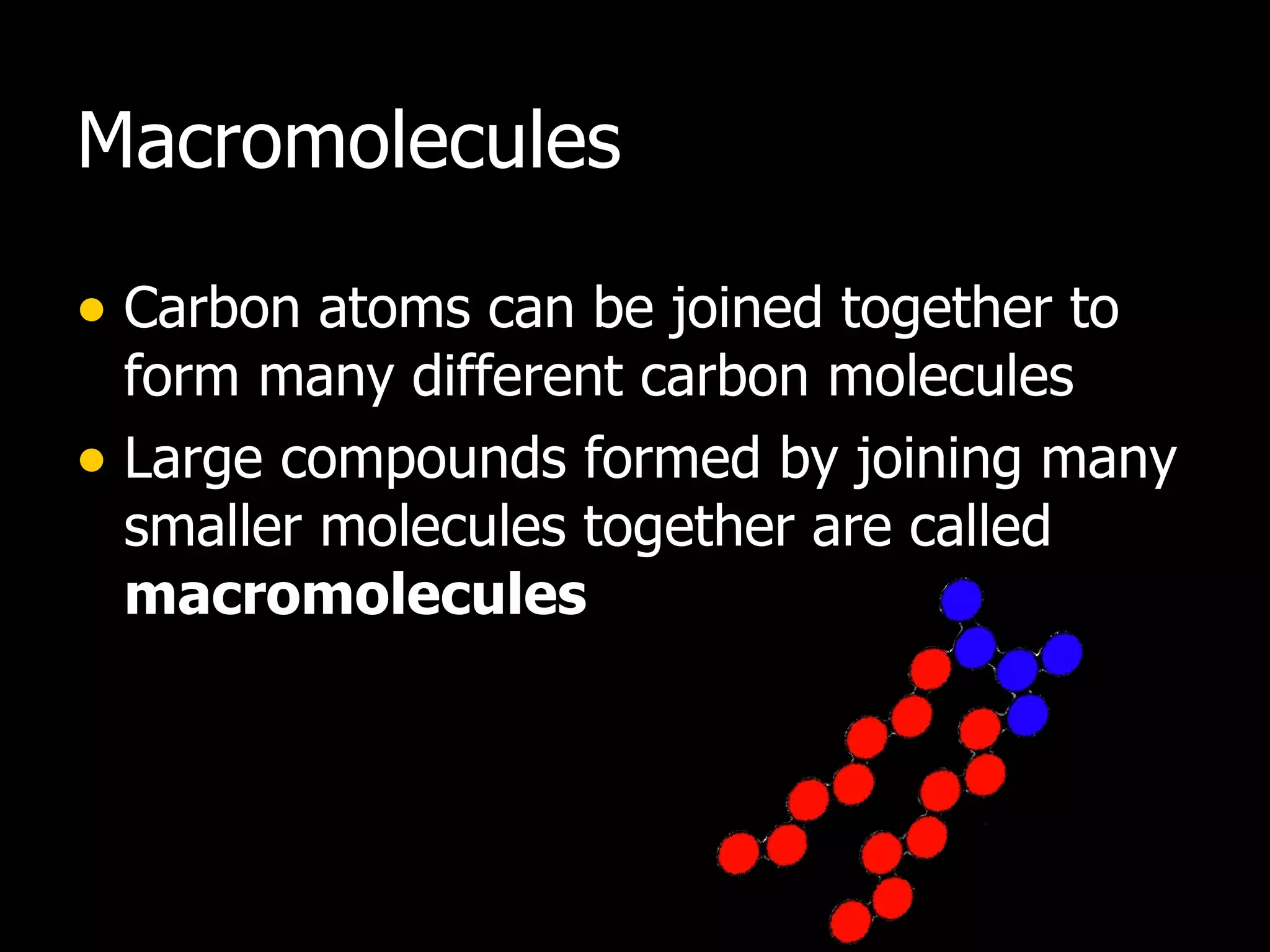
Macromolecules Carbon atoms can be joined together to form many different carbon molecules Large compounds formed by joining many smaller molecules together are called  macromolecules
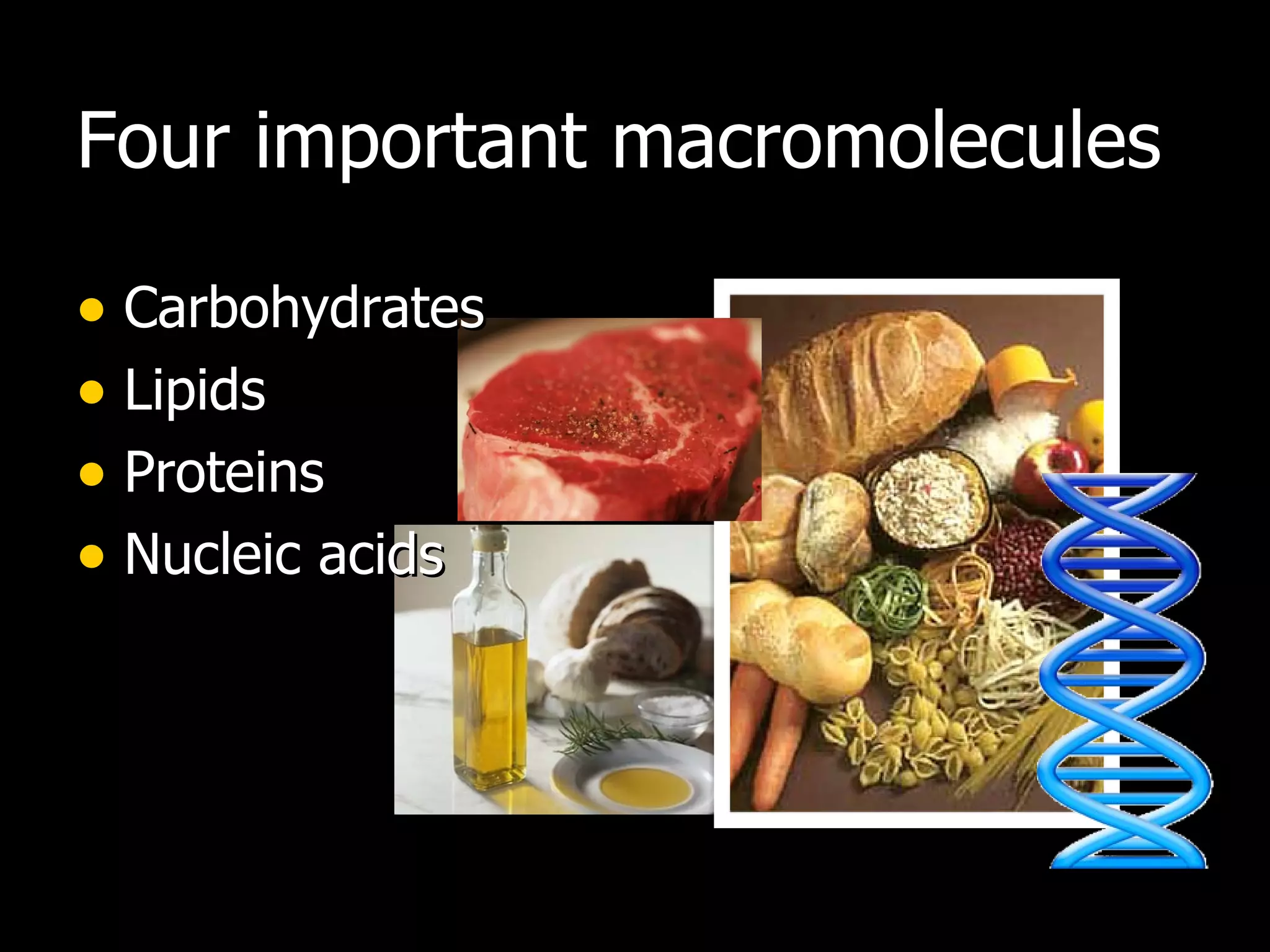
Four important macromolecules Carbohydrates Lipids Proteins Nucleic acids
In carbon-based molecules, small molecules make a long chain Mono mer: Each small part of a complete molecule Poly mer: A large molecule, or macromolecule, made of many monomers connected together
Bottom line All macromolecules (polymers) are synthesized (made) from simple precursors (monomers)
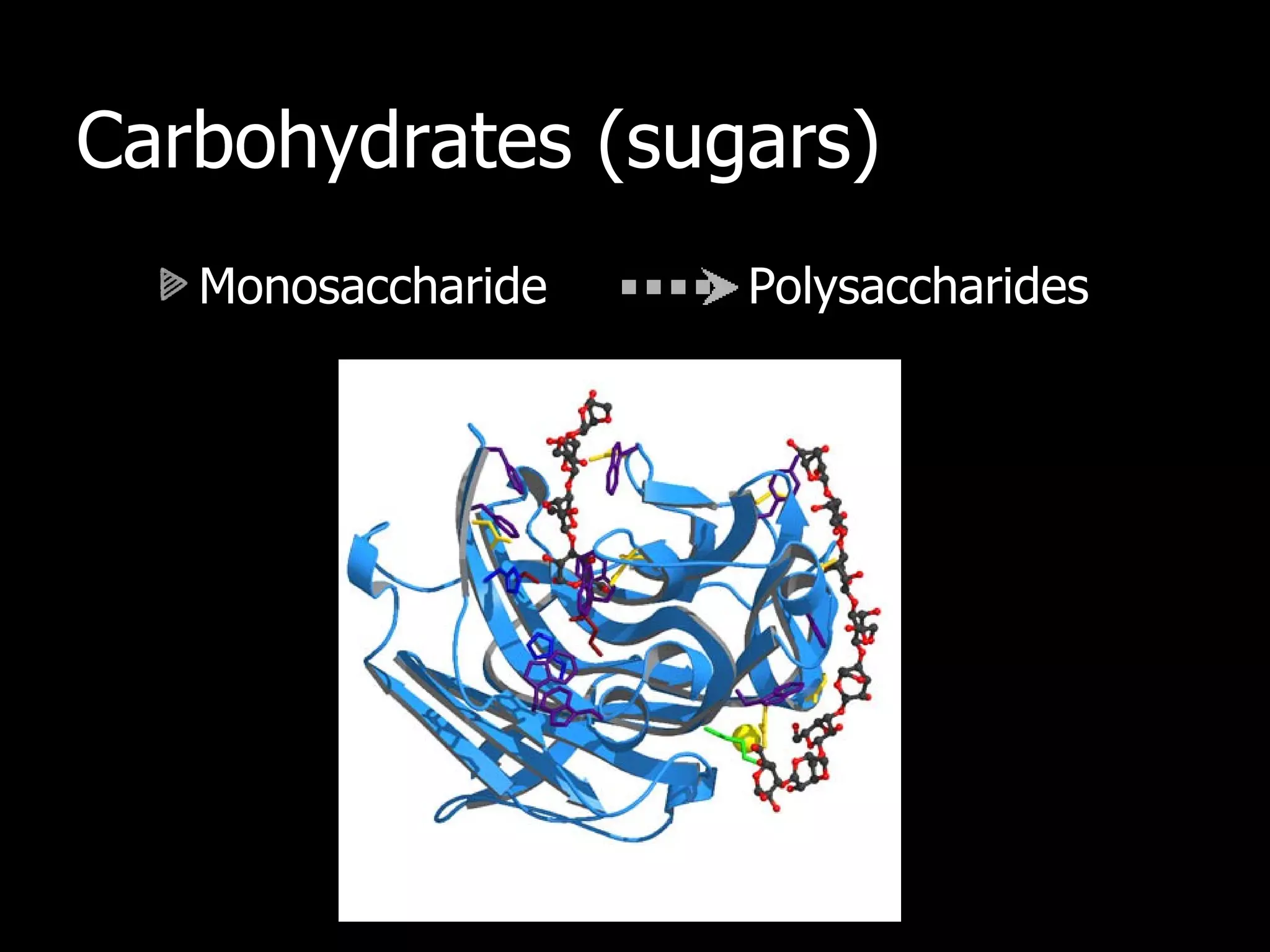
Carbohydrates (sugars) Monosaccharide  Polysaccharides
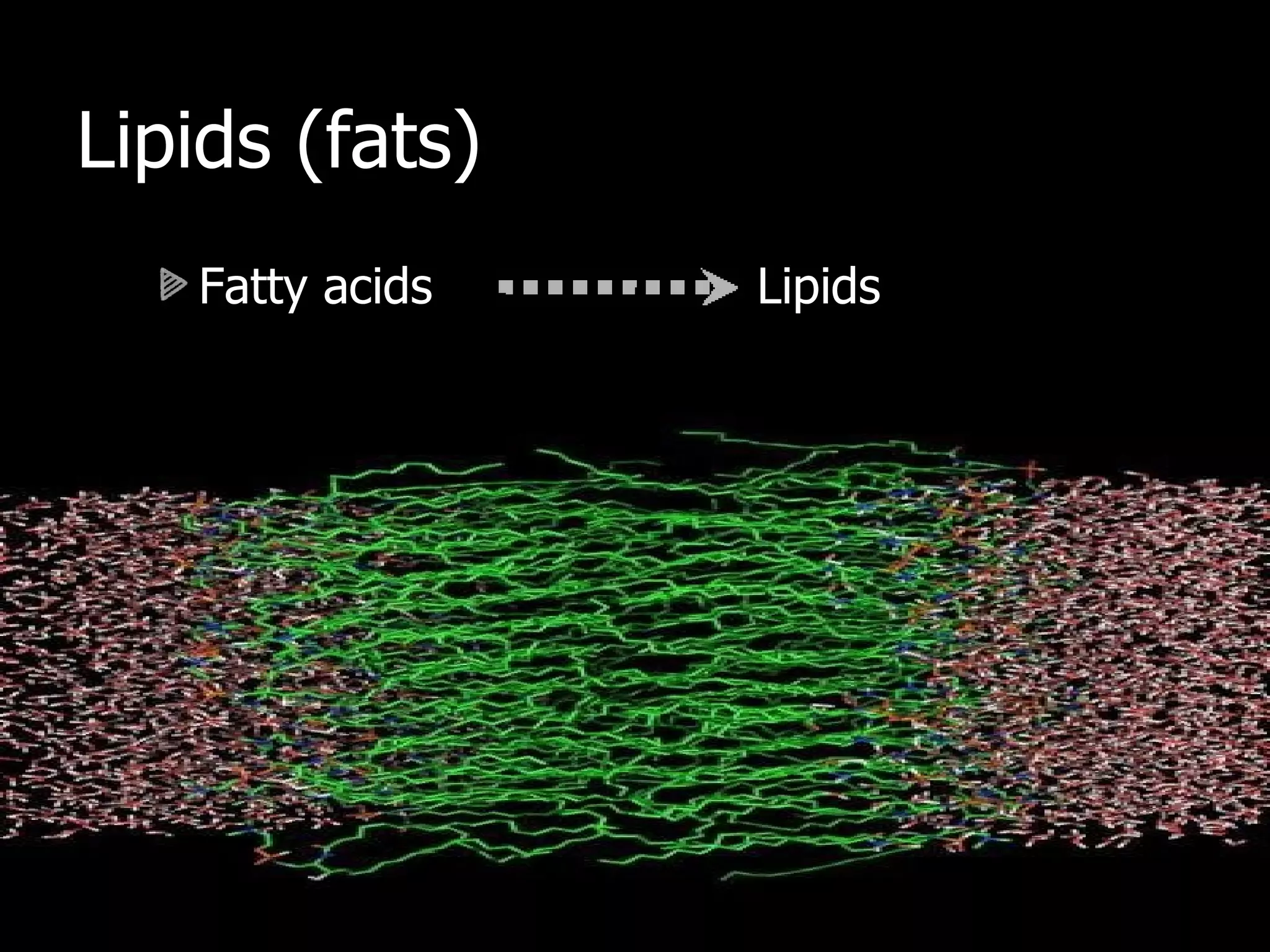
Lipids (fats) Fatty acids Lipids
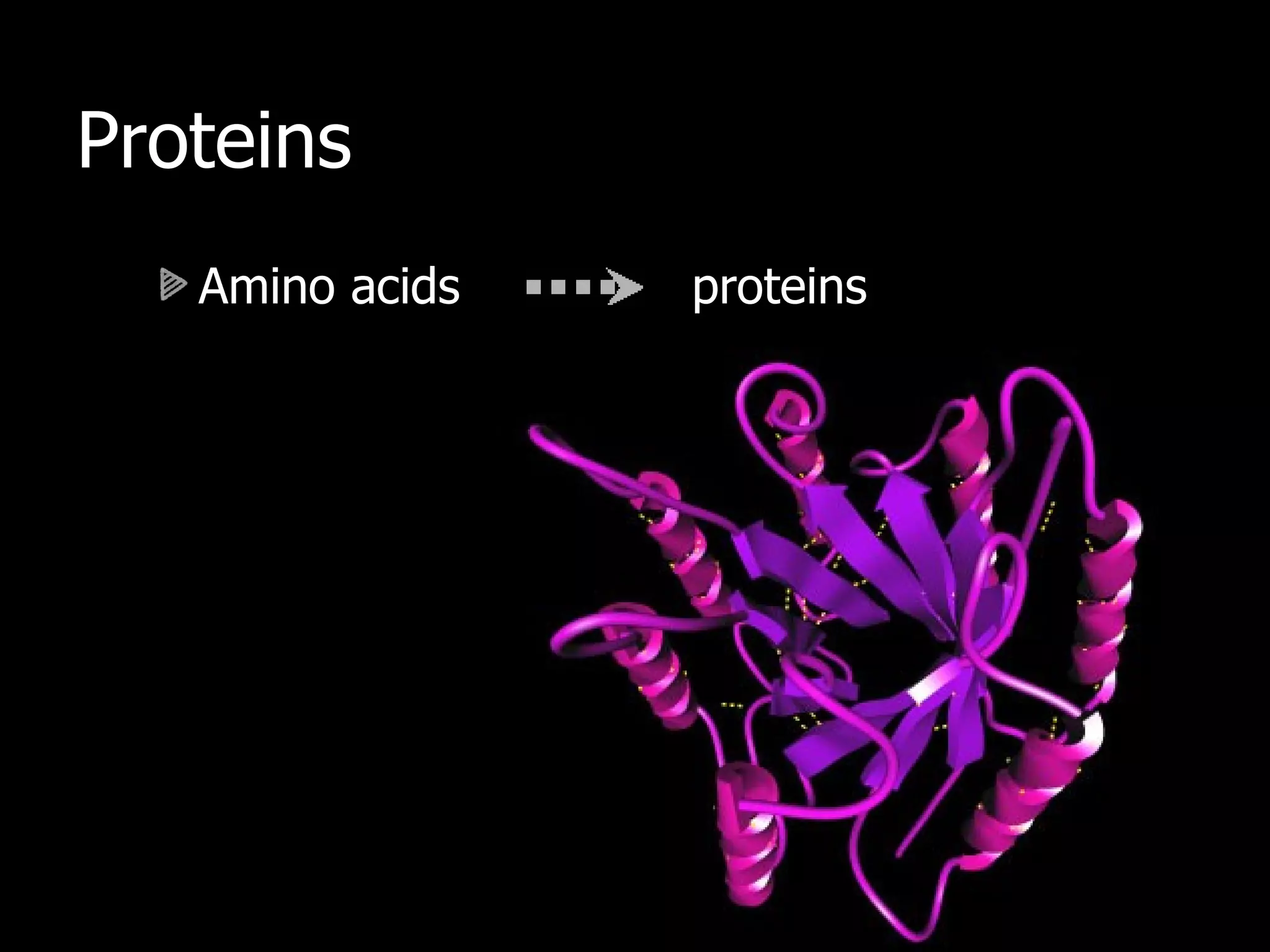
Proteins Amino acids  proteins
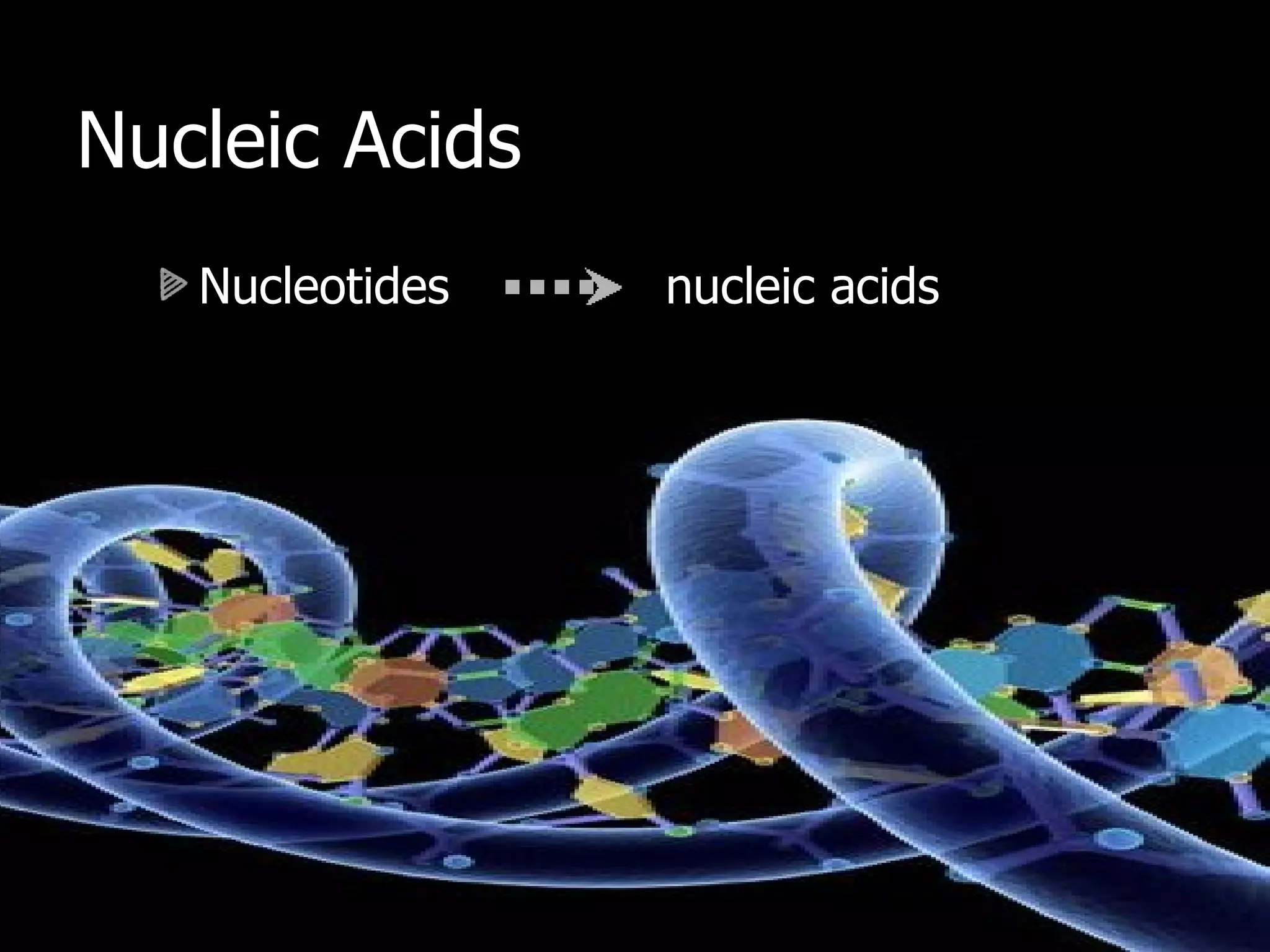
Nucleic Acids Nucleotides  nucleic acids
Summary In your notes, what are four things you learned today Make sure to bring your textbook tomorrow!
Board Notes Reminder, you are responsible for making sure that you stay on top of things and are getting lessons when you miss a day!!!!
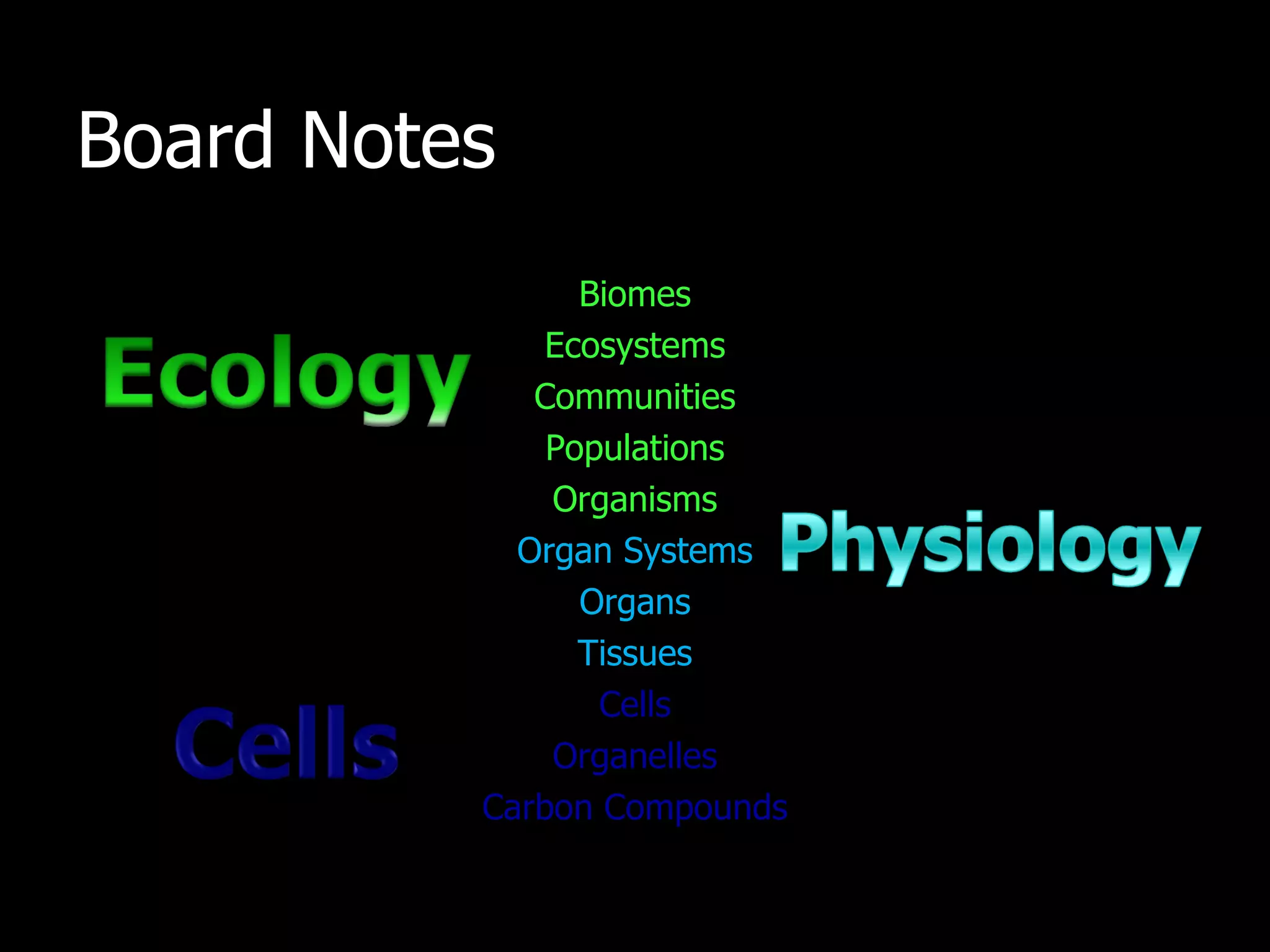
Board Notes Biomes Ecosystems Communities Populations Organisms Organ Systems Organs Tissues Cells Organelles Carbon Compounds
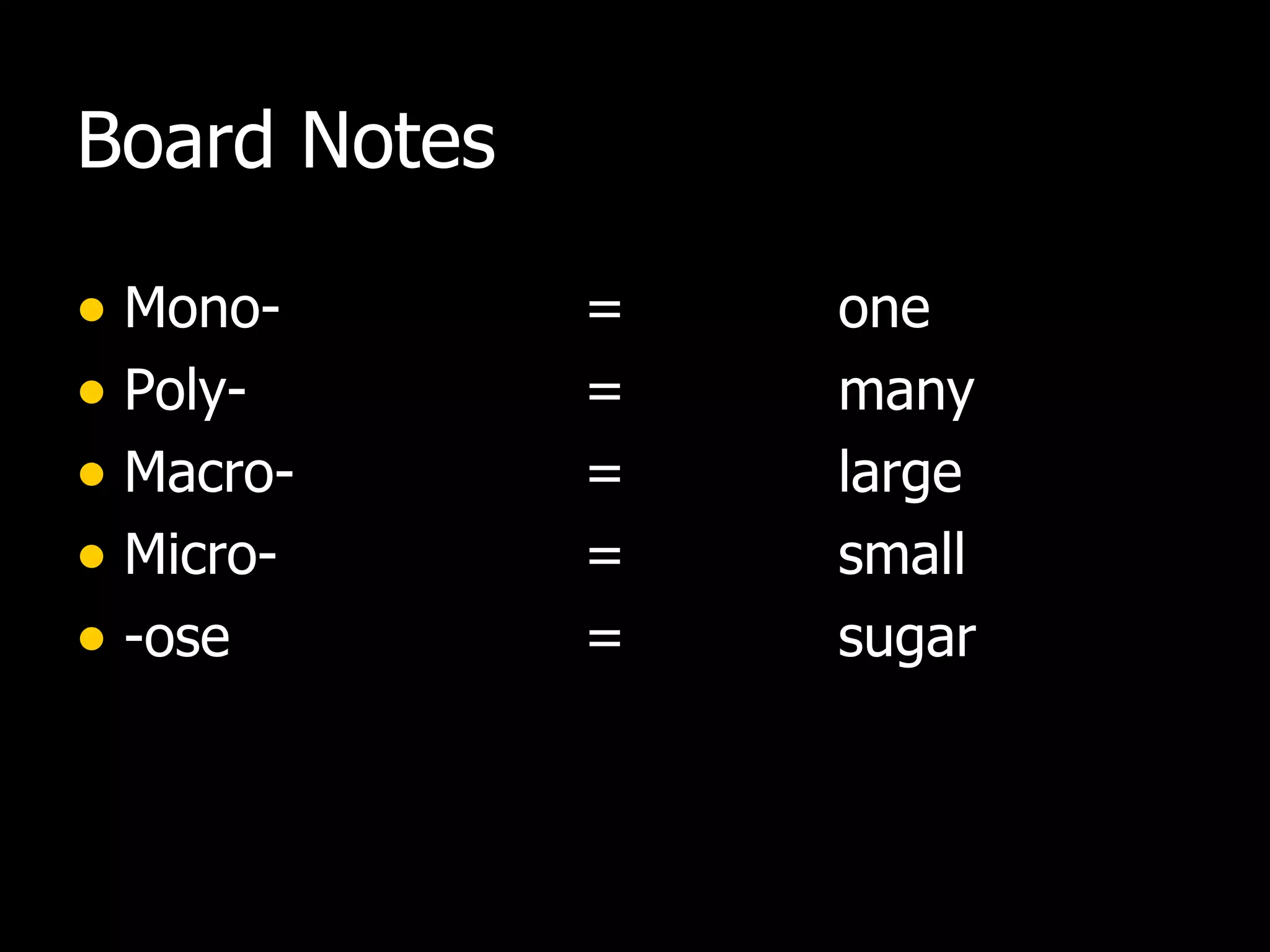
Board Notes Mono-  =  one Poly- = many Macro- = large Micro- = small -ose = sugar
One of the most famous monosaccharides is Glucose

Macromolecules, pt 1