LYOCELL
THE NEW AGE FIBRE
INTRODUCTION


Lyocell (lyo from Greek: lyein = dissolve, cell from
cellulose)



Man made cellulosic fibres



Produced by regenerating cellulose into fibre form out of
a solution (solvent spinning) of cellulose in an organic
solvent



‘Organic solvent’ - mixture of organic chemicals and
water



‘Solvent spinning’ means dissolving and spinning without
the formation of a derivative



Lenzing AG. is currently (2013) the only major producer
of lyocell fibres



Tencel is the brand name of Lyocell
RAW MATERIALS


Cellulose

•

Most abundant natural resource on earth.

•

It is obtained form wood pulp.

•

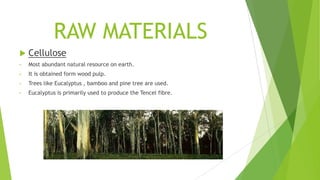
Trees like Eucalyptus , bamboo and pine tree are used.

•

Eucalyptus is primarily used to produce the Tencel fibre.


NMMO

•

Chemically produced from N methyl morpholine and hydrogen peroxide

•

Cyclic amine oxides such as N-methyl morpholine oxide have the capacity to
dissolve cellulose in large capacities

•

NMMO exists in several degrees of hydration.

•

At room temperature it is a crystalline mono hydrate and melts at 72 degrees

•

When heated at 100 C, mono hydrate NMMO is able to dissolve readily several
percentages of high molecular weight cellulose

•

Cellulose dissolution in NMMO is found to depend on:

– The temperature of the solution
– The water content of the mixtures
– The concentration and the degree of
– Polymerisation of the cellulose
MANUFACTURING AND PROCESSING


Preparing Wood Pulp

•

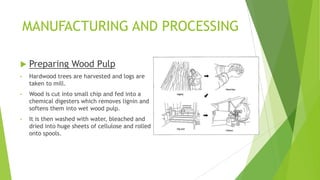
Hardwood trees are harvested and logs are
taken to mill.

•

Wood is cut into small chip and fed into a
chemical digesters which removes lignin and
softens them into wet wood pulp.

•

It is then washed with water, bleached and
dried into huge sheets of cellulose and rolled
onto spools.


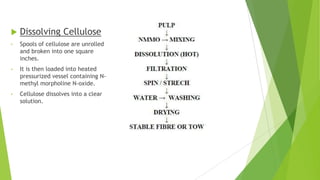
Dissolving Cellulose

•

Spools of cellulose are unrolled
and broken into one square
inches.

•

It is then loaded into heated
pressurized vessel containing Nmethyl morpholine N-oxide.

•

Cellulose dissolves into a clear
solution.


Filtering

•

In Amine Oxide solvent, cellulose is dissolved into a clear solution.

•

It is then pumped out and filtered.



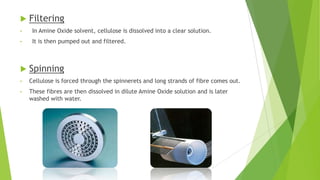
Spinning

•

Cellulose is forced through the spinnerets and long strands of fibre comes out.

•

These fibres are then dissolved in dilute Amine Oxide solution and is later
washed with water.


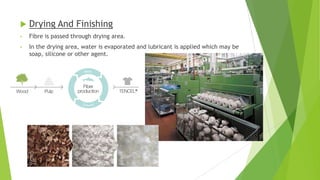
Drying And Finishing

•

Fibre is passed through drying area.

•

In the drying area, water is evaporated and lubricant is applied which may be
soap, silicone or other agent.


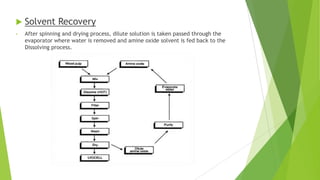
Solvent Recovery

•

After spinning and drying process, dilute solution is taken passed through the
evaporator where water is removed and amine oxide solvent is fed back to the
Dissolving process.
PROPERTIES


Soft, strong, absorbent



Fibrillated during wet processing to produce special textures



It has high wet and dry strength, it is stronger than Cotton and Wool.



Wrinkle resistant



Very versatile fabric, dyeable to vibrant colours, with a variety of effects and
textures.



Can be hand washable



Simulates silk, suede, or leather touch



Good drapability



Biodegradable



Fine yarn counts can be spun


Comfort

•

Soft, smooth fibre.

•

Ideal for apparel that contacts skin.

•

Thermal retention is poor.



Appearance Retention

•

Resiliency is moderate- Wrinkles but not as severely as rayon.

•

Shrinks, but not progressively.

•

May have problems with fuzziness or piling.


Aesthetics

•

Lustre, length and diameter can be changed depending upon end use.

•

Processed to produce a range of surface effects.

•

Offers unusual combinations of strength, opacity, absorbency.



Durability

•

Performs more like cotton than rayon.

•

Strongest of cellulosic fibres.

•

Unique combination of soft hand and good durability, produces comfortable,
long-lasting textiles for apparel and interiors.


Care

•

Either gently machine- Washable or dry cleaned.

•

Sensitive to acids.

•

Resistant to mild alkalis.

•

Sensitive to mildew and some insects.

•

High dye affinity.

•

High inherent whiteness- Bleaching is not necessary.
PHYSICAL STRUCTURE


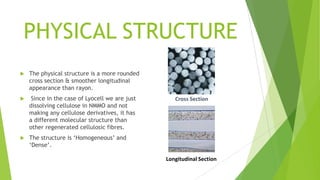
The physical structure is a more rounded
cross section & smoother longitudinal
appearance than rayon.



Since in the case of Lyocell we are just
dissolving cellulose in NMMO and not
making any cellulose derivatives, it has
a different molecular structure than
other regenerated cellulosic fibres.



The structure is ‘Homogeneous’ and
‘Dense’.

Cross Section

Longitudinal Section
APPLICATIONS


Professional business wear.



Leotards



Hosiery



Casual wear



Upholstery



Window-treatment fabrics



Filters



Printers’ blankets



Specialty papers



Medical dressings



Conveyer belts for strength & softness



Botanic Tencel bed

Botanic Bed
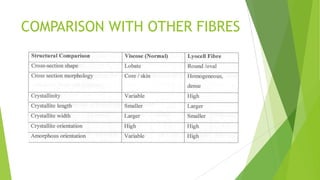
COMPARISON WITH OTHER FIBRES
THANK YOU!

Lyocell

  • 1.
  • 2.
    INTRODUCTION  Lyocell (lyo fromGreek: lyein = dissolve, cell from cellulose)  Man made cellulosic fibres  Produced by regenerating cellulose into fibre form out of a solution (solvent spinning) of cellulose in an organic solvent  ‘Organic solvent’ - mixture of organic chemicals and water  ‘Solvent spinning’ means dissolving and spinning without the formation of a derivative  Lenzing AG. is currently (2013) the only major producer of lyocell fibres  Tencel is the brand name of Lyocell
  • 3.
    RAW MATERIALS  Cellulose • Most abundantnatural resource on earth. • It is obtained form wood pulp. • Trees like Eucalyptus , bamboo and pine tree are used. • Eucalyptus is primarily used to produce the Tencel fibre.
  • 4.
     NMMO • Chemically produced fromN methyl morpholine and hydrogen peroxide • Cyclic amine oxides such as N-methyl morpholine oxide have the capacity to dissolve cellulose in large capacities • NMMO exists in several degrees of hydration. • At room temperature it is a crystalline mono hydrate and melts at 72 degrees • When heated at 100 C, mono hydrate NMMO is able to dissolve readily several percentages of high molecular weight cellulose • Cellulose dissolution in NMMO is found to depend on: – The temperature of the solution – The water content of the mixtures – The concentration and the degree of – Polymerisation of the cellulose
  • 5.
    MANUFACTURING AND PROCESSING  PreparingWood Pulp • Hardwood trees are harvested and logs are taken to mill. • Wood is cut into small chip and fed into a chemical digesters which removes lignin and softens them into wet wood pulp. • It is then washed with water, bleached and dried into huge sheets of cellulose and rolled onto spools.
  • 6.
     Dissolving Cellulose • Spools ofcellulose are unrolled and broken into one square inches. • It is then loaded into heated pressurized vessel containing Nmethyl morpholine N-oxide. • Cellulose dissolves into a clear solution.
  • 7.
     Filtering • In Amine Oxidesolvent, cellulose is dissolved into a clear solution. • It is then pumped out and filtered.  Spinning • Cellulose is forced through the spinnerets and long strands of fibre comes out. • These fibres are then dissolved in dilute Amine Oxide solution and is later washed with water.
  • 8.
     Drying And Finishing • Fibreis passed through drying area. • In the drying area, water is evaporated and lubricant is applied which may be soap, silicone or other agent.
  • 9.
     Solvent Recovery • After spinningand drying process, dilute solution is taken passed through the evaporator where water is removed and amine oxide solvent is fed back to the Dissolving process.
  • 10.
    PROPERTIES  Soft, strong, absorbent  Fibrillatedduring wet processing to produce special textures  It has high wet and dry strength, it is stronger than Cotton and Wool.  Wrinkle resistant  Very versatile fabric, dyeable to vibrant colours, with a variety of effects and textures.  Can be hand washable  Simulates silk, suede, or leather touch  Good drapability  Biodegradable  Fine yarn counts can be spun
  • 11.
     Comfort • Soft, smooth fibre. • Idealfor apparel that contacts skin. • Thermal retention is poor.  Appearance Retention • Resiliency is moderate- Wrinkles but not as severely as rayon. • Shrinks, but not progressively. • May have problems with fuzziness or piling.
  • 12.
     Aesthetics • Lustre, length anddiameter can be changed depending upon end use. • Processed to produce a range of surface effects. • Offers unusual combinations of strength, opacity, absorbency.  Durability • Performs more like cotton than rayon. • Strongest of cellulosic fibres. • Unique combination of soft hand and good durability, produces comfortable, long-lasting textiles for apparel and interiors.
  • 13.
     Care • Either gently machine-Washable or dry cleaned. • Sensitive to acids. • Resistant to mild alkalis. • Sensitive to mildew and some insects. • High dye affinity. • High inherent whiteness- Bleaching is not necessary.
  • 14.
    PHYSICAL STRUCTURE  The physicalstructure is a more rounded cross section & smoother longitudinal appearance than rayon.  Since in the case of Lyocell we are just dissolving cellulose in NMMO and not making any cellulose derivatives, it has a different molecular structure than other regenerated cellulosic fibres.  The structure is ‘Homogeneous’ and ‘Dense’. Cross Section Longitudinal Section
  • 15.
    APPLICATIONS  Professional business wear.  Leotards  Hosiery  Casualwear  Upholstery  Window-treatment fabrics  Filters  Printers’ blankets  Specialty papers  Medical dressings  Conveyer belts for strength & softness  Botanic Tencel bed Botanic Bed
  • 16.
  • 17.