









Long-Acting Local Anesthetics:
Present and Future
Joseph Cravero MD FAAP
Charles Berde MD, PhD
34th SSAI Congress
Sept 8 2017,
NO DISCLOSURES FOR ME
Objectives of the Lecture
1. To appraise advantages and
limitations of existing local
anesthetics
2. To assess how new local
anesthetics might change our
clinical practice in the near future
Despite Major Advances,
Surgery is Still Painful
Opioids are Partially Effective, but
with Side-Effects and Risks
• Somnolence, Mental Clouding
• Respiratory Depression
• Nausea and GI Dysfunction
• Addiction
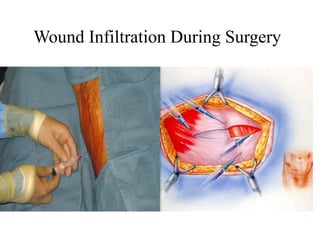
How do we use local anesthetics?
Wound Infiltration During Surgery
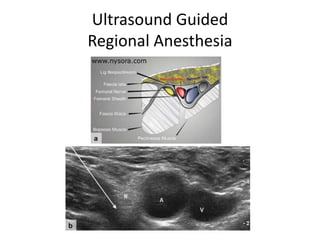
Ultrasound Guided
Regional Anesthesia
Clinical Outcomes of Regional Anesthesia
• Improved Pain Scores
• Opioid Sparing
• Accelerated Recovery (Hospital Stay, GI
Function)
• Long-Term Outcomes (Rehabilitation, Chronic
Pain, Cancer Progression)
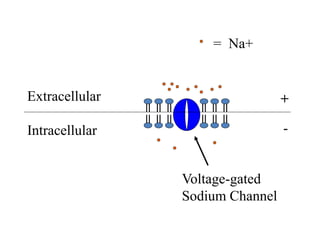
Extracellular
Intracellular
= Na+
Voltage-gated
Sodium Channel
+
-
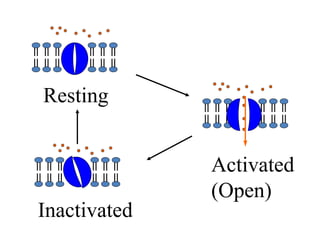
Resting
Activated
(Open)
Inactivated
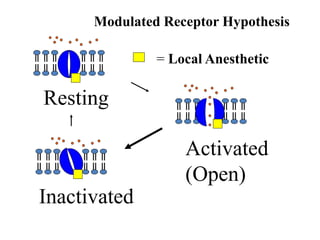
Resting
Activated
(Open)
Inactivated
= Local Anesthetic
Modulated Receptor Hypothesis
Currently Available
Local Anesthetics
are not Ideal.
Local Anesthetics are
“Dirty Drugs”.
• Low potency (10 – 300 mg)
• Toxicity near therapeutic dose
• Multiple cellular actions.
Other Sites of Action of
Local Anesthetics
• Calcium channels
• Potassium channels
• TRPV1 receptor-channels
• Mitochondrial electron-transport
• Macromolecular assembly
Major Structural Constraint:
• Must dissolve well and diffuse
rapidly in both aqueous and
lipophilic micro-environments.
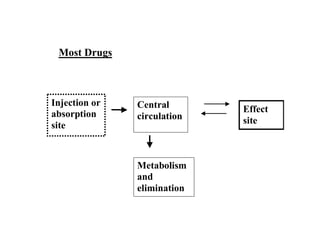
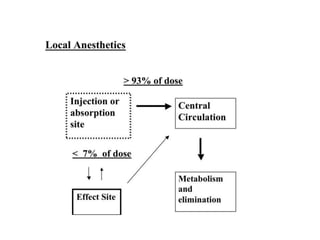
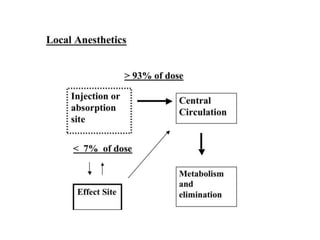
Most Drugs
Injection or
absorption
site
Central
circulation
Effect
site
Metabolism
and
elimination
Duration is too short.
• Bupivacaine and ropivacaine
average durations: 10 hours with
peripheral blocks
• Pain lasts for several days after
major surgery.
• Catheters are “high-maintenance”.
• CNS -> seizures
• Cardiac -> arrhythmia,
cardiac arrest
• Exacerbated by hypoxemia and
acidosis.
• Resuscitation is difficult.
Systemic Toxicity of Local
Anesthetics
Long Acting Local Anesthetics
Controlled-Release of Bupivacaine
and Other Local Anesthetics
• Liposomes
• Depo-Foam
• Polymer Microparticles
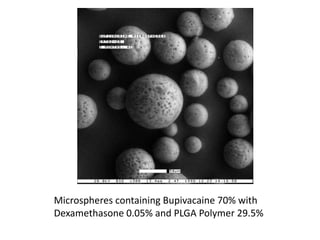
Microspheres containing Bupivacaine 70% with
Dexamethasone 0.05% and PLGA Polymer 29.5%
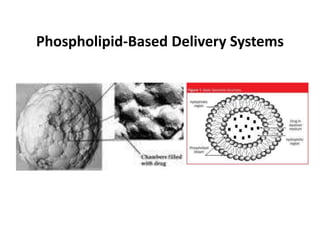
Phospholipid-Based Delivery Systems
Bupivacaine in Lipid Depot Foam (Exparel®)
• FDA approval for wound infiltration for
postoperative analgesia
• Not sufficiently dense for surgical
anesthesia
• Positive clinical trials mostly against
placebo.
• > 24 hours of analgesia vs. placebo
• very small effect size from 24 – 72 hours
Bupivacaine in Lipid Depot Foam (Exparel®)
• Most trials against standard aqueous
ropivacaine or bupivacaine have not
shown superiority; in some trials, Exparel
was inferior to active control.
• FDA initially deferred approval for nerve
blockade, re-review in progress
• very rapid increase in sales in U.S.
• not approved in Europe
Bupivacaine in Lipid Depot:
Exparel® – Clinical Trials and Use
• Pivotal trials: hemorrhoids, bunions,
breast reduction
• PK shows safe blood concentrations
with bupivacaine doses from 150 – 600
mg
• Higher doses showed some reductions
in pain scores or opioid use compared to
controls.
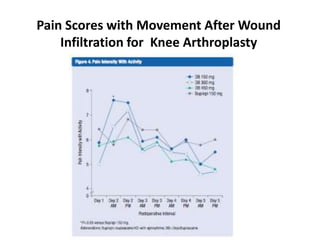
Pain Scores with Movement After Wound
Infiltration for Knee Arthroplasty
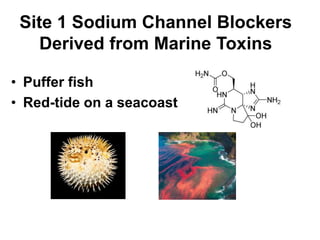
Site 1 Sodium Channel Blockers
Derived from Marine Toxins
• Puffer fish
• Red-tide on a seacoast
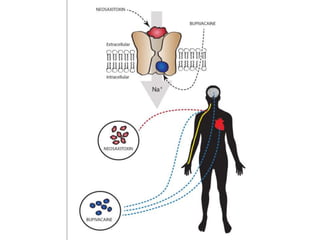
Site 1 sodium channel blockers
• e.g. tetrodotoxin, saxitoxin
• Very high potency on isolated
nerve
• Minimal local neurotoxicity
• Minimal effect on cardiac muscle
• Minimal CNS entry
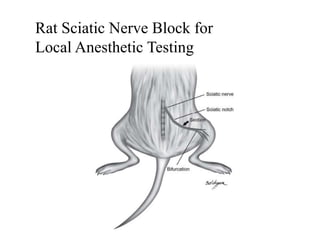
Rat Sciatic Nerve Block for
Local Anesthetic Testing
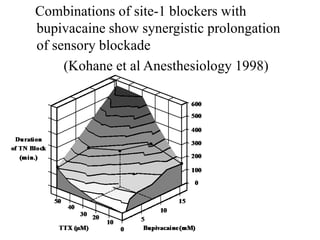
Combinations of site-1 blockers with
bupivacaine show synergistic prolongation
of sensory blockade
(Kohane et al Anesthesiology 1998)
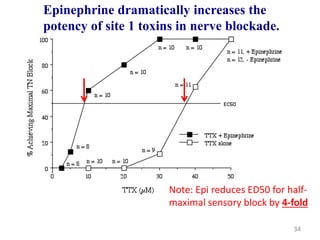
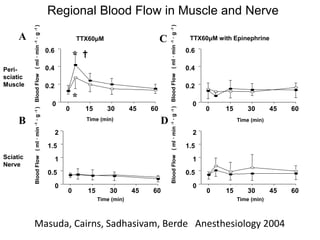
Epinephrine dramatically increases the
potency of site 1 toxins in nerve blockade.
Note: Epi reduces ED50 for half-
maximal sensory block by 4-fold
34
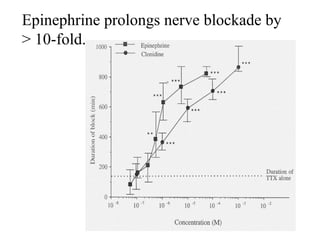
Epinephrine prolongs nerve blockade by
> 10-fold.
0
0.2
0.4
0.6
0 15 30 45 60
0
0.2
0.4
0.6
0 15 30 45 60
0
0.5
1
1.5
2
0 15 30 45 60
TTX60μM TTX60μM with Epinephrine
Sciatic
Nerve
Peri-
sciatic
Muscle
0.5
1.5
0
1
2
0 15 30 45 60
BloodFlow(ml·min-1·g-1)
Time (min) Time (min)
*
*
†
A
DB
C
Regional Blood Flow in Muscle and Nerve
Masuda, Cairns, Sadhasivam, Berde Anesthesiology 2004
Neosaxitoxin
Clinical Trials in Chile
• Phase 1 - skin infiltration in volunteers
– NeoSTX: more prolonged skin numbness
compared to bupivacaine.
– NeoSTX + bupivacaine: more prolonged
numbness than NeoSTX alone or
bupivacaine alone
– NeoSTX was well tolerated- no local or
systemic toxicities.
Rodriguez-Navarro et al Anesthesiology 2007, Neurotox res.
2009
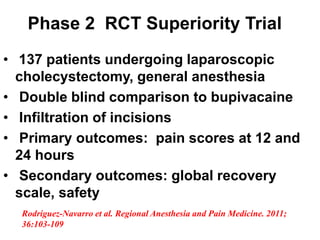
• 137 patients undergoing laparoscopic
cholecystectomy, general anesthesia
• Double blind comparison to bupivacaine
• Infiltration of incisions
• Primary outcomes: pain scores at 12 and
24 hours
• Secondary outcomes: global recovery
scale, safety
Phase 2 RCT Superiority Trial
Rodriguez-Navarro et al. Regional Anesthesia and Pain Medicine. 2011;
36:103-109
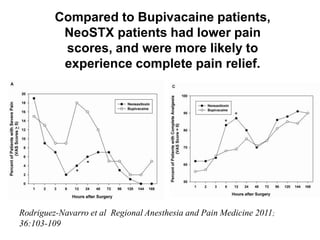
Compared to Bupivacaine patients,
NeoSTX patients had lower pain
scores, and were more likely to
experience complete pain relief.
Rodriguez-Navarro et al Regional Anesthesia and Pain Medicine 2011;
36:103-109
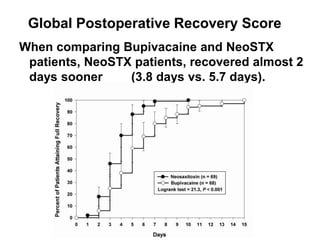
When comparing Bupivacaine and NeoSTX
patients, NeoSTX patients, recovered almost 2
days sooner (3.8 days vs. 5.7 days).
Global Postoperative Recovery Score
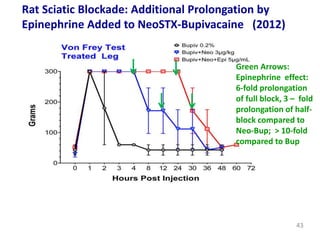
Rat Sciatic Blockade: Additional Prolongation by
Epinephrine Added to NeoSTX-Bupivacaine (2012)
Green Arrows:
Epinephrine effect:
6-fold prolongation
of full block, 3 – fold
prolongation of half-
block compared to
Neo-Bup; > 10-fold
compared to Bup
43
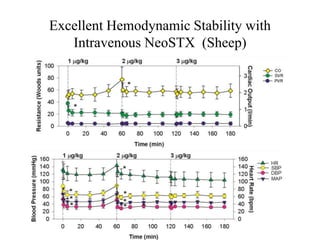
Excellent Hemodynamic Stability with
Intravenous NeoSTX (Sheep)
Phase 1 Study: Aims
1. Evaluate Local and Systemic Safety of
NeoSTX combined with Bup +/- epi
2. Characterize NeoSTX PK
3. Dose-Response for Cutaneous Sensory
Block Intensity and Duration
i. NeoSTX plain (in saline)
ii. NeoSTX-Bupivacaine
iii. Bupivacaine plain (comparator)
iv. Add-On Amendment Study:
NeoSTX-Bupivacaine-Epinephrine
47
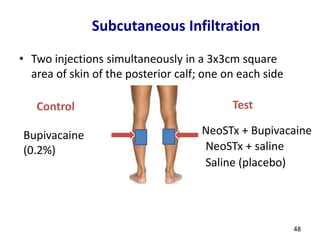
Subcutaneous Infiltration
• Two injections simultaneously in a 3x3cm square
area of skin of the posterior calf; one on each side
NeoSTx + saline
NeoSTx + BupivacaineBupivacaine
(0.2%)
Saline (placebo)
Control Test
48
Primary Outcome: Safety Parameters
• Symptom scores
– Tingling or numbness of lips, tongue or fingers
– Nausea or vomiting, Dizziness
• Subclinical Physiologic Measures
– Maximum negative inspiratory force (NIF)
– Vital capacity (FVC)
– Grip strength
• Clinical Physiologic Measures
– Oxygen saturation or EtCO2
– Hemodynamics and ECG
49
Secondary outcome measures:
PK-PD profiling
• Pharmacokinetics: uptake and distribution
of NeoSTX
–Blood and urine samples
• Pharmacodynamics:
–Cutaneous sensory blockade (numbness)
by QST
50
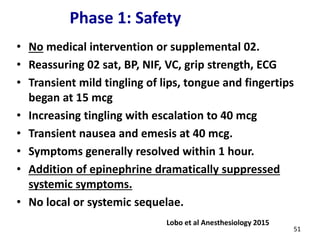
Phase 1: Safety
• No medical intervention or supplemental 02.
• Reassuring 02 sat, BP, NIF, VC, grip strength, ECG
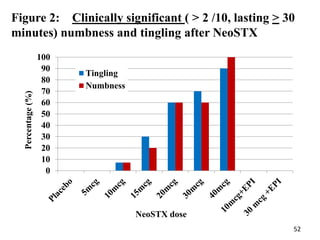
• Transient mild tingling of lips, tongue and fingertips
began at 15 mcg
• Increasing tingling with escalation to 40 mcg
• Transient nausea and emesis at 40 mcg.
• Symptoms generally resolved within 1 hour.
• Addition of epinephrine dramatically suppressed
systemic symptoms.
• No local or systemic sequelae.
Lobo et al Anesthesiology 2015
51
0
10
20
30
40
50
60
70
80
90
100
Percentage(%)
NeoSTX dose
Tingling
Numbness
Figure 2: Clinically significant ( > 2 /10, lasting > 30
minutes) numbness and tingling after NeoSTX
52
0
50
100
150
200
250
0 200 400 600 800 1000 1200 1400
NeoSTX(pg/mL)
Time (min)
NeoSTX (N = 5) NB (N = 5) NBE (N = 8) Saline (N = 2)
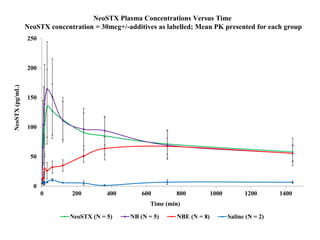
NeoSTX Plasma Concentrations Versus Time
NeoSTX concentration = 30mcg+/-additives as labelled; Mean PK presented for each group
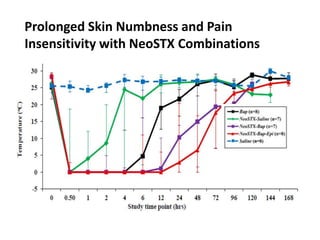
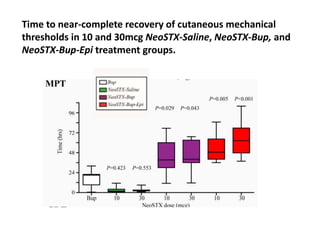
Prolonged Skin Numbness and Pain
Insensitivity with NeoSTX Combinations
Time to near-complete recovery of cutaneous mechanical
thresholds in 10 and 30mcg NeoSTX-Saline, NeoSTX-Bup, and
NeoSTX-Bup-Epi treatment groups.
Potential Impact of NeoSTX for
Prolonged-Duration Local Anesthesia
• Greater safety with large doses/volumes
• Utility both intra-op and post-op
• OR work-flow - single-shot blocks more than
catheters
• Wider spread of initial injectates versus
infusions
• Reliability – if you prove a block is working pre-
op, you should have 2 – 3 days of analgesia
• Impact in resource-limited countries
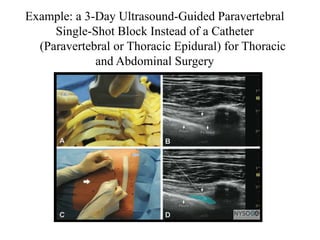
Example: a 3-Day Ultrasound-Guided Paravertebral
Single-Shot Block Instead of a Catheter
(Paravertebral or Thoracic Epidural) for Thoracic
and Abdominal Surgery
Conclusions
• Prolonged duration local anesthesics
should transform postoperative pain
relief and accelerate recovery
• Neosaxitoxin is a promising candidate
for achieving these goals.
• Drug development takes time and
persistence.
• Our progress to date was made
possible by the unique resources and
collaborations available at Boston
Children’s Hospital

Long-acting local anesthetics - present and future

  • 1.
    Long-Acting Local Anesthetics: Presentand Future Joseph Cravero MD FAAP Charles Berde MD, PhD 34th SSAI Congress Sept 8 2017,
  • 2.
  • 3.
    Objectives of theLecture 1. To appraise advantages and limitations of existing local anesthetics 2. To assess how new local anesthetics might change our clinical practice in the near future
  • 4.
  • 5.
    Opioids are PartiallyEffective, but with Side-Effects and Risks • Somnolence, Mental Clouding • Respiratory Depression • Nausea and GI Dysfunction • Addiction
  • 6.
    How do weuse local anesthetics?
  • 7.
  • 8.
  • 9.
    Clinical Outcomes ofRegional Anesthesia • Improved Pain Scores • Opioid Sparing • Accelerated Recovery (Hospital Stay, GI Function) • Long-Term Outcomes (Rehabilitation, Chronic Pain, Cancer Progression)
  • 10.
  • 11.
  • 12.
  • 13.
  • 14.
    Local Anesthetics are “DirtyDrugs”. • Low potency (10 – 300 mg) • Toxicity near therapeutic dose • Multiple cellular actions.
  • 15.
    Other Sites ofAction of Local Anesthetics • Calcium channels • Potassium channels • TRPV1 receptor-channels • Mitochondrial electron-transport • Macromolecular assembly
  • 16.
    Major Structural Constraint: •Must dissolve well and diffuse rapidly in both aqueous and lipophilic micro-environments.
  • 17.
  • 19.
    Duration is tooshort. • Bupivacaine and ropivacaine average durations: 10 hours with peripheral blocks • Pain lasts for several days after major surgery. • Catheters are “high-maintenance”.
  • 20.
    • CNS ->seizures • Cardiac -> arrhythmia, cardiac arrest • Exacerbated by hypoxemia and acidosis. • Resuscitation is difficult. Systemic Toxicity of Local Anesthetics
  • 21.
    Long Acting LocalAnesthetics
  • 22.
    Controlled-Release of Bupivacaine andOther Local Anesthetics • Liposomes • Depo-Foam • Polymer Microparticles
  • 23.
    Microspheres containing Bupivacaine70% with Dexamethasone 0.05% and PLGA Polymer 29.5%
  • 24.
  • 25.
    Bupivacaine in LipidDepot Foam (Exparel®) • FDA approval for wound infiltration for postoperative analgesia • Not sufficiently dense for surgical anesthesia • Positive clinical trials mostly against placebo. • > 24 hours of analgesia vs. placebo • very small effect size from 24 – 72 hours
  • 26.
    Bupivacaine in LipidDepot Foam (Exparel®) • Most trials against standard aqueous ropivacaine or bupivacaine have not shown superiority; in some trials, Exparel was inferior to active control. • FDA initially deferred approval for nerve blockade, re-review in progress • very rapid increase in sales in U.S. • not approved in Europe
  • 27.
    Bupivacaine in LipidDepot: Exparel® – Clinical Trials and Use • Pivotal trials: hemorrhoids, bunions, breast reduction • PK shows safe blood concentrations with bupivacaine doses from 150 – 600 mg • Higher doses showed some reductions in pain scores or opioid use compared to controls.
  • 28.
    Pain Scores withMovement After Wound Infiltration for Knee Arthroplasty
  • 29.
    Site 1 SodiumChannel Blockers Derived from Marine Toxins • Puffer fish • Red-tide on a seacoast
  • 30.
    Site 1 sodiumchannel blockers • e.g. tetrodotoxin, saxitoxin • Very high potency on isolated nerve • Minimal local neurotoxicity • Minimal effect on cardiac muscle • Minimal CNS entry
  • 32.
    Rat Sciatic NerveBlock for Local Anesthetic Testing
  • 33.
    Combinations of site-1blockers with bupivacaine show synergistic prolongation of sensory blockade (Kohane et al Anesthesiology 1998)
  • 34.
    Epinephrine dramatically increasesthe potency of site 1 toxins in nerve blockade. Note: Epi reduces ED50 for half- maximal sensory block by 4-fold 34
  • 35.
    Epinephrine prolongs nerveblockade by > 10-fold.
  • 37.
    0 0.2 0.4 0.6 0 15 3045 60 0 0.2 0.4 0.6 0 15 30 45 60 0 0.5 1 1.5 2 0 15 30 45 60 TTX60μM TTX60μM with Epinephrine Sciatic Nerve Peri- sciatic Muscle 0.5 1.5 0 1 2 0 15 30 45 60 BloodFlow(ml·min-1·g-1) BloodFlow(ml·min-1·g-1) BloodFlow(ml·min-1·g-1) BloodFlow(ml·min-1·g-1) Time (min) Time (min) Time (min) Time (min) * * † A DB C Regional Blood Flow in Muscle and Nerve Masuda, Cairns, Sadhasivam, Berde Anesthesiology 2004
  • 38.
  • 39.
    Clinical Trials inChile • Phase 1 - skin infiltration in volunteers – NeoSTX: more prolonged skin numbness compared to bupivacaine. – NeoSTX + bupivacaine: more prolonged numbness than NeoSTX alone or bupivacaine alone – NeoSTX was well tolerated- no local or systemic toxicities. Rodriguez-Navarro et al Anesthesiology 2007, Neurotox res. 2009
  • 40.
    • 137 patientsundergoing laparoscopic cholecystectomy, general anesthesia • Double blind comparison to bupivacaine • Infiltration of incisions • Primary outcomes: pain scores at 12 and 24 hours • Secondary outcomes: global recovery scale, safety Phase 2 RCT Superiority Trial Rodriguez-Navarro et al. Regional Anesthesia and Pain Medicine. 2011; 36:103-109
  • 41.
    Compared to Bupivacainepatients, NeoSTX patients had lower pain scores, and were more likely to experience complete pain relief. Rodriguez-Navarro et al Regional Anesthesia and Pain Medicine 2011; 36:103-109
  • 42.
    When comparing Bupivacaineand NeoSTX patients, NeoSTX patients, recovered almost 2 days sooner (3.8 days vs. 5.7 days). Global Postoperative Recovery Score
  • 43.
    Rat Sciatic Blockade:Additional Prolongation by Epinephrine Added to NeoSTX-Bupivacaine (2012) Green Arrows: Epinephrine effect: 6-fold prolongation of full block, 3 – fold prolongation of half- block compared to Neo-Bup; > 10-fold compared to Bup 43
  • 44.
    Excellent Hemodynamic Stabilitywith Intravenous NeoSTX (Sheep)
  • 47.
    Phase 1 Study:Aims 1. Evaluate Local and Systemic Safety of NeoSTX combined with Bup +/- epi 2. Characterize NeoSTX PK 3. Dose-Response for Cutaneous Sensory Block Intensity and Duration i. NeoSTX plain (in saline) ii. NeoSTX-Bupivacaine iii. Bupivacaine plain (comparator) iv. Add-On Amendment Study: NeoSTX-Bupivacaine-Epinephrine 47
  • 48.
    Subcutaneous Infiltration • Twoinjections simultaneously in a 3x3cm square area of skin of the posterior calf; one on each side NeoSTx + saline NeoSTx + BupivacaineBupivacaine (0.2%) Saline (placebo) Control Test 48
  • 49.
    Primary Outcome: SafetyParameters • Symptom scores – Tingling or numbness of lips, tongue or fingers – Nausea or vomiting, Dizziness • Subclinical Physiologic Measures – Maximum negative inspiratory force (NIF) – Vital capacity (FVC) – Grip strength • Clinical Physiologic Measures – Oxygen saturation or EtCO2 – Hemodynamics and ECG 49
  • 50.
    Secondary outcome measures: PK-PDprofiling • Pharmacokinetics: uptake and distribution of NeoSTX –Blood and urine samples • Pharmacodynamics: –Cutaneous sensory blockade (numbness) by QST 50
  • 51.
    Phase 1: Safety •No medical intervention or supplemental 02. • Reassuring 02 sat, BP, NIF, VC, grip strength, ECG • Transient mild tingling of lips, tongue and fingertips began at 15 mcg • Increasing tingling with escalation to 40 mcg • Transient nausea and emesis at 40 mcg. • Symptoms generally resolved within 1 hour. • Addition of epinephrine dramatically suppressed systemic symptoms. • No local or systemic sequelae. Lobo et al Anesthesiology 2015 51
  • 52.
    0 10 20 30 40 50 60 70 80 90 100 Percentage(%) NeoSTX dose Tingling Numbness Figure 2:Clinically significant ( > 2 /10, lasting > 30 minutes) numbness and tingling after NeoSTX 52
  • 53.
    0 50 100 150 200 250 0 200 400600 800 1000 1200 1400 NeoSTX(pg/mL) Time (min) NeoSTX (N = 5) NB (N = 5) NBE (N = 8) Saline (N = 2) NeoSTX Plasma Concentrations Versus Time NeoSTX concentration = 30mcg+/-additives as labelled; Mean PK presented for each group
  • 54.
    Prolonged Skin Numbnessand Pain Insensitivity with NeoSTX Combinations
  • 55.
    Time to near-completerecovery of cutaneous mechanical thresholds in 10 and 30mcg NeoSTX-Saline, NeoSTX-Bup, and NeoSTX-Bup-Epi treatment groups.
  • 56.
    Potential Impact ofNeoSTX for Prolonged-Duration Local Anesthesia • Greater safety with large doses/volumes • Utility both intra-op and post-op • OR work-flow - single-shot blocks more than catheters • Wider spread of initial injectates versus infusions • Reliability – if you prove a block is working pre- op, you should have 2 – 3 days of analgesia • Impact in resource-limited countries
  • 57.
    Example: a 3-DayUltrasound-Guided Paravertebral Single-Shot Block Instead of a Catheter (Paravertebral or Thoracic Epidural) for Thoracic and Abdominal Surgery
  • 58.
    Conclusions • Prolonged durationlocal anesthesics should transform postoperative pain relief and accelerate recovery • Neosaxitoxin is a promising candidate for achieving these goals. • Drug development takes time and persistence. • Our progress to date was made possible by the unique resources and collaborations available at Boston Children’s Hospital