Saurabh Gupta
VHK-1435
Preemptive Analgesia
 PREEMPTIVE analgesia is an antinociceptive treatment
that prevents establishment of altered processing of
afferent input, which amplifies postoperative pain.
 Preemptive analgesia has been defined as treatment
that:
 (1) starts before surgery;
 (2) prevents the establishment of central sensitization
caused by incisional injury (covers only the period of
surgery); and
 (3) prevents the establishment of central sensitization
caused by incisional and inflammatory injuries.
Terms Commonly Used in Studies
on Preemptive Analgesia
 Central sensitization —persistent postinjury
changes in the central nervous system that result
in pain hypersensitivity
 Central hyperexcitability —exaggerated and
prolonged responsiveness of neurons to normal
afferent input after tissue damage
 Preincisional treatment —treatment that starts
before an initial surgical incision
 Postincisional treatment —treatment that starts
immediately after the end of operation.
History and progress in pre-emptive
analgesia
 Pre-emptive analgesia would block the induction
of central neural sensitization brought about
by the incision and reduce the intensity of acute
postoperative pain ( proposed first by Crile and
later by Wall)
 General anesthesia may attenuate the
transmission of afferent injury barrage from the
periphery to the spinal cord and brain, but it
doesn’t block the transmission
Treatment
 1-Systemic opiods
 Pure Agonists
Morphine, oxymorphone, meperidine,
hydromorphone, fentanyl
 Partial agonists, mixed agonist-antagonists
Buprenorphine
Butorphanol
 Pure Antagonists (reversal of agonists)
Naloxone
Conti…
 2-Nonopioid analgesics:
 ACETAMINOPHEN & NSAIDS like- Diclofenac, Ibuprofen
 3-Regional anesthetic techniques .
a : Intrathecal analgesia.
 b :Epidural analgesia: Provides superior pain
relief and attenuate the stress response to surgery,
particularly continuous infusion during and after
surgery.
Conti…
Combined use of epidural local anesthetics and
adjuvants provides introperative analgesia and
postoperative pain effectively
 4-Peripheral nerve blocks
 5-Cryoanalgesia: is a procedure used to
temporarily block nerve conduction along
peripheral nerve pathways. The
procedure, which involves insertion of a
small probe to freeze the target nerve
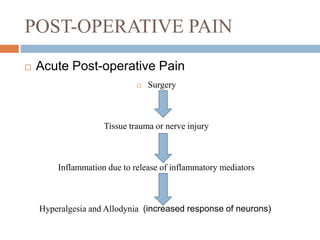
POST-OPERATIVE PAIN
 Acute Post-operative Pain
 Surgery
Tissue trauma or nerve injury
Inflammation due to release of inflammatory mediators
Hyperalgesia and Allodynia (increased response of neurons)
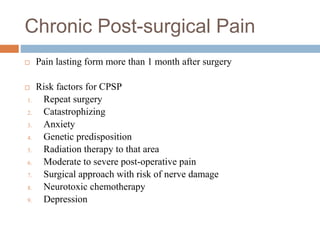
Chronic Post-surgical Pain
 Pain lasting form more than 1 month after surgery
 Risk factors for CPSP
1. Repeat surgery
2. Catastrophizing
3. Anxiety
4. Genetic predisposition
5. Radiation therapy to that area
6. Moderate to severe post-operative pain
7. Surgical approach with risk of nerve damage
8. Neurotoxic chemotherapy
9. Depression
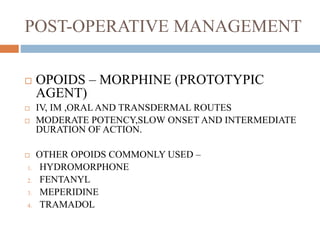
POST-OPERATIVE MANAGEMENT
 OPOIDS – MORPHINE (PROTOTYPIC
AGENT)
 IV, IM ,ORAL AND TRANSDERMAL ROUTES
 MODERATE POTENCY,SLOW ONSET AND INTERMEDIATE
DURATION OF ACTION.
 OTHER OPOIDS COMMONLY USED –
1. HYDROMORPHONE
2. FENTANYL
3. MEPERIDINE
4. TRAMADOL
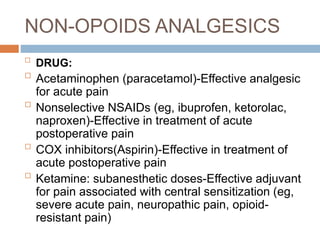
NON-OPOIDS ANALGESICS

DRUG:

Acetaminophen (paracetamol)-Effective analgesic
for acute pain

Nonselective NSAIDs (eg, ibuprofen, ketorolac,
naproxen)-Effective in treatment of acute
postoperative pain

COX inhibitors(Aspirin)-Effective in treatment of
acute postoperative pain

Ketamine: subanesthetic doses-Effective adjuvant
for pain associated with central sensitization (eg,
severe acute pain, neuropathic pain, opioid-
resistant pain)
Antidepressants and selective serotonin
reuptake inhibitors

Useful for acute neuropathic pain

Anticonvulsants (Gabapentin and pregabalin)-Reduce
postoperative pain, opioid requirements, and incidence of
vomiting, pruritus, and urinary retention, but increase risk of
sedation

May be useful for acute neuropathic pain (based on experience
with chronic neuropathic pain)

IV lidocaine infusion- Opioid sparing; reduced pain scores, nausea,
vomiting .

a2 Agonists (clonidine, dexmedetomidine)-Improves perioperative
opioid analgesia. Decreased opioid requirements and opioid side
effects

Side effects: sedation, hypotension
Preemptive analgesia

Preemptive analgesia

  • 1.
  • 2.
    Preemptive Analgesia  PREEMPTIVEanalgesia is an antinociceptive treatment that prevents establishment of altered processing of afferent input, which amplifies postoperative pain.  Preemptive analgesia has been defined as treatment that:  (1) starts before surgery;  (2) prevents the establishment of central sensitization caused by incisional injury (covers only the period of surgery); and  (3) prevents the establishment of central sensitization caused by incisional and inflammatory injuries.
  • 3.
    Terms Commonly Usedin Studies on Preemptive Analgesia  Central sensitization —persistent postinjury changes in the central nervous system that result in pain hypersensitivity  Central hyperexcitability —exaggerated and prolonged responsiveness of neurons to normal afferent input after tissue damage  Preincisional treatment —treatment that starts before an initial surgical incision  Postincisional treatment —treatment that starts immediately after the end of operation.
  • 4.
    History and progressin pre-emptive analgesia  Pre-emptive analgesia would block the induction of central neural sensitization brought about by the incision and reduce the intensity of acute postoperative pain ( proposed first by Crile and later by Wall)  General anesthesia may attenuate the transmission of afferent injury barrage from the periphery to the spinal cord and brain, but it doesn’t block the transmission
  • 5.
    Treatment  1-Systemic opiods Pure Agonists Morphine, oxymorphone, meperidine, hydromorphone, fentanyl  Partial agonists, mixed agonist-antagonists Buprenorphine Butorphanol  Pure Antagonists (reversal of agonists) Naloxone
  • 6.
    Conti…  2-Nonopioid analgesics: ACETAMINOPHEN & NSAIDS like- Diclofenac, Ibuprofen  3-Regional anesthetic techniques . a : Intrathecal analgesia.  b :Epidural analgesia: Provides superior pain relief and attenuate the stress response to surgery, particularly continuous infusion during and after surgery.
  • 7.
    Conti… Combined use ofepidural local anesthetics and adjuvants provides introperative analgesia and postoperative pain effectively  4-Peripheral nerve blocks  5-Cryoanalgesia: is a procedure used to temporarily block nerve conduction along peripheral nerve pathways. The procedure, which involves insertion of a small probe to freeze the target nerve
  • 8.
    POST-OPERATIVE PAIN  AcutePost-operative Pain  Surgery Tissue trauma or nerve injury Inflammation due to release of inflammatory mediators Hyperalgesia and Allodynia (increased response of neurons)
  • 9.
    Chronic Post-surgical Pain Pain lasting form more than 1 month after surgery  Risk factors for CPSP 1. Repeat surgery 2. Catastrophizing 3. Anxiety 4. Genetic predisposition 5. Radiation therapy to that area 6. Moderate to severe post-operative pain 7. Surgical approach with risk of nerve damage 8. Neurotoxic chemotherapy 9. Depression
  • 10.
    POST-OPERATIVE MANAGEMENT  OPOIDS– MORPHINE (PROTOTYPIC AGENT)  IV, IM ,ORAL AND TRANSDERMAL ROUTES  MODERATE POTENCY,SLOW ONSET AND INTERMEDIATE DURATION OF ACTION.  OTHER OPOIDS COMMONLY USED – 1. HYDROMORPHONE 2. FENTANYL 3. MEPERIDINE 4. TRAMADOL
  • 11.
    NON-OPOIDS ANALGESICS  DRUG:  Acetaminophen (paracetamol)-Effectiveanalgesic for acute pain  Nonselective NSAIDs (eg, ibuprofen, ketorolac, naproxen)-Effective in treatment of acute postoperative pain  COX inhibitors(Aspirin)-Effective in treatment of acute postoperative pain  Ketamine: subanesthetic doses-Effective adjuvant for pain associated with central sensitization (eg, severe acute pain, neuropathic pain, opioid- resistant pain)
  • 12.
    Antidepressants and selectiveserotonin reuptake inhibitors  Useful for acute neuropathic pain  Anticonvulsants (Gabapentin and pregabalin)-Reduce postoperative pain, opioid requirements, and incidence of vomiting, pruritus, and urinary retention, but increase risk of sedation  May be useful for acute neuropathic pain (based on experience with chronic neuropathic pain)  IV lidocaine infusion- Opioid sparing; reduced pain scores, nausea, vomiting .  a2 Agonists (clonidine, dexmedetomidine)-Improves perioperative opioid analgesia. Decreased opioid requirements and opioid side effects  Side effects: sedation, hypotension