Bridging the Gaps:Transliteracy as Informed PedagogyLane WilkinsonUniv. of Tennessee at ChattanoogaLOEX 2011Walnut Street Bridge. Chattanooga, Tenn.
How did we get here?
Identify a need
Secure funds
Evaluate travel options
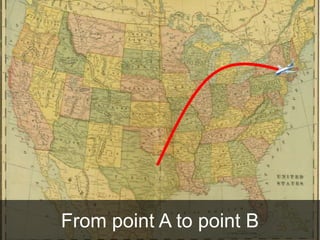
From point A to point B
This is information literacy
The paperwork
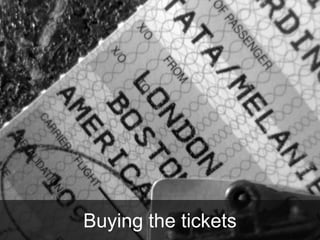
Buying the tickets
Navigating the airport
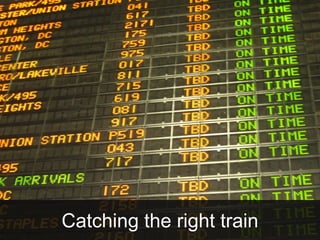
Catching the right train
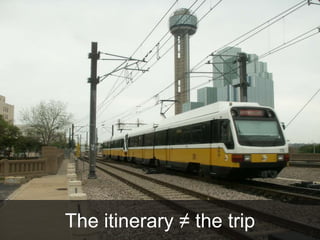
The itinerary ≠ the trip
This is transliteracy
What is transliteracy?The ability to read, write and interact across a range of platforms, tools and media.
Transliteracy is about how we navigate an ever-increasing array of communication and information sources.What is transliteracy?
It is about understanding how information sources fit together and how to make use of that fit.What is transliteracy?
Not from librariesWhere did it come from?
2005Transliteracies Project“a working group to study online reading”transliteracies.english.ucsb.eduWhere did it come from?
2007PART: Production and Research in Transliteracy GroupDeMontfort Universitynlabnetworks.typepad.com/transliteracyWhere did it come from?
2010Libraries and TransliteracyA cross-section of public librarians and library technology expertsLibrariesandtransliteracy.wordpress.comWhere did it come from?
What is transliteracy?The ability to read, write and interact across a range of platforms, tools and media.Transliteracy is about how we navigate an ever-increasing array of communication and information sources.It is about understanding how information sources fit together and how to make use of that fit.Where did it come from?Not from libraries2005Transliteracies Project“a working group to study online reading”transliteracies.english.ucsb.edu2007PART: Production and Research in Transliteracy GroupDeMontfort Universitynlabnetworks.typepad.com/transliteracy2010Libraries and TransliteracyA cross-section of public librarians and library technology expertsLibrariesandtransliteracy.wordpress.com
So, what does this mean for library instruction?
Research can’t be just about the library
New media
New linguistic competencies
New literacies
LiteracyDescriptiveEvaluativeInformation LiteracyTransliteracySubject-specificSubject-neutralOralPrintScientific literacyDigital literacyVisualHealth literacyCritical literacyComputerWebEconomic literacyMedia literacyOther subject specific  literaciesOther non-subject specific literacies
A word of warning
Three keys for library instruction
#1: Effective information use requires several information sources.
An explosion of information sources
Students will use non-library sources
But they hit a wall in the library
Address non-library resources at the start
#2: Information resources do not stand alone, they interact.
Popular vs. Scholarly doesn’t cut it anymore
Information doesn’t fit into compartments
Break down the divisions
Information resources are linked
#3: Navigating the interaction requires transferable skills.
“A mental model is…the user's mental image of a system and its capabilities that he employs to understand how to operate it.”(Holman 2011)
“…if today’s students [search] by discovery,should then the focus of information literacy instruction be on more effective strategies for refining a search rather than on initially constructing a near-perfect search?” (Holman 2011)
They already know how to do it
Teach the analogy
How do students use Wikipedia?(Head & Eisenberg 2011)
Understand transferable skillsmake overt connectionsprovide links to specific applications•focus on the purpose of strategiesinclude time for student reflectionconsider how strategies might be adaptedprovide feedback to studentsprovide opportunities to apply, re-apply and re-teachPerkins, D. N. & Salomon, G.  Transfer of learning, in International encyclopedia of education. (Second ed.) Oxford: Pergamon Press 1992.
Harness students’ existing skills
Give them a way through
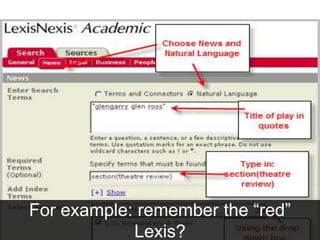
For example: remember the “red” Lexis?
Can your students still use it?
The University of Tennessee at Chattanooga
Wikipedia before class
Google versus the Library
The library is not (always) the answerYou moved off-campus, but now you’ve got roaches!Where’s the best place to find out which bug-spray is most effective?A.   Off.comB.   The Journal of EntomologyYahoo! AnswersAsk Grandma
Teaching the analogyhttp://www.youtube.com/v/dVETB3gaA2YSlideshare does not support video embeds.The clip originally shown starts at 0:01
The world of informationhttp://www.youtube.com/v/od8oTWqaDxESlideshare does not support video embeds.The clip originally shown starts at 0:40
Ample time to search
More to come
Future possibilities
But wait, there’s more!
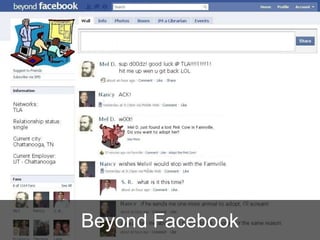
Social media training
Beyond Facebook
Workshops and beyond…
Last words
Your students’ trips are just beginning
Information literacy is how they’ll plan
Transliteracy is how they’ll get there
lane-wilkinson@utc.edu librariesandtransliteracy.wordpress.comThank you
Images“How did we get here” http://www.flickr.com/photos/miltoncorrea/3118589805/“Identify a need”http://www.flickr.com/photos/davidw/472529234/“Secure funds”www.flickr.com/photos/library_of_virginia/2899343224/“Evaluate travel options”http://www.flickr.com/photos/floridamemory/4203509136/This is information literacyhttp://www.flickr.com/photos/hey__paul/5573305472/‘The paperwork’http://www.flickr.com/photos/julia_manzerova/4388356403/“Buying the tickets”http://www.flickr.com/photos/melloveschallah/3562306837“Navigating the airport”http://www.flickr.com/photos/joiseyshowaa/2513692474“Catching the right train”www.flickr.com/photos/dasqfamily/3775600263/“The itinerary is not the trip”www.flickr.com/photos/daquellamanera/124077565/“This is transliteracy”www.flickr.com/photos/bass_nroll/422057721‘What is Transliteracy’http://www.flickr.com/photos/greeblie/3338710223/Not just about the libraryhttp://www.flickr.com/photos/diylibrarian/1403798100/New mediahttp://www.flickr.com/photos/tabor-roeder/5601654995/New literacieswww.flickr.com/photos/81203773@N00/411770953Three keyswww.flickr.com/photos/vek/2543518246/#1http://www.flickr.com/photos/lwr/4416908022An explosionhttp://www.flickr.com/photos/will-lion/2595497078/Students will use non-library sourceswww.flickr.com/photos/87913776@N00/5129607997But they hit a wallww.flickr.com/photos/ortizmj12/2366706532Address nonlibrary sources at the startwww.flickr.com/photos/polvero/3466964233#2http://www.flickr.com/photos/lwr/4318910816#3http://www.flickr.com/photos/lwr/2677504428/‘They already know how to do it’www.flickr.com/photos/ergonomic/3363073562/Teach the analogy’http://www.flickr.com/photos/automania/126698126/‘Harness existing skills’www.flickr.com/photos/nationalmediamuseum/3588573761Give them a way throughhttp://www.flickr.com/photos/raeallen/111030065Google versus the libraryhttp://www.flickr.com/photos/vblibrary/4993073773Ample time to searchhttp://www.flickr.com/photos/susanneanette/2990156824Social Media Traininghttp://www.flickr.com/photos/matthamm/2945559128Workshops and beyondwww.flickr.com/photos/george_eastman_house/2871176480/Last Wordshttp://www.flickr.com/photos/ilovememphis/4514924028Trips are just beginninghttp://www.flickr.com/photos/autumn_bliss/467766536/IL is how they’ll planhttp://www.flickr.com/photos/rohdesign/152626650Transliteracy is how they’ll get therehttp://www.flickr.com/photos/potyike/4783170326/Thank Youhttp://www.flickr.com/photos/brent_nashville/5157879240
Reading List							Bobish, G. (2011). Participation and pedagogy: connecting the social web to ACRL learning outcomes. Journal of Academic Librarianship, 37(1), 54-63.Brandt, D. S. (1997). Constructivism: teaching for understanding of the internet. Communications of the ACM, 40(10), 112-117.Head, A. J. & Eisenberg, M. B.. (2010). How today’s college-students use Wikipedia for dourse-related research. First Monday, 15(3). [Online] Holman, L. (2011). Millennial students’ mental models of search: implications for academic librarians and database developers. The Journal of Academic Librarianship, 37(1), 19-27.Junco, R., Heiberger, G., & Loken, E. (2011). The effect of Twitter on college student engagement and grades. Journal of Computer Assisted Learning, 27(2): 119-132.Kjellberg, S. (2010). I am a blogging researcher: motivations for blogging in a scholarly context. First Monday, 15(8). [Online]Perkins, D. N. & Salomon, G.  (1992). Transfer of learning, in International encyclopedia of education. (Second ed.) Oxford: Pergamon Press.
Websites							The Transliteracies Project			transliteracies.english.ucsb.eduPART: Production and Research in Transliteracy	www.transliteracy.comLibraries and transliteracy			librariesandtransliteracy.wordpress.com

LOEX 2011 - Transliteracy

  • 1.
    Bridging the Gaps:Transliteracyas Informed PedagogyLane WilkinsonUniv. of Tennessee at ChattanoogaLOEX 2011Walnut Street Bridge. Chattanooga, Tenn.
  • 2.
    How did weget here?
  • 3.
  • 4.
  • 5.
  • 6.
    From point Ato point B
  • 7.
  • 8.
  • 9.
  • 10.
  • 11.
  • 12.
  • 13.
  • 14.
    What is transliteracy?Theability to read, write and interact across a range of platforms, tools and media.
  • 15.
    Transliteracy is abouthow we navigate an ever-increasing array of communication and information sources.What is transliteracy?
  • 16.
    It is aboutunderstanding how information sources fit together and how to make use of that fit.What is transliteracy?
  • 17.
    Not from librariesWheredid it come from?
  • 18.
    2005Transliteracies Project“a workinggroup to study online reading”transliteracies.english.ucsb.eduWhere did it come from?
  • 19.
    2007PART: Production andResearch in Transliteracy GroupDeMontfort Universitynlabnetworks.typepad.com/transliteracyWhere did it come from?
  • 20.
    2010Libraries and TransliteracyAcross-section of public librarians and library technology expertsLibrariesandtransliteracy.wordpress.comWhere did it come from?
  • 21.
    What is transliteracy?Theability to read, write and interact across a range of platforms, tools and media.Transliteracy is about how we navigate an ever-increasing array of communication and information sources.It is about understanding how information sources fit together and how to make use of that fit.Where did it come from?Not from libraries2005Transliteracies Project“a working group to study online reading”transliteracies.english.ucsb.edu2007PART: Production and Research in Transliteracy GroupDeMontfort Universitynlabnetworks.typepad.com/transliteracy2010Libraries and TransliteracyA cross-section of public librarians and library technology expertsLibrariesandtransliteracy.wordpress.com
  • 22.
    So, what doesthis mean for library instruction?
  • 23.
    Research can’t bejust about the library
  • 24.
  • 25.
  • 26.
  • 27.
    LiteracyDescriptiveEvaluativeInformation LiteracyTransliteracySubject-specificSubject-neutralOralPrintScientific literacyDigitalliteracyVisualHealth literacyCritical literacyComputerWebEconomic literacyMedia literacyOther subject specific literaciesOther non-subject specific literacies
  • 28.
    A word ofwarning
  • 29.
    Three keys forlibrary instruction
  • 30.
    #1: Effective informationuse requires several information sources.
  • 31.
    An explosion ofinformation sources
  • 32.
    Students will usenon-library sources
  • 33.
    But they hita wall in the library
  • 34.
  • 35.
    #2: Information resourcesdo not stand alone, they interact.
  • 36.
    Popular vs. Scholarlydoesn’t cut it anymore
  • 37.
    Information doesn’t fitinto compartments
  • 38.
  • 39.
  • 40.
    #3: Navigating theinteraction requires transferable skills.
  • 41.
    “A mental modelis…the user's mental image of a system and its capabilities that he employs to understand how to operate it.”(Holman 2011)
  • 42.
    “…if today’s students[search] by discovery,should then the focus of information literacy instruction be on more effective strategies for refining a search rather than on initially constructing a near-perfect search?” (Holman 2011)
  • 43.
    They already knowhow to do it
  • 44.
  • 45.
    How do studentsuse Wikipedia?(Head & Eisenberg 2011)
  • 46.
    Understand transferable skillsmakeovert connectionsprovide links to specific applications•focus on the purpose of strategiesinclude time for student reflectionconsider how strategies might be adaptedprovide feedback to studentsprovide opportunities to apply, re-apply and re-teachPerkins, D. N. & Salomon, G. Transfer of learning, in International encyclopedia of education. (Second ed.) Oxford: Pergamon Press 1992.
  • 47.
  • 48.
    Give them away through
  • 49.
    For example: rememberthe “red” Lexis?
  • 50.
    Can your studentsstill use it?
  • 51.
    The University ofTennessee at Chattanooga
  • 52.
  • 53.
  • 54.
    The library isnot (always) the answerYou moved off-campus, but now you’ve got roaches!Where’s the best place to find out which bug-spray is most effective?A. Off.comB. The Journal of EntomologyYahoo! AnswersAsk Grandma
  • 55.
    Teaching the analogyhttp://www.youtube.com/v/dVETB3gaA2YSlidesharedoes not support video embeds.The clip originally shown starts at 0:01
  • 56.
    The world ofinformationhttp://www.youtube.com/v/od8oTWqaDxESlideshare does not support video embeds.The clip originally shown starts at 0:40
  • 57.
  • 58.
  • 59.
  • 60.
  • 61.
  • 62.
  • 63.
  • 64.
  • 65.
  • 66.
    Your students’ tripsare just beginning
  • 67.
    Information literacy ishow they’ll plan
  • 68.
    Transliteracy is howthey’ll get there
  • 69.
  • 70.
    Images“How did weget here” http://www.flickr.com/photos/miltoncorrea/3118589805/“Identify a need”http://www.flickr.com/photos/davidw/472529234/“Secure funds”www.flickr.com/photos/library_of_virginia/2899343224/“Evaluate travel options”http://www.flickr.com/photos/floridamemory/4203509136/This is information literacyhttp://www.flickr.com/photos/hey__paul/5573305472/‘The paperwork’http://www.flickr.com/photos/julia_manzerova/4388356403/“Buying the tickets”http://www.flickr.com/photos/melloveschallah/3562306837“Navigating the airport”http://www.flickr.com/photos/joiseyshowaa/2513692474“Catching the right train”www.flickr.com/photos/dasqfamily/3775600263/“The itinerary is not the trip”www.flickr.com/photos/daquellamanera/124077565/“This is transliteracy”www.flickr.com/photos/bass_nroll/422057721‘What is Transliteracy’http://www.flickr.com/photos/greeblie/3338710223/Not just about the libraryhttp://www.flickr.com/photos/diylibrarian/1403798100/New mediahttp://www.flickr.com/photos/tabor-roeder/5601654995/New literacieswww.flickr.com/photos/81203773@N00/411770953Three keyswww.flickr.com/photos/vek/2543518246/#1http://www.flickr.com/photos/lwr/4416908022An explosionhttp://www.flickr.com/photos/will-lion/2595497078/Students will use non-library sourceswww.flickr.com/photos/87913776@N00/5129607997But they hit a wallww.flickr.com/photos/ortizmj12/2366706532Address nonlibrary sources at the startwww.flickr.com/photos/polvero/3466964233#2http://www.flickr.com/photos/lwr/4318910816#3http://www.flickr.com/photos/lwr/2677504428/‘They already know how to do it’www.flickr.com/photos/ergonomic/3363073562/Teach the analogy’http://www.flickr.com/photos/automania/126698126/‘Harness existing skills’www.flickr.com/photos/nationalmediamuseum/3588573761Give them a way throughhttp://www.flickr.com/photos/raeallen/111030065Google versus the libraryhttp://www.flickr.com/photos/vblibrary/4993073773Ample time to searchhttp://www.flickr.com/photos/susanneanette/2990156824Social Media Traininghttp://www.flickr.com/photos/matthamm/2945559128Workshops and beyondwww.flickr.com/photos/george_eastman_house/2871176480/Last Wordshttp://www.flickr.com/photos/ilovememphis/4514924028Trips are just beginninghttp://www.flickr.com/photos/autumn_bliss/467766536/IL is how they’ll planhttp://www.flickr.com/photos/rohdesign/152626650Transliteracy is how they’ll get therehttp://www.flickr.com/photos/potyike/4783170326/Thank Youhttp://www.flickr.com/photos/brent_nashville/5157879240
  • 71.
    Reading List Bobish, G.(2011). Participation and pedagogy: connecting the social web to ACRL learning outcomes. Journal of Academic Librarianship, 37(1), 54-63.Brandt, D. S. (1997). Constructivism: teaching for understanding of the internet. Communications of the ACM, 40(10), 112-117.Head, A. J. & Eisenberg, M. B.. (2010). How today’s college-students use Wikipedia for dourse-related research. First Monday, 15(3). [Online] Holman, L. (2011). Millennial students’ mental models of search: implications for academic librarians and database developers. The Journal of Academic Librarianship, 37(1), 19-27.Junco, R., Heiberger, G., & Loken, E. (2011). The effect of Twitter on college student engagement and grades. Journal of Computer Assisted Learning, 27(2): 119-132.Kjellberg, S. (2010). I am a blogging researcher: motivations for blogging in a scholarly context. First Monday, 15(8). [Online]Perkins, D. N. & Salomon, G. (1992). Transfer of learning, in International encyclopedia of education. (Second ed.) Oxford: Pergamon Press.
  • 72.
    Websites The Transliteracies Project transliteracies.english.ucsb.eduPART:Production and Research in Transliteracy www.transliteracy.comLibraries and transliteracy librariesandtransliteracy.wordpress.com

Editor's Notes

  • #3 How did you get to this conference?By MiltonCJhttp://www.flickr.com/photos/miltoncorrea/3118589805/
  • #4 Looked for a conference?Waited for LOEX?Looked at the program?Evaluated whether it would be beneficial?By http://www.flickr.com/photos/davidw/472529234/
  • #5 Out of pocket?Write a grant?Travel funds?Some combination?Is the cost worth it?By the library of virginiahttp://www.flickr.com/photos/library_of_virginia/2899343224/
  • #6 Fly?Train?Drive?Walk?What dates?Which hotel?By Florida Memoryhttp://www.flickr.com/photos/floridamemory/4203509136/
  • #7 Weevaluated the merits of the conference, considered our needs and abilities, and determined the optimal means of travel.
  • #8 Information literacy is about finding the best way from point A to point B. It’s about identifying an information need, selecting the best resources to get from A to B, evaluating the information gained, and resolving the need.But, evaluation is only part of what we do. Creating the best itinerary is only part of what we do.Think about the more concrete skills involved in getting here…By Spec-ta-cleshttp://www.flickr.com/photos/hey__paul/5573305472/
  • #9 Did you register online?Write a travel grant?Poll colleagues on Twitter?Set up a conference alert feed in Google Reader?http://www.flickr.com/photos/julia_manzerova/4388356403/
  • #10 Travelocity?An agent?Did you have to map out the timing?Did you set up trip alerts on your phone?By melloveschallahhttp://www.flickr.com/photos/melloveschallah/3562306837/
  • #11 How do you get from the parking lot to the terminal?Are you familiar with security protocol?Can you read a building map?Did you give yourself enough time? Too much?By joiseyshowaahttp://www.flickr.com/photos/joiseyshowaa/2513692474
  • #12 How did you figure out how to time the trip when you had to move from car to plane to train to foot?For how many of you was this your first time on a train?How did you manage to catch the right train if you’ve never done it before?Look up directions on a website?Appeal to your preexisting knowledge of how airports work?By Qfamilyhttp://www.flickr.com/photos/dasqfamily/3775600263/
  • #13 My point is that there is a big difference between theevaluative part of travel and the operational part of travel.Evaluation is not operation.You could plan the world’s best itinerary, but get lost on the subway.You could know all about trains but need to cross an ocean.By daquellamanerahttp://www.flickr.com/photos/daquellamanera/124077565/
  • #14 This is transliteracy: the trip.Information literacy can tell us how to evaluate the information out there.Transliteracy can tell us how best to actually work with that information, to get at it, to move it between formats, and to get from point A to point B.By www.flickr.com/photos/bass_nroll/422057721
  • #15 Transliteracy is the ability to read, write, and interact across a range of platforms, tools and media.Transliteracies 2005PART 2007Libraries & Transliteracy 2010
  • #16 Transliteracy is the ability to read, write, and interact across a range of platforms, tools and media.Transliteracies 2005PART 2007Libraries & Transliteracy 2010
  • #17 Transliteracy is the ability to read, write, and interact across a range of platforms, tools and media.Transliteracies 2005PART 2007Libraries & Transliteracy 2010
  • #18 Transliteracy is the ability to read, write, and interact across a range of platforms, tools and media.Transliteracies 2005PART 2007Libraries & Transliteracy 2010
  • #19 Transliteracy is the ability to read, write, and interact across a range of platforms, tools and media.Transliteracies 2005PART 2007Libraries & Transliteracy 2010
  • #20 Transliteracy is the ability to read, write, and interact across a range of platforms, tools and media.Transliteracies 2005PART 2007Libraries & Transliteracy 2010
  • #21 Transliteracy is the ability to read, write, and interact across a range of platforms, tools and media.Transliteracies 2005PART 2007Libraries & Transliteracy 2010
  • #22 Transliteracy is the ability to read, write, and interact across a range of platforms, tools and media.Transliteracies 2005PART 2007Libraries & Transliteracy 2010
  • #23 Most of the current discussion of transliteracy is going on in two spheres:Public LibrariesLibrary technologyInstruction is only just beginning to apply this concept.
  • #24 Students do not treat the library as the starting point, despite our best intentions.We think that the big issue is getting students to stop using Google and use the library.But, this approach isn’t going to lead anywhere. We need to rethink the library as just another stop on the information journey. Rather than discourage Google, Wikipedia, blogs, we should encourage their use and find a way to make the library fit.Once they graduate, they will lose access to library resources. Ask yourself: What am I doing to prepare them for that?http://www.flickr.com/photos/diylibrarian/1403798100/
  • #25 Smartphones are on the riseVideo is dominantTablets are reshaping how we think about accessThe previous paradigm shift occurred in the 1980s as libraries survived (and changed) in response to the increasing prevalence of home computersThe new paradigm is the mobile paradigm.
  • #26 Consider the hashtag.This is the first use of what is now a required part of successfully using Twitter.This is a new syntax and semantics created to take advantage of new media.In other words, language is changing, and what it means to “read and write”
  • #27 It is becoming increasingly difficult to ignore video as a legitimate information source.It is becoming increasingly difficult to ignore the impact of Twitter on how we approach information.It is becoming increasingly difficult to say we are literate.So, we have digital literacy, web literacy, critical literacy, scientific literacy, information literacy, media literacy…etc. etc.How do we sort it all out???
  • #28 The best way to divide up literacy is into figurative, and literal senses.In the literal sense, literacy is how we communicate: orality, print, visual, computer, web, etc.In the more figurative sense, literacy is how we evaluate and understand informationThis evaluative aspect can either be subject specific, or subject neutralBut, the unifying thread is that this is all information literacyBut, what about the literal literacies: the skill-based literacies?This is transliteracy.
  • #29 Is ‘transliteracy’ a buzzword? In a word: yes. You’re going to see this cool-sounding word ‘transliteracy’ thrown around with no rhyme or reason. But, there is substantive research out there, and it would be dishonest to ignore the legitimate uses of transliteracy just because many treat it as the next “Library 2.0”Also, contra some advocates, I have elected to present transliteracy as conceptually distinct from information literacy for several reasons:Moving across or between the descriptive sense of literacy and the evaluative literacies is philosophically sloppy (Hume’s is/ought distinction) Info lit already provides a unifying structure for literacy in the figurative senseTransliteracy covers the oft-neglected operational literacies without stepping on the toes of IL. So, transliteracy, as I use it, is a complement to IL, not an umbrella term. I don’t want to delegitimize the important work done in IL over the past 25 years.
  • #30 I’d like to try to make some sense out of transliteracy by looking at three pedagogical principles we can extract for the library classroom.These three principles are not alternate definitions of transliteracy.They are simple facts that follow logically from the definition of transliteracy.
  • #31 Effective information use requires several information sources.Reading and writing across media requires that there be many media.By leoreynoldshttp://www.flickr.com/photos/lwr/4416908022
  • #32 The library is not alone in the world of research.http://www.flickr.com/photos/will-lion/2595497078/
  • #33 A recent article in First Mondayhttp://www.uic.edu/htbin/cgiwrap/bin/ojs/index.php/fm/article/viewArticle/2830/2476Shows that students use a diverse array of information sources#1: Course readings#2: Google#3: Library databasesIt isn’t enough to focus on library resources alone.Good programs understand this already.But, I know that we’re struggling to incorporate non-library sources in instruction.http://www.flickr.com/photos/87913776@N00/5129607997
  • #34 It’s hard to incorporate non-library sources:Lack of expertise on our parts?Tradition?Pressure from faculty?Ivory tower syndrome?So we often build a wall separating the library from the barbarians at the gates.So, we shouldn’t be surprised when students run right into that wall.Indexes? Databases? Keywords? Subject searching?The more we treat library research skills as fundamentallydifferent, the more students are going to struggle to understand them.
  • #35 Rather than ignore outside resources, we need to embrace them.Transliteracy focuses on the ability to communicate across a range of media, so the first lesson of transliteracy is that we need to get comfortable with the fact that there is a range of media out there.Expand your instruction beyond the library walls.Your students are going to use non-library sources, so say something about them!!!Example: Junco (2011) on Twitter
  • #36 Information sources do not stand alone, they interact.By leoreynoldshttp://www.flickr.com/photos/lwr/4318910816
  • #37 Professors have blogs.Wikipedia is reliable.Scholarly publishing is moving online, open access.Peer-review takes place on Twitter, FriendFeed, and millions of blog comments.Current events drive the information explosion When the academics are using social media, and the non-academics are using peer-review, something has to give.Good programs understand this already.
  • #38 Many IL programs already include discussion of Wikipedia, Google scholar, blogs, etc.Though alternative information sources are increasingly covered in library instruction, they are often segmented and compartmentalized. We cover Wikipedia, and then move on. Mention Google Scholar, and then move on. And so it goes. But, information is neutral with respect to technology. Information flows across technologies and the various means of access interact to shape and transform information.
  • #39 As we saw, students hit a wall when they enter the libraryIf we stop emphasizing the DIFFERENCES between the library and the outside world, we can start chipping away.But, we also need to emphasize the INTERACTION between information sources.We need to show that Wikipedia/blogs/etc are connected to library research.
  • #40 We need to stop treating information resources as wholly contained ecosystems and admit that they bleed into one another.Transliteracy is all about moving between media, so we need to focus on how media fit together and support one another.
  • #41 Navigating across information resources requires transferable skills.You have to have skills that apply in multiple media.By leoreynoldshttp://www.flickr.com/photos/lwr/2677504428/
  • #42 Most of the current discussion of transliteracy is going on in two spheres:Public LibrariesLibrary technologyInstruction is only just beginning to apply this concept.
  • #43 Most of the current discussion of transliteracy is going on in two spheres:Public LibrariesLibrary technologyInstruction is only just beginning to apply this concept.
  • #44 Your students come to class with a range of preexisting skills. Rather than start from scratch, figure out what they know and how to use it in instruction.Example: Holman (2011) argues that most IL focuses on a linear search, whereas internet tools have conditioned students to search by discovery (trial and error). They refine their search, rather than try to construct perfect syntax.Holman, Lucy. “Millennial Students’ Mental Models of Search: Implications for Academic Librarians and Database Developers.” The Journal of Academic Librarianship 37, no. 1 (2011): 19-27.
  • #45 Believe it or not, apples and oranges are more similar than different.Stop treating popular information sources and library resources as incommensurate.Hashtags are subject headingsHyperlinks are footnotesEtc.
  • #47 Transfer of Learning is well-defined in education. But library instruction does not seem to have caught on.A search of ERIC (CSA) for “Transfer of learning” yields 439 results.The preferred subject-heading “Transfer of Training” yields 4,015 results.A search of LISTA (EBSCO) for “transfer of learning” yields 14 results.The preferred subject-heading “Transfer of Training” yields 2 results.(May 5, 2011)
  • #48 Admit that they use Wikipedia and use that to your advantage.Show them how the way they use one service is the way they’ll use library services.How they evaluate a website is how they will evaluate an article.
  • #49 http://www.flickr.com/photos/raeallen/111030065
  • #51 If you didn’t come at instruction from the standpoint of transferable skills, your students may be experts at evaluating information, yet unable to cope with regular interface changes.
  • #52 Lupton Library has a small, but dedicated team of six library instructors serving 11,000 FTE.Through an emphasis on partnerships, we have managed to embed ourselves in the Freshman English curriculum.300-400 classes a year.ENGL 1010 and 1020A continuing curriculum between the two.We reach 79% of Freshmen.See Beverly’s talk later today.Our library instruction curriculum begins before the students even enter the room
  • #53 Research question worksheet requires students to contextualize a topic by learning the arguments surrounding it, reading background information from Wikipedia, and generating a list of possible keywords to use.Students bring completed worksheet to library instruction.Result:Students not only come to class with a topic, but they’ve often discussed it with their instructor, they’ve read various points of view and they understand some of the surrounding issues. It’s not a topic anymore – it’s a question. They have used a familiar source to get the ball rolling, rather than
  • #54 Using remote clickers, we quiz the students on effective information use, focusing on best practices for finding reliable info with Google. For example, we discuss bias, intent, and authority using popular websites, not academic articles. The skills will transfer. http://www.flickr.com/photos/vblibrary/4993073773
  • #55 In a transliterate approach, the library is not privileged.So, in the transliterate classroom we often find that the library is not the best place to look for information.
  • #56 This PRIMO Award-winning video relates the basics of library database navigation to more familiar resources.Research is like a gameWe use Wikipedia to develop keywordsMoreover, we only show one database, and trust that the lessons will extend to most databases.
  • #57 Another PRIMO database, The World of Information shows students that the skills they use in their personal lives are similar to the skills they will use in library research.
  • #58 The ability to apply and then reapply is crucial in developing transferable skills. http://www.flickr.com/photos/susanneanette/2990156824
  • #59 The possibilities for incorporating new media and technology into the classroom are expanding.For an excellent overview, see Greg Bobish, Participation and Pedagogy: Connecting theSocial Web to ACRL Learning OutcomesIn the January 2011 JAL
  • #60 For example, serious academics maintain regular blogposts.Brian LeiterDistinguished Professor and director at U of Chicago School of Law.Philosophy Professor
  • #61 Another example: Use Wordle to find keywords.This is the LOEX program.Really, the ideas are endless.The point is that we need to teach students that info comes from many places, different services can be used in conjunction w/ one another, and the skills in one can transfer to another.
  • #63 Obviously, if you are going to teach concepts related to new technologies, you have to be familiar with them. A recent initiative at Lupton Library did just that, teaching all librarians about blogs, Twitter, wikis, and beyond. Beverly’s 2008 LOEX talk.http://www.flickr.com/photos/matthamm/2945559128
  • #64 We teach a full-semester, credit-bearing course on social media and new tech.Ranging from Facebook to Flickr to YouTube to Foursquare and beyond.You have to engage the students with what they know and improve their non-library skills
  • #65 Our active workshop series includes workshops on free tools (open office, google docs, etc), classes on multimedia projects.We even spend a lot of time on Microsoft Office with an eye towards developing enhanced communication skills.http://www.flickr.com/photos/george_eastman_house/2871176480/
  • #66 http://www.flickr.com/photos/ilovememphis/4514924028
  • #67 By autumn blisshttp://www.flickr.com/photos/autumn_bliss/467766536/
  • #68 http://www.flickr.com/photos/rohdesign/152626650
  • #69 http://www.flickr.com/photos/potyike/4783170326/
  • #70 QUESTIONS????http://www.flickr.com/photos/brent_nashville/5157879240