From Information Literacy to TransliteracyPreparing our Students for Open LearningKim Balko, Dana Longley and Thomas Mackey
A Greater Cause?Excerpt from ESC Core Values:“sustain life-long curiosity and critical inquiry” “the key to a democratic society is the ability of the population to access and handle information effectively and efficiently.”  - William BadkeBadke, W. (2010). Foundations of Information Literacy: Learning From Paul Zurkowski. Online, 34(1), 48-50. Retrieved from Academic Search Complete database.
The Need87% of students may be “information illiterate” 1Primary student sources: textbooks and Google2Students “miss opportunities that college education provides for exploration, discovery, and deep learning.” 3Foster, A. (2006). Students Fall Short on 'Information Literacy,' Educational Testing Service's Study Finds. Chronicle of Higher Education, 53(10), A36. Retrieved from Academic Search Complete database: http://bit.ly/cnxwEx A. Head and M. Eisenberg, "Lessons Learned: How College Students Seek Information in the Digital Age," Project Information Literacy Progress Report, Information School, Univ. of Washington, Dec 1, 2009.Sharon A. Weiner, “Information Literacy: A Neglected Core Competency,” EDUCAUSE Quarterly, 33(1), 2010.
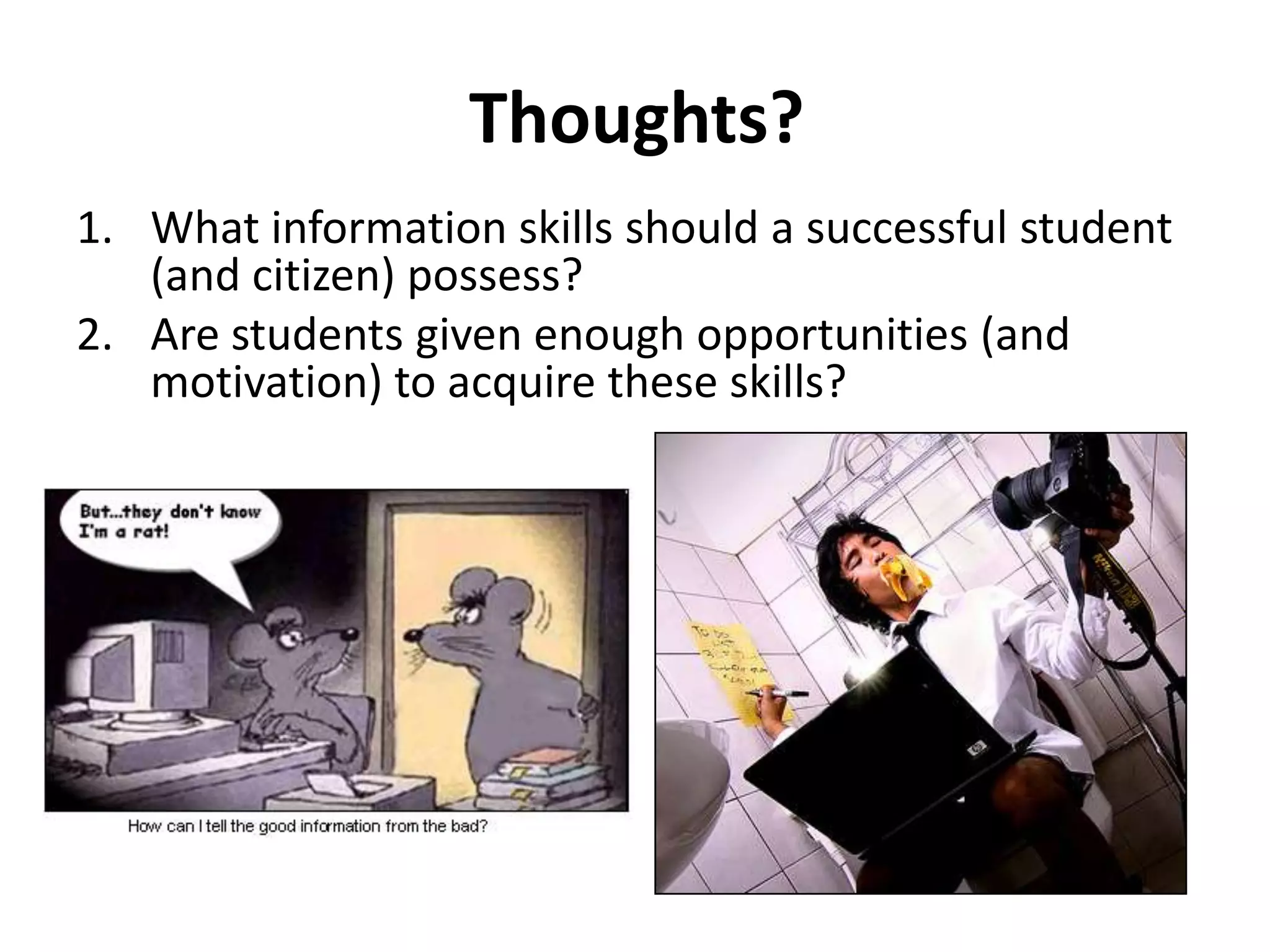
Thoughts?What information skills should a successful student (and citizen) possess?Are students given enough opportunities (and motivation) to acquire these skills?
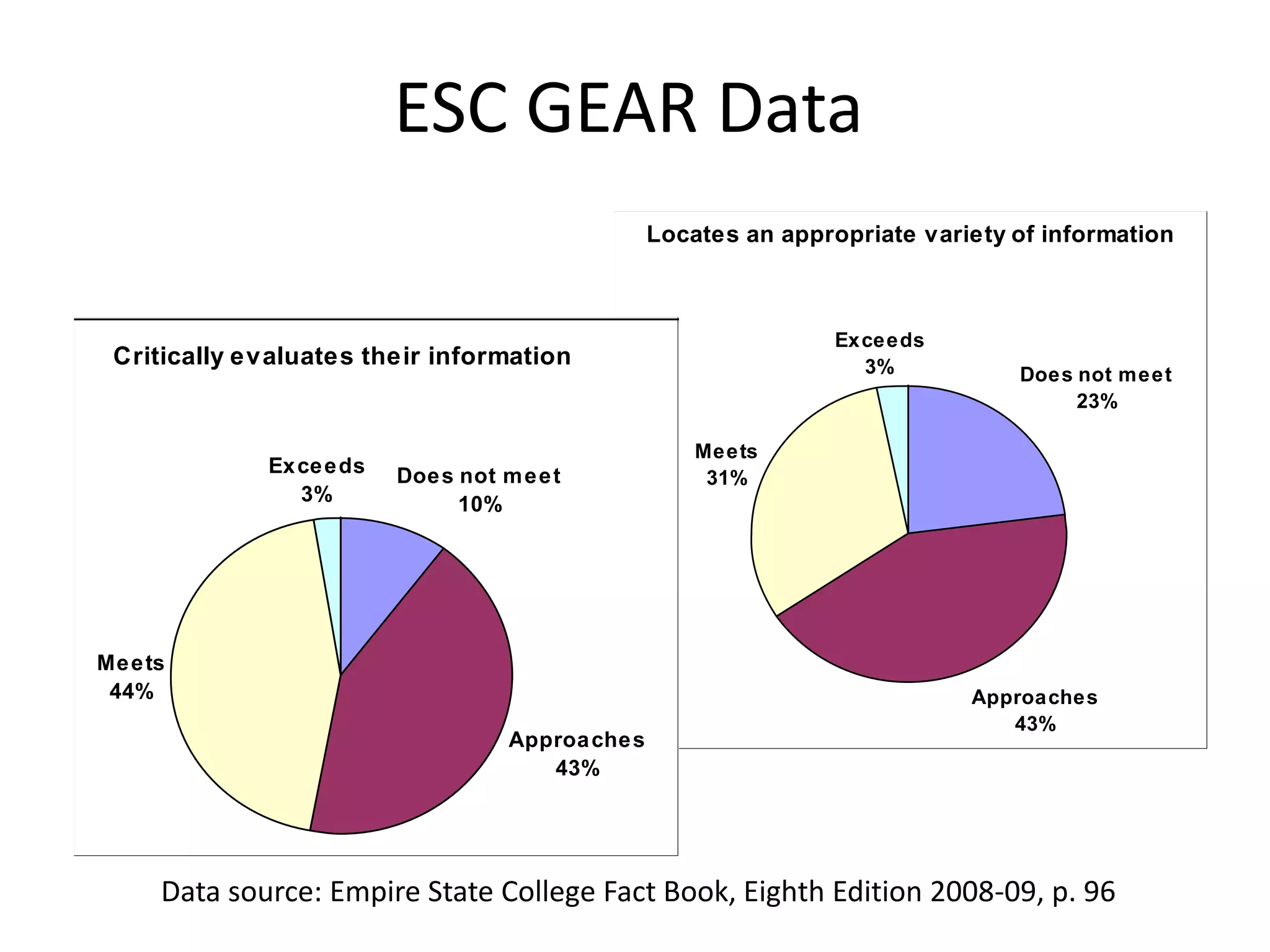
ESC GEAR DataData source: Empire State College Fact Book, Eighth Edition 2008-09, p. 96
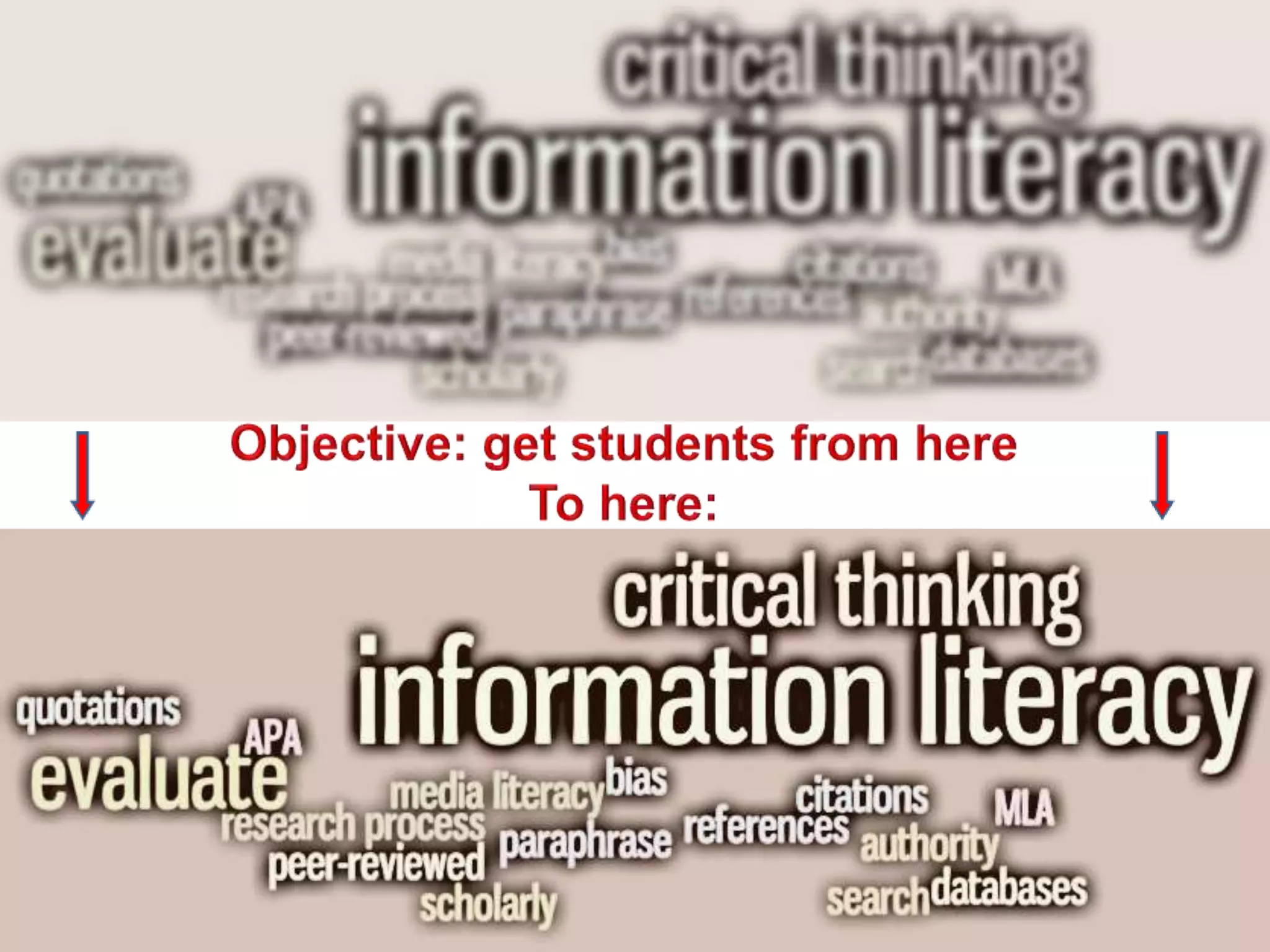
Objective: get students from hereTo here:
Emerging Literacy Frameworks7
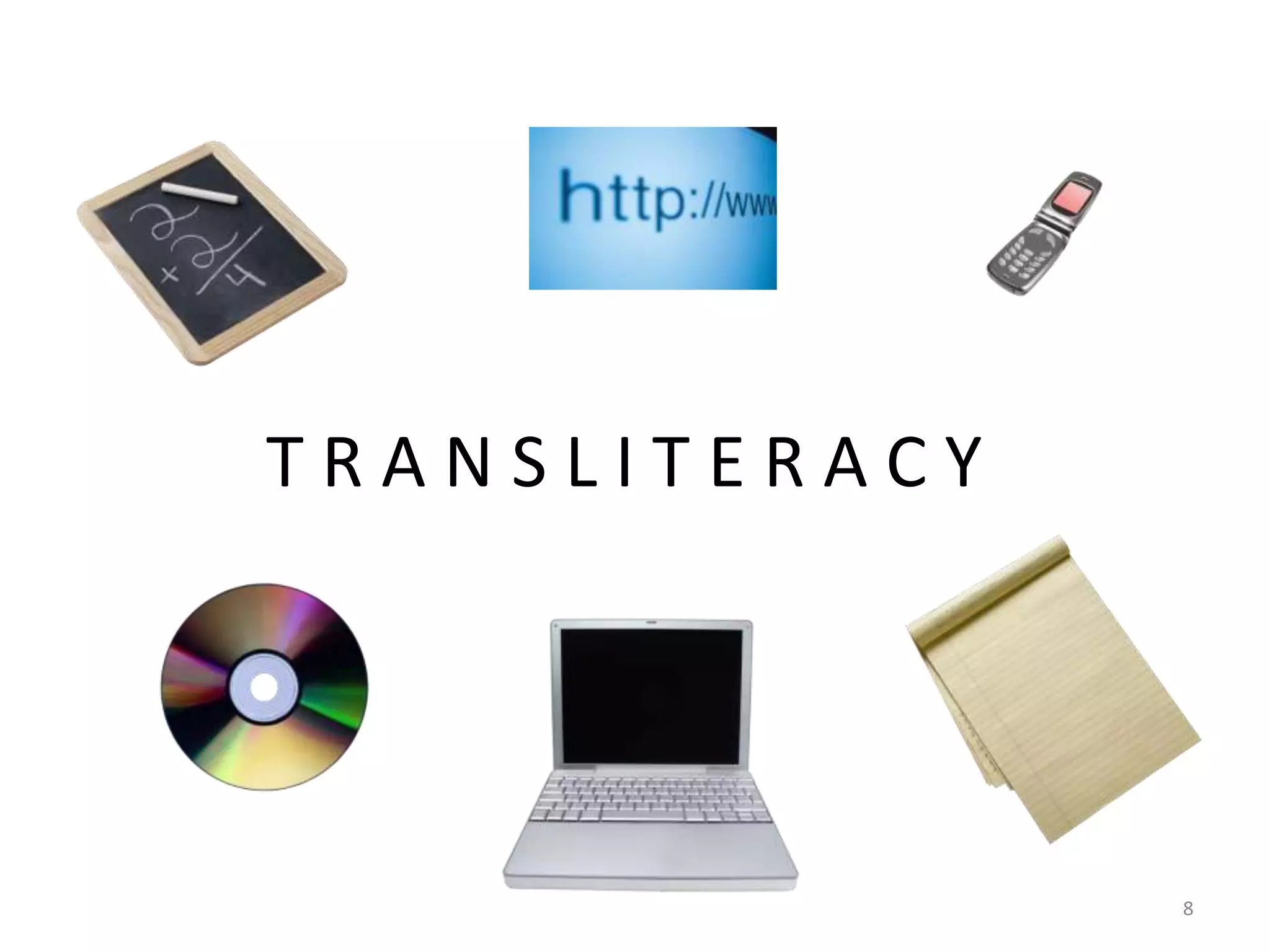
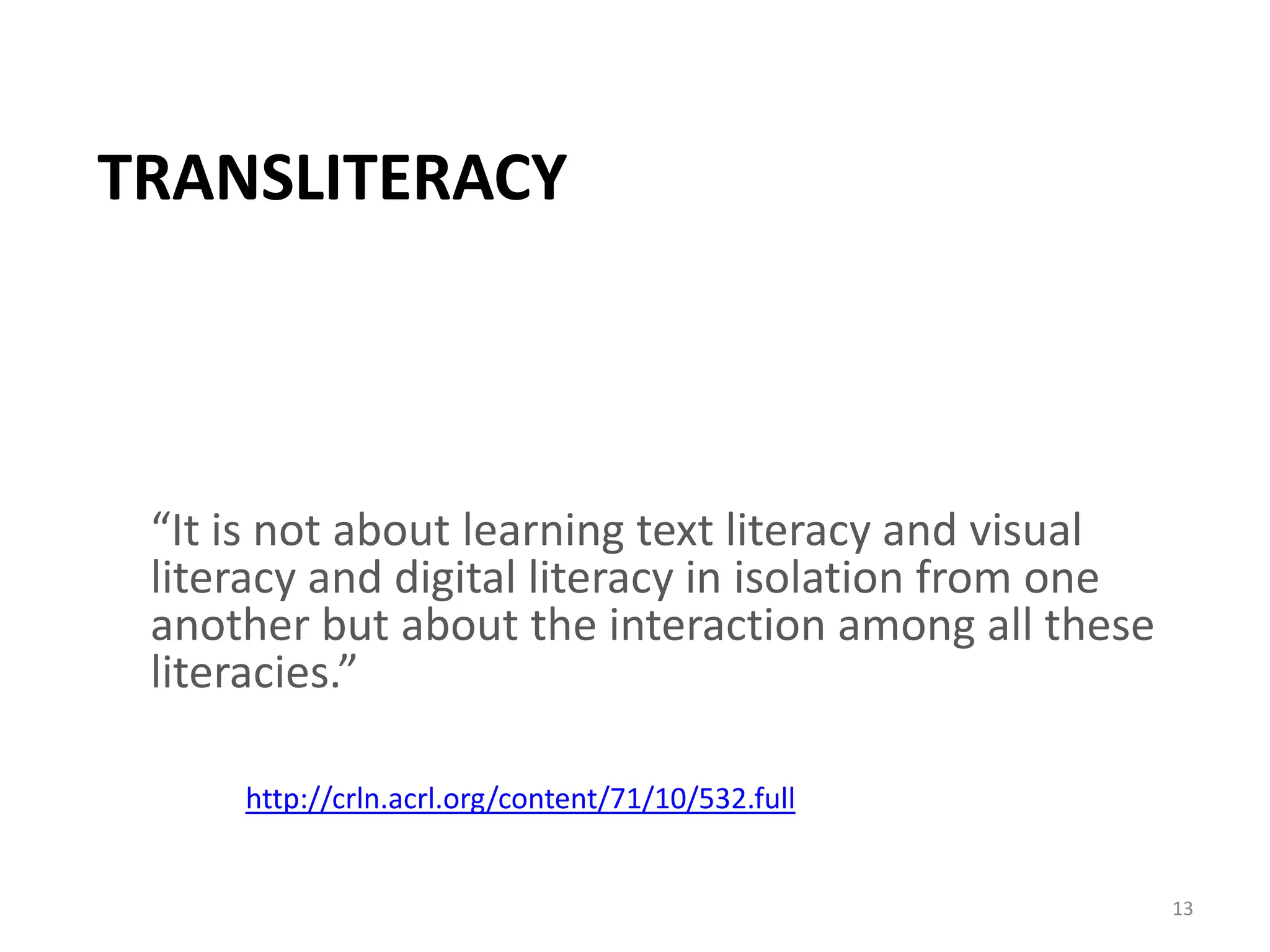
T R A N S L I T E R A C Y8
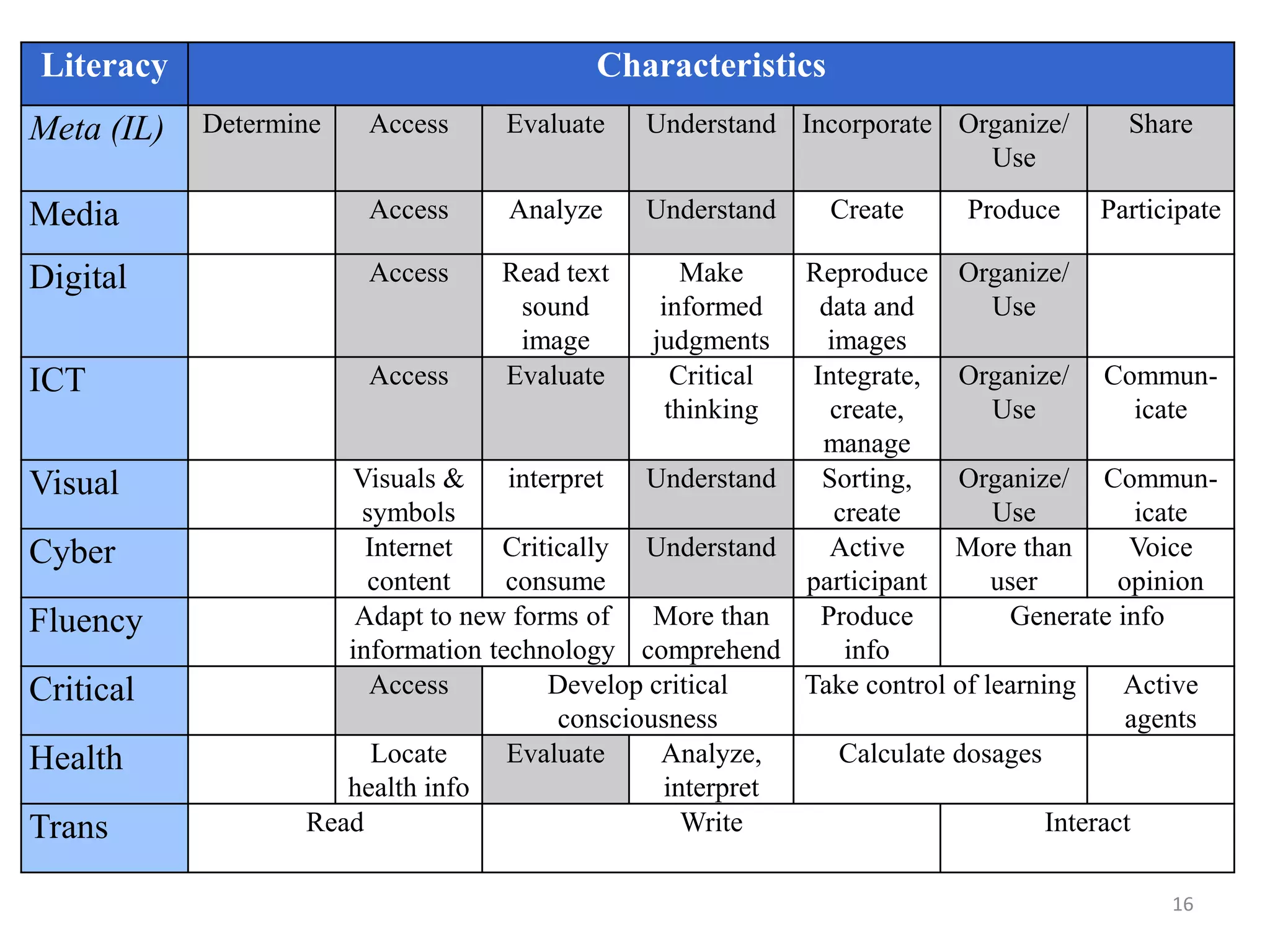
Transliteracy Research Group“Transliteracy is the ability to read, write and interact across a range of platforms, tools and media from signing and orality through handwriting, print, TV, radio and film, to digital social networks.”9http://nlabnetworks.typepad.com/transliteracy/
“Research in the Technological, Social, and Cultural Practices of Online Reading”Established 2005
Interdisciplinary research team in humanities, social sciences, and engineering
University of California, Santa Barbara10http://transliteracies.english.ucsb.edu/category/research-project
Transliterate“to write or print a letter or word using the closest corresponding letters of a different alphabet or language.”11http://crln.acrl.org/content/71/10/532.full
Transliteracy“mapping meaning across different media and not with developing particular literacies about various media.”12http://crln.acrl.org/content/71/10/532.full
Transliteracy“It is not about learning text literacy and visual literacy and digital literacy in isolation from one another but about the interaction among all these literacies.”13http://crln.acrl.org/content/71/10/532.full
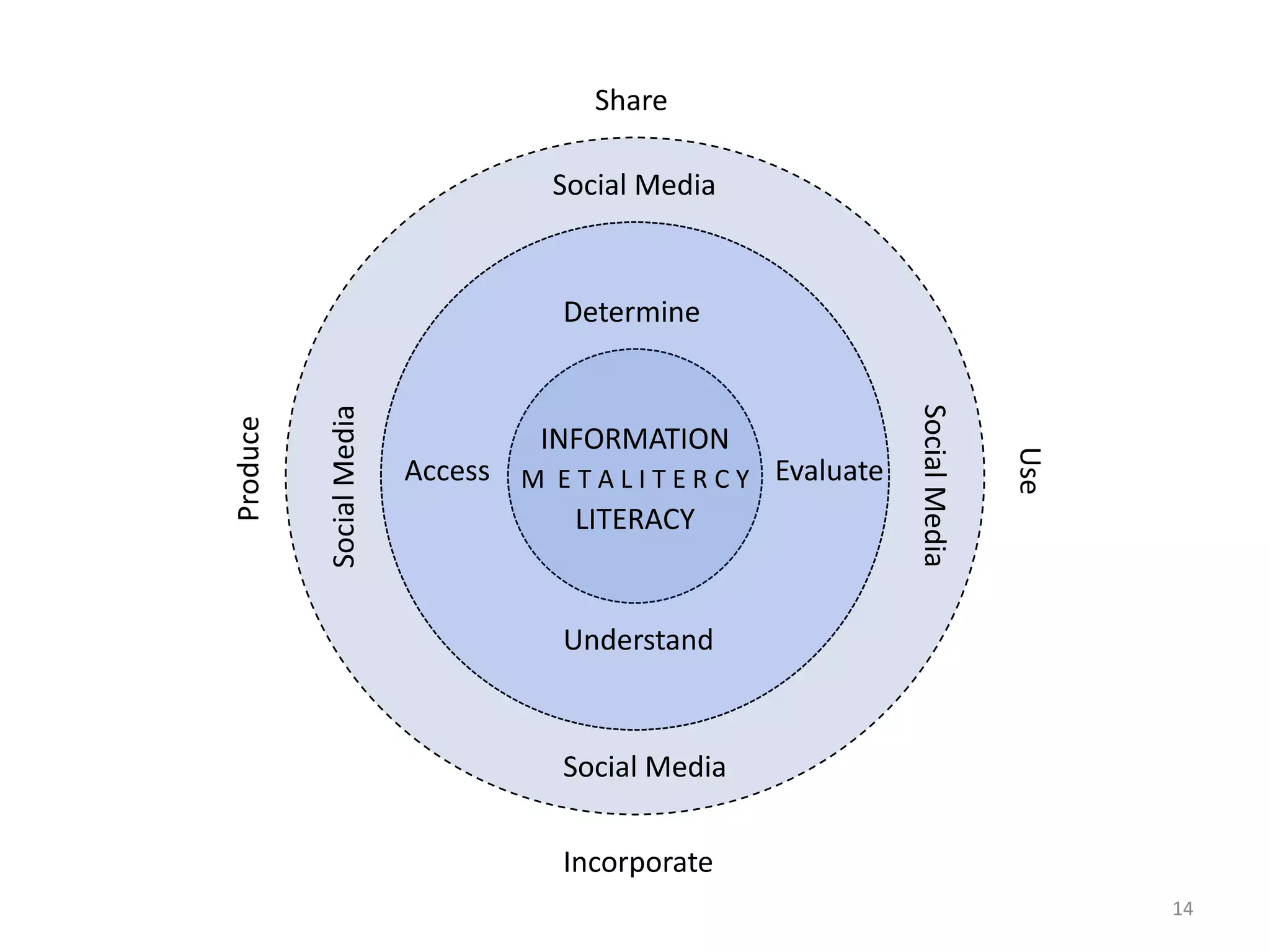
ShareSocial MediaDetermineINFORMATIONLITERACYProduceAccessEvaluateUseM  E T A L I T E R C YSocial MediaSocial MediaUnderstandSocial MediaIncorporate14
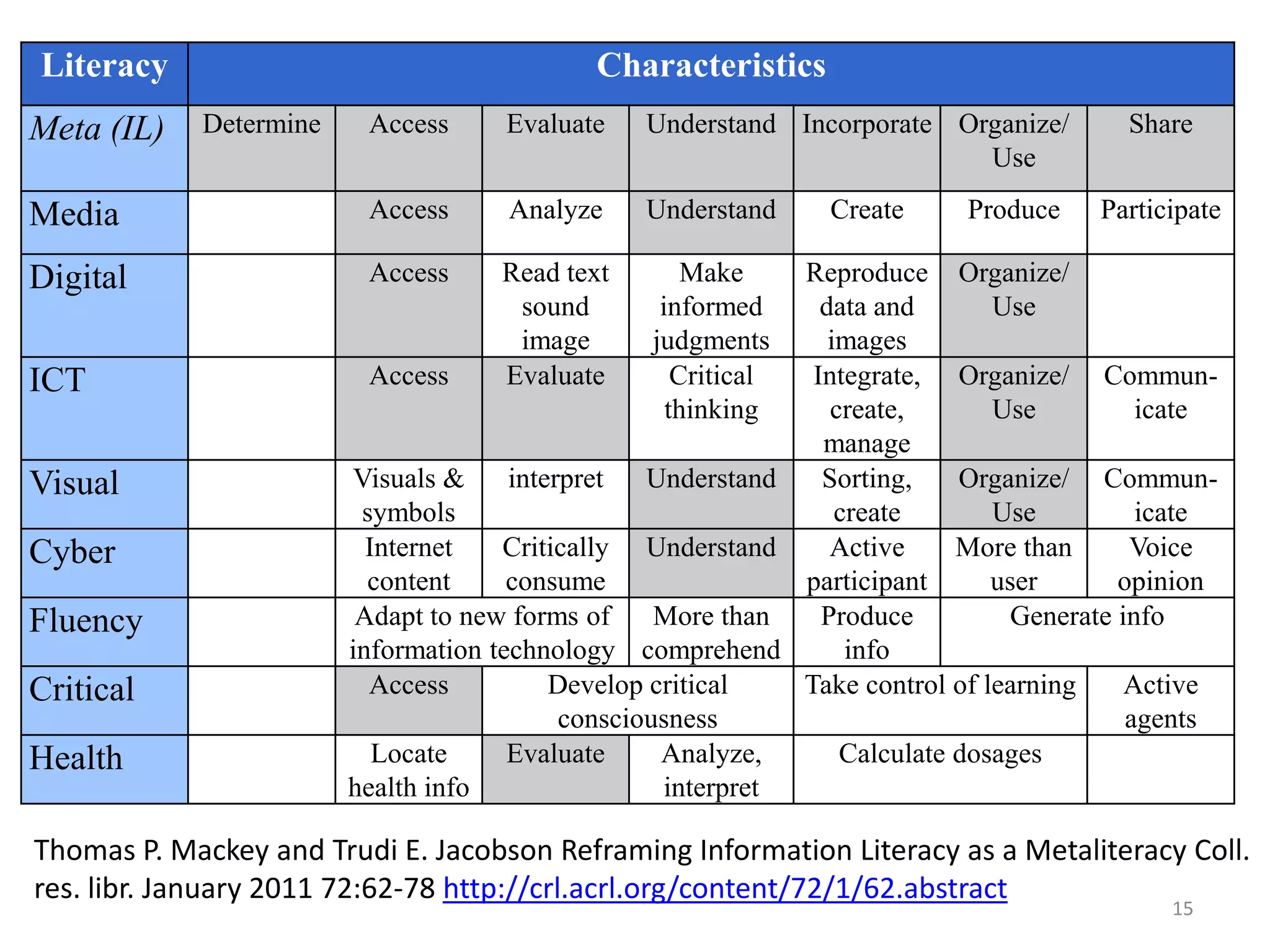
Thomas P. Mackey and Trudi E. Jacobson Reframing Information Literacy as a Metaliteracy Coll. res. libr. January 2011 72:62-78 http://crl.acrl.org/content/72/1/62.abstract15
16
Metaliteracy“promotes critical thinking and collaboration in a digital age, providing a comprehensive framework to effectively participate in social media and online communities. ”17Thomas P. Mackey and Trudi E. Jacobson Reframing Information Literacy as a Metaliteracy Coll. res. libr. January 2011 72:62-78 http://crl.acrl.org/content/72/1/62.abstract
Metaliteracy“Information literacy is central to this redefinition because information takes many forms online and is produced and communicated through multiple modalities. ”18Thomas P. Mackey and Trudi E. Jacobson Reframing Information Literacy as a Metaliteracy Coll. res. libr. January 2011 72:62-78 http://crl.acrl.org/content/72/1/62.abstract
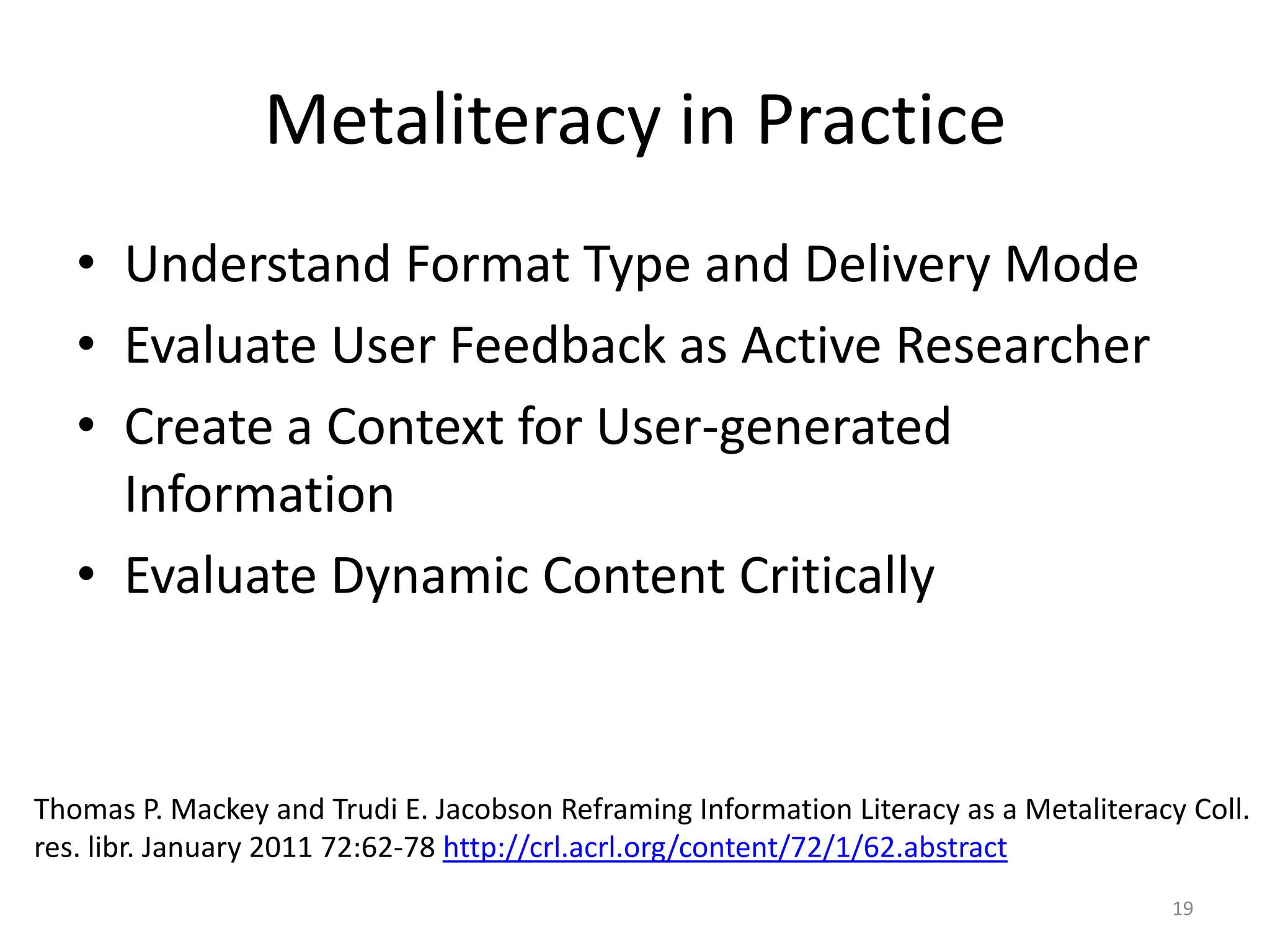
Metaliteracy in PracticeUnderstand Format Type and Delivery ModeEvaluate User Feedback as Active ResearcherCreate a Context for User-generated InformationEvaluate Dynamic Content Critically19Thomas P. Mackey and Trudi E. Jacobson Reframing Information Literacy as a Metaliteracy Coll. res. libr. January 2011 72:62-78 http://crl.acrl.org/content/72/1/62.abstract
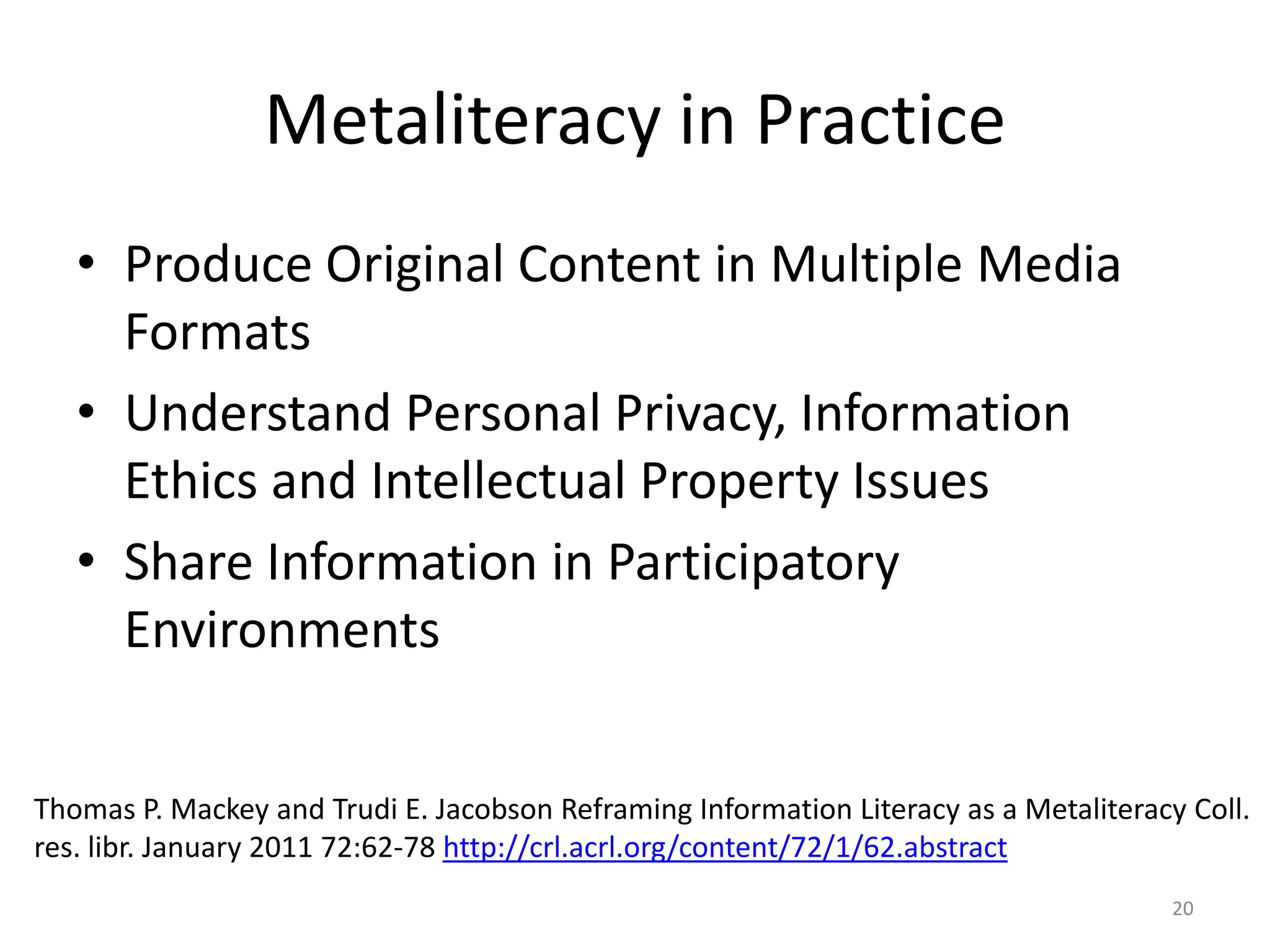
Metaliteracy in PracticeProduce Original Content in Multiple Media FormatsUnderstand Personal Privacy, Information Ethics and Intellectual Property IssuesShare Information in Participatory Environments20Thomas P. Mackey and Trudi E. Jacobson Reframing Information Literacy as a Metaliteracy Coll. res. libr. January 2011 72:62-78 http://crl.acrl.org/content/72/1/62.abstract
Nursing Research CourseIntegrated approach to information literacy.
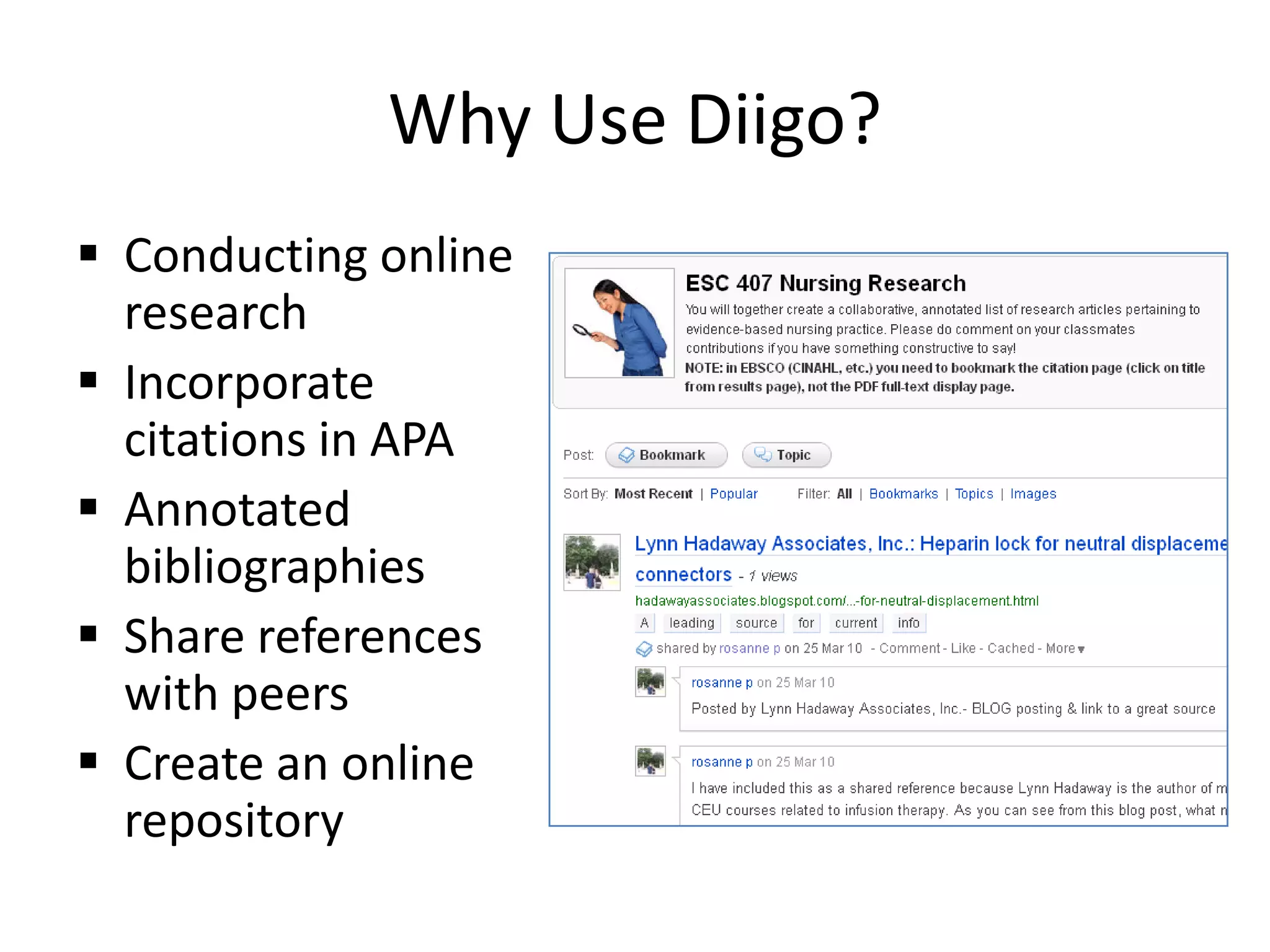
 Social Bookmarking Tool-Diigo
 Assignment: Find, read and bookmark 15 peer reviewed articles over a 3 module period (6 weeks). Reason for AssignmentWorking on beginning components of a research paper.

From Information Literacy to Transliteracy: Preparing our Students for Open Learning

  • 1.
    From Information Literacyto TransliteracyPreparing our Students for Open LearningKim Balko, Dana Longley and Thomas Mackey
  • 2.
    A Greater Cause?Excerptfrom ESC Core Values:“sustain life-long curiosity and critical inquiry” “the key to a democratic society is the ability of the population to access and handle information effectively and efficiently.” - William BadkeBadke, W. (2010). Foundations of Information Literacy: Learning From Paul Zurkowski. Online, 34(1), 48-50. Retrieved from Academic Search Complete database.
  • 3.
    The Need87% ofstudents may be “information illiterate” 1Primary student sources: textbooks and Google2Students “miss opportunities that college education provides for exploration, discovery, and deep learning.” 3Foster, A. (2006). Students Fall Short on 'Information Literacy,' Educational Testing Service's Study Finds. Chronicle of Higher Education, 53(10), A36. Retrieved from Academic Search Complete database: http://bit.ly/cnxwEx A. Head and M. Eisenberg, "Lessons Learned: How College Students Seek Information in the Digital Age," Project Information Literacy Progress Report, Information School, Univ. of Washington, Dec 1, 2009.Sharon A. Weiner, “Information Literacy: A Neglected Core Competency,” EDUCAUSE Quarterly, 33(1), 2010.
  • 4.
    Thoughts?What information skillsshould a successful student (and citizen) possess?Are students given enough opportunities (and motivation) to acquire these skills?
  • 5.
    ESC GEAR DataDatasource: Empire State College Fact Book, Eighth Edition 2008-09, p. 96
  • 6.
    Objective: get studentsfrom hereTo here:
  • 7.
  • 8.
    T R AN S L I T E R A C Y8
  • 9.
    Transliteracy Research Group“Transliteracyis the ability to read, write and interact across a range of platforms, tools and media from signing and orality through handwriting, print, TV, radio and film, to digital social networks.”9http://nlabnetworks.typepad.com/transliteracy/
  • 10.
    “Research in theTechnological, Social, and Cultural Practices of Online Reading”Established 2005
  • 11.
    Interdisciplinary research teamin humanities, social sciences, and engineering
  • 12.
    University of California,Santa Barbara10http://transliteracies.english.ucsb.edu/category/research-project
  • 13.
    Transliterate“to write orprint a letter or word using the closest corresponding letters of a different alphabet or language.”11http://crln.acrl.org/content/71/10/532.full
  • 14.
    Transliteracy“mapping meaning acrossdifferent media and not with developing particular literacies about various media.”12http://crln.acrl.org/content/71/10/532.full
  • 15.
    Transliteracy“It is notabout learning text literacy and visual literacy and digital literacy in isolation from one another but about the interaction among all these literacies.”13http://crln.acrl.org/content/71/10/532.full
  • 16.
    ShareSocial MediaDetermineINFORMATIONLITERACYProduceAccessEvaluateUseM E T A L I T E R C YSocial MediaSocial MediaUnderstandSocial MediaIncorporate14
  • 17.
    Thomas P. Mackeyand Trudi E. Jacobson Reframing Information Literacy as a Metaliteracy Coll. res. libr. January 2011 72:62-78 http://crl.acrl.org/content/72/1/62.abstract15
  • 18.
  • 19.
    Metaliteracy“promotes critical thinkingand collaboration in a digital age, providing a comprehensive framework to effectively participate in social media and online communities. ”17Thomas P. Mackey and Trudi E. Jacobson Reframing Information Literacy as a Metaliteracy Coll. res. libr. January 2011 72:62-78 http://crl.acrl.org/content/72/1/62.abstract
  • 20.
    Metaliteracy“Information literacy iscentral to this redefinition because information takes many forms online and is produced and communicated through multiple modalities. ”18Thomas P. Mackey and Trudi E. Jacobson Reframing Information Literacy as a Metaliteracy Coll. res. libr. January 2011 72:62-78 http://crl.acrl.org/content/72/1/62.abstract
  • 21.
    Metaliteracy in PracticeUnderstandFormat Type and Delivery ModeEvaluate User Feedback as Active ResearcherCreate a Context for User-generated InformationEvaluate Dynamic Content Critically19Thomas P. Mackey and Trudi E. Jacobson Reframing Information Literacy as a Metaliteracy Coll. res. libr. January 2011 72:62-78 http://crl.acrl.org/content/72/1/62.abstract
  • 22.
    Metaliteracy in PracticeProduceOriginal Content in Multiple Media FormatsUnderstand Personal Privacy, Information Ethics and Intellectual Property IssuesShare Information in Participatory Environments20Thomas P. Mackey and Trudi E. Jacobson Reframing Information Literacy as a Metaliteracy Coll. res. libr. January 2011 72:62-78 http://crl.acrl.org/content/72/1/62.abstract
  • 23.
    Nursing Research CourseIntegratedapproach to information literacy.
  • 24.
  • 25.
    Assignment: Find,read and bookmark 15 peer reviewed articles over a 3 module period (6 weeks). Reason for AssignmentWorking on beginning components of a research paper.
  • 26.
  • 27.
    Final paper presentedduring last week. Why Use Diigo?Conducting online research
  • 28.
  • 29.
  • 30.
  • 31.
    Create an onlinerepositoryPositive UsesCan make groups private
  • 32.
    Instructor can givefeedback to students on quality of articles
  • 33.
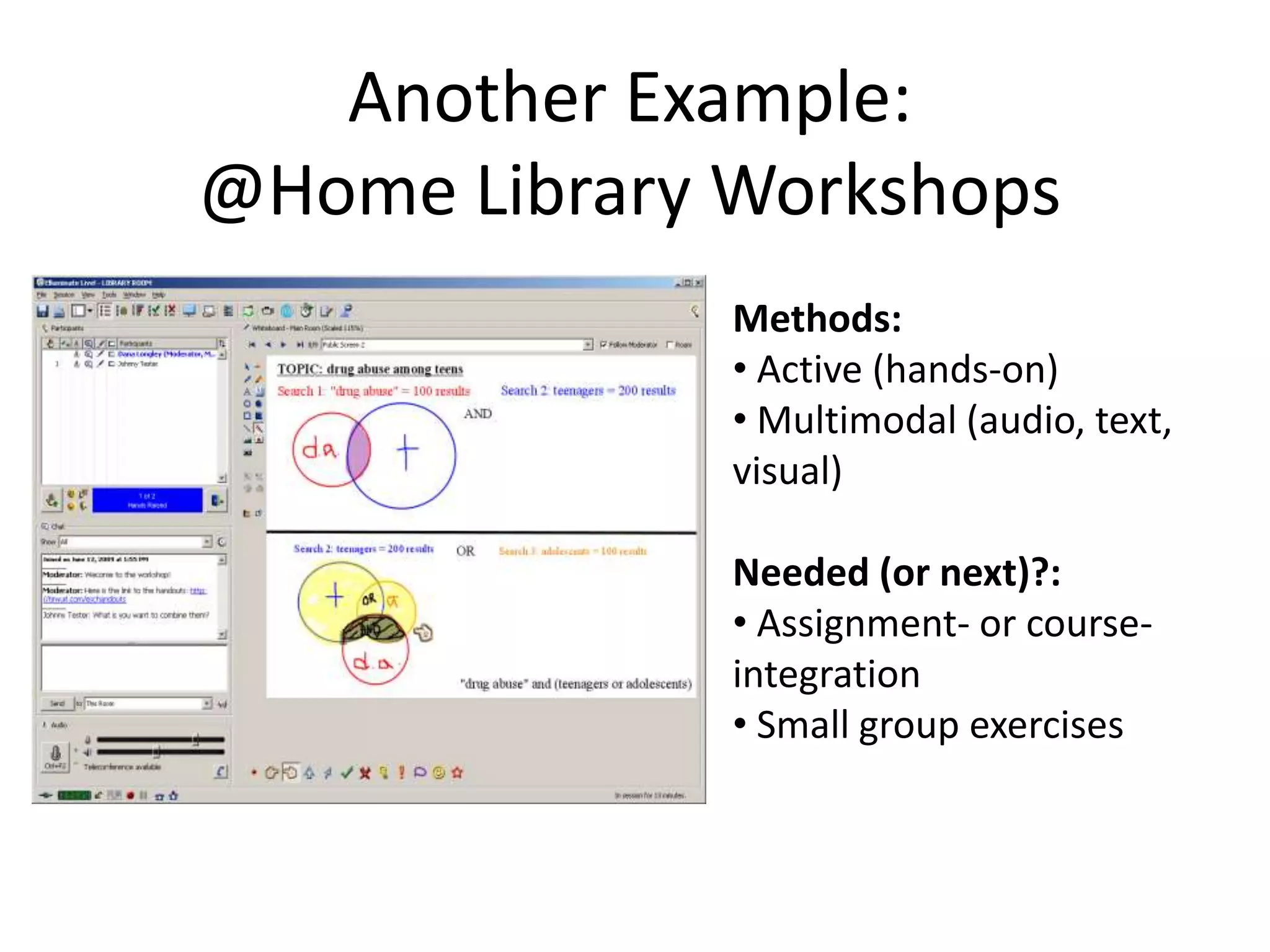
    Free technologyAnother Example:@Home Library WorkshopsMethods: Active (hands-on)
  • 34.
    Multimodal (audio,text, visual)Needed (or next)?: Assignment- or course-integration
  • 35.
    Small groupexercises

Editor's Notes

  • #20 Create context: Wikipedia, RSS, GoogleScolar