Scholarly Networks:
Friend or Foe or Risky Fray?
	
(Hint: ALL OF THE ABOVE)	
	
Bonnie Stewart	
University of Prince Edward Island, Canada
Digital Pedagogy Lab Cairo
March 2016
…what now?
#DigPed =
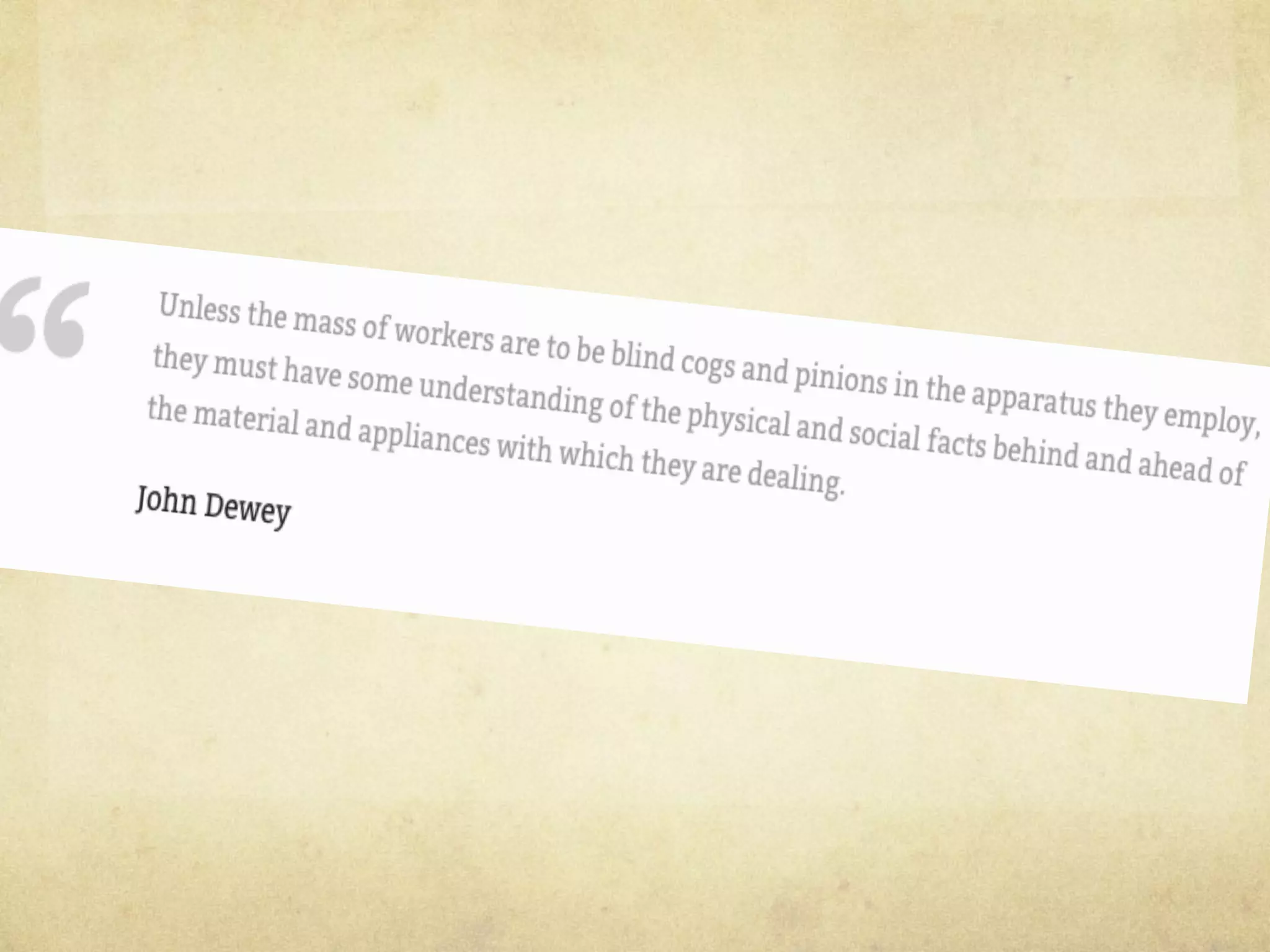
refusing to act/teach/live as Dewey’s
“blind cogs & pinions”
#DigPed ≠ Tech	
http://www.telecomtv.com/articles/tablets/retro-chic-apples-original-macintosh-reimagined-12100
#DigPed = (in part)
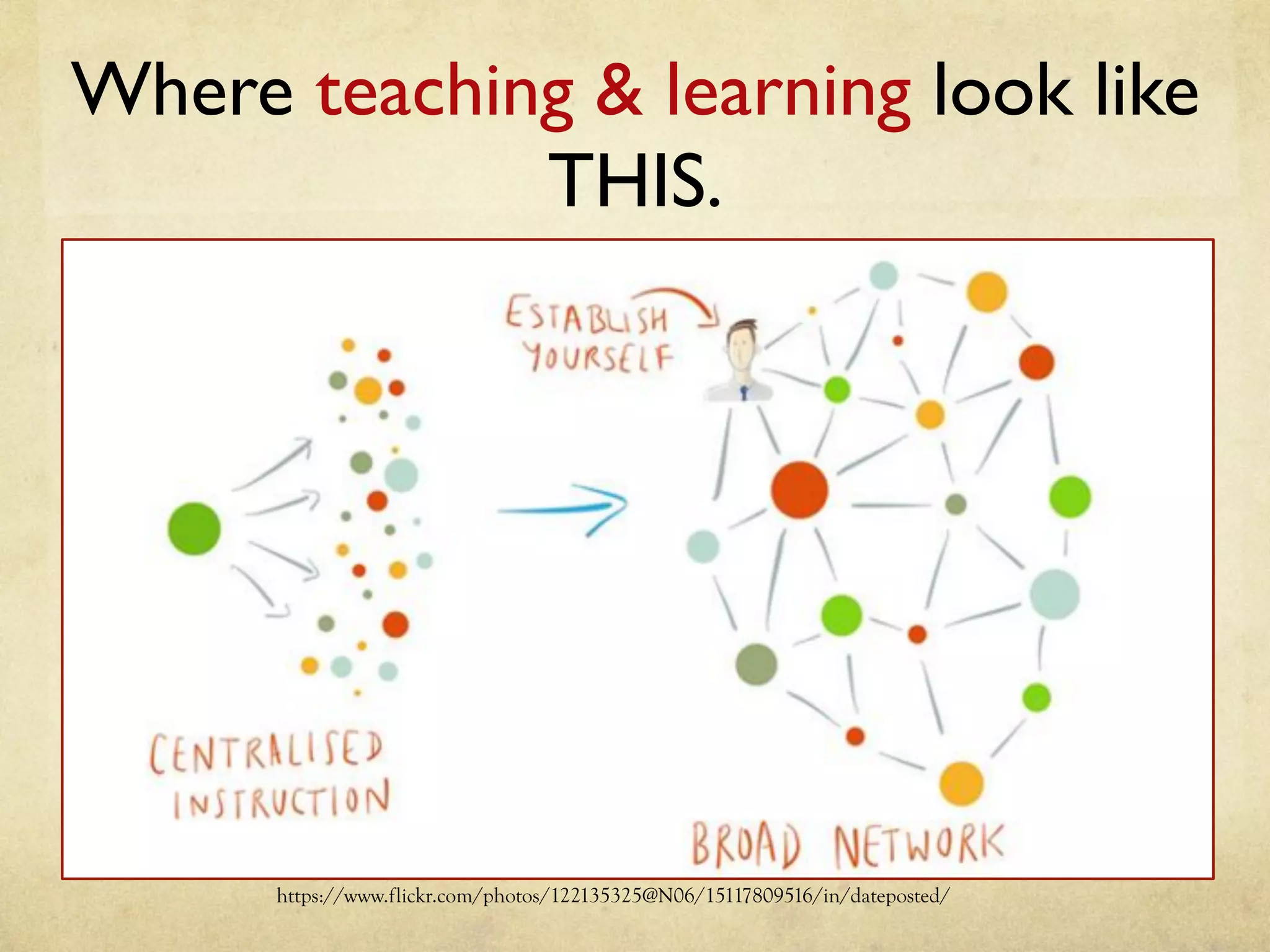
A Networked Approach
Where teaching & learning look like
THIS.	
https://www.flickr.com/photos/122135325@N06/15117809516/in/dateposted/
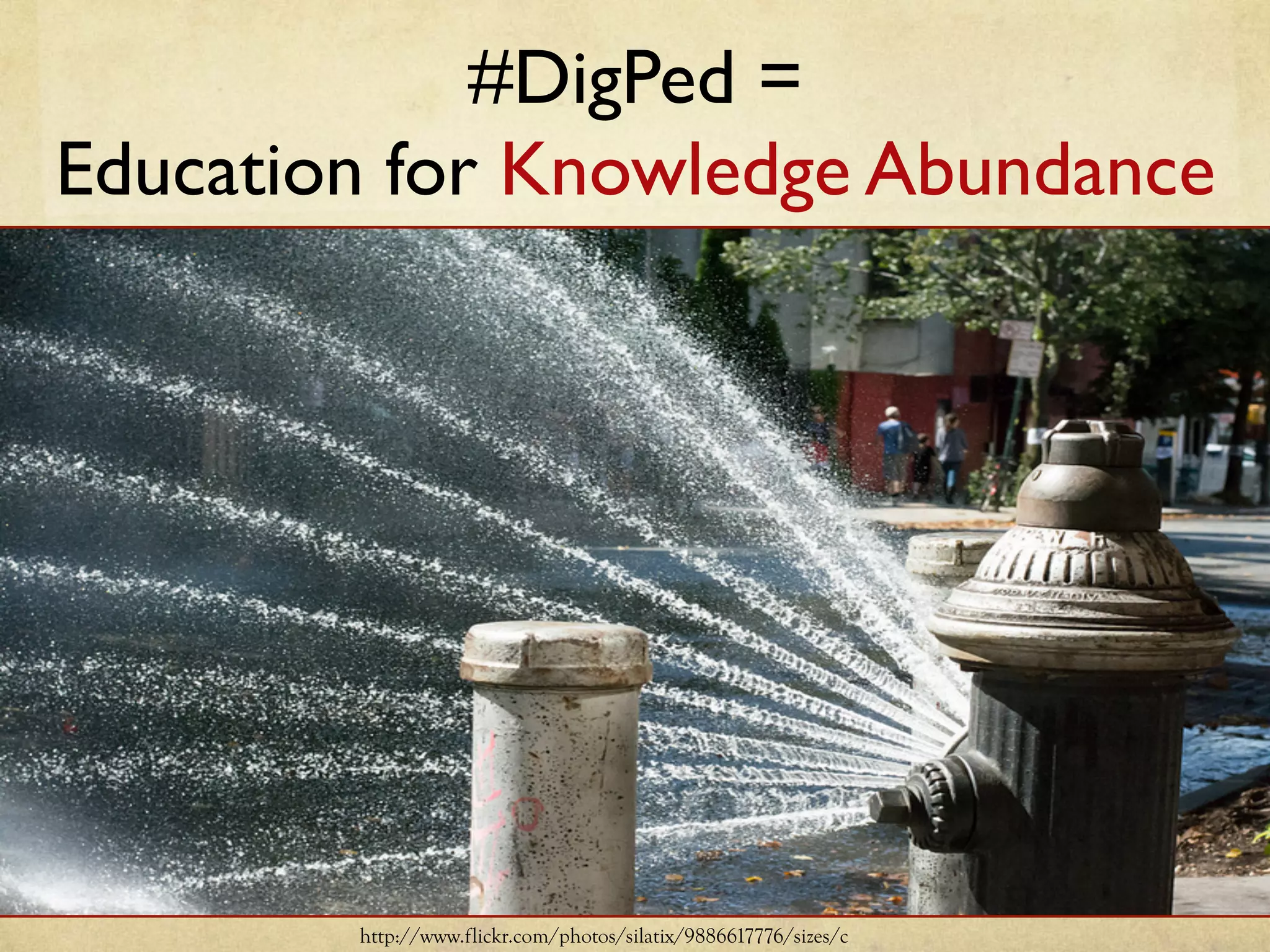
#DigPed =
Education for Knowledge Abundance	
http://www.flickr.com/photos/silatix/9886617776/sizes/c
"For the first time in human history, two related
propositions are true. One, it no longer
is possible to store within the human brain all of
the information that a human needs.	
Second, it no longer is necessary to store within
the human brain all of the information that
humans need.	
Education needs to be geared toward
the handling of data rather than the accumulation
of data.”	
- Berlo, 1975
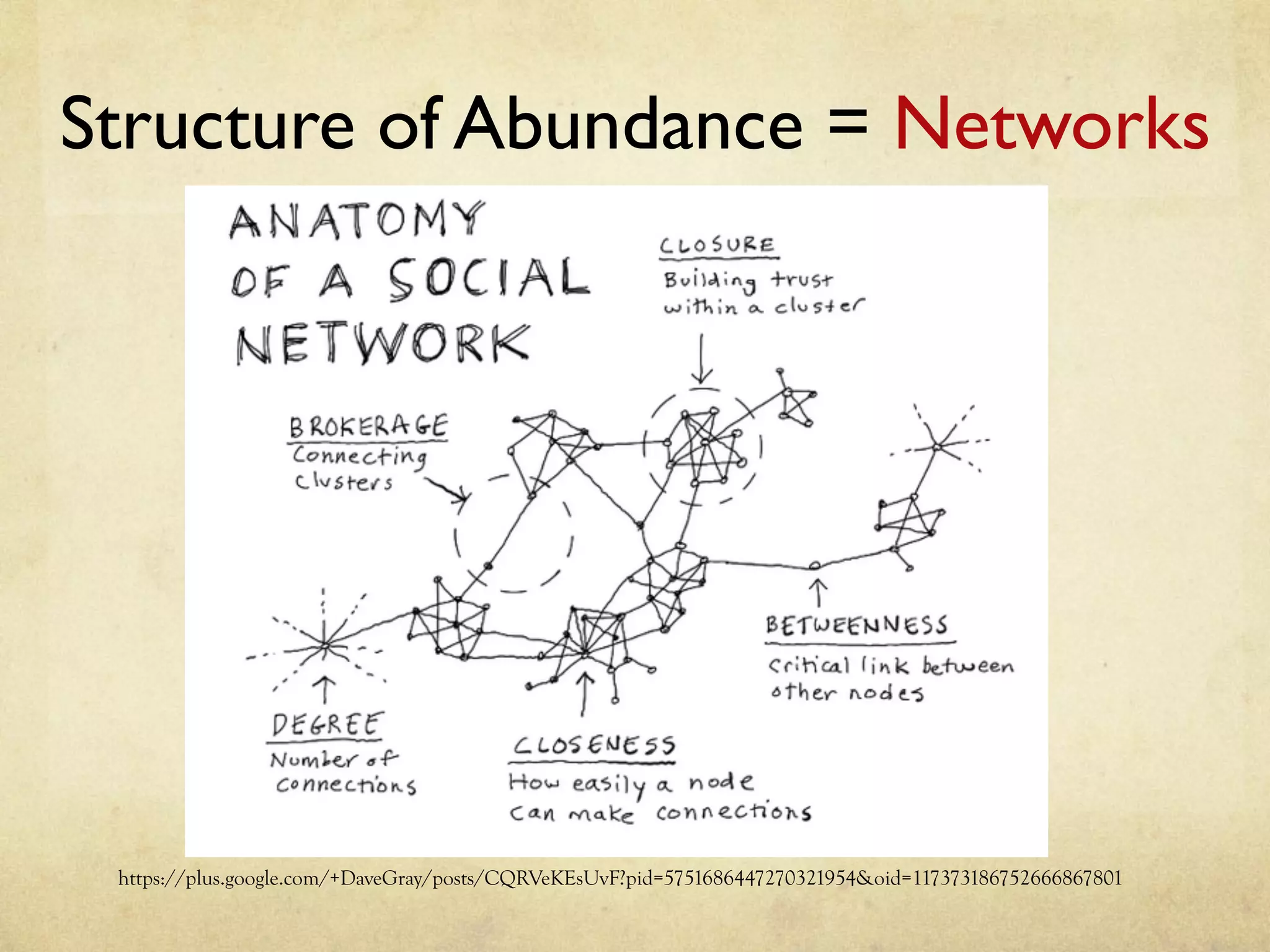
Structure of Abundance = Networks	
https://plus.google.com/+DaveGray/posts/CQRVeKEsUvF?pid=5751686447270321954&oid=117373186752666867801
Price of Admission = Public Identity
Wait. WHOA. ???
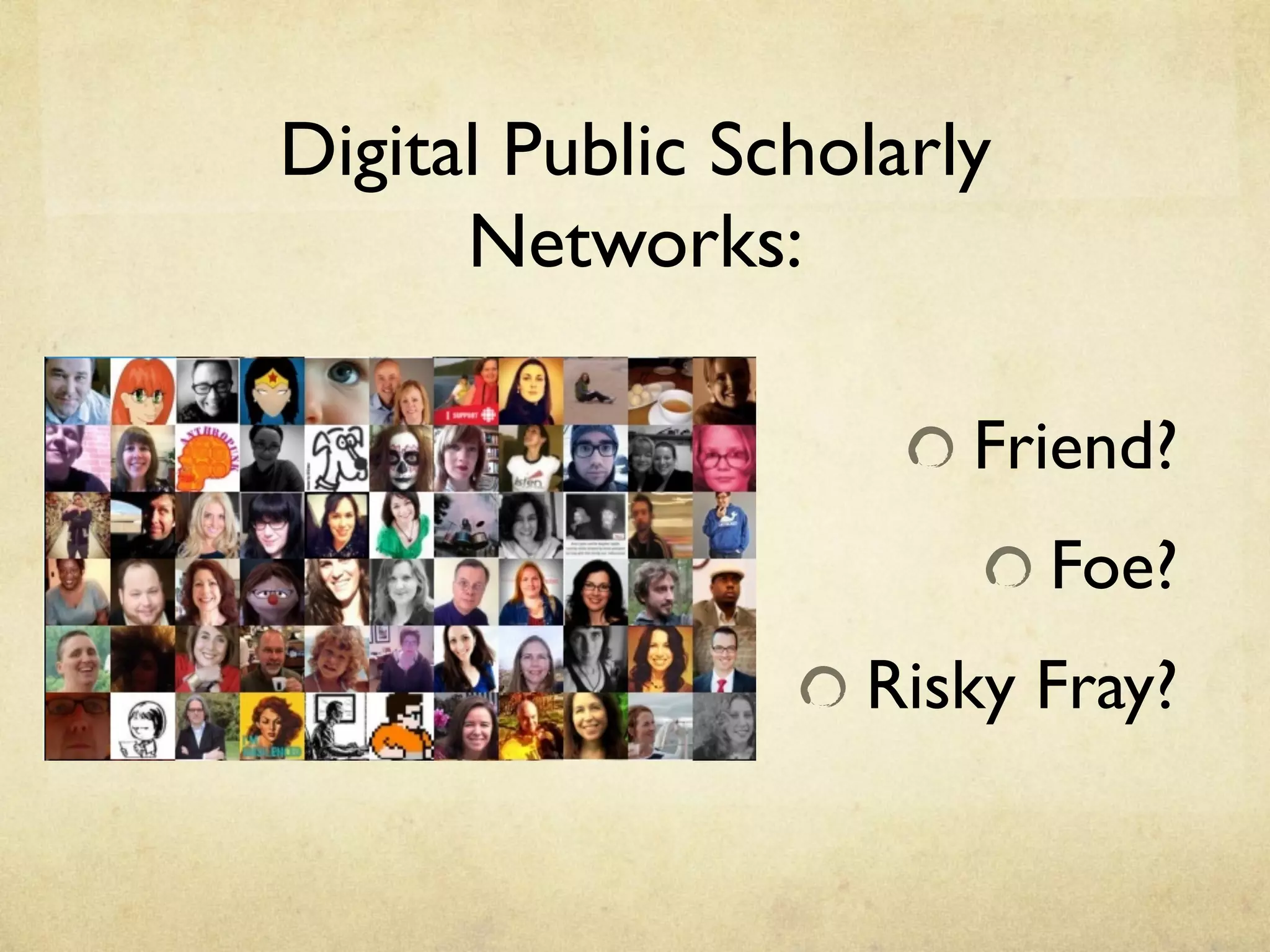
Digital Public Scholarly
Networks:	
!  Friend?	
!  Foe?	
!  Risky Fray?
YES.
Networks as Friend
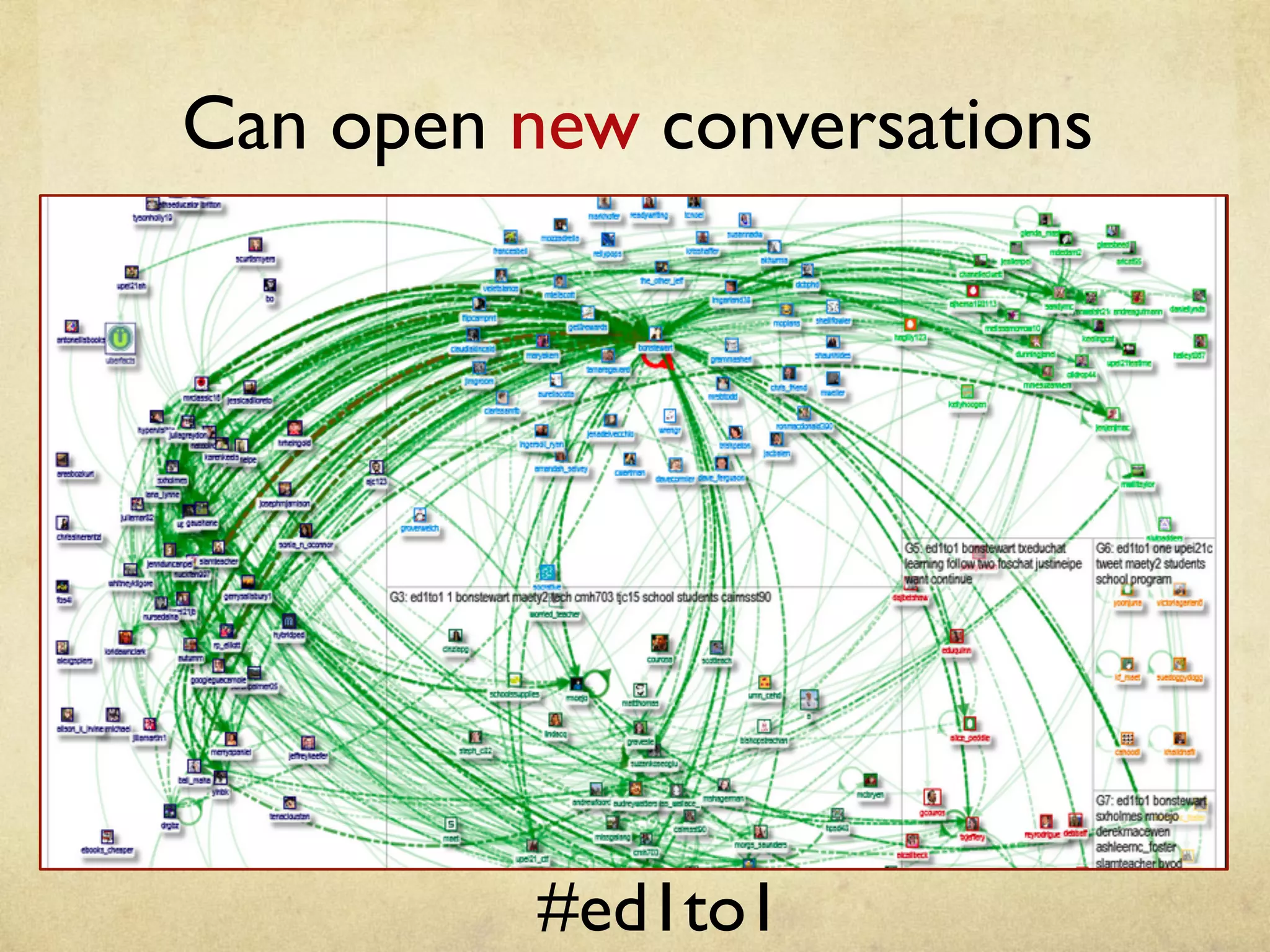
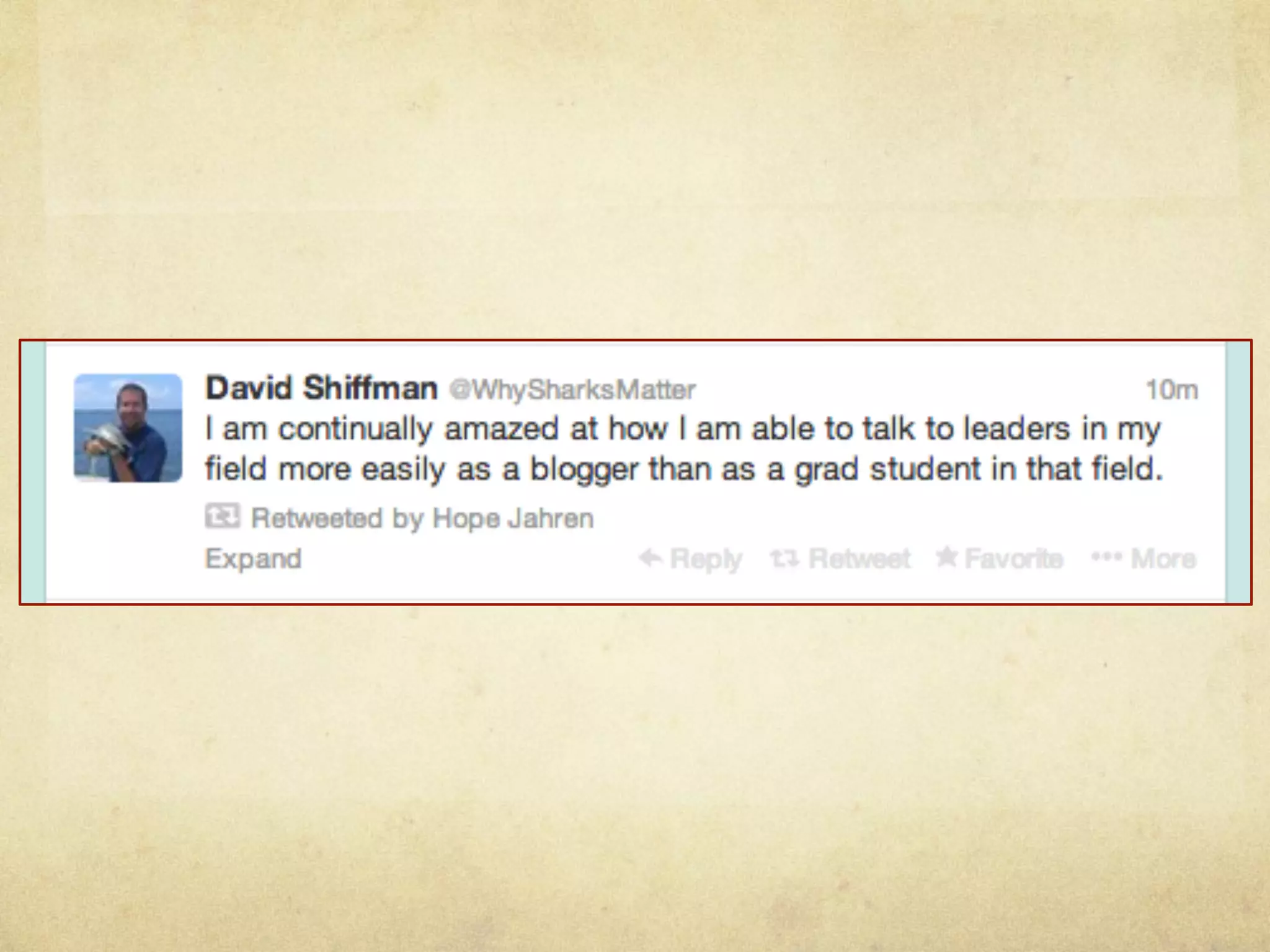
Can open new conversations	
#ed1to1
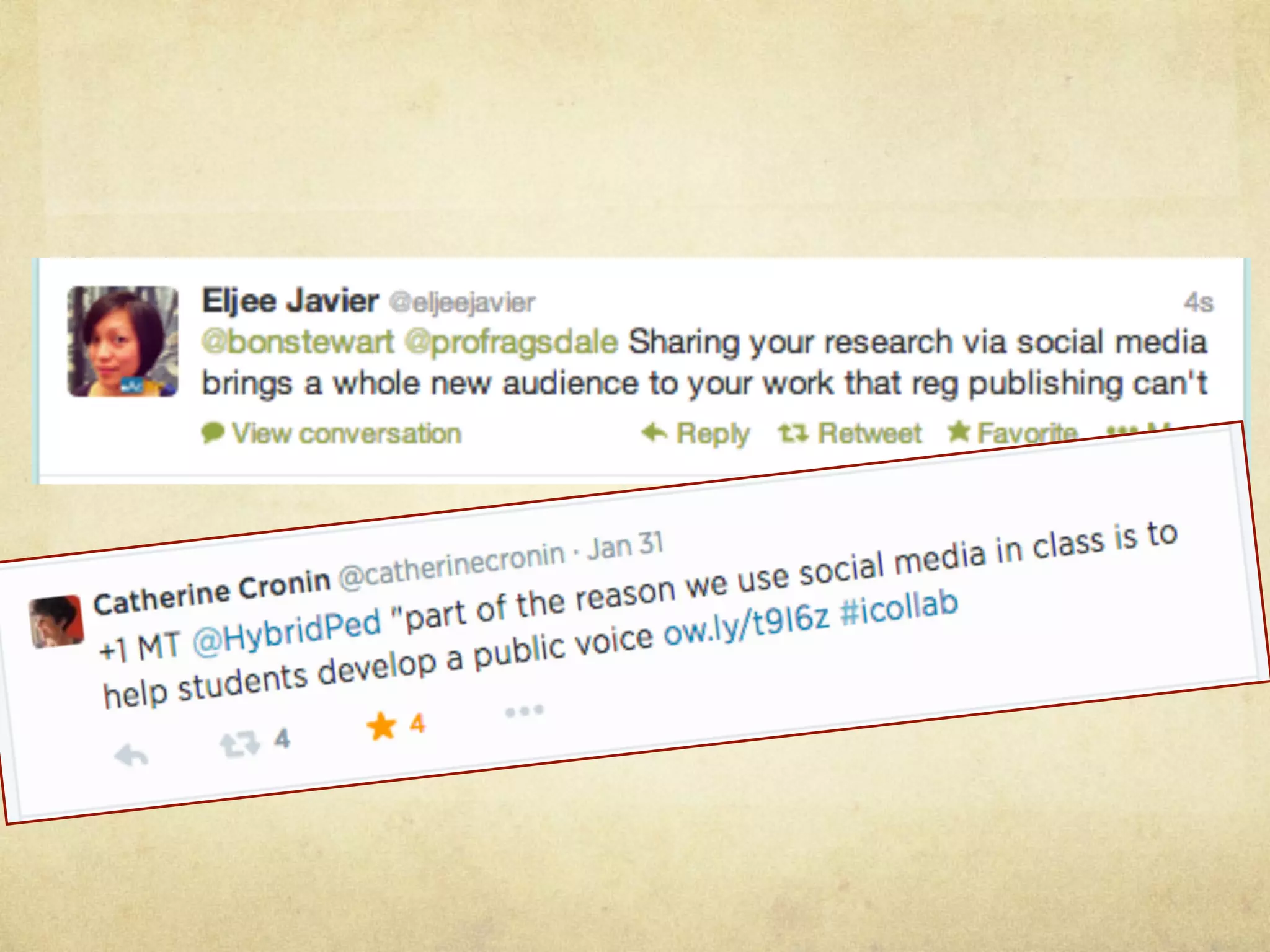
Can extend conversations,
resource-sharing, & visibility of work	
https://www.flickr.com/photos/legends2k/3473962847
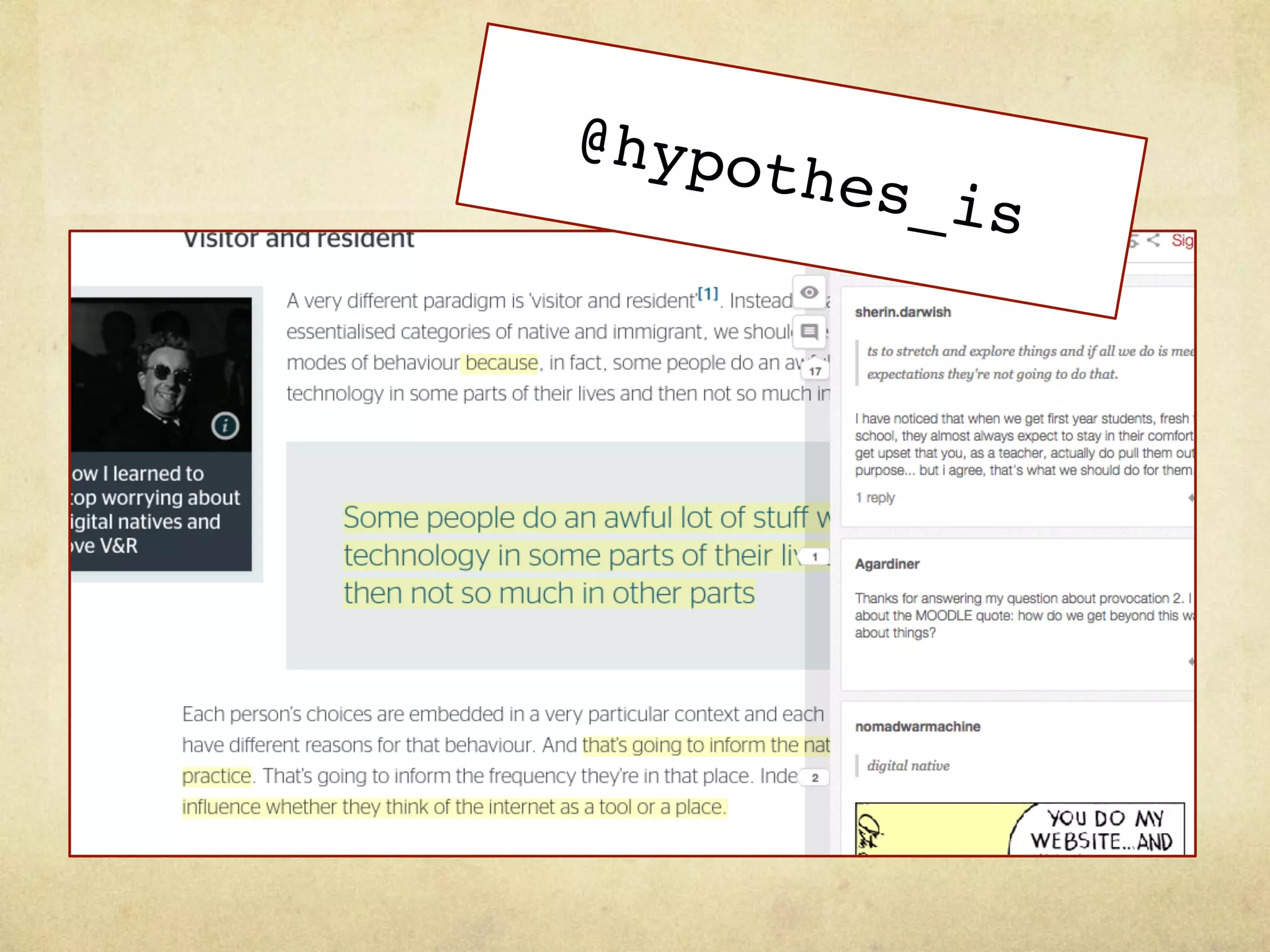
@hypothes_is!
Networks can open up new
perspectives
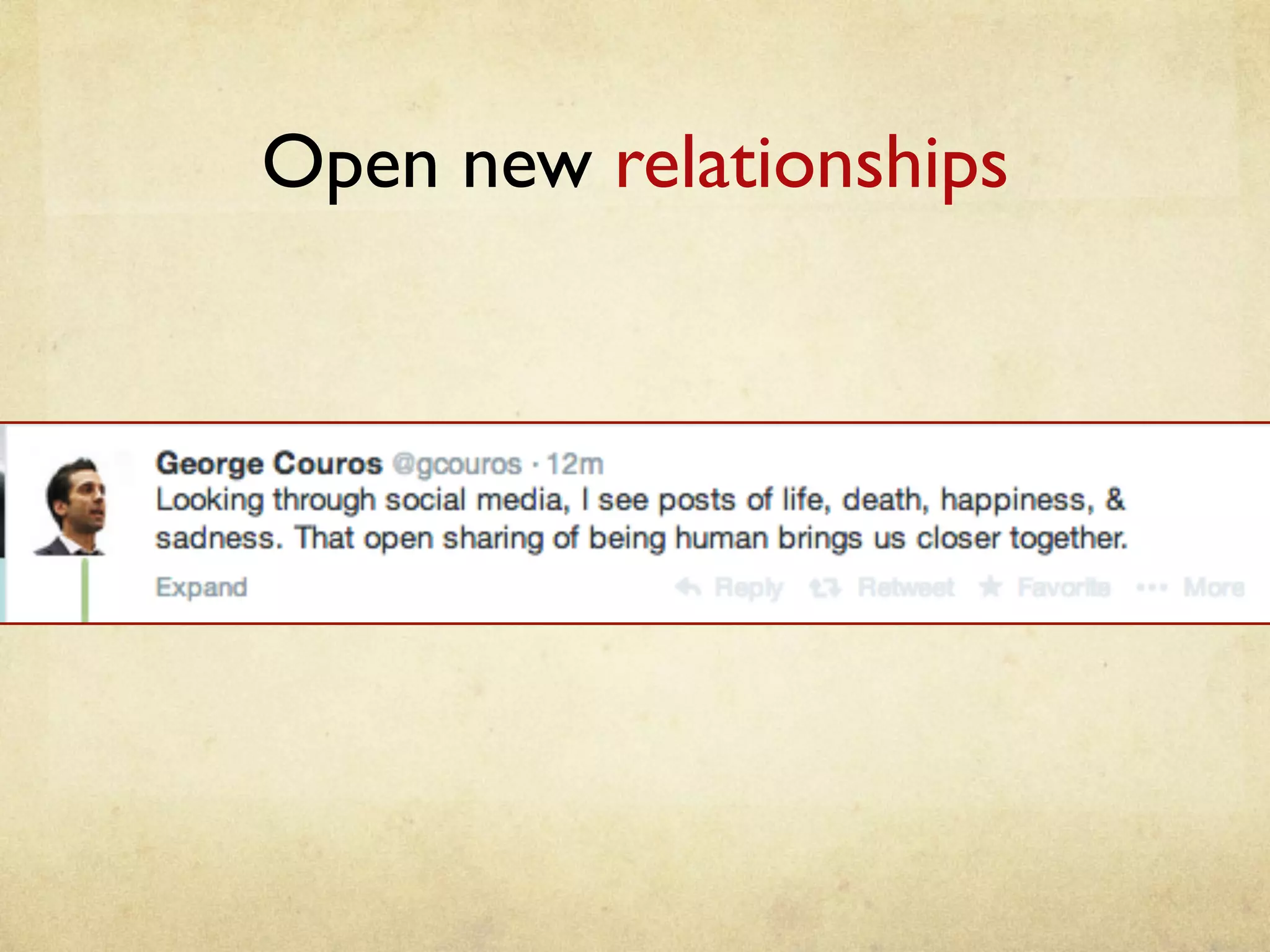
Open new relationships
…And bring care.
Networks enable us to work
together across distance.
https://www.flickr.com/photos/ooohoooh/1350774613/
Why?
Networks are not just for consuming,
but connecting.
Many-to-many communications	
http://upload.wikimedia.org/wikipedia/it/thumb/d/d8/Do_Not_Adjust_Your_Set.jpg/280px-Do_Not_Adjust_Your_Set.jpg
We become network nodes, forming
webs of visible (& invisible) connections
BUT.
Networks as Foe
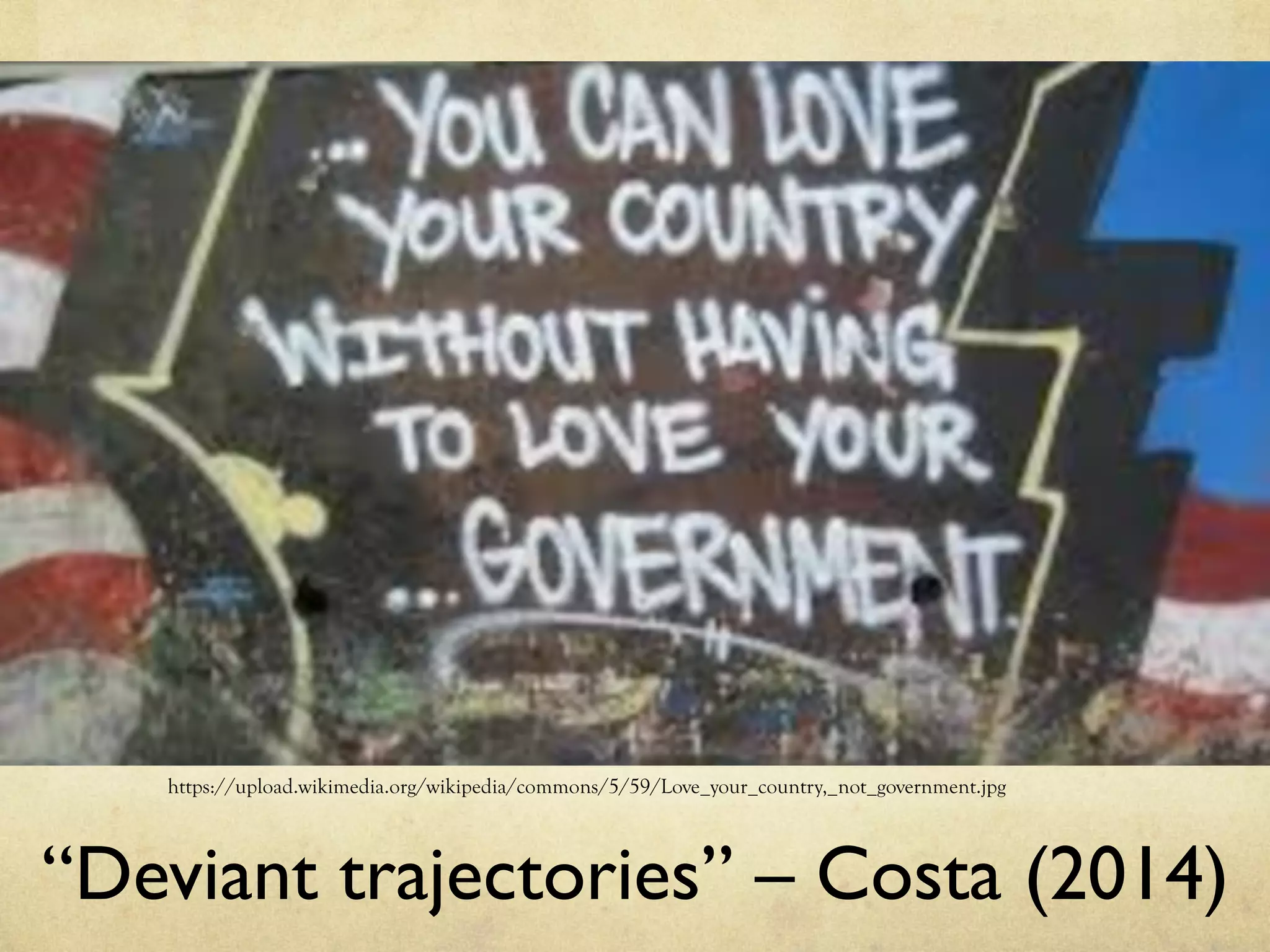
“Deviant trajectories” – Costa (2014)	
https://upload.wikimedia.org/wikipedia/commons/5/59/Love_your_country,_not_government.jpg
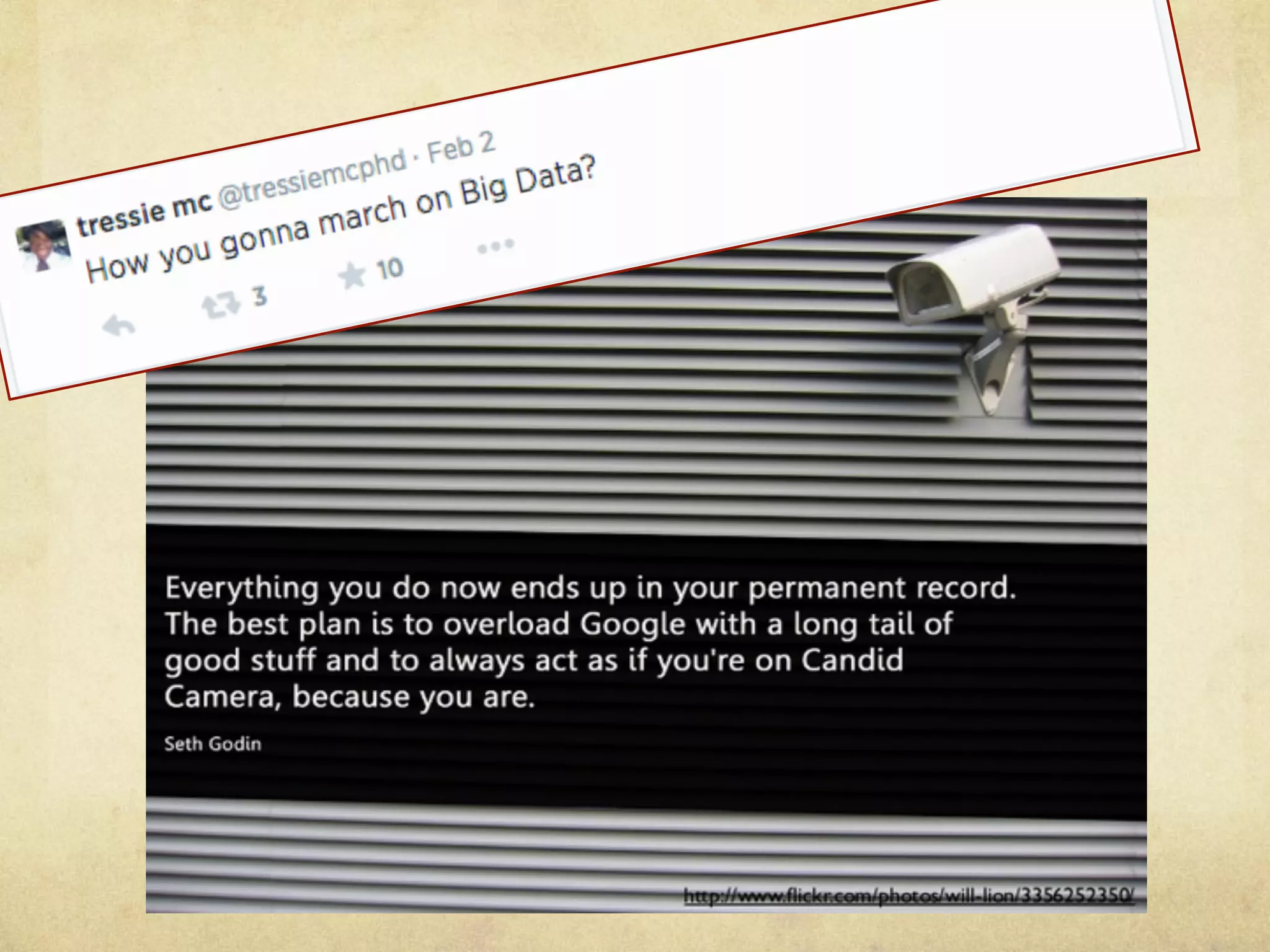
Networks make connectedness
+ scale visible…	
They enact & replicate power relations.
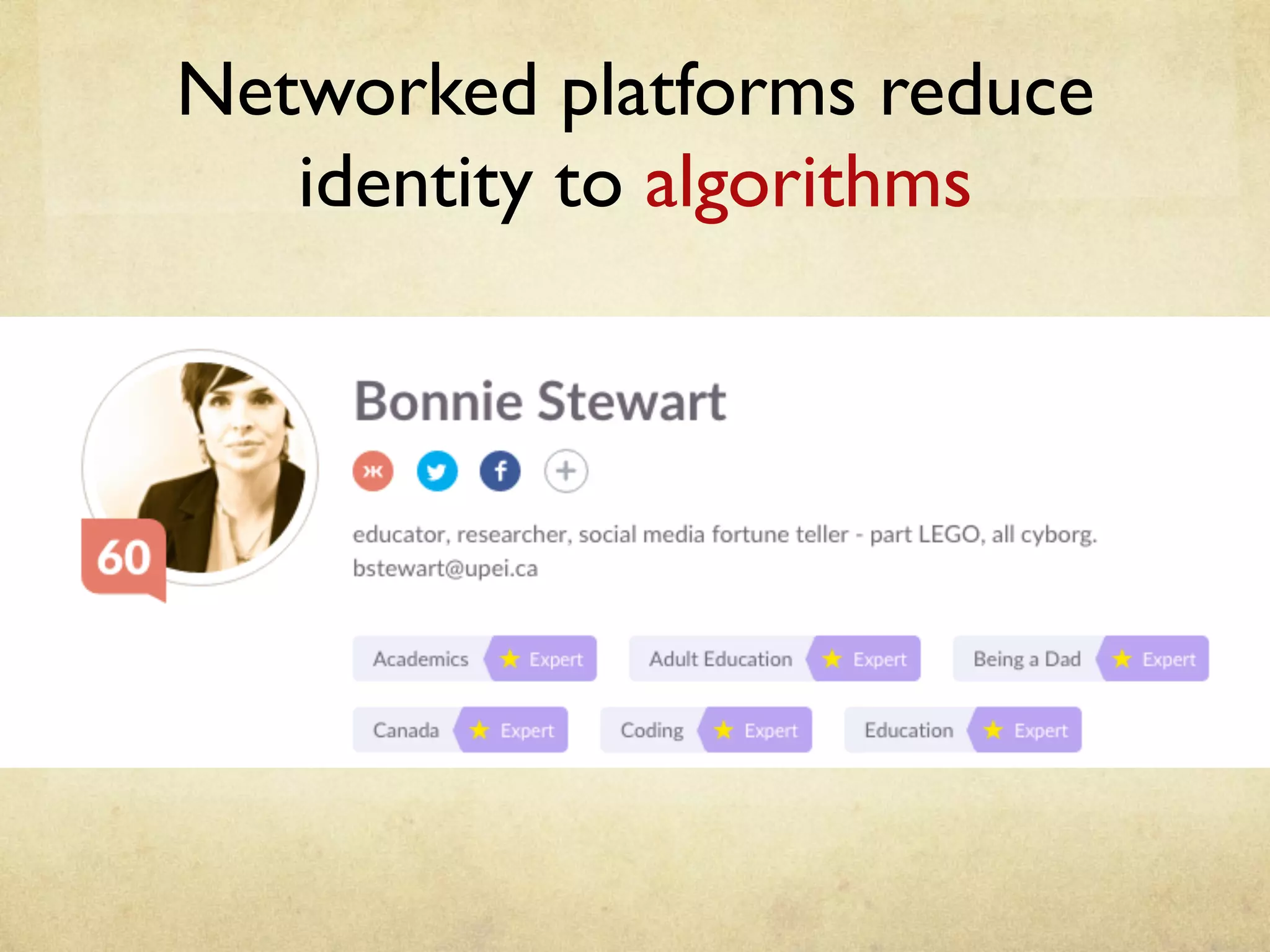
Networked platforms reduce
identity to algorithms
Networks are becoming
institutionalized
Networked identities = new forms of
vulnerability	
commodification + institutional indictments of deviance +
re-inscription of societal biases
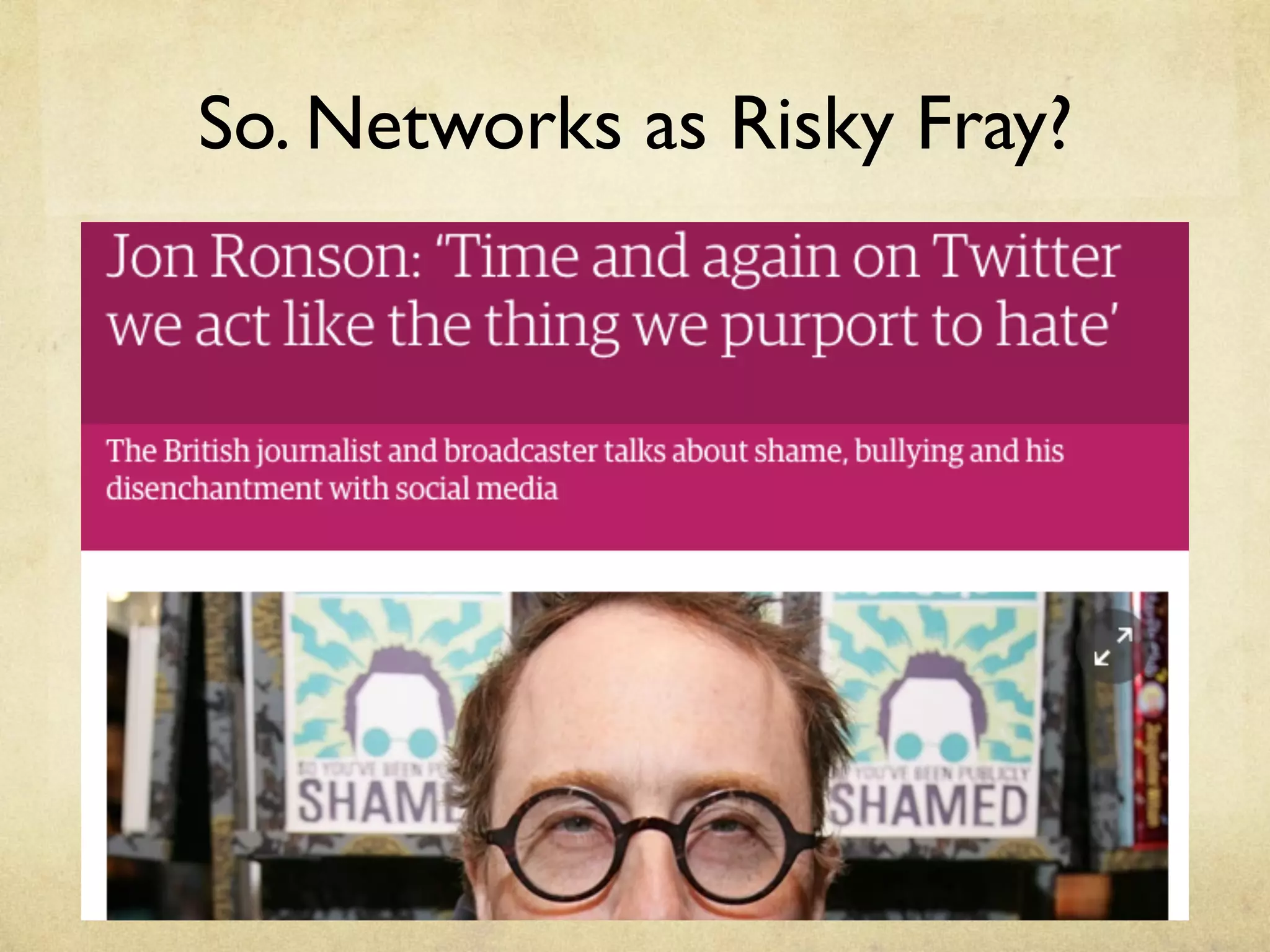
So. Networks as Risky Fray?
KINDA.
Callout Culture is not one
single phenomenon	
https://www.flickr.com/photos/seandavis/16528463225/
http://www.theatlantic.com/technology/archive/2015/11/
conversation-smoosh-twitter-decay/412867/
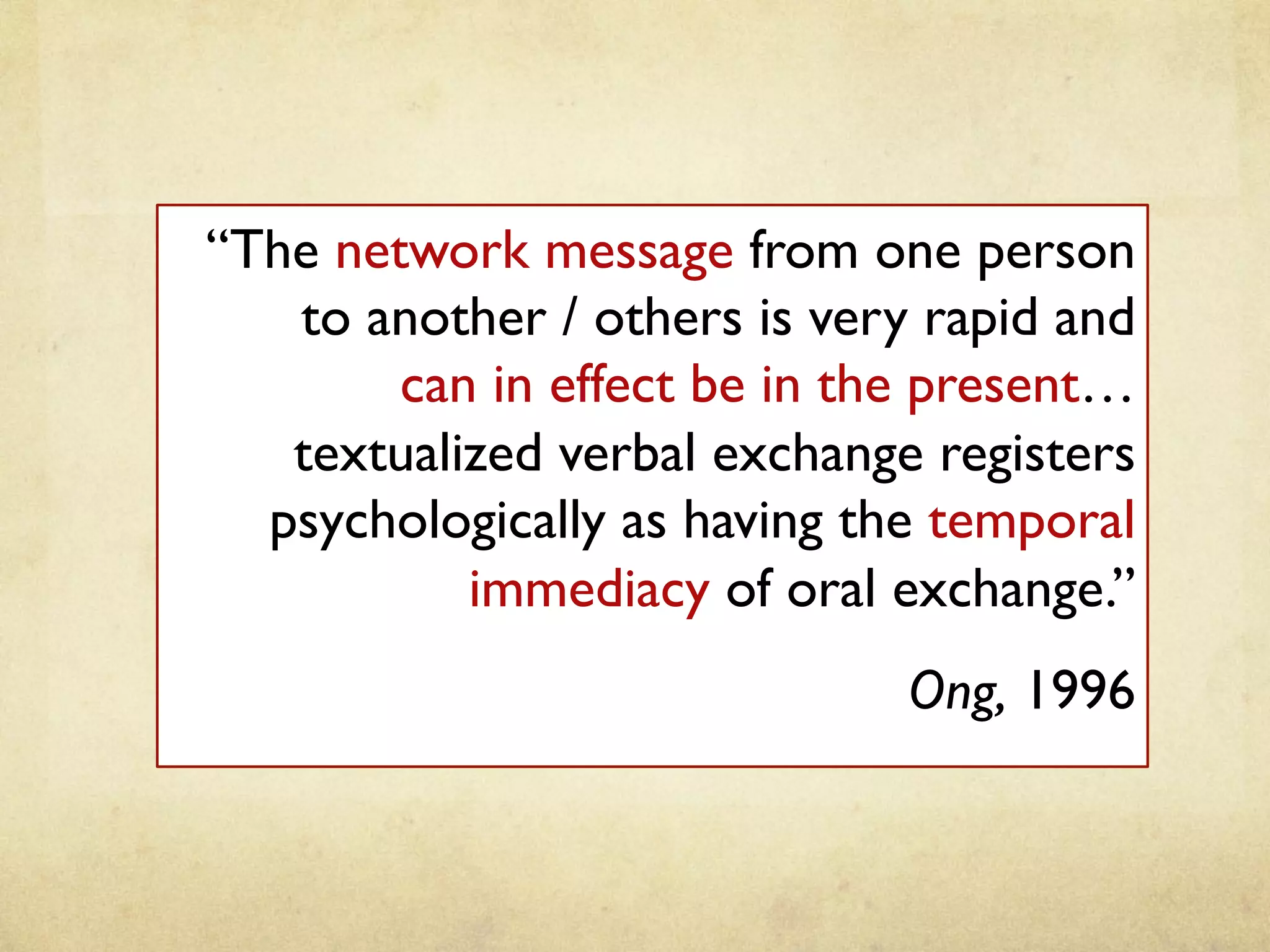
“The network message from one person
to another / others is very rapid and
can in effect be in the present…
textualized verbal exchange registers
psychologically as having the temporal
immediacy of oral exchange.”	
Ong, 1996
Speech-based
expectations	
Call Out Culture = Collapsed Publics	
Print-based
interpretations
So. Stay off the internet, & live happily
ever after? J
Callout culture & networked culture ARE
part of the “apparatus” of our times.
We cannot develop
students’ capacity to live in knowledge
abundance without developing
our own.
Networked practices = scholarship	
!   Scholarship of discovery	
!   Scholarship of integration	
!   Scholarship of application	
!   Scholarship of teaching	
!
(Boyer, 1990)
Networks allow participation
outside academic hierarchy	
Sometimes…I’ll choose
someone with twenty
followers, because I
come across something
they’ve managed to say
in 140 characters, and I
think “oh, look at you,
crafting on a
grain of rice.”	
- @KateMfD	
h"ps://www.flickr.com/photos/visualpanic/843670538
Going forward in networks =
Build on what’s been started here
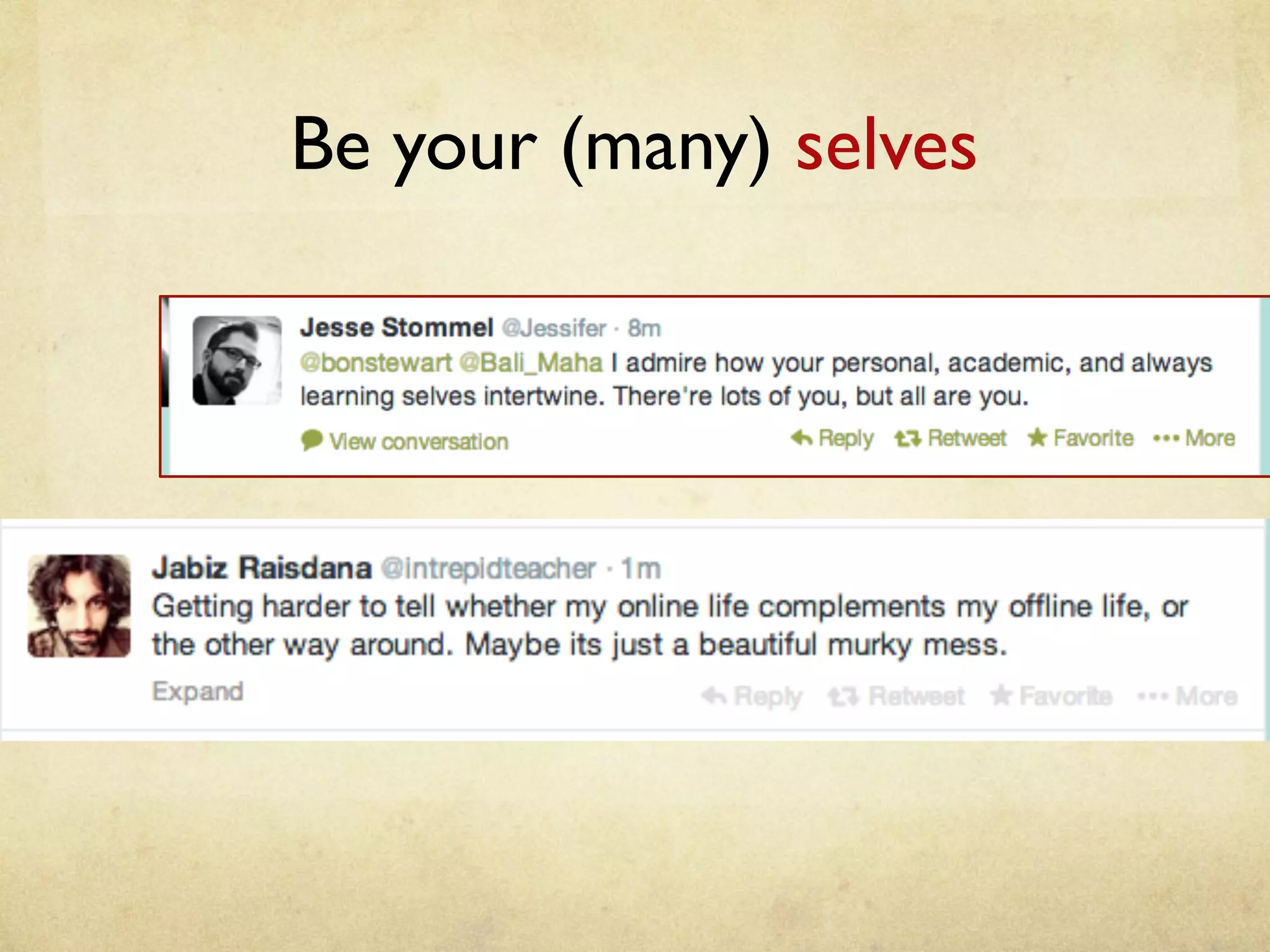
Be your (many) selves
#DigPed = a scholarship of abundance	
https://www.flickr.com/photos/92998734@N03/8466586880/
#DigPed = a story of connection
#DigPed = a scholarship of connection.
Of dance.	
Ring the bells that still can ring!
Forget your perfect offering!
There is a crack,!
A crack, in everything!
That’s how the light gets in.!
!
- Leonard Cohen
THANKYOU.	
@bonstewart
bstewart@upei.ca

Scholarly Networks: Friend or Foe or Risky Fray? ALL OF THE ABOVE