ANESTHESIA
DEFINITION
• Anesthesia is a way to control pain during a surgery or
procedure by using medicine called anesthetics. It can
help control breathing, blood pressure, blood flow, and
heart rate and rhythm.
• Anesthesia may be used to relax the patient, block
pain , make the patient sleepy or forgetful and make
him unconscious for the surgery.
TYPES OF ANESTHESIA
1. Local anesthesia
2. Regional anesthesia
3. General anesthesia
LOCAL ANESTHESIA
• are agents which produce reversible block of nerve conduction
without any structural damage to the neuron concerned and
without any loss of consciousness.
• local anesthetics are used to block all sensation in the part
supplied by the nerve.
• Most local anesthetic agents consist of a lipophilic group (eg, an
aromatic ring) connected by an intermediate chain via an ester
or amide to an ionizable group (eg, a tertiary amine)
TYPES..
1. Local Topical anesthetics:
- are applied directly to the skin or mucus membranes, such as the inside of
mouth, nose, or throat. They can also be applied to the surface of eye.
- Topical anesthetics come in the form of:
* Liquids ,Creams ,Gels ,Sprays , patches .
- Examples of procedures:
* applying or removing stitches, catheter insertion, laser treatments.
CONT…
2. Local Infiltration anesthesia :
- is the technique of producing loss-of-sensation restricted to a superficial,
localized area in the body. A low concentration of anesthetic agent is infiltrated
into the tissues in the area that requires anesthesia.
- The uses of local infiltration anesthesia include:
* Subcutaneous infiltration for IV placement, Suturing.
* Submucosal infiltration for Dental procedures, Laceration repairs.
* Wound infiltration for postoperative pain control at the incision site.
CLASSIFICATION
• ESTER GROUP :
-COCAINE, TETRACAINE, PROCAINE,
BENZOCAINE .
• AMIDE GROUP :
-LIDOCAINE, BUPIVACAINE, PRILOCAINE,
DIBUCAINE .
MECHANISM OF ACTION
• Sensory information passes along nerve fibers via electrical impulse, or
action potential.
• When nerve is at rest , the interior has a negative charge.
• An action potential is generated by the influx of Na ions in to the interior of
the nerve, giving it a positive charge-Depolarization
• The nerve fiber is returned to its resting potential by efflux of k ions-
repolarization.
• The action potential is then generated along the axon by successive
depolarization & repolarization of adjacent regions.
• The primary mechanism of action of local anesthetics
is blockade of voltage-gated sodium channels .
• Bind to receptors near the intracellular end of the
voltage gated Na channels.
• This reduce the permeability of cell membrane to Na
ions , so action potential is not generated.
CONTRAINDICATIONS OF LOCAL ANESTHESIA
• Previous allergic reaction to local anesthetic.
• Inflamed or Infected tissues- unlikely to have effect if used
locally due to low pH of tissue.
• Caution in patients with family history of malignant
hyperthermia.
PHARMACOKINETICS
• ABSORPTION :
- Systemic absorption of injected local anesthetic from the site of
administration is determined by several factors, including dosage, site of
injection, drug-tissue binding, local blood flow .
- Application of a local anesthetic to a highly vascular area such as the
tracheal mucosa or the tissue surrounding intercostal nerves results in more
rapid absorption.
• DISTRIBUTION :
- The amide local anesthetics are widely distributed after intravenous bolus
administration.
- After an initial rapid distribution phase, which consists of uptake into
highly perfused organs such as the brain, liver, kidney, and heart, a slower
distribution phase occurs with uptake into moderately well-perfused tissues,
such as muscle and the gastrointestinal tract.
• METABOLISM AND EXCRETION :
- The local anesthetics are converted in the liver (amide type)
or in plasma (ester type) to more water-soluble metabolites and
then excreted in the urine.
- Ester type LA is metabolized by pseudocholinesterase and
amide type by hepatic microsomal enzymes and enzyme
amidase.
SIDE EFFECTS
• Cardiovascular
-depression of heart, bradycardia, hypotension, cardiac arrhythmias .
• CNS
-rapid absorption produce restlessness, tremor, convulsions.
• Anaphylactic reaction
-common with ester type. -causes asthma, dermatitis, skin rash .
COMMONLY USED DRUG WITH LOCAL
ANESTHESIA
• Adrenaline : –to prolong the effect of LA and to reduce the toxicity by
reducing absorption from local area.
• COCAINE : -First local anesthetic obtained from leaves of plant Erythroxylon
Coca.
-It is no more in use nowadays because of its corneal toxicity, addictive
nature.
• LIGNOCAINE : - It has quick onset of action and high degree of penetration.
- The drug is recommended for topical, nerve block,
infiltration and epidural injection and for dental analgesia.
REGIONAL ANESTHESIA
• is a type of pain management for surgery that numbs a large
part of the body, such as from the waist down.
• The medication is delivered through an injection or small tube
called a catheter and is used when a simple injection of local
anesthetic is not enough, and when it’s better for the patient to
be awake.
TYPES OF REGIONAL ANESTHESIA
• Spinal anesthesia.
• Epidural anesthesia.
• Intravenous regional anesthesia.
• Ultrasound-guided peripheral nerve block.
SPINAL ANESTHESIA
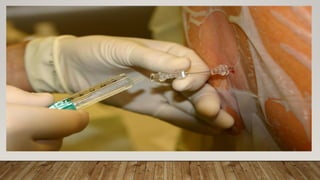
• is a form of neuraxial regional anesthesia involving the injection of a local
anesthetic or opioid into the subarachnoid space, generally through a fine
needle.
• The local anesthetic with or without an opioid injected into the cerebrospinal
fluid provides locoregional anesthesia: true analgesia, motor, sensory and
autonomic blockade.
• It is a safe and effective form of anesthesia performed by anesthesiologists
and nurse anesthetists which can be used as an alternative to general
anesthesia commonly in surgeries involving the lower extremities and
surgeries below the umbilicus.
INDICATION OF SPINAL ANESTHESIA
• Surgeries of lower limbs, perineum, and pelvis.
• Renal failure .
• Cardiac disease.
• Liver disease.
• Obstetric anesthesia.
CONTRAINDICATION OF SPINAL ANESTHESIA
• Infection at the site of injection.
• Increased intracranial pressure.
• Hypovolemia.
• Shock.
• Severe aortic and mitral stenosis.
• Coagulopathies.
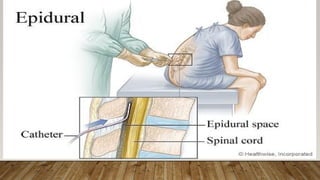
EPIDURAL ANESTHESIA
• is a method of medication administration in which a medicine is injected into the
epidural space around the spinal cord.
• The epidural route is used by physicians and nurse anesthetists to administer
local anesthetic agents, analgesics, diagnostic medicines such as radiocontrast
agents, and other medicines such as glucocorticoids.
• Epidural anaesthesia causes a loss of sensation, including pain, by blocking the
transmission of signals through nerve fibres in or near the spinal cord. For this
reason, epidurals are commonly used for pain control during childbirth and
surgery.
INDICATION OF EPIDURAL ANESTHESIA
• Maternal request.
• Multiple pregnancy.
• Diabetes mellitus.
• Cardiorespiratory disease.
CONTRAINDICATION OF EPIDURAL ANESTHESIA
• Local or generalized sepsis.
• Elevated intracranial pressure.
• Uncorrected hypovolemia.
• Inadequate unit staffing.
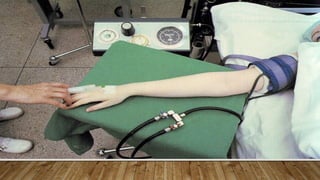
INTRAVENOUS REGIONAL ANESTHESIA.
• is an anesthetic technique on the body's extremities where a local anesthetic
is injected intravenously and isolated from circulation in a target area.
• The technique usually involves exsanguination of the target region, which
forces blood out of the extremity, followed by the application of pneumatic
tourniquets to safely stop blood flow.
• The anesthetic agent is intravenously introduced into the limb and allowed
to diffuse into the surrounding tissue while tourniquets retain the agent
within the desired area.
INDICATIONS OF INTRAVENOUS ANESTHESIA
• Provision of analgesia before or after surgery.
• Induction of anesthesia and maintenance of
anesthesia in patients with severe cardiac dysfunction.
• Inhibition of reflex sympathetic nervous system activity
.
• Provide post operative analgesia by injecting it to the
subarachnoid or epidural space.
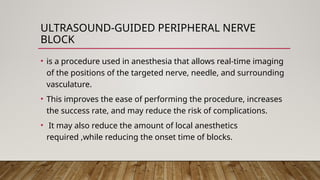
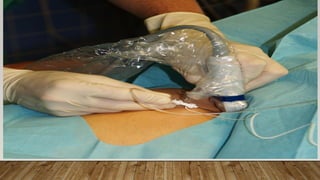
ULTRASOUND-GUIDED PERIPHERAL NERVE
BLOCK
• is a procedure used in anesthesia that allows real-time imaging
of the positions of the targeted nerve, needle, and surrounding
vasculature.
• This improves the ease of performing the procedure, increases
the success rate, and may reduce the risk of complications.
• It may also reduce the amount of local anesthetics
required ,while reducing the onset time of blocks.
GENERAL ANESTHESIA
• is the state produced when a patient receives medications for
amnesia, analgesia, muscle relaxation, and sedation.
• An anesthetized patient can be thought of as being in a
controlled, reversible state of unconsciousness.
• General anesthetics depress the central nervous system to a
sufficient degree to permit the performance of surgery and
other noxious or unpleasant procedures.
General anesthesia (narcosis) is condition of
central nervous system, put on the brakes and
accompanied with reversible loses of consciousn
ess, sensitivity, movement, conditional and some
unconditioned reflexes.
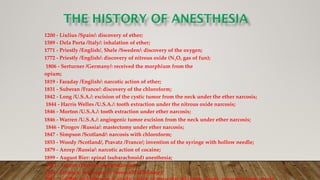
1200 - Liulius /Spain/: discovery of ether;
1589 - Dela Porta /Italy/: inhalation of ether;
1771 - Priestly /English/, Shele /Sweden/: discovery of the oxygen;
1772 - Priestly /English/: discovery of nitrous oxide (N2O, gas of fun);
1806 - Serturner /Germany/: received the morphium from the
opium;
1819 - Faraday /English/: narcotic action of ether;
1831 - Suberan /France/: discovery of the chloroform;
1842 - Long /U.S.A./: excision of the cystic tumor from the neck under the ether narcosis;
1844 - Harris Welles /U.S.A./: tooth extraction under the nitrous oxide narcosis;
1846 - Morton /U.S.A./: tooth extraction under ether narcosis;
1846 - Warren /U.S.A./: angiogenic tumor excision from the neck under ether narcosis;
1846 - Pirogov /Russia/: mastectomy under ether narcosis;
1847 - Simpson /Scotland/: narcosis with chloroform;
1853 - Woody /Scotland/, Pravatz /France/; invention of the syringe with hollow needle;
1879 - Anrep /Russia/: narcotic action of cocaine;
1899 - August Bier: spinal (subarachnoid) anesthesia;
1902 - Lemon /France/: electronarcosis;
1904 - Einhorn: invention of Novocain (Procaine);
TYPES OF GENERAL ANESTHESIA
• Inhalational anesthesia.
• Balanced anesthesia.
• Total intravenous anesthesia .
INHALATIONAL ANESTHETIC
• is a chemical compound possessing general anesthetic properties that can
be delivered via inhalation.
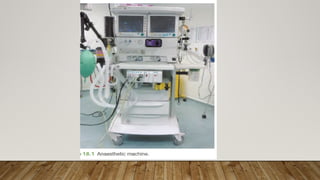
• They are administered through a face mask, laryngeal mask airway or
tracheal tube connected to an anesthetic vaporizer and an anesthetic
delivery system.
• Agents of significant contemporary clinical interest include volatile
anesthetic agents such as isoflurane, sevoflurane and desflurane, as well as
certain anesthetic gases such as nitrous oxide and xenon.
• Example : Halothane, Enflurane, Isoflurane, Desflurane, Ethylchloride .
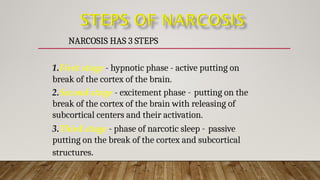
NARCOSIS HAS 3 STEPS
1.First stage - hypnotic phase - active putting on
break of the cortex of the brain.
2.Second stage - excitement phase – putting on the
break of the cortex of the brain with releasing of
subcortical centers and their activation.
3.Third stage - phase of narcotic sleep – passive
putting on the break of the cortex and subcortical
structures.
BALANCED ANESTHESIA
• is a anesthetic method for surgical patients during their operation.
• The purpose of balanced anesthesia is not only to be less dangerous than
using only one drug to make patients general anesthesia but also to
minimize the potential adverse side effects which may cause by the
anesthetic agents.
• The concept of balanced anesthesia is that applying two or more narcotic
drugs or techniques in order to help patients to ease pain, relax the muscles
and have autonomous reflection suppression.
• Examples: isoflurane and N2O(for maintenance), fentanyl (for analgesia),
rocuronium(for muscle relaxation)
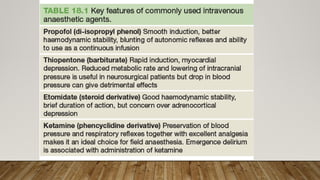
TOTAL INTRAVENOUS ANESTHESIA
• is the use of intravenous agents for induction and maintenance of anesthesia.
• The most frequently used agent is propofol. Propofol effect is usually
augmented with an opioid (e.g., remifentanil).
• Although it is possible to implement Total Intravenous Anesthesia using
pumps with the infusion rate controlled manually, the advent of pumps
programed with pharmacokinetic information has facilitated use.
• Examples: Ultra short Barbiturate, Benzodiazepines, Neurolept analgesia,
Ketamine.
MECHANISM OF ACTION OF GENERAL
ANESTHETICS
• inhibit or block excitatory ligand-gated ion channels and enhance
the sensitivity of inhibitory ion channels such as γ-aminobutyric acid
A (GABAA) receptor.
• Blockade of the ion channel in the N-methyl-d-aspartate (NMDA)
type of glutamate receptor by ketamine aroused great interest.
INDICATION OF GENERAL ANESTHESIA
• Extreme anxiety and fear.
• Adults or children who have mental or physical disabilities, or
disoriented patients.
• Age-infants and children .
• Short, traumatic procedures.
• Prolonged traumatic procedures.
CONTRAINDICATION OF GENERAL ANESTHESIA
• Anticipated difficult airway.
• Malignant hyperthermia.
• Severe asthma.
1.Preliminary preparation includes whole preoperative period and is designed for
investigation of all systems and correction of existing disturbances (sanation of chronic
infection sources, psychotherapy).
2. Preparation before starting of anesthesia means:
Not to eat in the evening at the day before operation;
If patient is urgent, it is necessary to empty the stomach by the help of a stomach tube;
Patient must be given a cleansering enema at bedtime;
Urine should be led out by a soft (Foley's) catheter during the operation;
Patient should be given a sleeping (sedative) pill before the night.
The patient should be given proper premedication, 40-60 minutes before operation.
After the premedication patient must not leave his bed;
The patient must be taken to the operation room on a stretcher;
The patient must be placed and fixed on the operating table in the position, assumed for
the operation;
Anesthesiologist applies the sphygmomanometer cuff, takes the arterial pressure,
counts the pulse;
Fastens apparatus sensors;
Does venepunctrure (venesection);
Adjusts the system for intravenous infusion, after what anesthesia may be started.
Complications in anesthesia are divided into 2 groups:
I. Complications during narcosis;
II.Complications of postoperative period.
1.Vomiting (vomitus) may be caused by the essential
disease (pylorostenosis, intestinal obstruction) or by the
irritation of the vomiting center with the narcotic drug.
2.Aspiration of stomach content into the trachea and
bronchus, which may cause laryngo- and bronchospasm
(bronchiolospasm) and lead to the cyanosis, hypoxia and
tachycardia (syndrome of Mendelssohn).
3.Regurgitation is the passive passing of the gastric content
into the trachea and bronchus during the deep narcosis an d
relaxation of cardiac sphincter. Aspiration of stomach content
into the tracheobronchial tract leads to the very grave
pneumonia with high mortality.
Prevention of above mentioned complications includes:
1. Empty stomach before operation.
2.Permanent nasogastric decompression with gastric tube
during whole operation in case of peritonitis and bowel
obstruction (Ileus).
3.Method of Selik: compression on the cricoid cartilage in aim
to press the esophagus.
In case of vomiting, it is necessary to remove the
stomach content from the oral cavity with suction- machin e
and gauze tampons, and liberation of tracheobronchial branch
with tracheal catheter, connected to negative pressure device.
Asphyxia (suffocation, chocking) may be caused by mechanical (foreign
bodies, back-tongue retraction) and central (depression of the respiratory center
with respiratory standstill-apnea, arrest of respiration) reasons.
In case of asphyxia it is necessary to remove mechanical reasons (in some
cases it is indicated to perform tracheotomy), insert the air-way after the holding
of the tongue with special tongue-holding forceps.
Prophylaxis of laryngospasm and bronchorrhea includes also injection of 0.5-
1.0 ml of 0.1% sol. of Atropine.
Central asphyxia (paralysis of respiratory center) is most dangerous
complication. Clinical signs: cyanosis, dilated pupils (no reaction on light), arrest
of respiration, dark blood. Cardiac action lasts during few minutes. In this
situation it is necessary:
1. To stop to give narcotic drug;
2. To start the artificial pulmonary ventilation (artificial respiration) giving
fresh air and oxygen;
3.To administer intravenously respiration center stimulators (respiration
analeptic drugs) - Lobelin or Cititon.
4.Infusion of cardiac remedies, 4% sol. of sodium bicarbonate, Trisamine
(THAM, Trisbuffer).
3. Cardiac arrest, heart failure (syncope) is the most dangerous
complication and may be happen suddenly. Clinical symptoms of it are:
1) Pulse in carotid and femoral arteries are not felt;
2) Heart sounds can’t be heard;
3) Respiratory standstill, arrest (apnea);
4) Pale skin;
5) Dilated pupils;
6) Muscles relaxation;
7) Wound stops to bleed.
The reasons of cardiac arrest are:
1. Narcotic drug overdosage with paralysis of cerebral vasomotoric centers, nervous
apparatus of myocardium;
2. Reflectory cardiac arrest may be caused by irritation of n. vagus as during the
anesthesia, so at the very beginning of the narcosis as the result of reflex,
coming from the mucosa of respiratory ways;
3.Oxygen insufficiency (hypoxia) in myocardium. it is necessary to stop giving
the ether and start urgent cardiac massage and artificial pulmonary
ventilation in the case of cardiac arrest.
1.Pneumonia, atelectasis, bronchitis: Prophylaxis of those
complications includes early activation of the patient in the
bed, exercise (therapy) vibration while doing massage, tapping
massage, respiration-exercise (blowing into the special
apparatus-designed for positive pressure at the moment of end
of expiration), removal of sputum and mucus,
antibioticotherapy.
2.Cardiac insufficiency is a result of toxic action of
anesthetics on the nervous apparatus of the heart;
prophylaxis: introduction of cardiac drugs,
EKG-monitoring, desintoxication, treatment of electrolyte
imbalance.
3.Risk of lipoid dystrophy of the liver today is reduced with
decreased dosage of the ether on the background of muscle
relaxants.
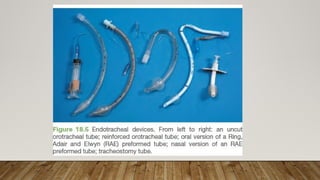
1.Endotracheal tube (intubation tube) of Hebuner,
Gordon-Green, Kiprensky, Koul with stylet (intubation
tube guide) and without it. It is preferable to use
endotracheal tube with a cuff;
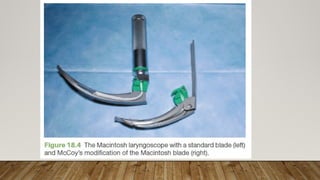
2. Laryngoscopes are two types: a) indirect (curvet),
b) Direct.
For the adults the length of the endotracheal tube
must be not less than 26cm and it must not reach on 2 cm
the bifurcation of trachea.
1.Nasotracheal (blindly and under the checking with
laryngoscope or bronchoscope);
2.Orotracheal (blind and under the checking with
laryngoscope , bronchoscope or glidescope). Head must be
thrown back-in “usual” (classic) or Jackson’s position.
Intubation of trachea must be done after initial narcosis
and injection of muscular relaxants (60-100 mg of Ditiline).
The tip of the tube must be connected to the anesthesia
apparatus respiratory hose (tube).
3.Laryngeal masc airway
Complications of intubation narcosis are divided on 3 groups:
1.Complications during the laryngoscopy and intubation
(iatrogenic);
Dental injuries with laryngoscope;
Injuries of vocal ligaments;
Insertion of the intubation (endotracheal) tube into the
esophagus;
Insertion of the intubation tube into the right bronchus.
2.Complications during intubation anesthesia:
displacement (twist, compression) of the endotracheal
tube;
3.Complications of the postoperative period (laryngitis,
pharyngitis, bronchitis, pneumonia).
Curare was the poison of the South American Indians, which had been used
by them for the poisoning of arrows. Victims died with muscle paralysis and
asphyxia.
The first scientific work about Curare belongs to Cloud Bernard (1851)
and Pelikan (1857). Alkaloid Tubocurarin-chloride was separated by King in 1935.
All modern myorelaxants act on the neuromuscular impulse transmission unit
(synapse) and are divided on 2 groups:(a) antidepolarizing myorelaxants block the
work of synapse, acetylcholine can’t act, as depolarization is impossible because of
block of postsynaptic membrane; (b) depolarizing myorelaxants act as
acetylcholine, cause the depolarization, but more prolonged and makes impossible
repolarization.
Using of the muscular relaxants has following advantages: reduces the
dose of basic anesthesia; makes possible to stop the spontaneous breathing and
take the patient on the artificial pulmonary ventilation, for arresting of cramps in
case of tetanus; makes easier reposition of dislocations and fractures; enhances of
anesthetic and antischock action of drugs.
THANK YOU

Anesthesia, a comprehensive overview of it

  • 1.
  • 2.
    DEFINITION • Anesthesia isa way to control pain during a surgery or procedure by using medicine called anesthetics. It can help control breathing, blood pressure, blood flow, and heart rate and rhythm. • Anesthesia may be used to relax the patient, block pain , make the patient sleepy or forgetful and make him unconscious for the surgery.
  • 3.
    TYPES OF ANESTHESIA 1.Local anesthesia 2. Regional anesthesia 3. General anesthesia
  • 4.
    LOCAL ANESTHESIA • areagents which produce reversible block of nerve conduction without any structural damage to the neuron concerned and without any loss of consciousness. • local anesthetics are used to block all sensation in the part supplied by the nerve. • Most local anesthetic agents consist of a lipophilic group (eg, an aromatic ring) connected by an intermediate chain via an ester or amide to an ionizable group (eg, a tertiary amine)
  • 5.
    TYPES.. 1. Local Topicalanesthetics: - are applied directly to the skin or mucus membranes, such as the inside of mouth, nose, or throat. They can also be applied to the surface of eye. - Topical anesthetics come in the form of: * Liquids ,Creams ,Gels ,Sprays , patches . - Examples of procedures: * applying or removing stitches, catheter insertion, laser treatments.
  • 6.
    CONT… 2. Local Infiltrationanesthesia : - is the technique of producing loss-of-sensation restricted to a superficial, localized area in the body. A low concentration of anesthetic agent is infiltrated into the tissues in the area that requires anesthesia. - The uses of local infiltration anesthesia include: * Subcutaneous infiltration for IV placement, Suturing. * Submucosal infiltration for Dental procedures, Laceration repairs. * Wound infiltration for postoperative pain control at the incision site.
  • 7.
    CLASSIFICATION • ESTER GROUP: -COCAINE, TETRACAINE, PROCAINE, BENZOCAINE . • AMIDE GROUP : -LIDOCAINE, BUPIVACAINE, PRILOCAINE, DIBUCAINE .
  • 8.
    MECHANISM OF ACTION •Sensory information passes along nerve fibers via electrical impulse, or action potential. • When nerve is at rest , the interior has a negative charge. • An action potential is generated by the influx of Na ions in to the interior of the nerve, giving it a positive charge-Depolarization • The nerve fiber is returned to its resting potential by efflux of k ions- repolarization. • The action potential is then generated along the axon by successive depolarization & repolarization of adjacent regions.
  • 9.
    • The primarymechanism of action of local anesthetics is blockade of voltage-gated sodium channels . • Bind to receptors near the intracellular end of the voltage gated Na channels. • This reduce the permeability of cell membrane to Na ions , so action potential is not generated.
  • 10.
    CONTRAINDICATIONS OF LOCALANESTHESIA • Previous allergic reaction to local anesthetic. • Inflamed or Infected tissues- unlikely to have effect if used locally due to low pH of tissue. • Caution in patients with family history of malignant hyperthermia.
  • 11.
    PHARMACOKINETICS • ABSORPTION : -Systemic absorption of injected local anesthetic from the site of administration is determined by several factors, including dosage, site of injection, drug-tissue binding, local blood flow . - Application of a local anesthetic to a highly vascular area such as the tracheal mucosa or the tissue surrounding intercostal nerves results in more rapid absorption.
  • 12.
    • DISTRIBUTION : -The amide local anesthetics are widely distributed after intravenous bolus administration. - After an initial rapid distribution phase, which consists of uptake into highly perfused organs such as the brain, liver, kidney, and heart, a slower distribution phase occurs with uptake into moderately well-perfused tissues, such as muscle and the gastrointestinal tract.
  • 13.
    • METABOLISM ANDEXCRETION : - The local anesthetics are converted in the liver (amide type) or in plasma (ester type) to more water-soluble metabolites and then excreted in the urine. - Ester type LA is metabolized by pseudocholinesterase and amide type by hepatic microsomal enzymes and enzyme amidase.
  • 14.
    SIDE EFFECTS • Cardiovascular -depressionof heart, bradycardia, hypotension, cardiac arrhythmias . • CNS -rapid absorption produce restlessness, tremor, convulsions. • Anaphylactic reaction -common with ester type. -causes asthma, dermatitis, skin rash .
  • 15.
    COMMONLY USED DRUGWITH LOCAL ANESTHESIA • Adrenaline : –to prolong the effect of LA and to reduce the toxicity by reducing absorption from local area. • COCAINE : -First local anesthetic obtained from leaves of plant Erythroxylon Coca. -It is no more in use nowadays because of its corneal toxicity, addictive nature. • LIGNOCAINE : - It has quick onset of action and high degree of penetration. - The drug is recommended for topical, nerve block, infiltration and epidural injection and for dental analgesia.
  • 16.
    REGIONAL ANESTHESIA • isa type of pain management for surgery that numbs a large part of the body, such as from the waist down. • The medication is delivered through an injection or small tube called a catheter and is used when a simple injection of local anesthetic is not enough, and when it’s better for the patient to be awake.
  • 17.
    TYPES OF REGIONALANESTHESIA • Spinal anesthesia. • Epidural anesthesia. • Intravenous regional anesthesia. • Ultrasound-guided peripheral nerve block.
  • 18.
    SPINAL ANESTHESIA • isa form of neuraxial regional anesthesia involving the injection of a local anesthetic or opioid into the subarachnoid space, generally through a fine needle. • The local anesthetic with or without an opioid injected into the cerebrospinal fluid provides locoregional anesthesia: true analgesia, motor, sensory and autonomic blockade. • It is a safe and effective form of anesthesia performed by anesthesiologists and nurse anesthetists which can be used as an alternative to general anesthesia commonly in surgeries involving the lower extremities and surgeries below the umbilicus.
  • 20.
    INDICATION OF SPINALANESTHESIA • Surgeries of lower limbs, perineum, and pelvis. • Renal failure . • Cardiac disease. • Liver disease. • Obstetric anesthesia.
  • 21.
    CONTRAINDICATION OF SPINALANESTHESIA • Infection at the site of injection. • Increased intracranial pressure. • Hypovolemia. • Shock. • Severe aortic and mitral stenosis. • Coagulopathies.
  • 22.
    EPIDURAL ANESTHESIA • isa method of medication administration in which a medicine is injected into the epidural space around the spinal cord. • The epidural route is used by physicians and nurse anesthetists to administer local anesthetic agents, analgesics, diagnostic medicines such as radiocontrast agents, and other medicines such as glucocorticoids. • Epidural anaesthesia causes a loss of sensation, including pain, by blocking the transmission of signals through nerve fibres in or near the spinal cord. For this reason, epidurals are commonly used for pain control during childbirth and surgery.
  • 24.
    INDICATION OF EPIDURALANESTHESIA • Maternal request. • Multiple pregnancy. • Diabetes mellitus. • Cardiorespiratory disease.
  • 25.
    CONTRAINDICATION OF EPIDURALANESTHESIA • Local or generalized sepsis. • Elevated intracranial pressure. • Uncorrected hypovolemia. • Inadequate unit staffing.
  • 26.
    INTRAVENOUS REGIONAL ANESTHESIA. •is an anesthetic technique on the body's extremities where a local anesthetic is injected intravenously and isolated from circulation in a target area. • The technique usually involves exsanguination of the target region, which forces blood out of the extremity, followed by the application of pneumatic tourniquets to safely stop blood flow. • The anesthetic agent is intravenously introduced into the limb and allowed to diffuse into the surrounding tissue while tourniquets retain the agent within the desired area.
  • 28.
    INDICATIONS OF INTRAVENOUSANESTHESIA • Provision of analgesia before or after surgery. • Induction of anesthesia and maintenance of anesthesia in patients with severe cardiac dysfunction. • Inhibition of reflex sympathetic nervous system activity . • Provide post operative analgesia by injecting it to the subarachnoid or epidural space.
  • 29.
    ULTRASOUND-GUIDED PERIPHERAL NERVE BLOCK •is a procedure used in anesthesia that allows real-time imaging of the positions of the targeted nerve, needle, and surrounding vasculature. • This improves the ease of performing the procedure, increases the success rate, and may reduce the risk of complications. • It may also reduce the amount of local anesthetics required ,while reducing the onset time of blocks.
  • 31.
    GENERAL ANESTHESIA • isthe state produced when a patient receives medications for amnesia, analgesia, muscle relaxation, and sedation. • An anesthetized patient can be thought of as being in a controlled, reversible state of unconsciousness. • General anesthetics depress the central nervous system to a sufficient degree to permit the performance of surgery and other noxious or unpleasant procedures.
  • 32.
    General anesthesia (narcosis)is condition of central nervous system, put on the brakes and accompanied with reversible loses of consciousn ess, sensitivity, movement, conditional and some unconditioned reflexes.
  • 33.
    1200 - Liulius/Spain/: discovery of ether; 1589 - Dela Porta /Italy/: inhalation of ether; 1771 - Priestly /English/, Shele /Sweden/: discovery of the oxygen; 1772 - Priestly /English/: discovery of nitrous oxide (N2O, gas of fun); 1806 - Serturner /Germany/: received the morphium from the opium; 1819 - Faraday /English/: narcotic action of ether; 1831 - Suberan /France/: discovery of the chloroform; 1842 - Long /U.S.A./: excision of the cystic tumor from the neck under the ether narcosis; 1844 - Harris Welles /U.S.A./: tooth extraction under the nitrous oxide narcosis; 1846 - Morton /U.S.A./: tooth extraction under ether narcosis; 1846 - Warren /U.S.A./: angiogenic tumor excision from the neck under ether narcosis; 1846 - Pirogov /Russia/: mastectomy under ether narcosis; 1847 - Simpson /Scotland/: narcosis with chloroform; 1853 - Woody /Scotland/, Pravatz /France/; invention of the syringe with hollow needle; 1879 - Anrep /Russia/: narcotic action of cocaine; 1899 - August Bier: spinal (subarachnoid) anesthesia; 1902 - Lemon /France/: electronarcosis; 1904 - Einhorn: invention of Novocain (Procaine);
  • 36.
    TYPES OF GENERALANESTHESIA • Inhalational anesthesia. • Balanced anesthesia. • Total intravenous anesthesia .
  • 37.
    INHALATIONAL ANESTHETIC • isa chemical compound possessing general anesthetic properties that can be delivered via inhalation. • They are administered through a face mask, laryngeal mask airway or tracheal tube connected to an anesthetic vaporizer and an anesthetic delivery system. • Agents of significant contemporary clinical interest include volatile anesthetic agents such as isoflurane, sevoflurane and desflurane, as well as certain anesthetic gases such as nitrous oxide and xenon. • Example : Halothane, Enflurane, Isoflurane, Desflurane, Ethylchloride .
  • 41.
    NARCOSIS HAS 3STEPS 1.First stage - hypnotic phase - active putting on break of the cortex of the brain. 2.Second stage - excitement phase – putting on the break of the cortex of the brain with releasing of subcortical centers and their activation. 3.Third stage - phase of narcotic sleep – passive putting on the break of the cortex and subcortical structures.
  • 42.
    BALANCED ANESTHESIA • isa anesthetic method for surgical patients during their operation. • The purpose of balanced anesthesia is not only to be less dangerous than using only one drug to make patients general anesthesia but also to minimize the potential adverse side effects which may cause by the anesthetic agents. • The concept of balanced anesthesia is that applying two or more narcotic drugs or techniques in order to help patients to ease pain, relax the muscles and have autonomous reflection suppression. • Examples: isoflurane and N2O(for maintenance), fentanyl (for analgesia), rocuronium(for muscle relaxation)
  • 43.
    TOTAL INTRAVENOUS ANESTHESIA •is the use of intravenous agents for induction and maintenance of anesthesia. • The most frequently used agent is propofol. Propofol effect is usually augmented with an opioid (e.g., remifentanil). • Although it is possible to implement Total Intravenous Anesthesia using pumps with the infusion rate controlled manually, the advent of pumps programed with pharmacokinetic information has facilitated use. • Examples: Ultra short Barbiturate, Benzodiazepines, Neurolept analgesia, Ketamine.
  • 45.
    MECHANISM OF ACTIONOF GENERAL ANESTHETICS • inhibit or block excitatory ligand-gated ion channels and enhance the sensitivity of inhibitory ion channels such as γ-aminobutyric acid A (GABAA) receptor. • Blockade of the ion channel in the N-methyl-d-aspartate (NMDA) type of glutamate receptor by ketamine aroused great interest.
  • 46.
    INDICATION OF GENERALANESTHESIA • Extreme anxiety and fear. • Adults or children who have mental or physical disabilities, or disoriented patients. • Age-infants and children . • Short, traumatic procedures. • Prolonged traumatic procedures.
  • 47.
    CONTRAINDICATION OF GENERALANESTHESIA • Anticipated difficult airway. • Malignant hyperthermia. • Severe asthma.
  • 48.
    1.Preliminary preparation includeswhole preoperative period and is designed for investigation of all systems and correction of existing disturbances (sanation of chronic infection sources, psychotherapy). 2. Preparation before starting of anesthesia means: Not to eat in the evening at the day before operation; If patient is urgent, it is necessary to empty the stomach by the help of a stomach tube; Patient must be given a cleansering enema at bedtime; Urine should be led out by a soft (Foley's) catheter during the operation; Patient should be given a sleeping (sedative) pill before the night. The patient should be given proper premedication, 40-60 minutes before operation. After the premedication patient must not leave his bed; The patient must be taken to the operation room on a stretcher; The patient must be placed and fixed on the operating table in the position, assumed for the operation; Anesthesiologist applies the sphygmomanometer cuff, takes the arterial pressure, counts the pulse; Fastens apparatus sensors; Does venepunctrure (venesection); Adjusts the system for intravenous infusion, after what anesthesia may be started.
  • 49.
    Complications in anesthesiaare divided into 2 groups: I. Complications during narcosis; II.Complications of postoperative period. 1.Vomiting (vomitus) may be caused by the essential disease (pylorostenosis, intestinal obstruction) or by the irritation of the vomiting center with the narcotic drug. 2.Aspiration of stomach content into the trachea and bronchus, which may cause laryngo- and bronchospasm (bronchiolospasm) and lead to the cyanosis, hypoxia and tachycardia (syndrome of Mendelssohn). 3.Regurgitation is the passive passing of the gastric content into the trachea and bronchus during the deep narcosis an d relaxation of cardiac sphincter. Aspiration of stomach content into the tracheobronchial tract leads to the very grave pneumonia with high mortality.
  • 50.
    Prevention of abovementioned complications includes: 1. Empty stomach before operation. 2.Permanent nasogastric decompression with gastric tube during whole operation in case of peritonitis and bowel obstruction (Ileus). 3.Method of Selik: compression on the cricoid cartilage in aim to press the esophagus. In case of vomiting, it is necessary to remove the stomach content from the oral cavity with suction- machin e and gauze tampons, and liberation of tracheobronchial branch with tracheal catheter, connected to negative pressure device.
  • 51.
    Asphyxia (suffocation, chocking)may be caused by mechanical (foreign bodies, back-tongue retraction) and central (depression of the respiratory center with respiratory standstill-apnea, arrest of respiration) reasons. In case of asphyxia it is necessary to remove mechanical reasons (in some cases it is indicated to perform tracheotomy), insert the air-way after the holding of the tongue with special tongue-holding forceps. Prophylaxis of laryngospasm and bronchorrhea includes also injection of 0.5- 1.0 ml of 0.1% sol. of Atropine. Central asphyxia (paralysis of respiratory center) is most dangerous complication. Clinical signs: cyanosis, dilated pupils (no reaction on light), arrest of respiration, dark blood. Cardiac action lasts during few minutes. In this situation it is necessary: 1. To stop to give narcotic drug; 2. To start the artificial pulmonary ventilation (artificial respiration) giving fresh air and oxygen; 3.To administer intravenously respiration center stimulators (respiration analeptic drugs) - Lobelin or Cititon. 4.Infusion of cardiac remedies, 4% sol. of sodium bicarbonate, Trisamine (THAM, Trisbuffer).
  • 52.
    3. Cardiac arrest,heart failure (syncope) is the most dangerous complication and may be happen suddenly. Clinical symptoms of it are: 1) Pulse in carotid and femoral arteries are not felt; 2) Heart sounds can’t be heard; 3) Respiratory standstill, arrest (apnea); 4) Pale skin; 5) Dilated pupils; 6) Muscles relaxation; 7) Wound stops to bleed. The reasons of cardiac arrest are: 1. Narcotic drug overdosage with paralysis of cerebral vasomotoric centers, nervous apparatus of myocardium; 2. Reflectory cardiac arrest may be caused by irritation of n. vagus as during the anesthesia, so at the very beginning of the narcosis as the result of reflex, coming from the mucosa of respiratory ways; 3.Oxygen insufficiency (hypoxia) in myocardium. it is necessary to stop giving the ether and start urgent cardiac massage and artificial pulmonary ventilation in the case of cardiac arrest.
  • 53.
    1.Pneumonia, atelectasis, bronchitis:Prophylaxis of those complications includes early activation of the patient in the bed, exercise (therapy) vibration while doing massage, tapping massage, respiration-exercise (blowing into the special apparatus-designed for positive pressure at the moment of end of expiration), removal of sputum and mucus, antibioticotherapy. 2.Cardiac insufficiency is a result of toxic action of anesthetics on the nervous apparatus of the heart; prophylaxis: introduction of cardiac drugs, EKG-monitoring, desintoxication, treatment of electrolyte imbalance. 3.Risk of lipoid dystrophy of the liver today is reduced with decreased dosage of the ether on the background of muscle relaxants.
  • 54.
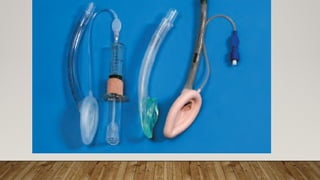
    1.Endotracheal tube (intubationtube) of Hebuner, Gordon-Green, Kiprensky, Koul with stylet (intubation tube guide) and without it. It is preferable to use endotracheal tube with a cuff; 2. Laryngoscopes are two types: a) indirect (curvet), b) Direct. For the adults the length of the endotracheal tube must be not less than 26cm and it must not reach on 2 cm the bifurcation of trachea.
  • 55.
    1.Nasotracheal (blindly andunder the checking with laryngoscope or bronchoscope); 2.Orotracheal (blind and under the checking with laryngoscope , bronchoscope or glidescope). Head must be thrown back-in “usual” (classic) or Jackson’s position. Intubation of trachea must be done after initial narcosis and injection of muscular relaxants (60-100 mg of Ditiline). The tip of the tube must be connected to the anesthesia apparatus respiratory hose (tube). 3.Laryngeal masc airway
  • 56.
    Complications of intubationnarcosis are divided on 3 groups: 1.Complications during the laryngoscopy and intubation (iatrogenic); Dental injuries with laryngoscope; Injuries of vocal ligaments; Insertion of the intubation (endotracheal) tube into the esophagus; Insertion of the intubation tube into the right bronchus. 2.Complications during intubation anesthesia: displacement (twist, compression) of the endotracheal tube; 3.Complications of the postoperative period (laryngitis, pharyngitis, bronchitis, pneumonia).
  • 57.
    Curare was thepoison of the South American Indians, which had been used by them for the poisoning of arrows. Victims died with muscle paralysis and asphyxia. The first scientific work about Curare belongs to Cloud Bernard (1851) and Pelikan (1857). Alkaloid Tubocurarin-chloride was separated by King in 1935. All modern myorelaxants act on the neuromuscular impulse transmission unit (synapse) and are divided on 2 groups:(a) antidepolarizing myorelaxants block the work of synapse, acetylcholine can’t act, as depolarization is impossible because of block of postsynaptic membrane; (b) depolarizing myorelaxants act as acetylcholine, cause the depolarization, but more prolonged and makes impossible repolarization. Using of the muscular relaxants has following advantages: reduces the dose of basic anesthesia; makes possible to stop the spontaneous breathing and take the patient on the artificial pulmonary ventilation, for arresting of cramps in case of tetanus; makes easier reposition of dislocations and fractures; enhances of anesthetic and antischock action of drugs.
  • 58.