Antiseptics, Astringents And
Sialogogues
BIBI UMEZA
Department of Pharmacology
ANTISEPTICS
Antiseptics are substances which destroy or
prevent the growth of microorganisms, applying
to living tissue.
Properties Desirable in Antiseptics
• Chemically stable.
• Cheap.
• Nonstaining with agreeable colour and odour.
• Cidal and not merely static, destroying spores
as well
• Active against all pathogens—bacteria, fungi,
viruses, protozoa.
• Require brief time of exposure.
• Able to spread through organic films and
enter folds and crevices.
• Active even in the presence of blood, pus,
exudates and excreta
In addition it should be:
• Rapid in action and exert sustained
protection.
• Nonirritating to tissues, should not delay
healing.
• Nonabsorbable, produce minimum toxicity if
absorbed.
• Nonsensitizing (no allergy).
• Compatible with soaps and other detergents
Spectrum of activity
• Reflecting nonselective of action.
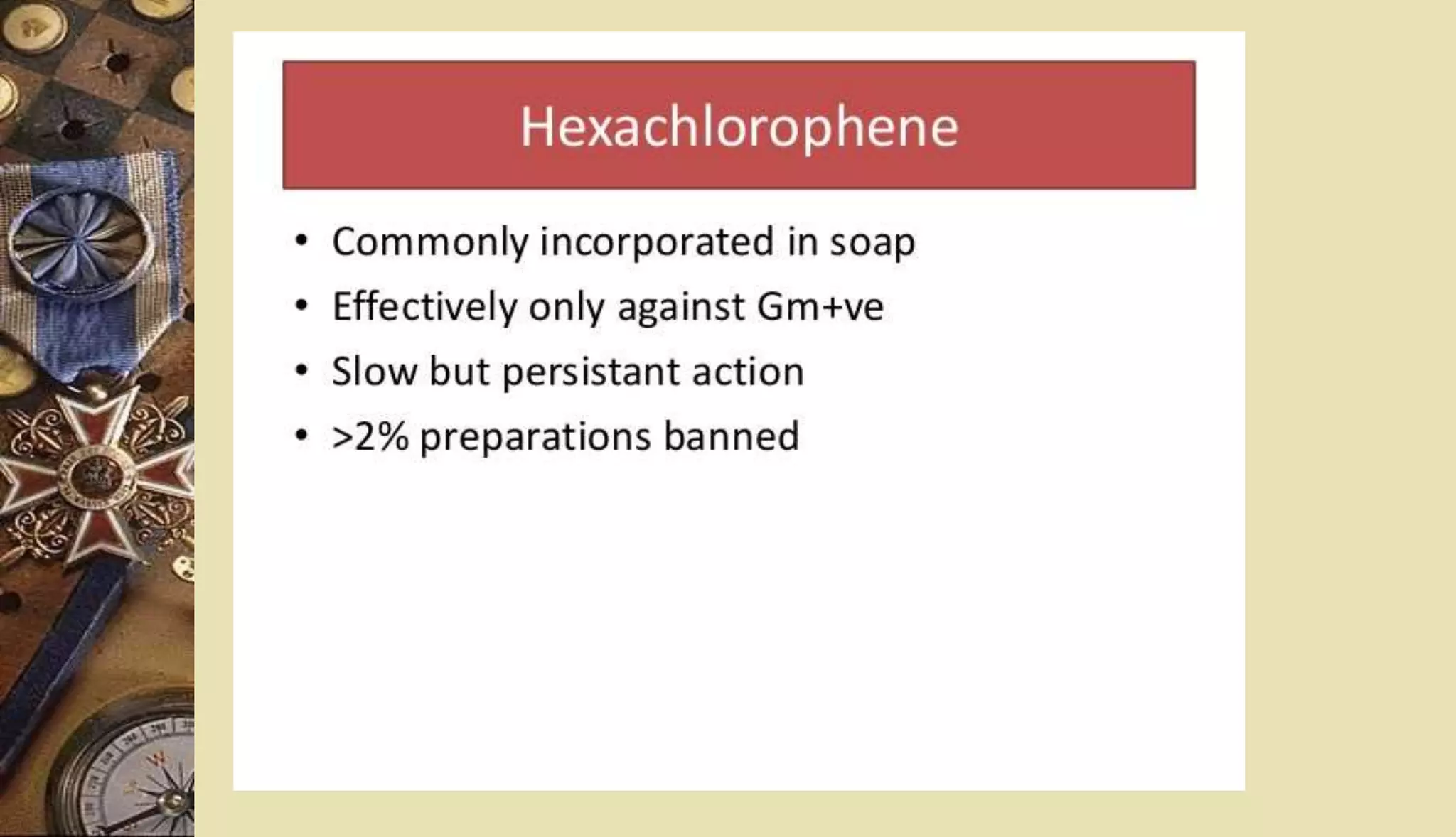
• some are selective, e.g. hexachlorophene,
quaternary ammonium antiseptics, acriflavin, etc
are more active on gram-positive than gram-
negative bacteria;
• silver nitrate is highly active against gonococci
• benzoyl peroxide against P. acnes.
Mechanisms of action
Germicides are varied, but can be grouped into:
1. Oxidation of bacterial protoplasm.
2. Denaturation of bacterial proteins including
enzymes.
3. Detergent like action increasing permeability
of bacterial membrane.
CLASSIFICATION
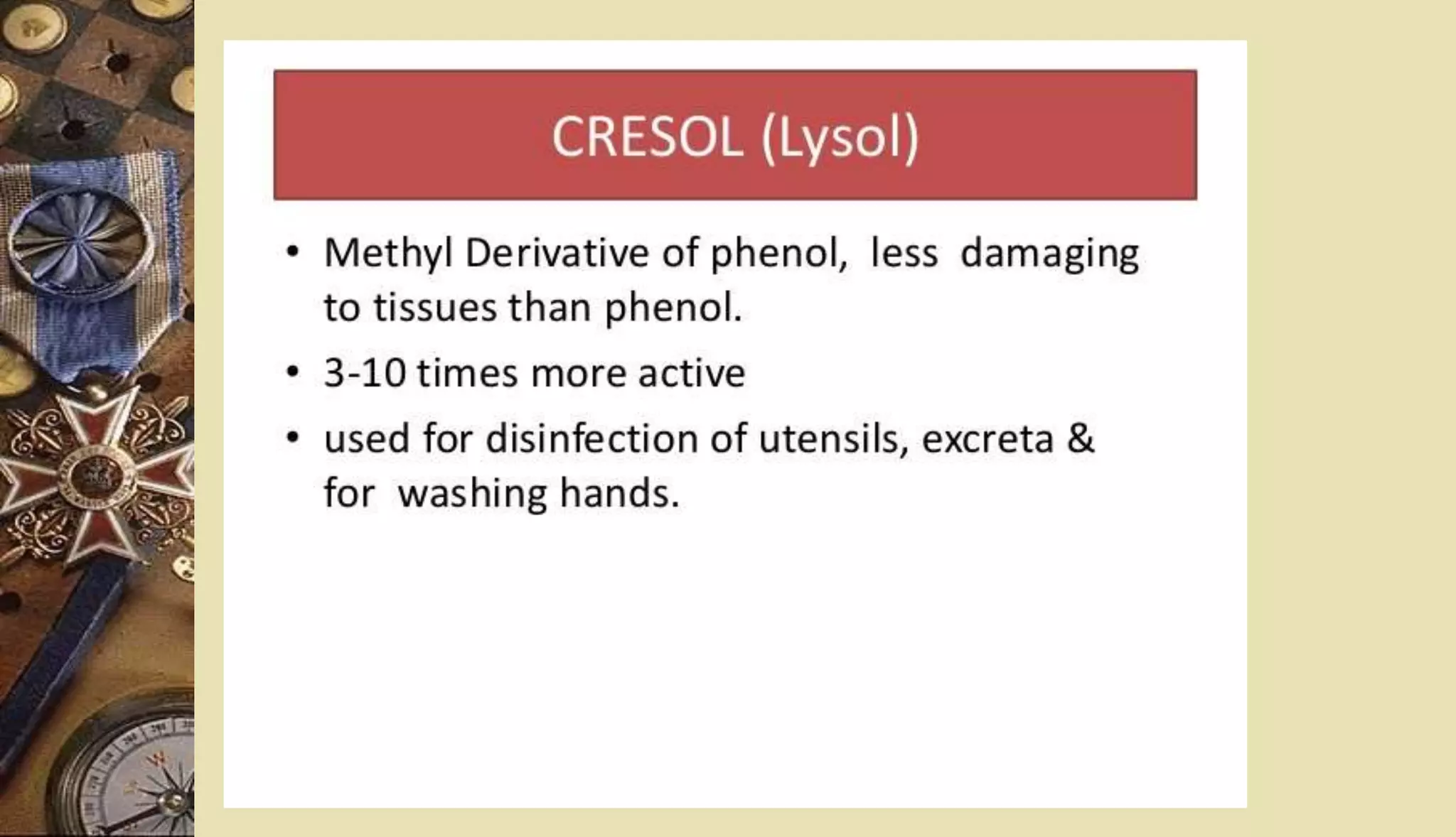
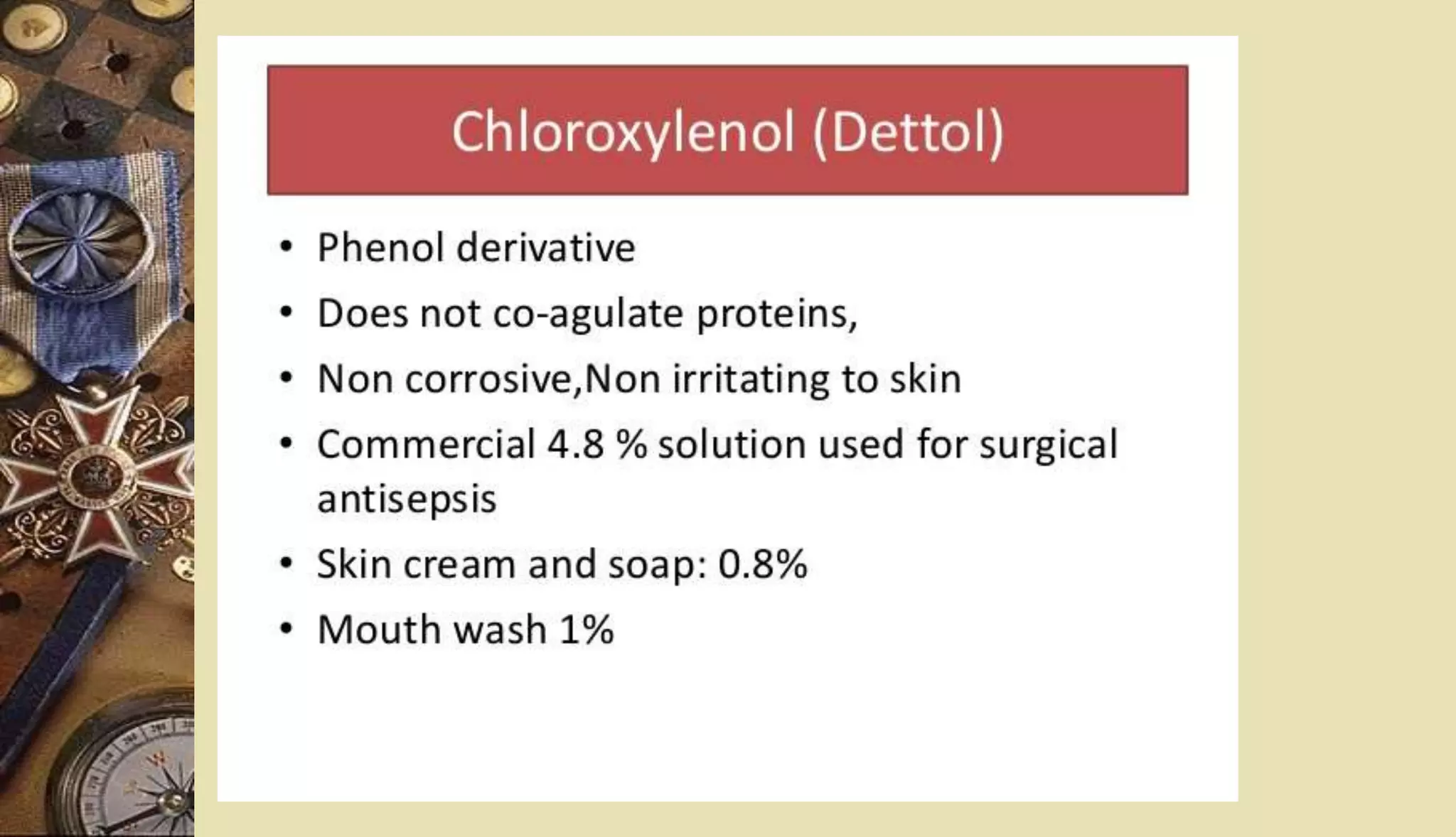
1. Phenol derivatives: Phenol, Cresol, Hexylresorcinol,
Chloroxylenol, Hexachlorophene.
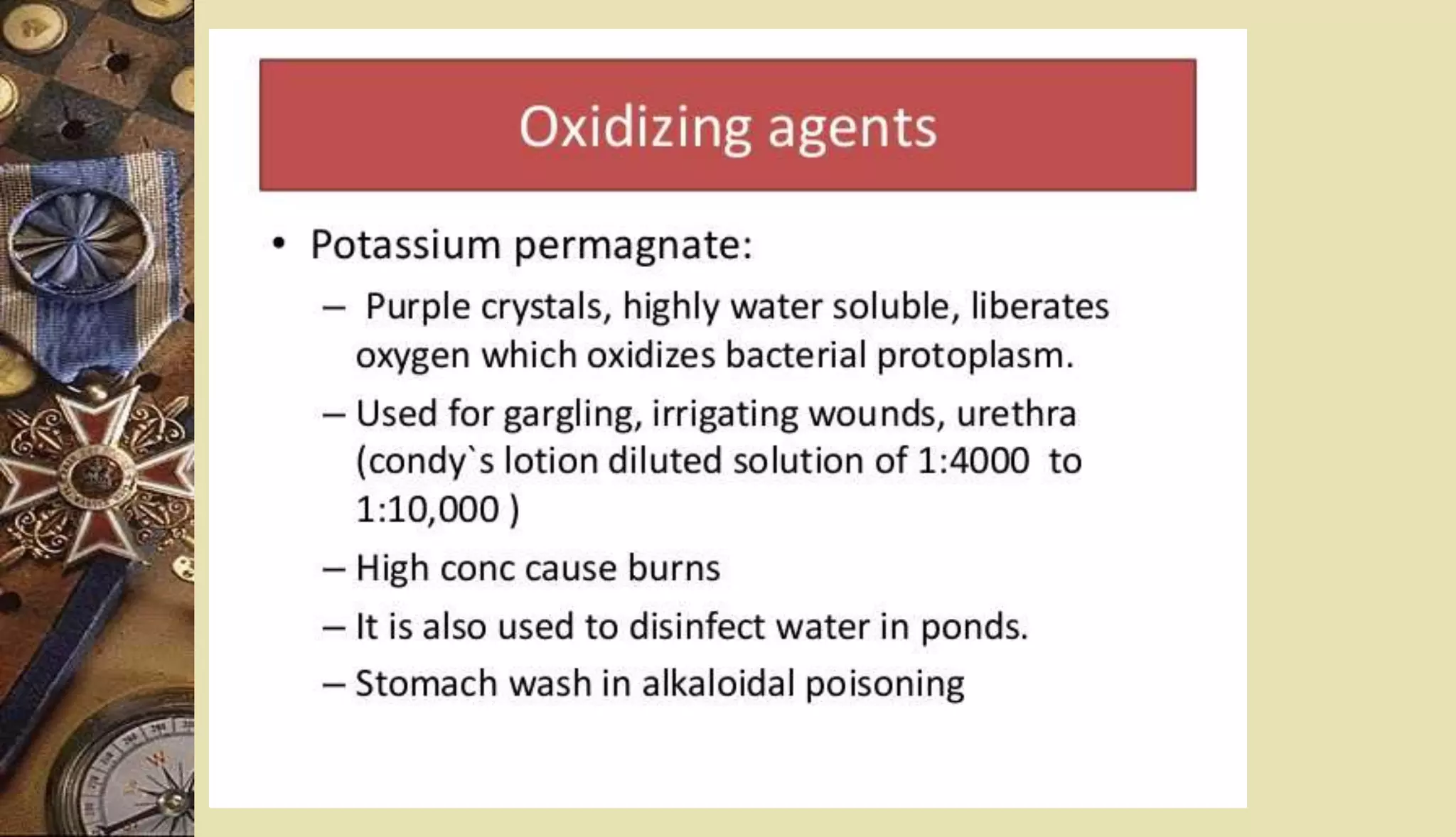
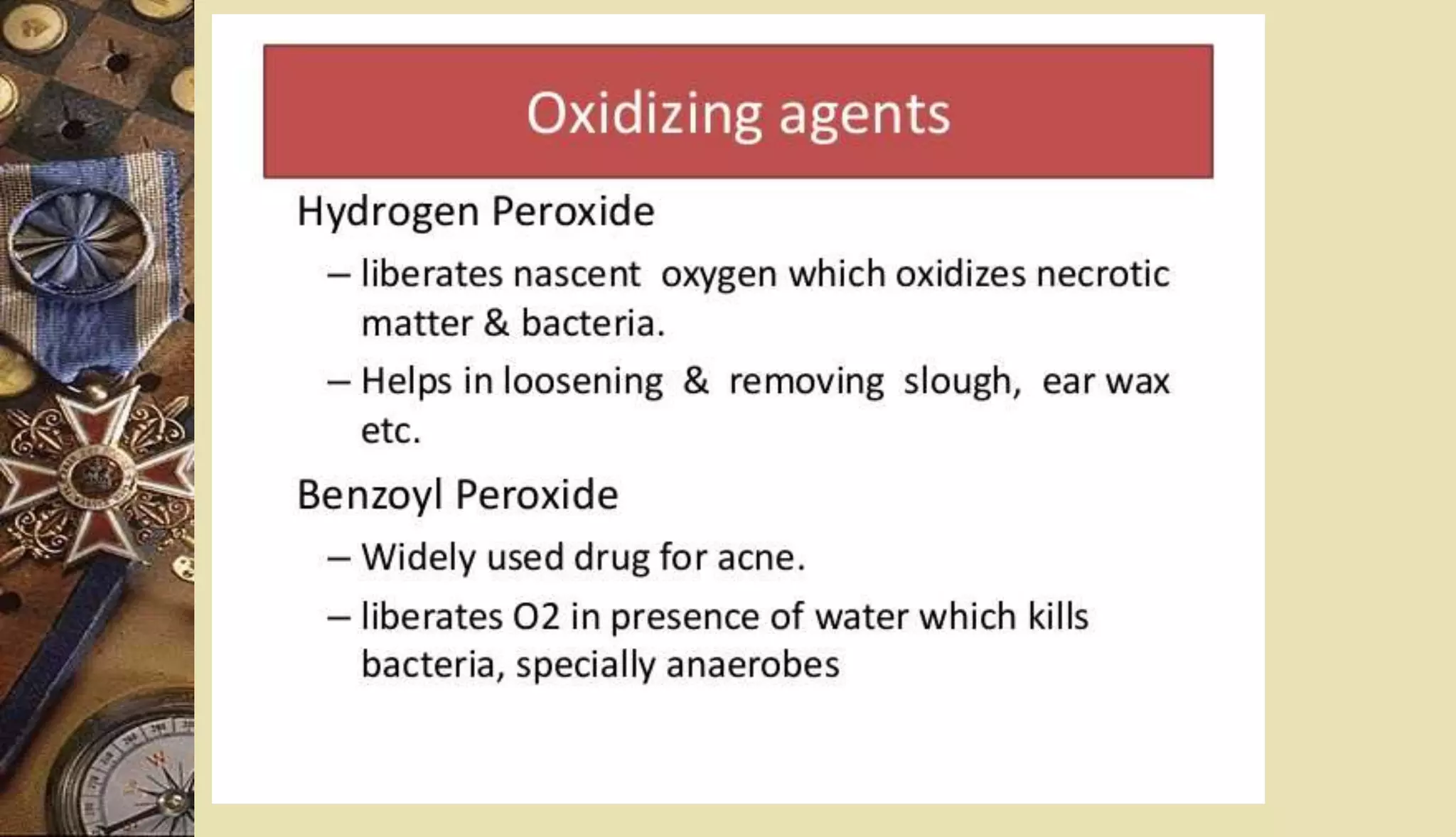
2. Oxidizing agents: Pot. permangnate, Hydrogen
peroxide, Benzoyl peroxide.
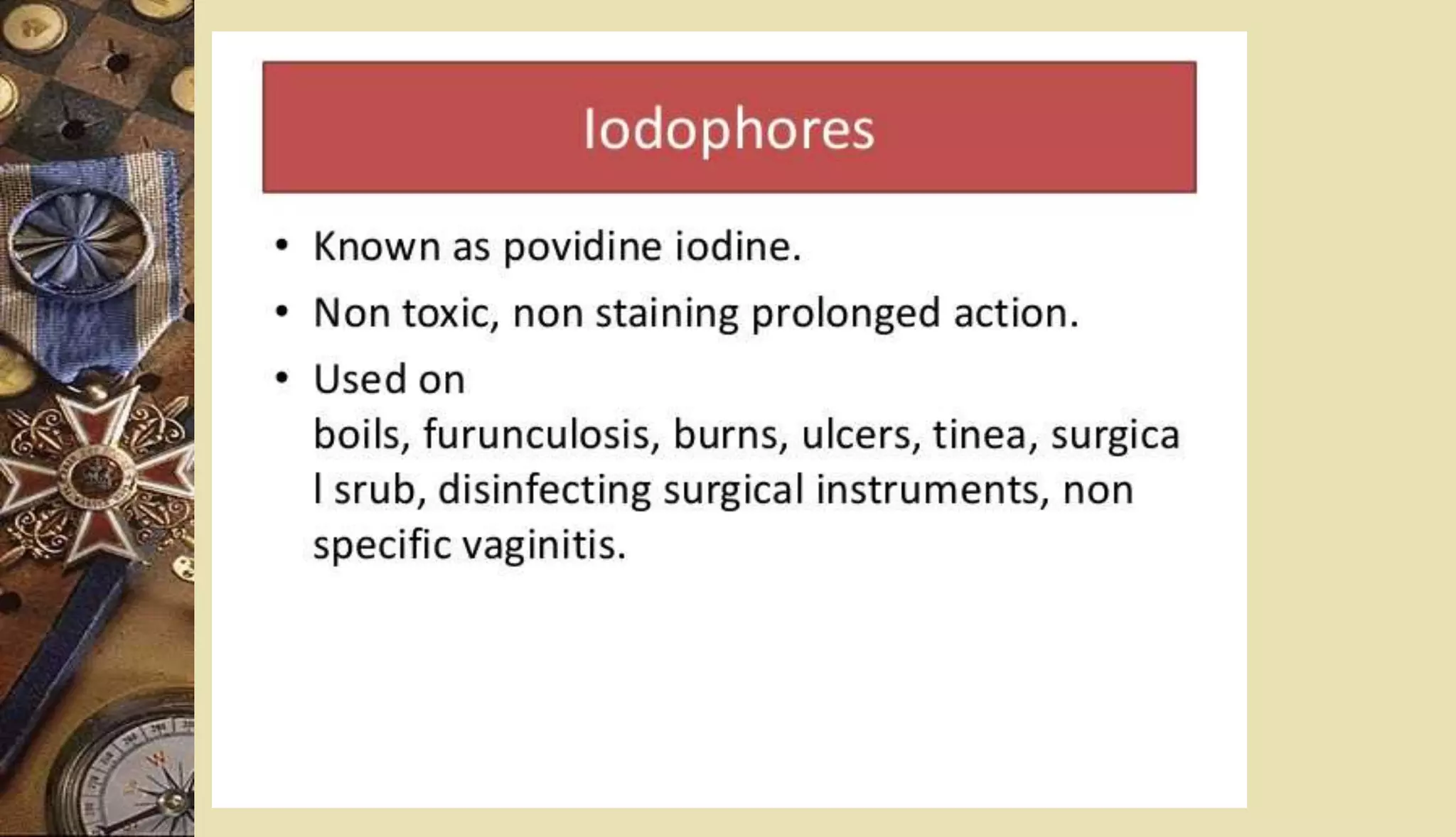
3. Halogens: Iodine, Iodophores, Chlorine, Chlorophores.
4. Biguanide: Chlorhexidine.
5. Quaternary ammonium (Cationic): Cetrimide,
Benzalkonium chloride, Dequalinium chloride.
6. Soaps: of Sod. and Pot.
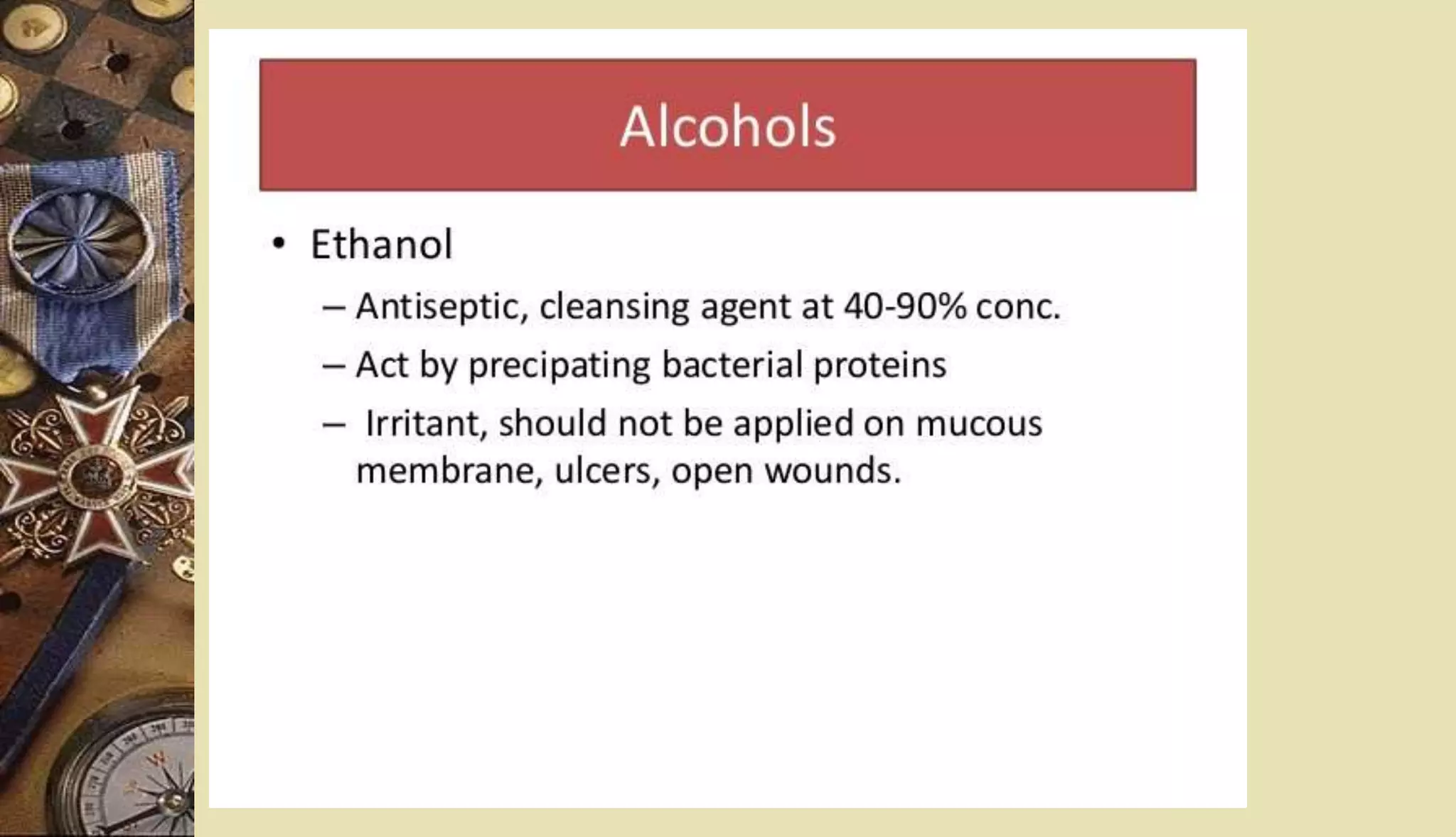
7. Alcohols: Ethanol, Isopropanol.
• Aldehydes: Formaldehyde, Glutaraldehyde.
• Acids: Boric acid, Acetic acid.
• Metallic salts: Silver nitrate, Silver sulfadiazine,
Mild silver protein, Zinc sulfate, Calamine, Zinc
oxide.
• Dyes:Gentian violet, Acriflavine, Proflavine.
• Furan derivative: Nitrofurazone.
ASTRINGENT
“Brings about protein
precipitation.”
E.g.: Alum
USES
 For Styptic action
 Anti inflammatory
 Anti perspirant
 Anti microbial
 To remove unwanted skin
• They form a protective coating and harden the
surface.
• Astringents check minor hemorrhages—arrest
capillary oozing as they promote clotting and
precipitate proteins on the bleeding surface.
• Astringents are therefore used as obtundents,
styptics and mummifying agents.
Types of Astringents
• Vegetable astringents—tannic acid, gall
• Metallic astringents—salts of zinc, copper,
iron, aluminum and silver; also alum
• Miscellaneous—alcohol, dilute acids.
Uses:
Uses: Astringents are used as mouthwashes,
paints, lotions and dentifrices in aphthous
ulcers, stomatitis, gingivitis and as local
hemostatics
SIALOGOGUES
SIALOGOGUES
• Sialogogues are agents which enhance
salivary secretions.
• Pilocarpine is generally used as a sialogogue.
• Cevimeline a newly introduced drug enhances
salivary secretion by directly stimulating the
muscarinic receptors
USES
• Sialogogues are used to treat acute symptoms
of sialoadenitis that may be seen in
sialolithiasis. Surgical excision is required in
most cases
• Xerostomia—often follows radiotherapy of the
head and neck. It may be troublesome
because it causes difficulty in speaking and
swallowing. It may be treated with pilocarpine
• Sjögren’s syndrome—cevimeline is used.
Antisialogogues
• An antisialogogue is a substance that reduces
salivary secretion.
• Propantheline bromide an atropine substitute
is commonly used.
Uses
• Sialocele: An antisialogogue is used to
suppress glandular function during healing or
to encourage spontaneous resolution of the
sialocele.
• Postsurgical: An antisialogogue is used for a
short period following surgeries of the
salivary glands and salivary ducts. Temporary
reduction in the flow of saliva is thought to be
helpful in faster wound healing
• In post-traumatic parotid fistulas and
sialoceles
• Trauma to the salivary gland and salivary
ducts
Thank you

Antiseptics, astringents and sialogogues

  • 1.
    Antiseptics, Astringents And Sialogogues BIBIUMEZA Department of Pharmacology
  • 2.
    ANTISEPTICS Antiseptics are substanceswhich destroy or prevent the growth of microorganisms, applying to living tissue.
  • 3.
    Properties Desirable inAntiseptics • Chemically stable. • Cheap. • Nonstaining with agreeable colour and odour. • Cidal and not merely static, destroying spores as well • Active against all pathogens—bacteria, fungi, viruses, protozoa. • Require brief time of exposure.
  • 4.
    • Able tospread through organic films and enter folds and crevices. • Active even in the presence of blood, pus, exudates and excreta
  • 5.
    In addition itshould be: • Rapid in action and exert sustained protection. • Nonirritating to tissues, should not delay healing. • Nonabsorbable, produce minimum toxicity if absorbed. • Nonsensitizing (no allergy). • Compatible with soaps and other detergents
  • 6.
    Spectrum of activity •Reflecting nonselective of action. • some are selective, e.g. hexachlorophene, quaternary ammonium antiseptics, acriflavin, etc are more active on gram-positive than gram- negative bacteria; • silver nitrate is highly active against gonococci • benzoyl peroxide against P. acnes.
  • 7.
    Mechanisms of action Germicidesare varied, but can be grouped into: 1. Oxidation of bacterial protoplasm. 2. Denaturation of bacterial proteins including enzymes. 3. Detergent like action increasing permeability of bacterial membrane.
  • 8.
    CLASSIFICATION 1. Phenol derivatives:Phenol, Cresol, Hexylresorcinol, Chloroxylenol, Hexachlorophene. 2. Oxidizing agents: Pot. permangnate, Hydrogen peroxide, Benzoyl peroxide. 3. Halogens: Iodine, Iodophores, Chlorine, Chlorophores. 4. Biguanide: Chlorhexidine. 5. Quaternary ammonium (Cationic): Cetrimide, Benzalkonium chloride, Dequalinium chloride. 6. Soaps: of Sod. and Pot. 7. Alcohols: Ethanol, Isopropanol.
  • 9.
    • Aldehydes: Formaldehyde,Glutaraldehyde. • Acids: Boric acid, Acetic acid. • Metallic salts: Silver nitrate, Silver sulfadiazine, Mild silver protein, Zinc sulfate, Calamine, Zinc oxide. • Dyes:Gentian violet, Acriflavine, Proflavine. • Furan derivative: Nitrofurazone.
  • 27.
  • 28.
    USES  For Stypticaction  Anti inflammatory  Anti perspirant  Anti microbial  To remove unwanted skin
  • 29.
    • They forma protective coating and harden the surface. • Astringents check minor hemorrhages—arrest capillary oozing as they promote clotting and precipitate proteins on the bleeding surface. • Astringents are therefore used as obtundents, styptics and mummifying agents.
  • 30.
    Types of Astringents •Vegetable astringents—tannic acid, gall • Metallic astringents—salts of zinc, copper, iron, aluminum and silver; also alum • Miscellaneous—alcohol, dilute acids.
  • 31.
    Uses: Uses: Astringents areused as mouthwashes, paints, lotions and dentifrices in aphthous ulcers, stomatitis, gingivitis and as local hemostatics
  • 32.
  • 33.
    SIALOGOGUES • Sialogogues areagents which enhance salivary secretions. • Pilocarpine is generally used as a sialogogue. • Cevimeline a newly introduced drug enhances salivary secretion by directly stimulating the muscarinic receptors
  • 34.
    USES • Sialogogues areused to treat acute symptoms of sialoadenitis that may be seen in sialolithiasis. Surgical excision is required in most cases • Xerostomia—often follows radiotherapy of the head and neck. It may be troublesome because it causes difficulty in speaking and swallowing. It may be treated with pilocarpine • Sjögren’s syndrome—cevimeline is used.
  • 35.
    Antisialogogues • An antisialogogueis a substance that reduces salivary secretion. • Propantheline bromide an atropine substitute is commonly used.
  • 36.
    Uses • Sialocele: Anantisialogogue is used to suppress glandular function during healing or to encourage spontaneous resolution of the sialocele. • Postsurgical: An antisialogogue is used for a short period following surgeries of the salivary glands and salivary ducts. Temporary reduction in the flow of saliva is thought to be helpful in faster wound healing
  • 37.
    • In post-traumaticparotid fistulas and sialoceles • Trauma to the salivary gland and salivary ducts
  • 38.